
Cranial Nerves I II I Olfactory sensory smell
- Slides: 24
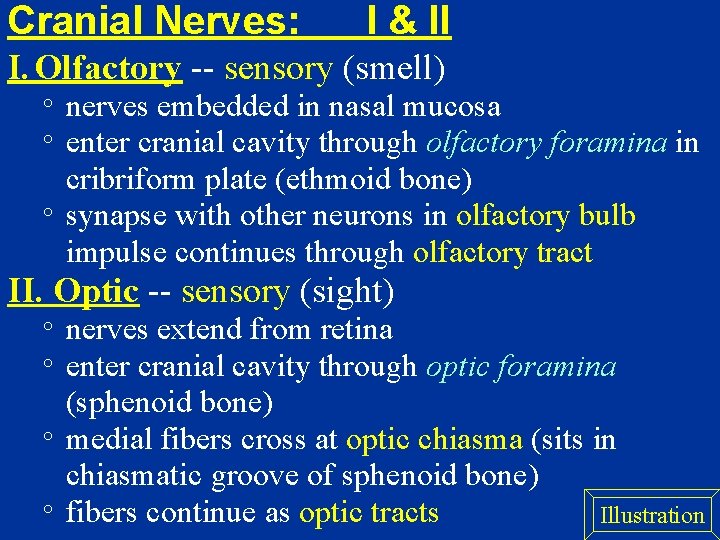
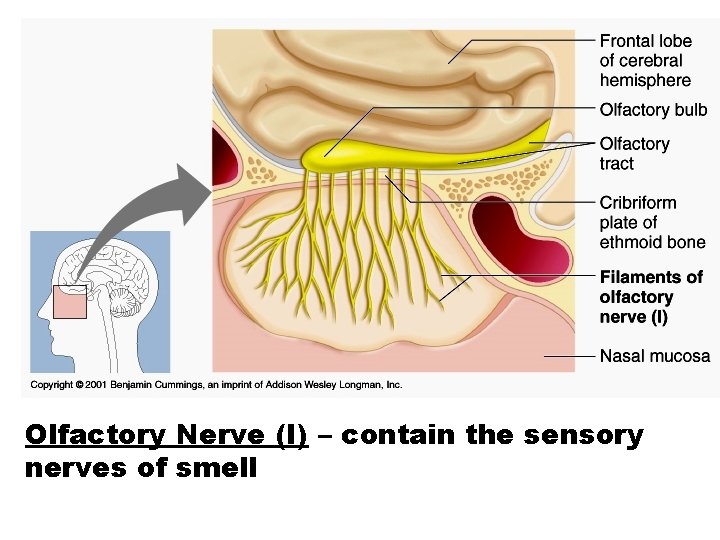
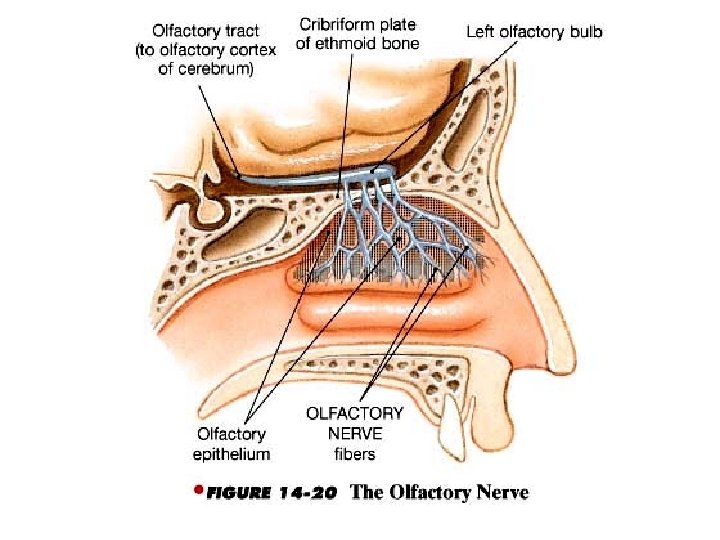
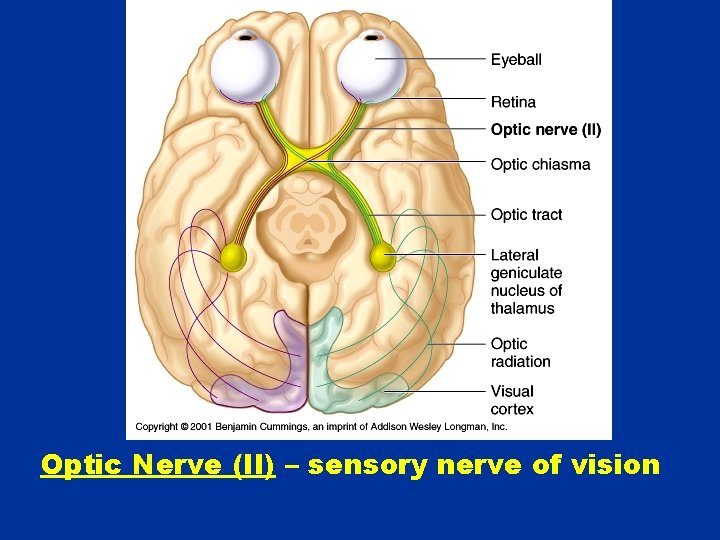
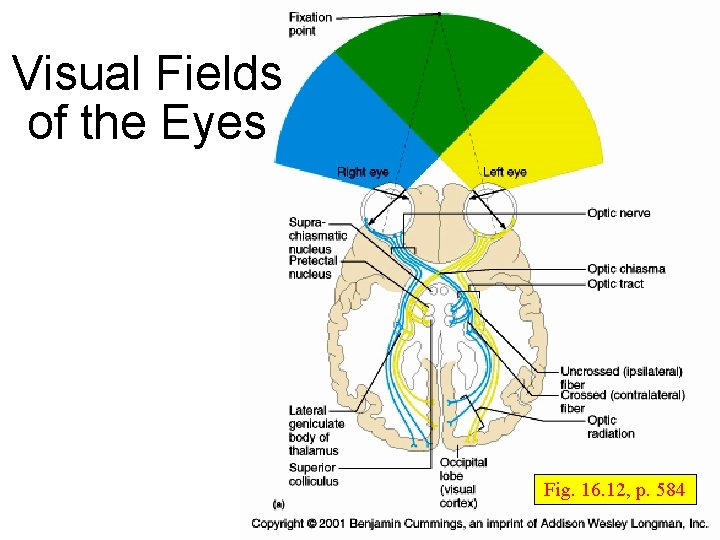
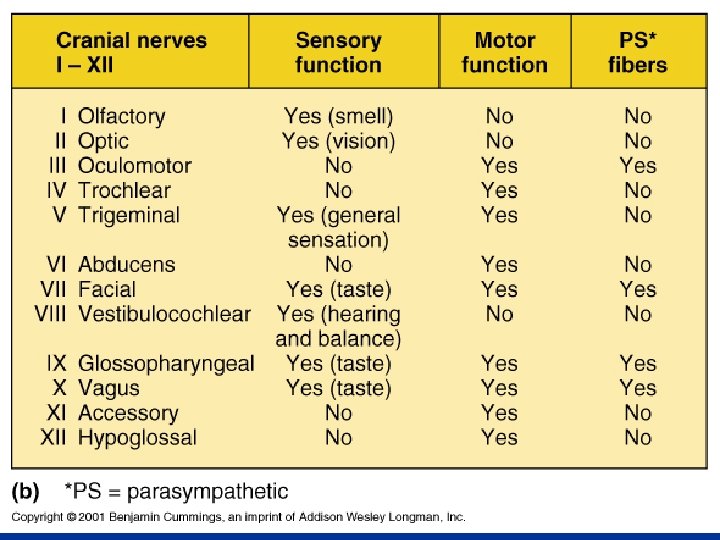
Cranial Nerves: I & II I. Olfactory -- sensory (smell) nerves embedded in nasal mucosa enter cranial cavity through olfactory foramina in cribriform plate (ethmoid bone) ° synapse with other neurons in olfactory bulb impulse continues through olfactory tract ° ° II. Optic -- sensory (sight) nerves extend from retina enter cranial cavity through optic foramina (sphenoid bone) ° medial fibers cross at optic chiasma (sits in chiasmatic groove of sphenoid bone) ° fibers continue as optic tracts Illustration ° °
Olfactory Nerve (I) – contain the sensory nerves of smell
Optic Nerve (II) – sensory nerve of vision
Visual Fields of the Eyes Fig. 16. 12, p. 584
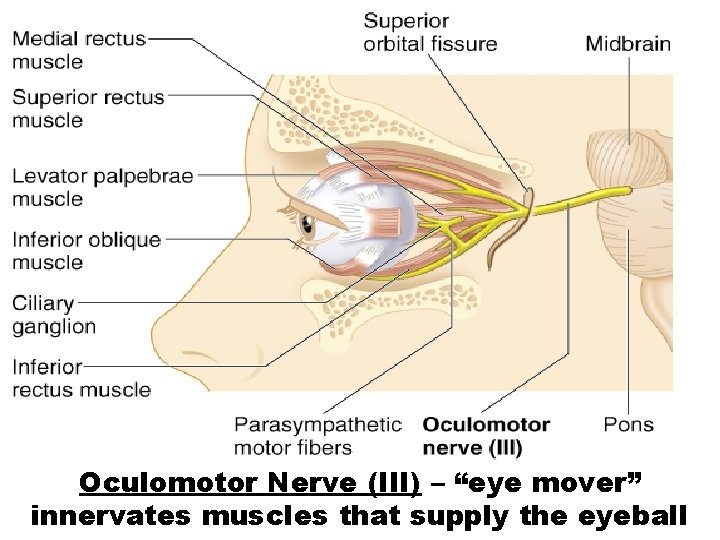
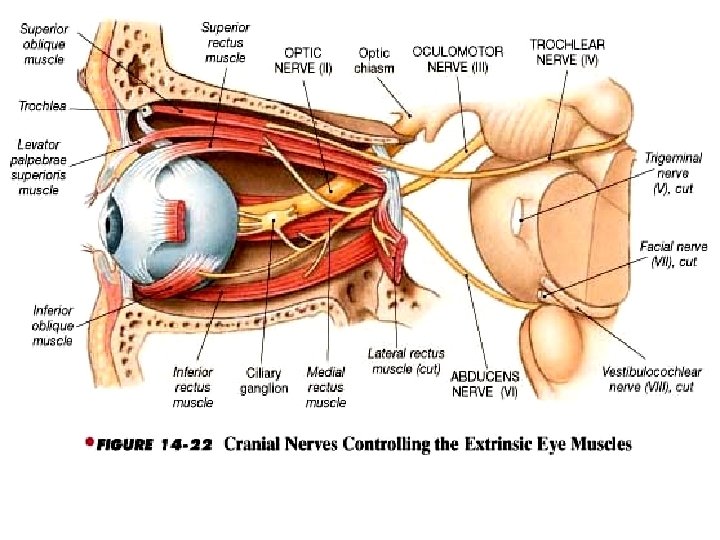
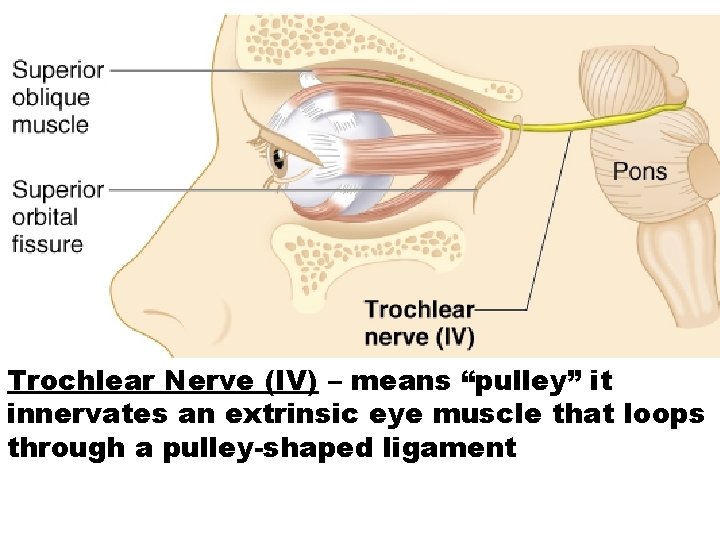
Cranial Nerves: III & IV III. Oculomotor – motor extrinsic muscles of eye except lateral rectus and superior oblique (eye movement) ° intrinsic smooth muscle of iris (constriction in response to brightness) and lens (controls shape for focusing) ° IV. Trochlear – motor ° superior oblique muscle of eye Illustration
Oculomotor Nerve (III) – “eye mover” innervates muscles that supply the eyeball
Trochlear Nerve (IV) – means “pulley” it innervates an extrinsic eye muscle that loops through a pulley-shaped ligament
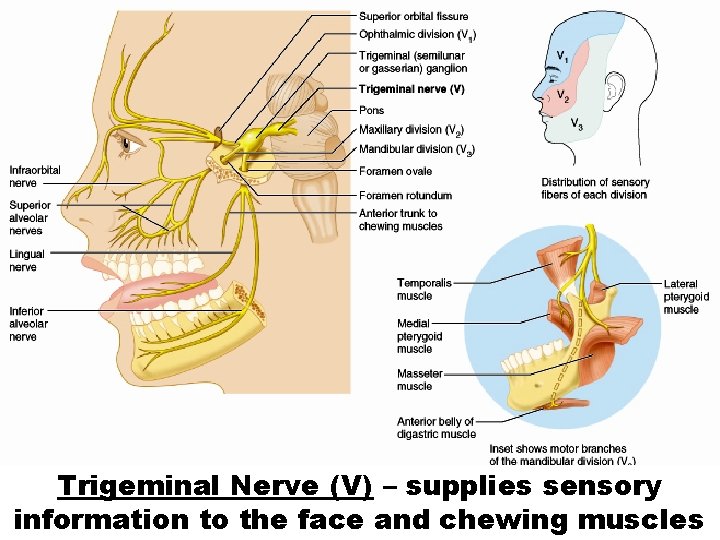
Cranial Nerves: V V. Trigeminal – mixed; largest cranial nerve, major sensory nerve serving face (skin, mucosae of mouth, surface of eyes), also important motor nerve (chewing) mandibular division – motor to chewing muscles; sensory from anterior tongue and lower teeth - mandibular division exits/enters through foramen ovale ° ophthalmic and maxillary divisions -- sensory - ophthalmic division from area around eye and forehead enters through superior orbital fissure - maxillary division from area around nose, cheeks, upper jaw enters through foramen rotundum ° Illustration
Trigeminal Nerve (V) – supplies sensory information to the face and chewing muscles
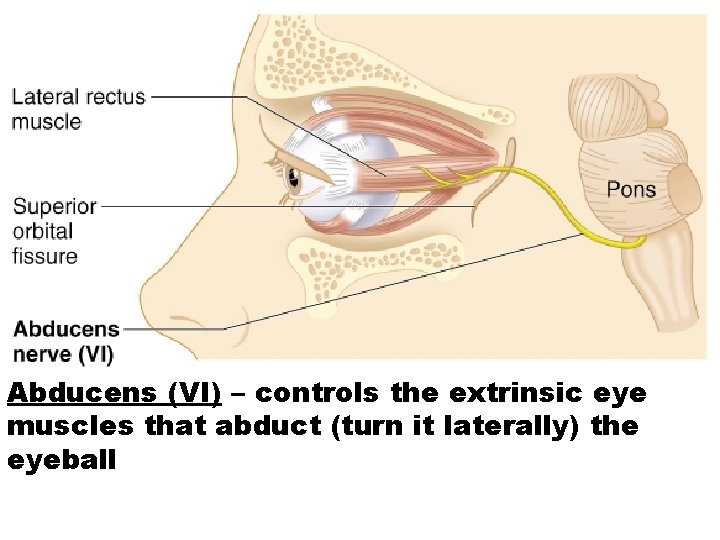
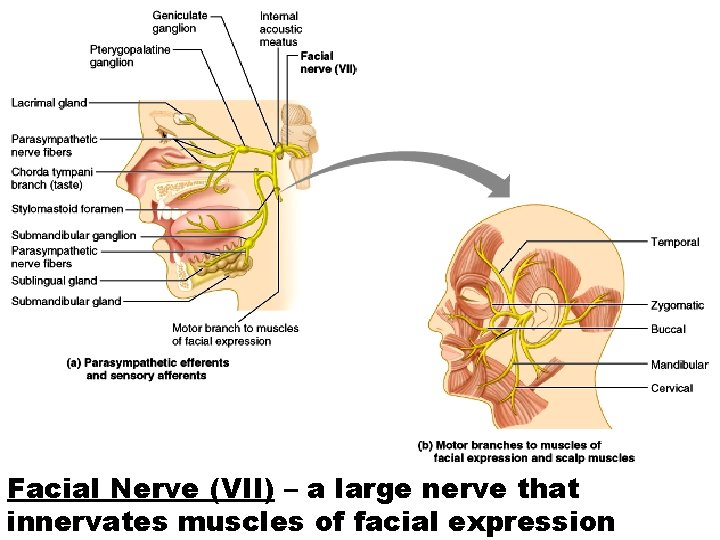
Cranial Nerves: VI & VII VI. Abducens – motor ° ° lateral rectus muscle of eye enters/exits cranial cavity through superior orbital fissure VII. Facial – mixed sensory from taste buds on tongue ° motor (ANS) to salivary and lacrimal glands ° motor (somatic) to muscles of facial expression ° enters/exits through stylomastoid foramen ° Illustration
Abducens (VI) – controls the extrinsic eye muscles that abduct (turn it laterally) the eyeball
Facial Nerve (VII) – a large nerve that innervates muscles of facial expression
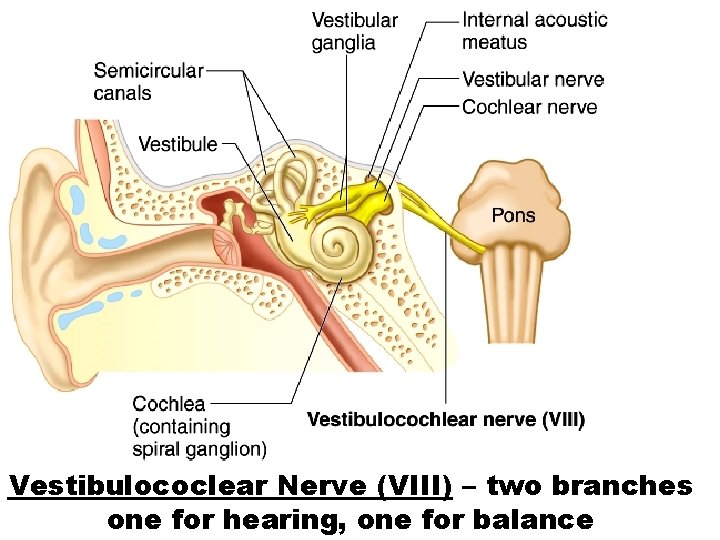
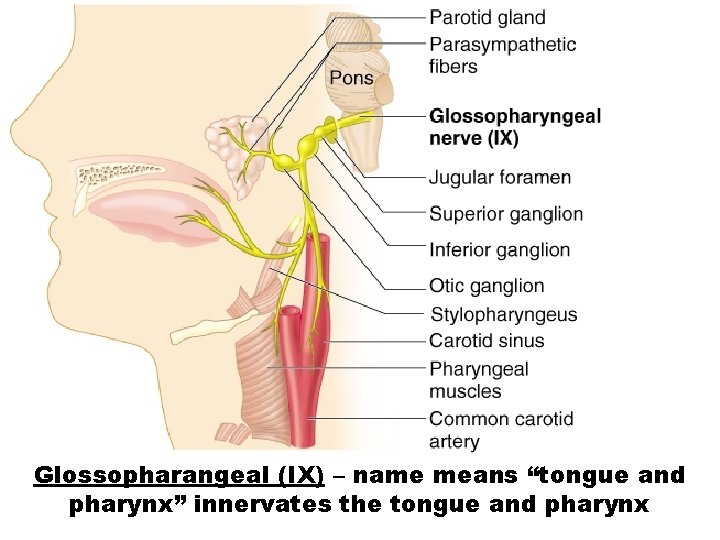
Cranial Nerves: VIII & IX VIII. Vestibulocochlear – sensory hearing and balance from inner ear ° enters through internal acoustic meatus ° IX. Glossopharyngeal -- mixed motor to pharyngeal muscles and salivary glands ° sensory from taste buds ° exits/enters through jugular foramen (border of temporal and occipital bones) ° Illustration
Vestibulococlear Nerve (VIII) – two branches one for hearing, one for balance
Glossopharangeal (IX) – name means “tongue and pharynx” innervates the tongue and pharynx
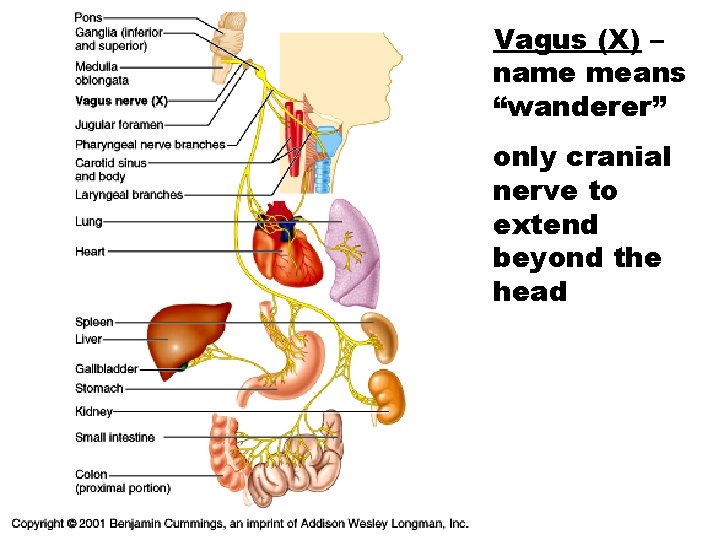
Cranial Nerves: X X. Vagus -- mixed motor (somatic) to pharynx and larynx for swallowing and speaking ° motor (ANS: parasympathetic) innervation to heart, lungs and abdominal viscera ° sensory info from thoracic and abdominal viscera ° exits/enters through jugular foramen (border of temporal and occipital bones) ° Illustration
Vagus (X) – name means “wanderer” only cranial nerve to extend beyond the head
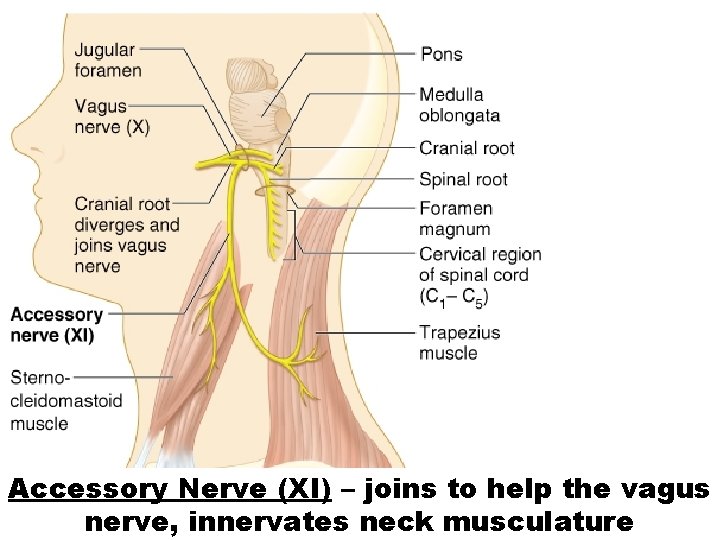
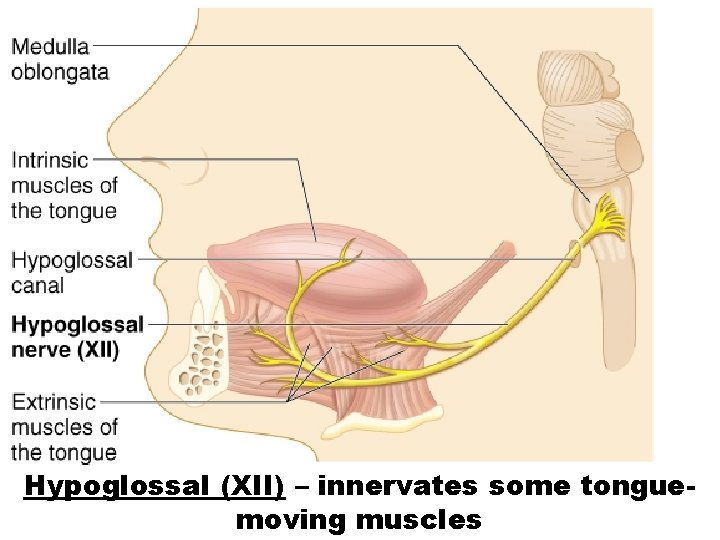
Cranial Nerves: XI & XII XI. Accessory -- motor ° ° muscles of neck enters/exits through jugular foramen (border of temporal and occipital bones) XII. Hypoglossal – motor ° ° muscles of tongue (chewing, swallowing and speech) enters/exits through hypoglossal canal (superior to occipital condyles of occipital bone) Illustration
Accessory Nerve (XI) – joins to help the vagus nerve, innervates neck musculature
Hypoglossal (XII) – innervates some tonguemoving muscles
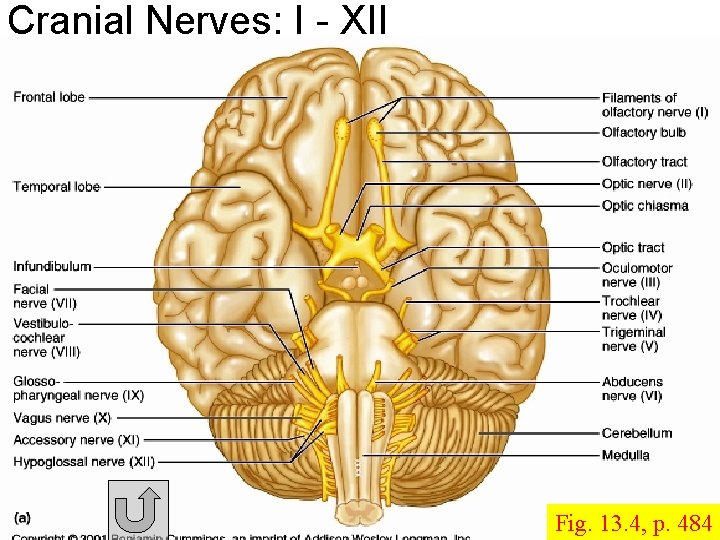
Cranial Nerves: I - XII Fig. 13. 4, p. 484