
CRANIAL NERVES AND THEIR CLINICAL RELEVANCE DR S

- Slides: 41
CRANIAL NERVES AND THEIR CLINICAL RELEVANCE DR S. OYAKHIRE. MBBS, MWACP, FMCP PHYSICIAN/NEUROLOGIST NATIONAL HOSPITAL ABUJA. © NITMED TUTORIALS
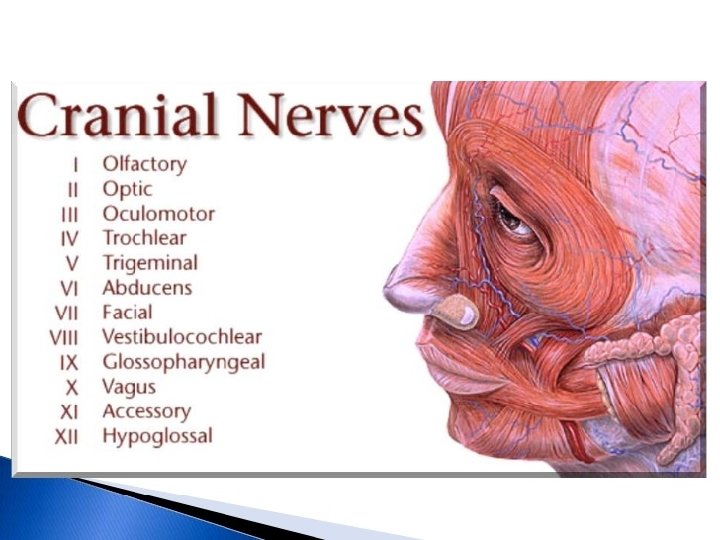
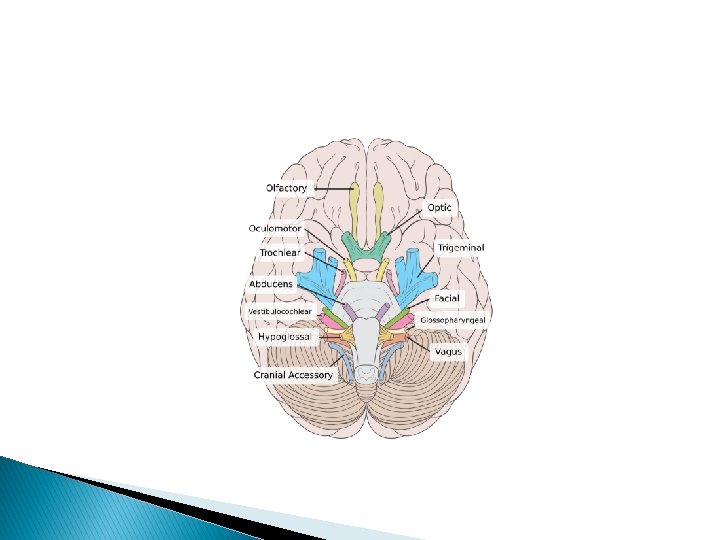
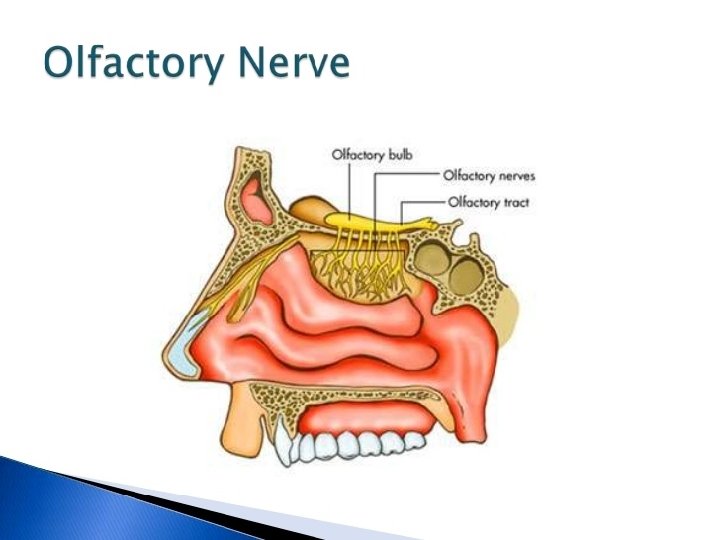
OLFACTORY NERVE-I � Component- sensory � Function- Smell � Origin-Olfactory receptor nerve cells � Opening to the skull; Openings in the cribriform plate of ethmoid. � Damage- Anosmia � Test- for smell.
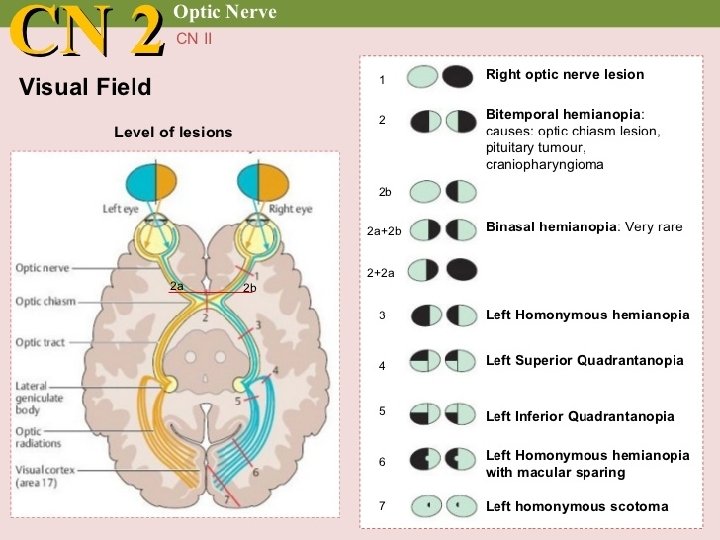
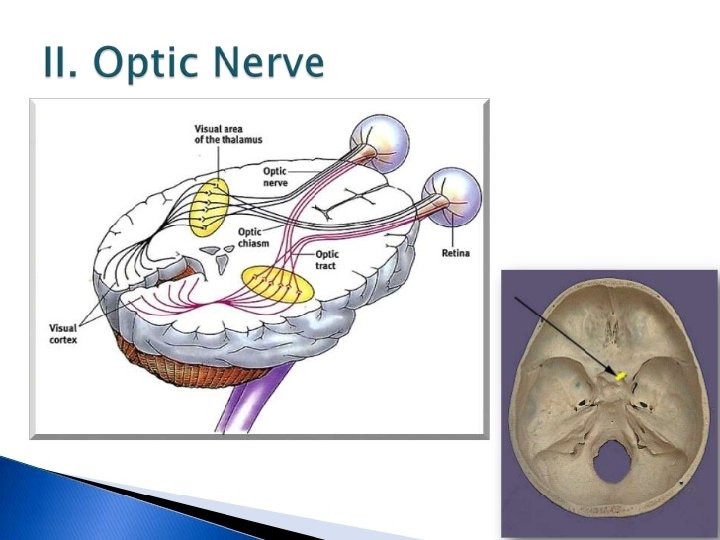
OPTIC NERVE- CNII. � Components- Sensory. � Function-Vision. � Origin- Behind the eyeball. � Opening to the skull-Optic canal. � Test for visual acuity, visual field and color � Do fundoscopy.
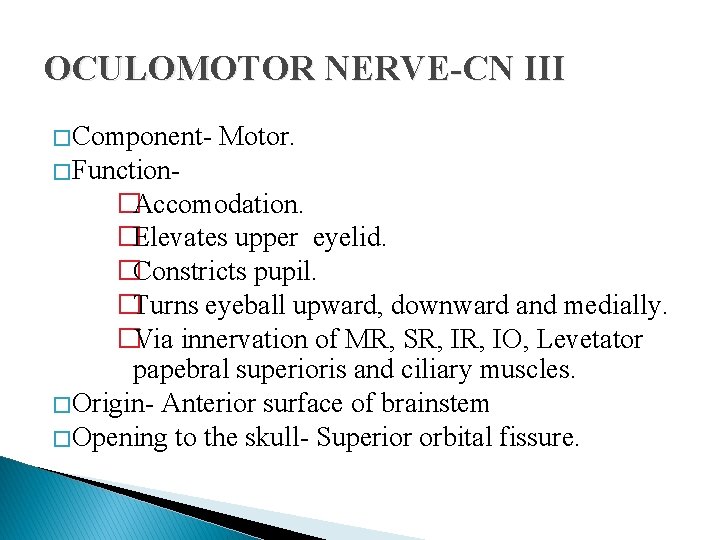
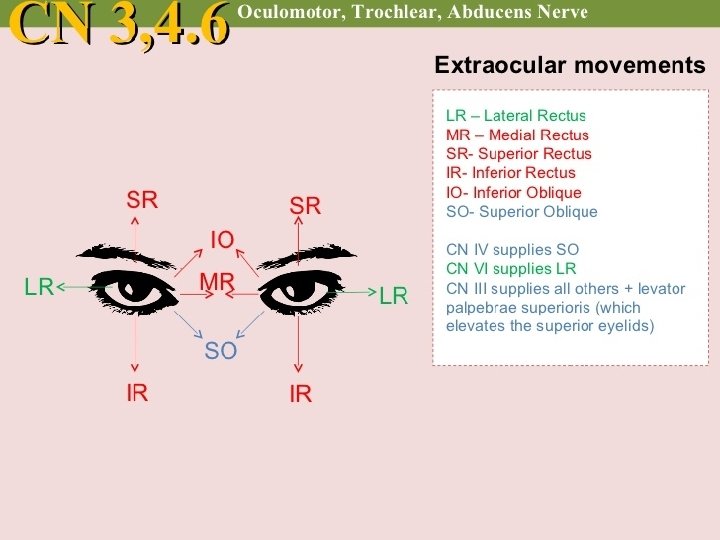
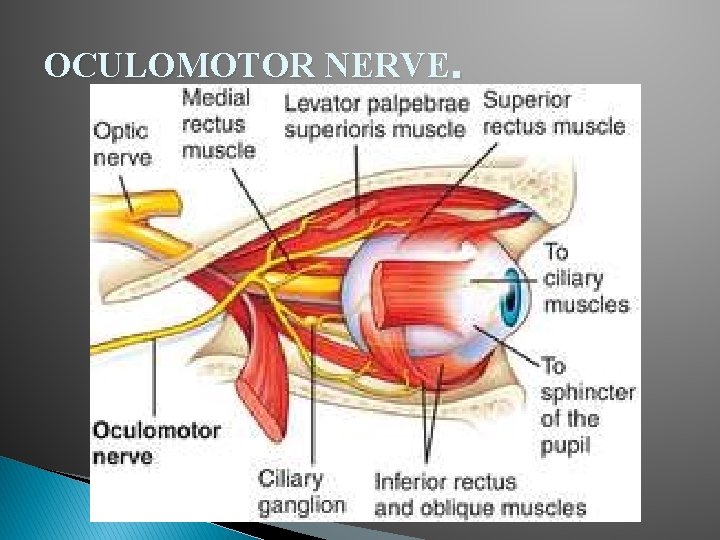
OCULOMOTOR NERVE-CN III � Component- Motor. � Function- �Accomodation. �Elevates upper eyelid. �Constricts pupil. �Turns eyeball upward, downward and medially. �Via innervation of MR, SR, IO, Levetator papebral superioris and ciliary muscles. � Origin- Anterior surface of brainstem � Opening to the skull- Superior orbital fissure.
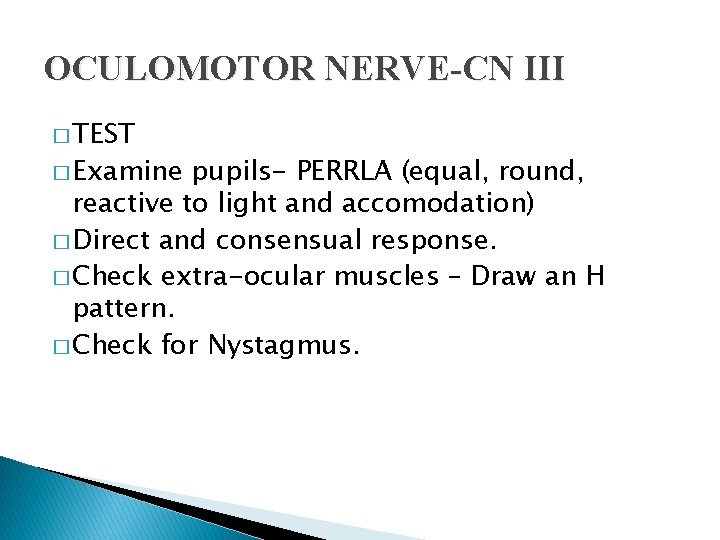
OCULOMOTOR NERVE-CN III � TEST � Examine pupils- PERRLA (equal, round, reactive to light and accomodation) � Direct and consensual response. � Check extra-ocular muscles – Draw an H pattern. � Check for Nystagmus.
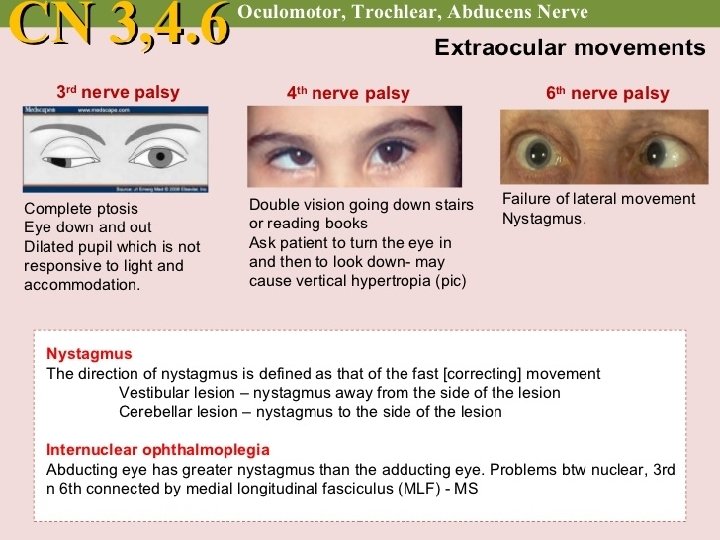
OCULOMOTOR NERVE-CN III � Damage- Ptosis, mydriasis, diplopia, difficulty focusing and “down- and- out eye. ” � Correlates- Compressive lesions e. g uncal herniation causes a “blown pupil” � Whereas Diabetic 3 rd eye, spares the pupil. � An acute CN III palsy is a medical emergency!!
OCULOMOTOR NERVE.
TROCHLEAR NERVE- CN IV � Component- Motor. � Innervates the Superior oblique (SO) � Function- Assists in turning the eyeball “ down & out” � Origin- Posterior surface of brainstem. � Opening to the skull- Superior orbital fissure � Damage- Double vision and inability to rotate eye inferolaterally.
TRIGEMINAL NERVE-CN V � It is the largest cranial nerve. � Components- contains both motor and sensory roots. � Origin- Anterior surface of the pons.
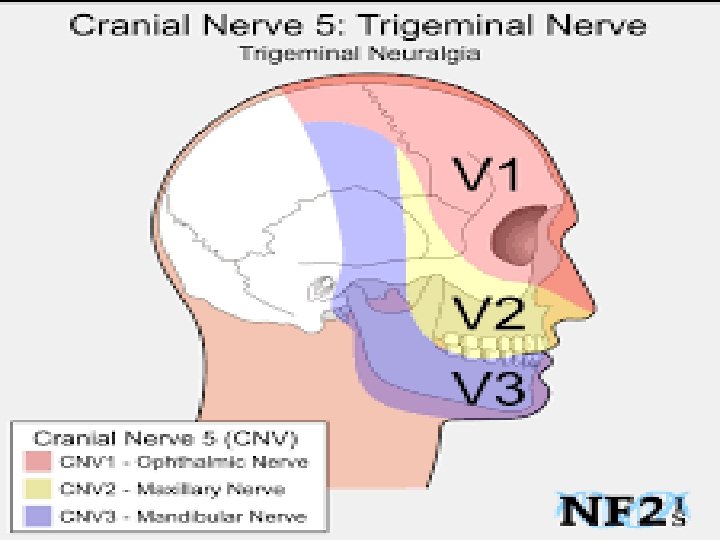
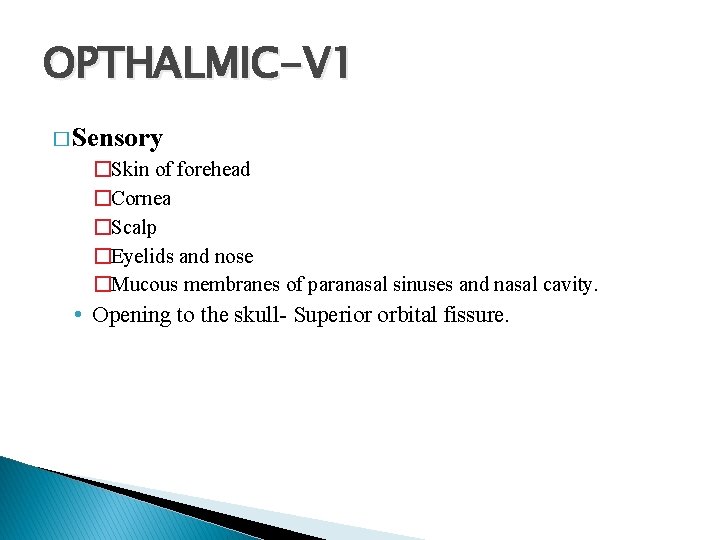
OPTHALMIC-V 1 � Sensory �Skin of forehead �Cornea �Scalp �Eyelids and nose �Mucous membranes of paranasal sinuses and nasal cavity. • Opening to the skull- Superior orbital fissure.
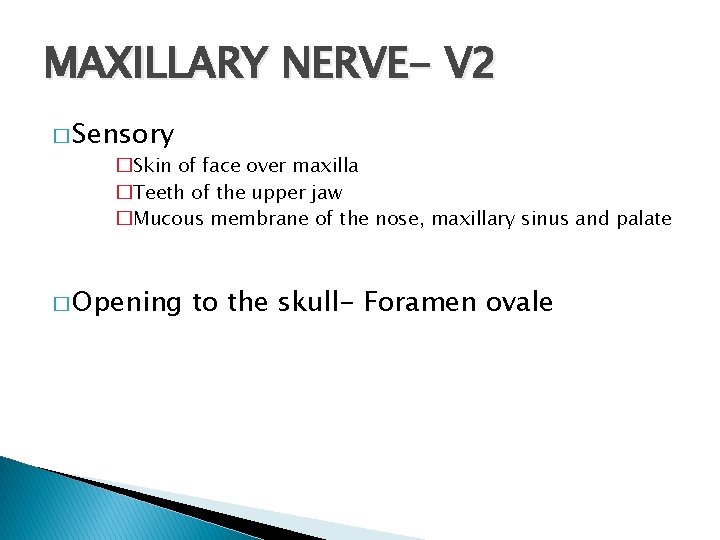
MAXILLARY NERVE- V 2 � Sensory �Skin of face over maxilla �Teeth of the upper jaw �Mucous membrane of the nose, maxillary sinus and palate � Opening to the skull- Foramen ovale
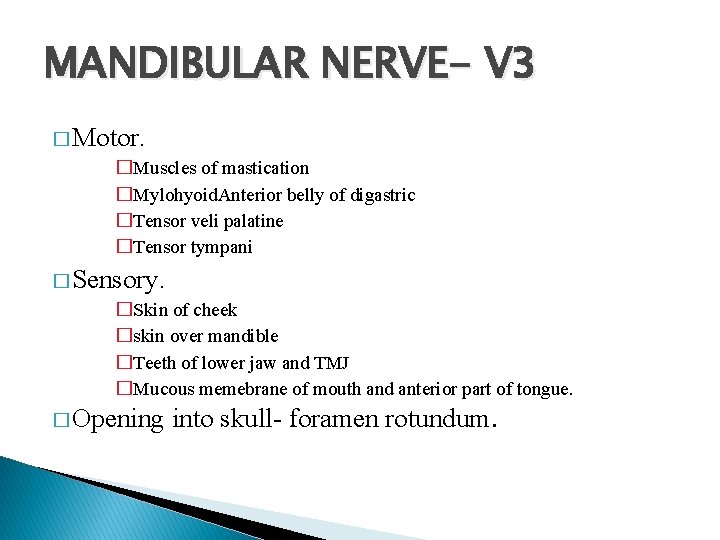
MANDIBULAR NERVE- V 3 � Motor. �Muscles of mastication �Mylohyoid. Anterior belly of digastric �Tensor veli palatine �Tensor tympani � Sensory. �Skin of cheek �skin over mandible �Teeth of lower jaw and TMJ �Mucous memebrane of mouth and anterior part of tongue. � Opening into skull- foramen rotundum.
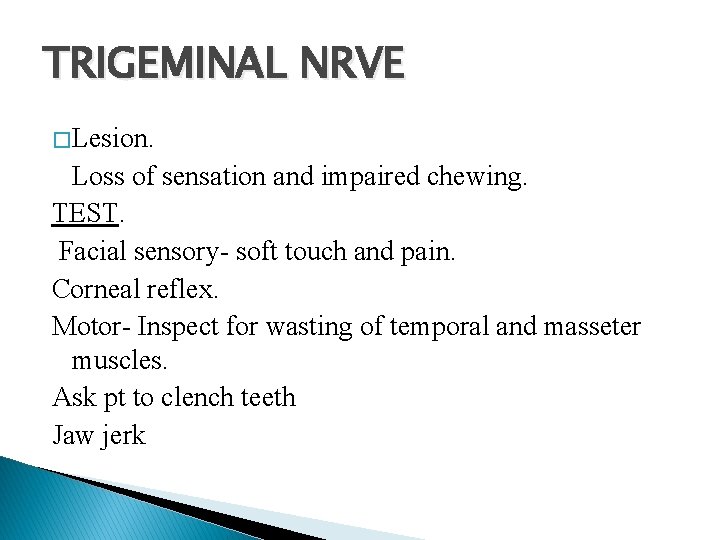
TRIGEMINAL NRVE � Lesion. Loss of sensation and impaired chewing. TEST. Facial sensory- soft touch and pain. Corneal reflex. Motor- Inspect for wasting of temporal and masseter muscles. Ask pt to clench teeth Jaw jerk
ABDUCENS NERVE- CN VI � Component – Motor � Function- supplies lateral rectus, turns eyeball laterally. � Origin- Anterior surface of brainstem between pons & medulla. � Opening to the skull- Superior orbital fissure. � Damage- Inability to abduct the eyeball.
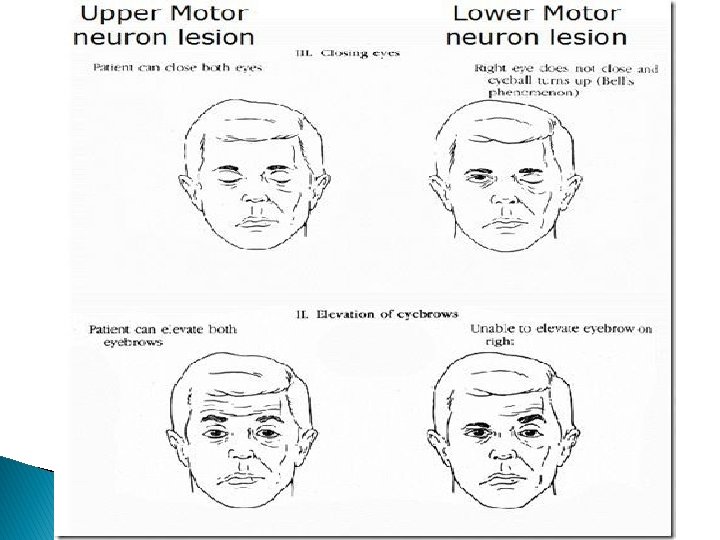
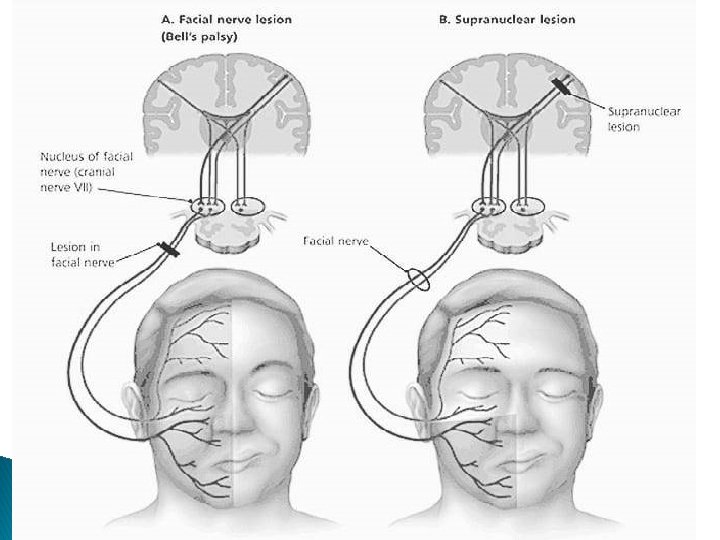
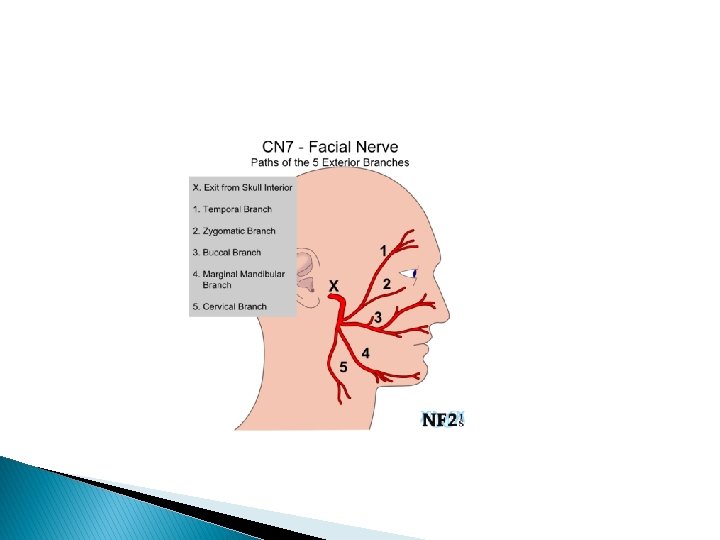
FACIAL NERVE- CN VII. �Component- motor & sensory. Motor �Somatic ( facial expressions) �Autonomic (Salivary, lacrimal) �Sensory �Taste on anterior 2/3 rds of the tongue �Damage- Facial weakness ( drooping) with loss of taste. �It could also be upper motor or lower motor neuron type
FACIAL NERVE- CN VII � TEST � Ask pt to wrinkle forehead, show teeth, close eyes and puff out cheeks. � If Lower motor neuron inspect ear and palate for vesicles- Ramsay Hunt syndrome.
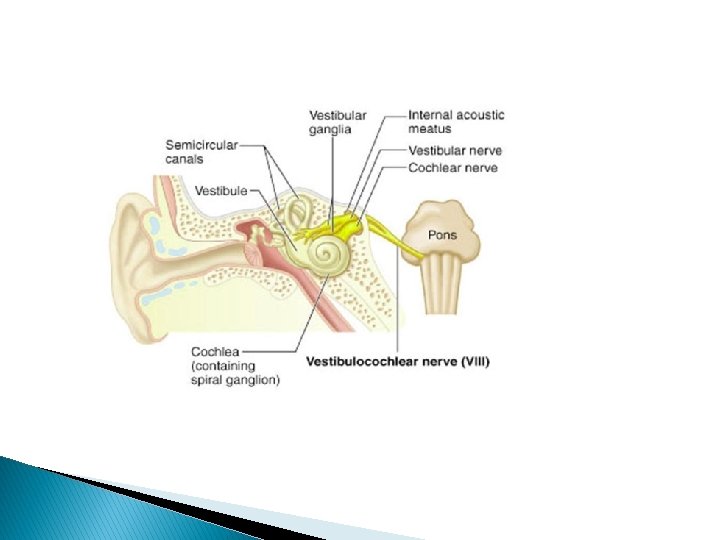
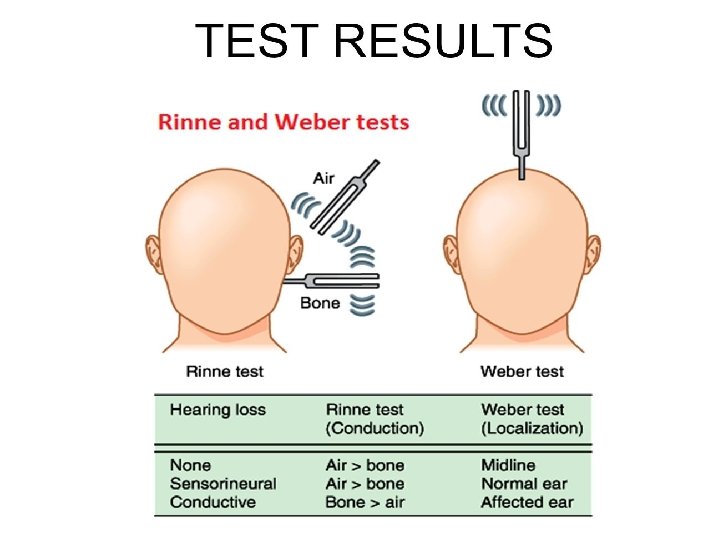
VESTIBULO-COCHLEAR- CN VIII � Component -Sensory � Hearing ( cochlear) � Proprioception/ balance (vestibular) � Damage- deafness, vertigo, nystagmus, tinnitus.
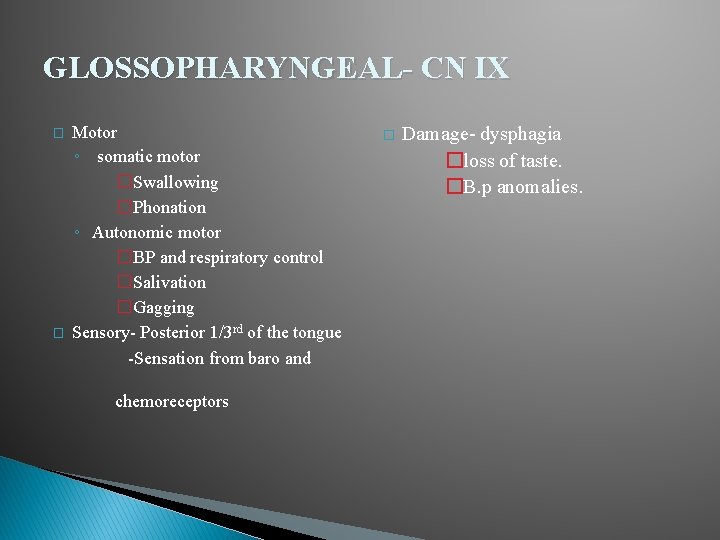
GLOSSOPHARYNGEAL- CN IX � � Motor ◦ somatic motor �Swallowing �Phonation ◦ Autonomic motor �BP and respiratory control �Salivation �Gagging Sensory- Posterior 1/3 rd of the tongue -Sensation from baro and chemoreceptors � Damage- dysphagia �loss of taste. �B. p anomalies.
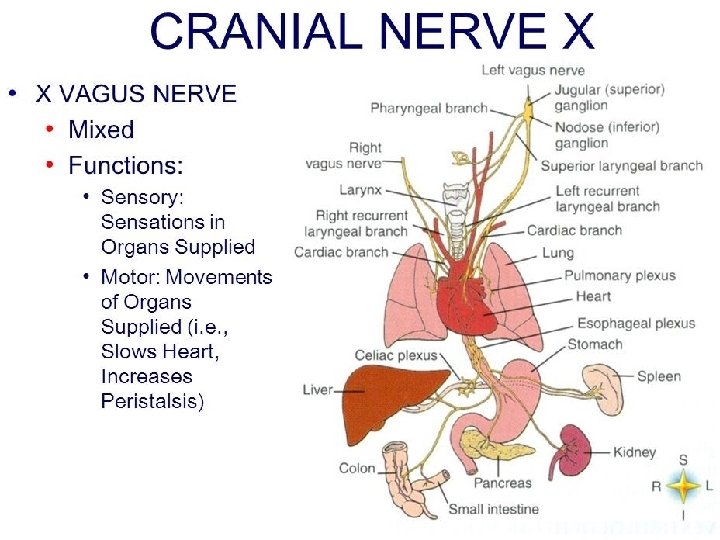
VAGUS NERVE � Motor ◦ Somatic �Swallowing �Phonation via pharyngeal muscles ◦ Autonomic �Smooth muscles of the Abdominal viscera �Visceral gland secretions �Relaxation of airways �Heart rate control (Vagal tone)
VAGUS NERVE � Sensory �Skin at Back of ear �External acoustic meatus �Part of tympanic membrane �Larynx, trachea, esophagus, and abdominal viscera. �Baro & chemoreceotors �Special sensory- taste from epiglottis & pharynx � Damage- CN IX) Vocal hoarseness, dysphagia, B. p anomalies (with
TESTING IX & X � Ask pt to say Ah- look for position of the uvula (pulled toward the normal side) � Check gag reflex. ◦ Afferent –CN IX ◦ Efferent- CN X
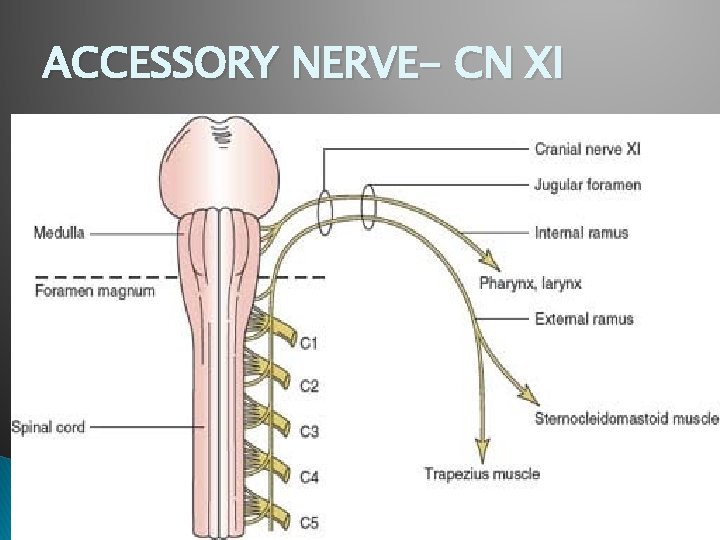
ACCESSORY NERVE- CN XI � Component – Motor �Swallowing via phayngeal muscles �Head and neck movement via trapezius & sternocleidomastoid � Damage-Imapaired movement. head, neck & shoulder
ACCESSORY NERVE- CN XI
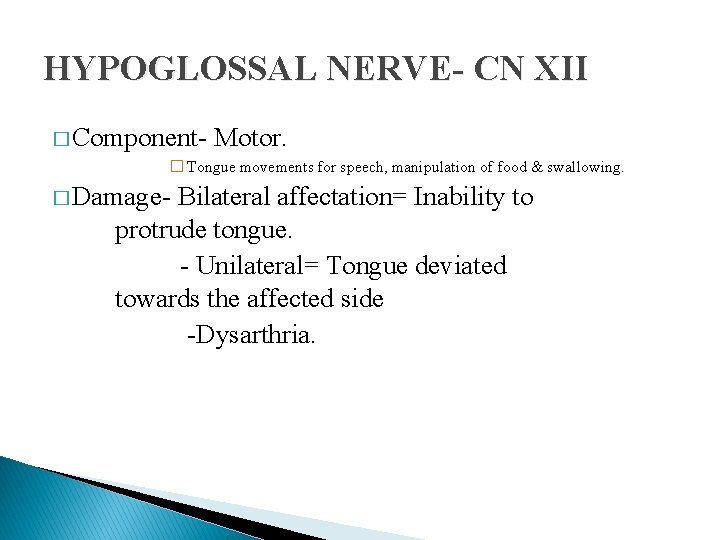
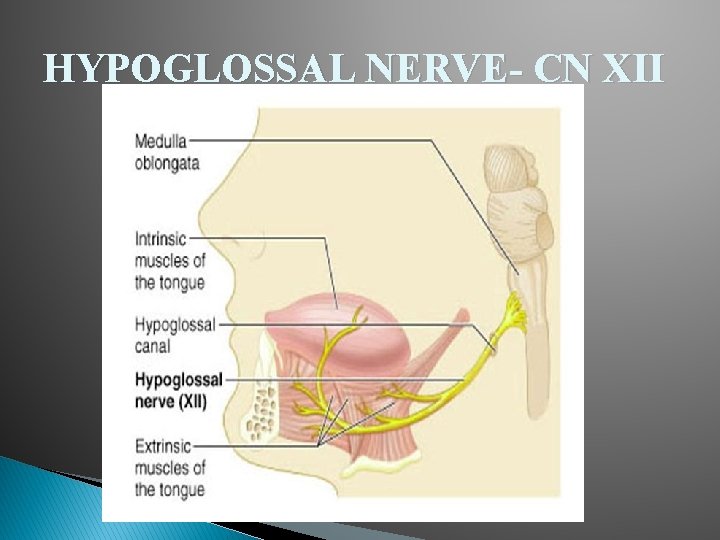
HYPOGLOSSAL NERVE- CN XII � Component- Motor. � Tongue movements for speech, manipulation of food & swallowing. � Damage- Bilateral affectation= Inability to protrude tongue. - Unilateral= Tongue deviated towards the affected side -Dysarthria.
HYPOGLOSSAL NERVE- CN XII
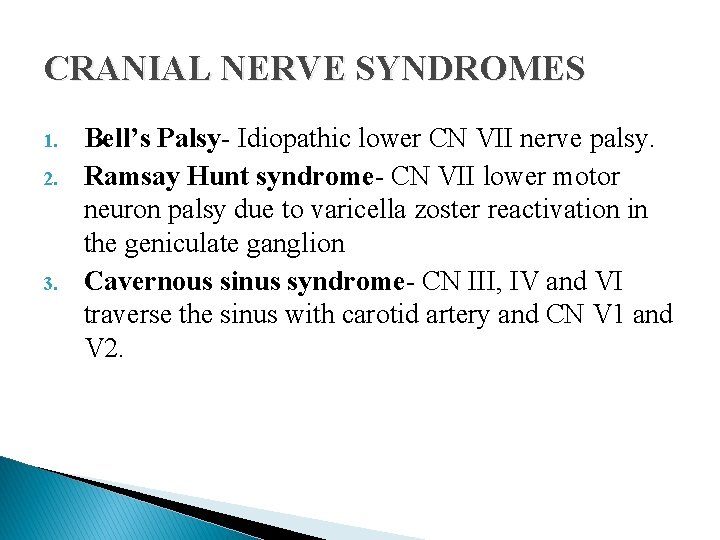
CRANIAL NERVE SYNDROMES 1. 2. 3. Bell’s Palsy- Idiopathic lower CN VII nerve palsy. Ramsay Hunt syndrome- CN VII lower motor neuron palsy due to varicella zoster reactivation in the geniculate ganglion Cavernous sinus syndrome- CN III, IV and VI traverse the sinus with carotid artery and CN V 1 and V 2.
THANKS FOR LISTENING