
CRADLES OF CIVILIZATION What is a civilization What
- Slides: 14
CRADLES OF CIVILIZATION What is a civilization? What makes up a civilization?
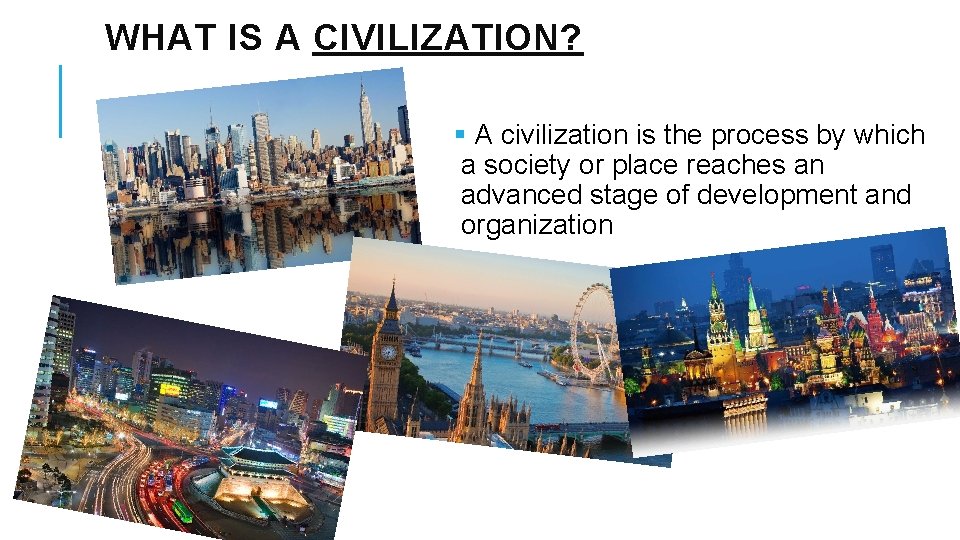
WHAT IS A CIVILIZATION? § A civilization is the process by which a society or place reaches an advanced stage of development and organization
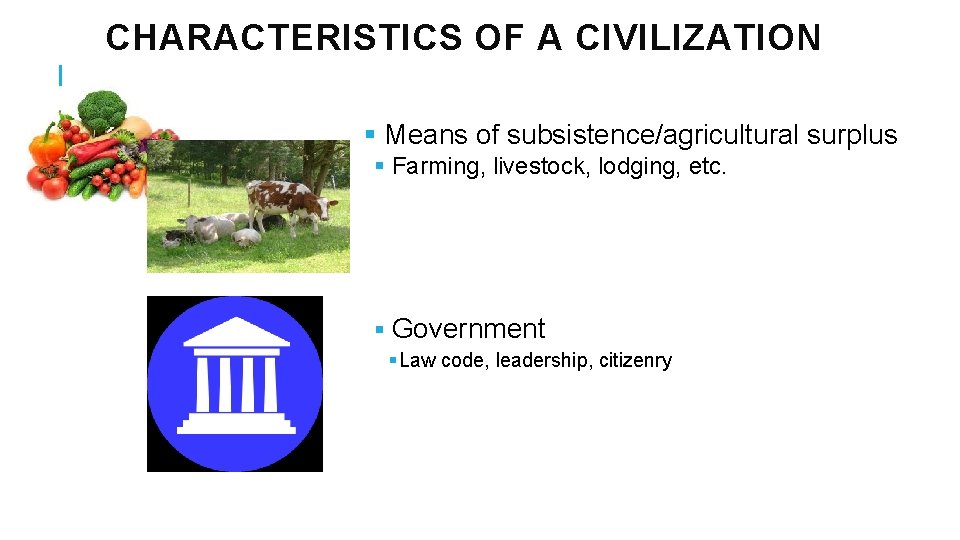
CHARACTERISTICS OF A CIVILIZATION § Means of subsistence/agricultural surplus § Farming, livestock, lodging, etc. § Government § Law code, leadership, citizenry
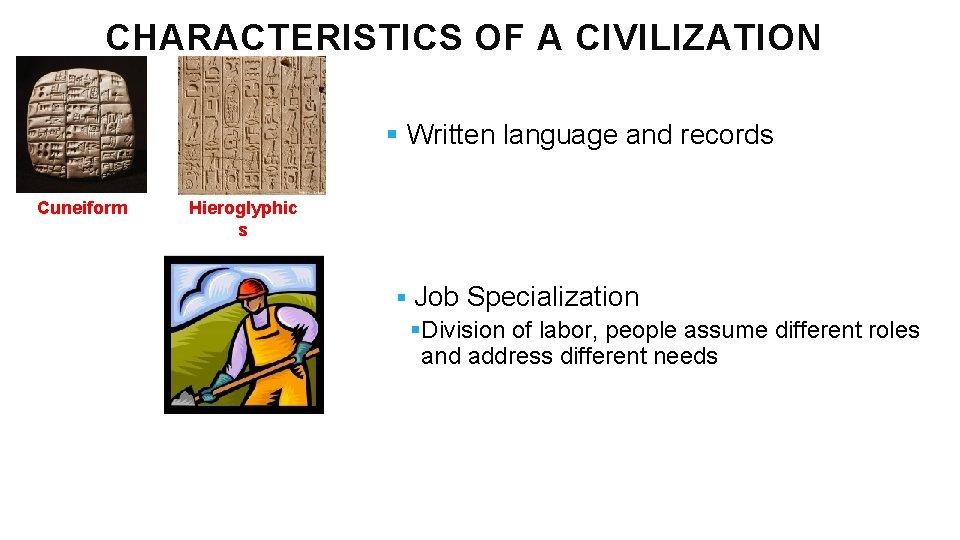
CHARACTERISTICS OF A CIVILIZATION § Written language and records Cuneiform Hieroglyphic s § Job Specialization §Division of labor, people assume different roles and address different needs
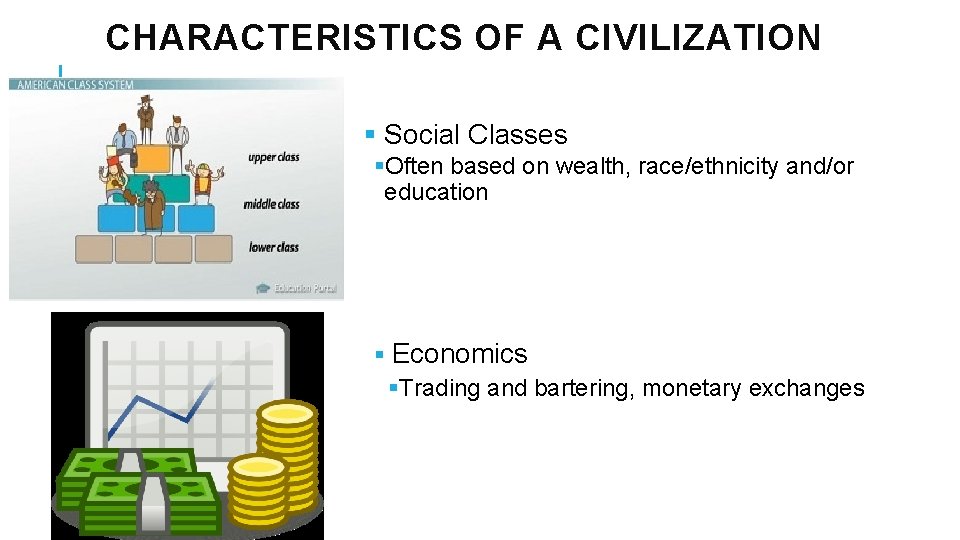
CHARACTERISTICS OF A CIVILIZATION § Social Classes §Often based on wealth, race/ethnicity and/or education § Economics §Trading and bartering, monetary exchanges
CHARACTERISTICS OF A CIVILIZATION § Education/Technology §Academic or trade specific § Religion/Spirituality §Either formal established religion or moral/ethical teachings
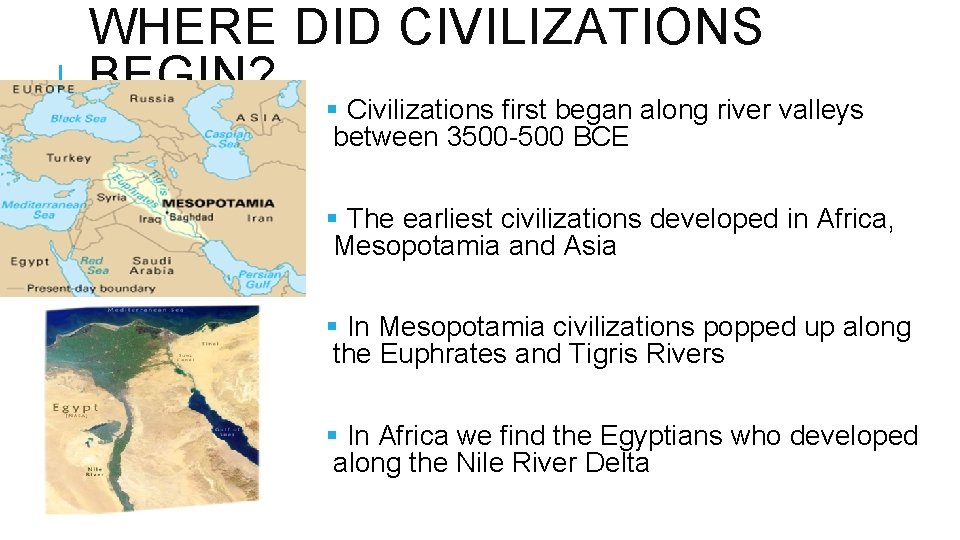
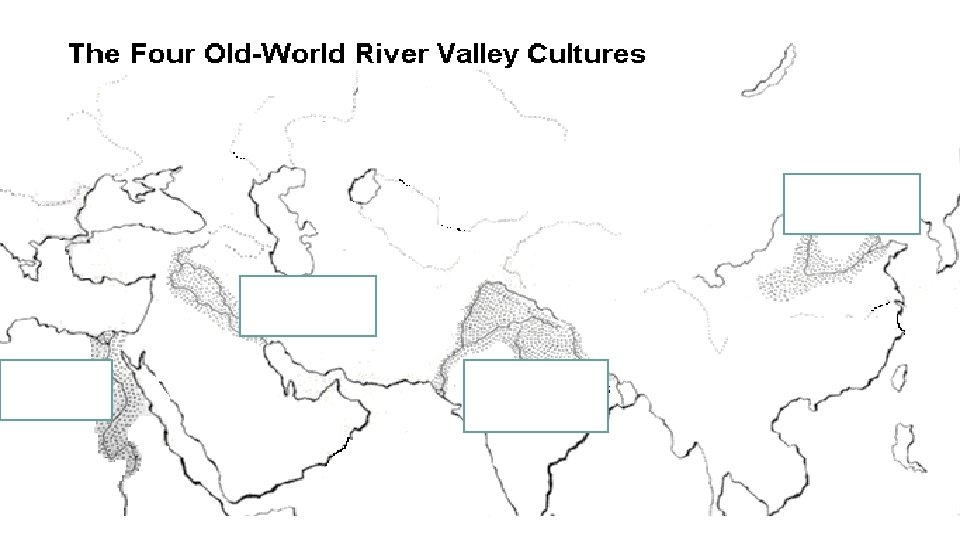
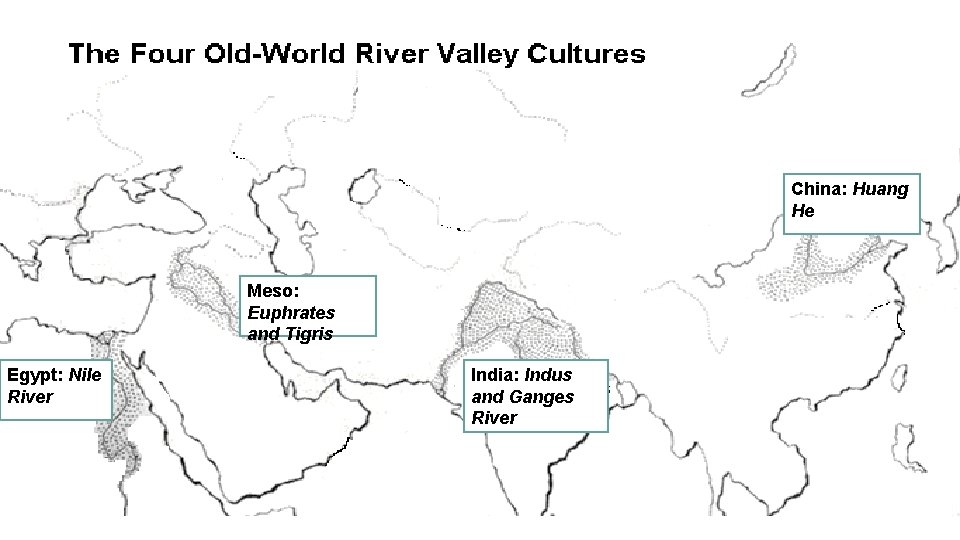
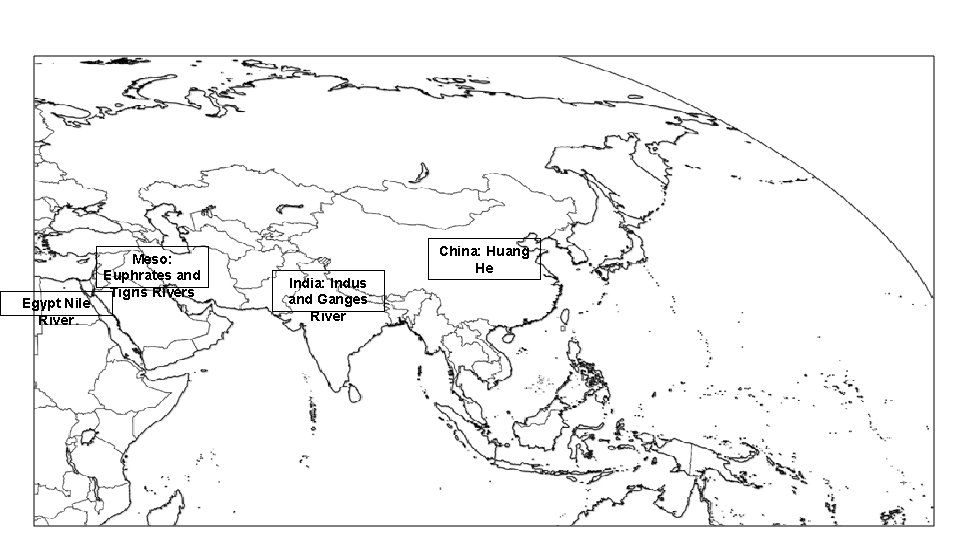
WHERE DID CIVILIZATIONS BEGIN? § Civilizations first began along river valleys between 3500 -500 BCE § The earliest civilizations developed in Africa, Mesopotamia and Asia § In Mesopotamia civilizations popped up along the Euphrates and Tigris Rivers § In Africa we find the Egyptians who developed along the Nile River Delta
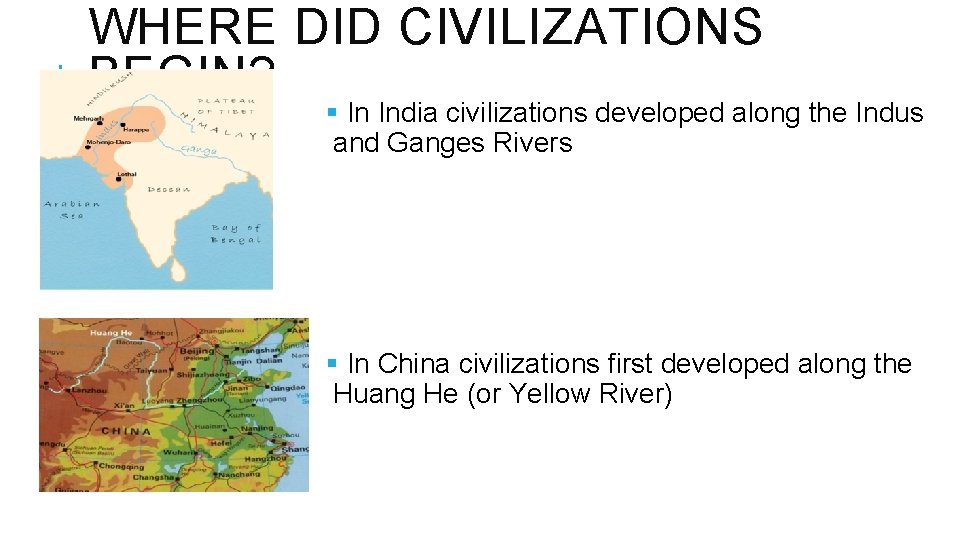
WHERE DID CIVILIZATIONS BEGIN? § In India civilizations developed along the Indus and Ganges Rivers § In China civilizations first developed along the Huang He (or Yellow River)
China: Huang He Meso: Euphrates and Tigris Egypt: Nile River India: Indus and Ganges River
Egypt Nile River Meso: Euphrates and Tigris Rivers India: Indus and Ganges River China: Huang He
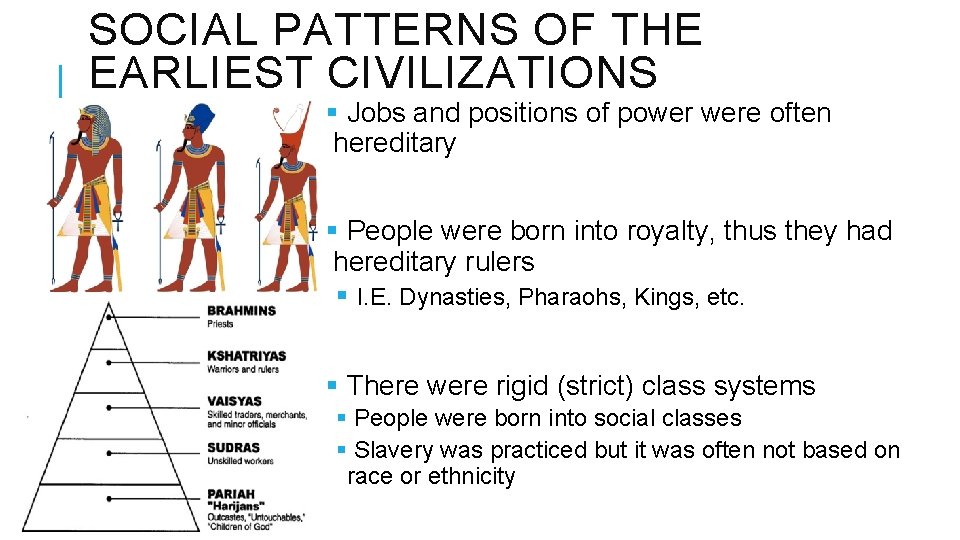
SOCIAL PATTERNS OF THE EARLIEST CIVILIZATIONS § Jobs and positions of power were often hereditary § People were born into royalty, thus they had hereditary rulers § I. E. Dynasties, Pharaohs, Kings, etc. § There were rigid (strict) class systems § People were born into social classes § Slavery was practiced but it was often not based on race or ethnicity
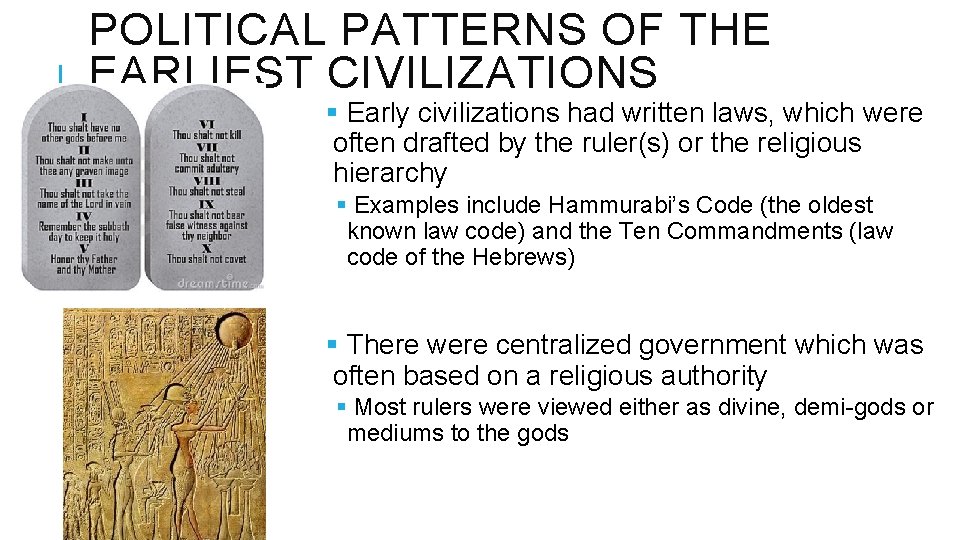
POLITICAL PATTERNS OF THE EARLIEST CIVILIZATIONS § Early civilizations had written laws, which were often drafted by the ruler(s) or the religious hierarchy § Examples include Hammurabi’s Code (the oldest known law code) and the Ten Commandments (law code of the Hebrews) § There were centralized government which was often based on a religious authority § Most rulers were viewed either as divine, demi-gods or mediums to the gods
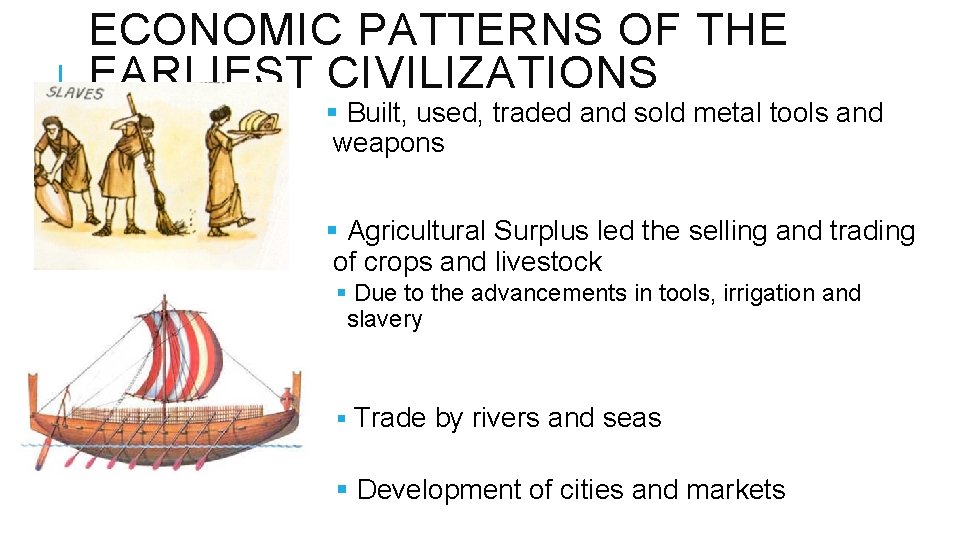
ECONOMIC PATTERNS OF THE EARLIEST CIVILIZATIONS § Built, used, traded and sold metal tools and weapons § Agricultural Surplus led the selling and trading of crops and livestock § Due to the advancements in tools, irrigation and slavery § Trade by rivers and seas § Development of cities and markets