
CPUC IOU Zero Net Energy Building Activities Setting

CPUC / IOU Zero Net Energy Building Activities: Setting the Stage Energy Commission 2015 IEPR Workshop May 18, 2015 Cathleen Fogel, Ph. D. Energy Efficiency Branch California Public Utilities Commission 1
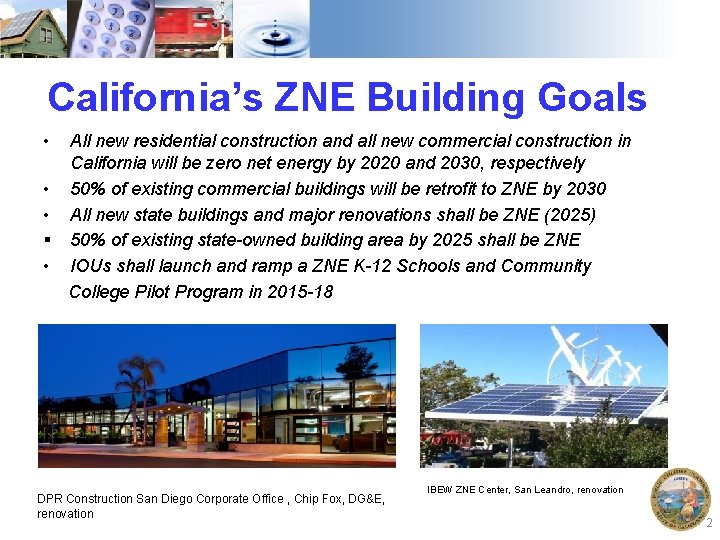
California’s ZNE Building Goals • All new residential construction and all new commercial construction in California will be zero net energy by 2020 and 2030, respectively • 50% of existing commercial buildings will be retrofit to ZNE by 2030 • All new state buildings and major renovations shall be ZNE (2025) § 50% of existing state-owned building area by 2025 shall be ZNE • IOUs shall launch and ramp a ZNE K-12 Schools and Community College Pilot Program in 2015 -18 • IBEW Zero Net DPR Construction San Diego Corporate Office , Chip Fox, DG&E, renovation IBEW ZNE Center, San Leandro, renovation 2
California Energy Efficiency Strategic Plan (2008) ZNE Commercial Action Plan “Champions” 3

IOU Programs Supporting ZNE Buildings • Codes & Standards • Emerging Tech • California Advanced Home / Savings By Design • “Reach” Building Code Support for Local Govts • Workforce training & outreach DPR Construction San Diego Corporate Office , Chip Fox, DG&E One Sky Homes Cottle House in San Jose, Allen Gilliand 4

CPUC and IOU Zero Net Energy Programs and Activities RESIDENTIAL NEW CONSTRUCTION 5

California Advanced Home Program: Moving Beyond Percentage Above Title 24 CAHP Incentive Structure (per unit) $ 5 000, 00 $ 4 500, 00 $ 4 000, 00 CAHP Incentive $ 3 500, 00 $ 3 000, 00 $ 2 500, 00 $ 2 000, 00 $ 1 500, 00 $ 1 000, 00 $ 500, 00 $100 96 92 88 2013 Code CAHP: Single Family Home of 84 • $300 for program entry CAHP Score • $100 for each point up to 75 • $200 for each point thereafter 84 80 2013 20% Home 76 72 68 64 60 CAHP Score CAHP: Multifamily Low-Rise • $150 for program entry CAHP Score of 84 • $50 for each point up to 75 • $100 for each point thereafter

2015 Code Readiness Initiative IOU Support • High Performance Attics and Ducts in Conditioned Space: Get the ducts out of hot, hot space • High R-value Walls (≤ 0. 050 assembly U-Factor) • Dedicated design and construction assistance • Builder Commitment • Post-occupancy monitoring • Case studies • Financial Support • Leverage CAHP incentives • Per project incentives ~ About $15, 000 per key measure • Rollout • 3 builders each, PG&E/ SCE by mid-2016; 25 lots/builder 7
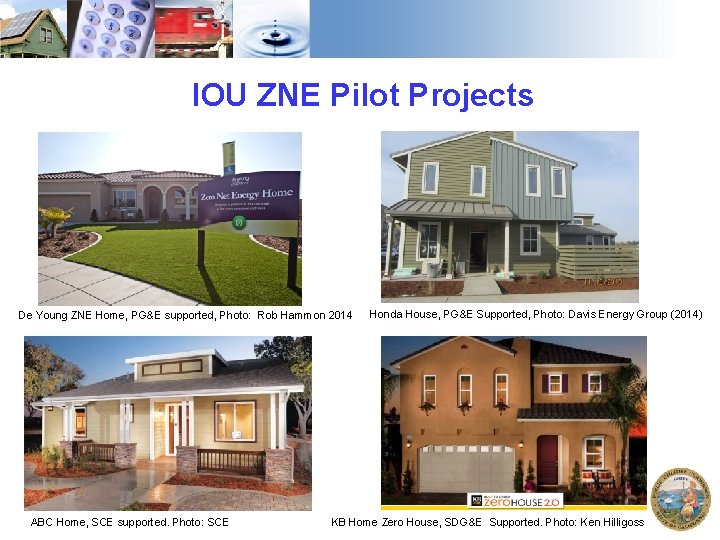
IOU ZNE Pilot Projects De Young ZNE Home, PG&E supported, Photo: Rob Hammon 2014 ABC Home, SCE supported. Photo: SCE Honda House, PG&E Supported, Photo: Davis Energy Group (2014) KB Home Zero House, SDG&E Supported. Photo: Ken Hilligoss
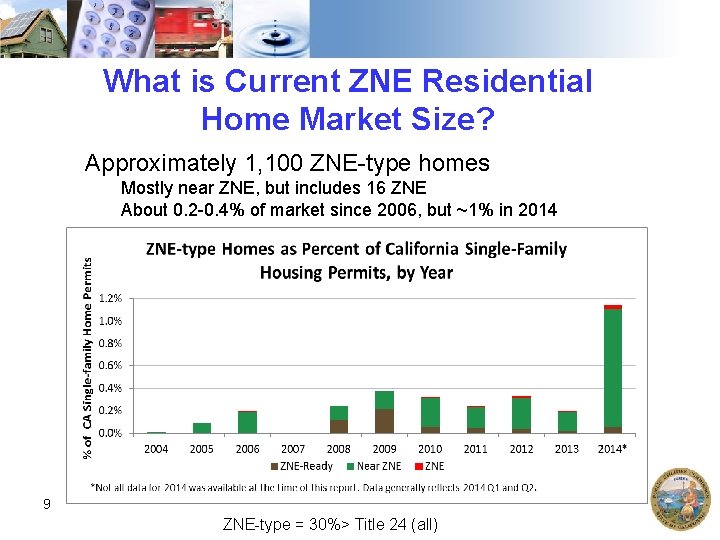
What is Current ZNE Residential Home Market Size? Approximately 1, 100 ZNE-type homes Mostly near ZNE, but includes 16 ZNE About 0. 2 -0. 4% of market since 2006, but ~1% in 2014 9 ZNE-type = 30%> Title 24 (all)
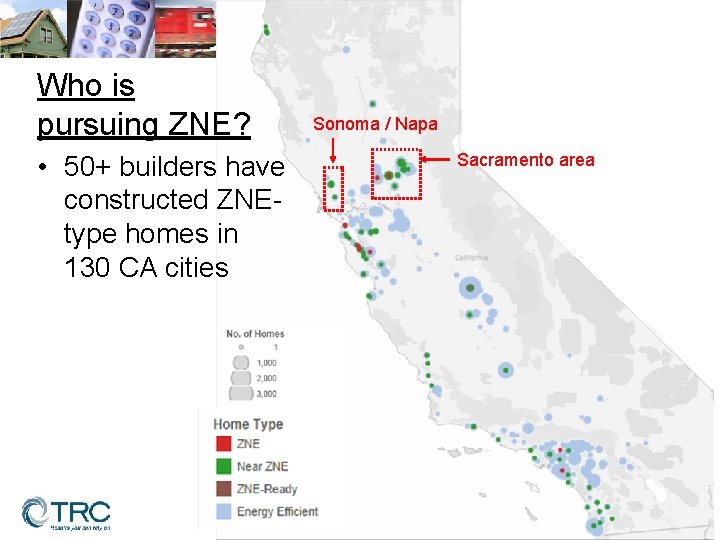
Who is pursuing ZNE? • 50+ builders have constructed ZNEtype homes in 130 CA cities Sonoma / Napa Sacramento area
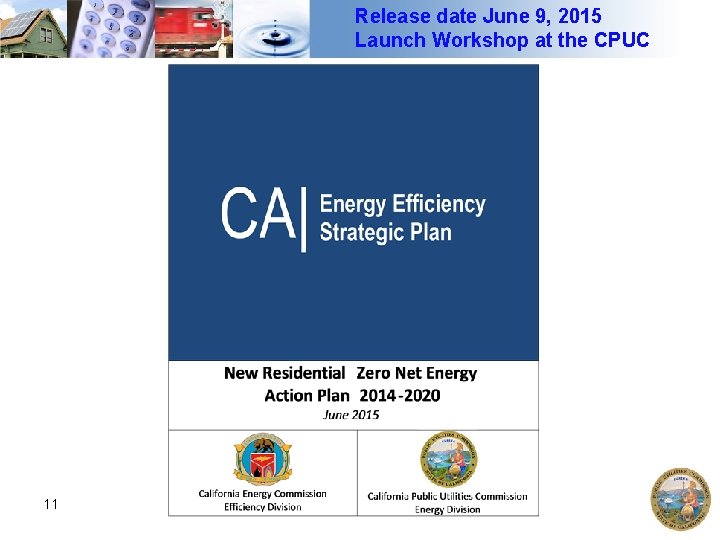
Release date June 9, 2015 Launch Workshop at the CPUC 11

12

Overall Critical Path 13
CPUC and IOU Zero Net Energy Programs and Activities NON-RESIDENTIAL BUILDINGS 14
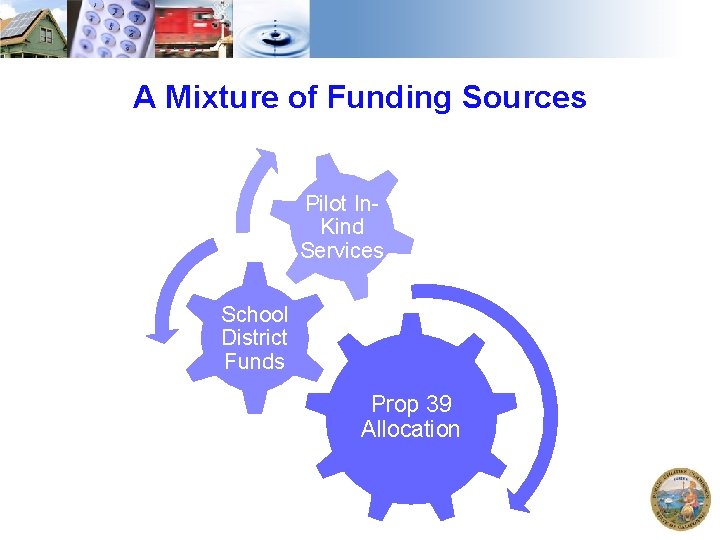
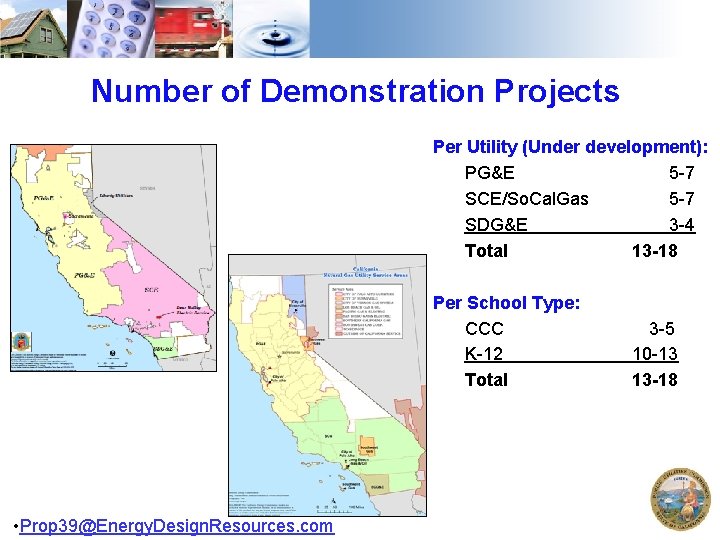
Prop. 39 K-12 Schools and Community College Initiative u Five Elements to the Pilot- Target of 13 -18 demo buildings Element 1: Element 2: Element 3: Element 4: Element 5: IOU ZNE Demonstration School Retrofits Training Outreach and Recognition Institutional Training Codes and Standards Production Program Development The ZNE Pilot will provide: And the ZNE Pilot will require: 15 • Design assistance • Trainings on how to socialize the ZNE concept with stakeholders (e. g. parents, teachers, students, board members) • Ongoing commissioning and construction inspection • Training on how to maintain ZNE operations • Monitoring, verification Written commitment to the Pilot A willingness to design and retrofit a ZNE building A healthy budget A willingness to share experiences with other interested schools
A Mixture of Funding Sources Pilot In. Kind Services School District Funds Prop 39 Allocation
Number of Demonstration Projects Per Utility (Under development): PG&E 5 -7 SCE/So. Cal. Gas 5 -7 SDG&E 3 -4 Total 13 -18 Per School Type: CCC K-12 Total • Prop 39@Energy. Design. Resources. com 3 -5 10 -13 13 -18
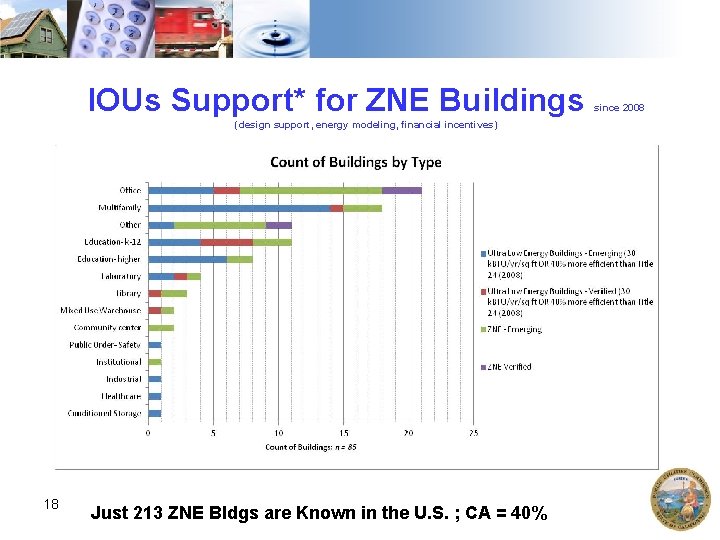
IOUs Support* for ZNE Buildings (design support, energy modeling, financial incentives) 18 Just 213 ZNE Bldgs are Known in the U. S. ; CA = 40% since 2008
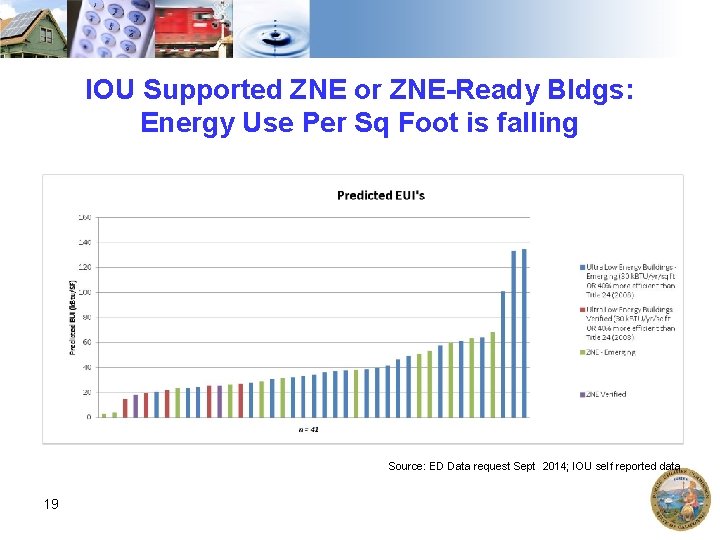
IOU Supported ZNE or ZNE-Ready Bldgs: Energy Use Per Sq Foot is falling Source: ED Data request Sept 2014; IOU self reported data 19
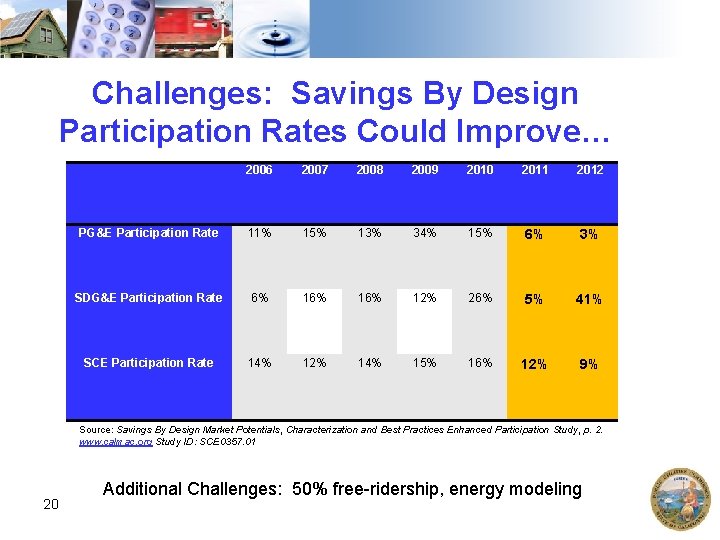
Challenges: Savings By Design Participation Rates Could Improve… 2006 2007 2008 2009 2010 2011 2012 PG&E Participation Rate 11% 15% 13% 34% 15% 6% 3% SDG&E Participation Rate 6% 16% 12% 26% 5% 41% SCE Participation Rate 14% 12% 14% 15% 16% 12% 9% Source: Savings By Design Market Potentials, Characterization and Best Practices Enhanced Participation Study, p. 2. www. calmac. org Study ID: SCE 0357. 01 20 Additional Challenges: 50% free-ridership, energy modeling
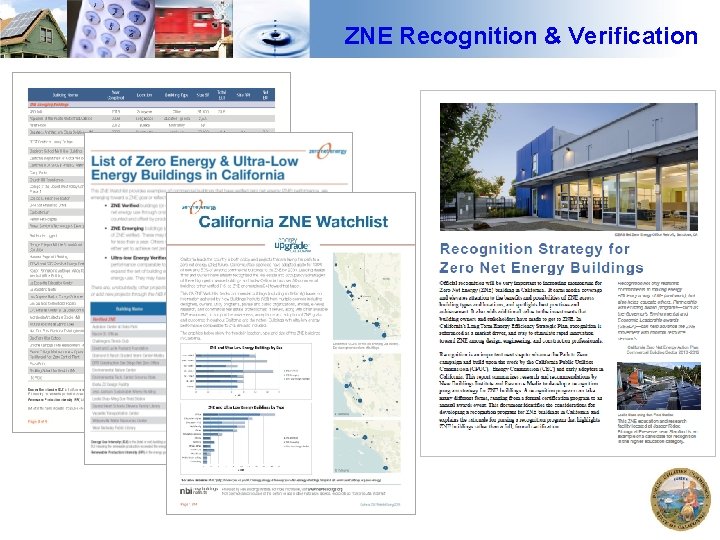
ZNE Recognition & Verification
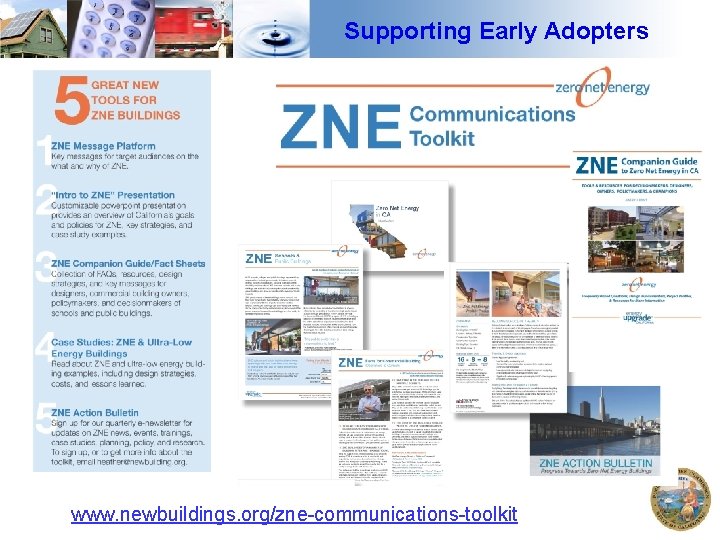
Supporting Early Adopters www. newbuildings. org/zne-communications-toolkit
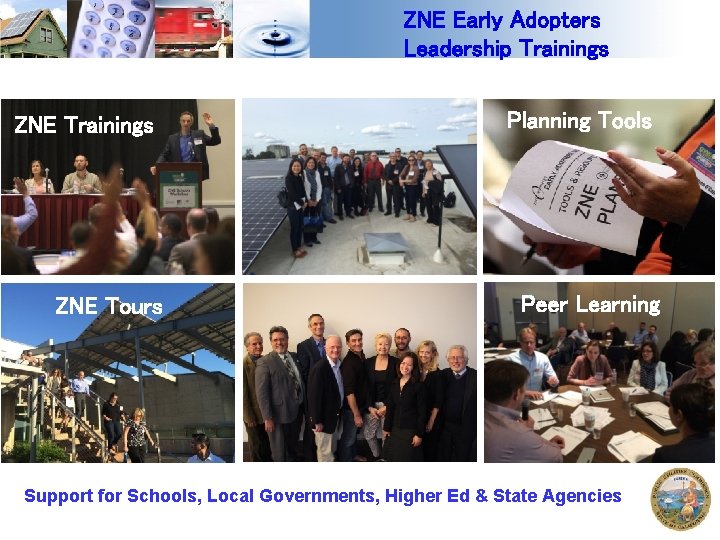
ZNE Early Adopters Leadership Trainings ZNE Tours Planning Tools Peer Learning Support for Schools, Local Governments, Higher Ed & State Agencies
CPUC and IOU Zero Net Energy Programs and Activities NEW RESEARCH AREAS 24
Distribution Planning and ZNE Bldgs • Distribution Resource Planning Proceeding (R. 14 -08 -013) – – Integration capacity Analysis Locational Value Analysis Optimal locational benefit analysis Distributed Energy Resources growth scenarios 1. IEPR “Trajectory” case 2. IEPR “High Growth” case 3. Very high potential growth, including ZNE Title 24 (and much more) • CPUC Customer Distributed Energy Resources Grid Integration Study (launching 2015) - What are the expected costs and benefits to the transmission and distribution system of requiring all new homes to be ZNE by 2020, or later? • 25 CPUC will adopt NEM successor tariff by end of 2015 (R. 14 -07 -002)
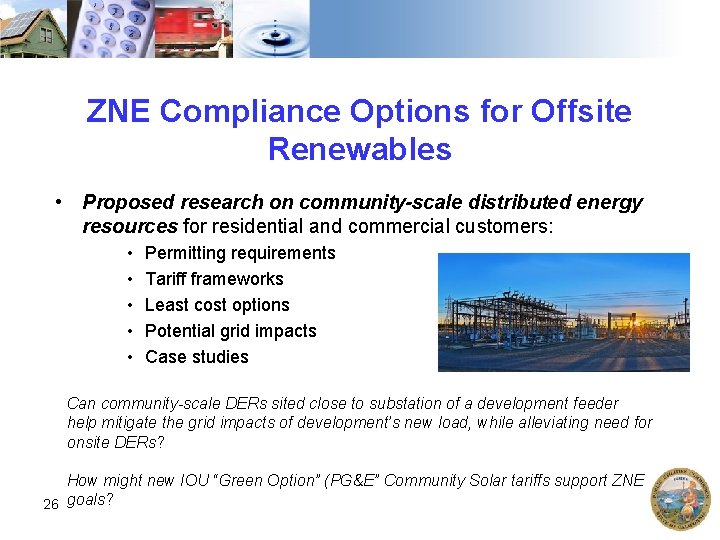
ZNE Compliance Options for Offsite Renewables • Proposed research on community-scale distributed energy resources for residential and commercial customers: • • • Permitting requirements Tariff frameworks Least cost options Potential grid impacts Case studies Can community-scale DERs sited close to substation of a development feeder help mitigate the grid impacts of development’s new load, while alleviating need for onsite DERs? How might new IOU “Green Option” (PG&E” Community Solar tariffs support ZNE 26 goals?
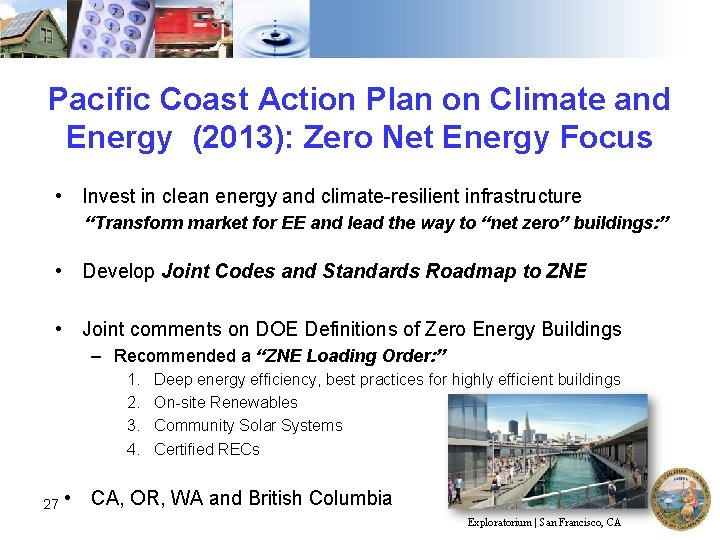
Pacific Coast Action Plan on Climate and Energy (2013): Zero Net Energy Focus • Invest in clean energy and climate-resilient infrastructure “Transform market for EE and lead the way to “net zero” buildings: ” • Develop Joint Codes and Standards Roadmap to ZNE • Joint comments on DOE Definitions of Zero Energy Buildings – Recommended a “ZNE Loading Order: ” 1. 2. 3. 4. 27 Deep energy efficiency, best practices for highly efficient buildings On-site Renewables Community Solar Systems Certified RECs • CA, OR, WA and British Columbia Exploratorium | San Francisco, CA
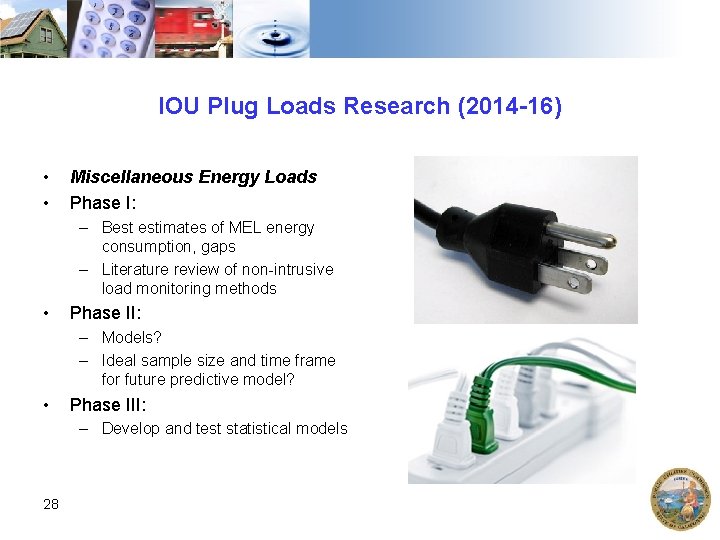
IOU Plug Loads Research (2014 -16) • • Miscellaneous Energy Loads Phase I: – Best estimates of MEL energy consumption, gaps – Literature review of non-intrusive load monitoring methods • Phase II: – Models? – Ideal sample size and time frame for future predictive model? • Phase III: – Develop and test statistical models 28
Closing Thoughts: Transform the Market • Need to engage and scale efforts of Early Adopters – Reduce first costs; work closely with suppliers and builders – ZNE homes subdivision pilots ; expand High Performance Walls/ Attics – Savings By Design: aim at reducing EUIs • Early Adopter cohort support? – Greater awareness, education and training in both sectors • ZNE Building Recognition and Case Studies • Update of ZNE building definition / goal to accommodate off-site renewables when needed is welcome 29
Thank you! Cathleen Fogel, Ph. D. Senior Analyst Energy Efficiency Branch California Public Utilities Commission cathleen. fogel@cpuc. ca. gov (415) 703 -1809 http: //www. cpuc. ca. gov/puc/ http: //www. cpuc. ca. gov/PUC/energy/Energy+Efficiency/Zero+Net+Energy+Buil dings. htm http: //www. californiaznehomes. com 30
CPUC and IOU Zero Net Energy Programs and Activities EXTRA SLIDES 31
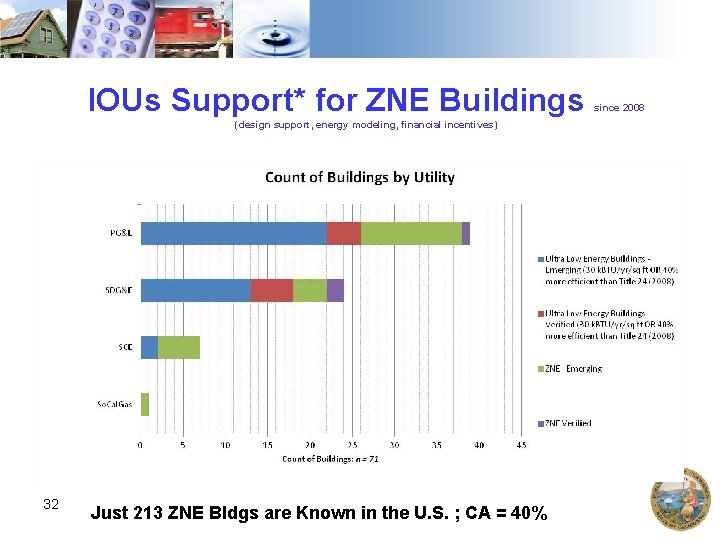
IOUs Support* for ZNE Buildings (design support, energy modeling, financial incentives) 32 Just 213 ZNE Bldgs are Known in the U. S. ; CA = 40% since 2008
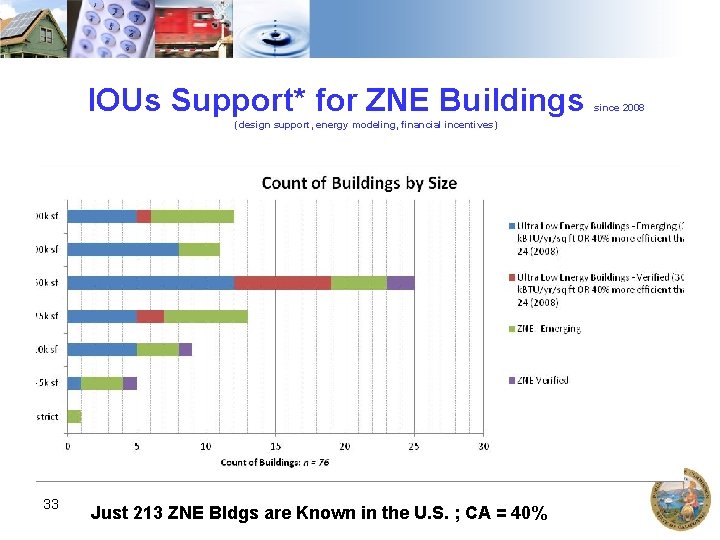
IOUs Support* for ZNE Buildings (design support, energy modeling, financial incentives) 33 Just 213 ZNE Bldgs are Known in the U. S. ; CA = 40% since 2008
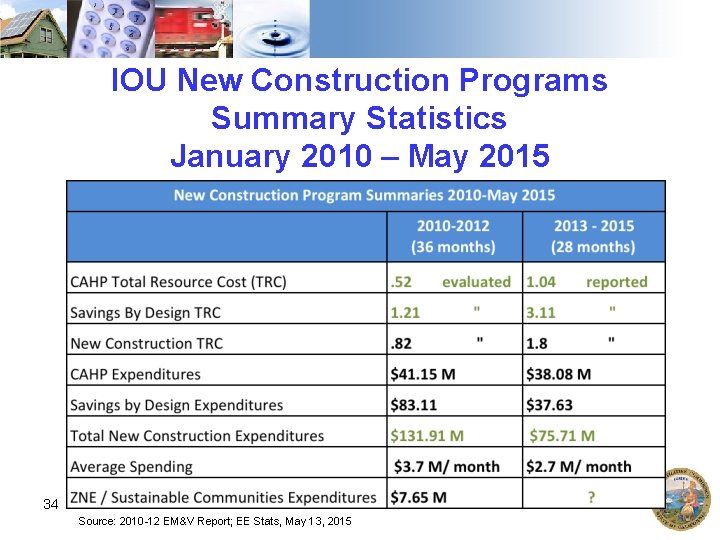
IOU New Construction Programs Summary Statistics January 2010 – May 2015 34 Source: 2010 -12 EM&V Report; EE Stats, May 13, 2015
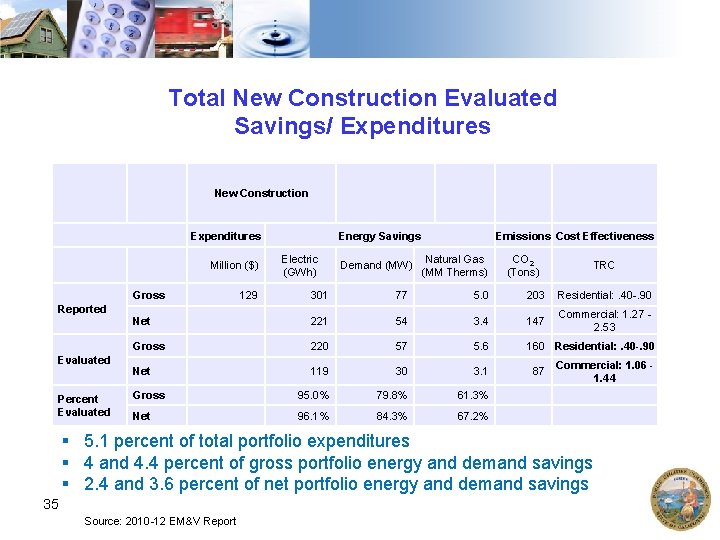
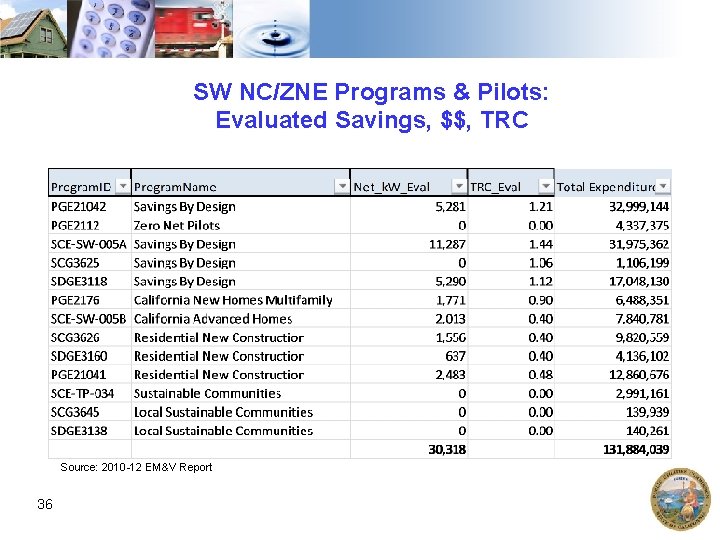
Total New Construction Evaluated Savings/ Expenditures New Construction Expenditures Million ($) Gross Reported Evaluated Percent Evaluated 129 Energy Savings Electric (GWh) Demand (MW) Emissions Cost Effectiveness Natural Gas (MM Therms) CO 2 (Tons) TRC 301 77 5. 0 203 Residential: . 40 -. 90 Net 221 54 3. 4 147 Commercial: 1. 27 2. 53 Gross 220 57 5. 6 160 Residential: . 40 -. 90 Net 119 30 3. 1 Gross 95. 0% 79. 8% 61. 3% Net 96. 1% 84. 3% 67. 2% 87 Commercial: 1. 06 1. 44 § 5. 1 percent of total portfolio expenditures § 4 and 4. 4 percent of gross portfolio energy and demand savings § 2. 4 and 3. 6 percent of net portfolio energy and demand savings 35 Source: 2010 -12 EM&V Report
SW NC/ZNE Programs & Pilots: Evaluated Savings, $$, TRC Source: 2010 -12 EM&V Report 36
- Slides: 36