
CPU Optimization Cache Mapping Associative Mapping Cache item




- Slides: 14
CPU Optimization Cache Mapping
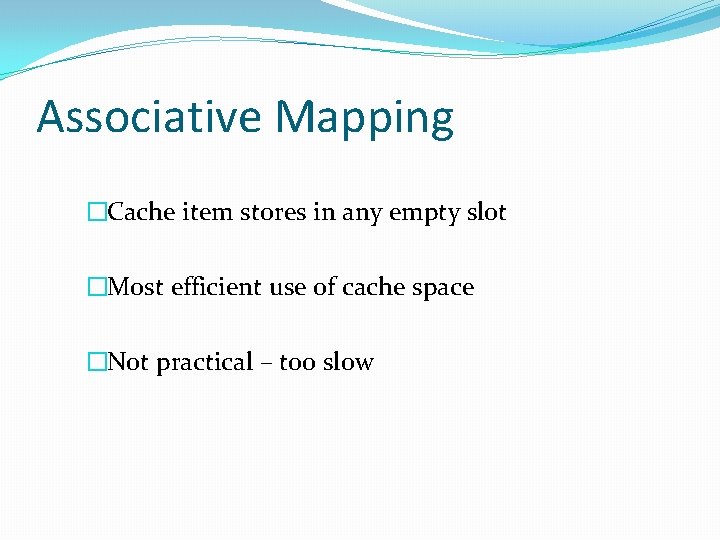
Associative Mapping �Cache item stores in any empty slot �Most efficient use of cache space �Not practical – too slow
Memory Fragmentation Prevents Associative Mapping from being practical
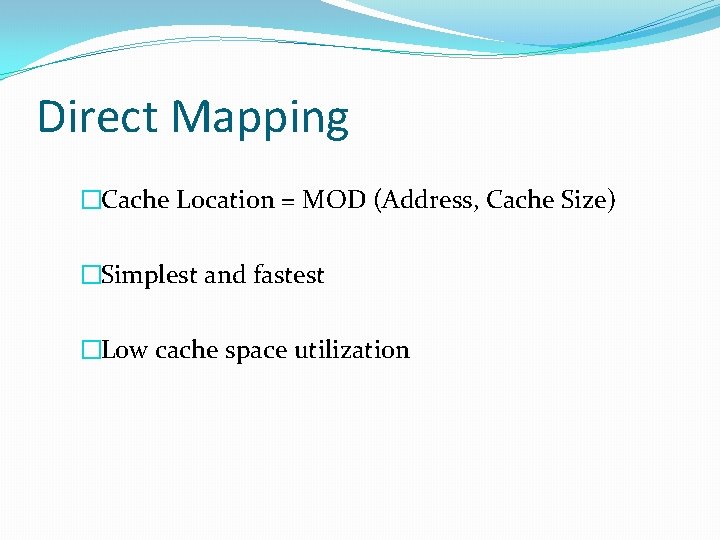
Direct Mapping �Cache Location = MOD (Address, Cache Size) �Simplest and fastest �Low cache space utilization
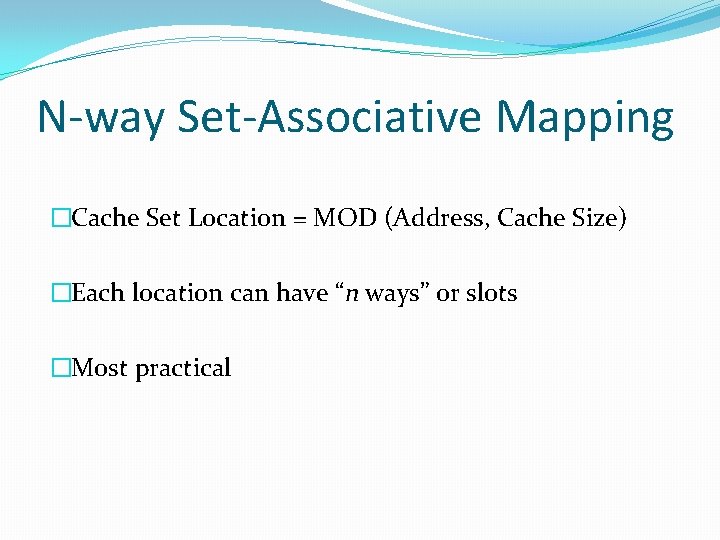
N-way Set-Associative Mapping �Cache Set Location = MOD (Address, Cache Size) �Each location can have “n ways” or slots �Most practical
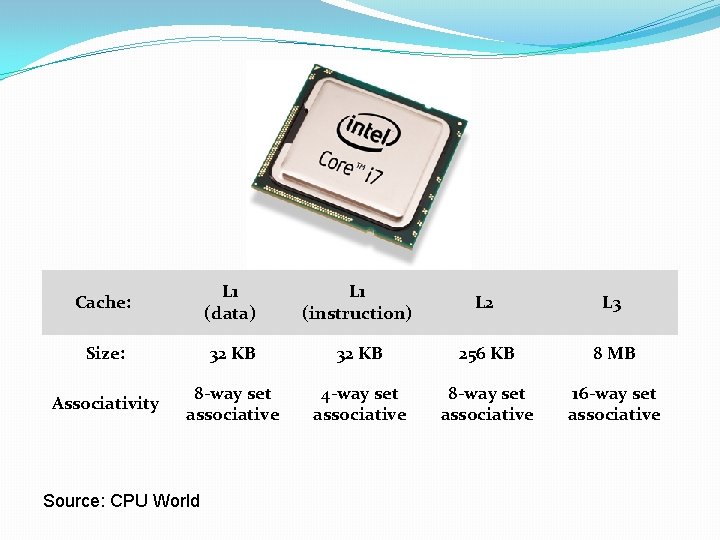
Cache: L 1 (data) L 1 (instruction) L 2 L 3 Size: 32 KB 256 KB 8 MB Associativity 8 -way set associative 4 -way set associative 8 -way set associative 16 -way set associative Source: CPU World
Cache Considerations Factors that impact its performance
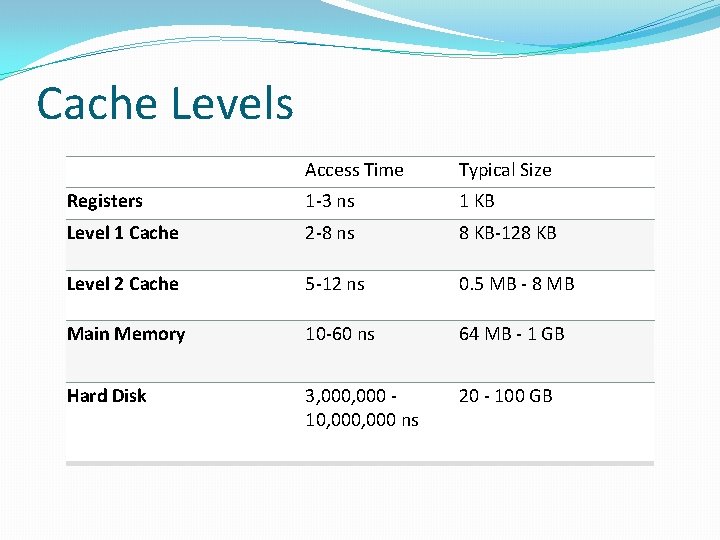
Cache Levels Access Time Typical Size Registers 1 -3 ns 1 KB Level 1 Cache 2 -8 ns 8 KB-128 KB Level 2 Cache 5 -12 ns 0. 5 MB - 8 MB Main Memory 10 -60 ns 64 MB - 1 GB Hard Disk 3, 000 10, 000 ns 20 - 100 GB
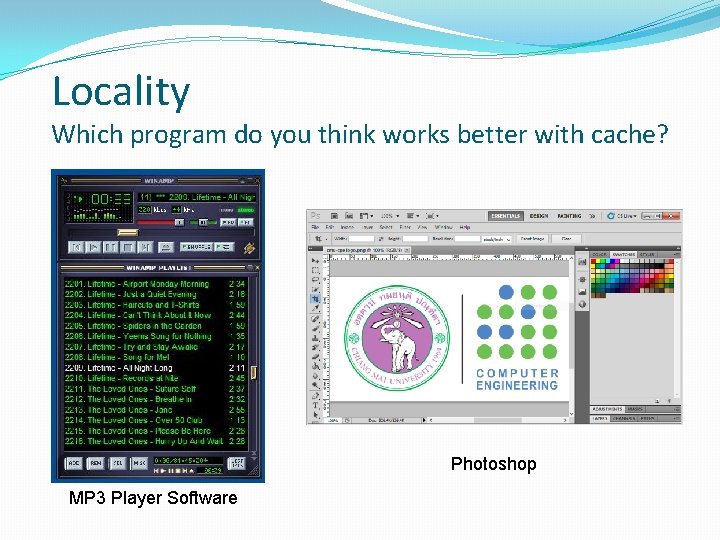
Locality Which program do you think works better with cache? Photoshop MP 3 Player Software
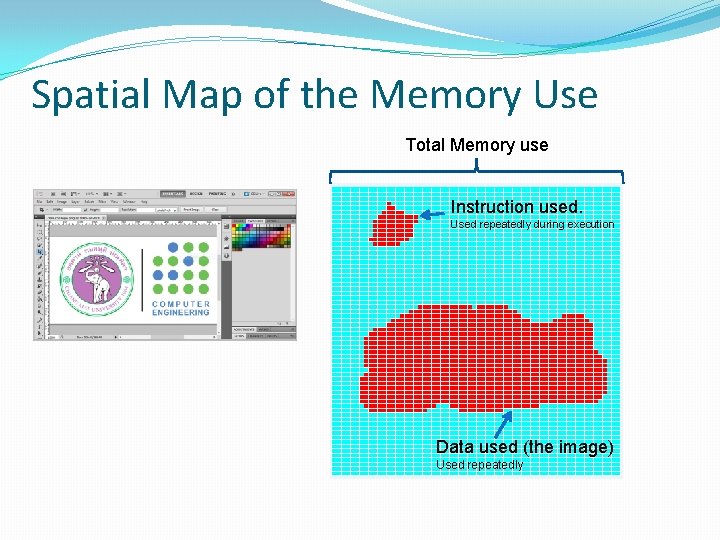
Spatial Map of the Memory Use Total Memory use Instruction used. Used repeatedly during execution Data used (the image) Used repeatedly
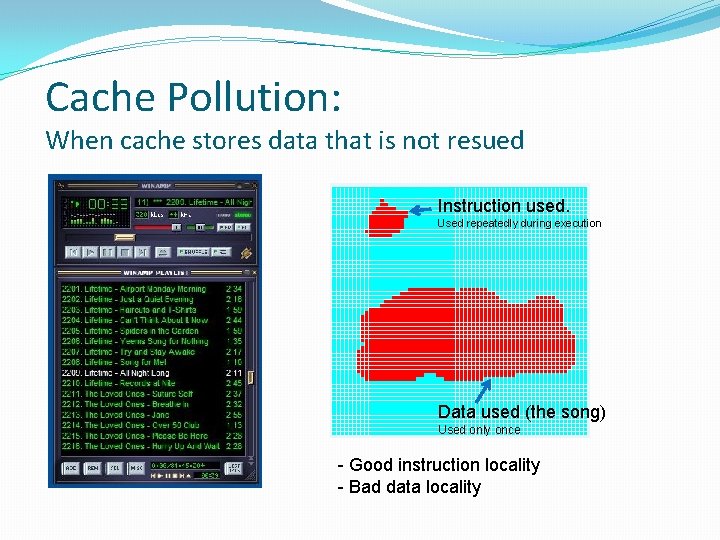
Cache Pollution: When cache stores data that is not resued Instruction used. Used repeatedly during execution Data used (the song) Used only once - Good instruction locality - Bad data locality
Some Cache Systems Separate Instruction Cache and Data Cache: L 1 (data) L 1 (instruction) L 2 L 3 Size: 32 KB 256 KB 8 MB Associativity 8 -way set associative 4 -way set associative 8 -way set associative 16 -way set associative Source: CPU World
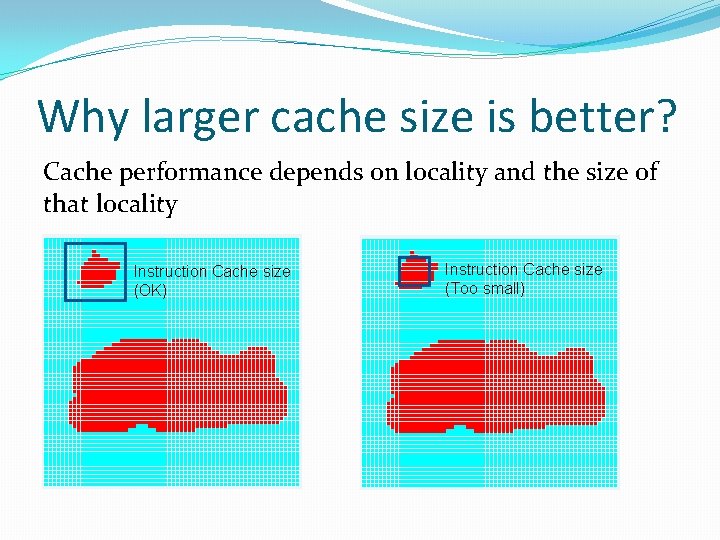
Why larger cache size is better? Cache performance depends on locality and the size of that locality Instruction Cache size (OK) Instruction Cache size (Too small)
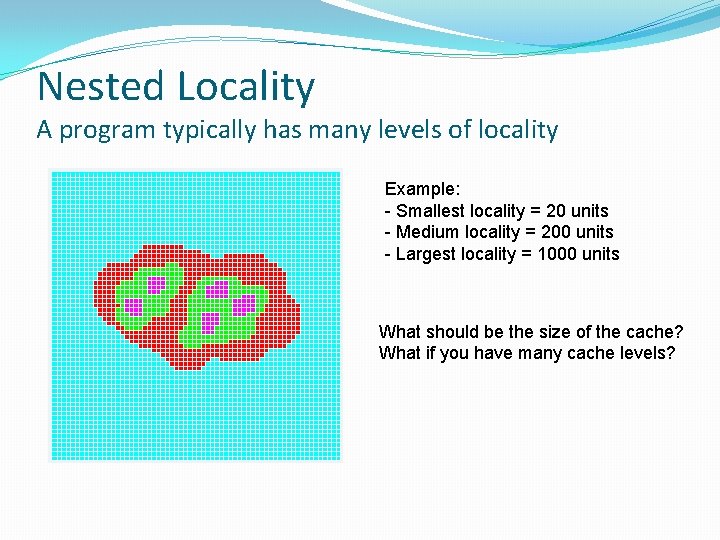
Nested Locality A program typically has many levels of locality Example: - Smallest locality = 20 units - Medium locality = 200 units - Largest locality = 1000 units What should be the size of the cache? What if you have many cache levels?