
CPSC 531 System Modeling and Simulation Carey Williamson
- Slides: 25
CPSC 531: System Modeling and Simulation Carey Williamson Department of Computer Science University of Calgary Fall 2017
Simulation Methods § Outline: —Basics of simulation modeling —Overview of simulation paradigms § Monte Carlo simulation § Time-driven simulation § Event-driven simulation —Simulation implementation approaches § Sequential vs parallel vs distributed —Technical issues for parallel simulation
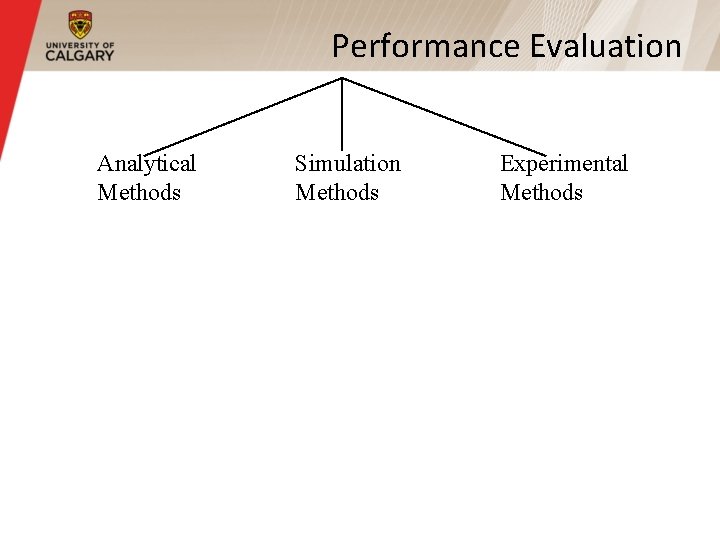
Performance Evaluation Analytical Methods Simulation Methods Experimental Methods
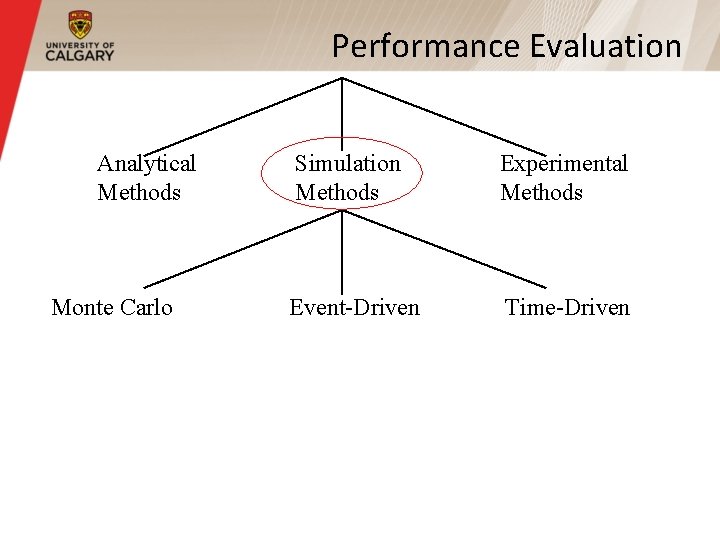
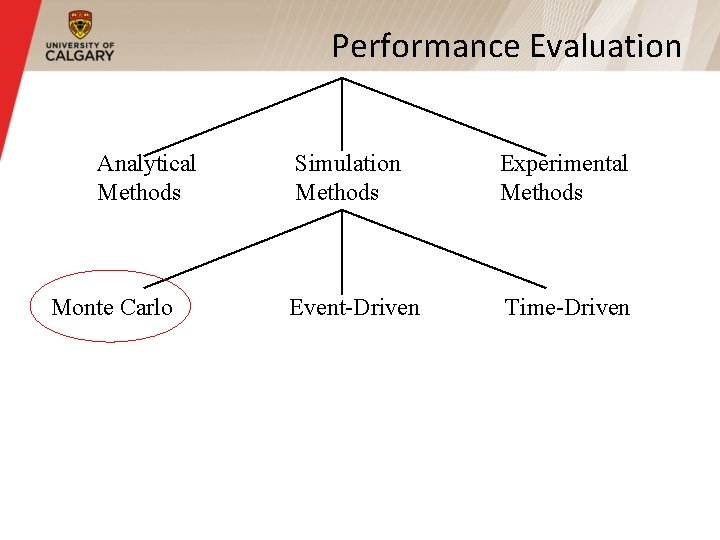
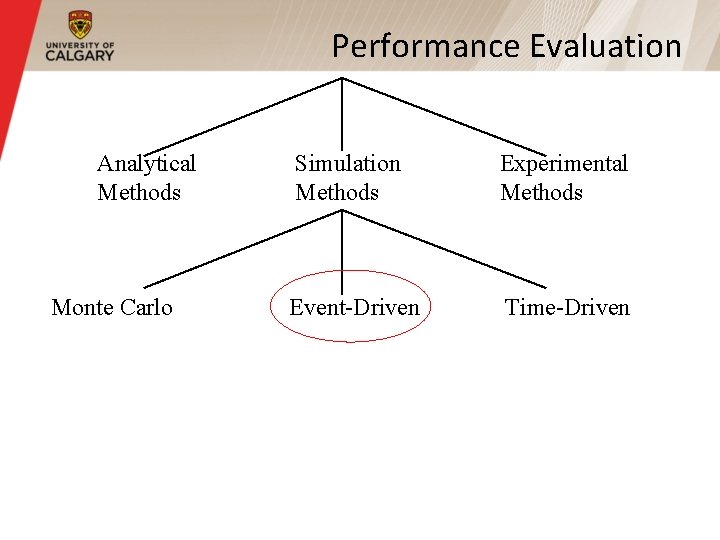
Performance Evaluation Analytical Methods Monte Carlo Simulation Methods Experimental Methods Event-Driven Time-Driven
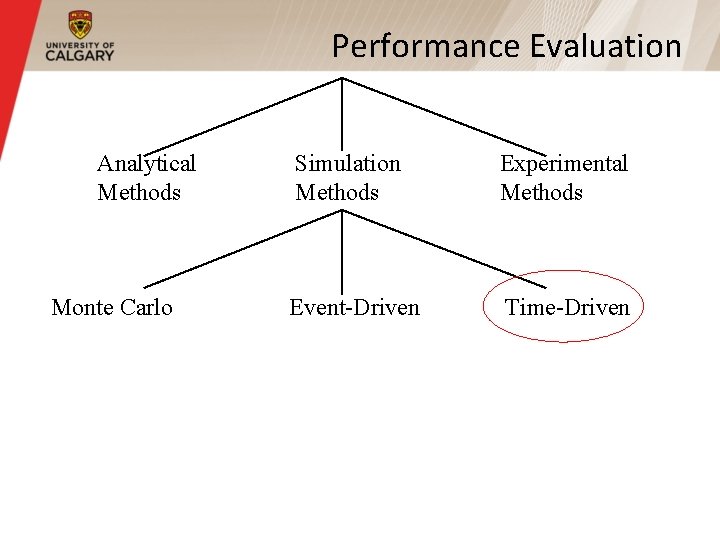
Performance Evaluation Analytical Methods Monte Carlo Simulation Methods Experimental Methods Event-Driven Time-Driven
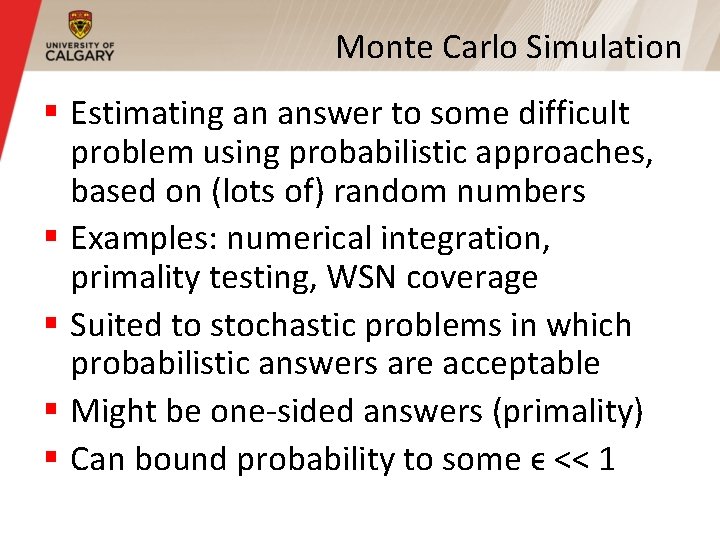
Monte Carlo Simulation § Estimating an answer to some difficult problem using probabilistic approaches, based on (lots of) random numbers § Examples: numerical integration, primality testing, WSN coverage § Suited to stochastic problems in which probabilistic answers are acceptable § Might be one-sided answers (primality) § Can bound probability to some ϵ << 1
Performance Evaluation Analytical Methods Monte Carlo Simulation Methods Experimental Methods Event-Driven Time-Driven
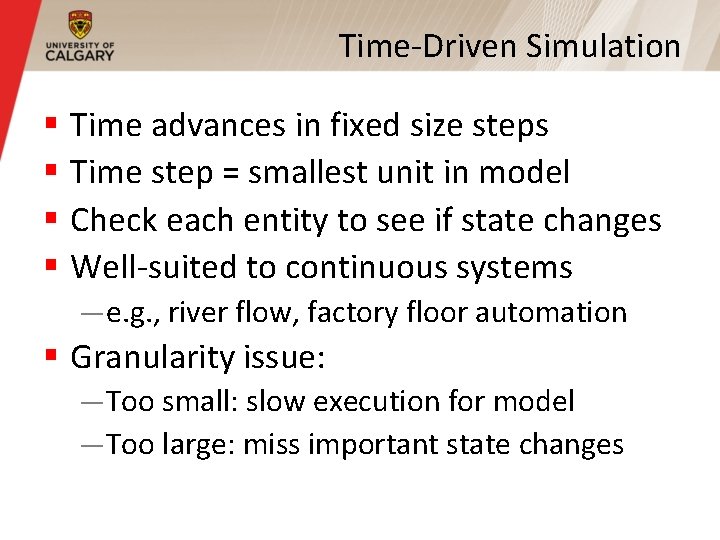
Time-Driven Simulation § Time advances in fixed size steps § Time step = smallest unit in model § Check each entity to see if state changes § Well-suited to continuous systems —e. g. , river flow, factory floor automation § Granularity issue: —Too small: slow execution for model —Too large: miss important state changes
Performance Evaluation Analytical Methods Monte Carlo Simulation Methods Experimental Methods Event-Driven Time-Driven
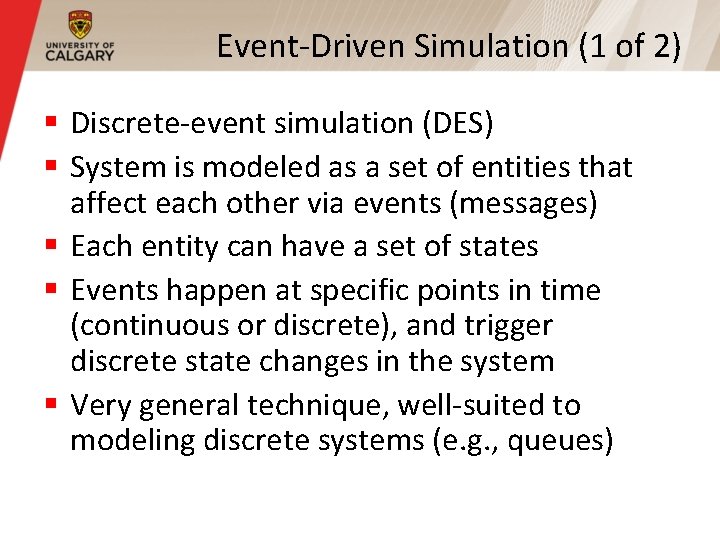
Event-Driven Simulation (1 of 2) § Discrete-event simulation (DES) § System is modeled as a set of entities that affect each other via events (messages) § Each entity can have a set of states § Events happen at specific points in time (continuous or discrete), and trigger discrete state changes in the system § Very general technique, well-suited to modeling discrete systems (e. g. , queues)
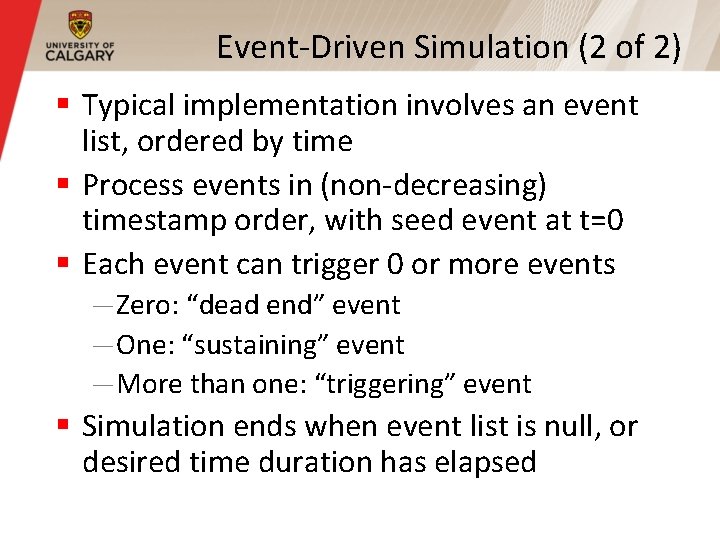
Event-Driven Simulation (2 of 2) § Typical implementation involves an event list, ordered by time § Process events in (non-decreasing) timestamp order, with seed event at t=0 § Each event can trigger 0 or more events —Zero: “dead end” event —One: “sustaining” event —More than one: “triggering” event § Simulation ends when event list is null, or desired time duration has elapsed
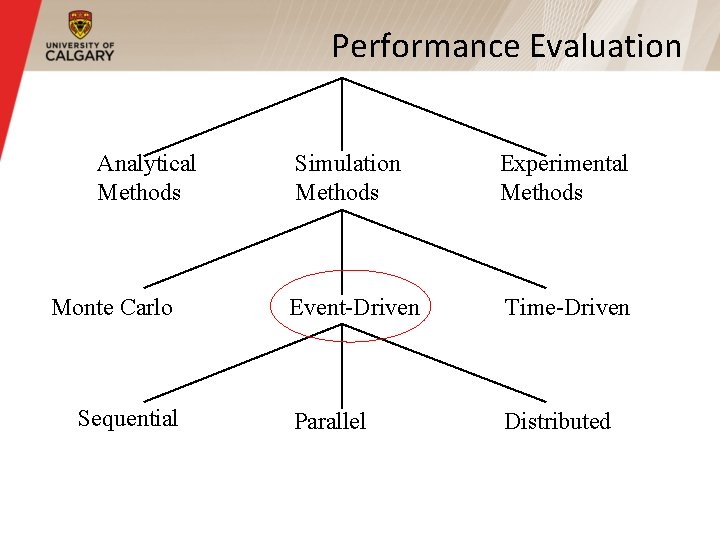
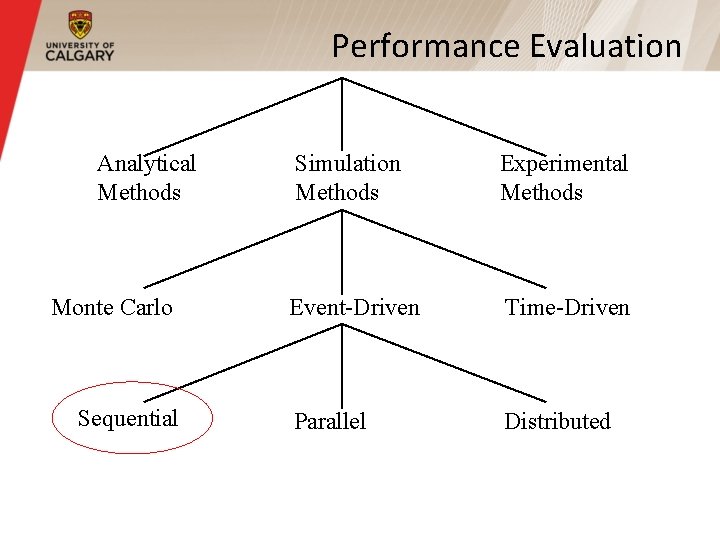
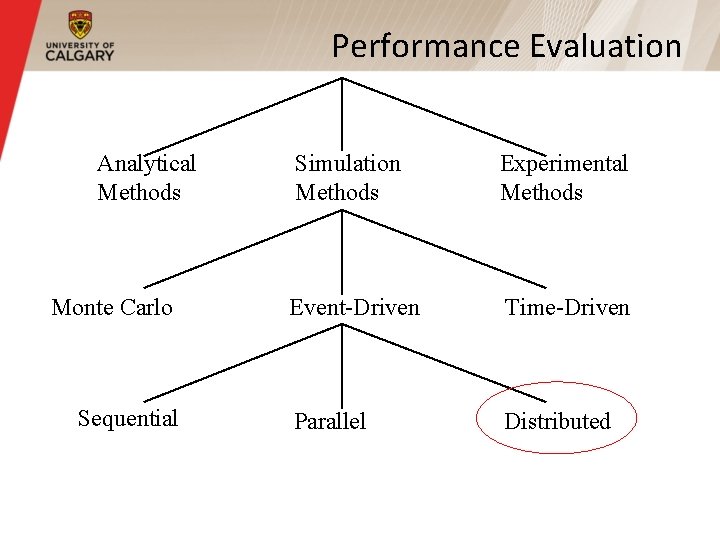
Performance Evaluation Analytical Methods Monte Carlo Sequential Simulation Methods Experimental Methods Event-Driven Time-Driven Parallel Distributed
Performance Evaluation Analytical Methods Monte Carlo Sequential Simulation Methods Experimental Methods Event-Driven Time-Driven Parallel Distributed
Sequential Simulation § § § Assumes a single processor system Uses central event list (ordered by time) Global state information available Single, well-defined notion of time Many clever implementation techniques and data structures for optimizing event list management —Linked list; doubly-linked list; priority queue; heap; calendar queue; trie structure
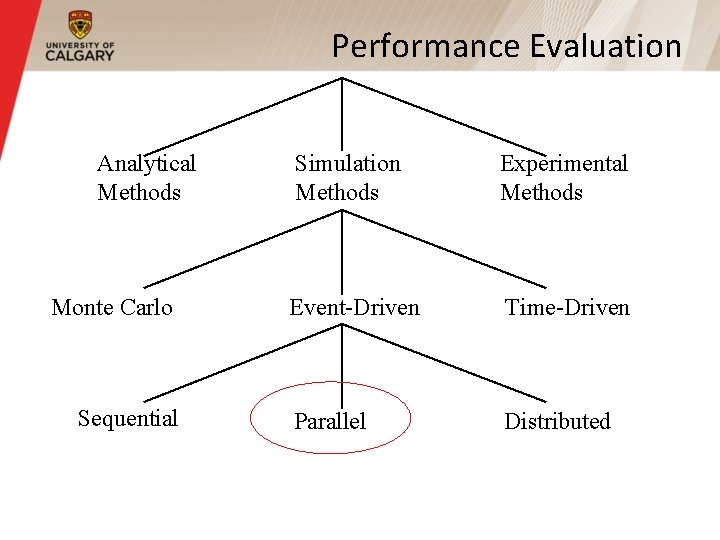
Performance Evaluation Analytical Methods Monte Carlo Sequential Simulation Methods Experimental Methods Event-Driven Time-Driven Parallel Distributed
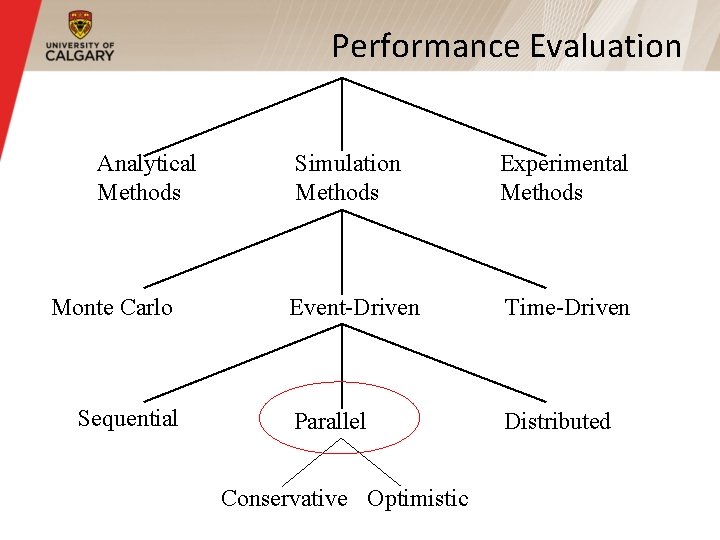
Parallel Simulation § Assumes multiple processors or cores, often tightly coupled, with shared memory § Same sim results as sequential, only faster § Need fast inter-process communication § Shared state vs. no shared state § Event list: centralized or not? —Central event list can be a bottleneck —Decentralized requires careful coordination § Potentially different views of time § Conservative versus optimistic execution
Performance Evaluation Analytical Methods Monte Carlo Sequential Simulation Methods Experimental Methods Event-Driven Time-Driven Parallel Distributed
Distributed Simulation § Assumes multiple processors, but geographically distributed (LAN/WAN) § Inter-process communication becomes expensive because of large latencies § Need to find right balance between computation and communication § Granularity of task scheduling § Similar technical issues to parallel simulation with respect to concurrency
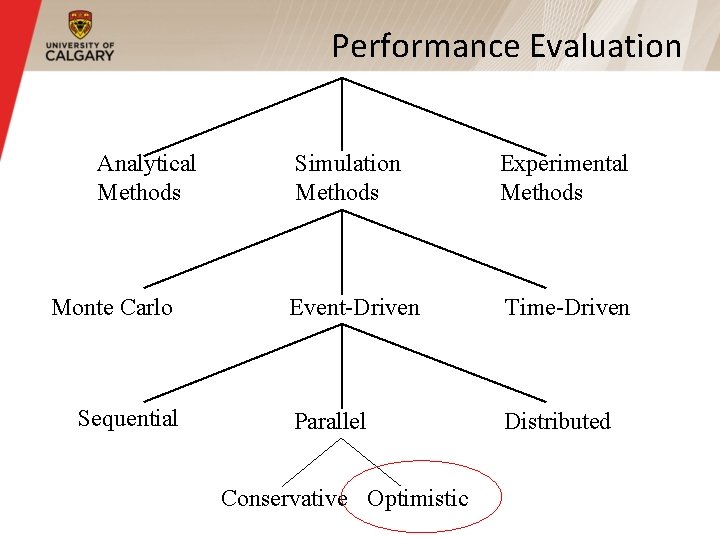
Performance Evaluation Analytical Methods Monte Carlo Sequential Simulation Methods Experimental Methods Event-Driven Time-Driven Parallel Distributed Conservative Optimistic
Performance Evaluation Analytical Methods Monte Carlo Sequential Simulation Methods Experimental Methods Event-Driven Time-Driven Parallel Distributed Conservative Optimistic
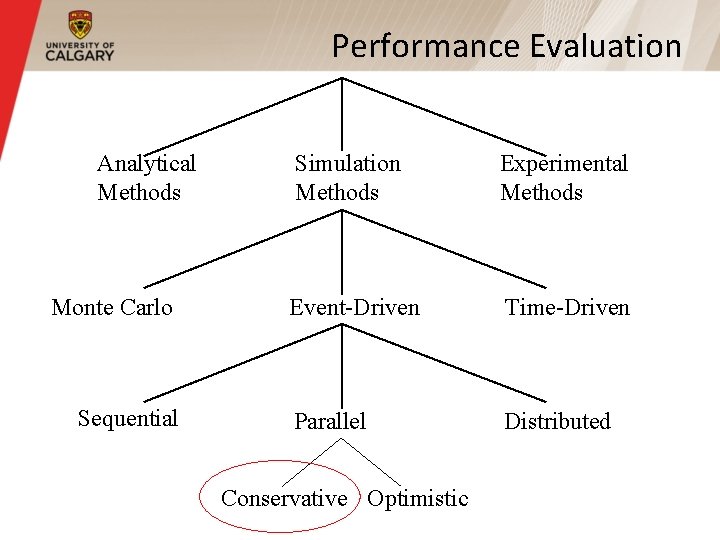
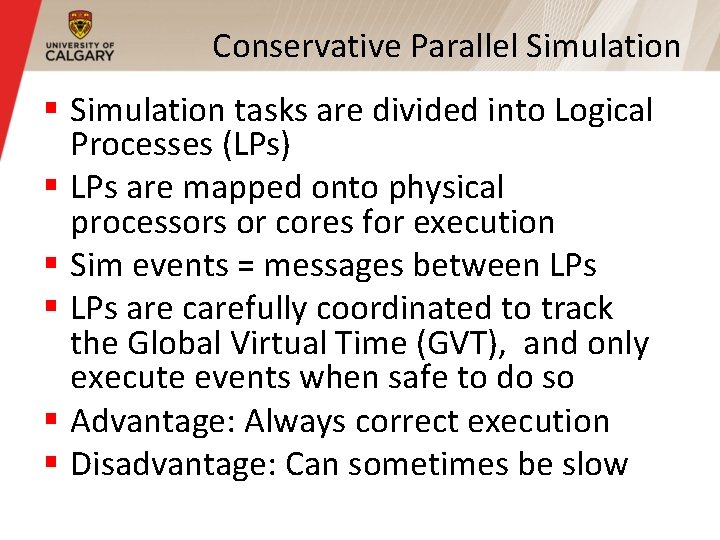
Conservative Parallel Simulation § Simulation tasks are divided into Logical Processes (LPs) § LPs are mapped onto physical processors or cores for execution § Sim events = messages between LPs § LPs are carefully coordinated to track the Global Virtual Time (GVT), and only execute events when safe to do so § Advantage: Always correct execution § Disadvantage: Can sometimes be slow
Performance Evaluation Analytical Methods Monte Carlo Sequential Simulation Methods Experimental Methods Event-Driven Time-Driven Parallel Distributed Conservative Optimistic
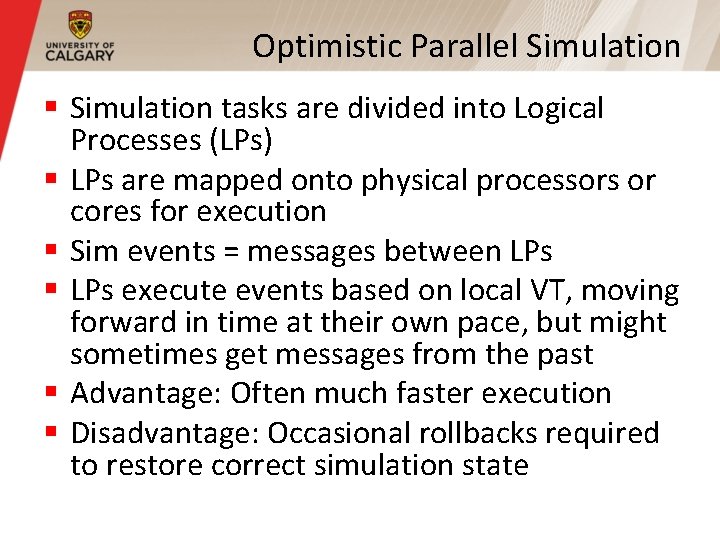
Optimistic Parallel Simulation § Simulation tasks are divided into Logical Processes (LPs) § LPs are mapped onto physical processors or cores for execution § Sim events = messages between LPs § LPs execute events based on local VT, moving forward in time at their own pace, but might sometimes get messages from the past § Advantage: Often much faster execution § Disadvantage: Occasional rollbacks required to restore correct simulation state
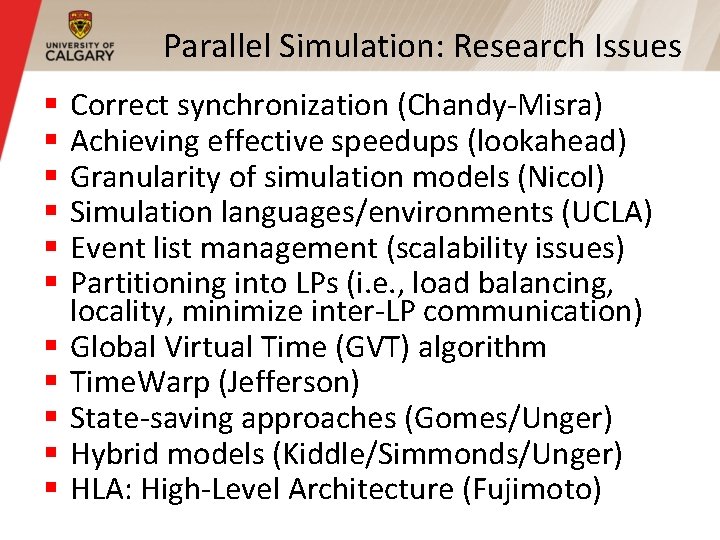
Parallel Simulation: Research Issues § § § Correct synchronization (Chandy-Misra) Achieving effective speedups (lookahead) Granularity of simulation models (Nicol) Simulation languages/environments (UCLA) Event list management (scalability issues) Partitioning into LPs (i. e. , load balancing, locality, minimize inter-LP communication) Global Virtual Time (GVT) algorithm Time. Warp (Jefferson) State-saving approaches (Gomes/Unger) Hybrid models (Kiddle/Simmonds/Unger) HLA: High-Level Architecture (Fujimoto)
Summary § Simulation methods offer a range of general-purpose approaches for performance evaluation § Simulation modeler must determine the appropriate aspects of system to model § “The hardest part about simulation is deciding what not to model. ” - M. Lavigne § Many technical issues: RNG, validation, statistical inference, comp efficiency