
CPS 216 Advanced Database Systems Notes 04 Data
CPS 216: Advanced Database Systems Notes 04: Data Access from Disks Shivnath Babu
Outline • Disks • Data access from disks • Software-based optimizations – Prefetching blocks – Choosing the right block size
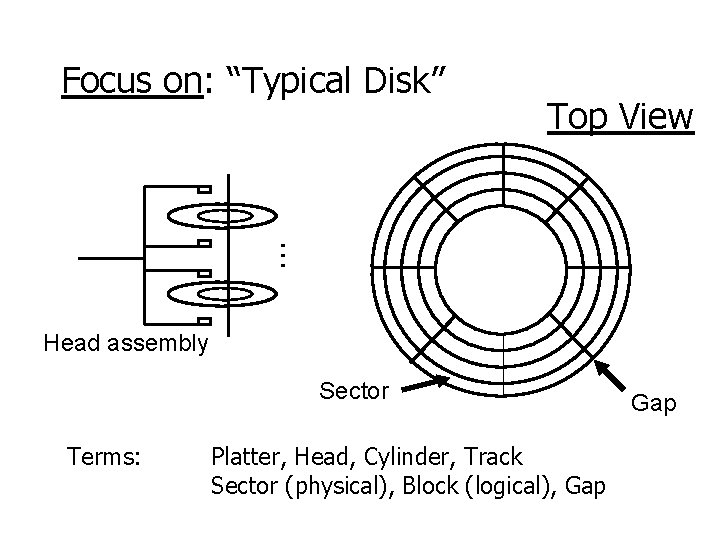
Focus on: “Typical Disk” Top View … Head assembly Sector Terms: Platter, Head, Cylinder, Track Sector (physical), Block (logical), Gap
Block Address: • • Physical Device Cylinder # Surface # Start sector #
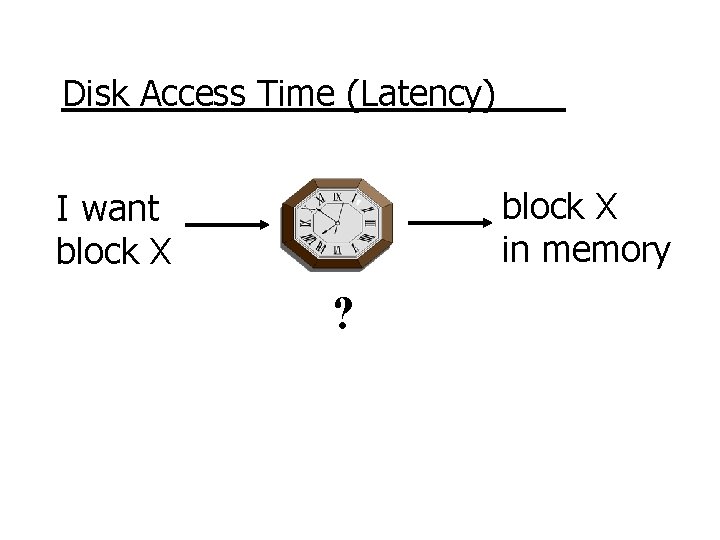
Disk Access Time (Latency) block X in memory I want block X ?
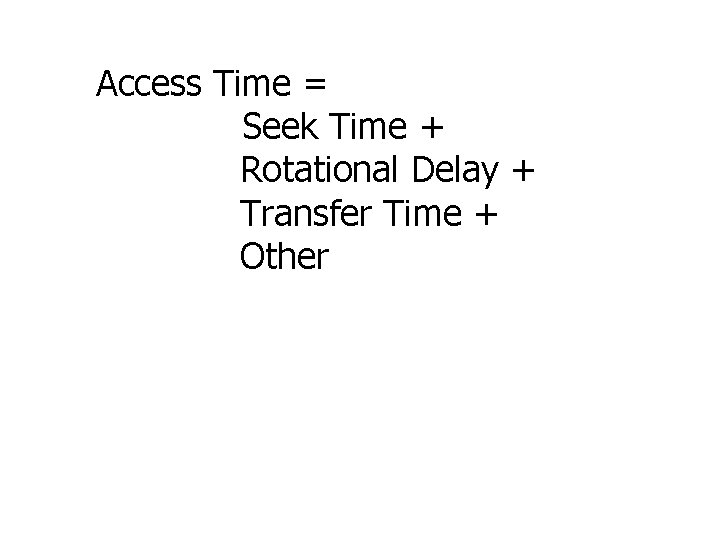
Access Time = Seek Time + Rotational Delay + Transfer Time + Other
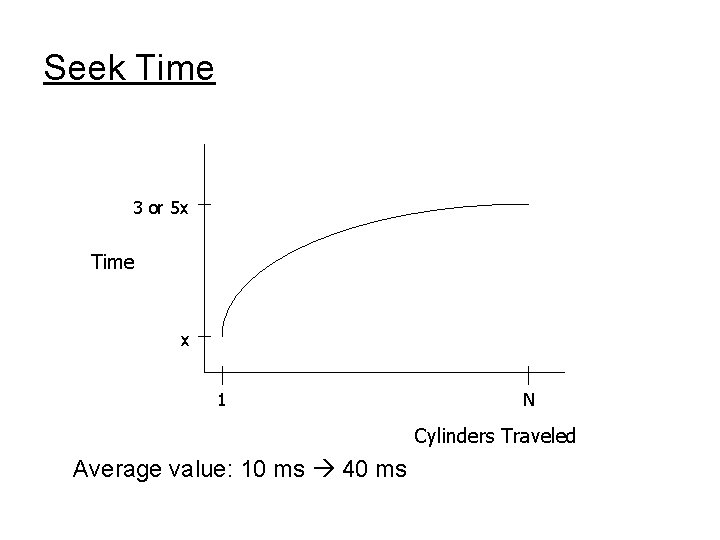
Seek Time 3 or 5 x Time x 1 N Cylinders Traveled Average value: 10 ms 40 ms
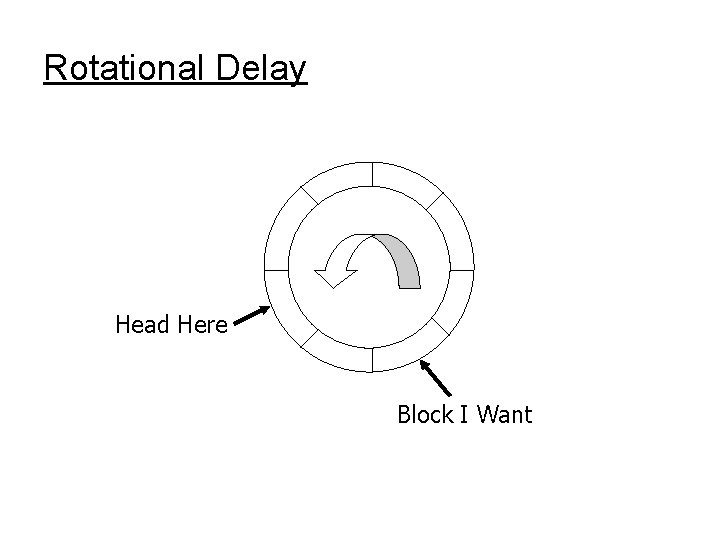
Rotational Delay Head Here Block I Want
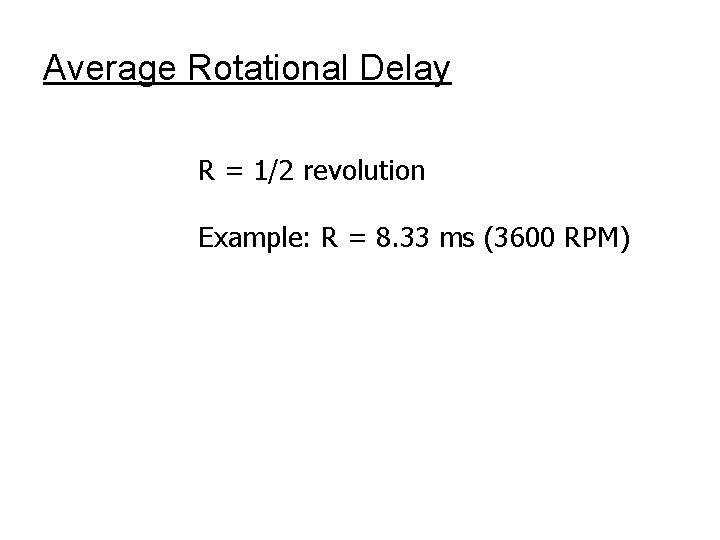
Average Rotational Delay R = 1/2 revolution Example: R = 8. 33 ms (3600 RPM)
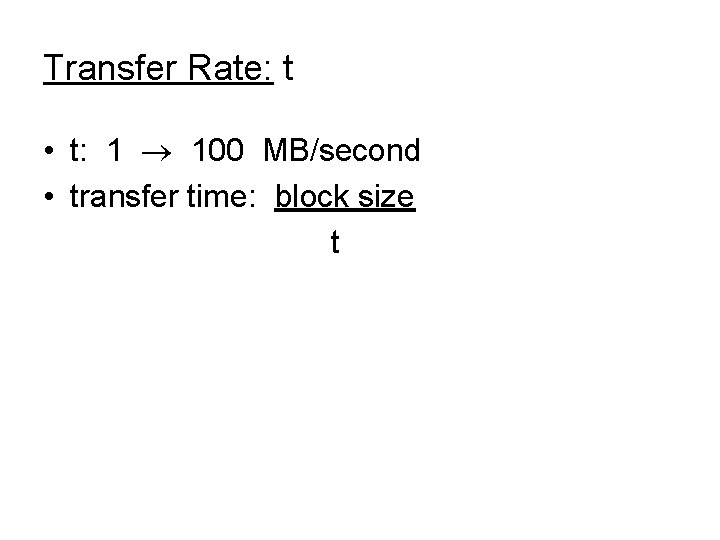
Transfer Rate: t • t: 1 100 MB/second • transfer time: block size t
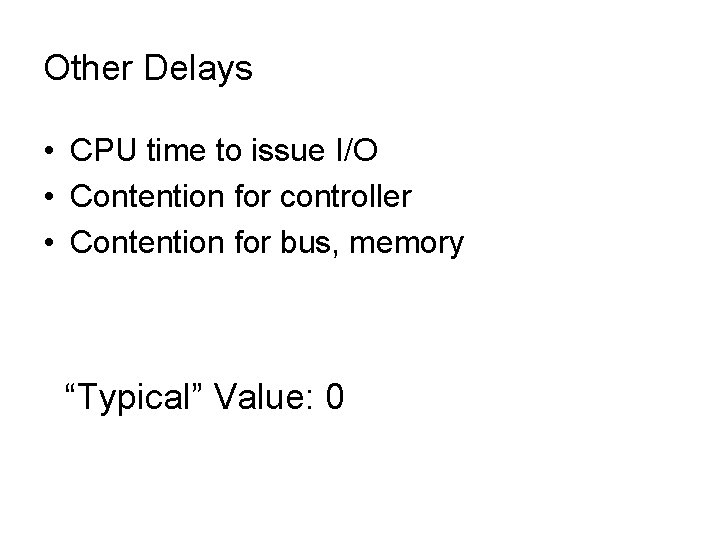
Other Delays • CPU time to issue I/O • Contention for controller • Contention for bus, memory “Typical” Value: 0
• So far: Random Block Access • What about: Reading “Next” block?
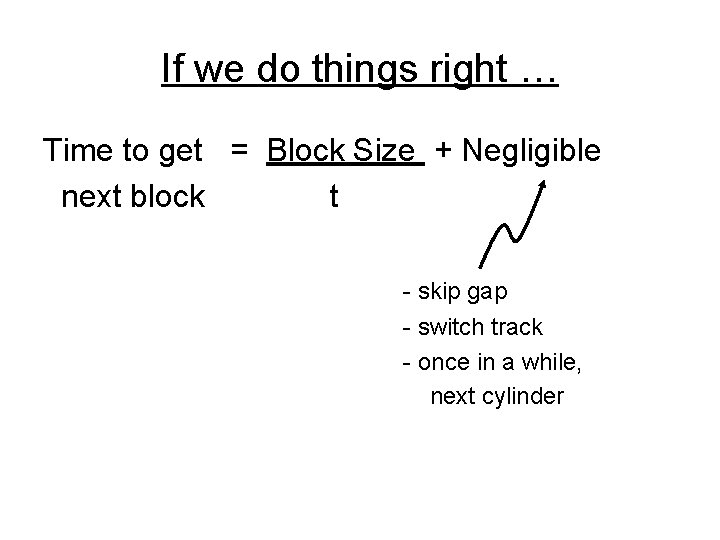
If we do things right … Time to get = Block Size + Negligible next block t - skip gap - switch track - once in a while, next cylinder
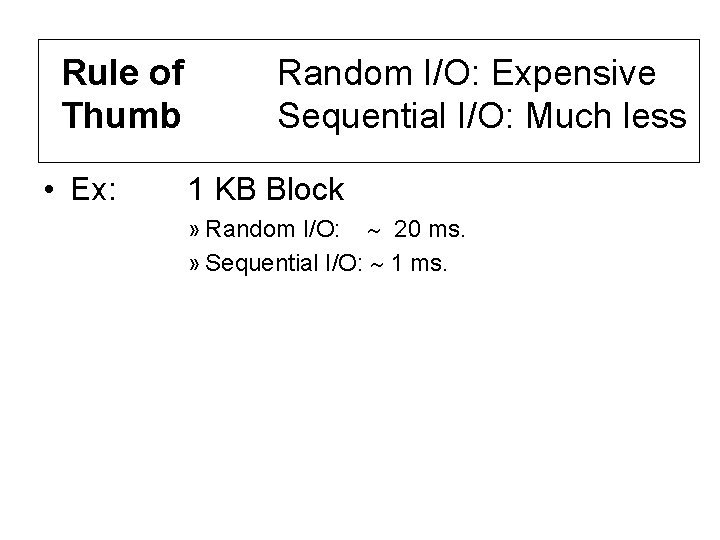
Rule of Thumb • Ex: Random I/O: Expensive Sequential I/O: Much less 1 KB Block » Random I/O: 20 ms. » Sequential I/O: 1 ms.
Cost for Writing similar to Reading …. unless we want to verify!
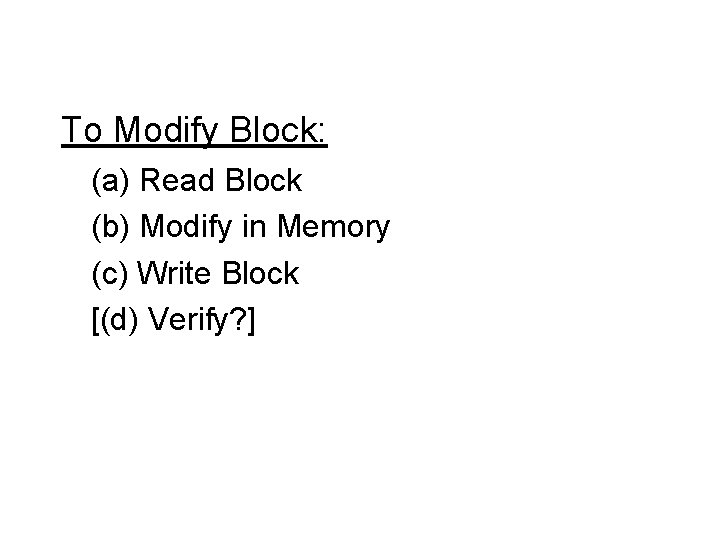
To Modify Block: (a) Read Block (b) Modify in Memory (c) Write Block [(d) Verify? ]
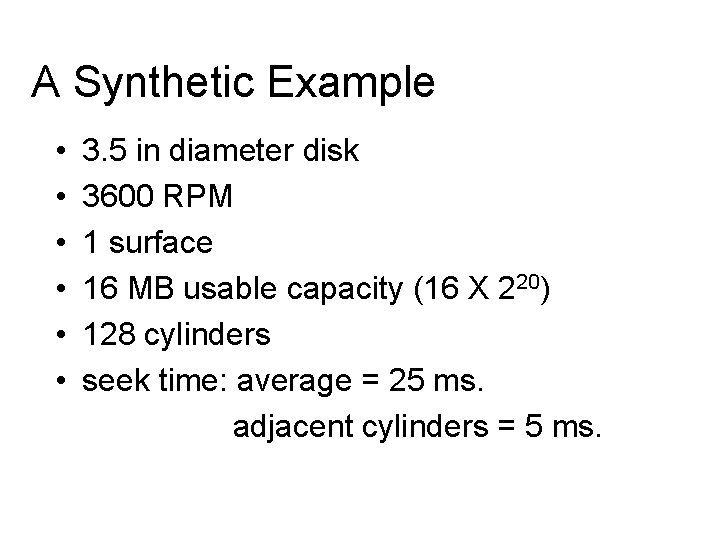
A Synthetic Example • • • 3. 5 in diameter disk 3600 RPM 1 surface 16 MB usable capacity (16 X 220) 128 cylinders seek time: average = 25 ms. adjacent cylinders = 5 ms.
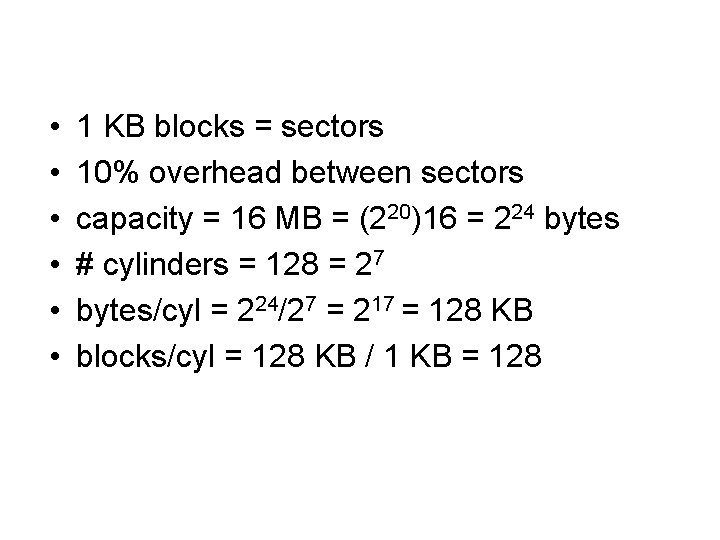
• • • 1 KB blocks = sectors 10% overhead between sectors capacity = 16 MB = (220)16 = 224 bytes # cylinders = 128 = 27 bytes/cyl = 224/27 = 217 = 128 KB blocks/cyl = 128 KB / 1 KB = 128
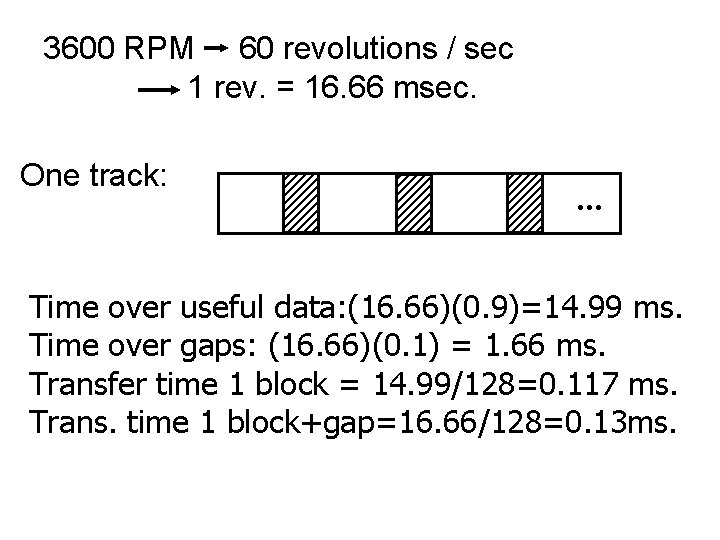
3600 RPM 60 revolutions / sec 1 rev. = 16. 66 msec. One track: . . . Time over useful data: (16. 66)(0. 9)=14. 99 ms. Time over gaps: (16. 66)(0. 1) = 1. 66 ms. Transfer time 1 block = 14. 99/128=0. 117 ms. Trans. time 1 block+gap=16. 66/128=0. 13 ms.
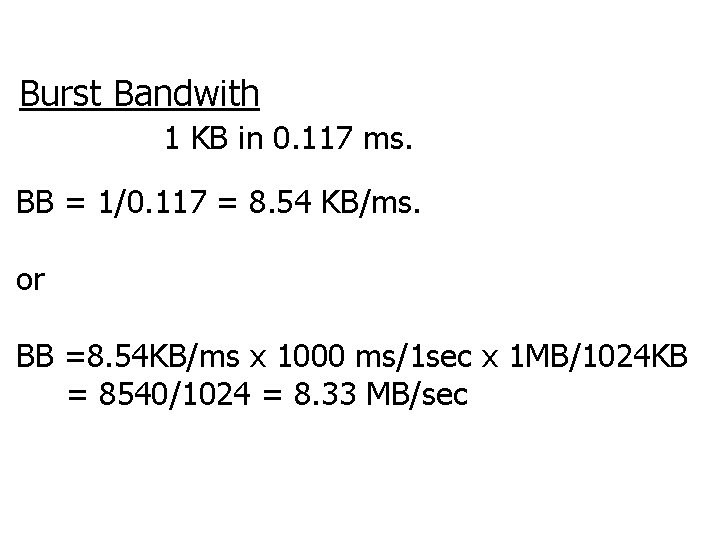
Burst Bandwith 1 KB in 0. 117 ms. BB = 1/0. 117 = 8. 54 KB/ms. or BB =8. 54 KB/ms x 1000 ms/1 sec x 1 MB/1024 KB = 8540/1024 = 8. 33 MB/sec
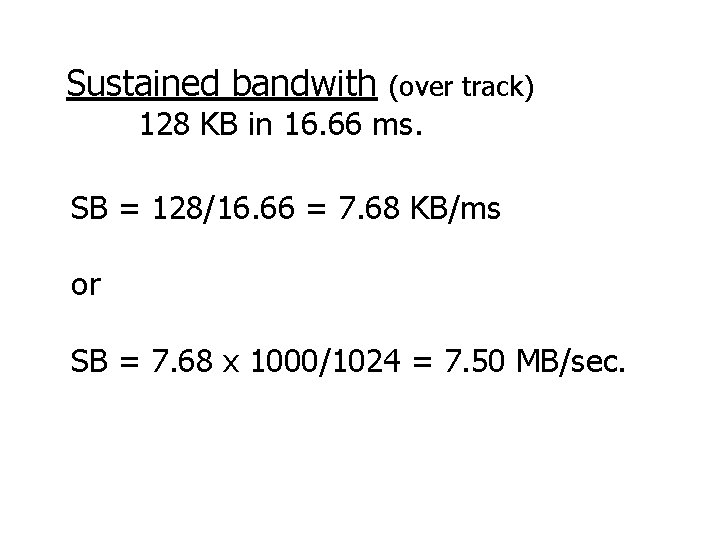
Sustained bandwith (over track) 128 KB in 16. 66 ms. SB = 128/16. 66 = 7. 68 KB/ms or SB = 7. 68 x 1000/1024 = 7. 50 MB/sec.
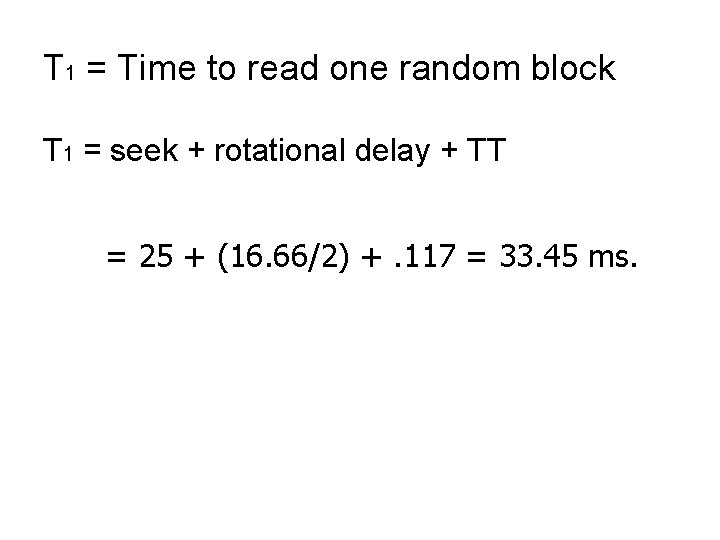
T 1 = Time to read one random block T 1 = seek + rotational delay + TT = 25 + (16. 66/2) +. 117 = 33. 45 ms.
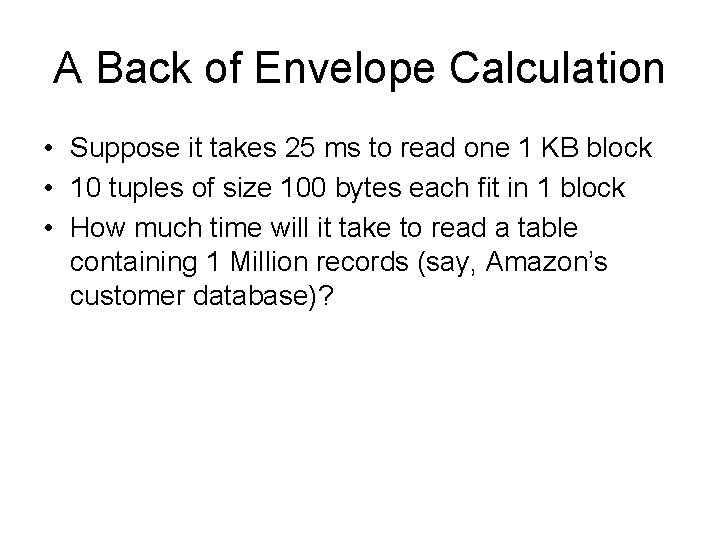
A Back of Envelope Calculation • Suppose it takes 25 ms to read one 1 KB block • 10 tuples of size 100 bytes each fit in 1 block • How much time will it take to read a table containing 1 Million records (say, Amazon’s customer database)?
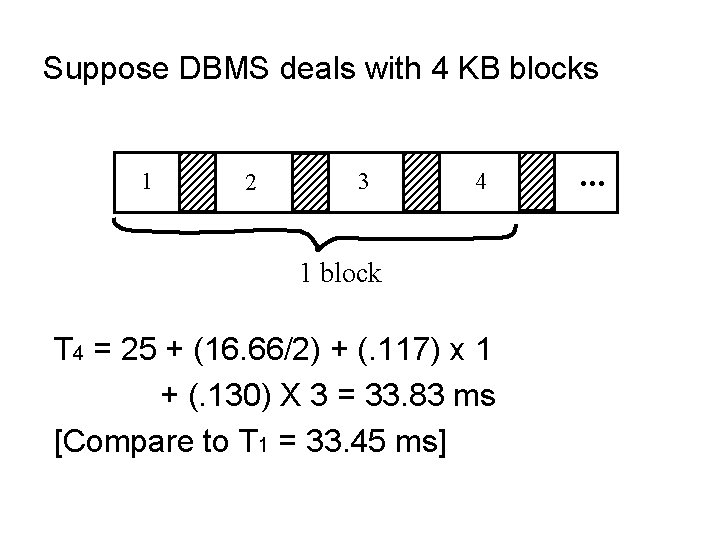
Suppose DBMS deals with 4 KB blocks 1 2 3 4 1 block T 4 = 25 + (16. 66/2) + (. 117) x 1 + (. 130) X 3 = 33. 83 ms [Compare to T 1 = 33. 45 ms] . . .
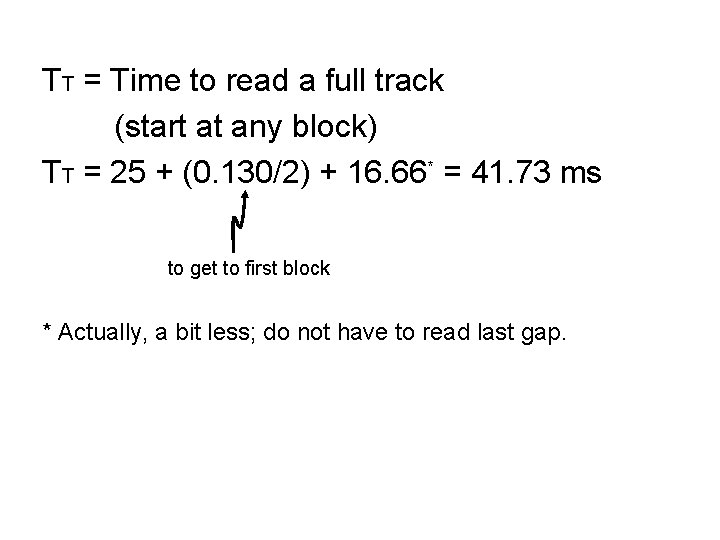
TT = Time to read a full track (start at any block) TT = 25 + (0. 130/2) + 16. 66* = 41. 73 ms to get to first block * Actually, a bit less; do not have to read last gap.
Outline • Disks • Data access from disks • Software-based optimizations – Prefetching blocks – Choosing the right block size
Software-based Optimizations (in Disk controller, OS, or DBMS Buffer Manager) • Prefetching blocks • Choosing the right block size • Some others covered in textbook
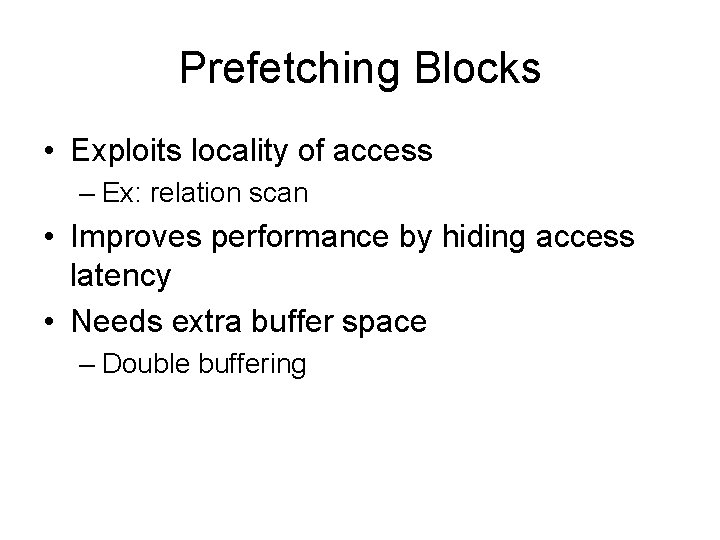
Prefetching Blocks • Exploits locality of access – Ex: relation scan • Improves performance by hiding access latency • Needs extra buffer space – Double buffering
Block Size Selection? • Big Block Amortize I/O Cost Unfortunately. . . • Big Block Read in more useless stuff!
Tradeoffs in Choosing Block Size • • Small relations? Update-heavy workload? Difficult to use blocks larger than track Multiple block sizes
Further Reading if you are Interested (not part of syllabus) • Chapter 11 “Data Storage” in textbook • Sorting disk-resident records (Will cover later in class) • Scheduling disk accesses • Disk failures and recovery, RAID
- Slides: 31