
CPRsouth 2016 Zanzibar PIZZA TO POLICY Social Media
CPRsouth 2016 Zanzibar PIZZA TO POLICY: Social Media Analytics of a Pizza and implications for policy making Ashish Rathore IIT Delhi, INDIA ashishriitd@gmail. com
Research Question • How does the usage of social media provide valuable insights to businesses in developing new products? • How to identify the patterns and trends emerging in Twitter data for a new product? • How can network analysis help businesses in identifying lead users and their influence? • Whether social media analytics can be used for policy making?
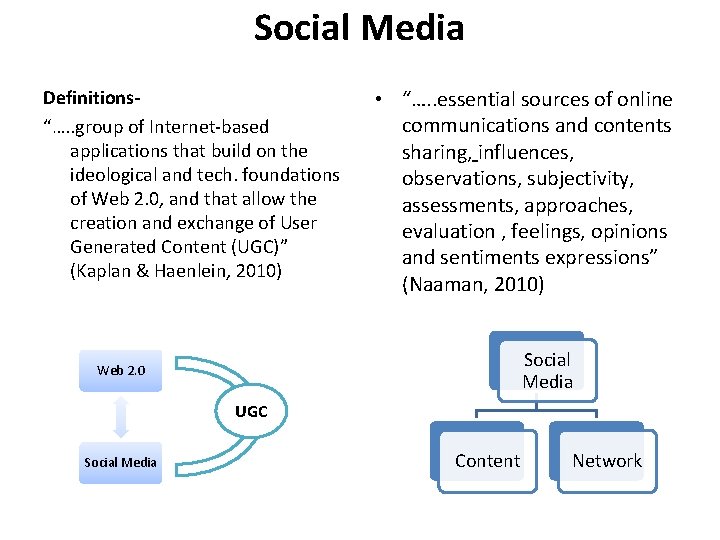
Social Media Definitions“…. . group of Internet-based applications that build on the ideological and tech. foundations of Web 2. 0, and that allow the creation and exchange of User Generated Content (UGC)” (Kaplan & Haenlein, 2010) • “…. . essential sources of online communications and contents sharing, influences, observations, subjectivity, assessments, approaches, evaluation , feelings, opinions and sentiments expressions” (Naaman, 2010) Social Media Web 2. 0 UGC Social Media Content Network
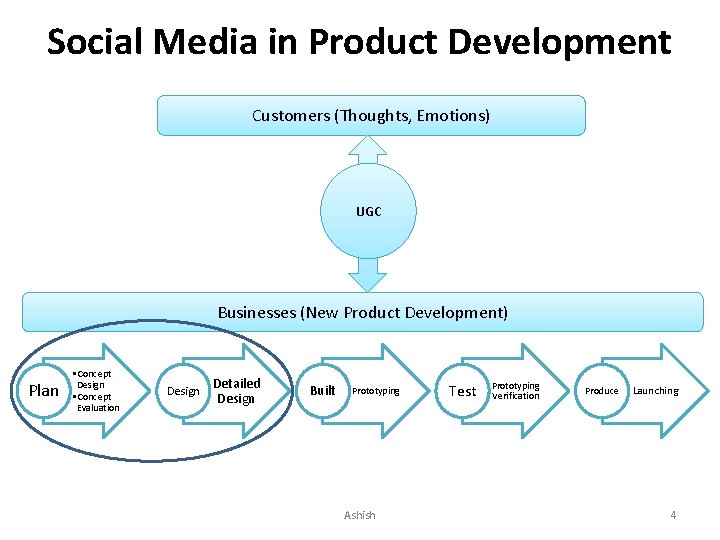
Social Media in Product Development Customers (Thoughts, Emotions) UGC Businesses (New Product Development) Plan • Concept Design • Concept Evaluation Design Detailed Design Built Prototyping Ashish Test Prototyping Verification Produce Launching 4
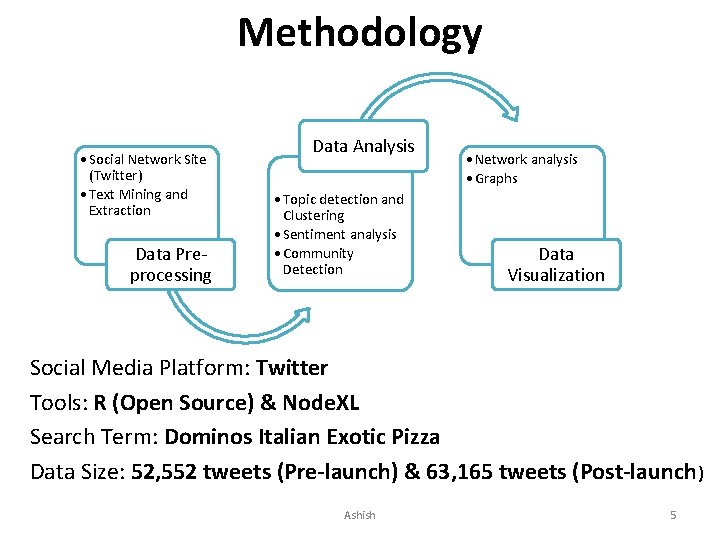
Methodology • Social Network Site (Twitter) • Text Mining and Extraction Data Preprocessing Data Analysis • Topic detection and Clustering • Sentiment analysis • Community Detection • Network analysis • Graphs Data Visualization Social Media Platform: Twitter Tools: R (Open Source) & Node. XL Search Term: Dominos Italian Exotic Pizza Data Size: 52, 552 tweets (Pre-launch) & 63, 165 tweets (Post-launch ) Ashish 5
Results, Analysis & Discussion
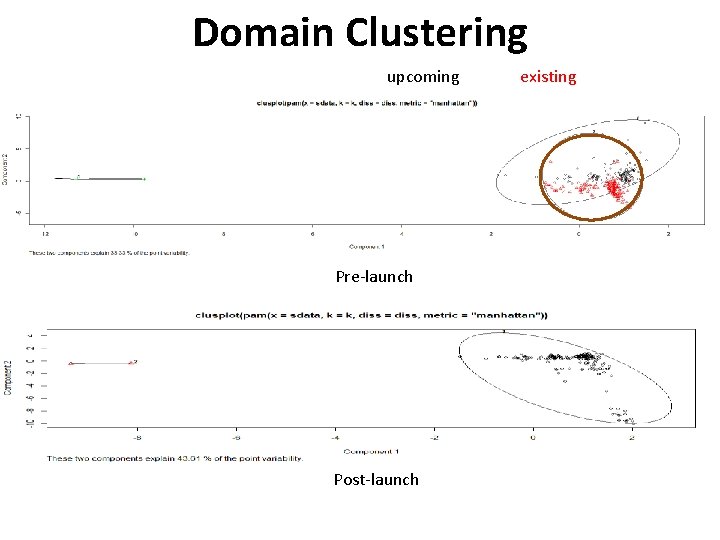
Domain Clustering upcoming Pre-launch Post-launch existing
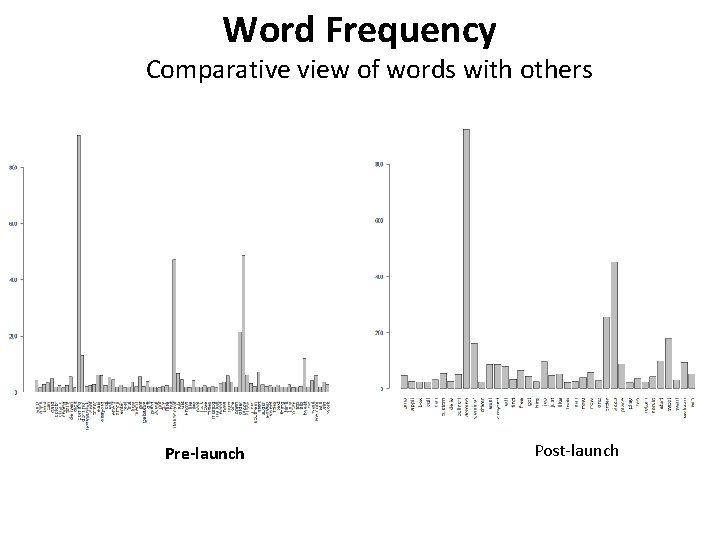
Word Frequency Comparative view of words with others Pre-launch Post-launch
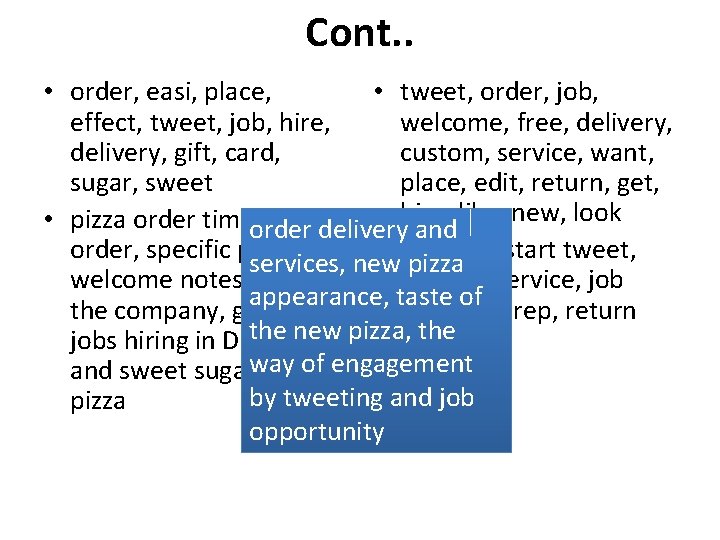
Cont. . • order, easi, place, • tweet, order, job, effect, tweet, job, hire, welcome, free, delivery, gift, card, custom, service, want, sugar, sweet place, edit, return, get, hire, like, new, look • pizza order time, easy to order delivery and order, specific places, • delivery, start tweet, services, new pizza welcome notes from get free service, job appearance, taste of the company, girt cards, hire, look rep, return the new pizza, the jobs hiring in Dominos delivery way of engagement and sweet sugar about by tweeting and job pizza opportunity
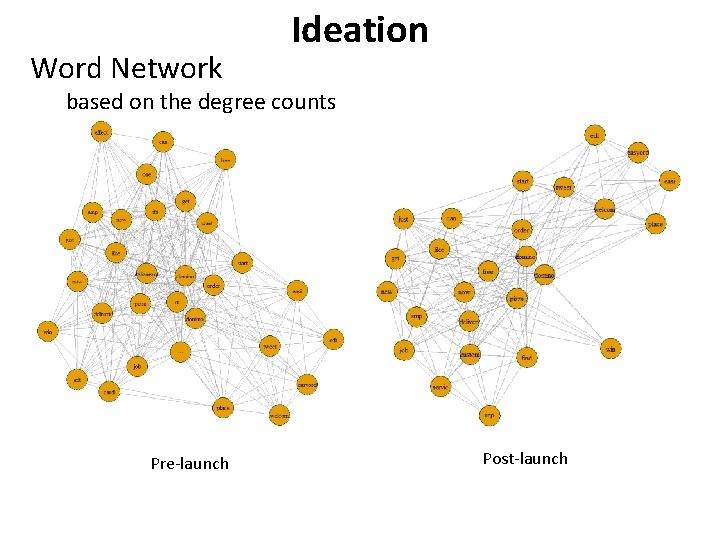
Word Network Ideation based on the degree counts Pre-launch Post-launch
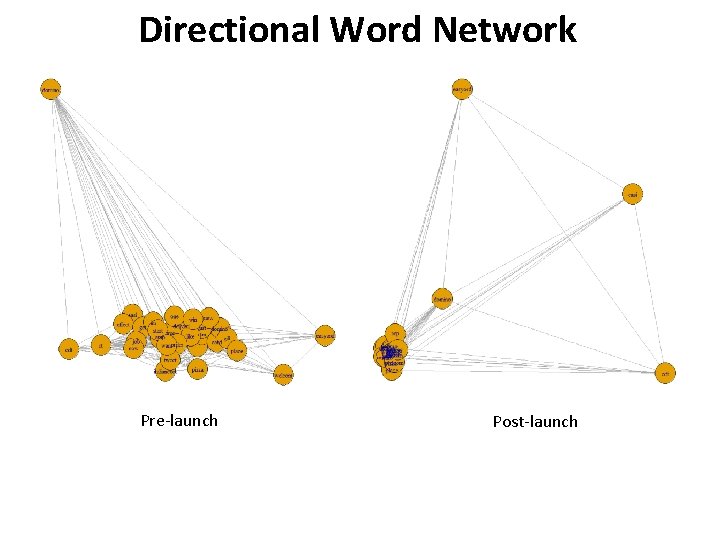
Directional Word Network Pre-launch Post-launch
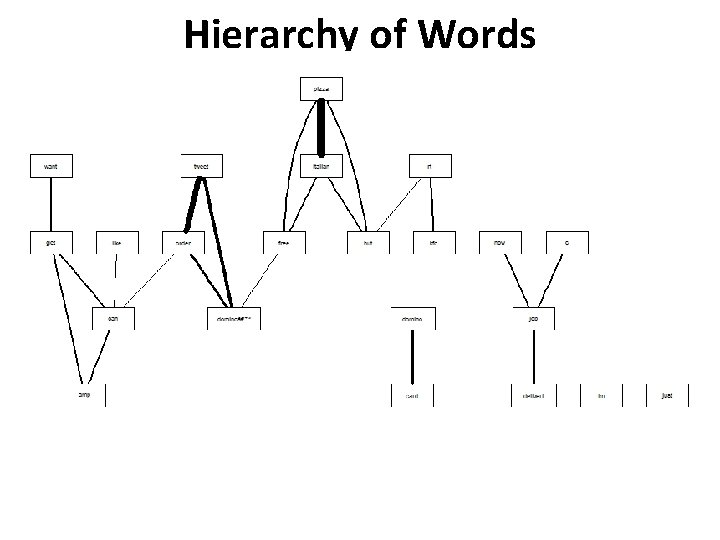
Hierarchy of Words
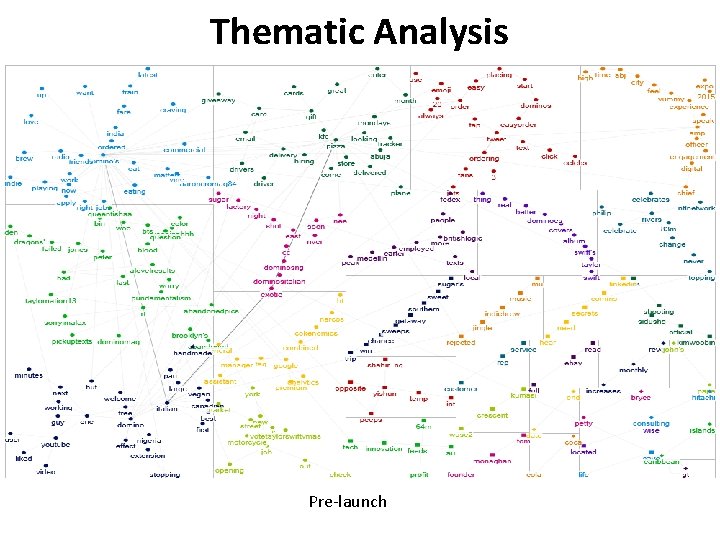
Thematic Analysis Pre-launch
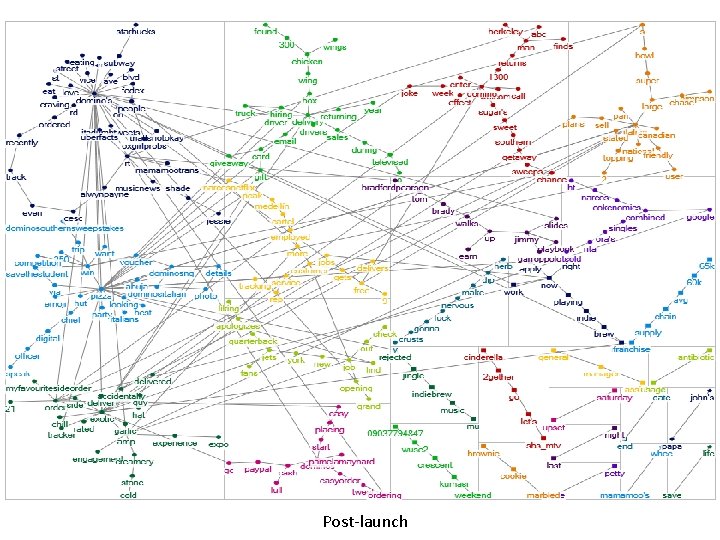
Post-launch
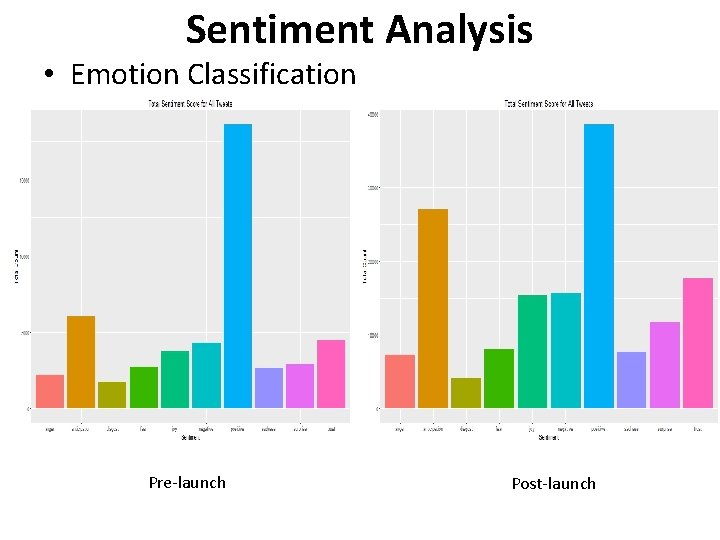
Sentiment Analysis • Emotion Classification Pre-launch Post-launch

Time Series Sentiment Analysis
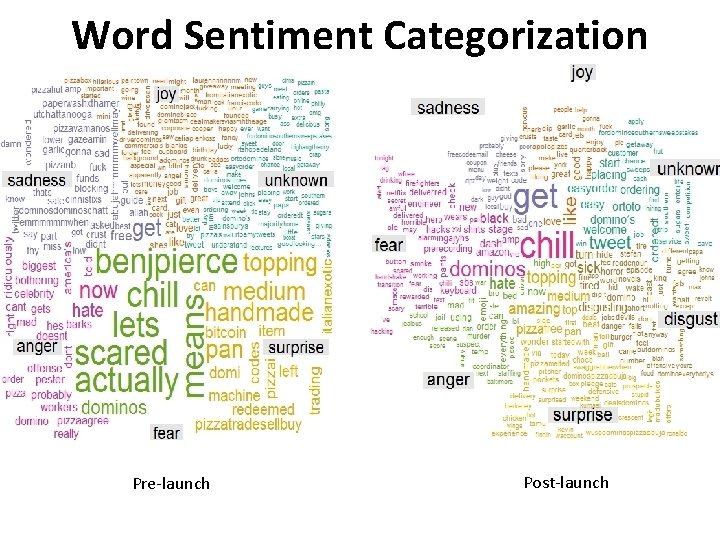
Word Sentiment Categorization Pre-launch Post-launch
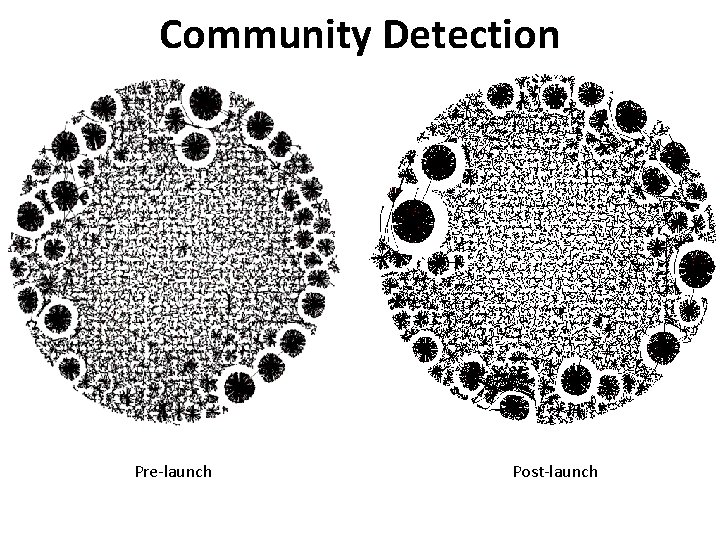
Community Detection Pre-launch Post-launch
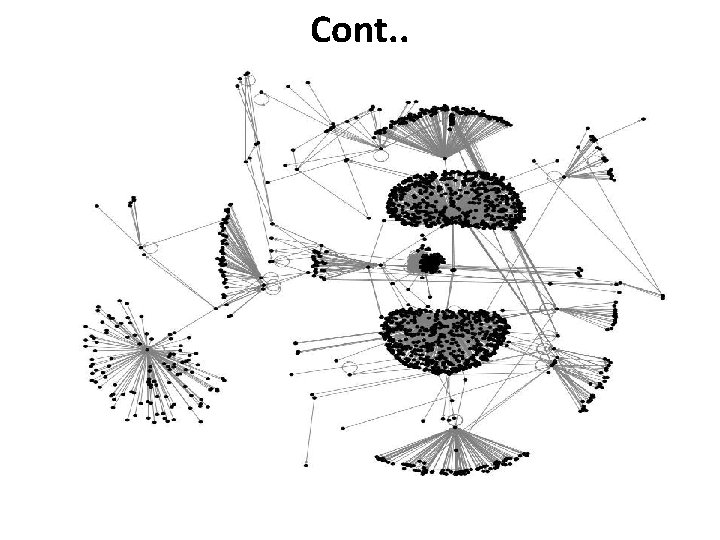
Cont. .
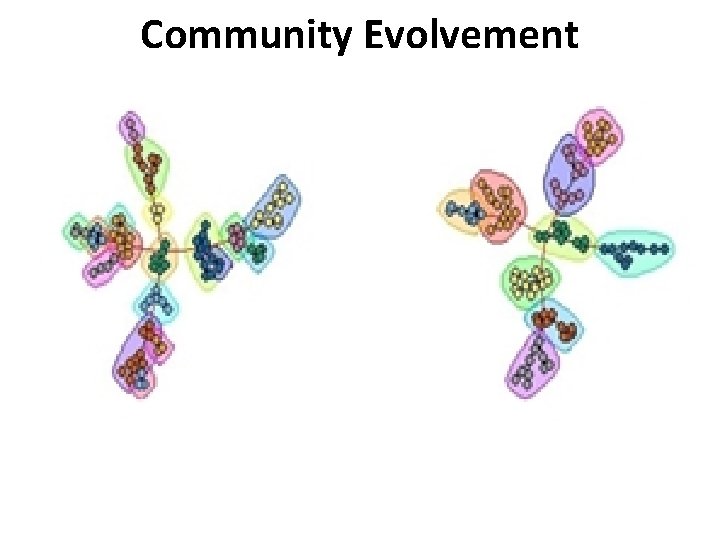
Community Evolvement
Implication • • UGC / customers’ reactions for design To gauge product success/failure Approach of collecting data requires relatively low cost Community helps in understanding target audience and their collective judgement – transfer of effective information from public community to policymakers based on localized similar interests and behaviors
Policy Recommendations • Methodology extended for policy arena • Social media data inputs for policy making – GST in India – Transport policy using travellers’ views and experiences – In disaster emergencies, harvesting information for situation awareness and taking actions – Rumours & Social unrest
REFERENCES Adedoyin-Olowe, M. , Gaber, M. & Stahl, F. (2013). A survey of data mining techniques for social network analysis. Retrieved October 7, 2014, from http: //jdmdh. episciences. org/18/pdf Banerjee, N. , Chakraborty, D. , Joshi, A. , Mittal, S. , Rai, A. , &Ravindran, B. (2012, May). Towards Analyzing Micro-Blogs for Detection and Classification of Real-Time Intentions. In ICWSM. Brown, E. D. (2012). Will twitter make you a better investor? a look at sentiment, user reputation and their effect on the stock market. Proc. of SAIS. Carr, J. , Decreton, L. , Qin, W. , Rojas, B. , Rossochacki, T. , & wen Yang, Y. (2015). Social media in product development. Food Quality and Preference, 40, 354 -364. Du Plessis, M. (2007). The role of knowledge management in innovation. Journal of knowledge management, 11(4), 20 -29. Evangelopoulos, N. , Magro, M. J. , &Sidorova, A. (2012). The dual micro/macro informing role of social network sites: can Twitter macro messages help predict stock prices? . Informing Science: the International Journal of an Emerging Transdiscipline, 15(1), 247 -268. Forbes. (2013). Can Twitter save TV? (and can TV save Twitter? ). Retrieved March 13, 2016, from http: //www. forbes. com/sites/jeffbercovici/2013/10/07/can-twitter -save-tv-and-can-tv-save-twitter/#1 fbf 89 f 86419 He, W. , & Yan, G. (2015). Mining blogs and forums to understand the use of social media in customer co-creation. The Computer Journal, 58(9), 1909 -1920. Kaplan, A. M. , &Haenlein, M. (2010). Users of the world, unite! The challenges and opportunities of Social Media. Business horizons, 53(1), 59 -68. Lipizzi, C. , Iandoli, L. , & Marquez, J. E. R. (2015). Extracting and evaluating conversational patterns in social media: A socio-semantic analysis of customers’ reactions to the launch of new products using Twitter streams. International Journal of Information Management, 35(4), 490 -503. Liu, B. (2012). Sentiment analysis and opinion mining. Synthesis lectures on human language technologies, 5(1), 1 -167. Marcus, A. , Bernstein, M. S. , Badar, O. , Karger, D. R. , Madden, S. , & Miller, R. C. (2011, May). Twitinfo: aggregating and visualizing microblogs for event exploration. In Proceedings of the SIGCHI conference on Human factors in computing systems (pp. 227 -236). ACM. Moe, W. W. , &Schweidel, D. A. (2012). Online product opinions: Incidence, evaluation, and evolution. Marketing Science, 31(3), 372 -386. Nambisan, S. (2013). Information technology and product/service innovation: A brief assessment and some suggestions for future research. Journal of the Association for Information Systems, 14(4), 215. Ngai, E. W. T. , Hu, Y. , Wong, Y. H. , Chen, Y. , & Sun, X. (2011). The application of data mining techniques in financial fraud detection: A classification framework and an academic review of literature. Decision Support Systems, 50(3), 559 -569. Noble, C. H. , & Kumar, M. (2008). Using product design strategically to create deeper consumer connections. Business Horizons, 51(5), 441 -450. Papadopoulos, S. , Kompatsiaris, Y. , Vakali, A. , &Spyridonos, P. (2012). Community detection in social media. Data Mining and Knowledge Discovery, 24(3), 515 -554. Sam, Y. , &Cai, Y. (2015). A Study on the Use of Social Media to Understand Consumer Preference: The Case of Starbucks. International Journal of Management and Business Research, 5(3), 207 -214. Thelwall, M. , Buckley, K. , &Paltoglou, G. (2011). Sentiment in Twitter events. Journal of the American Society for Information Science and Technology, 62(2), 406 -418. Tuten, T. L. , and Solomon, M. R. (2013). Social Media Marketing. Boston: Pearson. Verhoef, P. C. , Beckers, S. F. , & van Doorn, J. (2013). Understand the perils of co-creation. Harvard Business Review, 91(9), 28.

Thanks You! Q&A
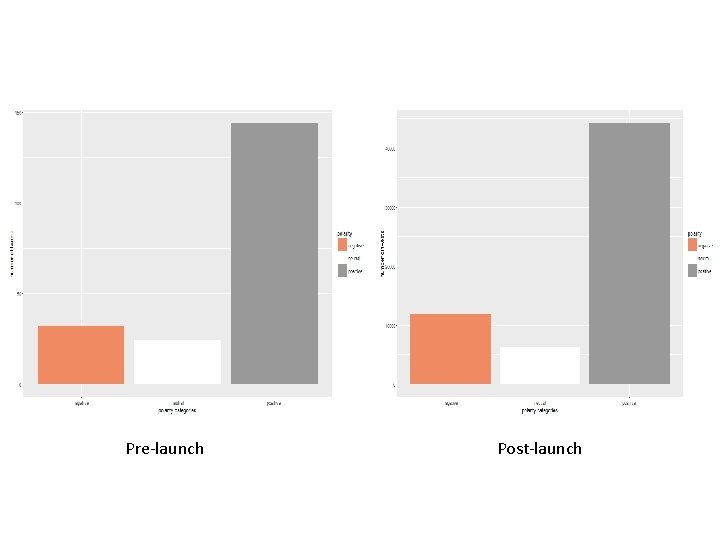
Pre-launch Post-launch
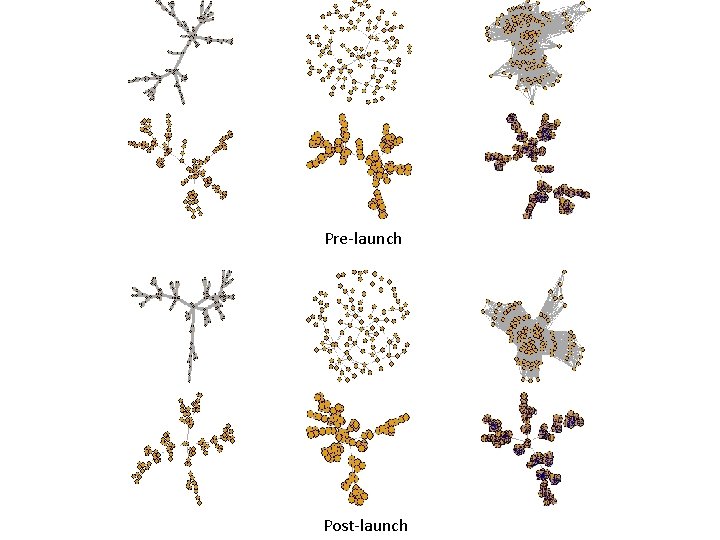
Pre-launch Post-launch
- Slides: 26