
CPR First Aid Part 1 Theory FREE IHMP
- Slides: 23
CPR & First Aid Part 1 Theory FREE IHMP International Hyperbaric Medical Programs www. diveitda. org/medical. htm ITDA Group International Inc. Ltd. ITDA Group International C 2013 1
Introduction IHMP Part of the ITDA Group International • International Hyperbaric Medical Programs IHMP training division We are “Training Specialists” in Medical Training, First-Aid and Accident Control & Management. Also Hyperbaric Training for Medical and Non-medical personnel. ITDA Group International C 2013 2
Introduction IHMP Part of the ITDA Group International • About this theory training program This is a two part program and to be certified in CPR you MUST complete the practical exercises with the CPR Mannequin and be assessed on your skill level. With an Instructor in CPR… ITDA Group International C 2013 3
Training Programs Sports Diving • CPR & First Aid • Aquatic Rescue • Dive Medic (BLS) • AED. First Aid • Oxygen. First Aid • Assist. DM Instructor • Dive Medic Instructor / Trainer Technical & Medical • Accident Management • Intro to Hyperbarics • Chamber Operations • Mixed Gas Therapy • Dive Medic Technician • Chamber Supervisor / Instructor / Trainer ITDA Group International C 2013 4
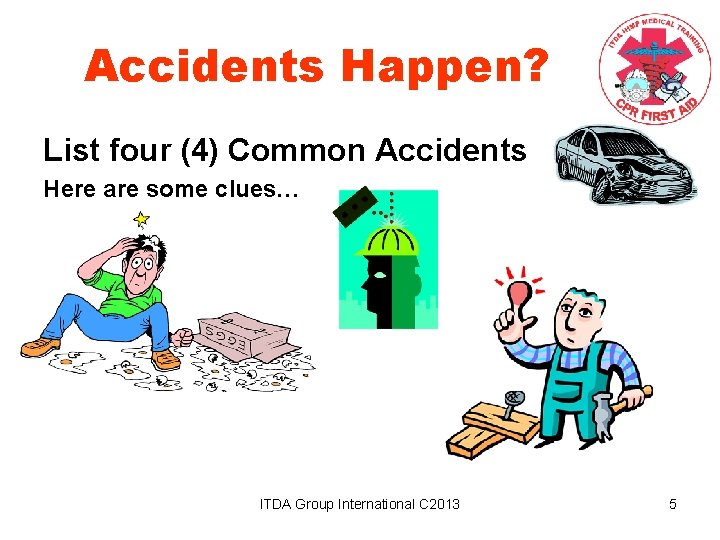
Accidents Happen? List four (4) Common Accidents Here are some clues… ITDA Group International C 2013 5
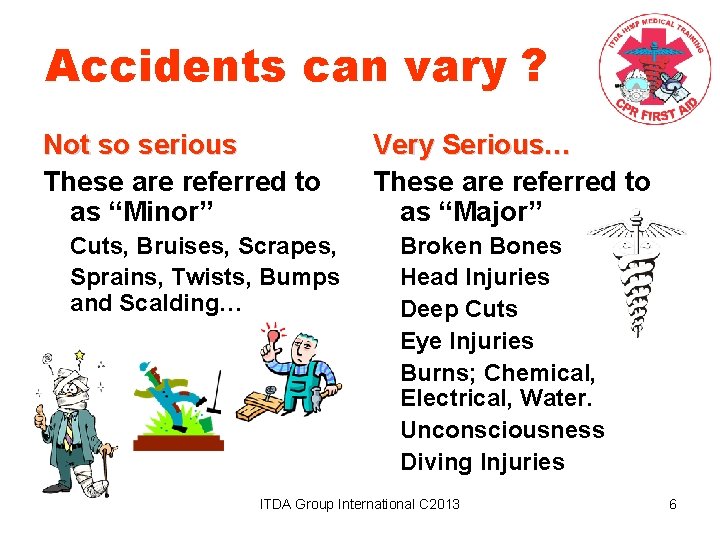
Accidents can vary ? Not so serious These are referred to as “Minor” Cuts, Bruises, Scrapes, Sprains, Twists, Bumps and Scalding… Very Serious… These are referred to as “Major” Broken Bones Head Injuries Deep Cuts Eye Injuries Burns; Chemical, Electrical, Water. Unconsciousness Diving Injuries ITDA Group International C 2013 6
CPR & First Aid (BLS) This course program is a Basic CPR Introduction Program and will include: • CPR Review • General Practical First Aid Tips • Overview of Diving Accidents • Future Training (You now may attend a Dive Medic Program) And we highly recommend Oxygen Admin from IHMP/ITDA Group or DAN (Divers Alert Network) ITDA Group International C 2013 7
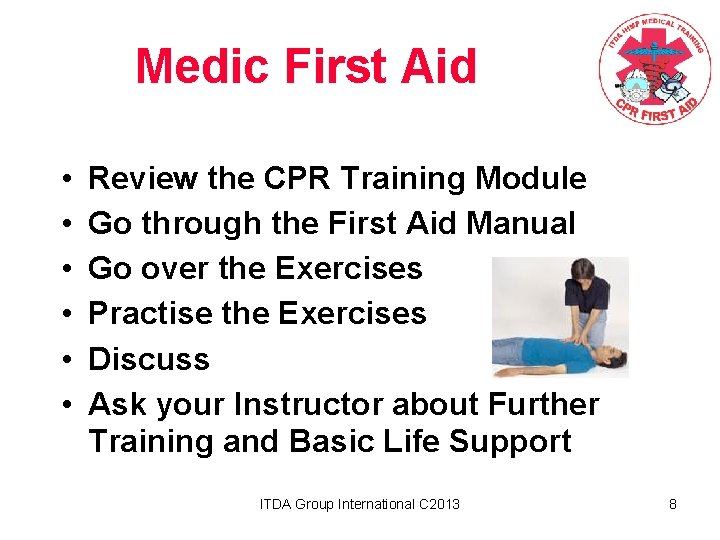
Medic First Aid • • • Review the CPR Training Module Go through the First Aid Manual Go over the Exercises Practise the Exercises Discuss Ask your Instructor about Further Training and Basic Life Support ITDA Group International C 2013 8
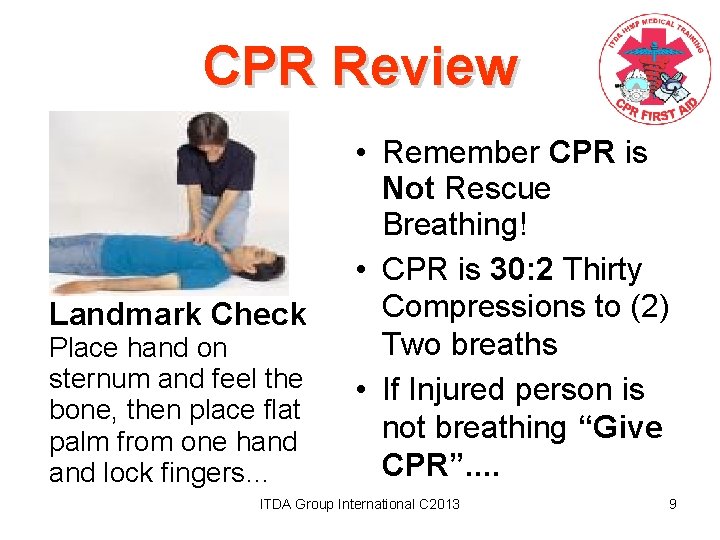
CPR Review Landmark Check Place hand on sternum and feel the bone, then place flat palm from one hand lock fingers… • Remember CPR is Not Rescue Breathing! • CPR is 30: 2 Thirty Compressions to (2) Two breaths • If Injured person is not breathing “Give CPR”. . ITDA Group International C 2013 9
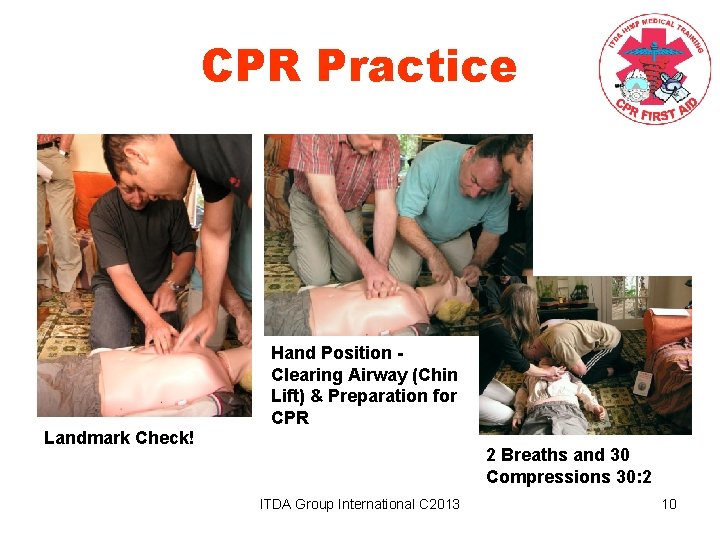
CPR Practice Hand Position Clearing Airway (Chin Lift) & Preparation for CPR Landmark Check! 2 Breaths and 30 Compressions 30: 2 ITDA Group International C 2013 10
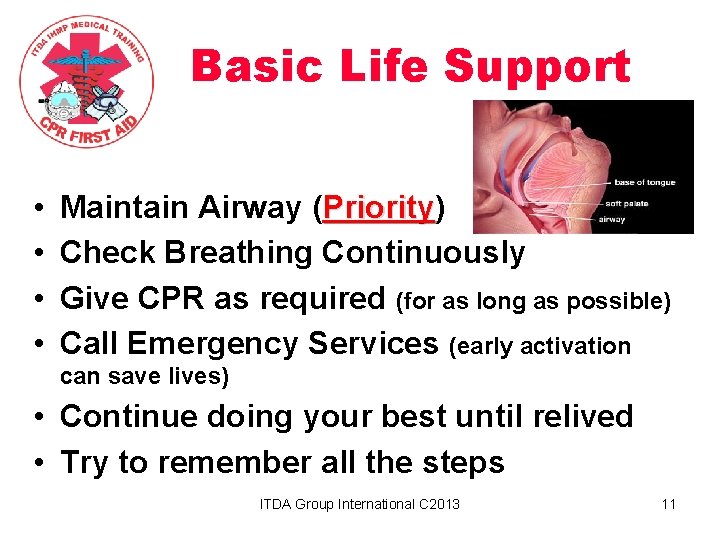
Basic Life Support • • Maintain Airway (Priority) Priority Check Breathing Continuously Give CPR as required (for as long as possible) Call Emergency Services (early activation can save lives) • Continue doing your best until relived • Try to remember all the steps ITDA Group International C 2013 11
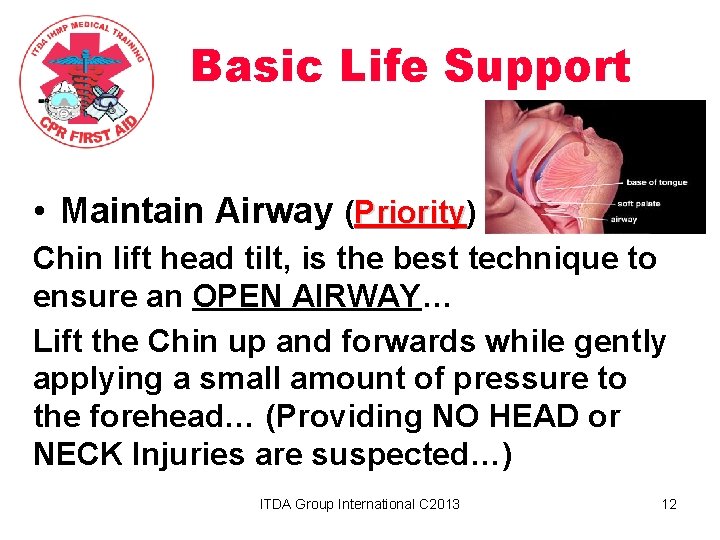
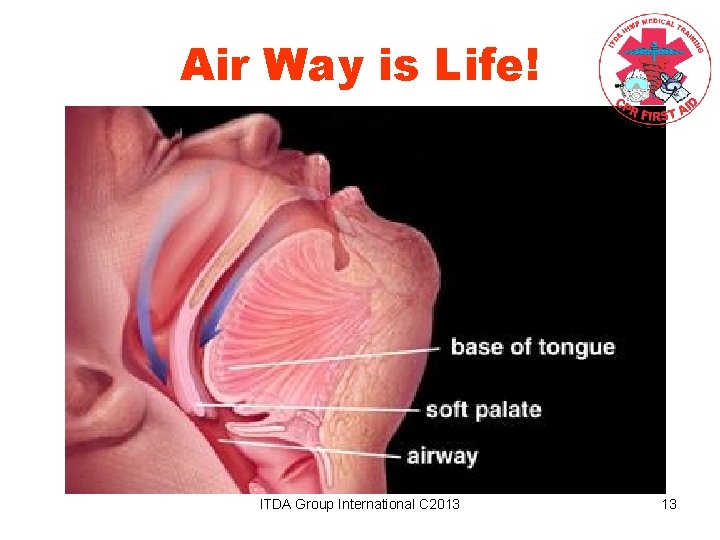
Basic Life Support • Maintain Airway (Priority) Priority Chin lift head tilt, is the best technique to ensure an OPEN AIRWAY… Lift the Chin up and forwards while gently applying a small amount of pressure to the forehead… (Providing NO HEAD or NECK Injuries are suspected…) ITDA Group International C 2013 12
Air Way is Life! ITDA Group International C 2013 13
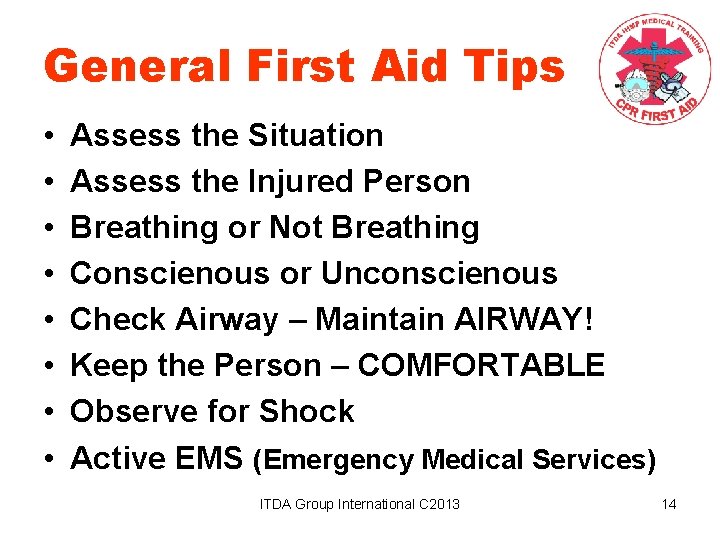
General First Aid Tips • • Assess the Situation Assess the Injured Person Breathing or Not Breathing Conscienous or Unconscienous Check Airway – Maintain AIRWAY! Keep the Person – COMFORTABLE Observe for Shock Active EMS (Emergency Medical Services) ITDA Group International C 2013 14
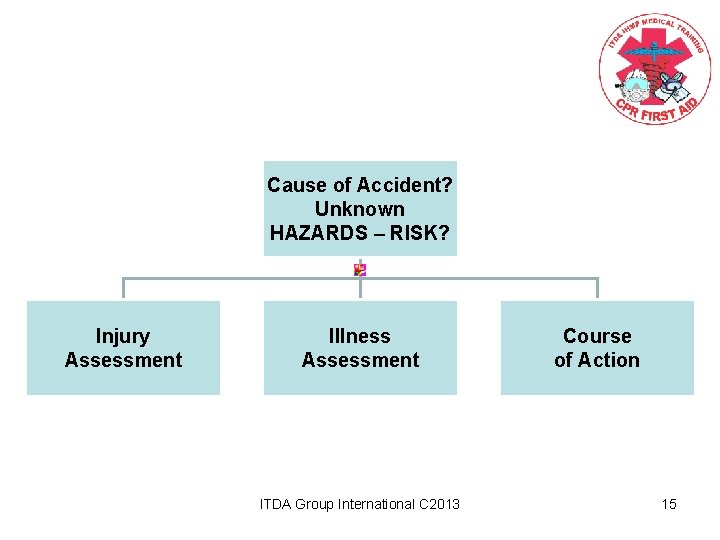
Cause of Accident? Unknown HAZARDS – RISK? Injury Assessment Illness Assessment ITDA Group International C 2013 Course of Action 15
Coming Across An Accident • • • Look for the Cause ? Perform A RISK ASSESSMENT DO NOT CAUSE ANOTHER ACCIDENT Approach with Caution Ask the person if they require help? If they refuse you should ask what help is available… Discuss “DUTY of CARE” with your trainer/instructor. ITDA Group International C 2013 16
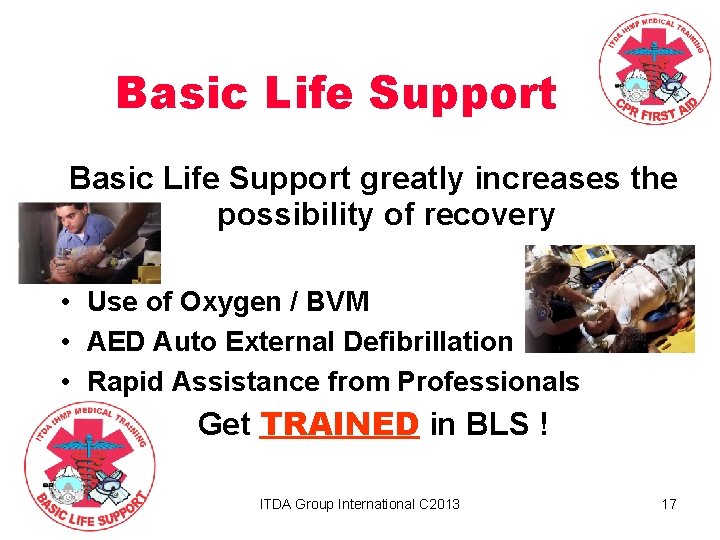
Basic Life Support greatly increases the possibility of recovery • Use of Oxygen / BVM • AED Auto External Defibrillation • Rapid Assistance from Professionals Get TRAINED in BLS ! ITDA Group International C 2013 17
Overview The most common forms of diving accidents have just two elements… § Problems: Accident or Injury, or Equipment malfunction (most rare!) § Divers Reaction to the problem: Fear and Panic or solution thinking ITDA Group International C 2013 18
Overview The most common causes of diving accidents: § Diving beyond training and experience level. § Gas Management & Failing to monitor air supply (Running low or out of Air) § Fear and Panic when a problem occurs ITDA Group International C 2013 19
Overview The way to avoid diving accidents: § Only dive within your training and experience level. § Monitor your air supply (and Buddy) § Stop, Think and then Act (Apply solution thinking to problems, never react! As this often leads to panic…) ITDA Group International C 2013 20
Overview REMEMBER THIS: PANIC KILLS ITDA Group International C 2013 21
Thank You Taking this program means that you take your responsibilities seriously • Ask your Instructor / Trainer About… Advanced Training, Dive Medic Basic Life Support First Aid Oxygen Training / AED First Aid Hyperbaric Training ITDA Group International C 2013 22
Dive Safely www. diveitda. org Mail: admin@diveitda. org ITDA Group International C 2013 23