
Cpr E 281 Digital Logic Instructor Alexander Stoytchev





- Slides: 64
Cpr. E 281: Digital Logic Instructor: Alexander Stoytchev http: //www. ece. iastate. edu/~alexs/classes/
State Minimization Cpr. E 281: Digital Logic Iowa State University, Ames, IA Copyright © Alexander Stoytchev
Administrative Stuff • Homework 10 is out • It is due on Monday Dec 2, 2013
Administrative Stuff • Extra Credit Homework #2 is out • Posted on the class web page • There are 4 problems • Due no later than the last lab for this semester • Submit your design on paper and demonstrate your circuit to the lab TAs using the boards in the lab.
Administrative Stuff • Final Project • Posted on the class web page (Labs section) • Pick one of the 4 problems and solve it. • Your grade will not depend on which project you pick • By this Friday you need to select your project number and e-mail that number to your lab TAs
Sample E-mail Hello TAs, I decided to pick problem number x for my final project in Cpr. E 281. Thanks, [your name]
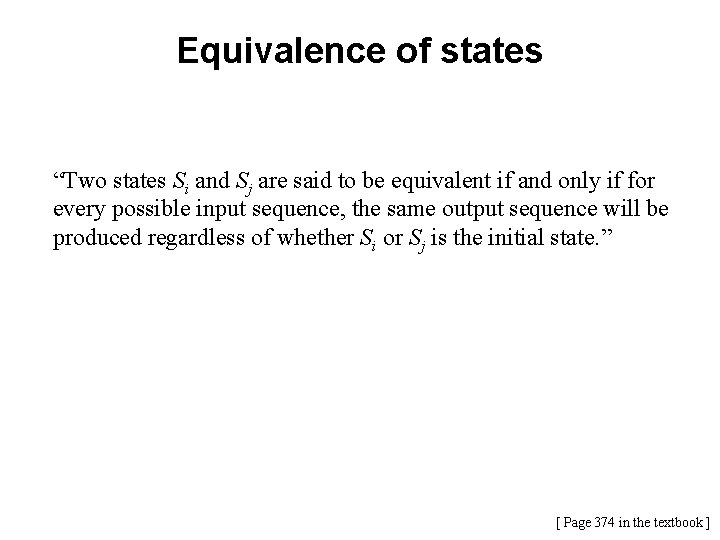
Equivalence of states “Two states Si and Sj are said to be equivalent if and only if for every possible input sequence, the same output sequence will be produced regardless of whether Si or Sj is the initial state. ” [ Page 374 in the textbook ]
Partition Minimization Procedure
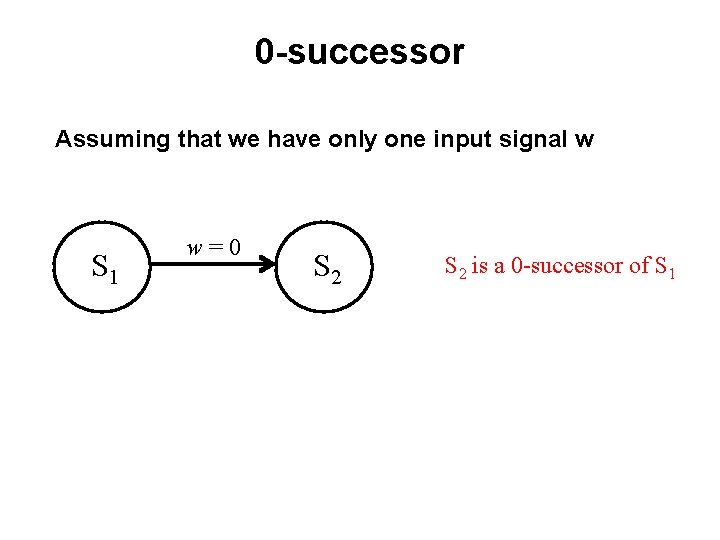
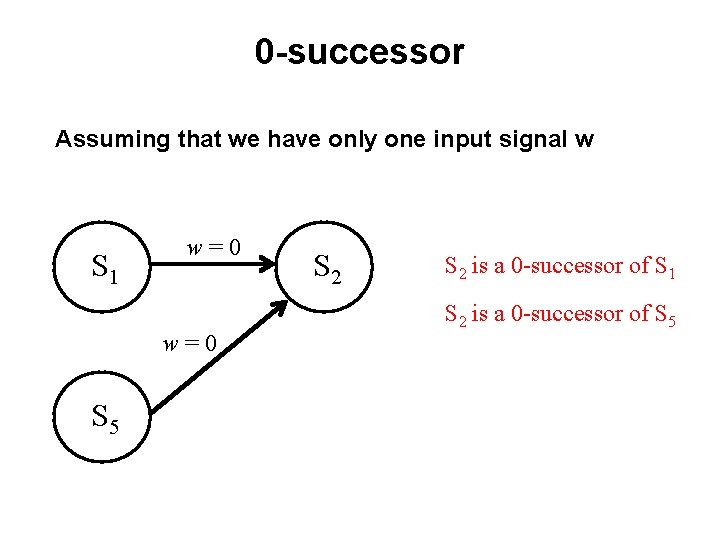
0 -successor Assuming that we have only one input signal w S 1 w=0 S 2 is a 0 -successor of S 1
0 -successor Assuming that we have only one input signal w S 1 w=0 S 5 S 2 is a 0 -successor of S 1 S 2 is a 0 -successor of S 5
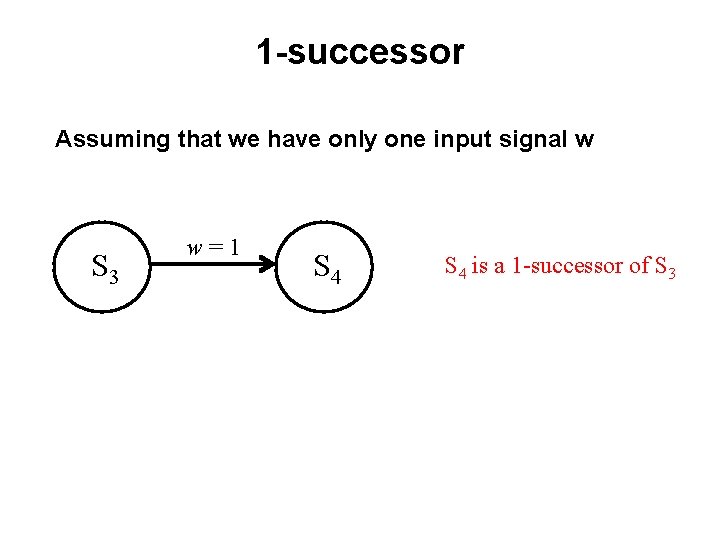
1 -successor Assuming that we have only one input signal w S 3 w=1 S 4 is a 1 -successor of S 3
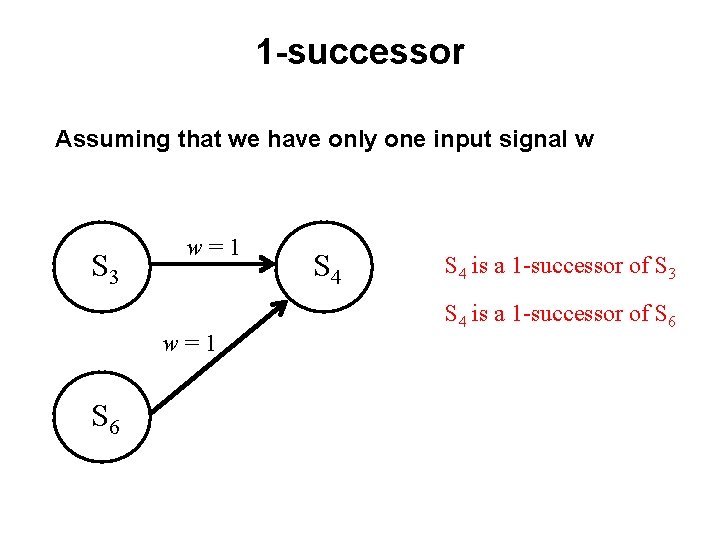
1 -successor Assuming that we have only one input signal w S 3 w=1 S 6 S 4 is a 1 -successor of S 3 S 4 is a 1 -successor of S 6
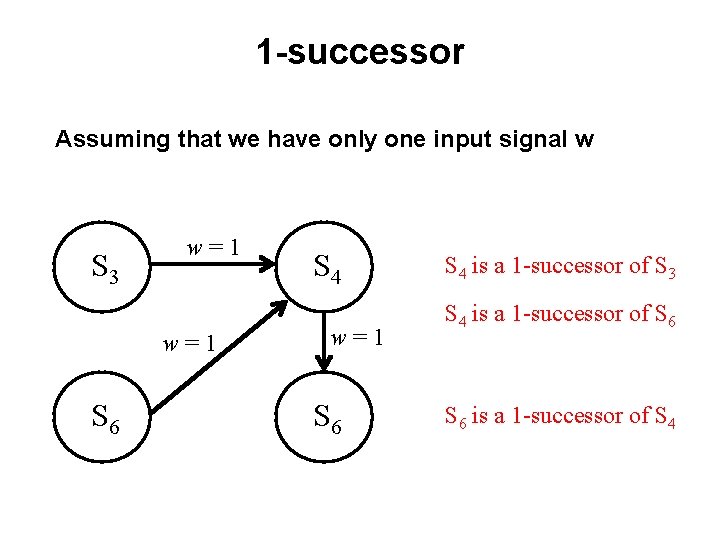
1 -successor Assuming that we have only one input signal w S 3 w=1 S 6 S 4 is a 1 -successor of S 3 S 4 is a 1 -successor of S 6 is a 1 -successor of S 4
k-successors of a State Assuming that we have only one input signal w, then k can only be equal to 0 or 1.
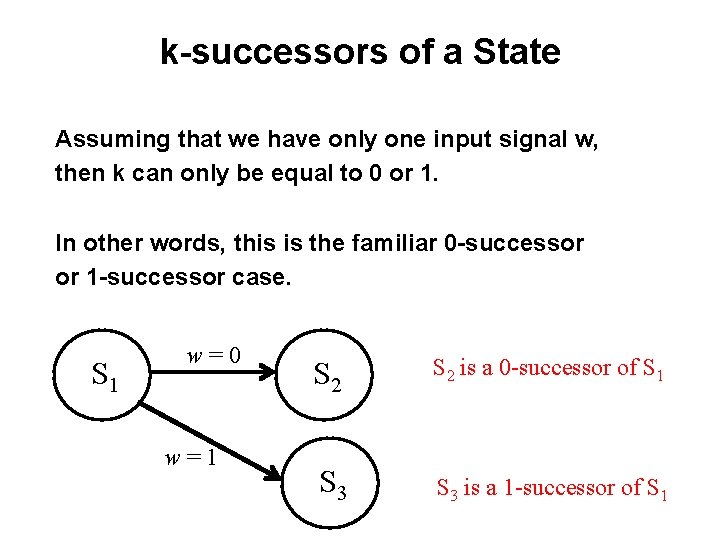
k-successors of a State Assuming that we have only one input signal w, then k can only be equal to 0 or 1. In other words, this is the familiar 0 -successor or 1 -successor case. S 1 w=0 w=1 S 2 is a 0 -successor of S 1 S 3 is a 1 -successor of S 1
k-successors of a State If we have two input signals, e. g. , w 0 and w 1, then k can only be equal to 0, 1, 2, or 3.
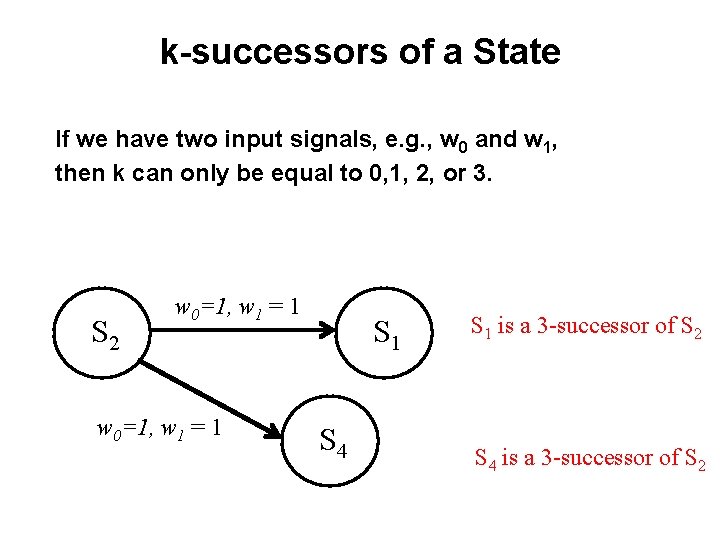
k-successors of a State If we have two input signals, e. g. , w 0 and w 1, then k can only be equal to 0, 1, 2, or 3. S 2 w 0=1, w 1 = 1 S 1 S 4 S 1 is a 3 -successor of S 2 S 4 is a 3 -successor of S 2
Equivalence of states “If states Si and Sj are equivalent, then their corresponding -successors (for all k) are also equivalent. ” k [ Page 374 in the textbook ]
Partition “A partition consists of one or more blocks, where each block comprises a subset of states that may be equivalent, but the states in a given block are definitely not equivalent to the states in other blocks. ” [ Page 374 in the textbook ]
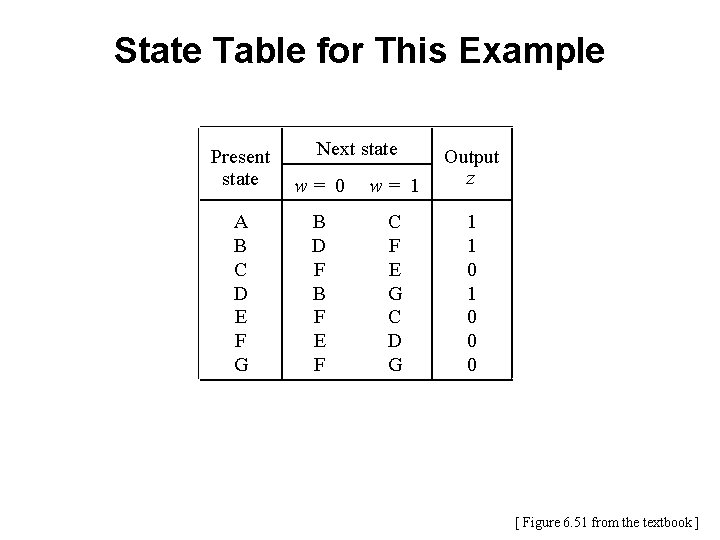
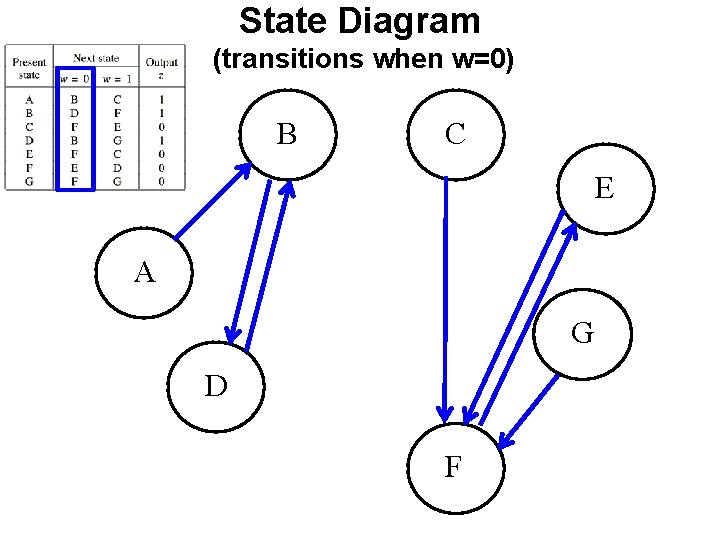
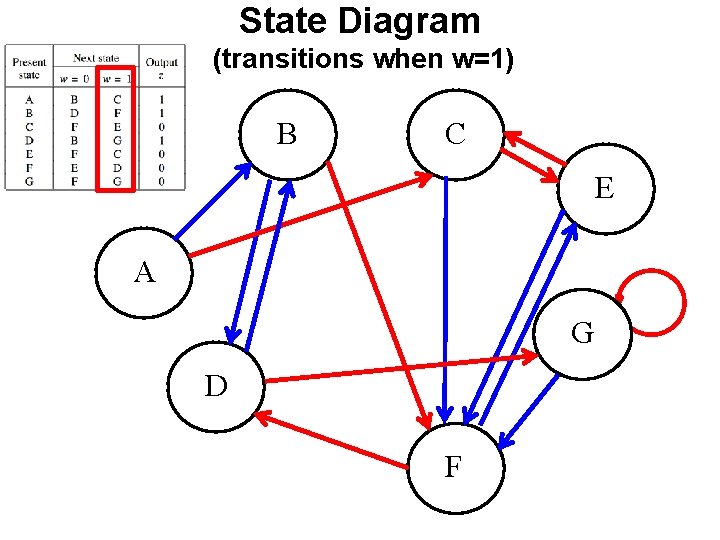
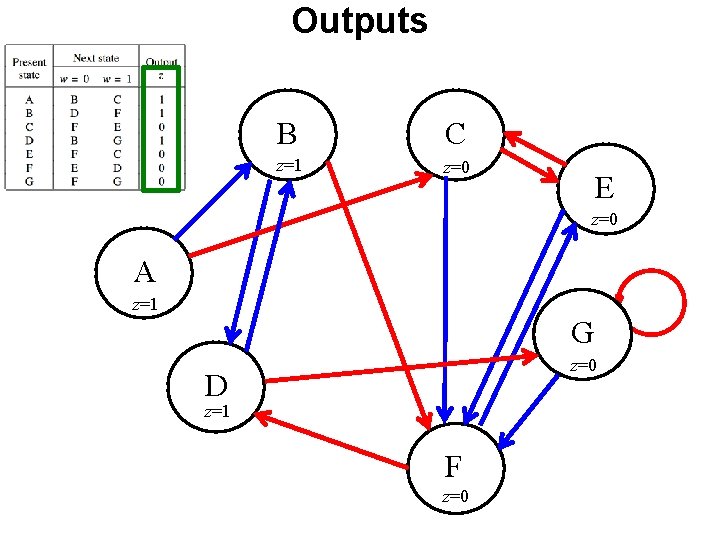
State Table for This Example Next state Present state w= 0 w= 1 Output z A B C D E F G B D F B F E F C F E G C D G 1 1 0 0 0 [ Figure 6. 51 from the textbook ]
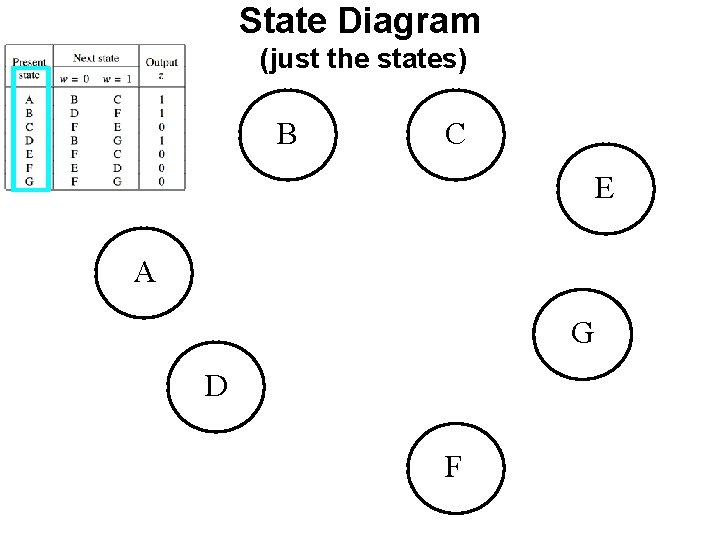
State Diagram (just the states) B C E A G D F
State Diagram (transitions when w=0) B C E A G D F
State Diagram (transitions when w=1) B C E A G D F
Outputs B C z=1 z=0 E z=0 A z=1 G z=0 D z=1 F z=0
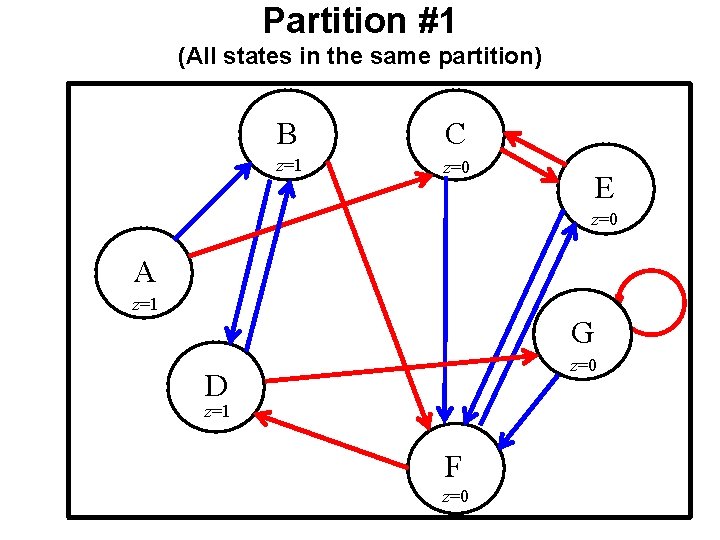
Partition #1 (All states in the same partition) B C z=1 z=0 E z=0 A z=1 G z=0 D z=1 F z=0
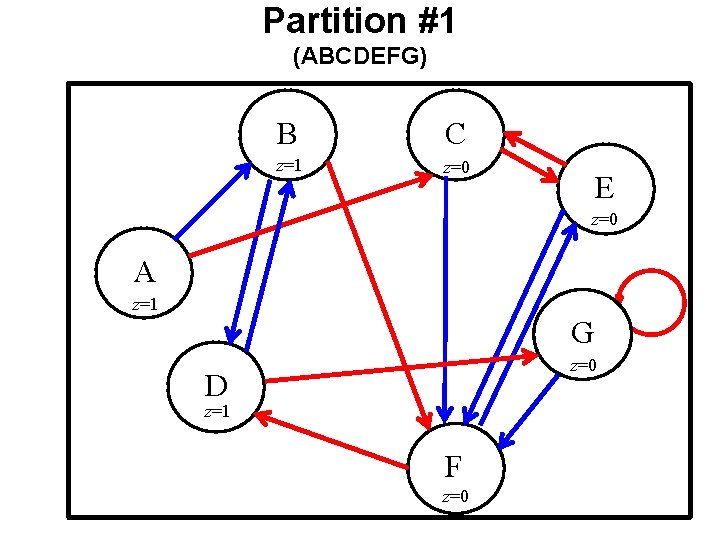
Partition #1 (ABCDEFG) B C z=1 z=0 E z=0 A z=1 G z=0 D z=1 F z=0
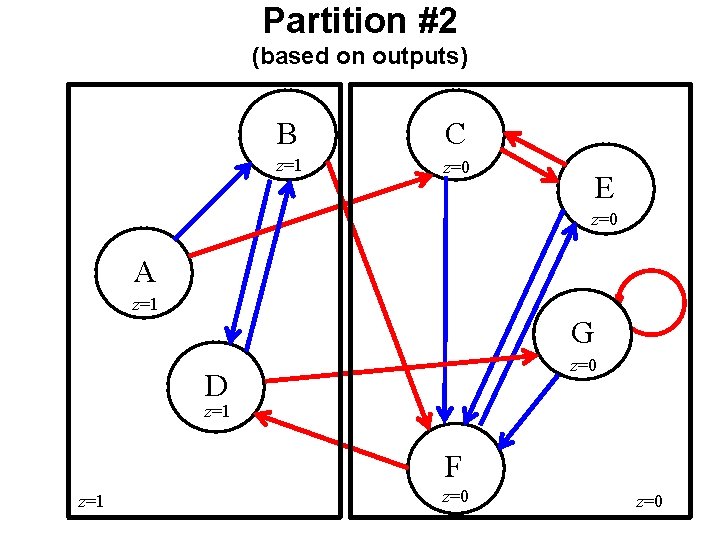
Partition #2 (based on outputs) B C z=1 z=0 E z=0 A z=1 G z=0 D z=1 F z=1 z=0
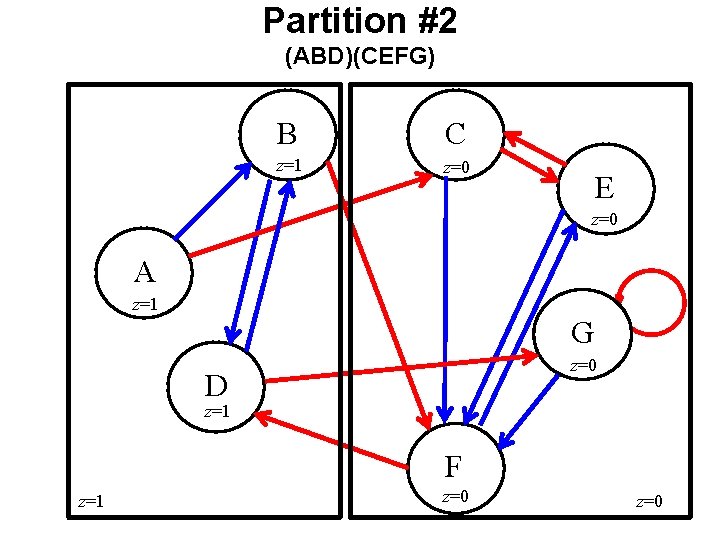
Partition #2 (ABD)(CEFG) B C z=1 z=0 E z=0 A z=1 G z=0 D z=1 F z=1 z=0
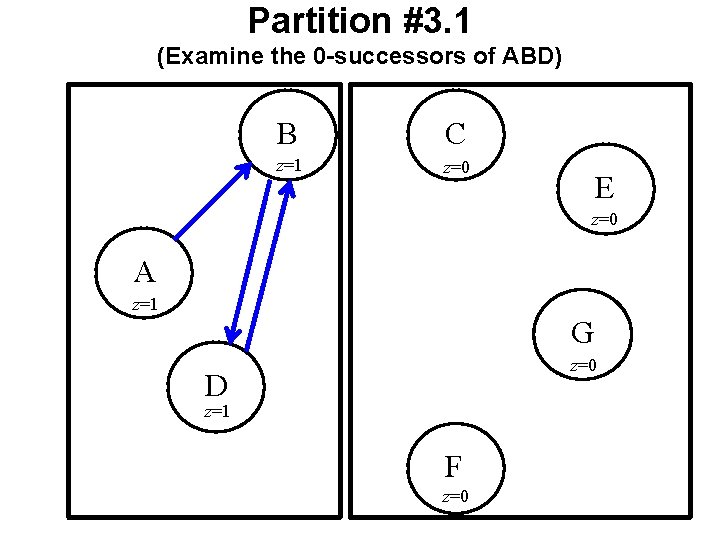
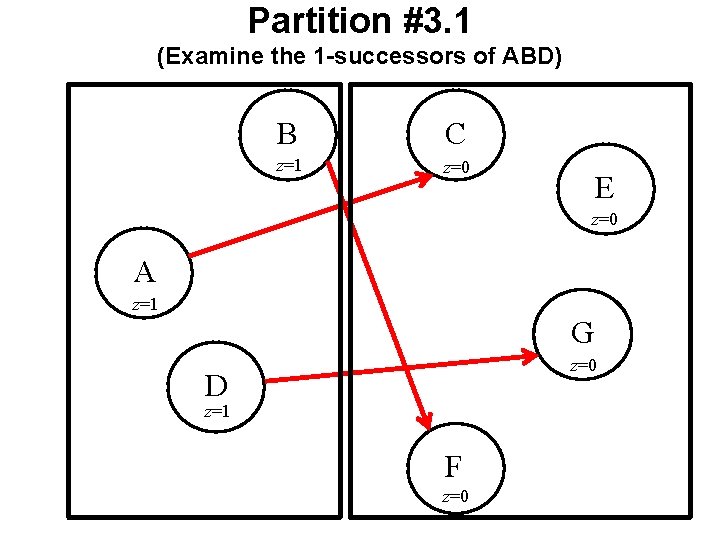
Partition #3. 1 (Examine the 0 -successors of ABD) B C z=1 z=0 E z=0 A z=1 G z=0 D z=1 F z=0
Partition #3. 1 (Examine the 1 -successors of ABD) B C z=1 z=0 E z=0 A z=1 G z=0 D z=1 F z=0
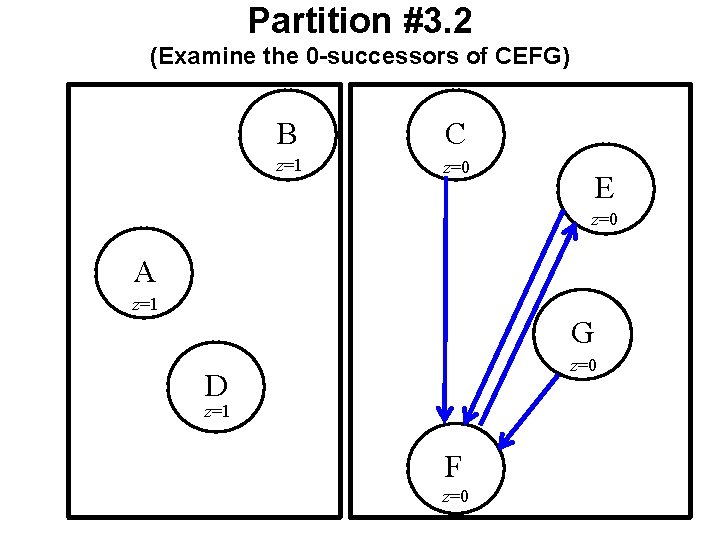
Partition #3. 2 (Examine the 0 -successors of CEFG) B C z=1 z=0 E z=0 A z=1 G z=0 D z=1 F z=0
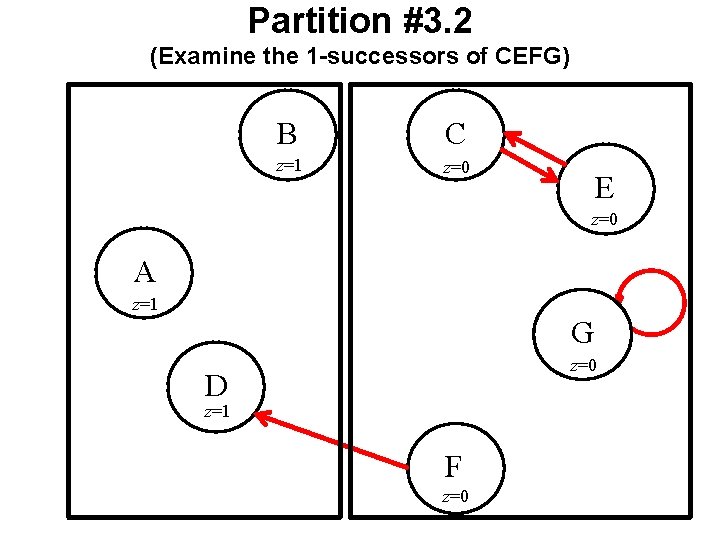
Partition #3. 2 (Examine the 1 -successors of CEFG) B C z=1 z=0 E z=0 A z=1 G z=0 D z=1 F z=0
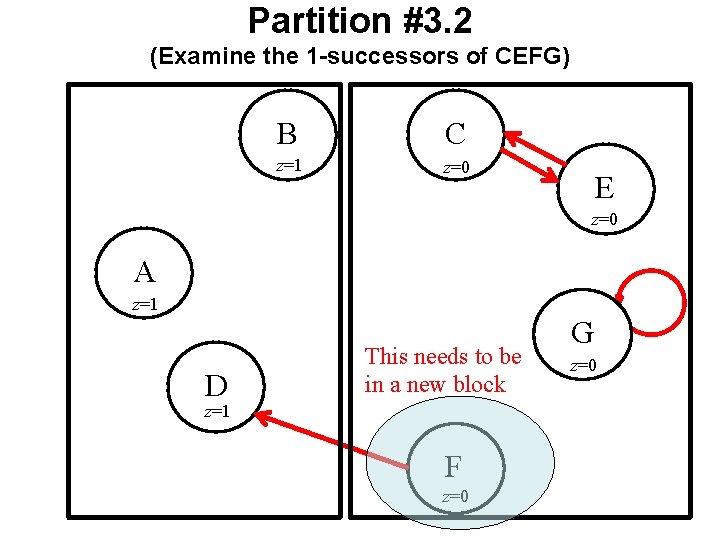
Partition #3. 2 (Examine the 1 -successors of CEFG) B C z=1 z=0 E z=0 A z=1 D This needs to be in a new block z=1 F z=0 G z=0
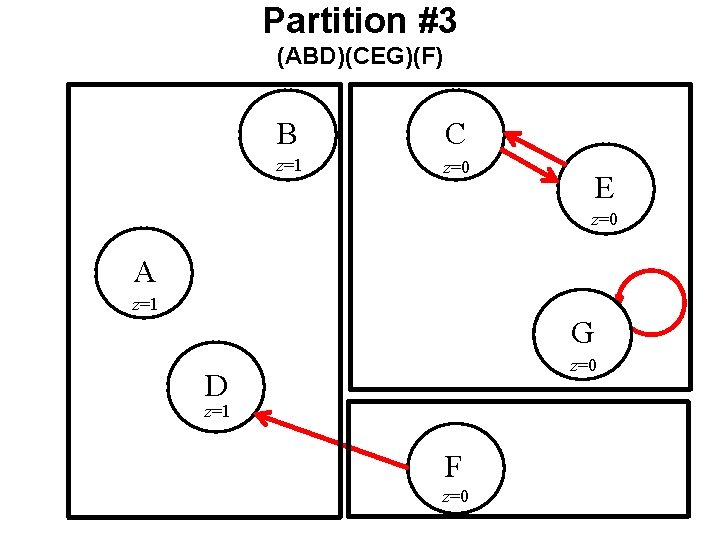
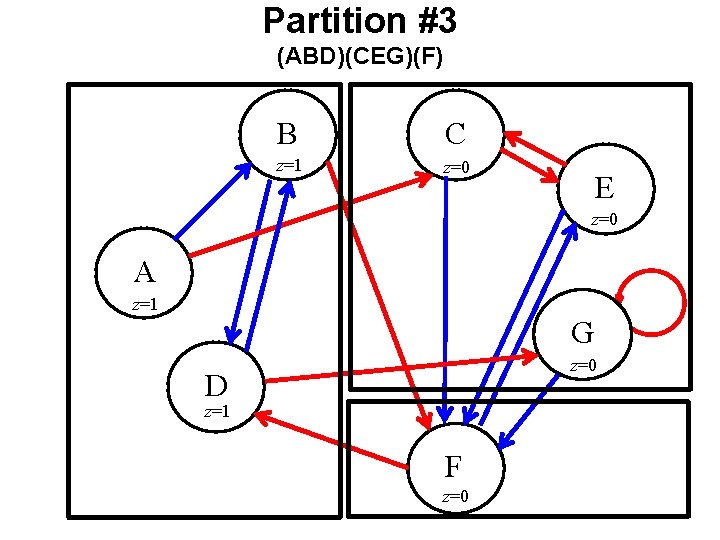
Partition #3 (ABD)(CEG)(F) B C z=1 z=0 E z=0 A z=1 G z=0 D z=1 F z=0
Partition #3 (ABD)(CEG)(F) B C z=1 z=0 E z=0 A z=1 G z=0 D z=1 F z=0
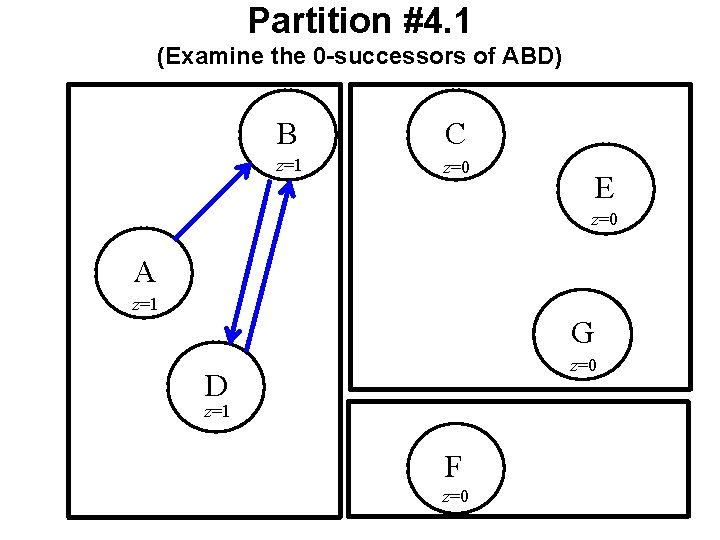
Partition #4. 1 (Examine the 0 -successors of ABD) B C z=1 z=0 E z=0 A z=1 G z=0 D z=1 F z=0
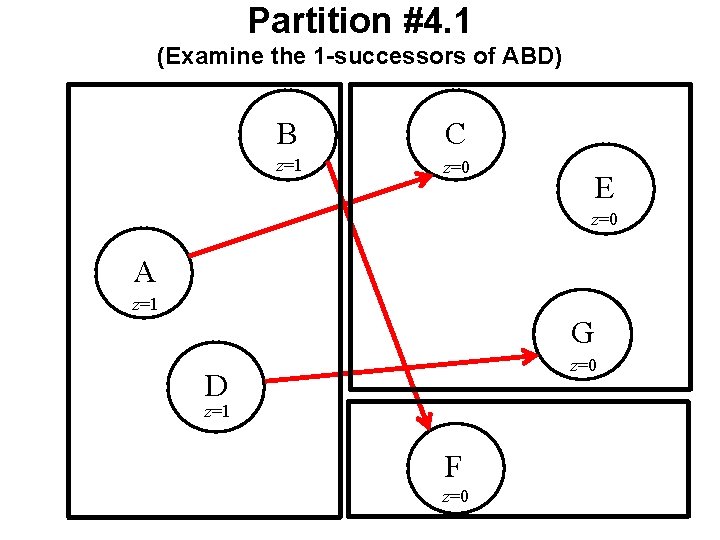
Partition #4. 1 (Examine the 1 -successors of ABD) B C z=1 z=0 E z=0 A z=1 G z=0 D z=1 F z=0
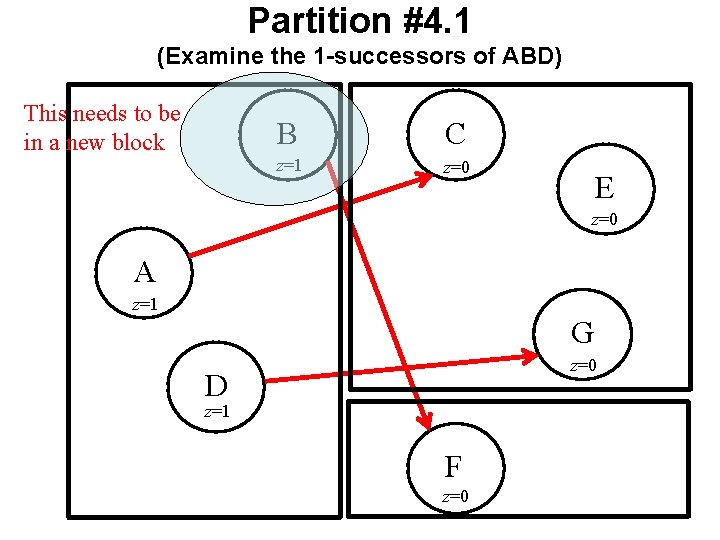
Partition #4. 1 (Examine the 1 -successors of ABD) This needs to be in a new block B C z=1 z=0 E z=0 A z=1 G z=0 D z=1 F z=0
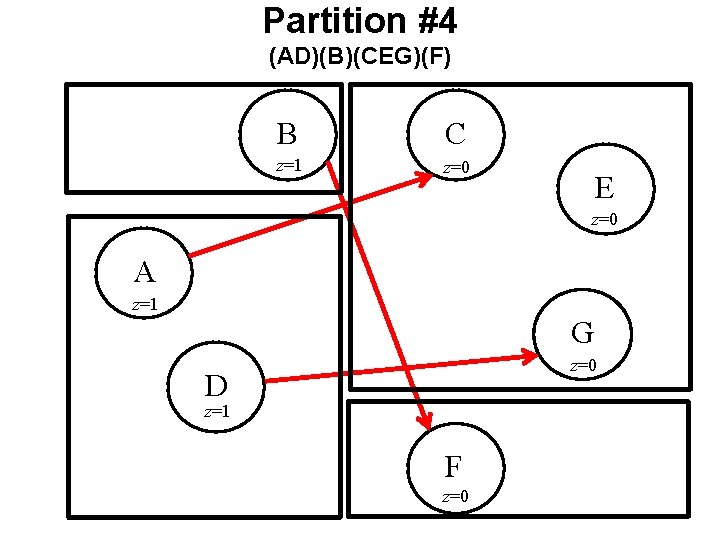
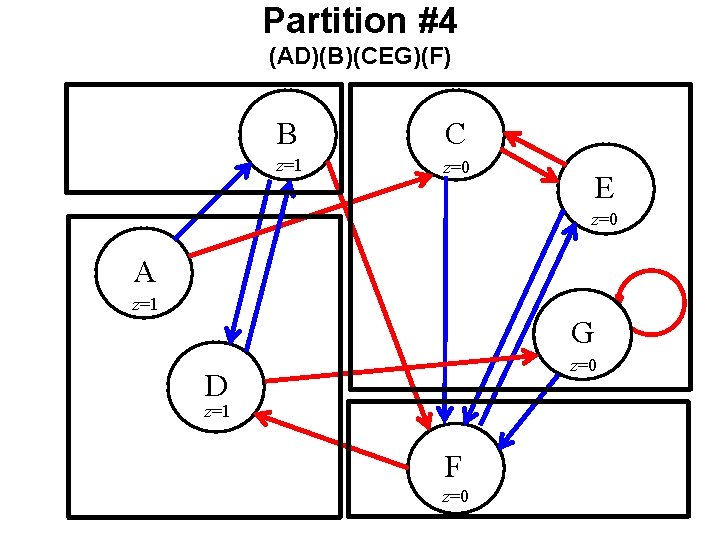
Partition #4 (AD)(B)(CEG)(F) B C z=1 z=0 E z=0 A z=1 G z=0 D z=1 F z=0
Partition #4 (AD)(B)(CEG)(F) B C z=1 z=0 E z=0 A z=1 G z=0 D z=1 F z=0
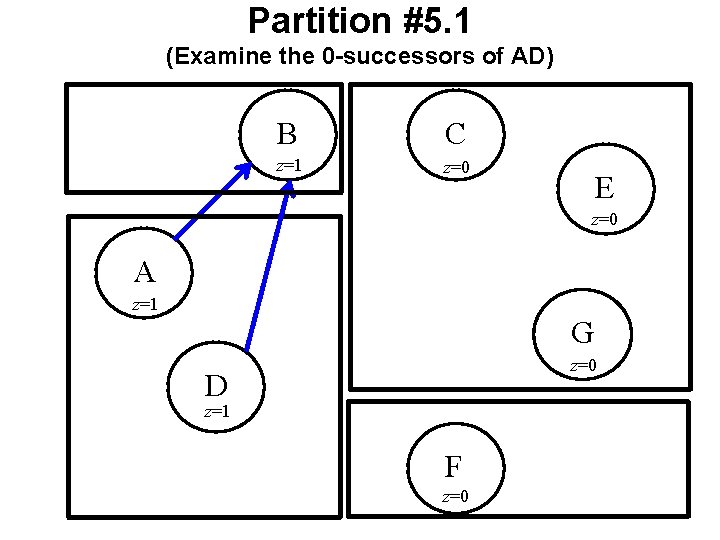
Partition #5. 1 (Examine the 0 -successors of AD) B C z=1 z=0 E z=0 A z=1 G z=0 D z=1 F z=0
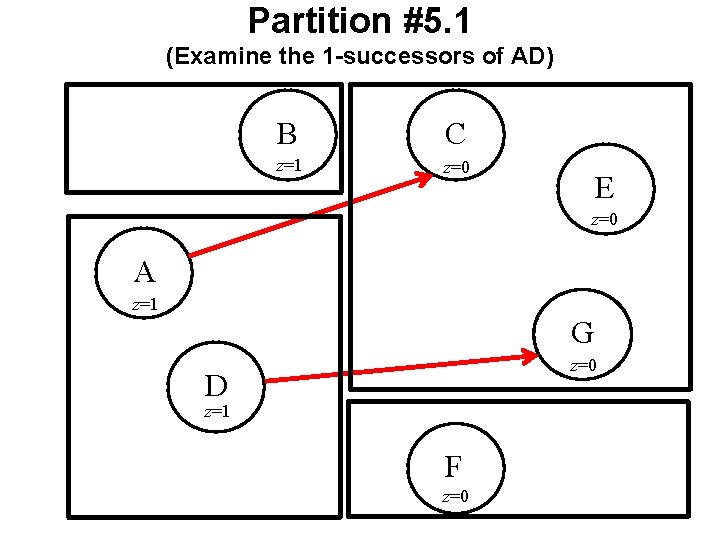
Partition #5. 1 (Examine the 1 -successors of AD) B C z=1 z=0 E z=0 A z=1 G z=0 D z=1 F z=0
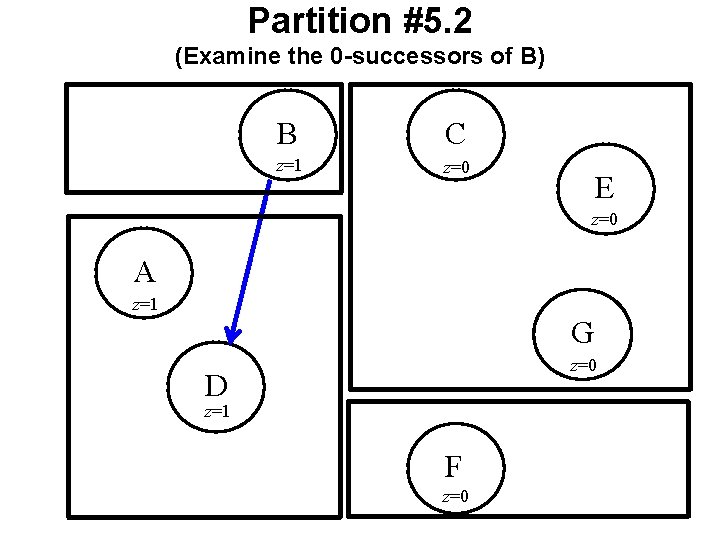
Partition #5. 2 (Examine the 0 -successors of B) B C z=1 z=0 E z=0 A z=1 G z=0 D z=1 F z=0
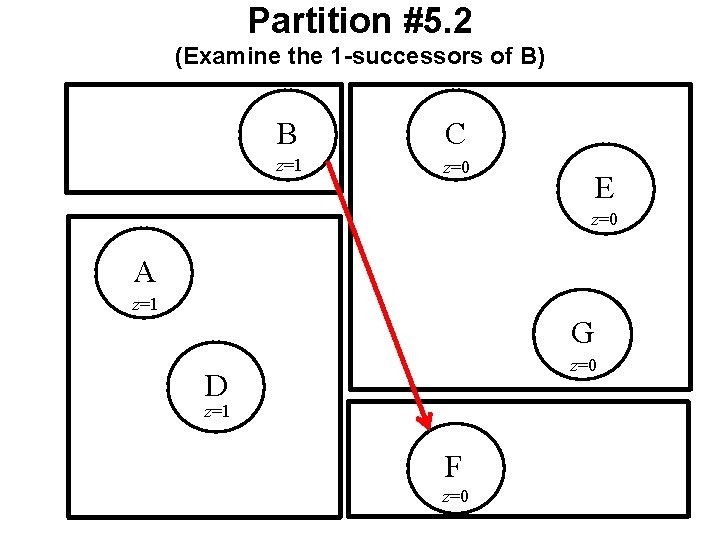
Partition #5. 2 (Examine the 1 -successors of B) B C z=1 z=0 E z=0 A z=1 G z=0 D z=1 F z=0
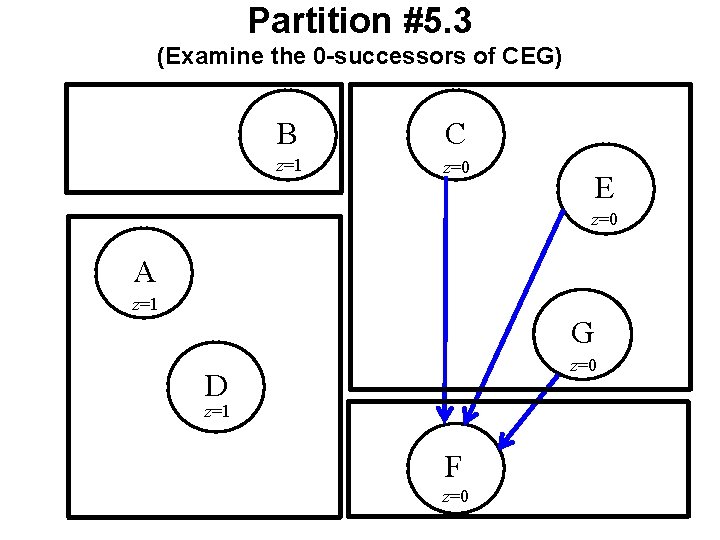
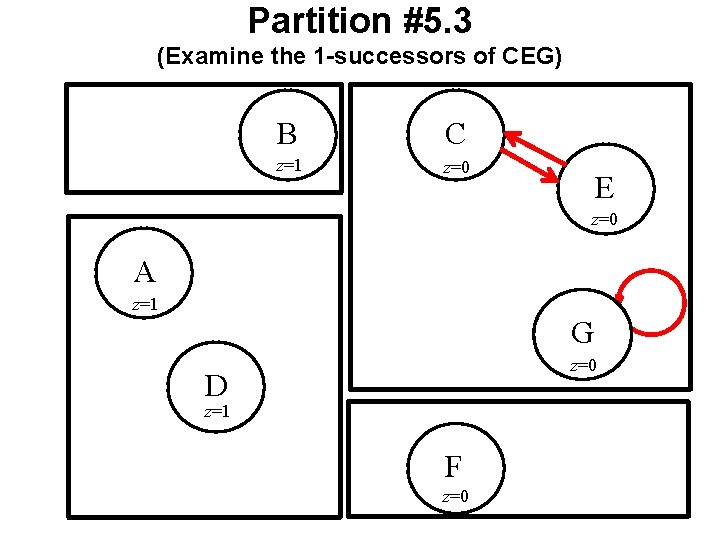
Partition #5. 3 (Examine the 0 -successors of CEG) B C z=1 z=0 E z=0 A z=1 G z=0 D z=1 F z=0
Partition #5. 3 (Examine the 1 -successors of CEG) B C z=1 z=0 E z=0 A z=1 G z=0 D z=1 F z=0
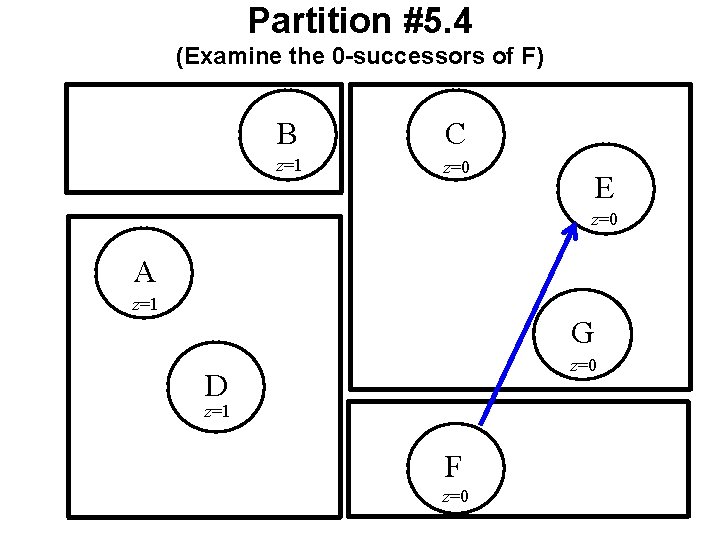
Partition #5. 4 (Examine the 0 -successors of F) B C z=1 z=0 E z=0 A z=1 G z=0 D z=1 F z=0
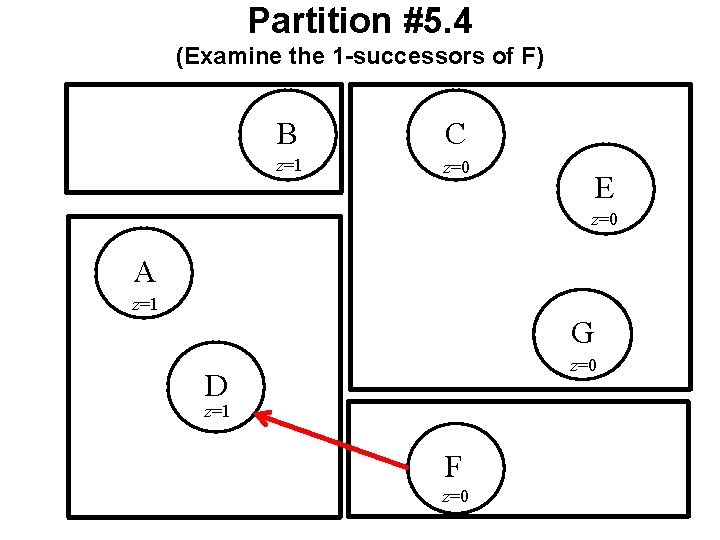
Partition #5. 4 (Examine the 1 -successors of F) B C z=1 z=0 E z=0 A z=1 G z=0 D z=1 F z=0
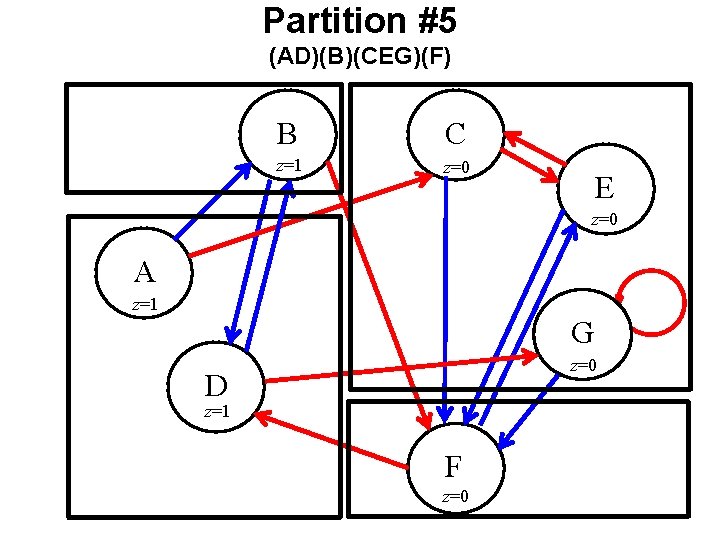
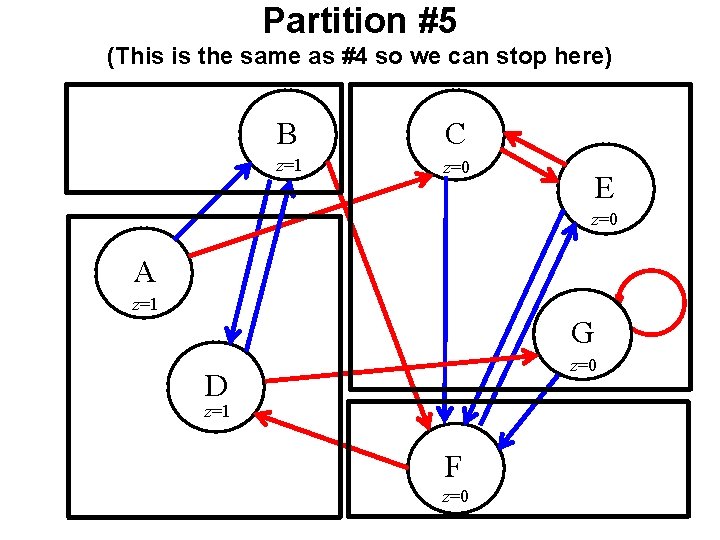
Partition #5 (AD)(B)(CEG)(F) B C z=1 z=0 E z=0 A z=1 G z=0 D z=1 F z=0
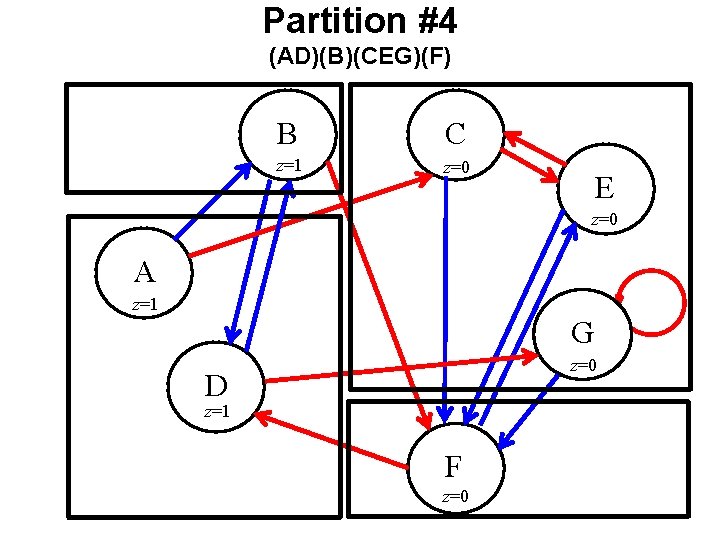
Partition #4 (AD)(B)(CEG)(F) B C z=1 z=0 E z=0 A z=1 G z=0 D z=1 F z=0
Partition #5 (This is the same as #4 so we can stop here) B C z=1 z=0 E z=0 A z=1 G z=0 D z=1 F z=0
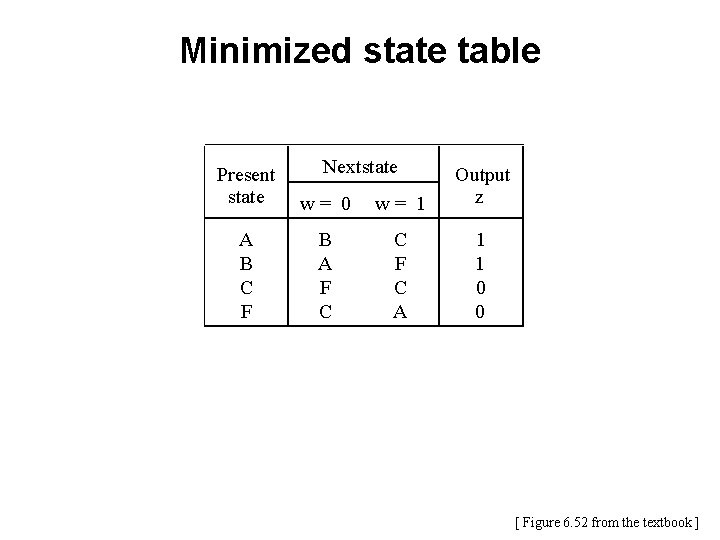
Minimized state table Nextstate Present state w= 0 w= 1 Output z A B C F B A F C C F C A 1 1 0 0 [ Figure 6. 52 from the textbook ]
Vending Machine Example
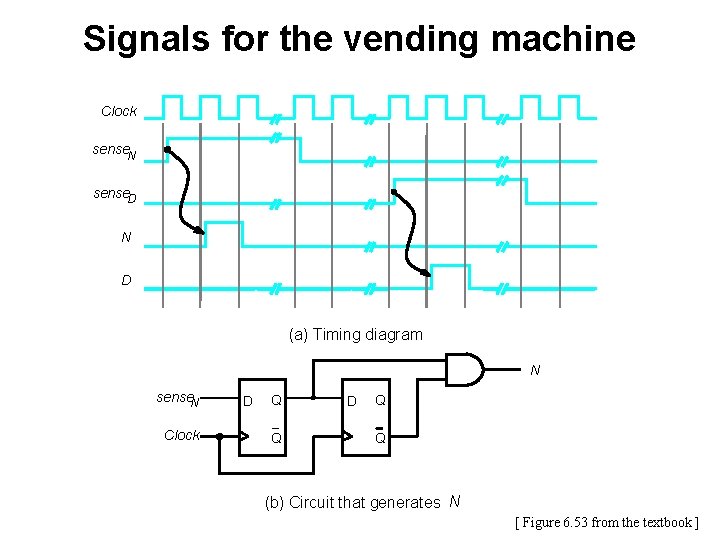
Signals for the vending machine Clock sense. N sense. D N D (a) Timing diagram N sense. N Clock D Q Q (b) Circuit that generates N [ Figure 6. 53 from the textbook ]
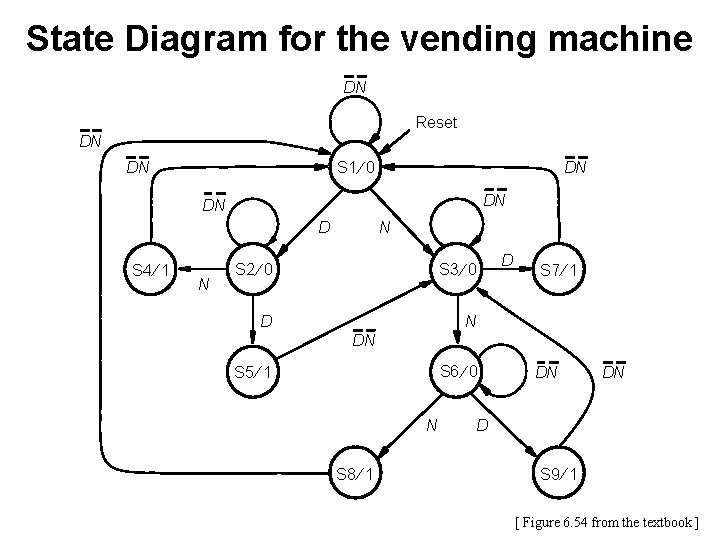
State Diagram for the vending machine DN Reset DN S 1 ¤ 0 DN DN D S 4 ¤ 1 N N S 2 ¤ 0 S 3 ¤ 0 D N D S 7 ¤ 1 DN S 6 ¤ 0 S 5 ¤ 1 N S 8 ¤ 1 DN DN D S 9 ¤ 1 [ Figure 6. 54 from the textbook ]
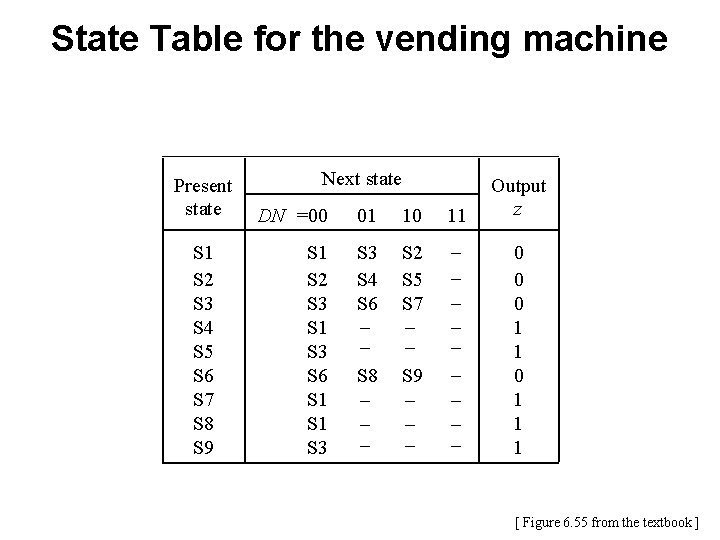
State Table for the vending machine Present state S 1 S 2 S 3 S 4 S 5 S 6 S 7 S 8 S 9 Next state DN =00 01 10 11 Output z S 1 S 2 S 3 S 1 S 3 S 6 S 1 S 3 S 4 S 6 – – S 8 – – – S 2 S 5 S 7 – – S 9 – – – 0 0 0 1 1 1 [ Figure 6. 55 from the textbook ]
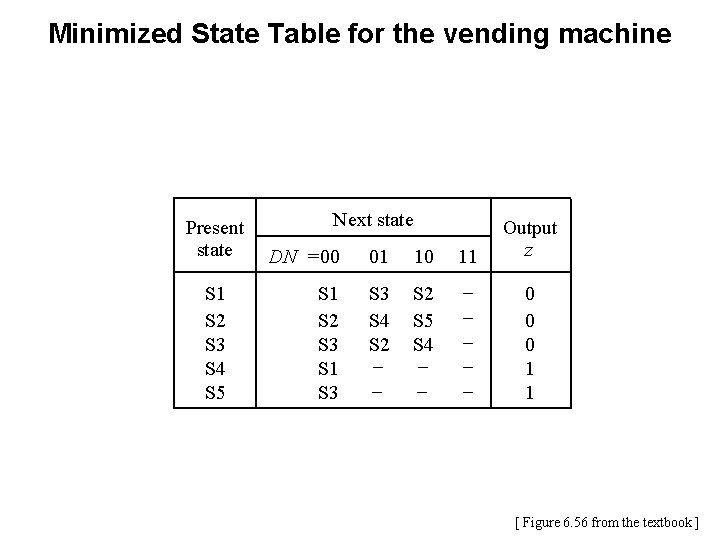
Minimized State Table for the vending machine Present state S 1 S 2 S 3 S 4 S 5 Next state DN =00 01 10 11 Output z S 1 S 2 S 3 S 1 S 3 S 4 S 2 – – S 2 S 5 S 4 – – – – 0 0 0 1 1 [ Figure 6. 56 from the textbook ]
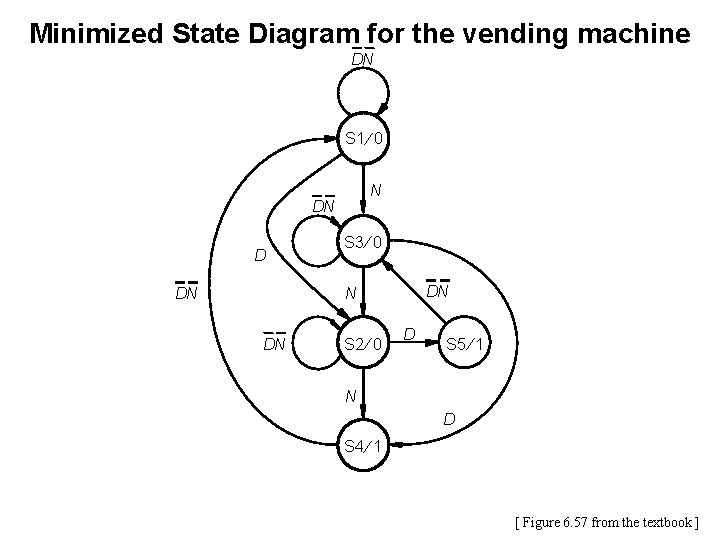
Minimized State Diagram for the vending machine DN S 1 ¤ 0 N DN D DN S 3 ¤ 0 DN N DN S 2 ¤ 0 D S 5 ¤ 1 N D S 4 ¤ 1 [ Figure 6. 57 from the textbook ]
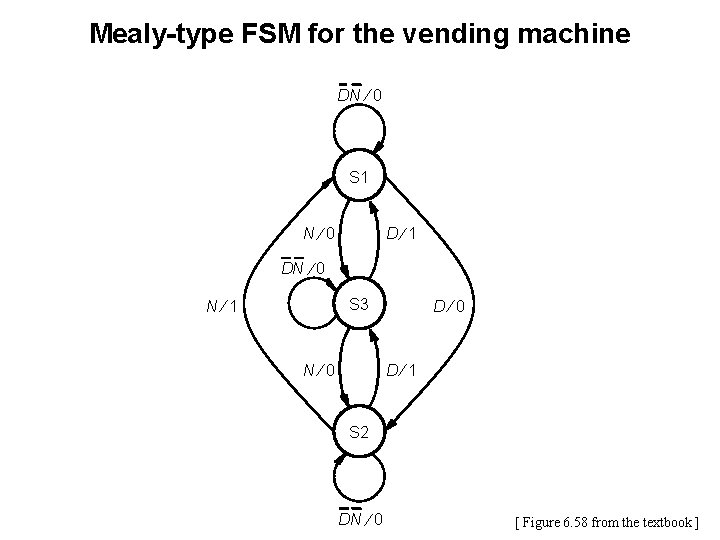
Mealy-type FSM for the vending machine DN ¤ 0 S 1 N¤ 0 D¤ 1 DN ¤ 0 N¤ 1 D¤ 0 S 3 N¤ 0 D¤ 1 S 2 DN ¤ 0 [ Figure 6. 58 from the textbook ]
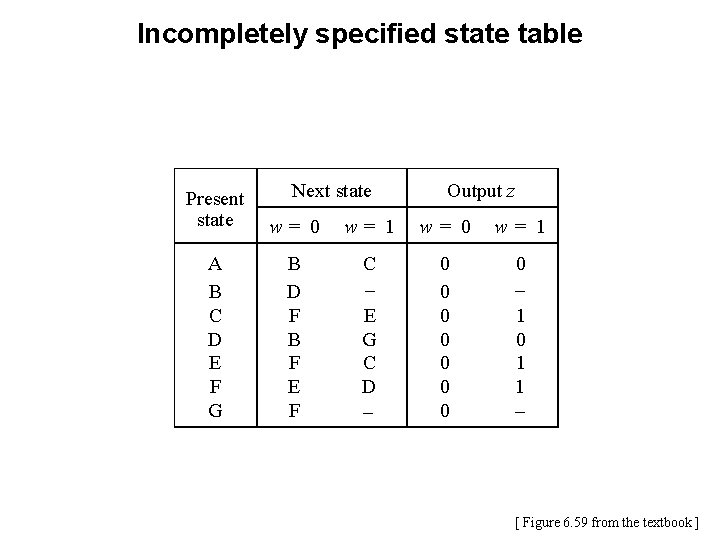
Incompletely specified state table Next state Output z Present state w= 0 w= 1 A B C D E F G B D F B F E F C – E G C D – 0 0 0 0 – 1 0 1 1 – [ Figure 6. 59 from the textbook ]
Questions?
THE END