
Cpr E 281 Digital Logic Instructor Alexander Stoytchev




![Addition of two 1 -bit numbers [ Figure 2. 12 from the textbook ]](https://slidetodoc.com/presentation_image_h2/696e13dafe21fbc38209b07c43ab443d/image-38.jpg "Addition of two 1 -bit numbers [ Figure 2. 12 from the textbook ]")
![The Half-Adder [ Figure 3. 1 c-d from the textbook ]](https://slidetodoc.com/presentation_image_h2/696e13dafe21fbc38209b07c43ab443d/image-62.jpg "The Half-Adder [ Figure 3. 1 c-d from the textbook ]")
![Problem Statement and Truth Table [ Figure 3. 2 b from the textbook ]](https://slidetodoc.com/presentation_image_h2/696e13dafe21fbc38209b07c43ab443d/image-73.jpg "Problem Statement and Truth Table [ Figure 3. 2 b from the textbook ]")
![Let’s fill-in the two K-maps [ Figure 3. 3 a-b from the textbook ]](https://slidetodoc.com/presentation_image_h2/696e13dafe21fbc38209b07c43ab443d/image-74.jpg "Let’s fill-in the two K-maps [ Figure 3. 3 a-b from the textbook ]")
![Let’s fill-in the two K-maps [ Figure 3. 3 a-b from the textbook ]](https://slidetodoc.com/presentation_image_h2/696e13dafe21fbc38209b07c43ab443d/image-77.jpg "Let’s fill-in the two K-maps [ Figure 3. 3 a-b from the textbook ]")
![This is called the Full-Adder [ Figure 3. 3 c from the textbook ]](https://slidetodoc.com/presentation_image_h2/696e13dafe21fbc38209b07c43ab443d/image-80.jpg "This is called the Full-Adder [ Figure 3. 3 c from the textbook ]")
![[ Figure 3. 6 a from the textbook ]](https://slidetodoc.com/presentation_image_h2/696e13dafe21fbc38209b07c43ab443d/image-97.jpg "[ Figure 3. 6 a from the textbook ]")
![A A [ Figure 3. 6 a from the textbook ]](https://slidetodoc.com/presentation_image_h2/696e13dafe21fbc38209b07c43ab443d/image-98.jpg "A A [ Figure 3. 6 a from the textbook ]")
![A A 2 A [ Figure 3. 6 a from the textbook ]](https://slidetodoc.com/presentation_image_h2/696e13dafe21fbc38209b07c43ab443d/image-99.jpg "A A 2 A [ Figure 3. 6 a from the textbook ]")
![A 2 A A A [ Figure 3. 6 a from the textbook ]](https://slidetodoc.com/presentation_image_h2/696e13dafe21fbc38209b07c43ab443d/image-100.jpg "A 2 A A A [ Figure 3. 6 a from the textbook ]")
![[ Figure 3. 6 b from the textbook ]](https://slidetodoc.com/presentation_image_h2/696e13dafe21fbc38209b07c43ab443d/image-108.jpg "[ Figure 3. 6 b from the textbook ]")
![2 A A 3 A [ Figure 3. 6 b from the textbook ]](https://slidetodoc.com/presentation_image_h2/696e13dafe21fbc38209b07c43ab443d/image-110.jpg "2 A A 3 A [ Figure 3. 6 b from the textbook ]")


- Slides: 112
Cpr. E 281: Digital Logic Instructor: Alexander Stoytchev http: //www. ece. iastate. edu/~alexs/classes/
Addition of Unsigned Numbers Cpr. E 281: Digital Logic Iowa State University, Ames, IA Copyright © Alexander Stoytchev
Administrative Stuff • HW 4 is due today
Administrative Stuff • HW 5 is due next Monday
Administrative Stuff • The first midterm is this Friday
Quick Review
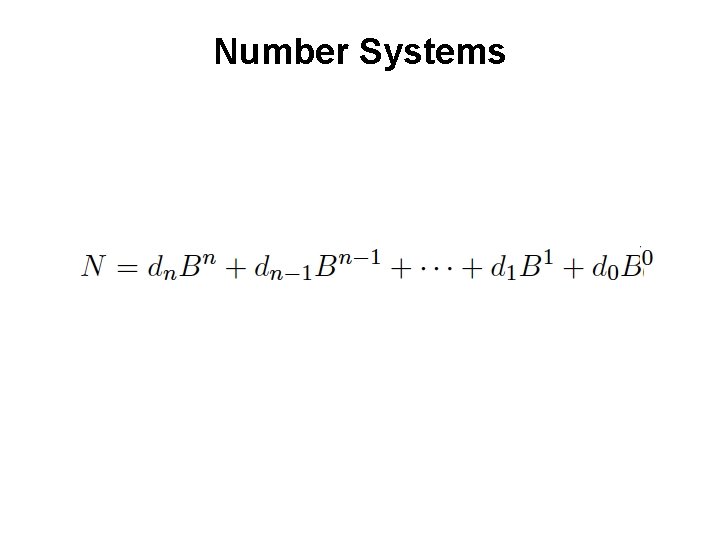
Number Systems
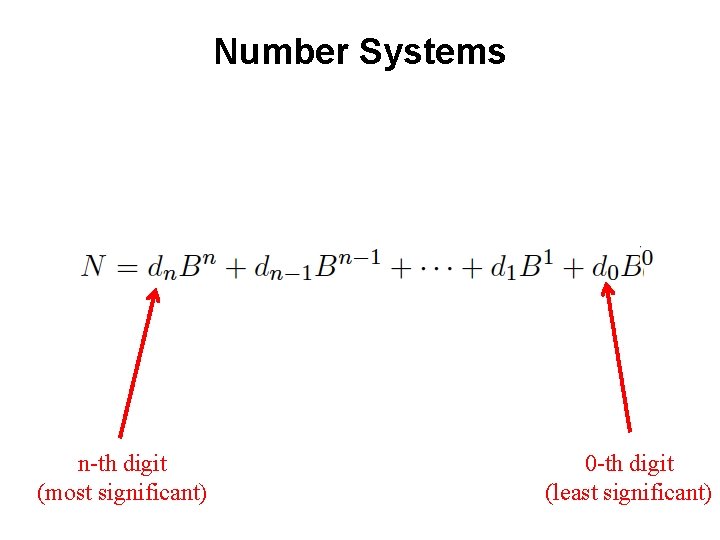
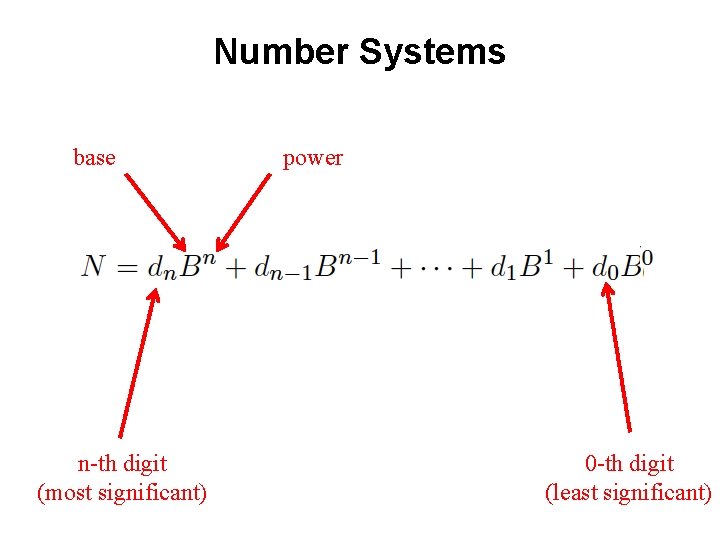
Number Systems n-th digit (most significant) 0 -th digit (least significant)
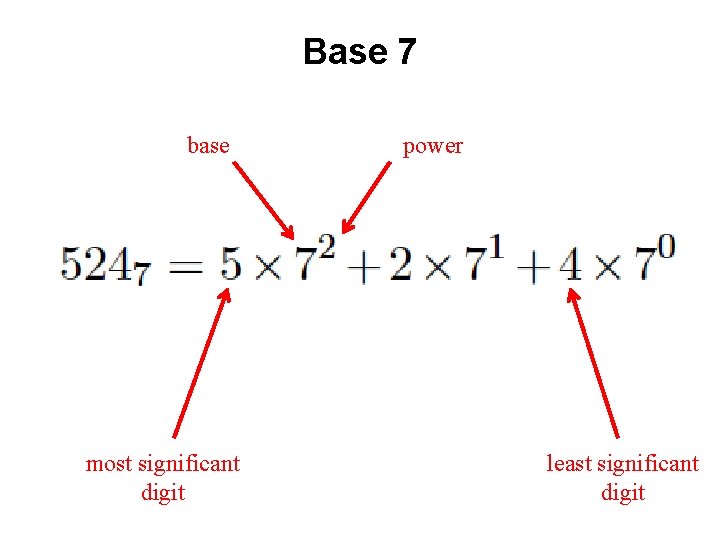
Number Systems base n-th digit (most significant) power 0 -th digit (least significant)
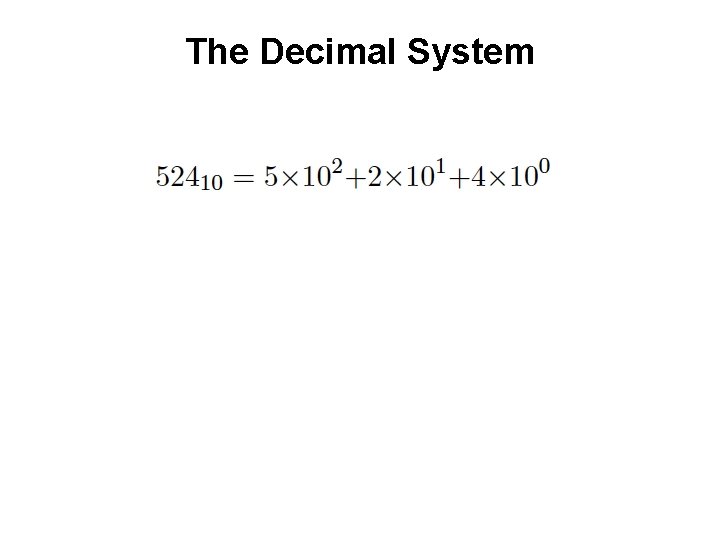
The Decimal System
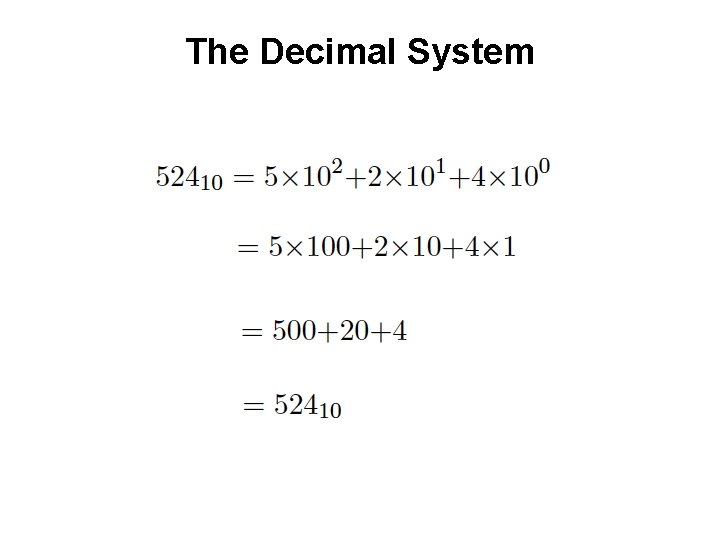
The Decimal System
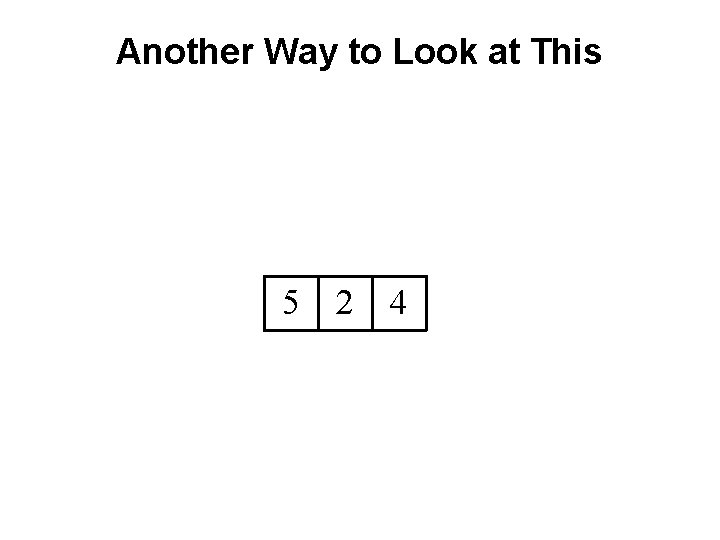
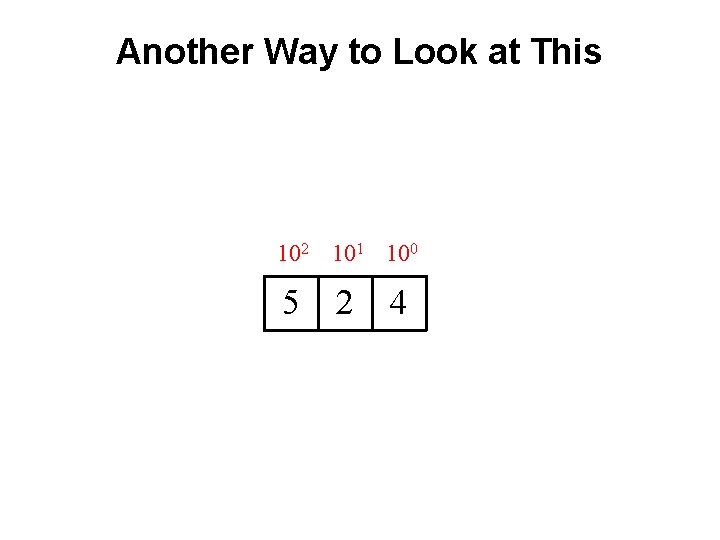
Another Way to Look at This 5 2 4
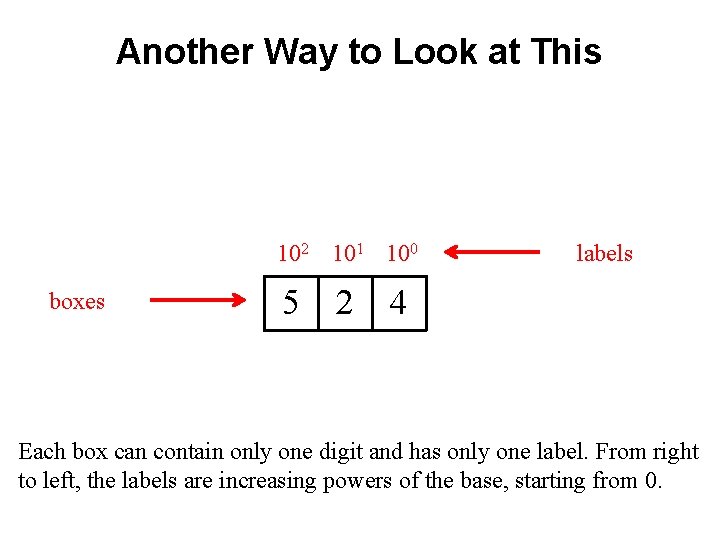
Another Way to Look at This 102 101 100 5 2 4
Another Way to Look at This 102 101 100 boxes 5 2 labels 4 Each box can contain only one digit and has only one label. From right to left, the labels are increasing powers of the base, starting from 0.
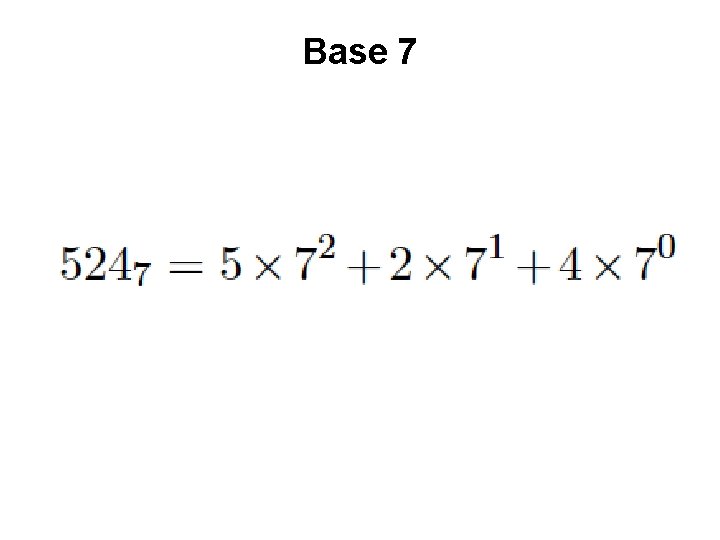
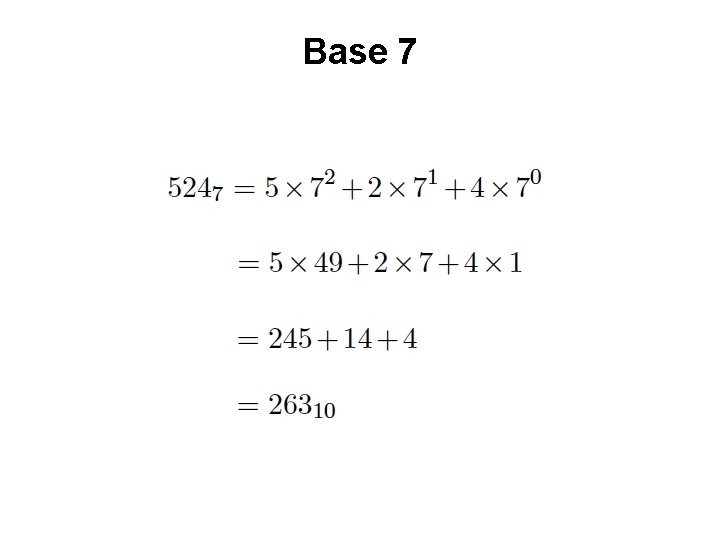
Base 7
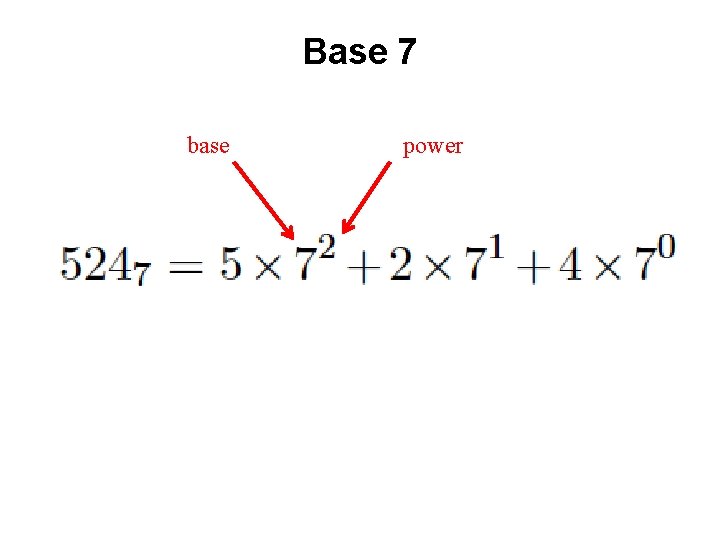
Base 7 base power
Base 7 base most significant digit power least significant digit
Base 7
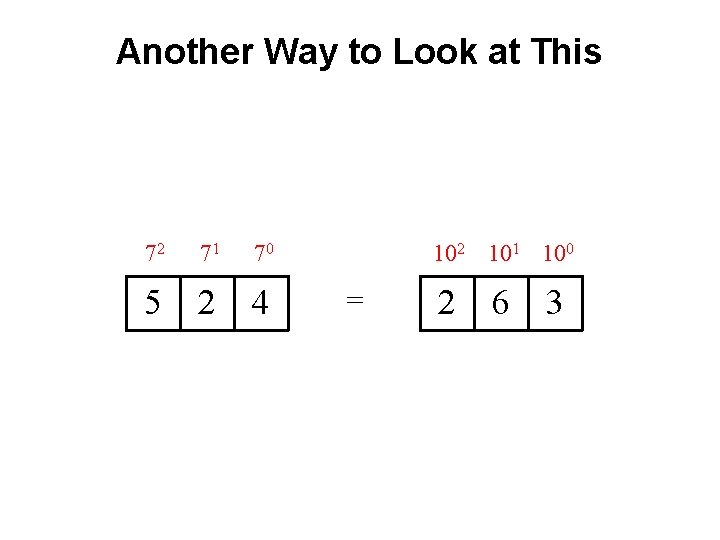
Another Way to Look at This 72 71 70 5 2 4 102 101 100 = 2 6 3
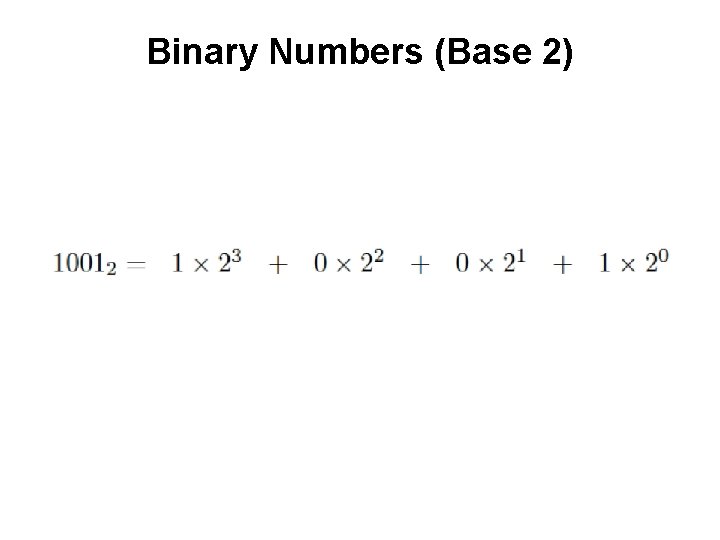
Binary Numbers (Base 2)
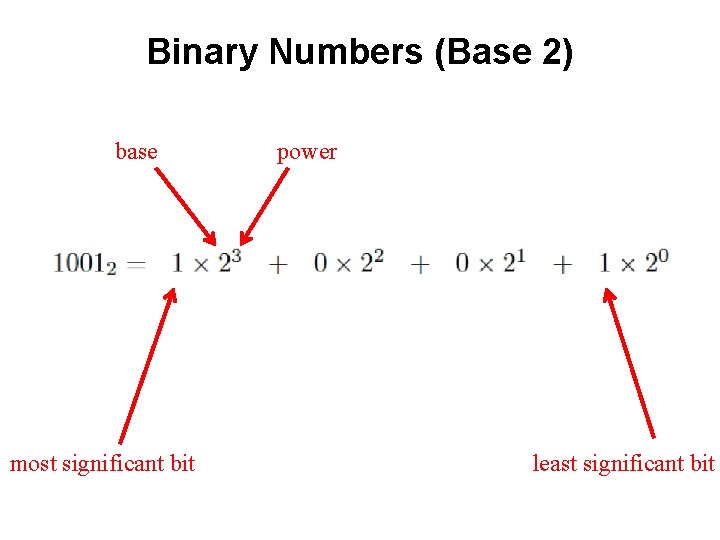
Binary Numbers (Base 2) base most significant bit power least significant bit
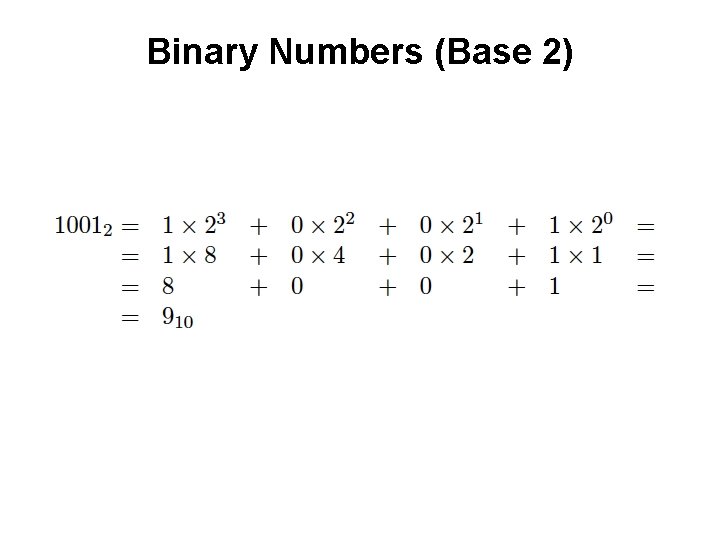
Binary Numbers (Base 2)
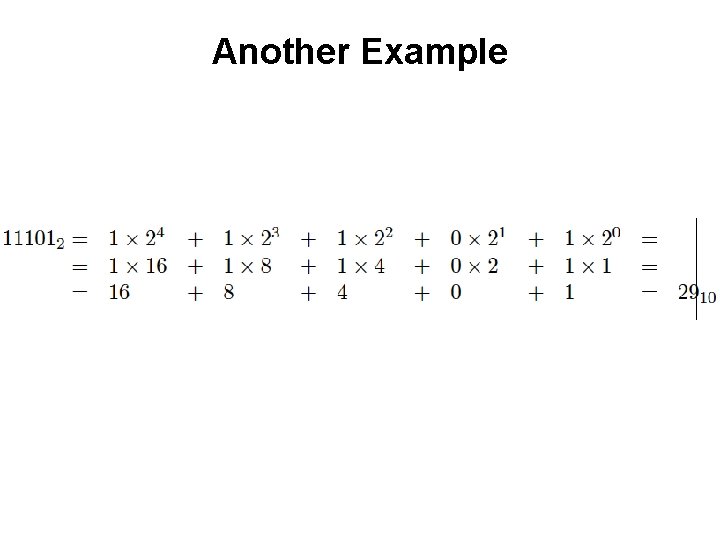
Another Example
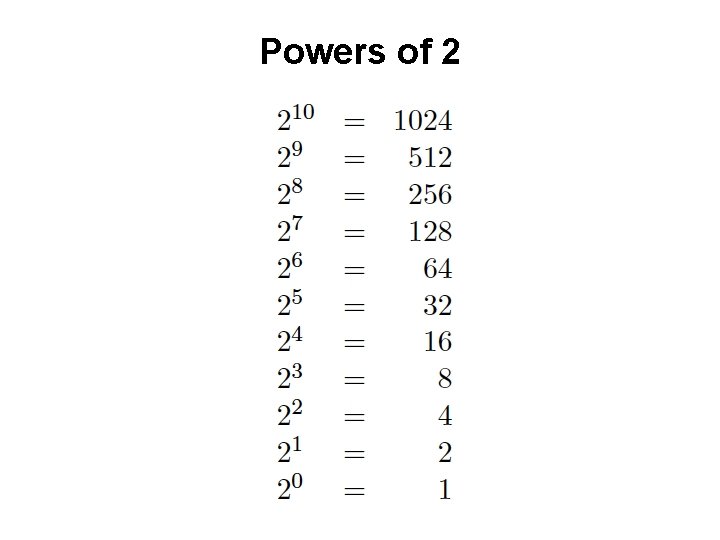
Powers of 2
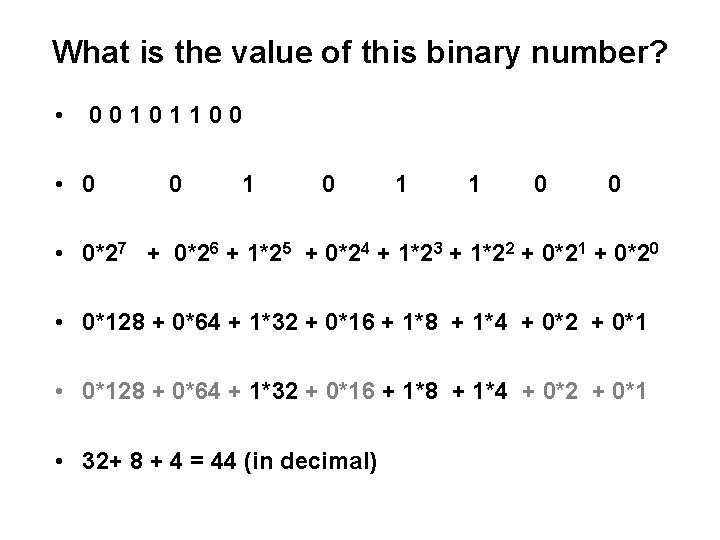
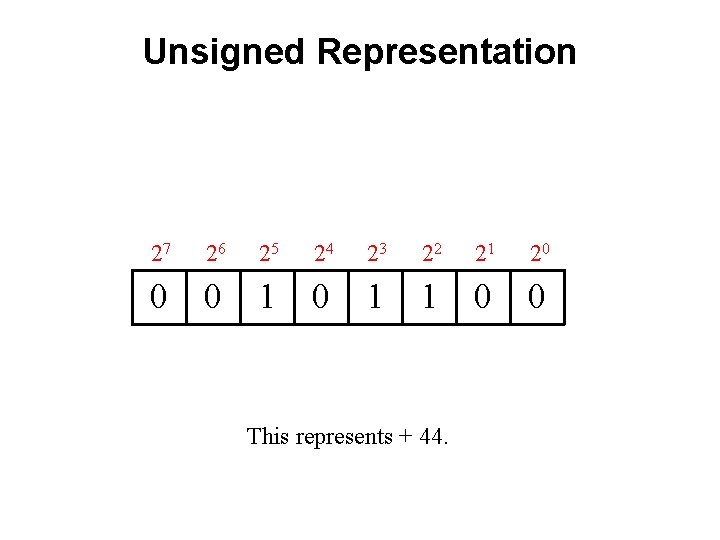
What is the value of this binary number? • 00101100 • 0 0 1 1 0 0 • 0*27 + 0*26 + 1*25 + 0*24 + 1*23 + 1*22 + 0*21 + 0*20 • 0*128 + 0*64 + 1*32 + 0*16 + 1*8 + 1*4 + 0*2 + 0*1 • 32+ 8 + 4 = 44 (in decimal)
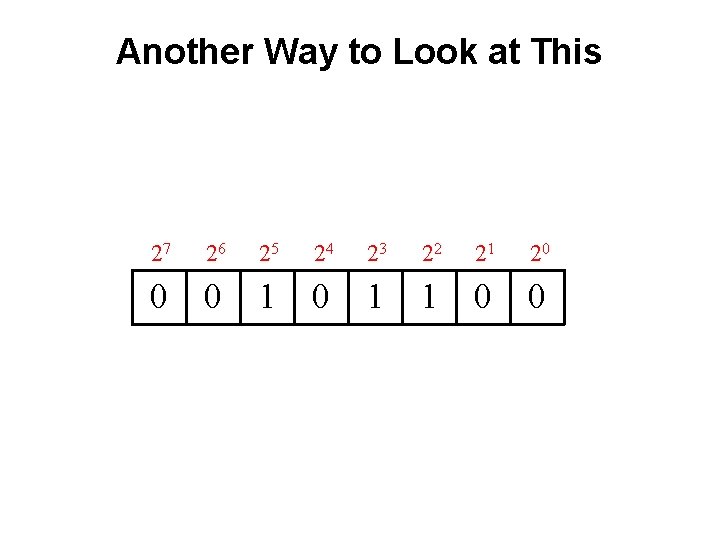
Another Way to Look at This 27 26 25 24 23 22 21 20 0 0 1 1 0 0
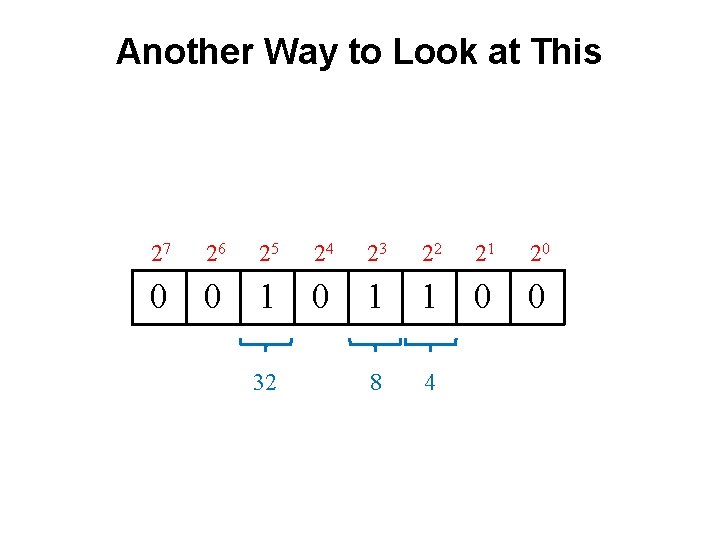
Another Way to Look at This 27 26 25 24 23 22 21 20 0 0 1 1 0 0 8 4 32
Signed v. s. Unsigned Numbers
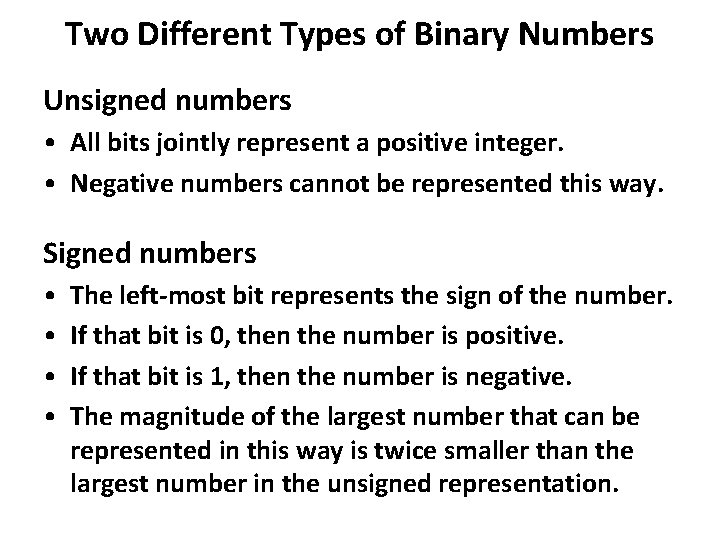
Two Different Types of Binary Numbers Unsigned numbers • All bits jointly represent a positive integer. • Negative numbers cannot be represented this way. Signed numbers • • The left-most bit represents the sign of the number. If that bit is 0, then the number is positive. If that bit is 1, then the number is negative. The magnitude of the largest number that can be represented in this way is twice smaller than the largest number in the unsigned representation.
Unsigned Representation 27 26 25 24 23 22 21 20 0 0 1 1 0 0 This represents + 44.
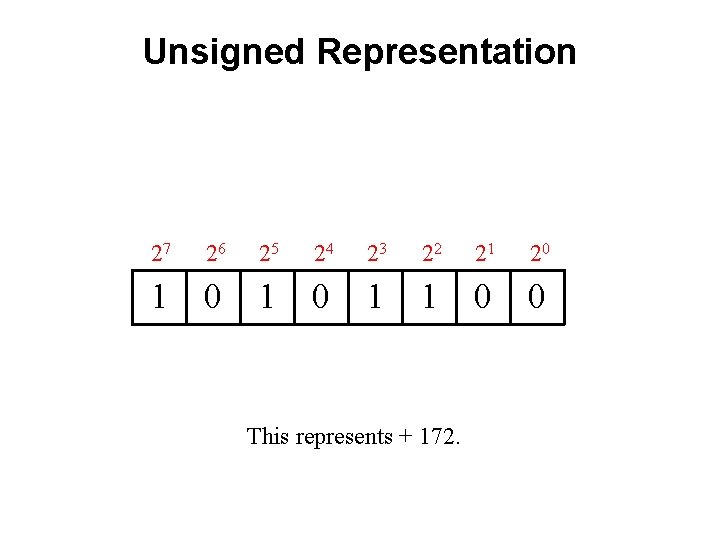
Unsigned Representation 27 26 25 24 23 22 21 20 1 0 1 1 0 0 This represents + 172.
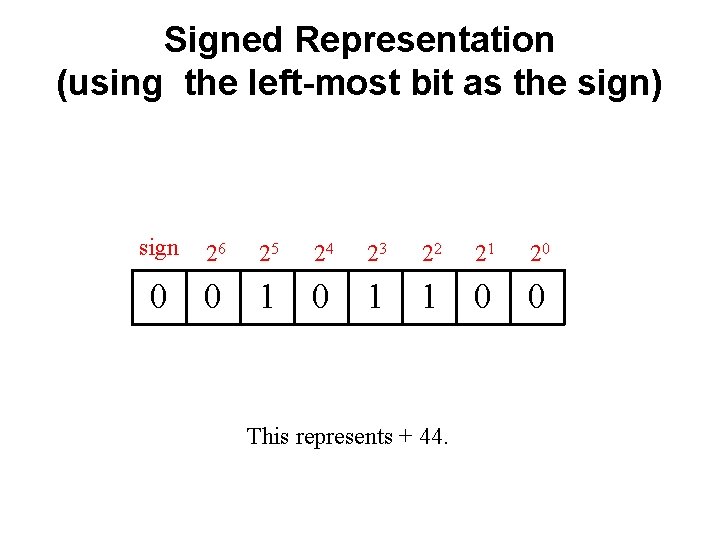
Signed Representation (using the left-most bit as the sign) sign 26 25 24 23 22 21 20 0 0 1 1 0 0 This represents + 44.
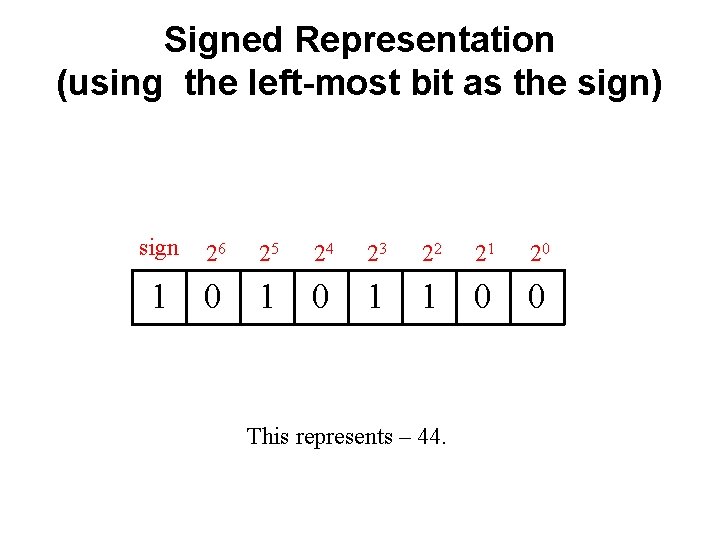
Signed Representation (using the left-most bit as the sign) sign 26 25 24 23 22 21 20 1 0 1 1 0 0 This represents – 44.
Today’s Lecture is About Addition of Unsigned Numbers
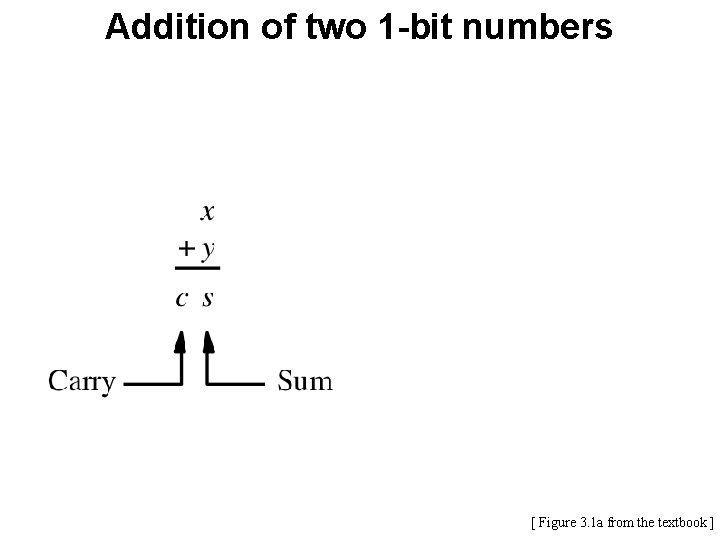
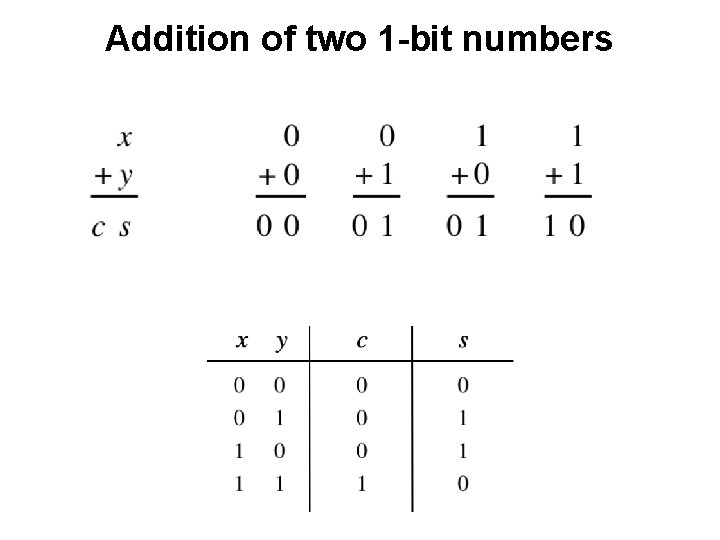
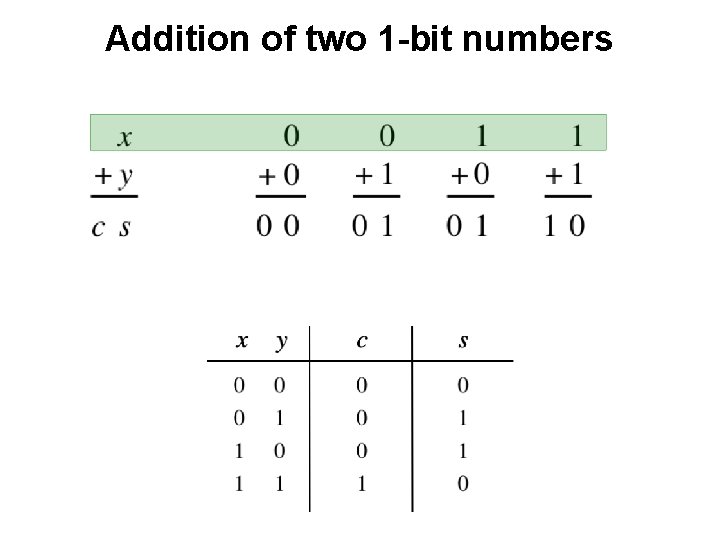
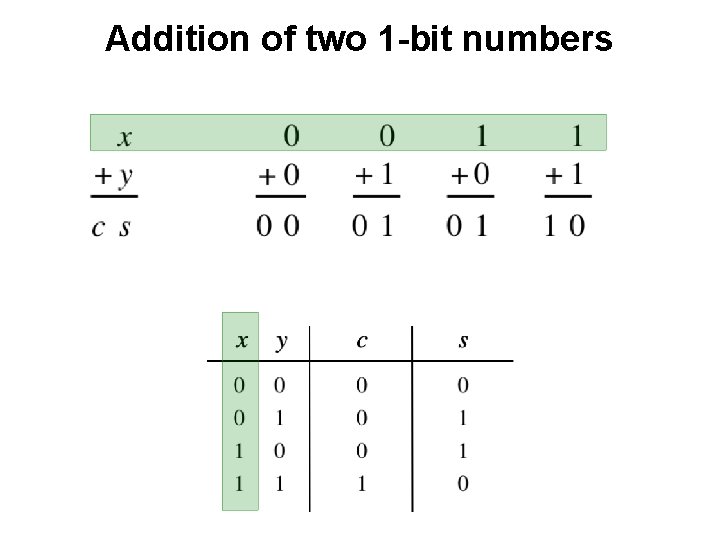
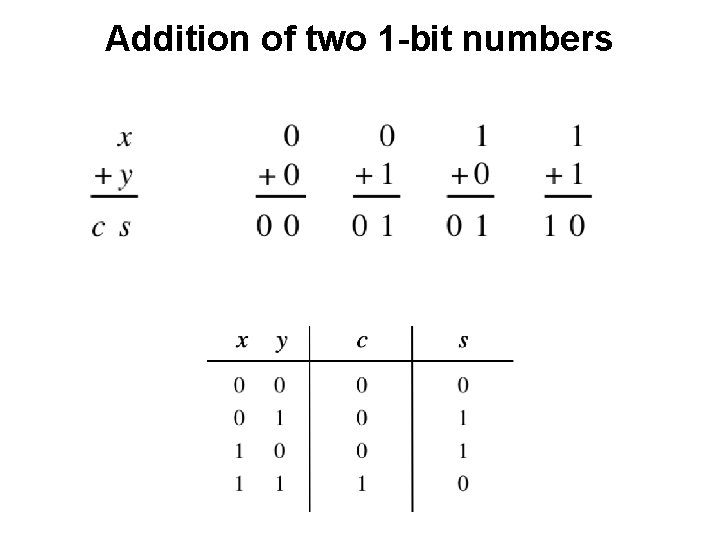
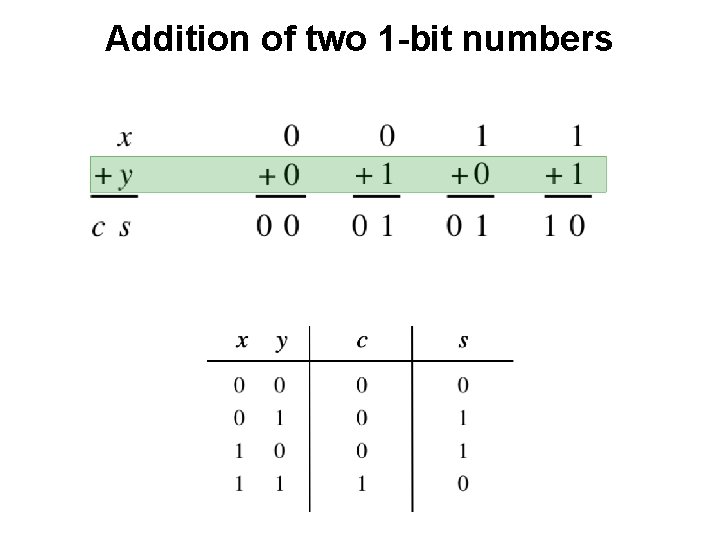
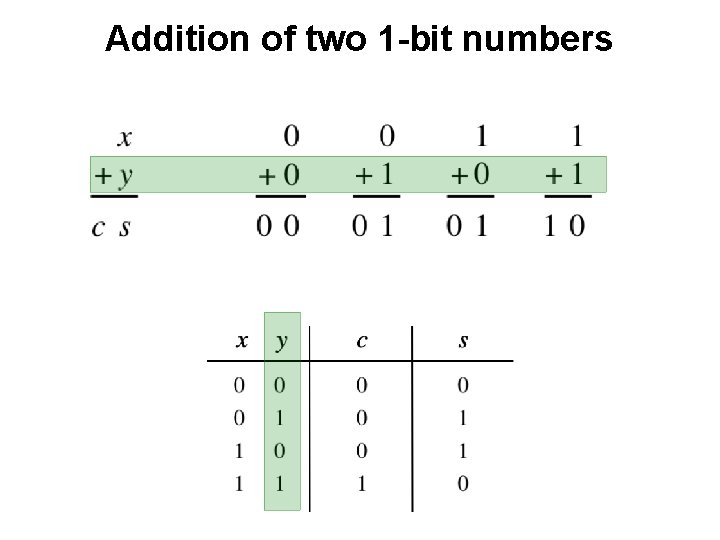
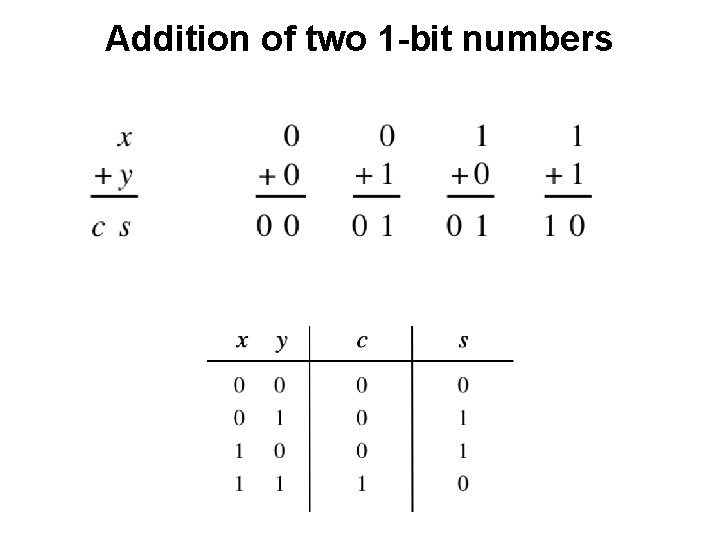
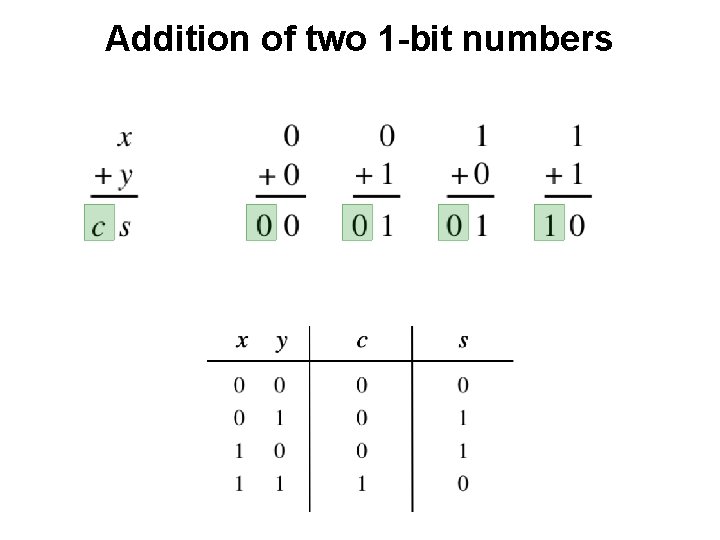
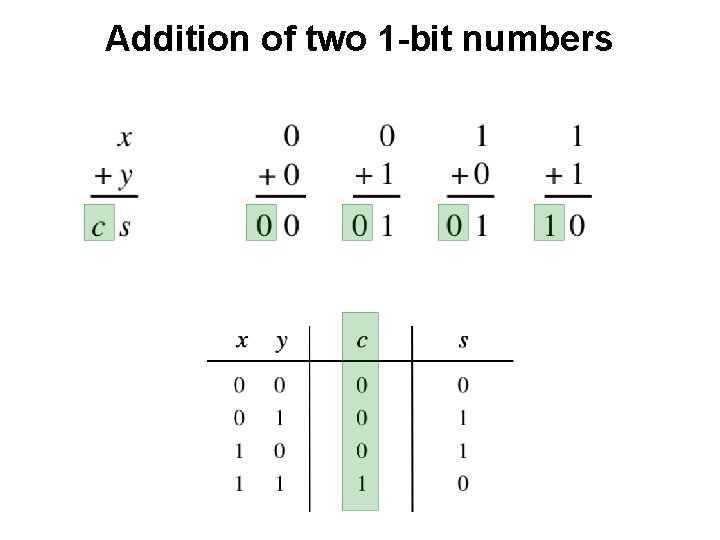
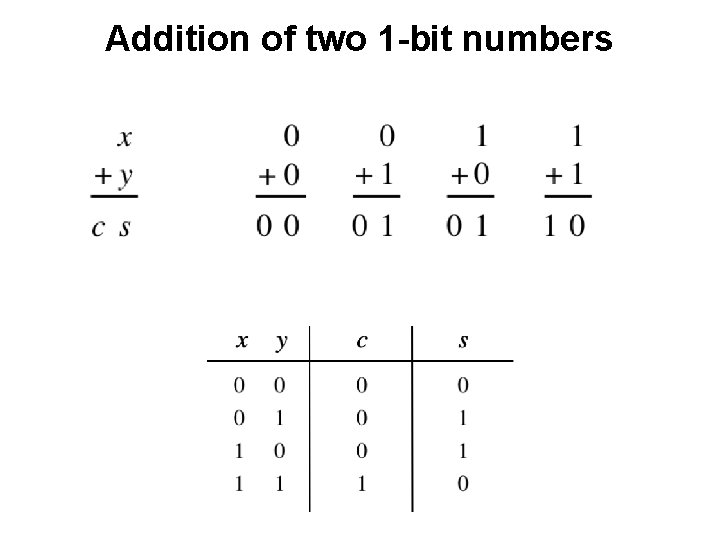
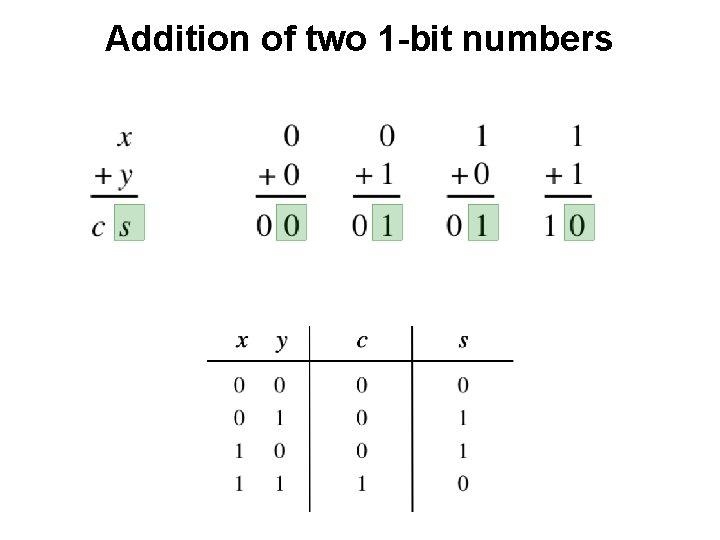
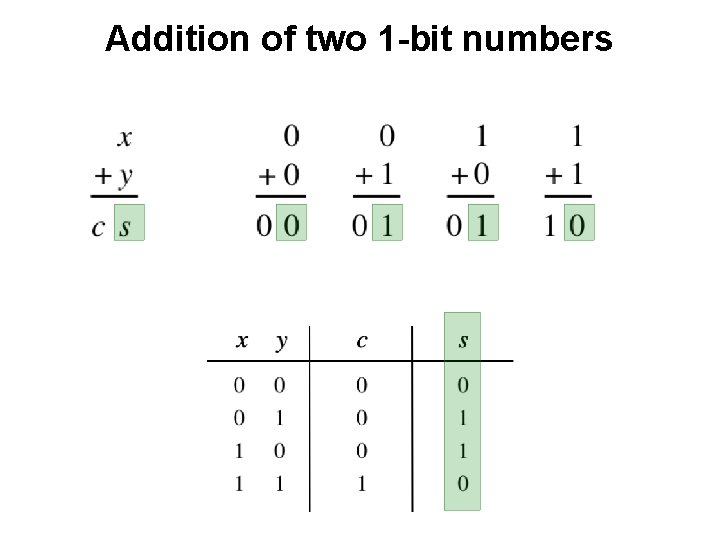
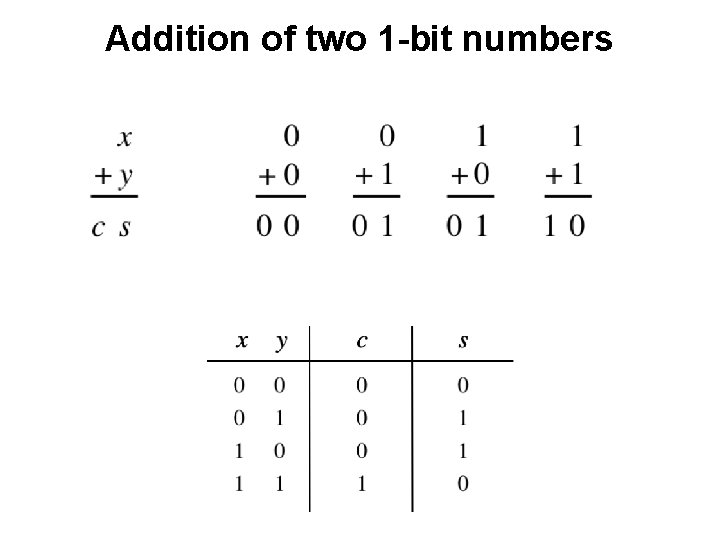
Addition of two 1 -bit numbers [ Figure 3. 1 a from the textbook ]
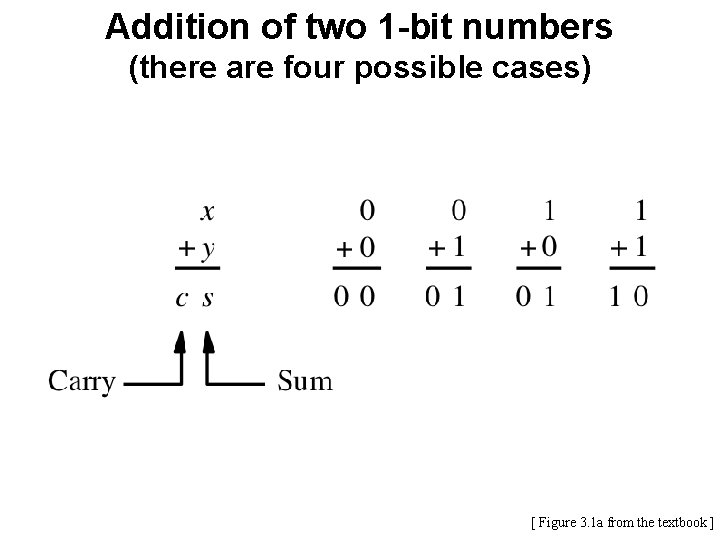
Addition of two 1 -bit numbers (there are four possible cases) [ Figure 3. 1 a from the textbook ]
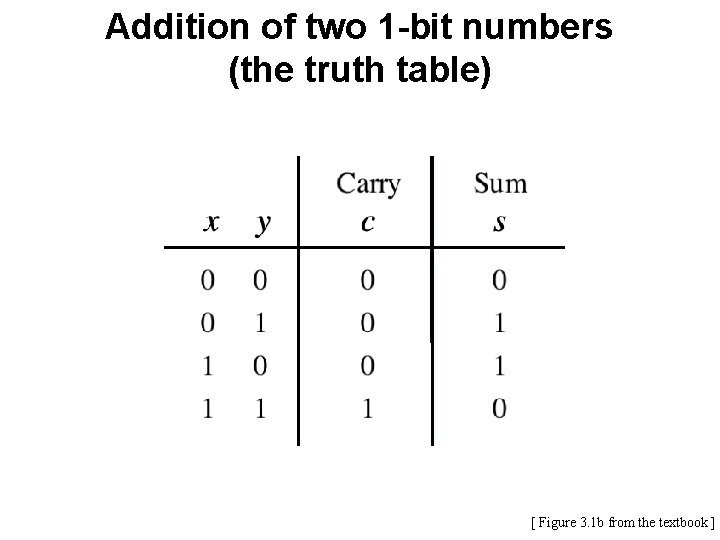
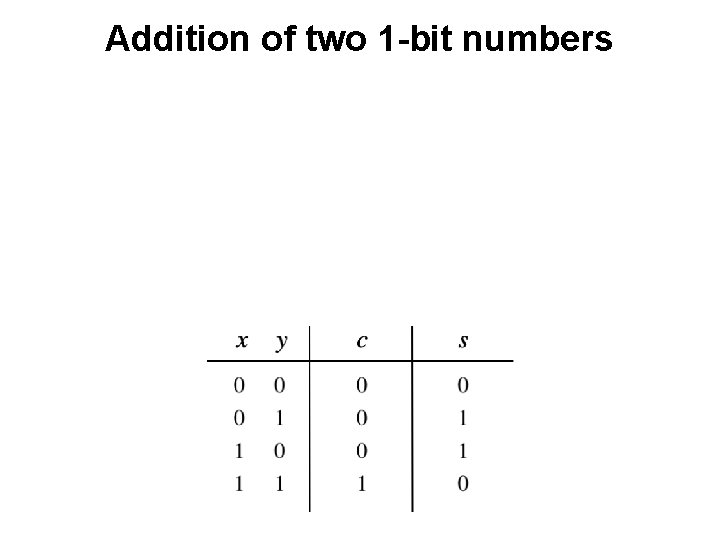
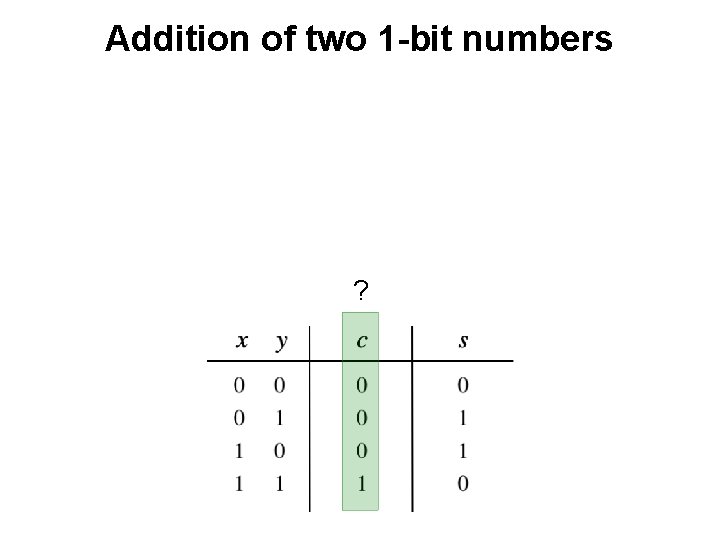
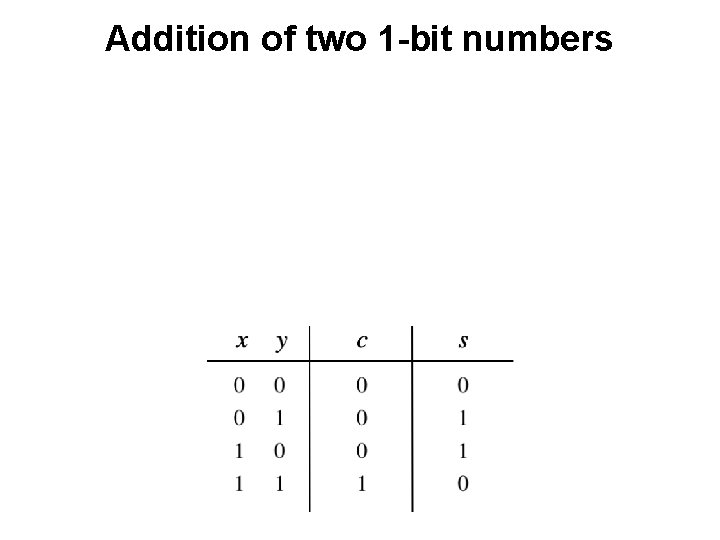
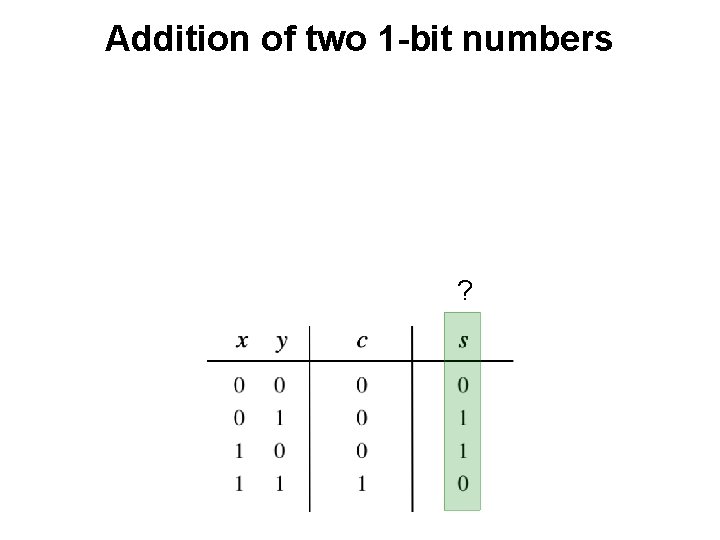
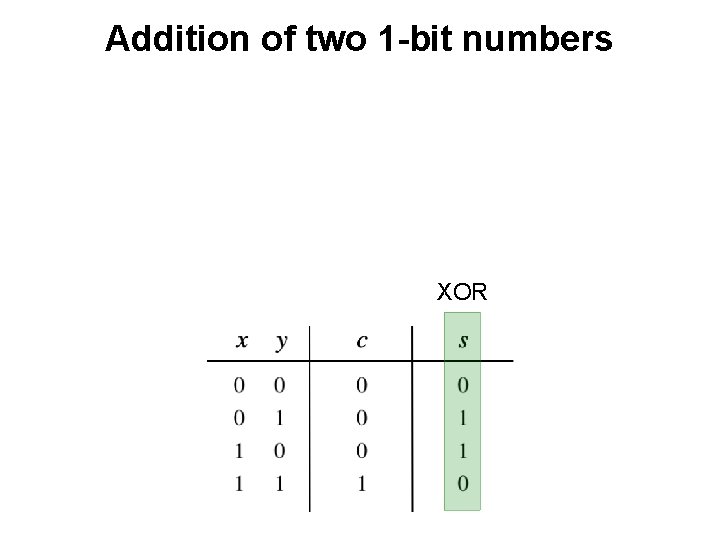
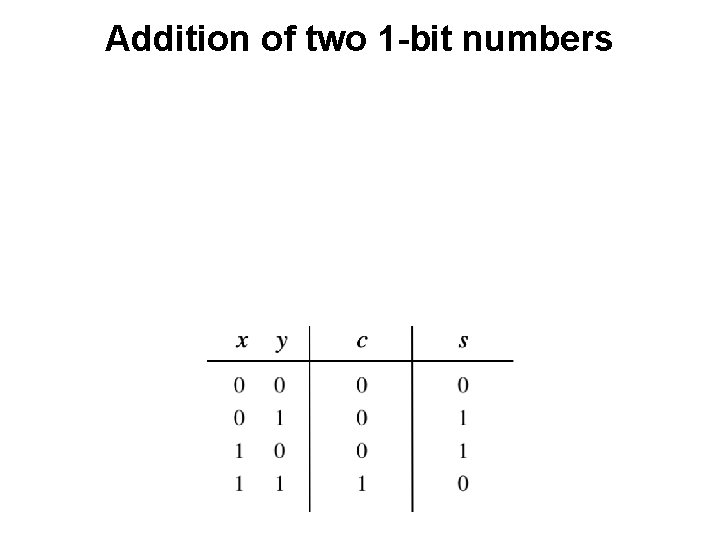
Addition of two 1 -bit numbers (the truth table) [ Figure 3. 1 b from the textbook ]
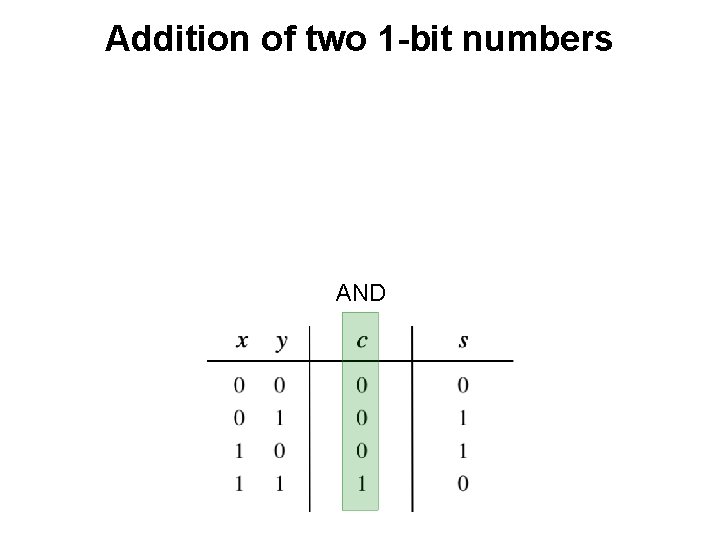
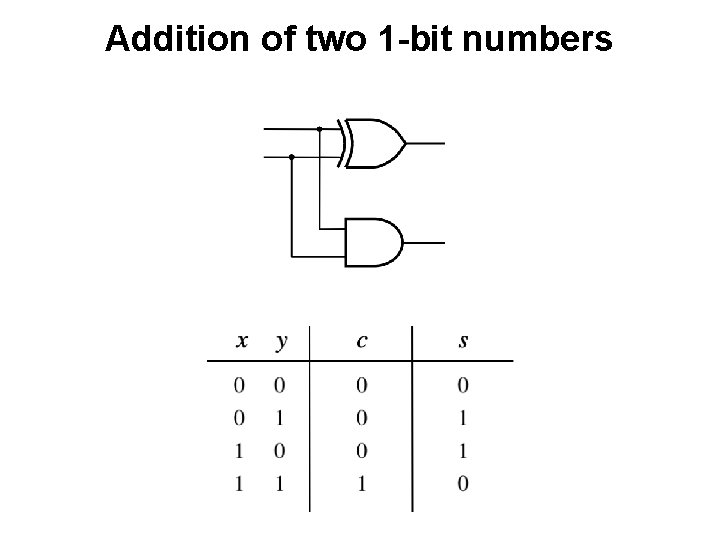
Addition of two 1 -bit numbers [ Figure 2. 12 from the textbook ]
Addition of two 1 -bit numbers
Addition of two 1 -bit numbers
Addition of two 1 -bit numbers
Addition of two 1 -bit numbers
Addition of two 1 -bit numbers
Addition of two 1 -bit numbers
Addition of two 1 -bit numbers
Addition of two 1 -bit numbers
Addition of two 1 -bit numbers
Addition of two 1 -bit numbers
Addition of two 1 -bit numbers
Addition of two 1 -bit numbers
Addition of two 1 -bit numbers
Addition of two 1 -bit numbers
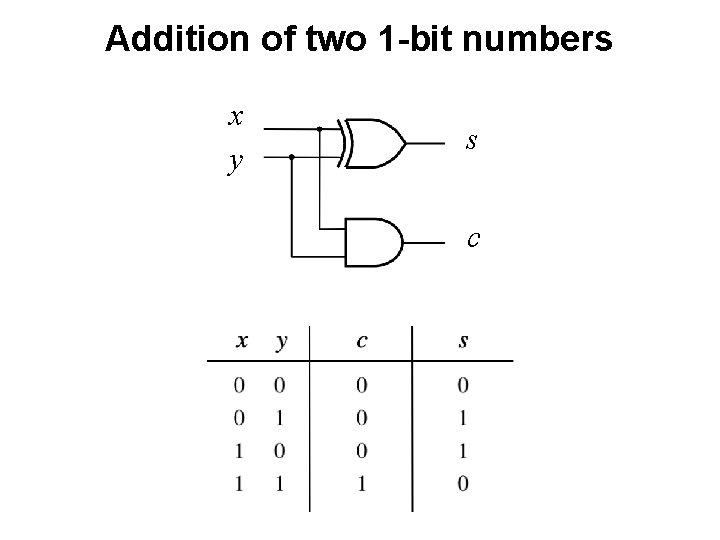
Addition of two 1 -bit numbers ?
Addition of two 1 -bit numbers AND
Addition of two 1 -bit numbers
Addition of two 1 -bit numbers ?
Addition of two 1 -bit numbers XOR
Addition of two 1 -bit numbers
Addition of two 1 -bit numbers
Addition of two 1 -bit numbers x y s c
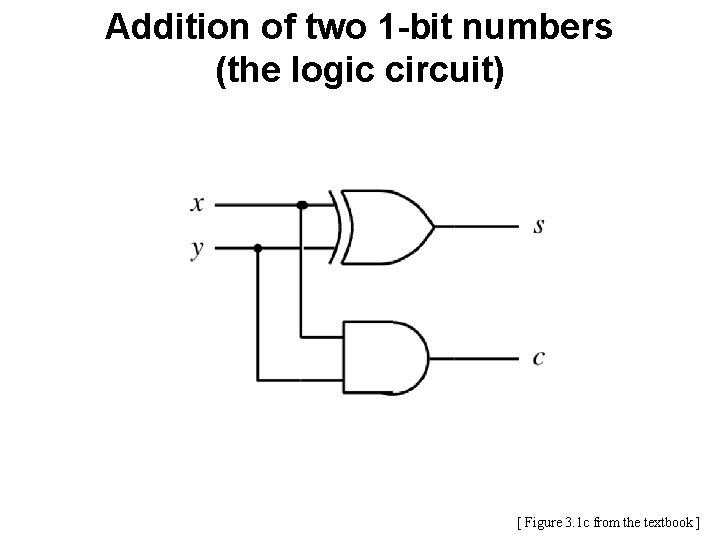
Addition of two 1 -bit numbers (the logic circuit) [ Figure 3. 1 c from the textbook ]
The Half-Adder [ Figure 3. 1 c-d from the textbook ]
Addition of Multibit Unsigned Numbers
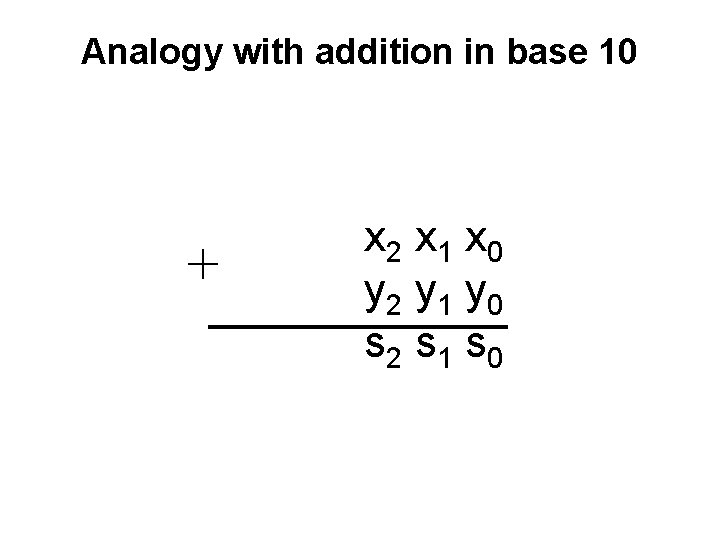
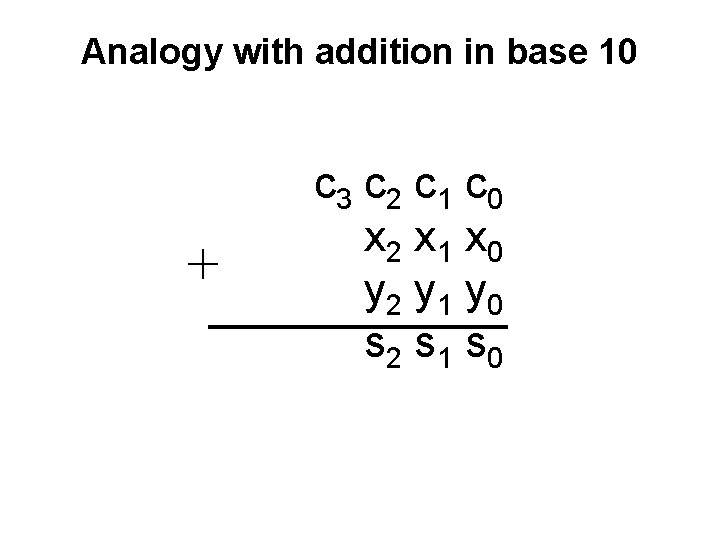
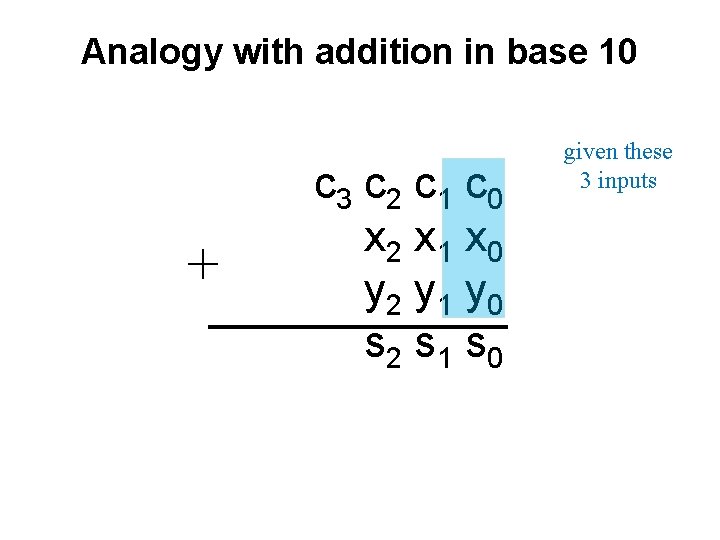
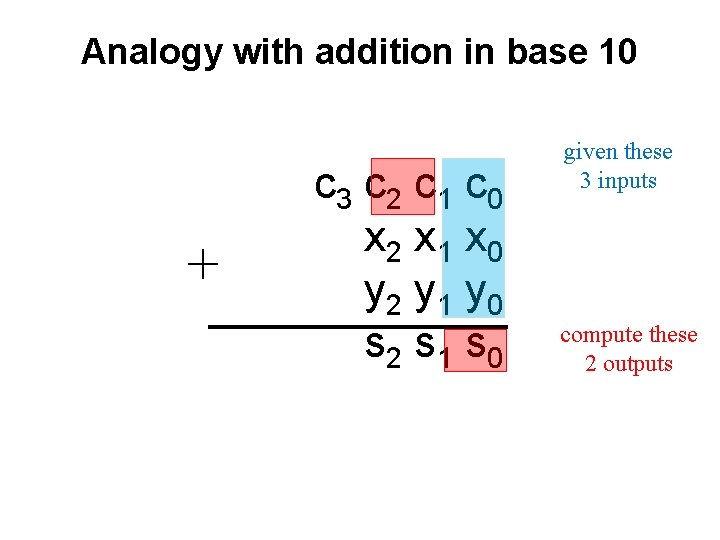
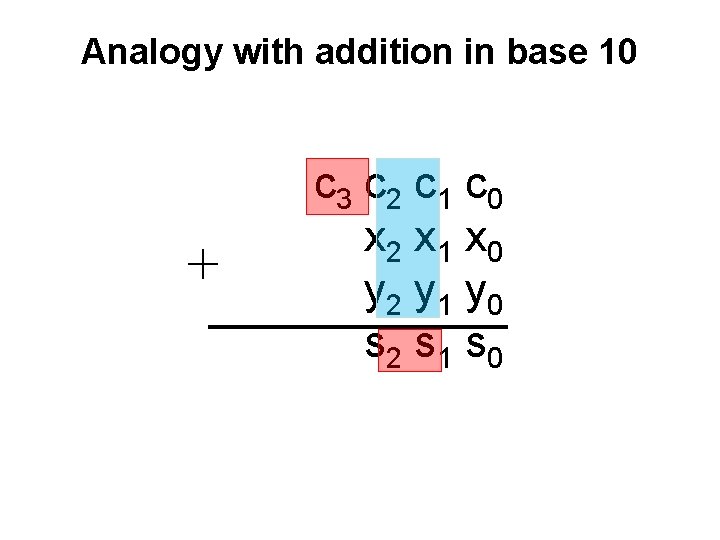
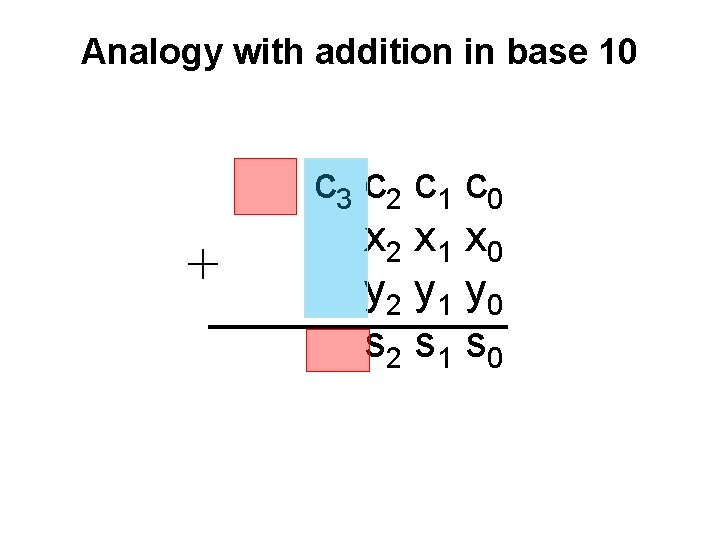
Analogy with addition in base 10 + c 3 c 2 c 1 c 0 x 2 x 1 x 0 y 2 y 1 y 0 s 2 s 1 s 0
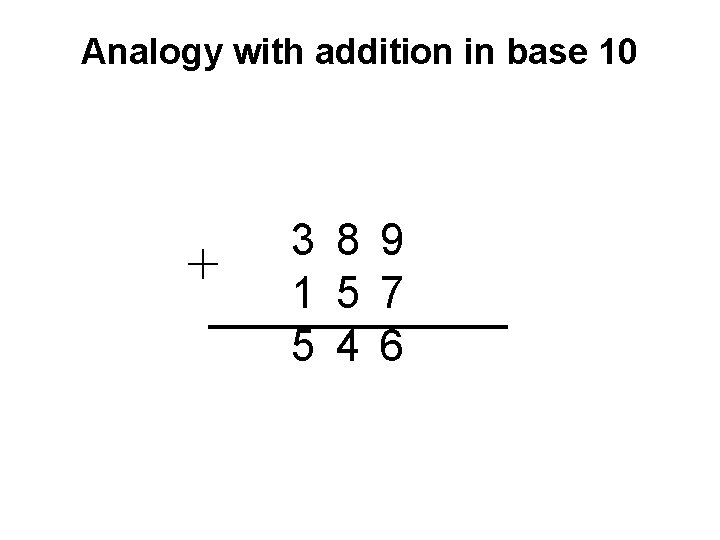
Analogy with addition in base 10 + 3 8 9 1 5 7 5 4 6
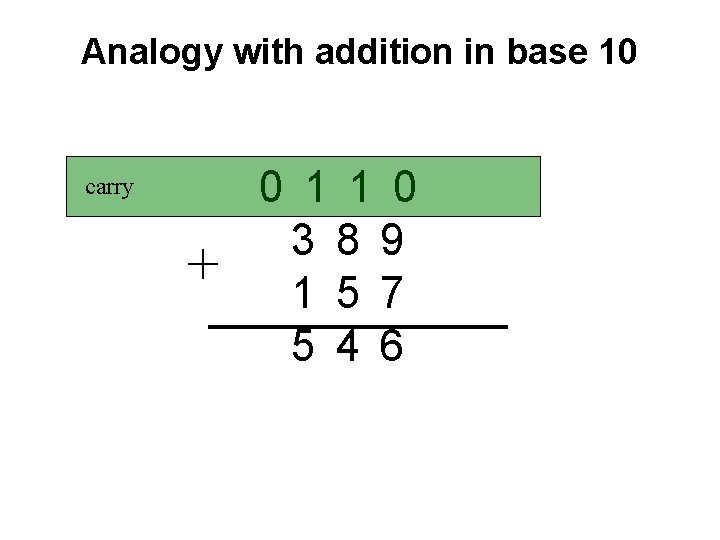
Analogy with addition in base 10 carry + 0 1 1 0 3 8 9 1 5 7 5 4 6
Analogy with addition in base 10 + c 3 c 2 c 1 c 0 x 2 x 1 x 0 y 2 y 1 y 0 s 2 s 1 s 0
Analogy with addition in base 10 + c 3 c 2 c 1 c 0 x 2 x 1 x 0 y 2 y 1 y 0 s 2 s 1 s 0 given these 3 inputs
Analogy with addition in base 10 + c 3 c 2 c 1 c 0 x 2 x 1 x 0 y 2 y 1 y 0 s 2 s 1 s 0 given these 3 inputs compute these 2 outputs
Analogy with addition in base 10 + c 3 c 2 c 1 c 0 x 2 x 1 x 0 y 2 y 1 y 0 s 2 s 1 s 0
Analogy with addition in base 10 + c 3 c 2 c 1 c 0 x 2 x 1 x 0 y 2 y 1 y 0 s 2 s 1 s 0
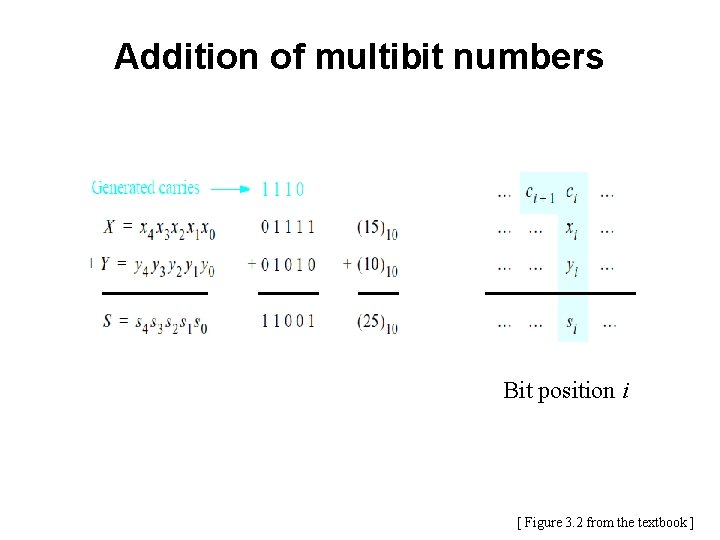
Addition of multibit numbers Bit position i [ Figure 3. 2 from the textbook ]
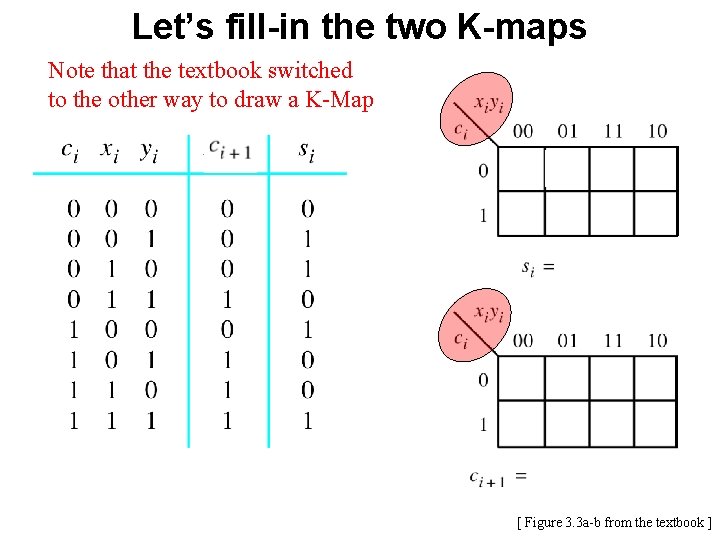
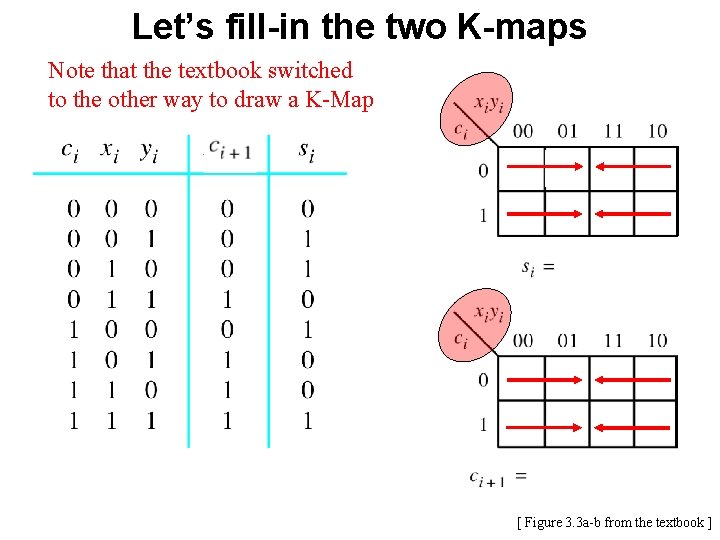
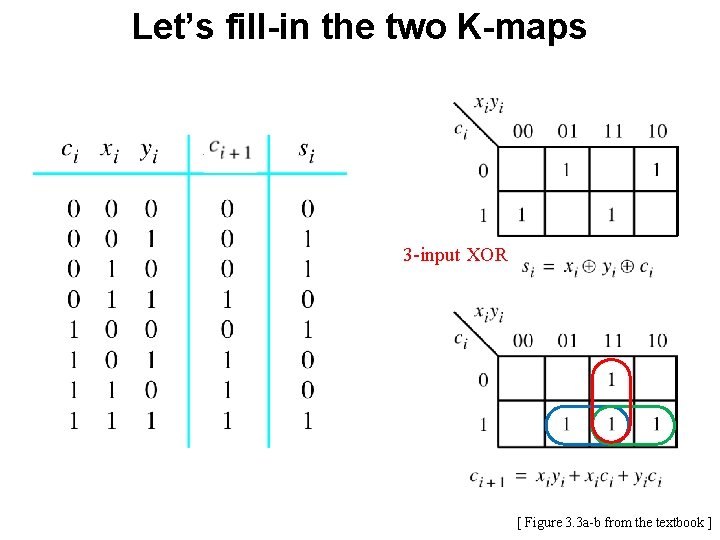
Problem Statement and Truth Table [ Figure 3. 2 b from the textbook ] [ Figure 3. 3 a from the textbook ]
Let’s fill-in the two K-maps [ Figure 3. 3 a-b from the textbook ]
Let’s fill-in the two K-maps Note that the textbook switched to the other way to draw a K-Map [ Figure 3. 3 a-b from the textbook ]
Let’s fill-in the two K-maps Note that the textbook switched to the other way to draw a K-Map [ Figure 3. 3 a-b from the textbook ]
Let’s fill-in the two K-maps [ Figure 3. 3 a-b from the textbook ]
Let’s fill-in the two K-maps 3 -input XOR [ Figure 3. 3 a-b from the textbook ]
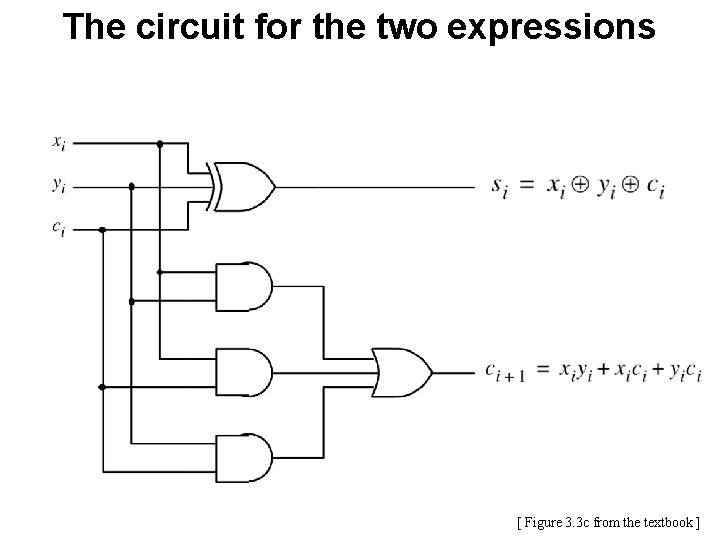
The circuit for the two expressions [ Figure 3. 3 c from the textbook ]
This is called the Full-Adder [ Figure 3. 3 c from the textbook ]
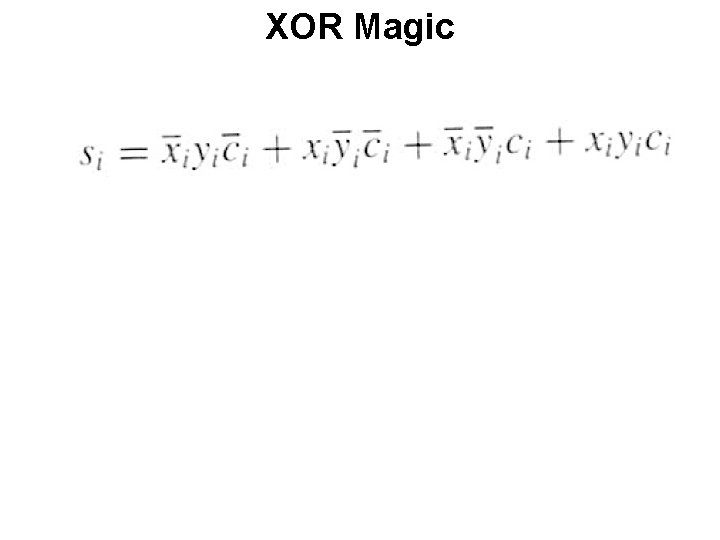
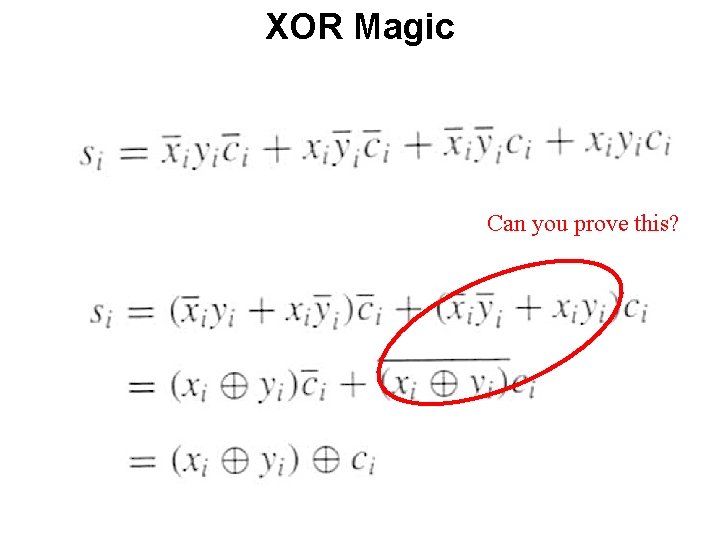
XOR Magic
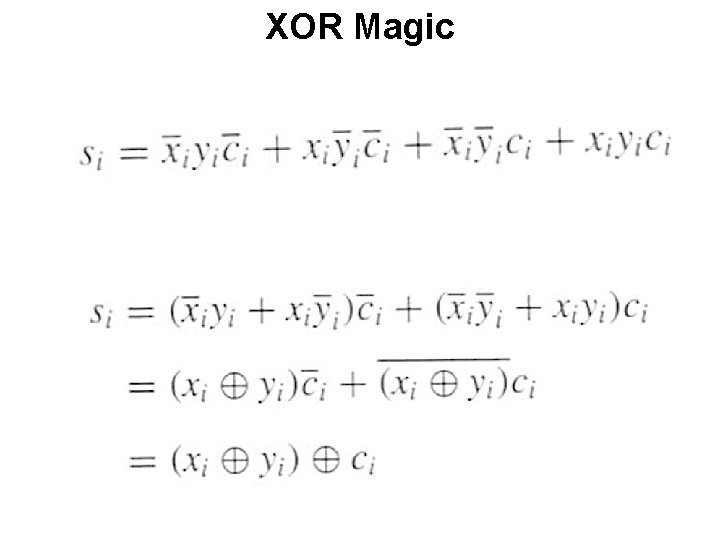
XOR Magic
XOR Magic Can you prove this?
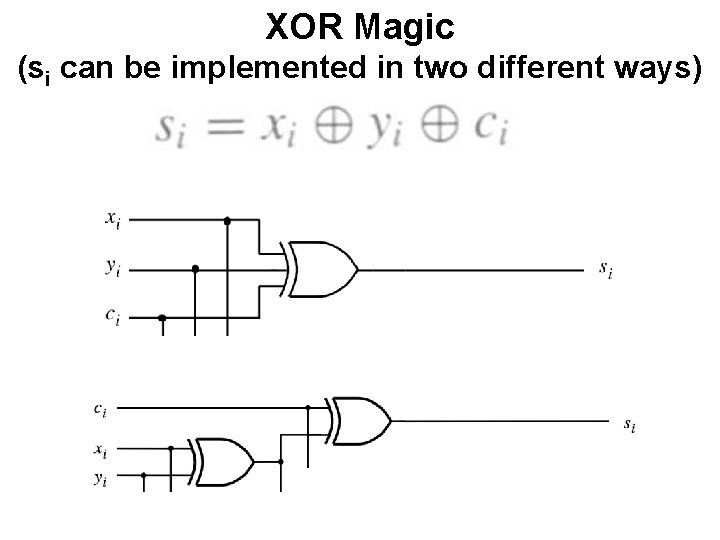
XOR Magic (si can be implemented in two different ways)
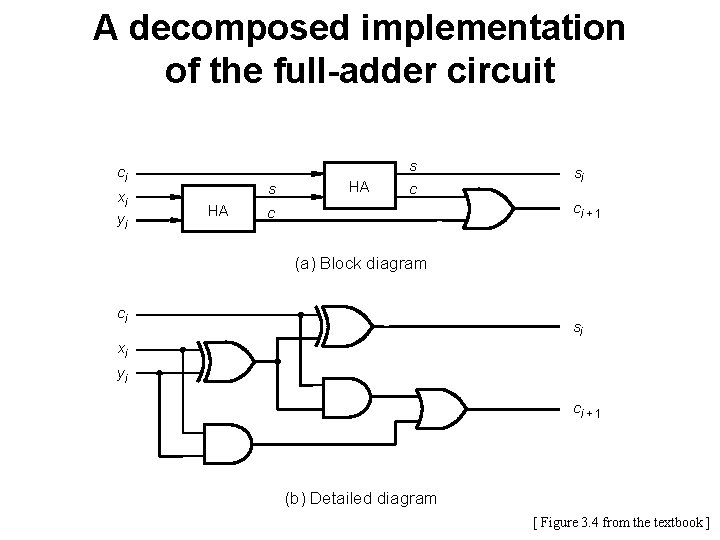
A decomposed implementation of the full-adder circuit s ci xi yi s HA HA c si ci + 1 c (a) Block diagram ci si xi yi ci + 1 (b) Detailed diagram [ Figure 3. 4 from the textbook ]
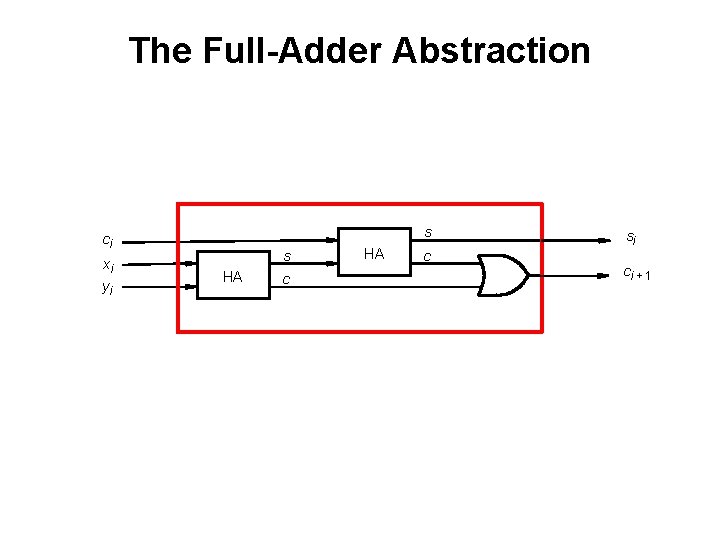
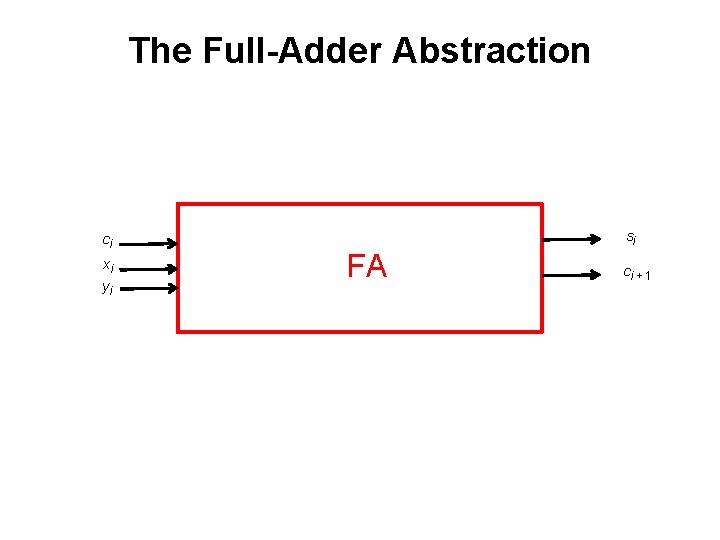
The Full-Adder Abstraction s ci xi yi s HA c si ci + 1
The Full-Adder Abstraction ci xi yi si FA ci + 1
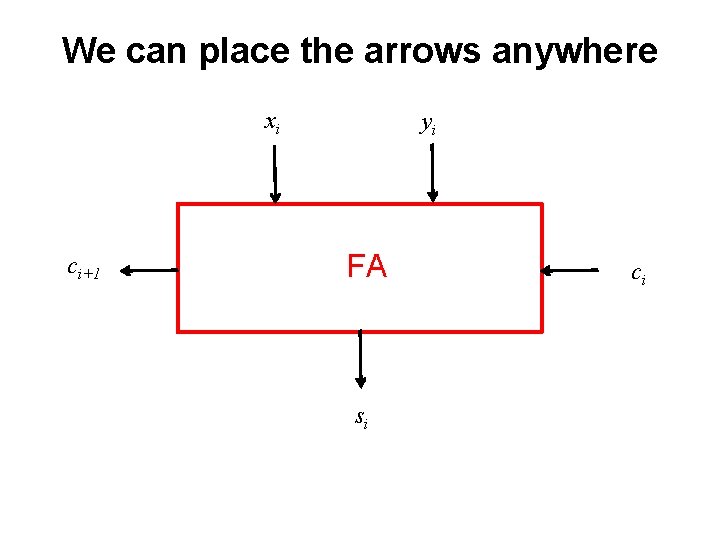
We can place the arrows anywhere xi ci+1 yi FA si ci
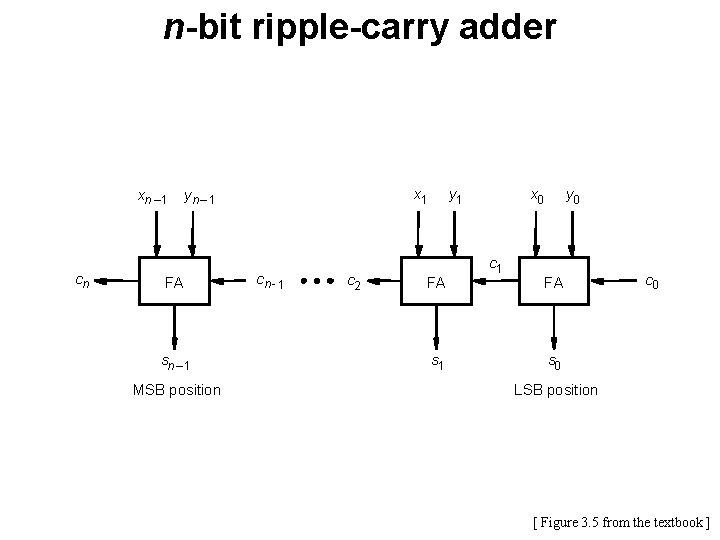
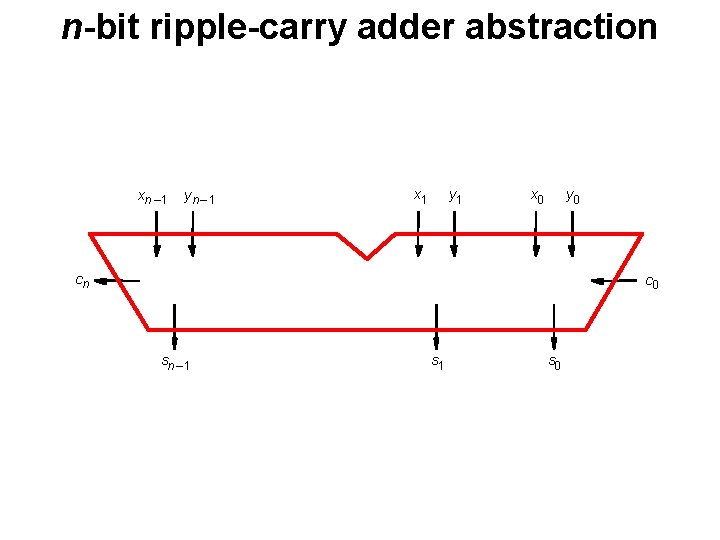
n-bit ripple-carry adder xn – 1 cn x 1 yn – 1 FA sn – 1 MSB position cn - 1 c 2 y 1 FA s 1 x 0 c 1 y 0 FA c 0 s 0 LSB position [ Figure 3. 5 from the textbook ]
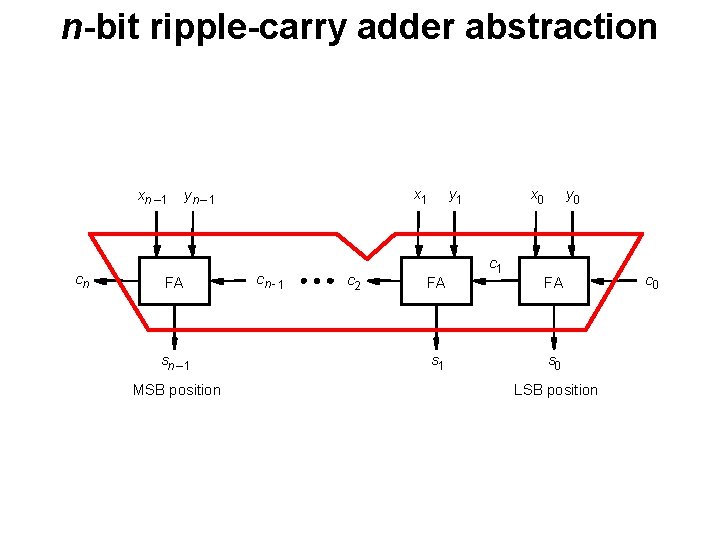
n-bit ripple-carry adder abstraction xn – 1 cn x 1 yn – 1 FA sn – 1 MSB position cn - 1 c 2 y 1 FA s 1 x 0 c 1 y 0 FA s 0 LSB position c 0
n-bit ripple-carry adder abstraction xn – 1 yn – 1 x 1 y 1 x 0 y 0 cn c 0 sn – 1 s 0
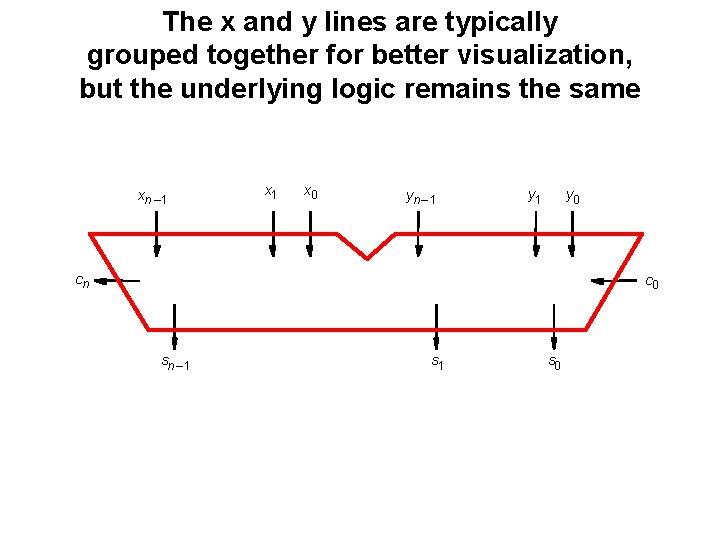
The x and y lines are typically grouped together for better visualization, but the underlying logic remains the same xn – 1 x 0 yn – 1 y 0 cn c 0 sn – 1 s 0
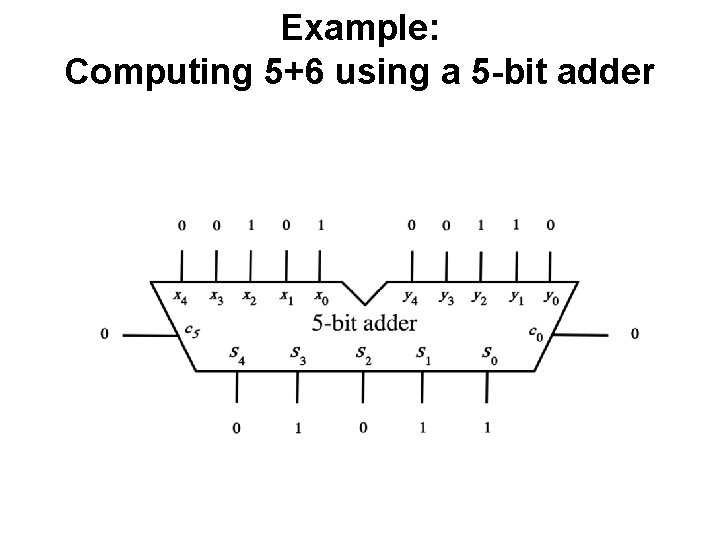
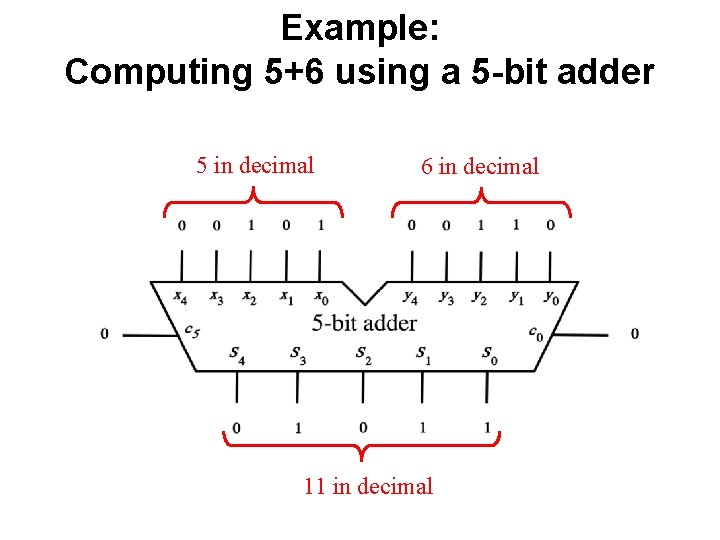
Example: Computing 5+6 using a 5 -bit adder
Example: Computing 5+6 using a 5 -bit adder 5 in decimal 6 in decimal 11 in decimal
Design Example: Create a circuit that multiplies a number by 3
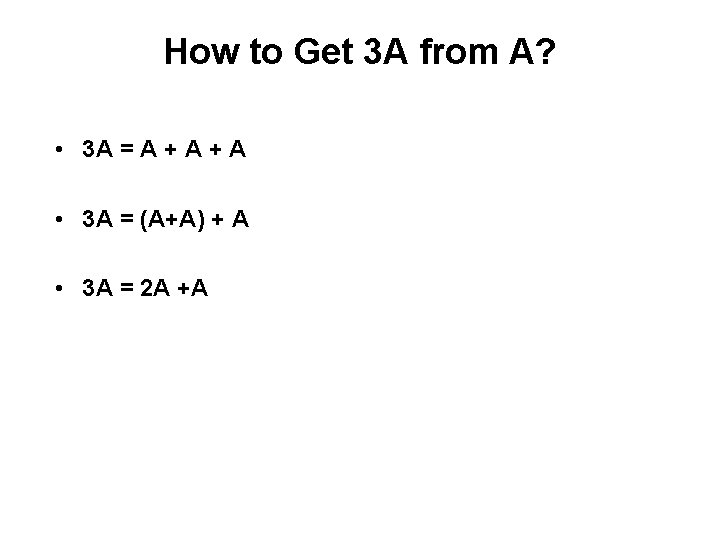
How to Get 3 A from A? • 3 A = A + A • 3 A = (A+A) + A • 3 A = 2 A +A
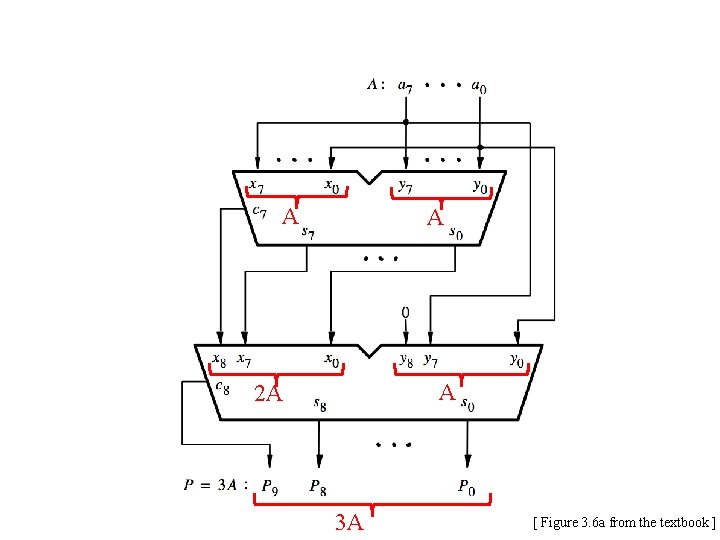
[ Figure 3. 6 a from the textbook ]
A A [ Figure 3. 6 a from the textbook ]
A A 2 A [ Figure 3. 6 a from the textbook ]
A 2 A A A [ Figure 3. 6 a from the textbook ]
A A A 2 A 3 A [ Figure 3. 6 a from the textbook ]
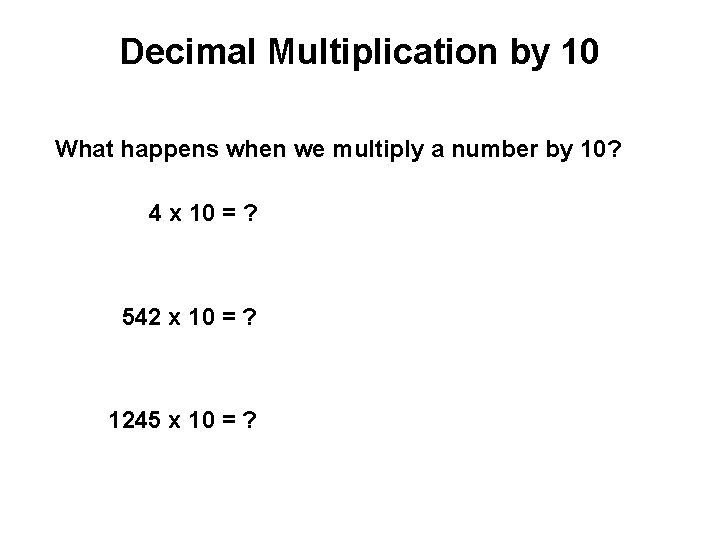
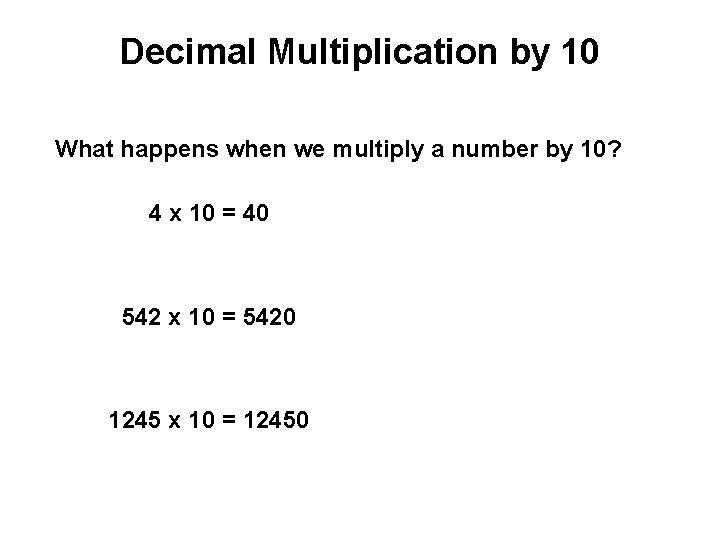
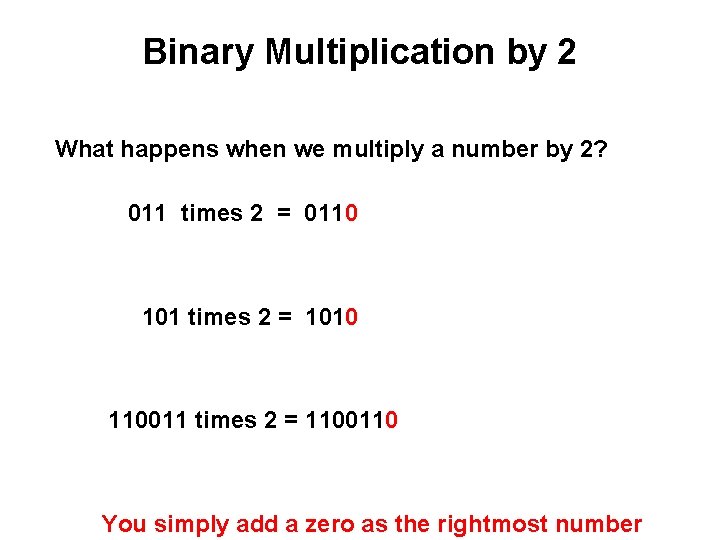
Decimal Multiplication by 10 What happens when we multiply a number by 10? 4 x 10 = ? 542 x 10 = ? 1245 x 10 = ?
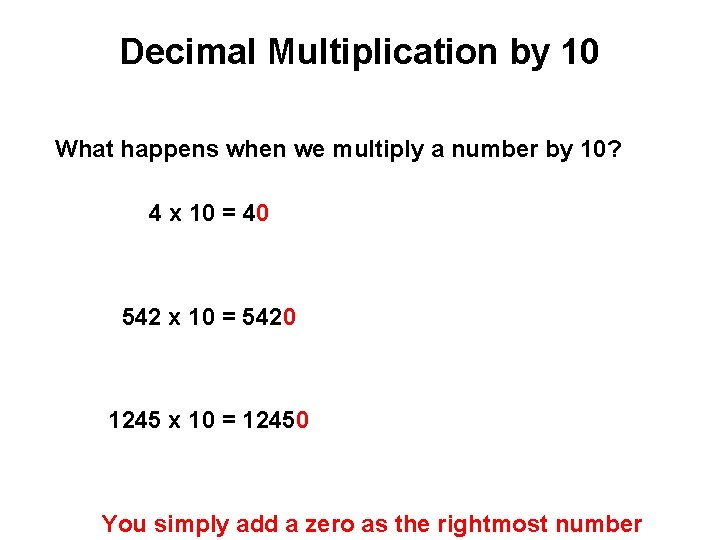
Decimal Multiplication by 10 What happens when we multiply a number by 10? 4 x 10 = 40 542 x 10 = 5420 1245 x 10 = 12450
Decimal Multiplication by 10 What happens when we multiply a number by 10? 4 x 10 = 40 542 x 10 = 5420 1245 x 10 = 12450 You simply add a zero as the rightmost number
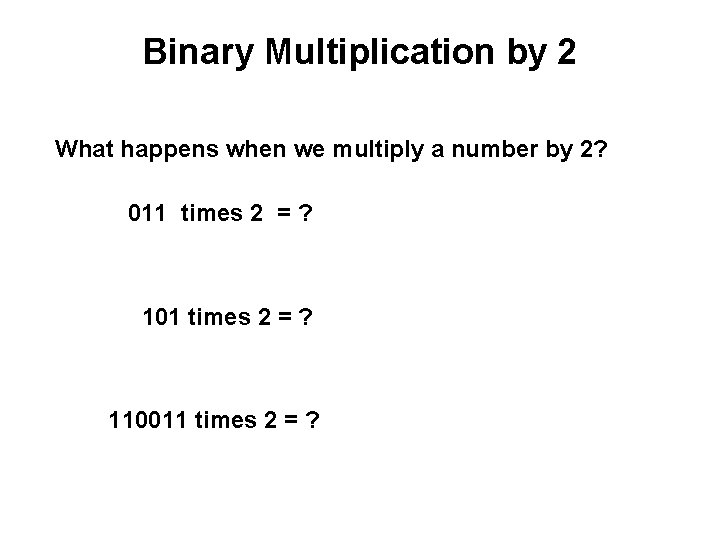
Binary Multiplication by 2 What happens when we multiply a number by 2? 011 times 2 = ? 101 times 2 = ? 110011 times 2 = ?
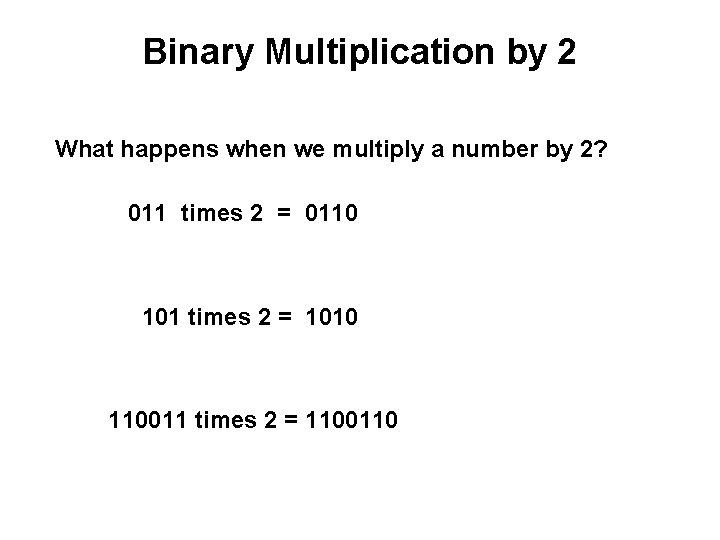
Binary Multiplication by 2 What happens when we multiply a number by 2? 011 times 2 = 0110 101 times 2 = 1010 110011 times 2 = 1100110
Binary Multiplication by 2 What happens when we multiply a number by 2? 011 times 2 = 0110 101 times 2 = 1010 110011 times 2 = 1100110 You simply add a zero as the rightmost number
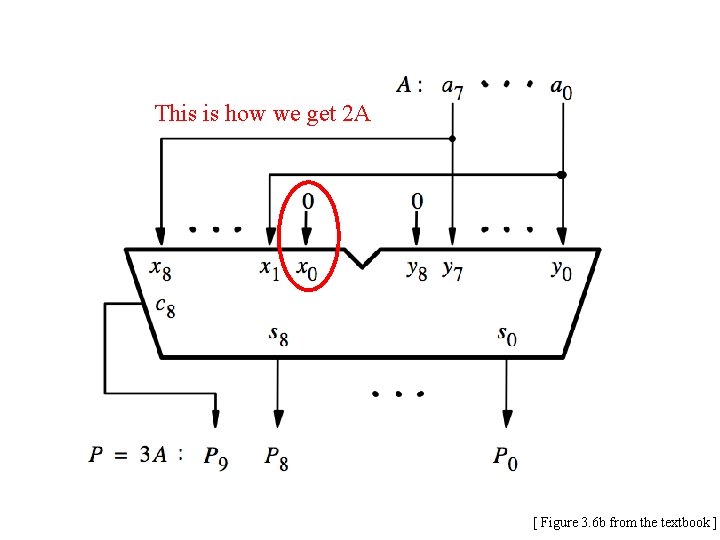
[ Figure 3. 6 b from the textbook ]
This is how we get 2 A [ Figure 3. 6 b from the textbook ]
2 A A 3 A [ Figure 3. 6 b from the textbook ]
Questions?
THE END