
CPMC Stanford Collaboration Ryan Dougherty MD CPMC Adult
CPMC / Stanford Collaboration Ryan Dougherty, MD CPMC Adult Program Director March 2019
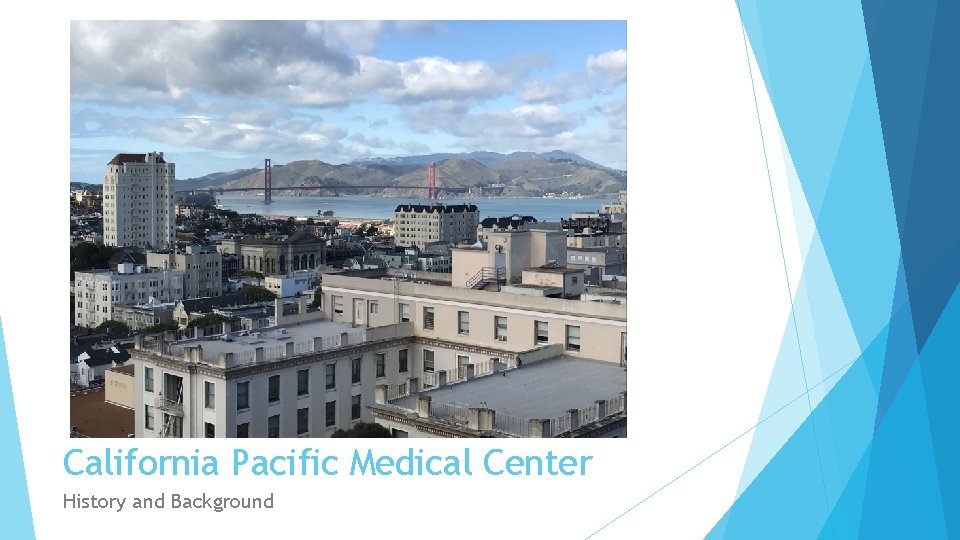
California Pacific Medical Center History and Background
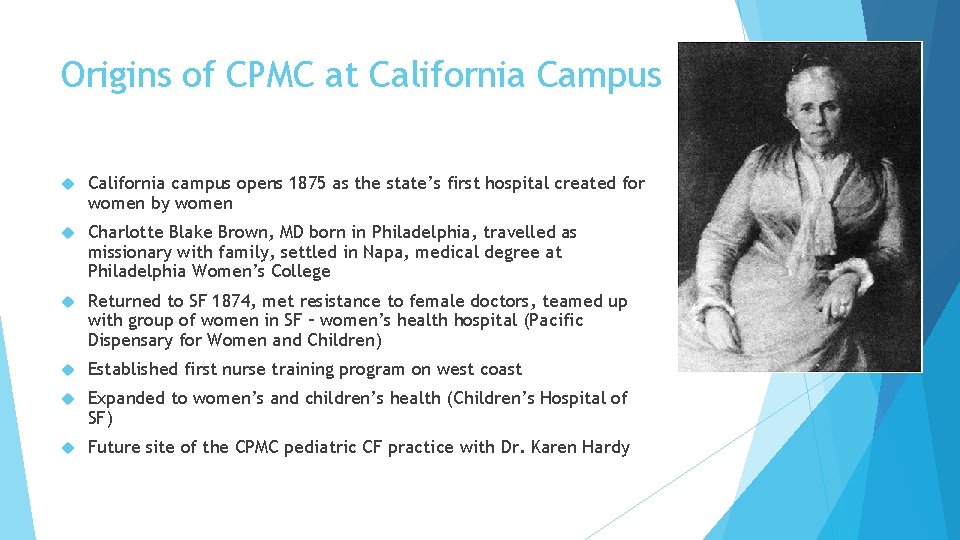
Origins of CPMC at California Campus California campus opens 1875 as the state’s first hospital created for women by women Charlotte Blake Brown, MD born in Philadelphia, travelled as missionary with family, settled in Napa, medical degree at Philadelphia Women’s College Returned to SF 1874, met resistance to female doctors, teamed up with group of women in SF – women’s health hospital (Pacific Dispensary for Women and Children) Established first nurse training program on west coast Expanded to women’s and children’s health (Children’s Hospital of SF) Future site of the CPMC pediatric CF practice with Dr. Karen Hardy
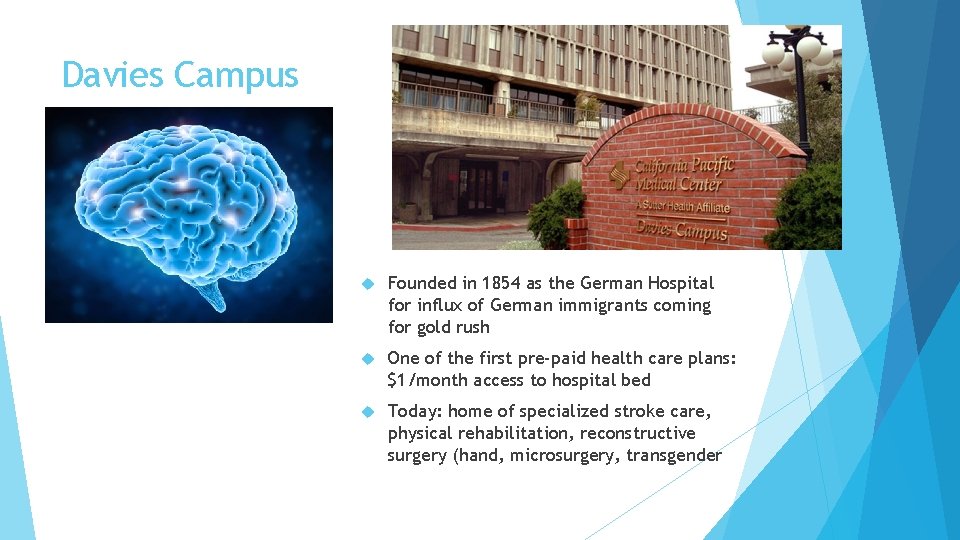
Davies Campus Founded in 1854 as the German Hospital for influx of German immigrants coming for gold rush One of the first pre-paid health care plans: $1/month access to hospital bed Today: home of specialized stroke care, physical rehabilitation, reconstructive surgery (hand, microsurgery, transgender

Pacific Campus: Many Firsts for California 1857: Elias Cooper, MD founded first medical school on the west coast (Cooper Medical College) “Father of medical research in the West” Became Stanford Medical School in 1909 (School moved to Palo Alto in 1959) Pacific Presbyterian Hospital is born CA first successful caesarian birth SF first use of chloroform for surgery, alcohol dressings to prevent infection 1990 s: advanced specialized care in cardiac/transplant (nation’s first nine way, two day kidney transplant chain in 2015) UCSF-CPMC
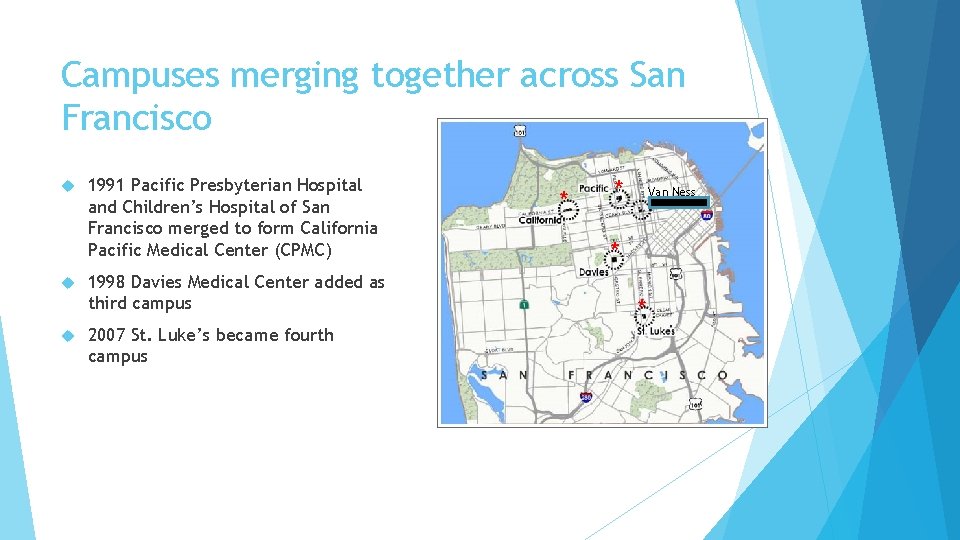
Campuses merging together across San Francisco 1991 Pacific Presbyterian Hospital and Children’s Hospital of San Francisco merged to form California Pacific Medical Center (CPMC) 1998 Davies Medical Center added as third campus 2007 St. Luke’s became fourth campus * * Van Ness * *
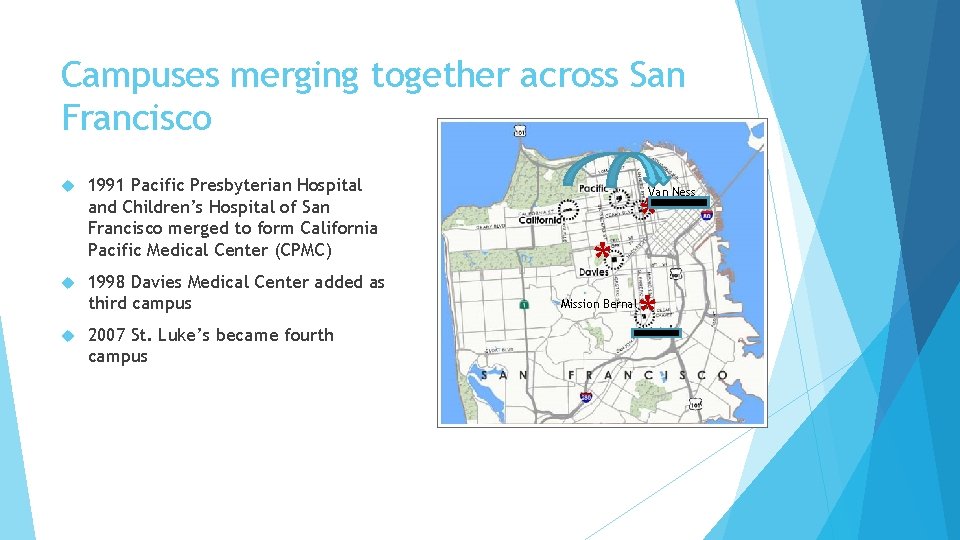
Campuses merging together across San Francisco 1991 Pacific Presbyterian Hospital and Children’s Hospital of San Francisco merged to form California Pacific Medical Center (CPMC) 1998 Davies Medical Center added as third campus 2007 St. Luke’s became fourth campus Van Ness * Mission Bernal * *
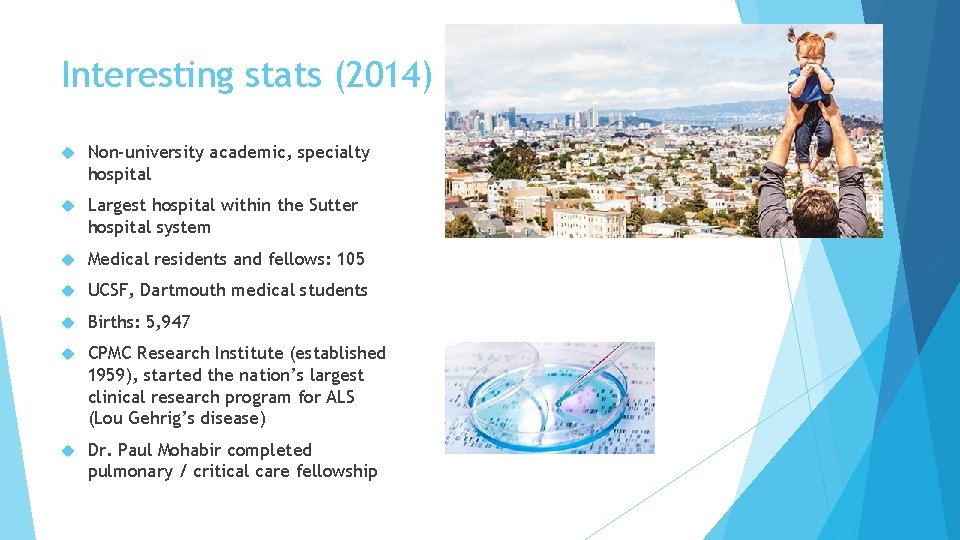
Interesting stats (2014) Non-university academic, specialty hospital Largest hospital within the Sutter hospital system Medical residents and fellows: 105 UCSF, Dartmouth medical students Births: 5, 947 CPMC Research Institute (established 1959), started the nation’s largest clinical research program for ALS (Lou Gehrig’s disease) Dr. Paul Mohabir completed pulmonary / critical care fellowship

Adult CF Program at CPMC Past, Present and Future

Adult CF Program at CPMC: Past Originated with Dr. Karen Hardy (pediatric) who partnered with Dr. Christopher Brown (adult) 1990 to start CPMC’s first adult program CFF center accreditation 2007 After my training fellowship at UCSF 2009, I joined CPMC with interest in CF care, became center director in 2012 2017: CPMC became affiliate program of Stanford – working “collaboration” Programs with fewer than 40 patient encouraged to become affiliates Best of both worlds: private practice group and community hospital in SF + highly specialized university expertise of Stanford (research trials, expert consultants, quality care protocols, access to transplant) Provide ease of transition for pediatric patients at CPMC, living in SF
Adult CF Program at CPMC - Present Inpatient services: Interventional radiology (world class) ENT Rehab / exercise, Infectious diseases, microbiology lab Palliative care team (advanced lung disease symptom and pain management) Experienced, caring nurses (20 -30 yrs experience with CF) Unique Research projects: Novabiotics cysteamine phase II study Started with a patient inquiry CPMC enrolled first patient in the U. S.
Adult CF Program at CPMC - Present Outpatient services Focused, individualized care (3 -5 patients / clinic), twice a month Excellent coordination of patient care (Carolyn Hruschka, NP) Full team (NP coordinator, three CF attending physicians, dietician, social worker, mental health coordinator, respiratory therapist, research coordinator) Overarching goal: to provide high quality, compassionate care for adults with CF
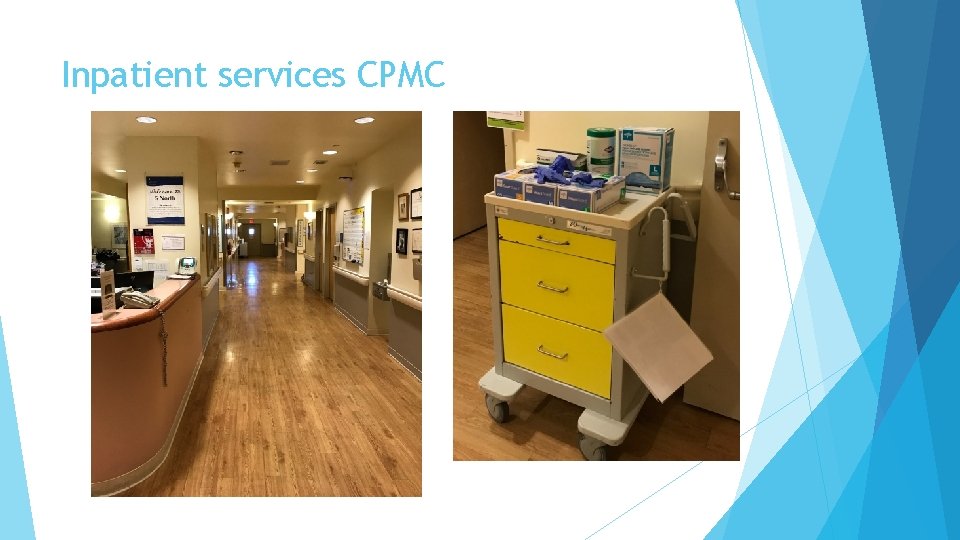
Inpatient services CPMC
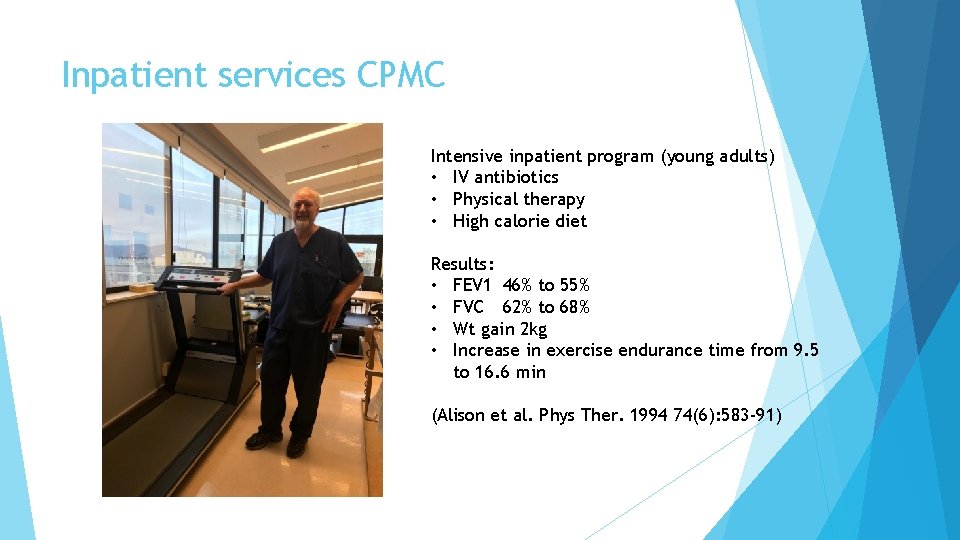
Inpatient services CPMC Intensive inpatient program (young adults) • IV antibiotics • Physical therapy • High calorie diet Results: • FEV 1 46% to 55% • FVC 62% to 68% • Wt gain 2 kg • Increase in exercise endurance time from 9. 5 to 16. 6 min (Alison et al. Phys Ther. 1994 74(6): 583 -91)

Alta Plaza Park
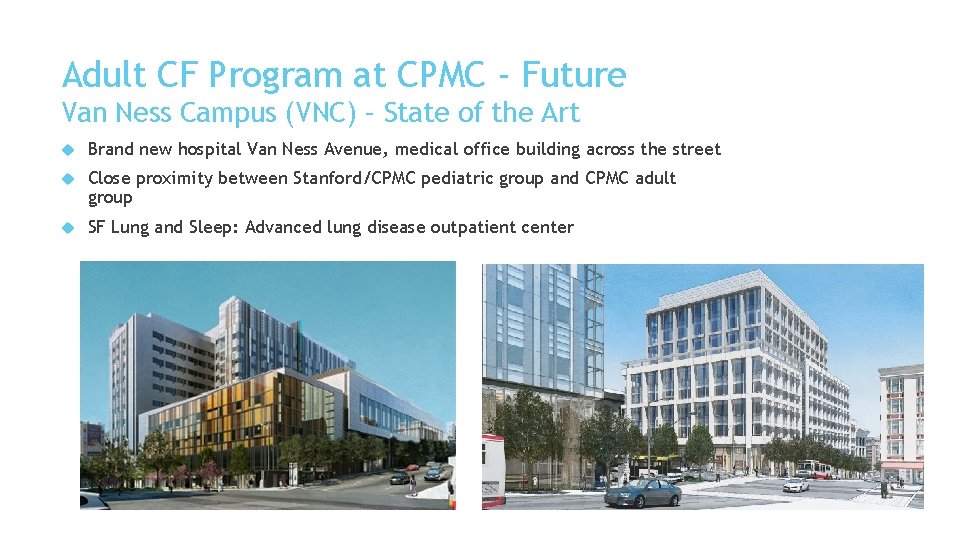
Adult CF Program at CPMC - Future Van Ness Campus (VNC) – State of the Art Brand new hospital Van Ness Avenue, medical office building across the street Close proximity between Stanford/CPMC pediatric group and CPMC adult group SF Lung and Sleep: Advanced lung disease outpatient center
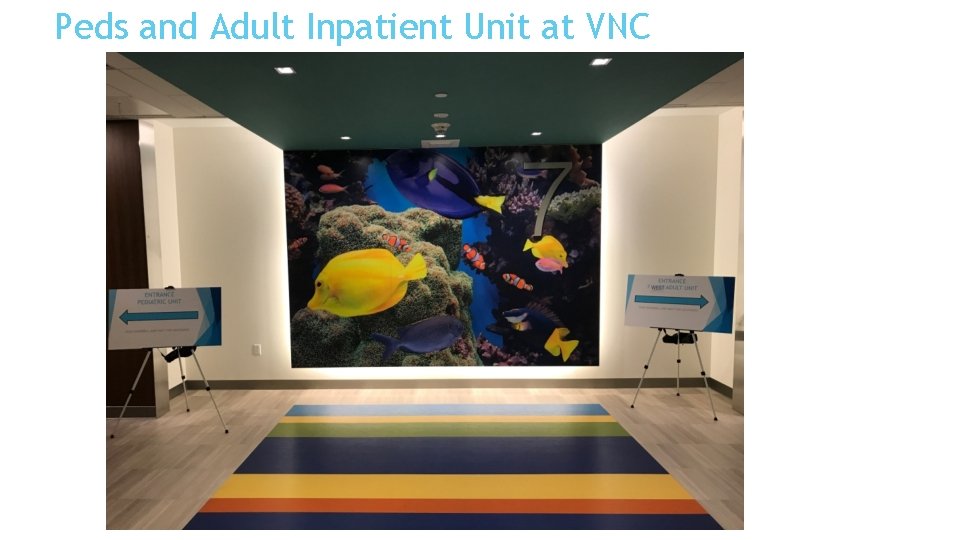
Peds and Adult Inpatient Unit at VNC
Adult CF Program at CPMC - Future Maintaining expertise of our care team utilizing resources from Stanford: Stanford CF grand rounds and journal clubs Quality improvement meetings Site visits Quarterly meetings Quality care protocols Research meetings Patient and Family Advisory Board (Dr. Vinnie Jha) Pediatric to adult team transition Quality improvement projects (PDSA “Plan-Do-Study-Act” model)
Quality improvement project – GI symptom tracker Objective: obtain a more objective understanding of GI symptoms among our CF adults Rationale: few patients reporting difficulty with adherence or symptoms (“everything is fine”) Administer the “GI Symptom Tracker” questionnaire by Abbvie (part of the “I Can” program) in waiting room prior to clinic visit Findings: 1. 69. 2% reported various symptoms “often or always” 2. 61. 5% reported adherence challenges to taking enzymes 3. 75% of patients who reported either frequent symptoms and/or adherence challenges were below goal BMI (BMI < 22 females, <23 males)
Quality improvement project – GI symptom tracker Important to objectively assess GI symptoms and adherence with enzymes Opportunities for improving patient GI health and well being: Enzyme dose, assess need for acid suppression Strategies for improving compliance The “CF Gut” is complex: • Hepatobiliary problems • Constipation • Gastroesophageal reflux disease • Gastric emptying • Small intestinal bacterial • Peptic ulcer disease overgrowth • Malignancy Dysbiosis (loss of normal colon • Celiac disease bacteria) • Lactose intolerance • Dysmotility • Eosinophilic esophagitis • Medication side effects • Cdiff colitis •
CPMC Adult CF Program San Francisco Lung and Sleep 1100 Van Ness Avenue, Suite 1005 San Francisco, CA 94109 415 -923 -3421
- Slides: 21