
CPIES Current and Pressure recording Inverted Echo Sounder

- Slides: 22
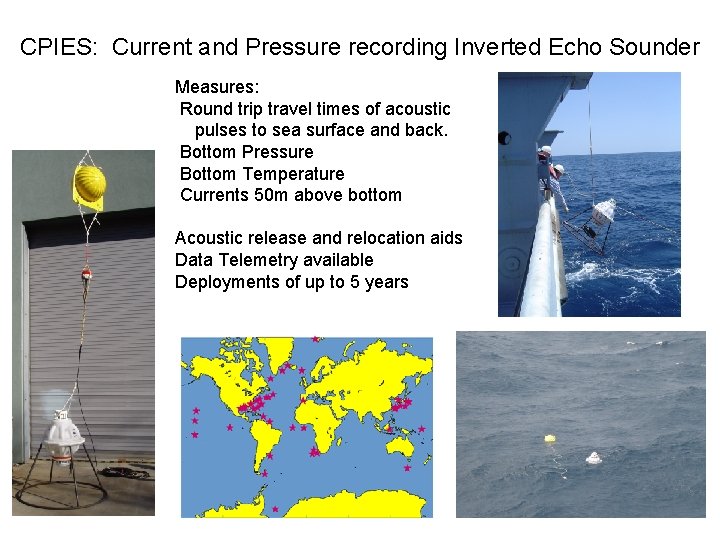
CPIES: Current and Pressure recording Inverted Echo Sounder Measures: Round trip travel times of acoustic pulses to sea surface and back. Bottom Pressure Bottom Temperature Currents 50 m above bottom Acoustic release and relocation aids Data Telemetry available Deployments of up to 5 years
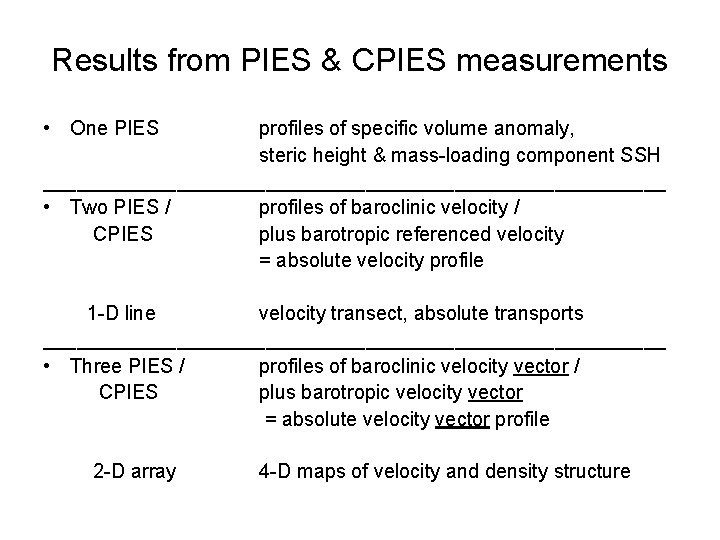
Results from PIES & CPIES measurements • One PIES profiles of specific volume anomaly, steric height & mass-loading component SSH ____________________________ • Two PIES / profiles of baroclinic velocity / CPIES plus barotropic referenced velocity = absolute velocity profile 1 -D line velocity transect, absolute transports ____________________________ • Three PIES / profiles of baroclinic velocity vector / CPIES plus barotropic velocity vector = absolute velocity vector profile 2 -D array 4 -D maps of velocity and density structure
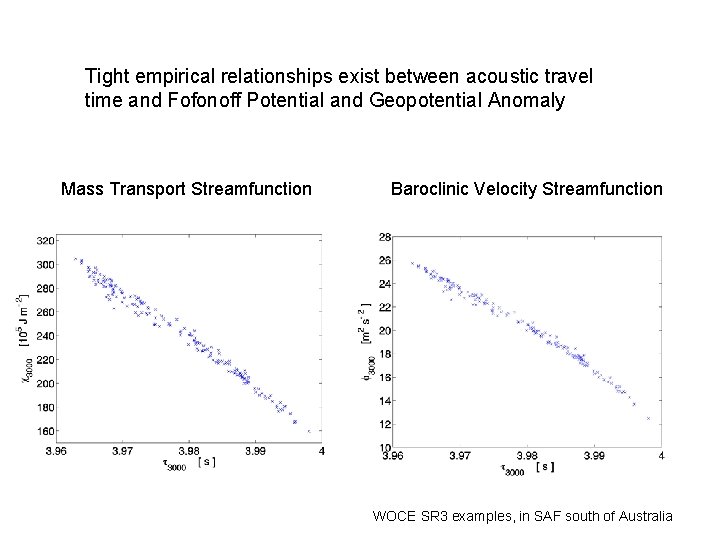
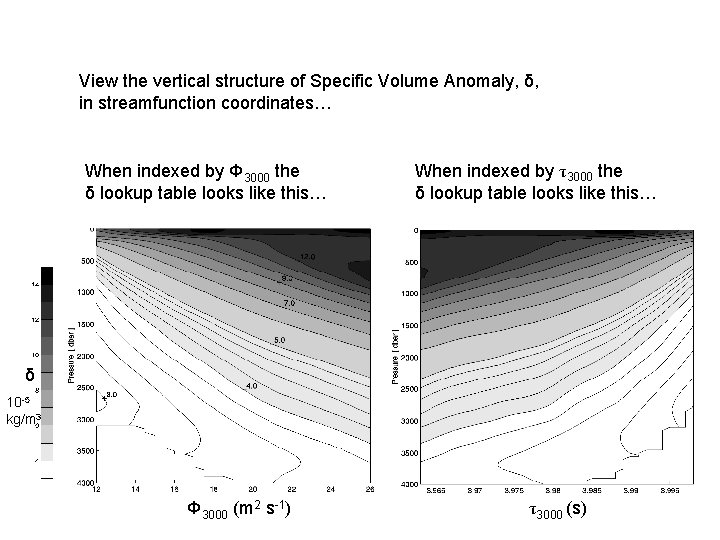
Tight empirical relationships exist between acoustic travel time and Fofonoff Potential and Geopotential Anomaly Mass Transport Streamfunction Baroclinic Velocity Streamfunction WOCE SR 3 examples, in SAF south of Australia
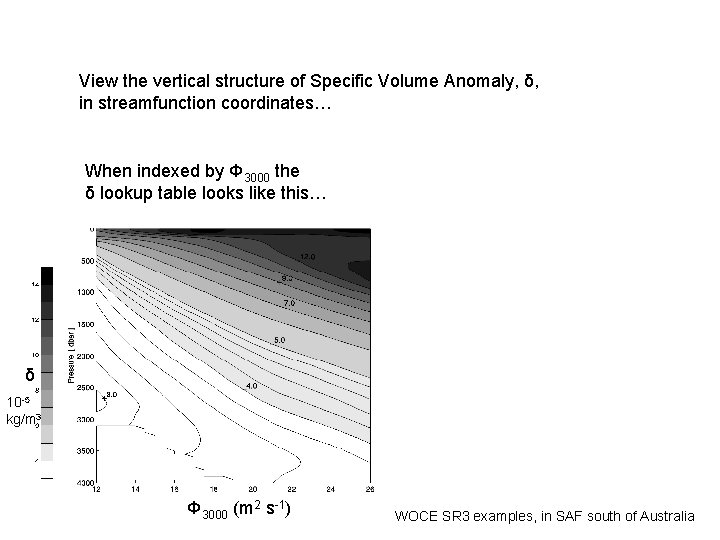
View the vertical structure of Specific Volume Anomaly, δ, in streamfunction coordinates… When indexed by Φ 3000 the δ lookup table looks like this… δ 10 -5 kg/m 3 Φ 3000 (m 2 s-1) WOCE SR 3 examples, in SAF south of Australia
View the vertical structure of Specific Volume Anomaly, δ, in streamfunction coordinates… When indexed by Φ 3000 the δ lookup table looks like this… When indexed by τ3000 the δ lookup table looks like this… δ 10 -5 kg/m 3 Φ 3000 (m 2 s-1) τ3000 (s)
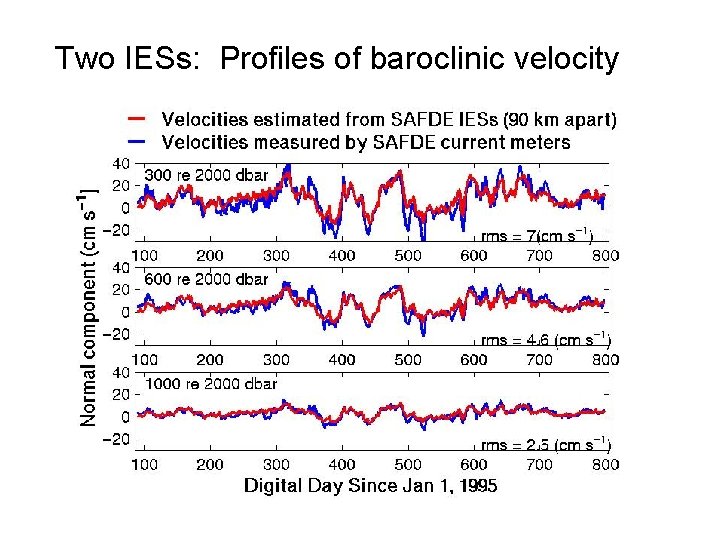
Two IESs: Profiles of baroclinic velocity
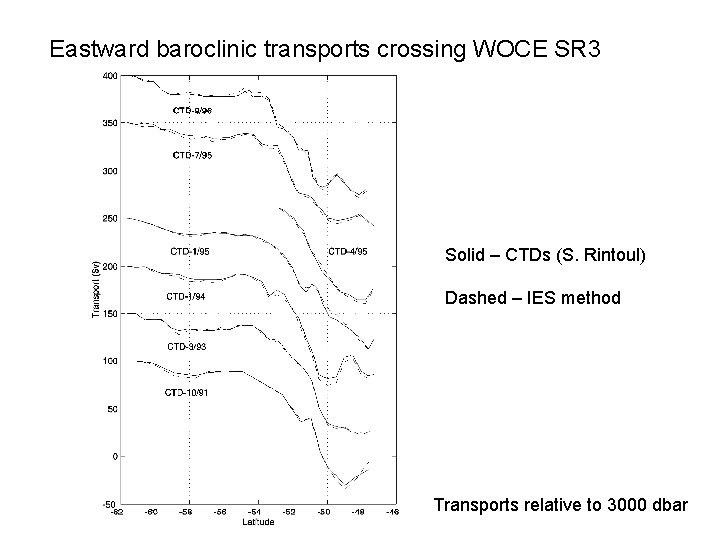
Eastward baroclinic transports crossing WOCE SR 3 Solid – CTDs (S. Rintoul) Dashed – IES method Transports relative to 3000 dbar
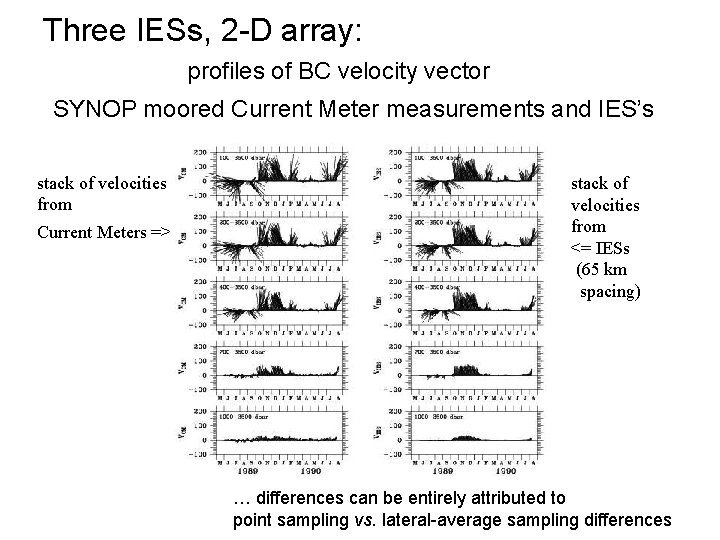
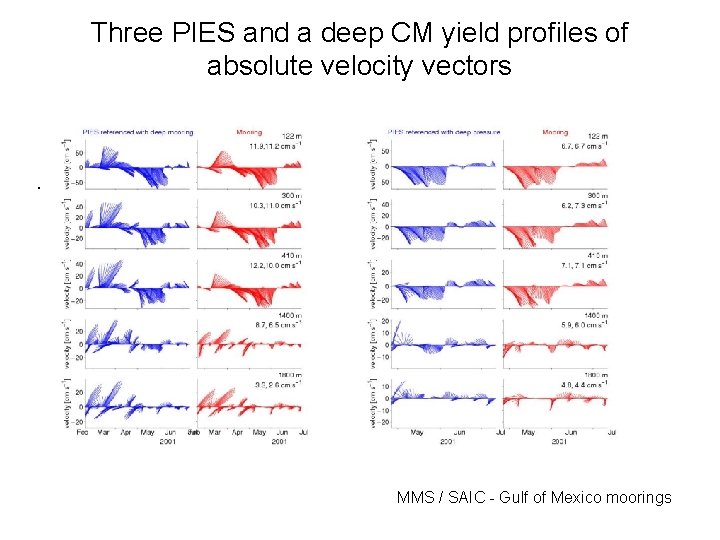
Three IESs, 2 -D array: profiles of BC velocity vector SYNOP moored Current Meter measurements and IES’s stack of velocities from Current Meters => stack of velocities from <= IESs (65 km spacing) … differences can be entirely attributed to point sampling vs. lateral-average sampling differences
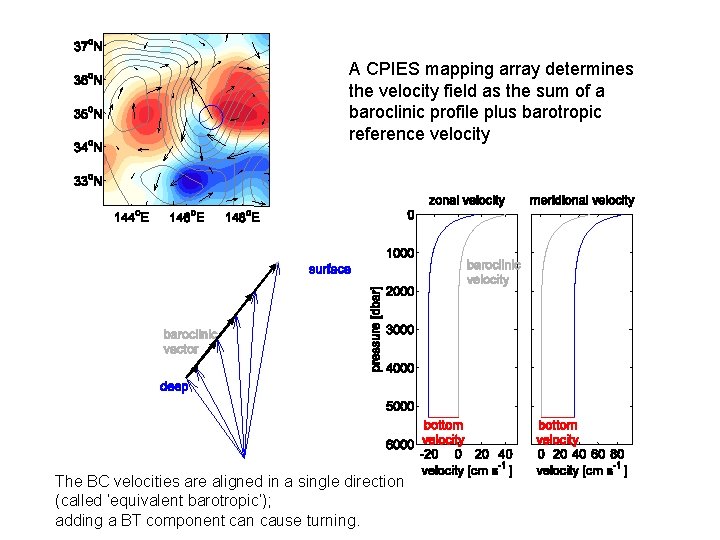
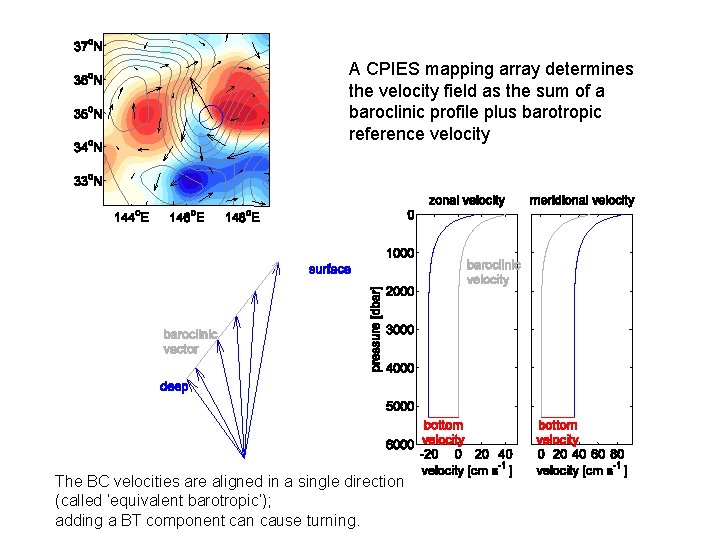
A CPIES mapping array determines the velocity field as the sum of a baroclinic profile plus barotropic reference velocity The BC velocities are aligned in a single direction (called ‘equivalent barotropic’); adding a BT component can cause turning.
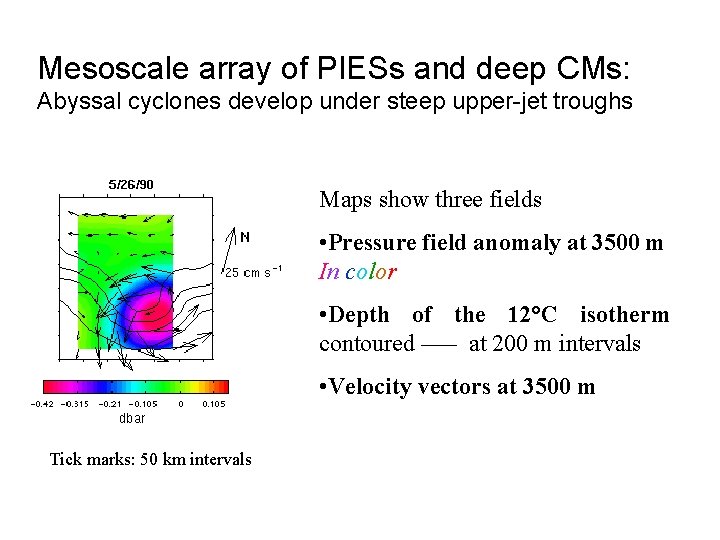
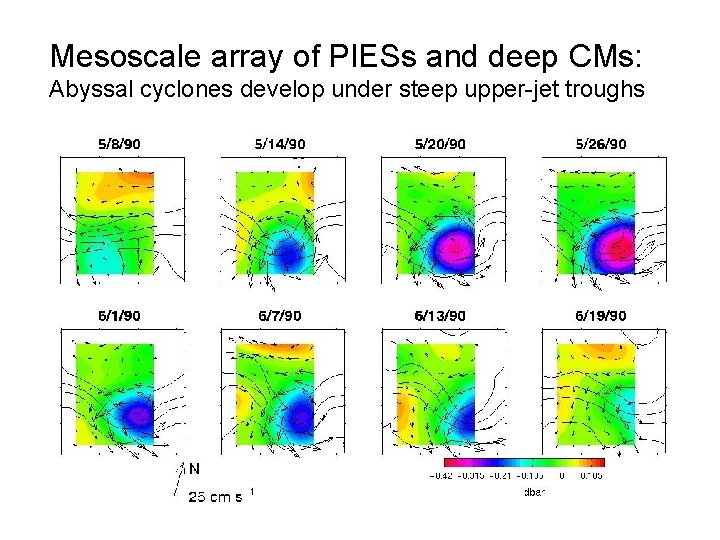
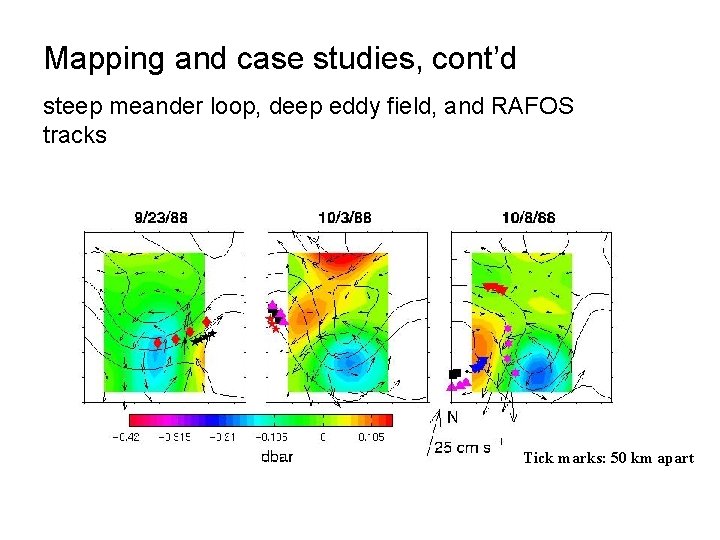
Mesoscale array of PIESs and deep CMs: Abyssal cyclones develop under steep upper-jet troughs Maps show three fields • Pressure field anomaly at 3500 m In color • Depth of the 12°C isotherm contoured ––– at 200 m intervals • Velocity vectors at 3500 m Tick marks: 50 km intervals
Mesoscale array of PIESs and deep CMs: Abyssal cyclones develop under steep upper-jet troughs
Summary • PIES with deep current reference, e. g. , CPIES capabilities – 1 -D transects provide absolute velocity and transport estimates • Cost-effective for high horizontal spatial resolution • Geostrophic velocities are laterally integrated (intrinsically) • High temporal sampling for extended time periods (up to 5 years) – 2 -D arrays of CPIESs can provide velocity structure • With mesoscale spatial and temporal resolution • Well-resolved maps allow for dynamical diagnoses & case-studies
• End of planned presentation • Some extra slides follow
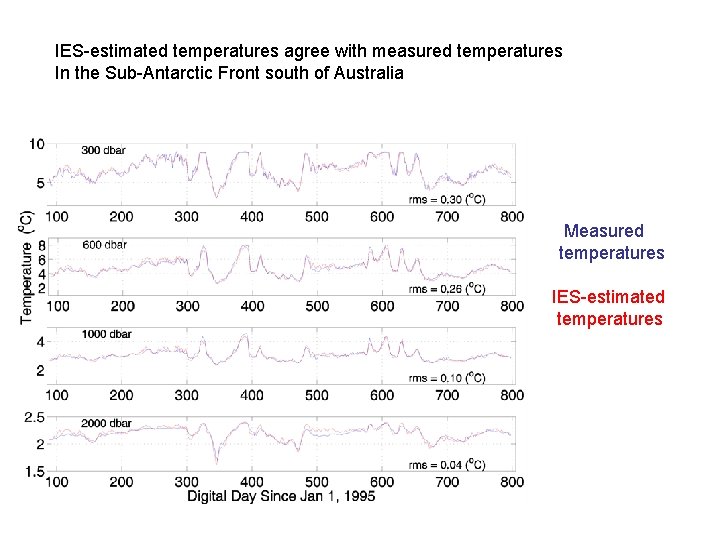
IES-estimated temperatures agree with measured temperatures In the Sub-Antarctic Front south of Australia Measured temperatures IES-estimated temperatures
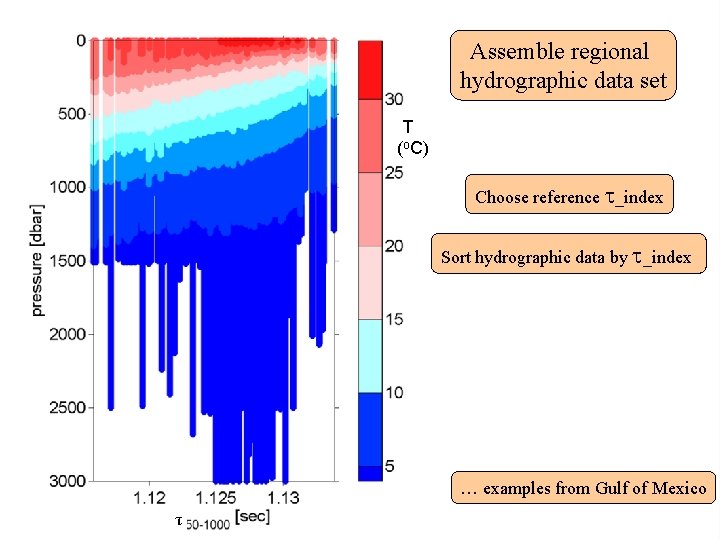
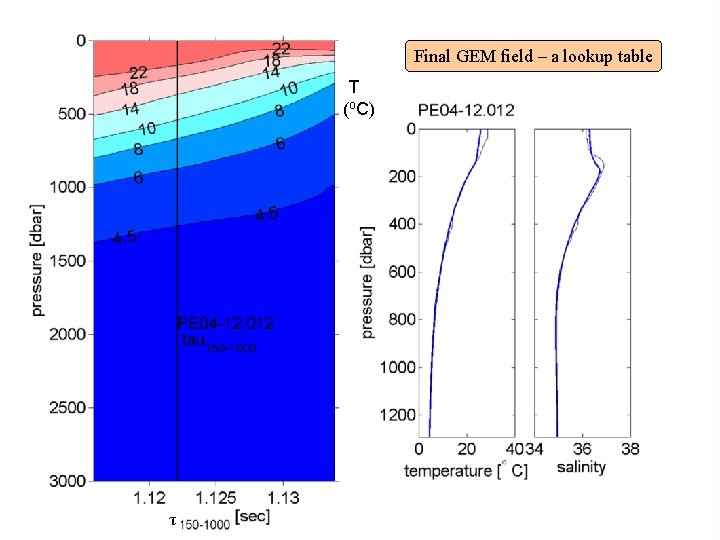
Assemble regional hydrographic data set T Hydrographic data sorted by tau (o. C) Choose reference _index Sort hydrographic data by _index … examples from Gulf of Mexico τ
Fit cubic splines to data T (o. C) τ
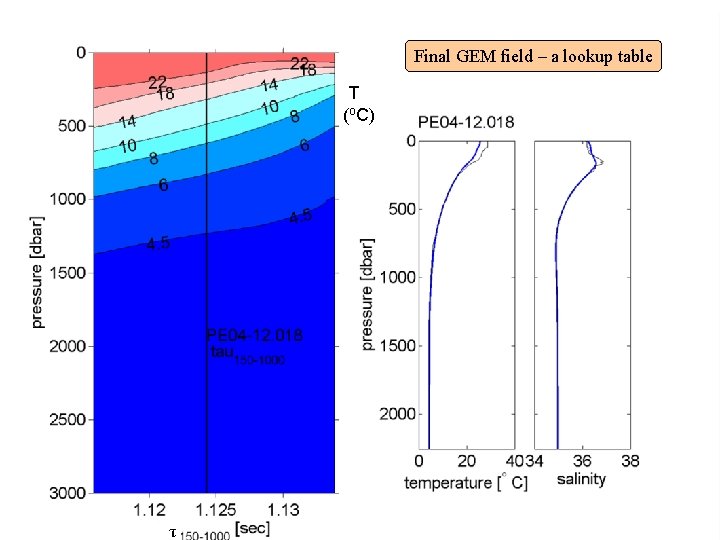
Final GEM field – a lookup table T (o. C) τ
Final GEM field – a lookup table T (o. C) τ
Three PIES and a deep CM yield profiles of absolute velocity vectors . MMS / SAIC - Gulf of Mexico moorings
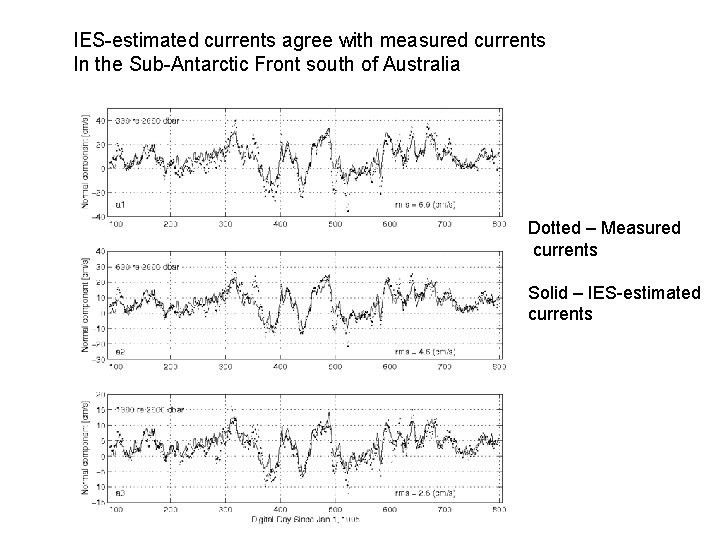
IES-estimated currents agree with measured currents In the Sub-Antarctic Front south of Australia Dotted – Measured currents Solid – IES-estimated currents
A CPIES mapping array determines the velocity field as the sum of a baroclinic profile plus barotropic reference velocity The BC velocities are aligned in a single direction (called ‘equivalent barotropic’); adding a BT component can cause turning.
Mapping and case studies, cont’d steep meander loop, deep eddy field, and RAFOS tracks Tick marks: 50 km apart