
COVID19 Infection Prevention and Control GP Practice October
COVID-19 Infection Prevention and Control GP Practice October 2020
Preventing the spread of COVID-19 Infection Prevention & Control • Cough etiquette • Hand hygiene • Personal protective equipment (PPE) • Social distancing • Protecting the vulnerable - shielding • Isolation of those with symptoms • Cleaning 2
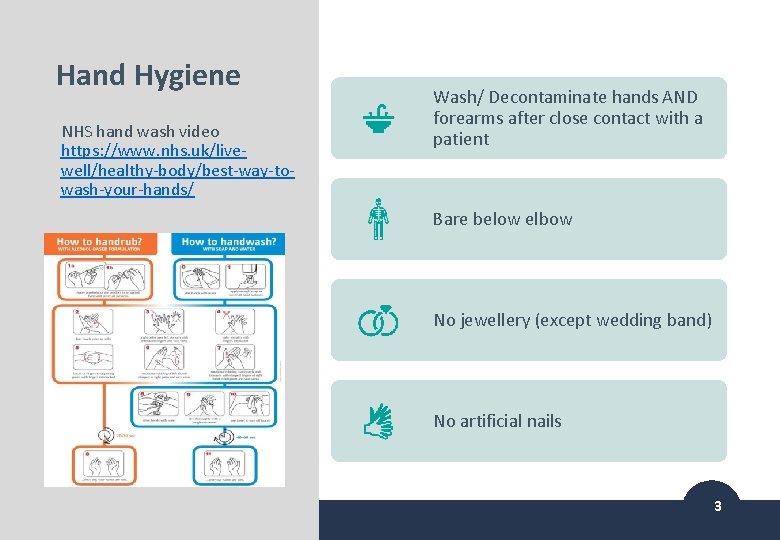
Hand Hygiene NHS hand wash video https: //www. nhs. uk/livewell/healthy-body/best-way-towash-your-hands/ Wash/ Decontaminate hands AND forearms after close contact with a patient Bare below elbow No jewellery (except wedding band) No artificial nails 3
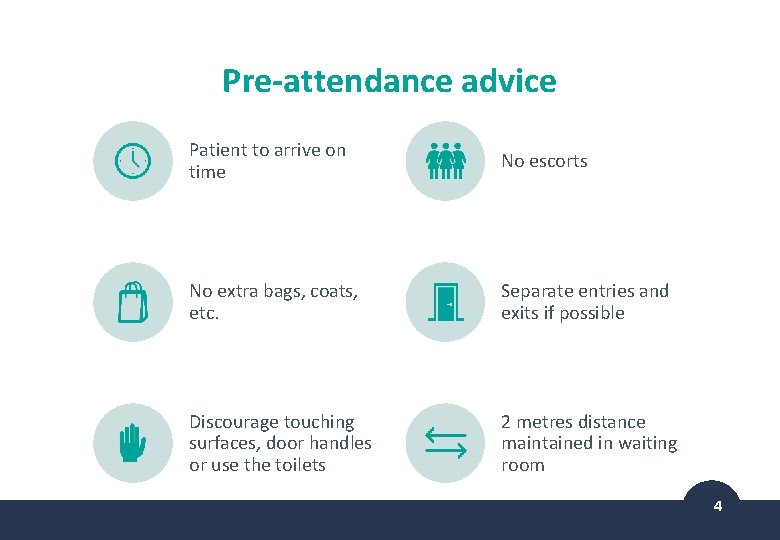
Pre-attendance advice Patient to arrive on time No escorts No extra bags, coats, etc. Separate entries and exits if possible Discourage touching surfaces, door handles or use the toilets 2 metres distance maintained in waiting room 4
Post Consultation/ treatment - Staff Ensure that the patient exits the building. Clean frequently touched surfaces e. g. keyboard, mouse, phones, etc. Ensure that all PPE are disposed of in clinical waste bins. There should be provision for daily cleaning and cleaning staff must been trained in cleaning of the healthcare environment 5
I n f o r m P r o m o t e S u s t a i n Personal Protective Equipment (PPE) PPE will only prevent spread of infection if it is: Used and changed at the right time Accompanied by good hand hygiene Cough etiquette is applied Mobile phones should not be used whilst wearing PPE All staff, including cleaners & housekeepers, must be trained in how to use PPE 6
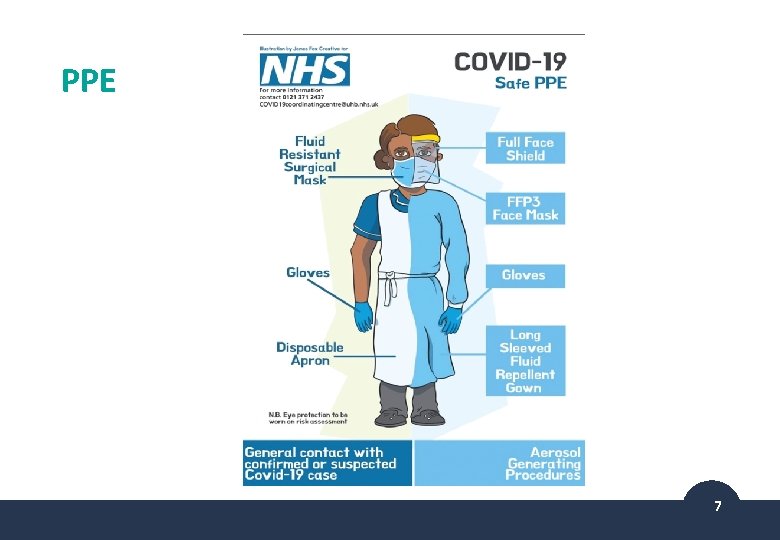
PPE 7
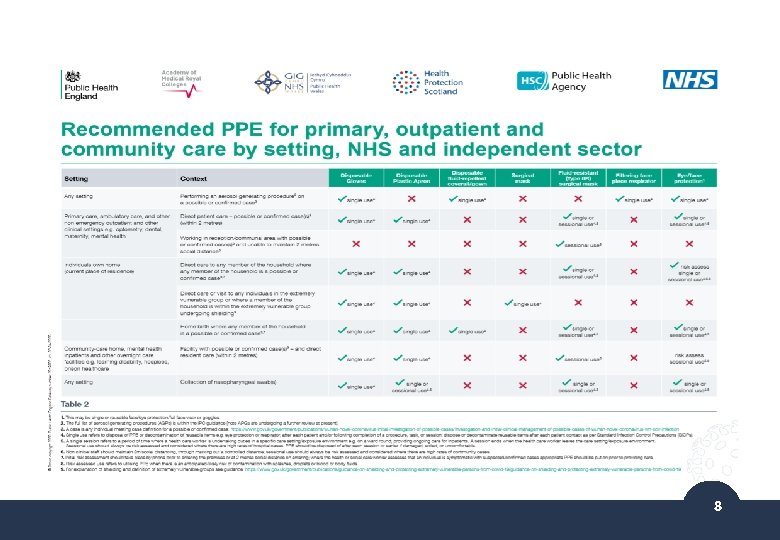
PPE Risk Assessment 8
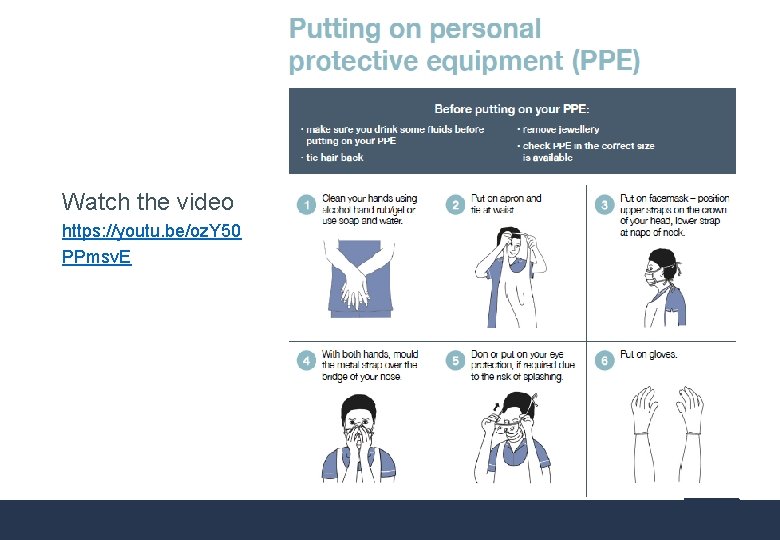
Watch the video https: //youtu. be/oz. Y 50 PPmsv. E
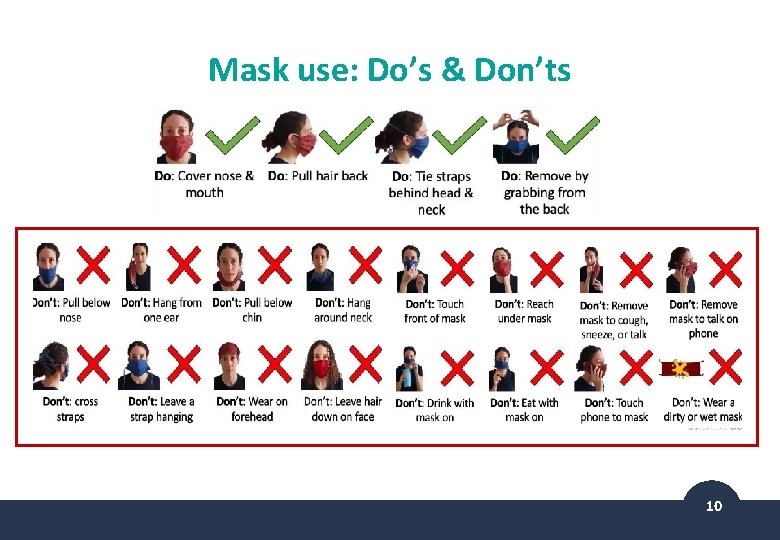
Mask use: Do’s & Don’ts 10
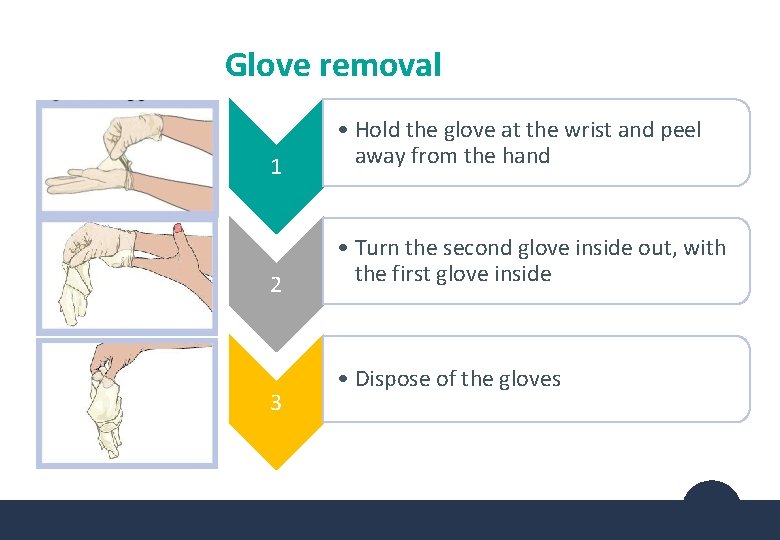
Glove removal 1 • Hold the glove at the wrist and peel away from the hand 2 • Turn the second glove inside out, with the first glove inside 3 • Dispose of the gloves
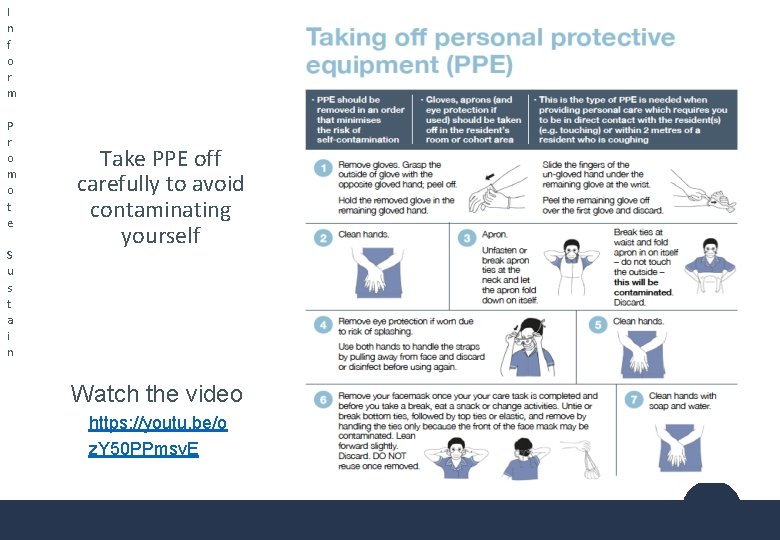
I n f o r m P r o m o t e S u s t a i n Take PPE off carefully to avoid contaminating yourself Watch the video https: //youtu. be/o z. Y 50 PPmsv. E
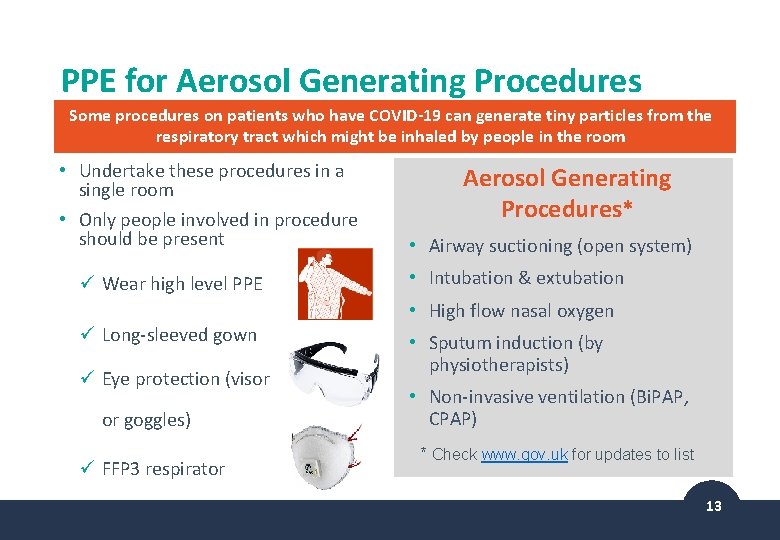
PPE for Aerosol Generating Procedures Some procedures on patients who have COVID-19 can generate tiny particles from the respiratory tract which might be inhaled by people in the room • Undertake these procedures in a single room • Only people involved in procedure should be present ü Wear high level PPE Aerosol Generating Procedures* • Airway suctioning (open system) • Intubation & extubation • High flow nasal oxygen ü Long-sleeved gown ü Eye protection (visor or goggles) ü FFP 3 respirator • Sputum induction (by physiotherapists) • Non-invasive ventilation (Bi. PAP, CPAP) * Check www. gov. uk for updates to list 13
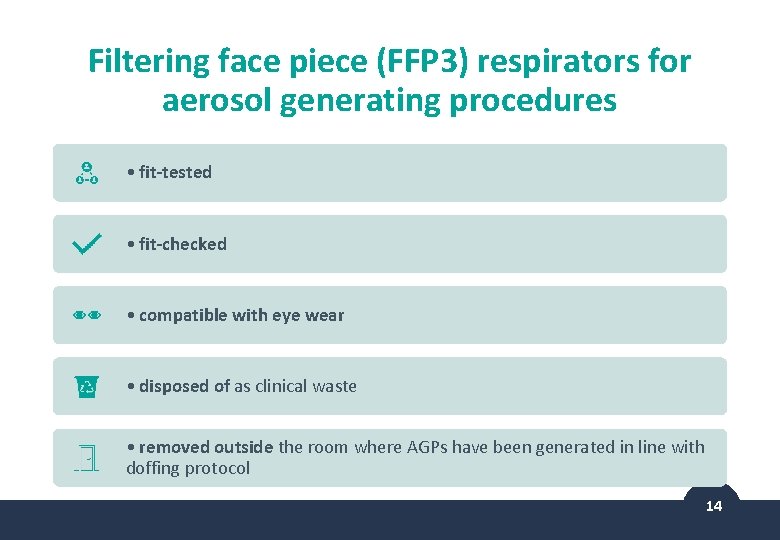
Filtering face piece (FFP 3) respirators for aerosol generating procedures • fit-tested • fit-checked • compatible with eye wear • disposed of as clinical waste • removed outside the room where AGPs have been generated in line with doffing protocol 14
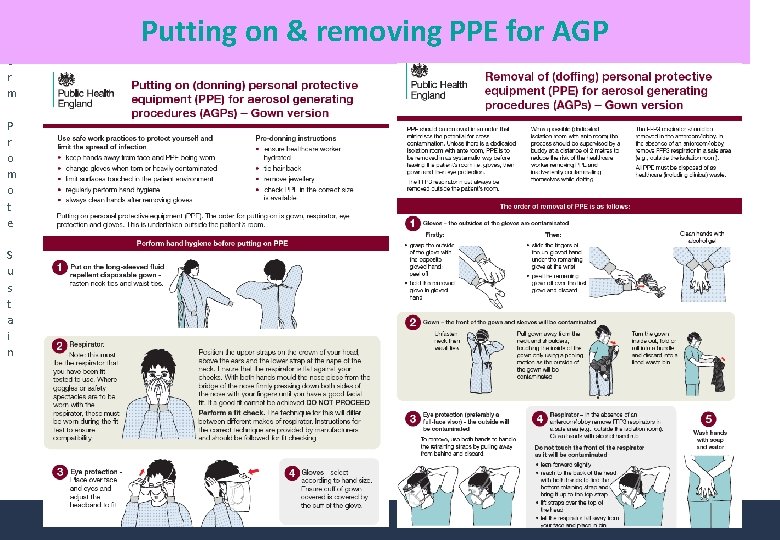
I n f o r m P r o m o t e S u s t a i n Putting on & removing PPE for AGP
On cleaning… • Cleaning is a skilled but often undervalued job • Cleaning is everybody’s responsibility but needs leadership and oversight • Would you feel safer being cared for in a clean and uncluttered environment?
Cleaning and disinfection • Cleaning is the physical removal of soil and debris through the mechanical action of wiping with a clean wet cloth or mop. • Surfaces must be cleaned of visible soil before they can be disinfected as dust, dirt, and organic matter interferes with the effectiveness of the disinfectant. • Disinfection is the inactivation of disease producing microorganisms through wetting of a surface with a ready-to-use disinfectant wipe or cloth saturated with a disinfectant solution prepared according to the manufacturer’s instructions for use. • To achieve disinfection, the surface must stay wet for the manufacturer’s recommended contact time.
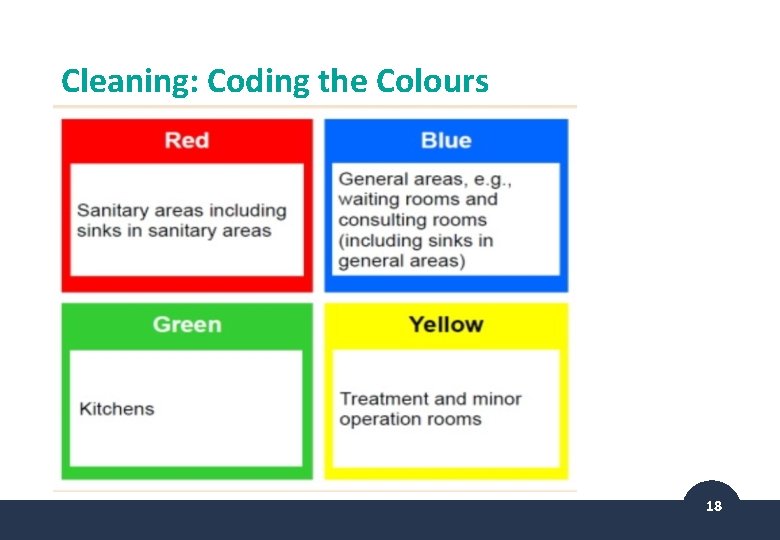
Cleaning: Coding the Colours 18
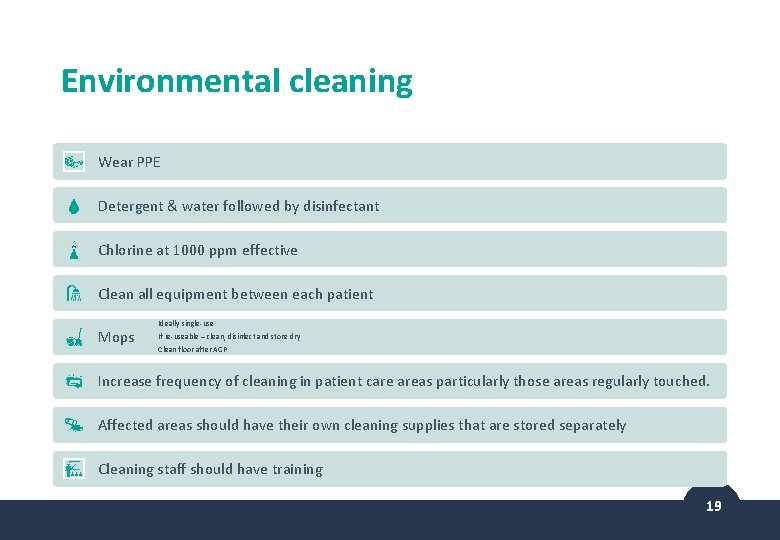
Environmental cleaning Wear PPE Detergent & water followed by disinfectant Chlorine at 1000 ppm effective Clean all equipment between each patient Mops Ideally single-use If re-useable – clean, disinfect and store dry Clean floor after AGP Increase frequency of cleaning in patient care areas particularly those areas regularly touched. Affected areas should have their own cleaning supplies that are stored separately Cleaning staff should have training 19
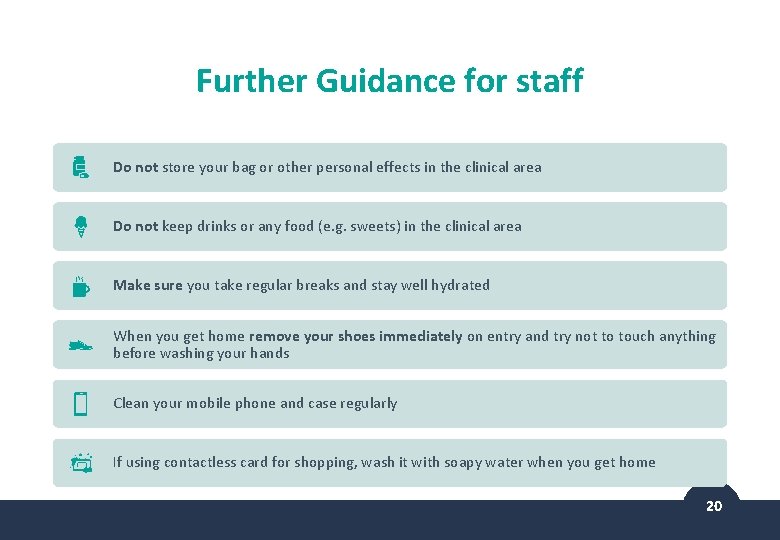
Further Guidance for staff Do not store your bag or other personal effects in the clinical area Do not keep drinks or any food (e. g. sweets) in the clinical area Make sure you take regular breaks and stay well hydrated When you get home remove your shoes immediately on entry and try not to touch anything before washing your hands Clean your mobile phone and case regularly If using contactless card for shopping, wash it with soapy water when you get home 20
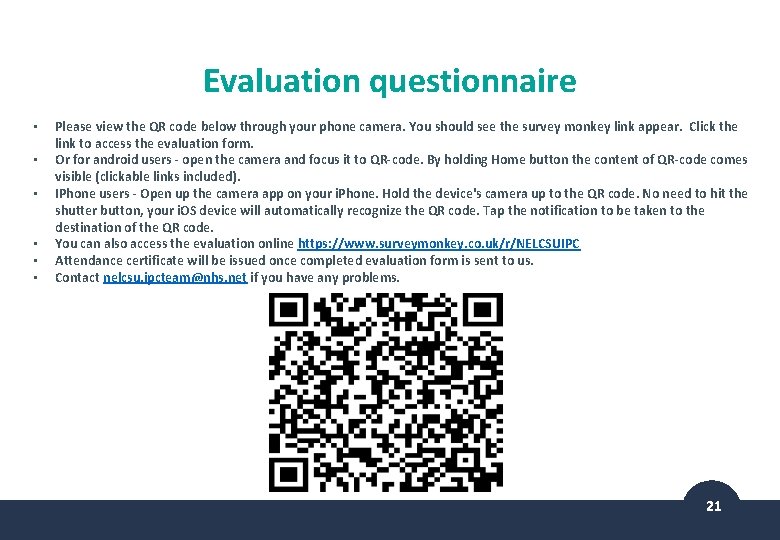
Evaluation questionnaire • • • Please view the QR code below through your phone camera. You should see the survey monkey link appear. Click the link to access the evaluation form. Or for android users - open the camera and focus it to QR-code. By holding Home button the content of QR-code comes visible (clickable links included). IPhone users - Open up the camera app on your i. Phone. Hold the device's camera up to the QR code. No need to hit the shutter button, your i. OS device will automatically recognize the QR code. Tap the notification to be taken to the destination of the QR code. You can also access the evaluation online https: //www. surveymonkey. co. uk/r/NELCSUIPC Attendance certificate will be issued once completed evaluation form is sent to us. Contact nelcsu. ipcteam@nhs. net if you have any problems. 21
- Slides: 21