
COVID19 and VTE Ananya Mahesh Akshay Kulkarni Sonal
- Slides: 25
COVID-19 and VTE Ananya Mahesh, Akshay Kulkarni, Sonal Churiwal, and Krishan Patel The GTF Group
Abstract Since its inception a few months ago in Wuhan, China, COVID-19 has affected the entire World, making it a pandemic. Unfortunately, the lack of adequate resources compounded with the long 14 day incubation period of COVID-19 is enabling the rapid spread of the virus. Diagnosis of COVID-19 includes nasopharyngeal swabs and serological testing. Patients at high-risk of contracting COVID-19 include the elderly and patients with asthma, chronic lung disease, immunocompromised patients, etc. One prevalent complication of COVID 19 includes thrombosis, which although has been highest among patients that are not receiving adequate prophylaxis, is still prevailing among those who are receiving prophylaxis. Thrombosis is managed through anticoagulants; however, care should be exercised in order to prevent excess bleeding.
Introduction • • COVID-19 is the viral illness caused by the severe acute respiratory syndrome coronavirus 2 (SARS-Co. V 2) Increased inflammation due to COVID-19 is harmful by causing increased clotting. PE and DVT frequently occur in spite of standard-dose anticoagulation because of the lack of response. Extensive microvascular thrombosis associated with hemorrhage in the lung occurs.
Introduction, contd. • • COVID-19 -associated coagulopathy (CAC) has high inflammatory markers in the blood, such as D-dimer and fibrinogen. Our colleagues in GTF are investigating other aspects of COVID-19 such as COVID-19 and PE and COVID-19 and DVT Kulkarni et al (2020) had reviewed the preliminary findings Bikdeli B; Madhavan MV; Fareed, et al (In Press) have recently published a preliminary review on COVID-19.
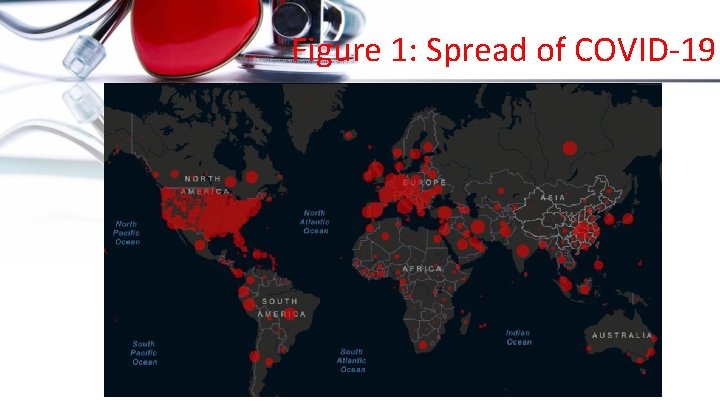
History of COVID-19 • • • December 2019: The first case of Covid-19 was reported in Wuhan, Hubei Province, China Progressed very rapidly through 6 continents and over 100 countries Many countries adopted measures of social distancing policies to slow the spread of the virus February 29, 2020: First report of COVID-19 in the United States in Seattle To date, there have been 3, 360, 000 cases, 239, 000 deaths, and 1, 060, 000 recoveries Worldwide (Figure 1)
Figure 1: Spread of COVID-19
Spread, Symptoms, Challenges • • Spreads through many ways including respiratory droplets, fomites, and through asymptomatic carriers. COVID-19 expresses flu-like symptoms. Major symptoms include low-grade fever, coughing, and lessened sense of taste/smell. Challenges include a long incubation period, difficulty in diagnosis, lack of resources and lack of vaccine. High risk patients include the elderly and those with underlying medical conditions such as asthma, diabetes, hypertension, as well as those who are immunocompromised.
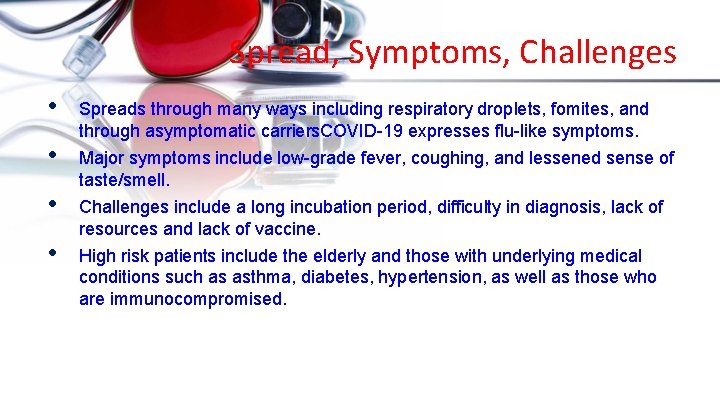
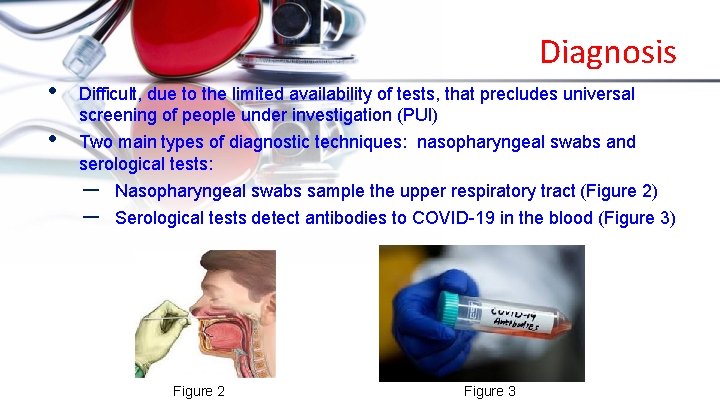
Diagnosis • • Difficult, due to the limited availability of tests, that precludes universal screening of people under investigation (PUI) Two main types of diagnostic techniques: nasopharyngeal swabs and serological tests: – – Nasopharyngeal swabs sample the upper respiratory tract (Figure 2) Serological tests detect antibodies to COVID-19 in the blood (Figure 3) Figure 2 Figure 3
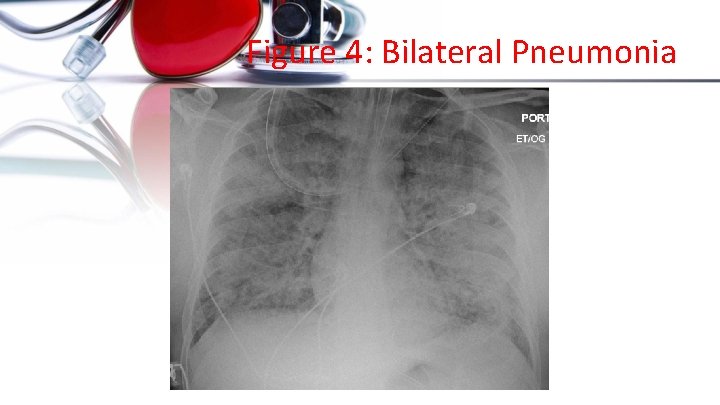
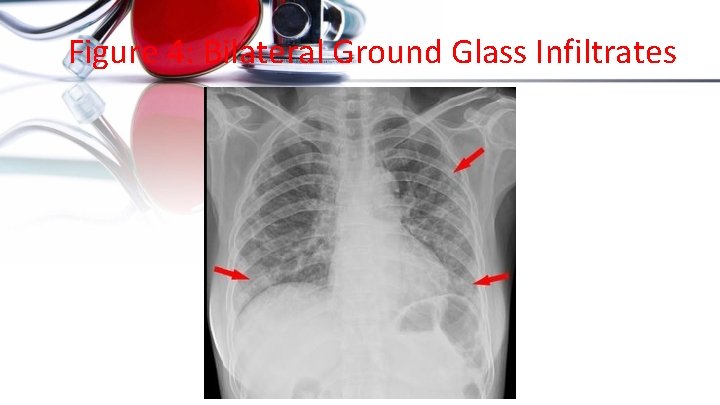
General Complications • • Potential cardiac, pulmonary, GI, neurologic and even dermatologic manifestations Pulmonary complications: pneumonia, ARDS/SIRS and PE – – Figure 4 demonstrates bilateral pneumonia Figure 5 illustrates ground glass infiltrates
Figure 4: Bilateral Pneumonia
Figure 4: Bilateral Ground Glass Infiltrates
Thrombotic Complications • • May be caused by severe systemic inflammation, hypoxia, immobilization and diffuse intravascular coagulopathy. Wang, et al (2020) studied with 1, 099 patients with a confirmed COVID-19 infection – – – Forty percent were at high risk An estimated 11% of high risk patients developed venous thromboembolism without appropriate thromboprophylaxis. High risk patients were often requiring mechanical ventilation With appropriate prophylaxis, the venous thromboembolism could be prevented. Only 7% of high risk patients had anticoagulation data, emphasizing the need to identify high risk patients
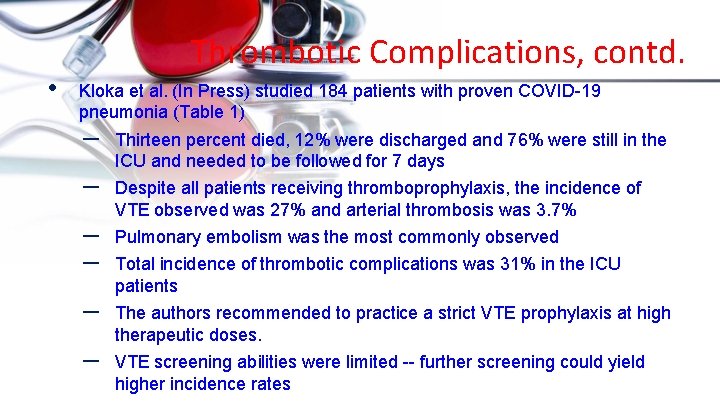
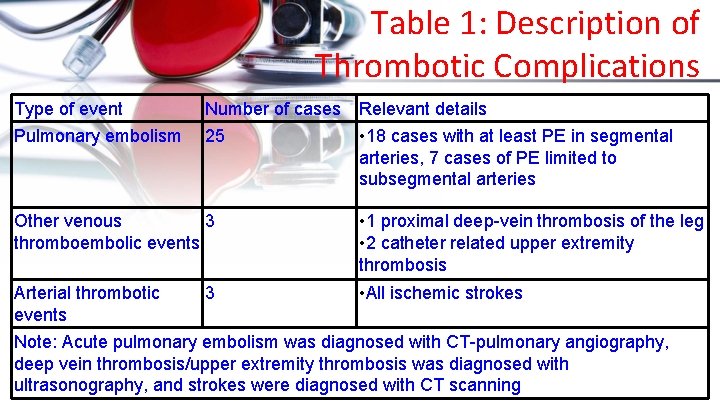
• Thrombotic Complications, contd. Kloka et al. (In Press) studied 184 patients with proven COVID-19 pneumonia (Table 1) – – – Thirteen percent died, 12% were discharged and 76% were still in the ICU and needed to be followed for 7 days Despite all patients receiving thromboprophylaxis, the incidence of VTE observed was 27% and arterial thrombosis was 3. 7% Pulmonary embolism was the most commonly observed Total incidence of thrombotic complications was 31% in the ICU patients The authors recommended to practice a strict VTE prophylaxis at high therapeutic doses. VTE screening abilities were limited -- further screening could yield higher incidence rates
Table 1: Description of Thrombotic Complications Type of event Number of cases Relevant details Pulmonary embolism 25 • 18 cases with at least PE in segmental arteries, 7 cases of PE limited to subsegmental arteries Other venous 3 thromboembolic events • 1 proximal deep-vein thrombosis of the leg • 2 catheter related upper extremity thrombosis Arterial thrombotic events • All ischemic strokes 3 Note: Acute pulmonary embolism was diagnosed with CT-pulmonary angiography, deep vein thrombosis/upper extremity thrombosis was diagnosed with ultrasonography, and strokes were diagnosed with CT scanning
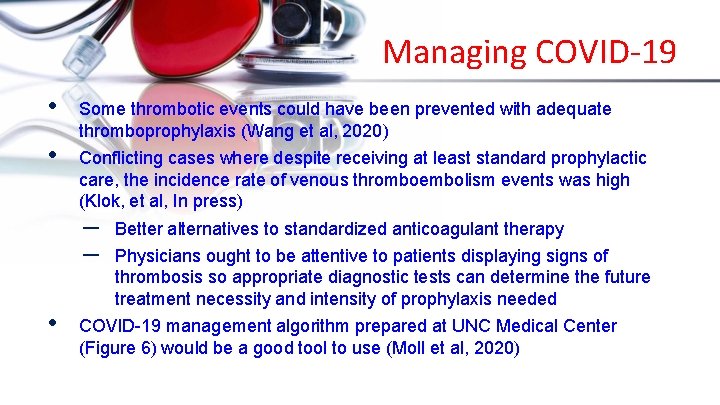
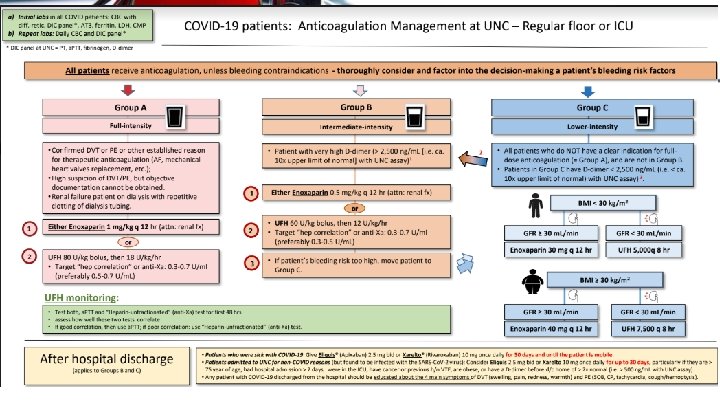
Managing COVID-19 • • Some thrombotic events could have been prevented with adequate thromboprophylaxis (Wang et al, 2020) Conflicting cases where despite receiving at least standard prophylactic care, the incidence rate of venous thromboembolism events was high (Klok, et al, In press) – – • Better alternatives to standardized anticoagulant therapy Physicians ought to be attentive to patients displaying signs of thrombosis so appropriate diagnostic tests can determine the future treatment necessity and intensity of prophylaxis needed COVID-19 management algorithm prepared at UNC Medical Center (Figure 6) would be a good tool to use (Moll et al, 2020)
Figure 8: COVID-19 Patients
Preventing COVID-19 • • The prevention of COVID-19 is similar to preventing any other airborne diseases, with some extra precautions added due to the contagiosity of the virus Preventative measures include: – – – Washing your hands often, especially after coming in contact with other people Distance yourself from others by at least 6 feet Cover your mouth with a cloth or mask when leaving the house or around others Avoid contact with those who are affected Stay at home to prevent the spread of the virus
General Recommendations • All hospitalized COVID-19 patients need DVT/PE prophylaxis with anticoagulation – – Thrombosis appears to be a bigger problem in COVID-19 patients than bleeding. The choice of the ideal anticoagulant and dosage have not yet been established.
General Recommendations, contd. • Caution should be exercised to avoid excess bleeding from the anticoagulation therapy – • Particularly in the elderly, patients with thrombocytopenia (most concerning if platelet count < 50 k /μL), coagulopathy with progressive disseminated intravascular coagulation (DIC) leading to decreased coagulation factor levels, renal dysfunction, liver impairment, multiorgan failure, h/o bleeding or active bleeding sites. Patients need to be evaluated individually with respect to the possible etiology of their respiratory and other organ failure, bleeding risk, and suitability for anticoagulation
Recommendations from the Anticoagulation Forum • • Pharmacologic VTE prophylaxis for all hospitalized non-pregnant patients with confirmed or highly suspected COVID-19, regardless of VTE risk assessment score, unless a contraindication exists (e. g. active bleeding, profound thrombocytopenia). Pharmacologic VTE prophylaxis for all hospitalized pregnant patients with confirmed or highly suspected COVID-19. In patients with a contraindication to pharmacologic VTE prophylaxis, a consistent application of intermittent pneumatic compression devices with regular reassessment for conversion to pharmacologic prophylaxis. In critically ill patients, it is reasonable to employ both pharmacologic and mechanical VTE prophylaxis (i. e. , intermittent pneumatic compression devices) as long as no contraindication to either modality exists.
Summary and Conclusions • • • COVID-19 is rather difficult to control because of its many methods of spreading Heightened risk of infection raises chances of thrombotic events Important to consider preventive and therapeutic use of antithrombotic agents, especially for high-risk patients Other complications include respiratory problems such as pneumonia Precautions include wearing masks, frequent hand washing, social distancing, etc.
Acknowledgements • • • Dr. Atul Laddu and Mrs. Jayashree Laddu for their help and support throughout the presentation. Dr. Rashmi Kulkarni for her mentorship throughout the project Ms. Archana Athalye for her organization of the project. GTF for providing us a platform for this presentation. Our parents for their encouragement throughout the process.
References 1. Barnes, Geoffrey D; Burnett, Allison; Allen, Arthur et al: Thromboembolism and Anticoagulant Therapy During the COVID-19 Pandemic: Interim Clinical Guidance from the Anticoagulation Forum, The Journal of Thrombosis and Thrombolysis, In press. 2. Bikdeli B; Madhavan MV; Fareed J; Caprini JA; Tafur AJ; Piazza G; Goldhaber SZ: COVID-19 and Thrombotic or Thromboembolic Disease: Implications for Prevention, Antithrombotic Therapy, and Follow-up, Journal of the American College of Cardiology, In Press. 3. Casey, Kyla; Iteen, Alexander; Nicolini Reese, et al: COVID-19 pneumonia with hemoptysis: Acute segmental pulmonary emboli associated with novel coronavirus infection: American Journal of Emergency Medicine, In Press. 4. Centers for Disease Control and Prevention. Evaluating and Testing Persons for Coronavirus Disease 2019 (COVID-19). https: //www. cdc. gov/coronavirus/2019 -n. Co. V/hcp/clinical-criteria. html 5. Danzi, Gian B. ; Loffi, Marco; Galeazzi, Gianluca, et al: Acute pulmonary embolism and COVID-19 pneumonia: a random association? : European Society of Cardiology, 2020.
References, contd. 6. Infectious Diseases Society of America. COVID-19 Prioritization of Diagnostic Testing. https: //www. idsociety. org/globalassets/idsa/public-health/covid-19 -prioritization-of-dx-testing. pdf. 7. Kissler, Stephen M. ; Tedijanto, Christine; Goldstein, Edward, et al: Projecting the transmission dynamics of SARS-Co. V-2 through the post pandemic period: Science, In Press. 8. Klok FA, Kruip MJHA, van der Meer NJM, et al. Incidence of thrombotic complications in critically ill ICU patients with COVID-19 [published online ahead of print, 2020 Apr 10]. Thromb Res. 2020; S 0049 -3848(20)30120 -1. doi: 10. 1016/j. thromres. 2020. 04. 013 9. Kulkarni, Akshay; Tembe, Anusha; Bhate, Anushka; Gavankar, Sanket and Kulkarni, Rashmi: Facts about COVID-19, Indian Periodical, May 7, 2020. 10. Moll, Stephan: Preventing thrombosis in COVID-19 -anticoagulation algorithm: Clot Connect, April 18, 2020. 11. Tang, Ning; Bai, Huan; Chen, Xing, et al: Anticoagulant treatment is associated with decreased mortality in severe coronavirus disease 2019 patients with coagulopathy: Journal of Thrombosis and Haemostasis, In Press.
References, contd. 12. Wang, Tao; Chen, Ruchong; Liu, Chunli, et al: Attention should be paid to venous thromboembolism prophylaxis in the management of COVID-19: Lancet Haematol, 1 -2, April 9, 2020. 13. Xie, Yuanliang; Wang, Xiang; Yang, Pei, et al: COVID-19 Complicated by Acute Pulmonary Embolism: Radiology: Cardiothoracic Imaging, 2, 1 -2, 2020. 14. Xu, Jin-fu; Wang, Lan; Zhao, Lan, et al: Risk assessment of venous thromboembolism and bleeding in COVID-19 patients: Research Square, In Press. 15. Wang D, Hu B, Hu C, et al. Clinical Characteristics of 138 Hospitalized Patients With 2019 Novel Coronavirus-Infected Pneumonia in Wuhan, China. JAMA, 323, 1061 -10669, 2020. 16. Wu C, Chen X, Cai Y, et al. Risk Factors Associated With Acute Respiratory Distress Syndrome and Death in Patients With Coronavirus Disease 2019 Pneumonia in Wuhan, China. JAMA Intern Med, E 1 -E 10, 2020. 17. Zhao J, Yuan Q, Wang H, et al. Antibody responses to SARS-Co. V-2 in patients of novel coronavirus disease 2019. Clin Infect Dis. March 20, 2020.