
Covering and Protecting the Body The Integumentary System
Covering and Protecting the Body The Integumentary System Science 7
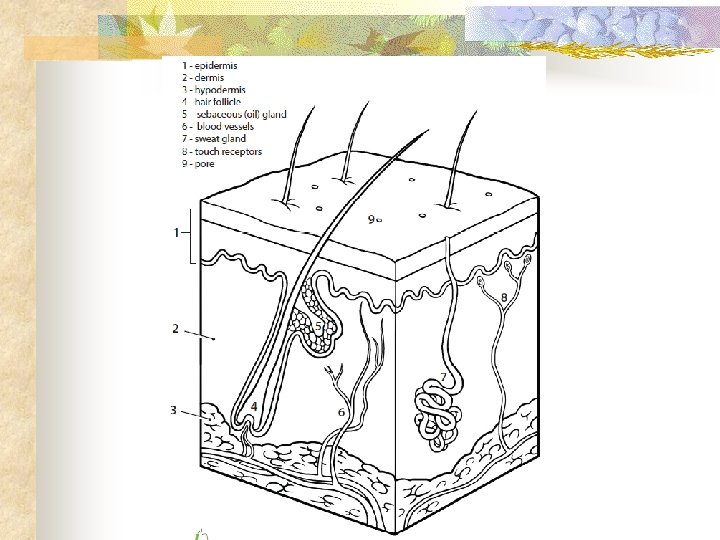
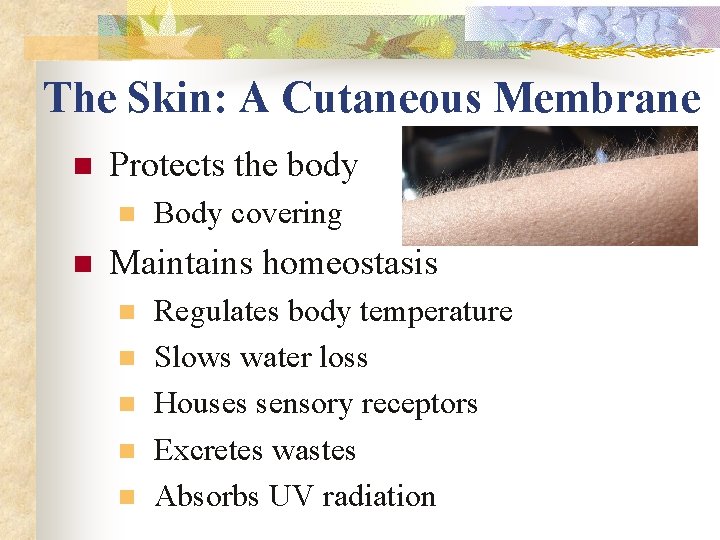
The Skin: A Cutaneous Membrane n Protects the body n n Body covering Maintains homeostasis n n n Regulates body temperature Slows water loss Houses sensory receptors Excretes wastes Absorbs UV radiation
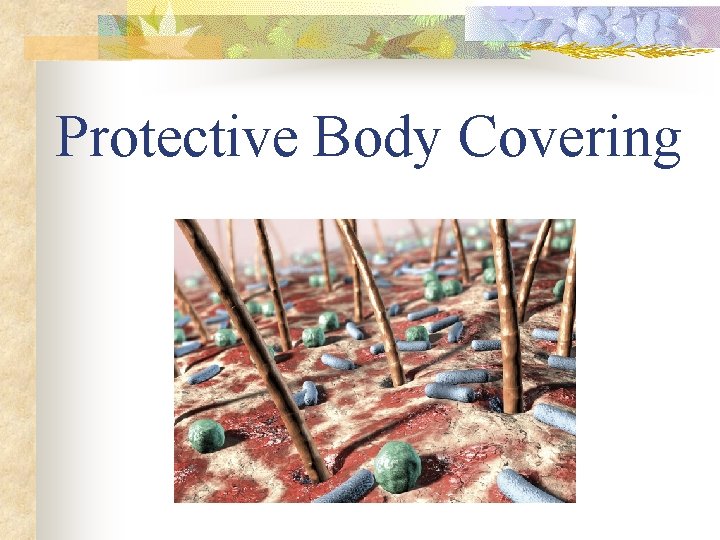
Protective Body Covering
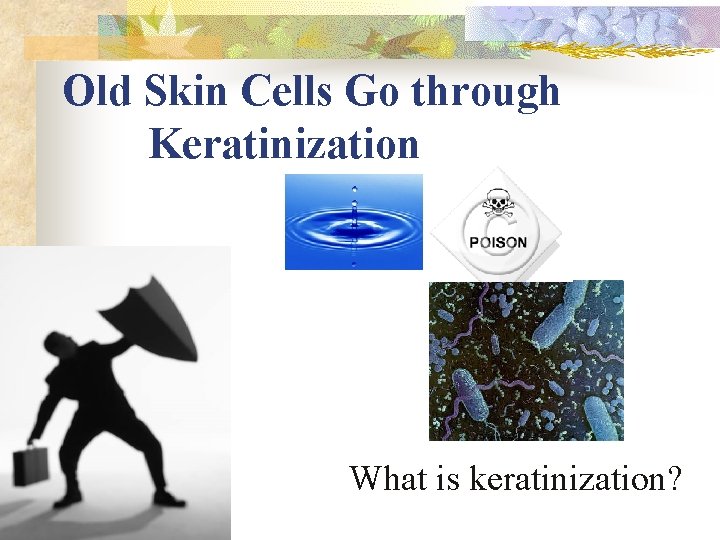
Old Skin Cells Go through Keratinization What is keratinization?
Keratinization Definition: the hardening of older cells n n n Keratin protein fills cytoplasm Keratin is tough and waterproof. Tough layer of dead cells
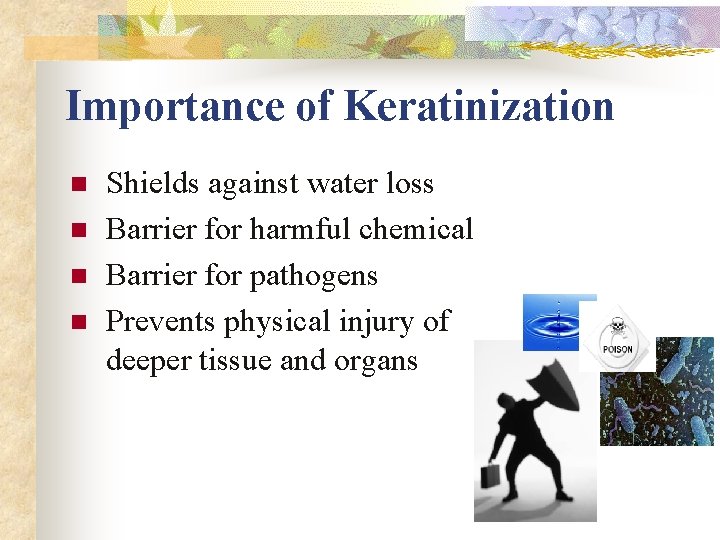
Importance of Keratinization n n Shields against water loss Barrier for harmful chemical Barrier for pathogens Prevents physical injury of deeper tissue and organs
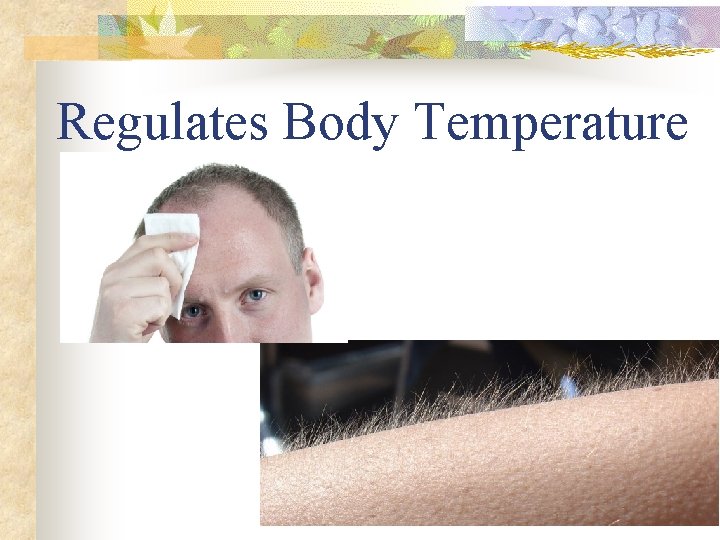
Regulates Body Temperature
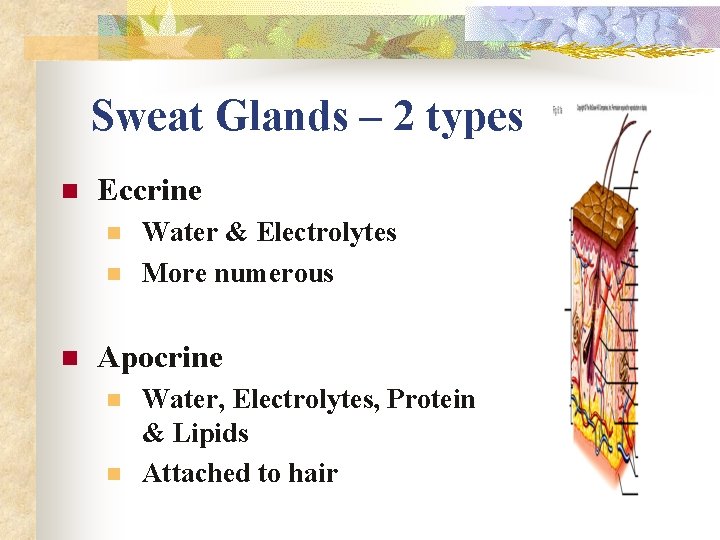
Sweat Glands – 2 types n Eccrine n n n Water & Electrolytes More numerous Apocrine n n Water, Electrolytes, Protein & Lipids Attached to hair
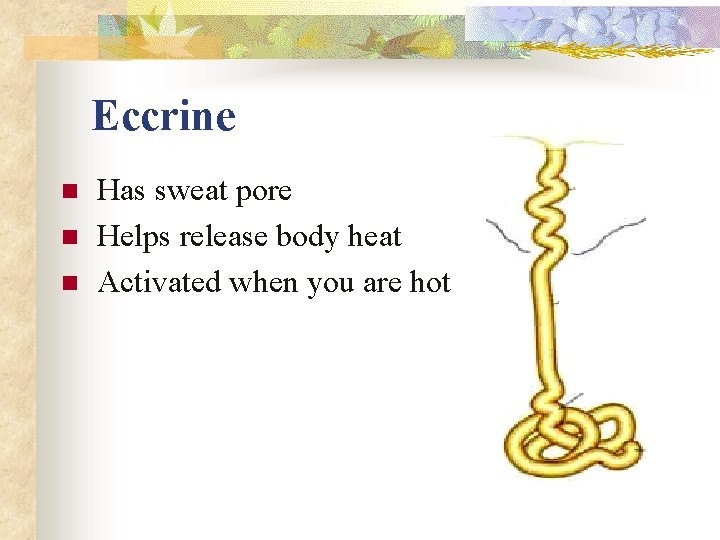
Eccrine n n n Has sweat pore Helps release body heat Activated when you are hot
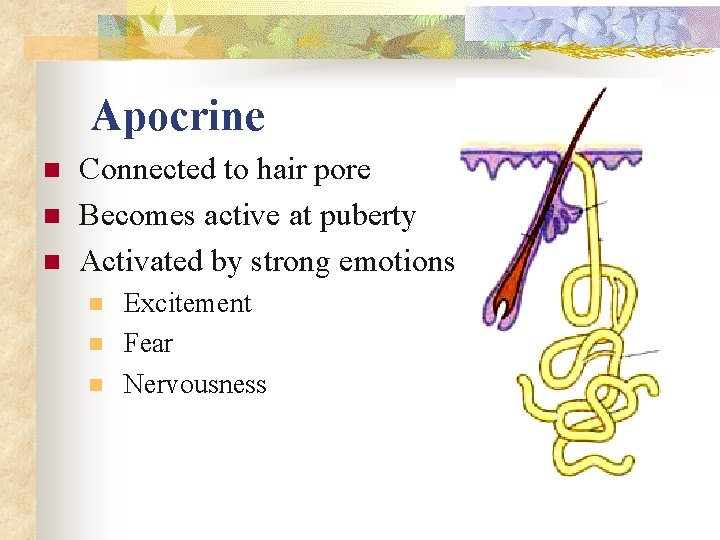
Apocrine n n n Connected to hair pore Becomes active at puberty Activated by strong emotions n n n Excitement Fear Nervousness
Absorbs UV Radiation and Gives Skin its Color
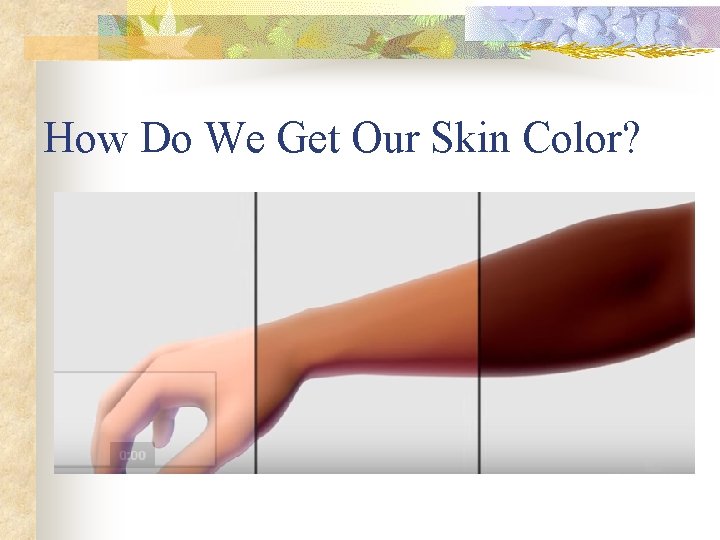
How Do We Get Our Skin Color?
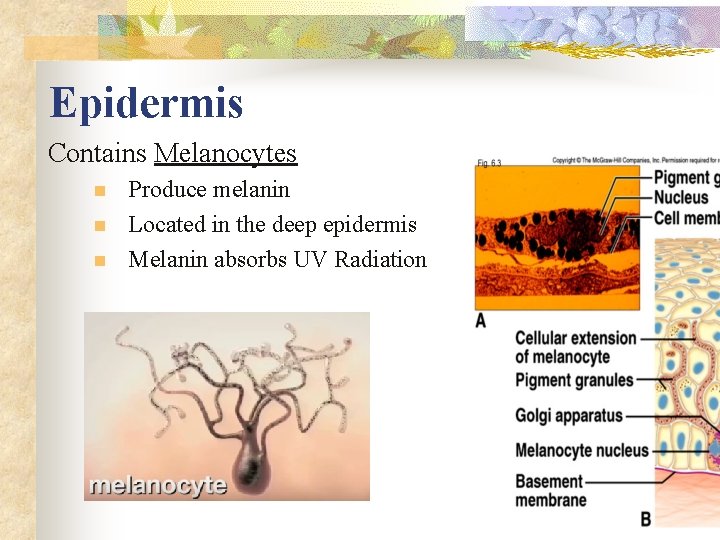
Epidermis Contains Melanocytes n n n Produce melanin Located in the deep epidermis Melanin absorbs UV Radiation
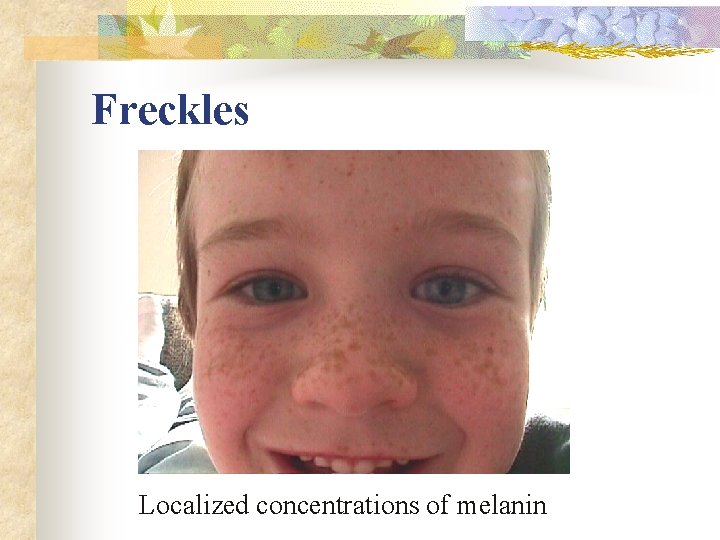
Freckles Localized concentrations of melanin
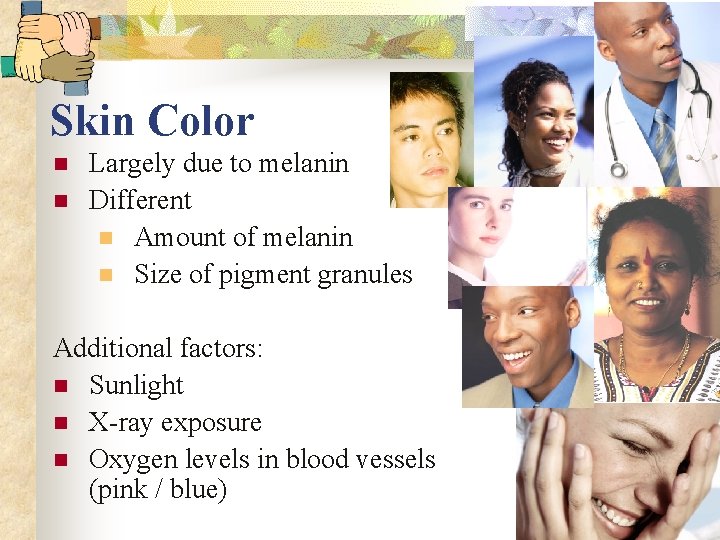
Skin Color n n Largely due to melanin Different n Amount of melanin n Size of pigment granules Additional factors: n Sunlight n X-ray exposure n Oxygen levels in blood vessels (pink / blue)
- Slides: 16