
Covalent Bonds Covalent Bonds Covalent compounds form when
Covalent Bonds
Covalent Bonds • Covalent compounds form when elements have roughly equal tendency to accept electrons. • Elements that are both nonmetals and therefore close together on the periodic table tend to form covalent compounds.
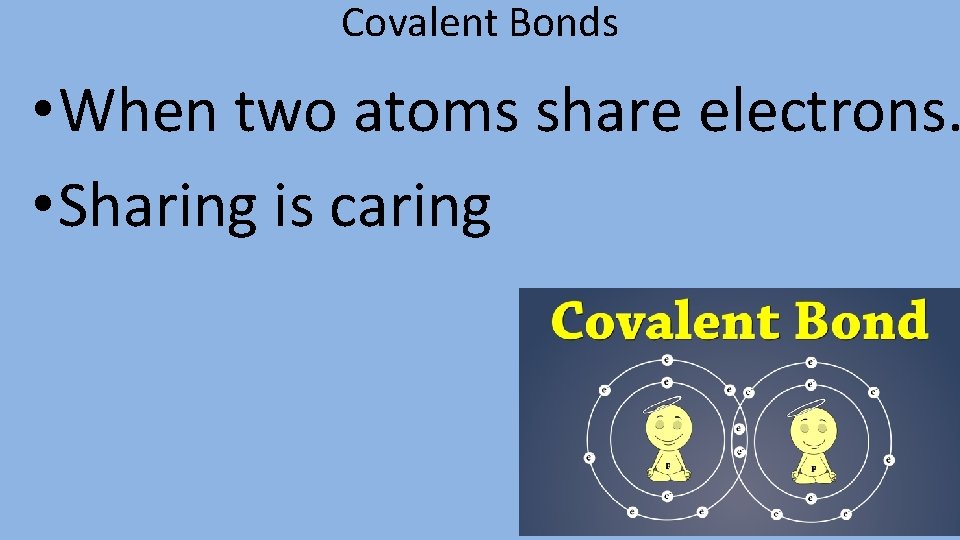
Covalent Bonds • When two atoms share electrons. • Sharing is caring
Lewis Structures • Covalent bonding in a molecule is represented by a Lewis structure. • A valid Lewis structure should have an octet for each atom except hydrogen.
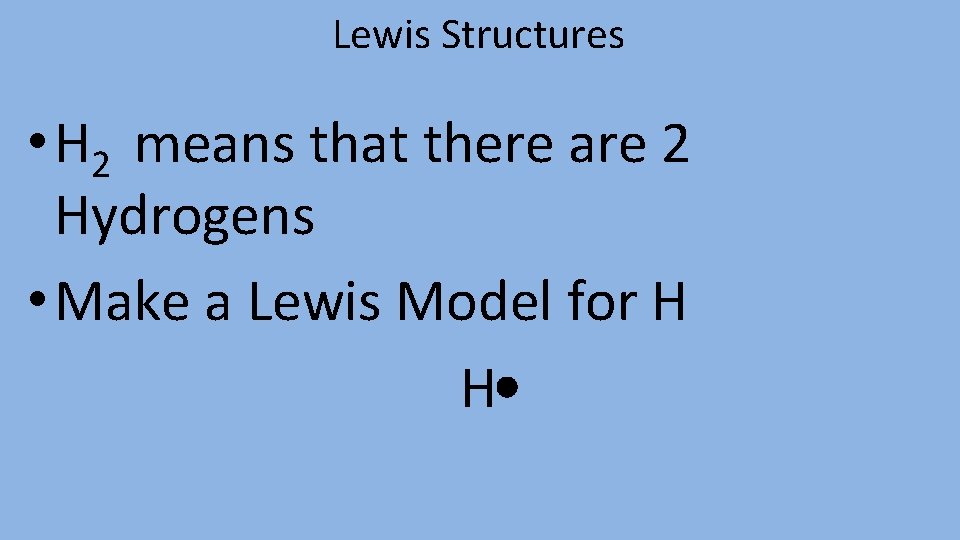
Lewis Structures • H 2 means that there are 2 Hydrogens • Make a Lewis Model for H H
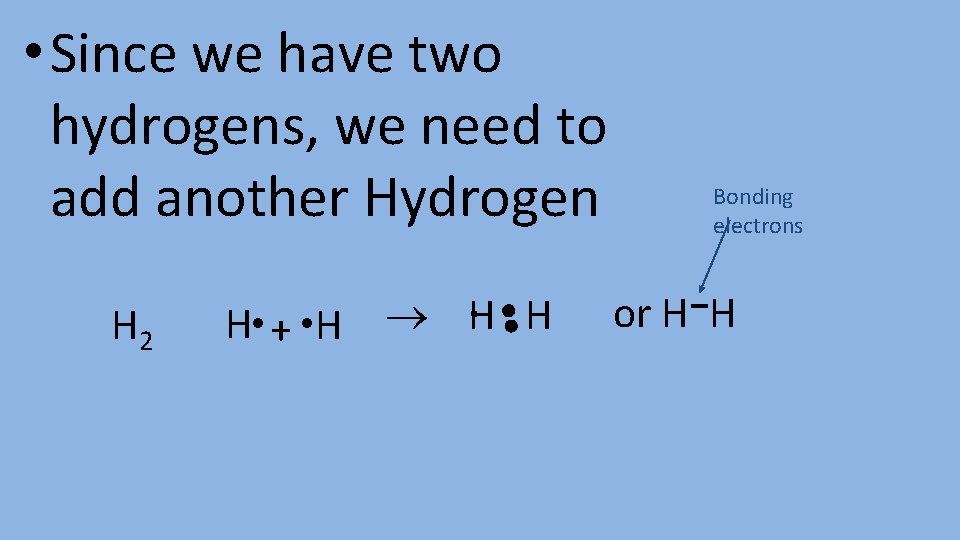
• Since we have two hydrogens, we need to add another Hydrogen H 2 H· + ·H ® H H Bonding electrons or H H

Make a Lewis dot structure for Cl ·· ·· Cl ··
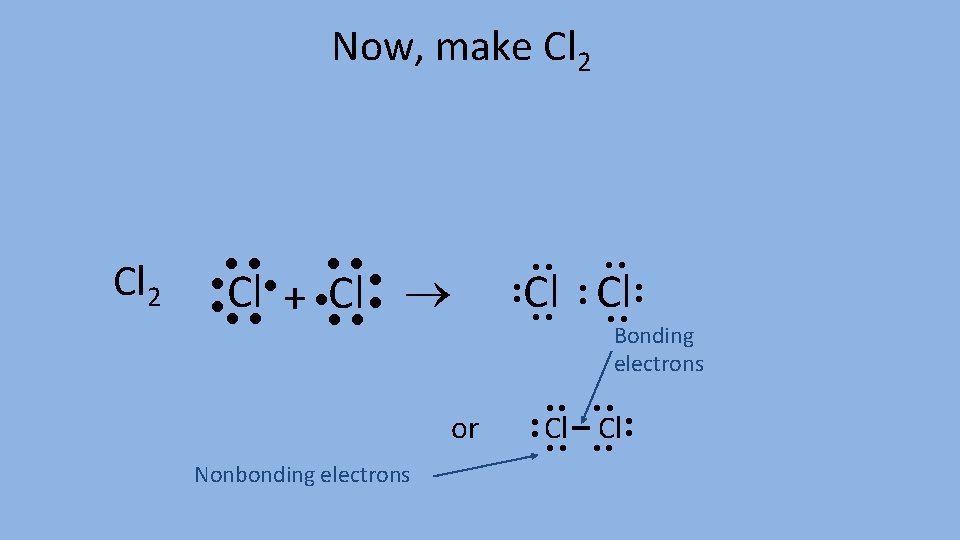
Now, make Cl 2 ·· ·· Bonding electrons ·· Cl Cl ·· ·· · · Cl Cl or Nonbonding electrons ·· ·· Cl ® Cl + ·· ·· ·· Cl 2 ··
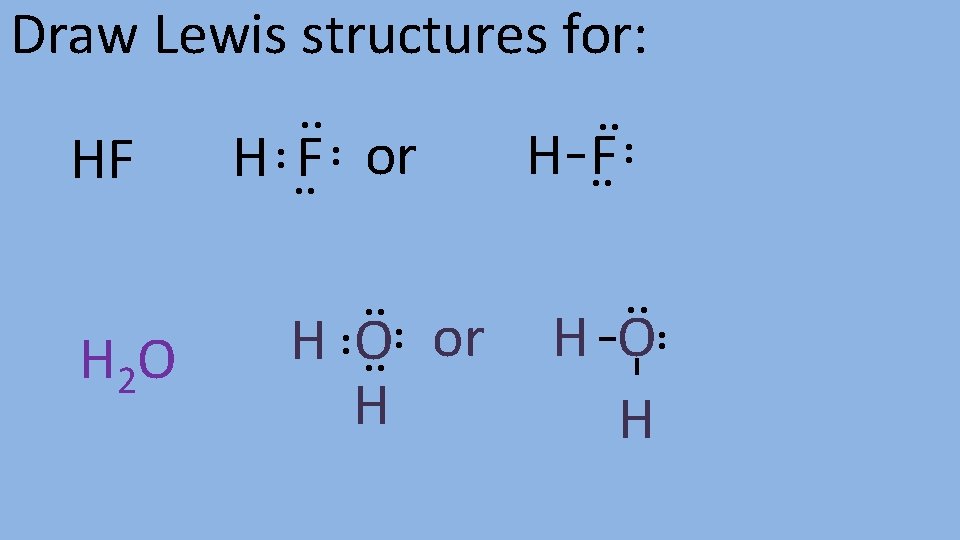
Draw Lewis structures for: H O or H ·· ·· H F ·· ·· H 2 O H F or ·· HF ·· ·· ·· H O H · ·
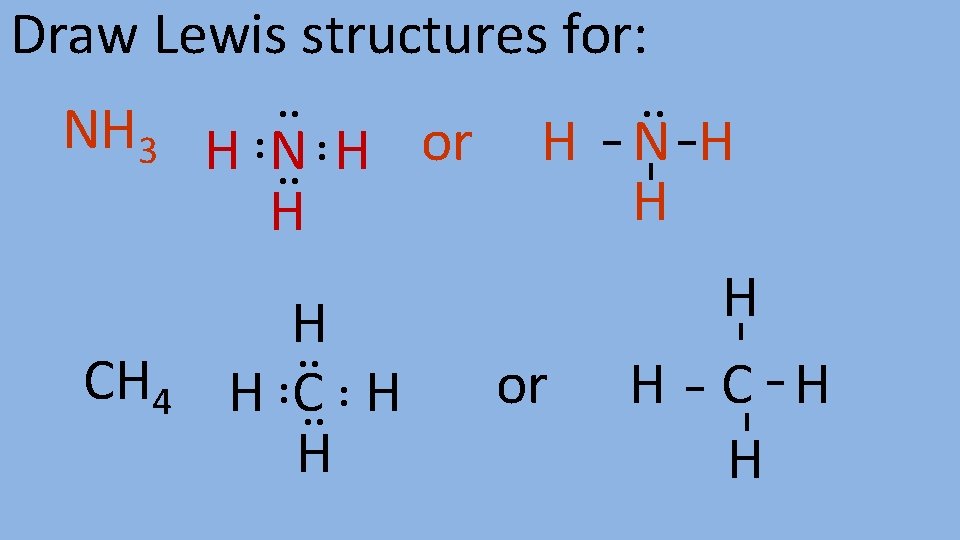
Draw Lewis structures for: NH 3 H N H or H ·· ·· CH 4 H H C H H ·· ·· H N H H or H H C H H
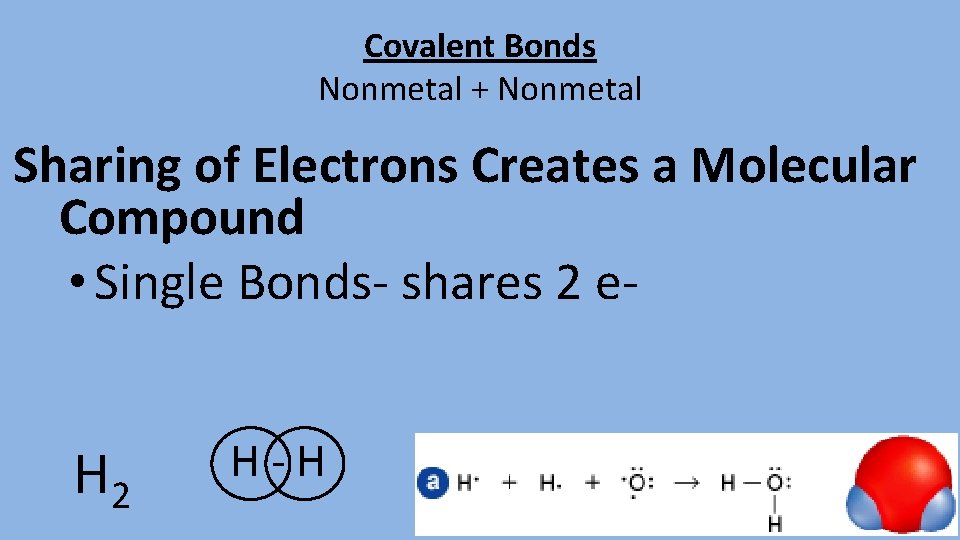
Covalent Bonds Nonmetal + Nonmetal Sharing of Electrons Creates a Molecular Compound • Single Bonds- shares 2 e- H 2 H-H
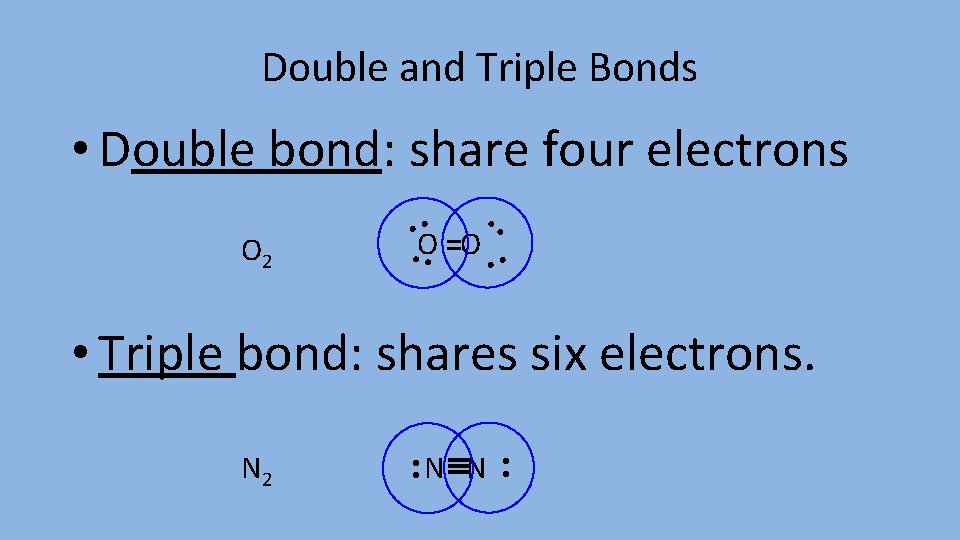
Double and Triple Bonds • Double bond: share four electrons O 2 ·· ·· O =O N N ·· N 2 ·· • Triple bond: shares six electrons.
Covalent Compounds Properties: (Butter) • Melting and Boiling Points. • Poor Conductor of electricity (Insulator) • Exists in all States at Room Temperature • Solubility- like dissolves like
What is a covalent bond? Atoms _______ SHARE one or more electrons with each other to form the bond. Each atom is left with a COMPLETE ________ outer shell. A covalent bond forms between two _________. NONMETAL
- Slides: 14