
Covalent Bonding Watch Fuse School video Interactive Covalent

Covalent Bonding
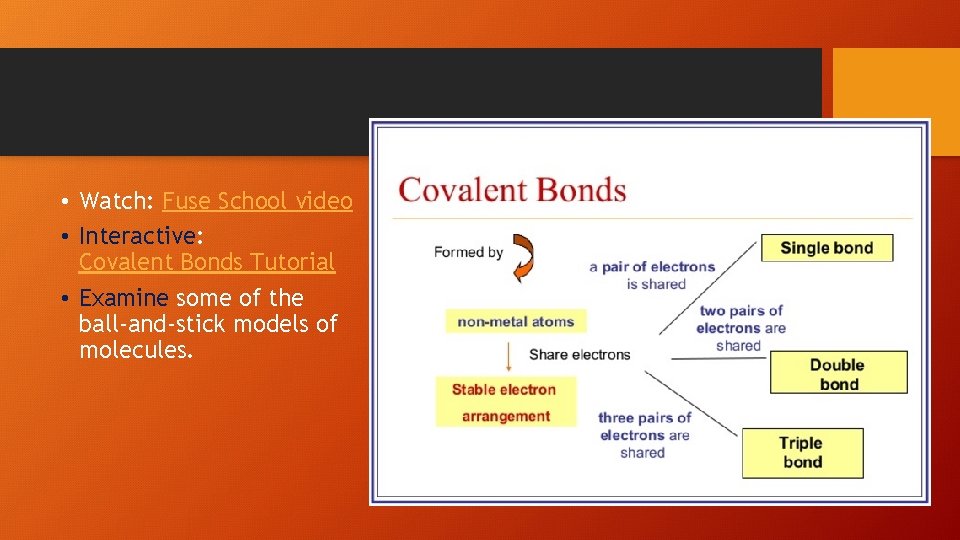
• Watch: Fuse School video • Interactive: Covalent Bonds Tutorial • Examine some of the ball-and-stick models of molecules.
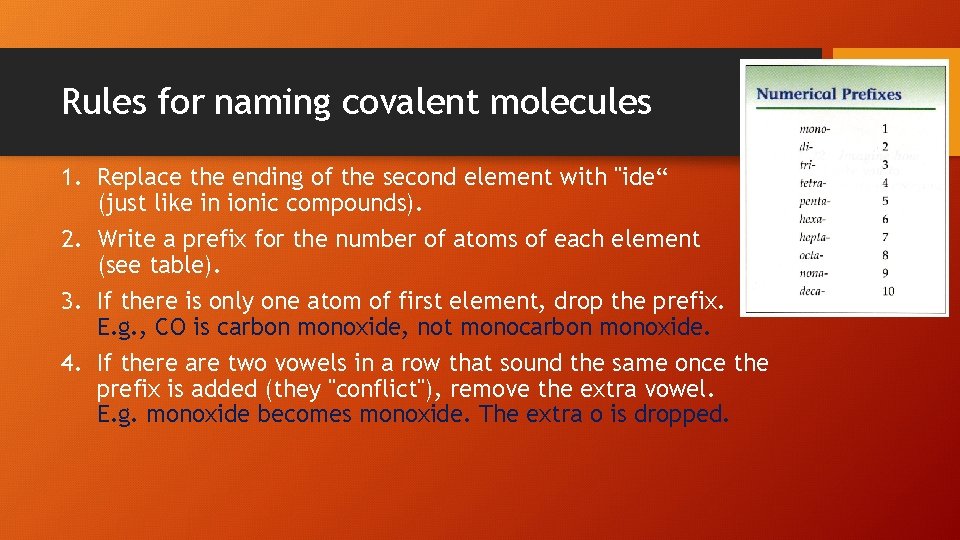
Rules for naming covalent molecules 1. Replace the ending of the second element with "ide“ (just like in ionic compounds). 2. Write a prefix for the number of atoms of each element (see table). 3. If there is only one atom of first element, drop the prefix. E. g. , CO is carbon monoxide, not monocarbon monoxide. 4. If there are two vowels in a row that sound the same once the prefix is added (they "conflict"), remove the extra vowel. E. g. monoxide becomes monoxide. The extra o is dropped.
Examples of named covalent molecules: • • SO 2 is called sulfur dioxide Si. I 4 is called silicon tetraiodide SF 6 is called sulfur hexafluoride CS 2 is called carbon disulphide • Do this worksheet: • Names and Formulas of Covalent Compounds
Lewis Dot Structures (Electron Dot Diagrams) • Lewis Dot Structures show valence electrons pair up to form covalent bonds in molecules. • To master this skill, do these worksheets with your teacher: • Covalent Bonds and Lewis Dot Structures • (Optional) Lewis Structures (Electron Dot Diagrams) for Covalent Bonding • Use this as a reference sheet! • Try this on your own: • Lewis Dot Structures Practice • Do this worksheet to review: • Starter for 10… Covalent dot and cross
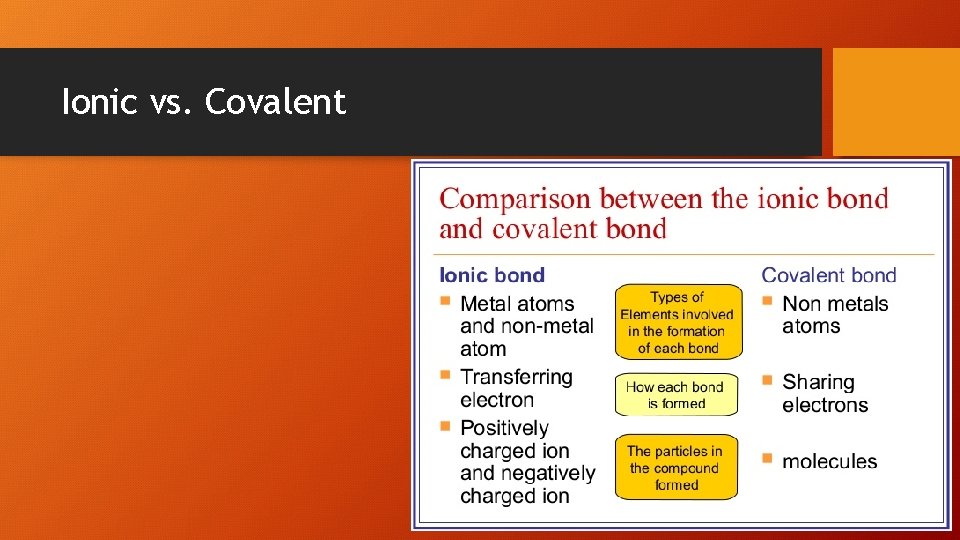
Ionic vs. Covalent
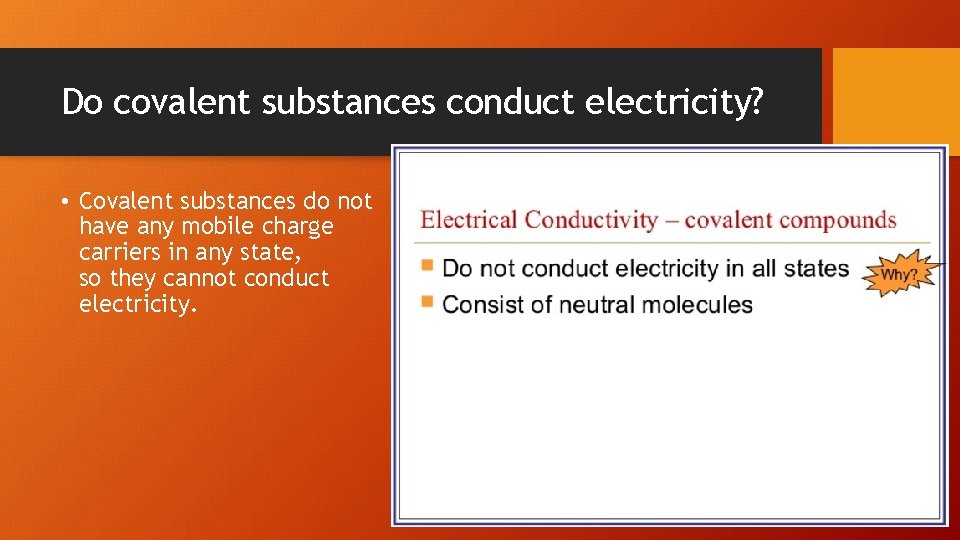
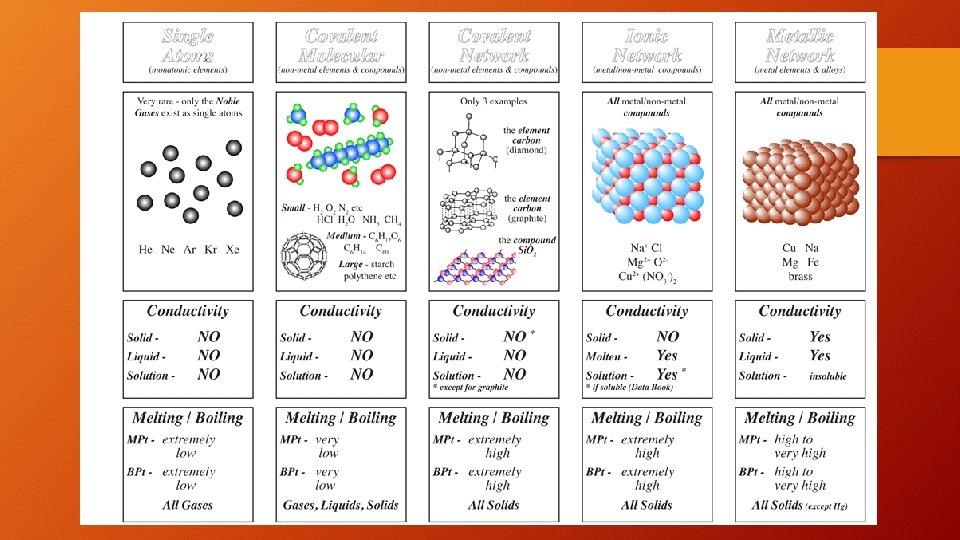
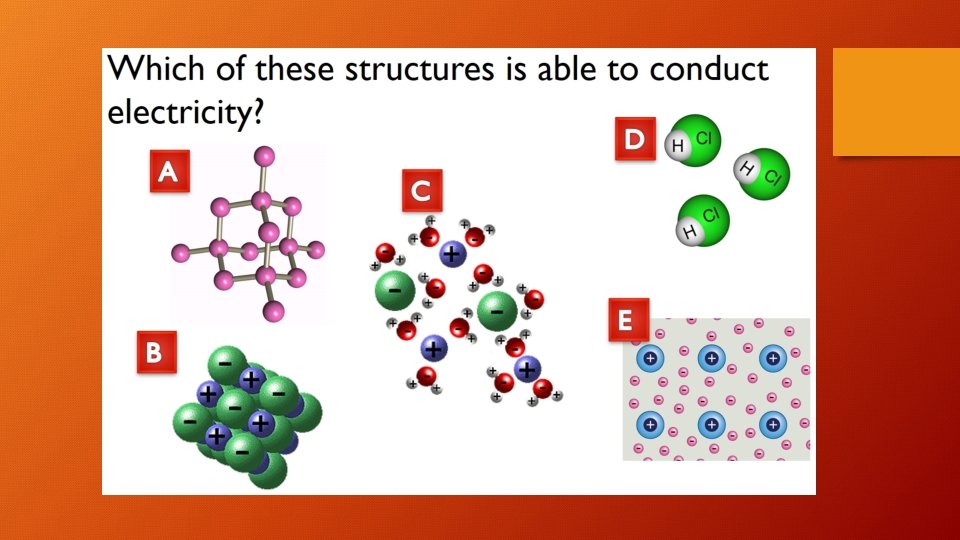
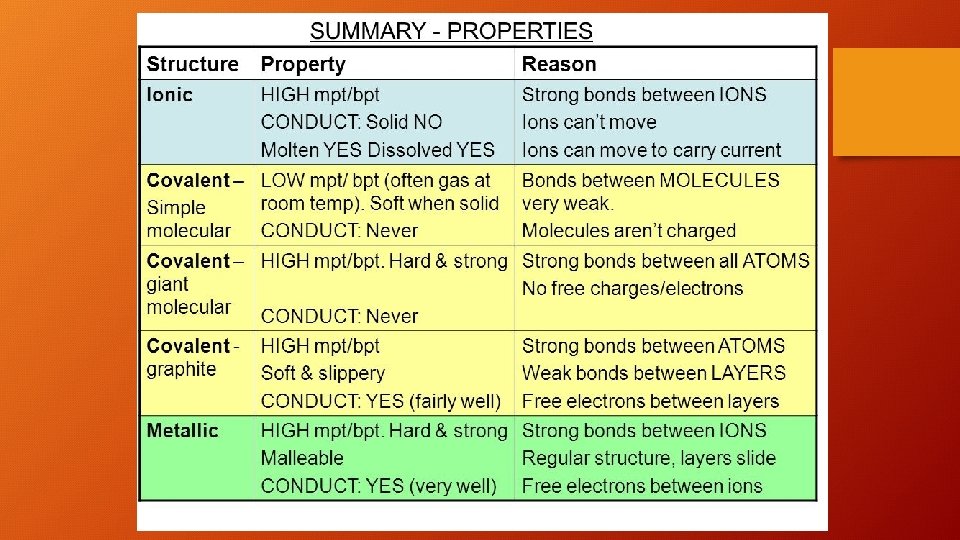
Do covalent substances conduct electricity? • Covalent substances do not have any mobile charge carriers in any state, so they cannot conduct electricity.
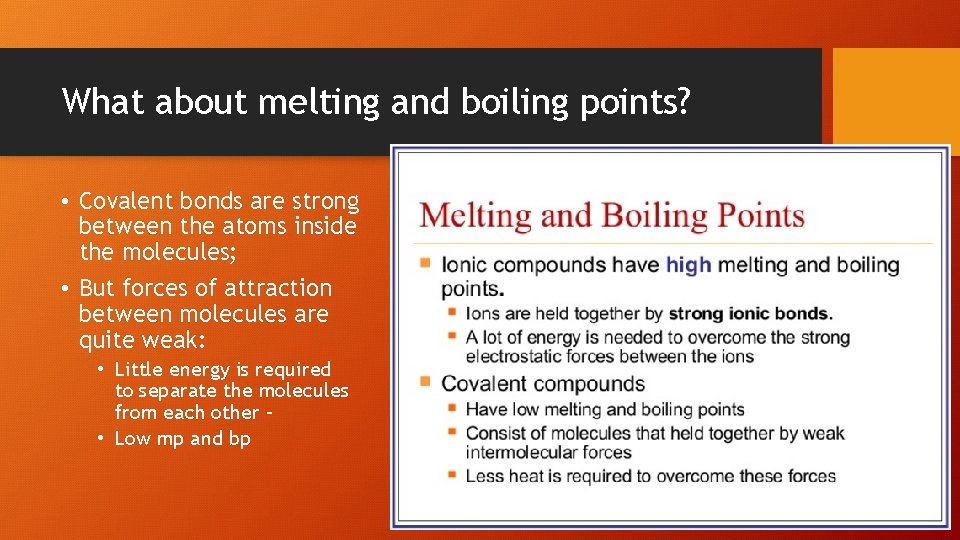
What about melting and boiling points? • Covalent bonds are strong between the atoms inside the molecules; • But forces of attraction between molecules are quite weak: • Little energy is required to separate the molecules from each other – • Low mp and bp
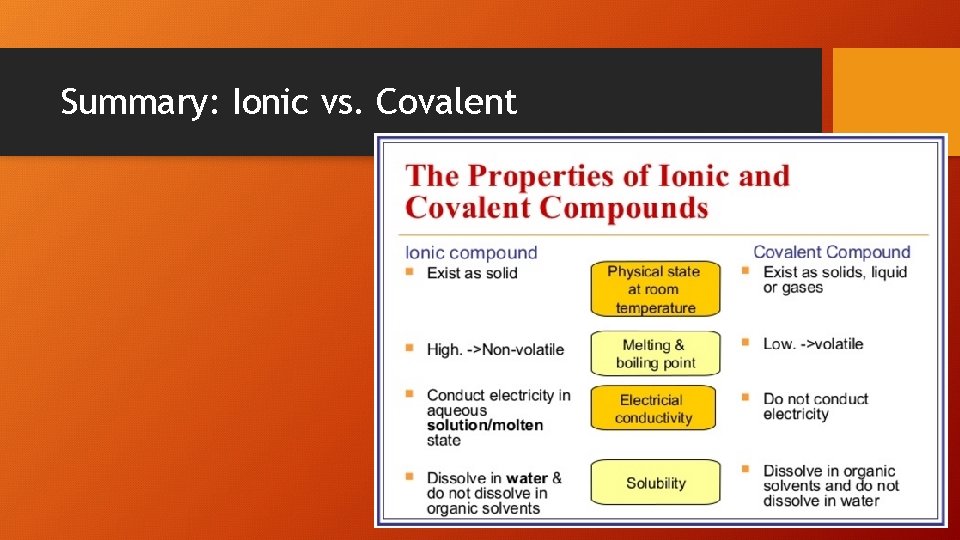
Summary: Ionic vs. Covalent
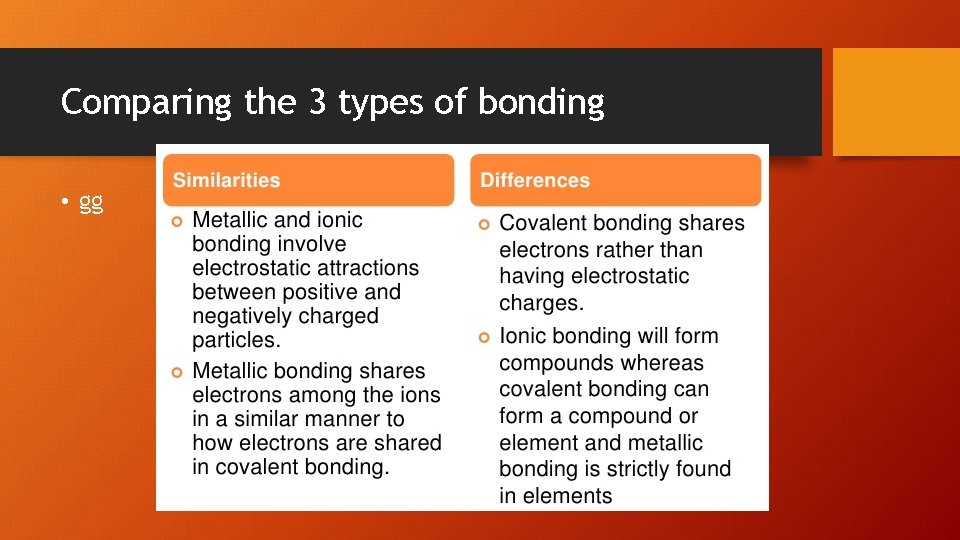
Comparing the 3 types of bonding • gg
- Slides: 13