
Covalent Bonding The atoms held together by sharing
Covalent Bonding • The atoms held together by sharing electrons are joined by a covalent bond. – Nonmetals are strong so a nonmetal and a nonmetal will fight for the electron and end up sharing. • A molecule is a neutral group of atoms joined together by covalent bonds. Air contains oxygen molecules. • A molecular formula shows how many atoms of each element a molecule contains
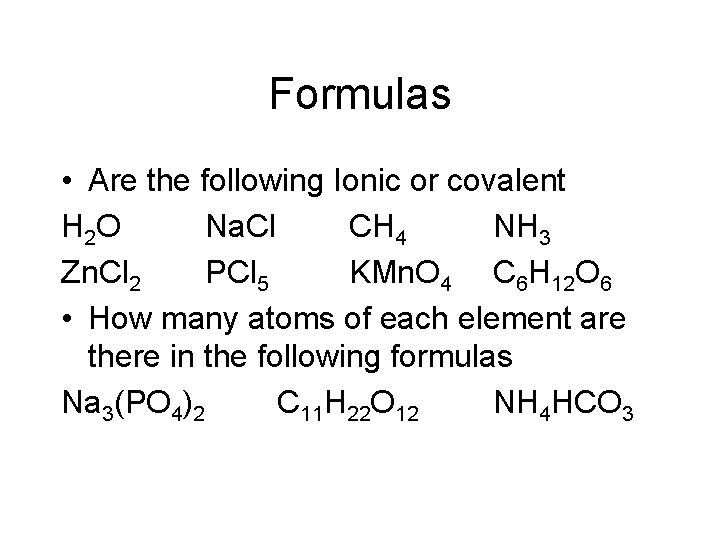
Formulas • Are the following Ionic or covalent H 2 O Na. Cl CH 4 NH 3 Zn. Cl 2 PCl 5 KMn. O 4 C 6 H 12 O 6 • How many atoms of each element are there in the following formulas Na 3(PO 4)2 C 11 H 22 O 12 NH 4 HCO 3

Diatomic Molecules • A diatomic molecule is a molecule consisting of two atoms • There are 7 diatomic molecules, you must memorize them – HONI that is H 2, O 2, N 2, I 2, Br 2, Cl 2, F 2
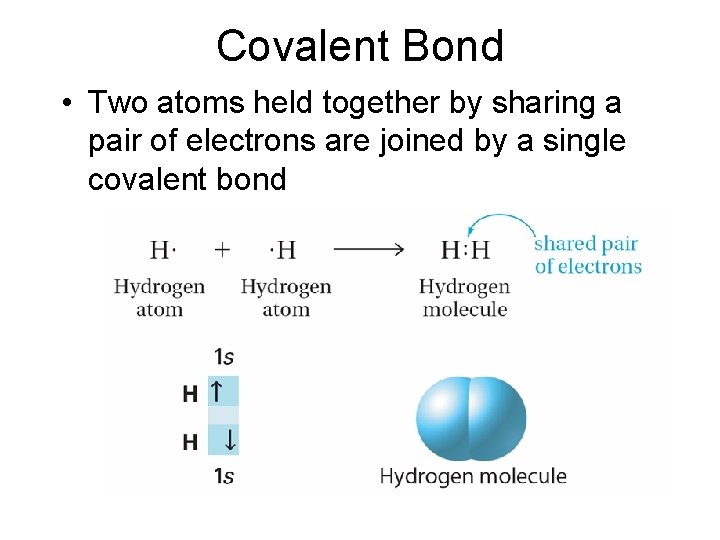
Covalent Bond • Two atoms held together by sharing a pair of electrons are joined by a single covalent bond
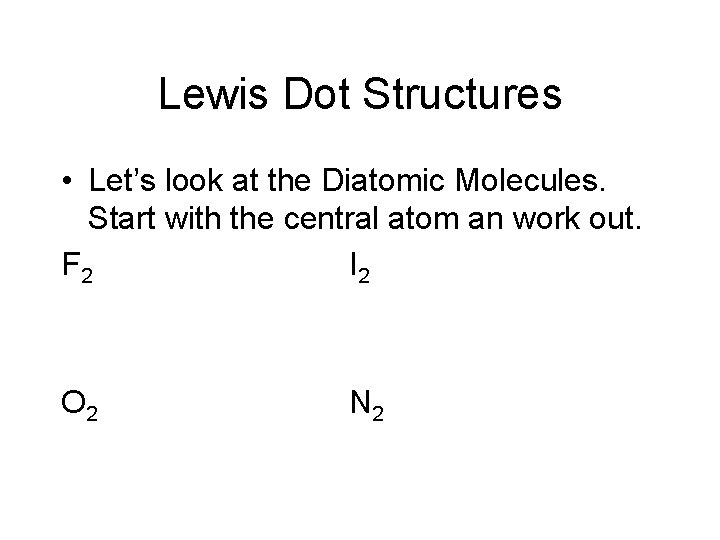
Lewis Dot Structures • Let’s look at the Diatomic Molecules. Start with the central atom an work out. F 2 I 2 O 2 N 2
Definitions • Lone Pair - A pair of valence electrons that is not shared between atoms. • Single Bond - A bond that involves one shared pair of electrons. • Double Bond - A bond that involves two shared pairs of electrons. • Triple Bond - A bond that involves three shared pairs of electrons.
More Dots • Do the dot structure for the following and tell how many lone pairs and shared pairs of electrons for each molecule. CH 4 NH 3 H 2 O PCl 3 H 2 O 2
Other Structures • A coordinate covalent bond - is a covalent bond in which one atom contributes both bonding electrons. • A resonance structure - when two or more valid electron dot structures (mirror images)
Dots and Dots • Draw the following CO 2 CO O 3
Exceptions to the Octet Rule • There a few exceptions to the Octet Rule. H-2 B-6 P - 10 S - 12 Draw the following PCl 5 SF 6
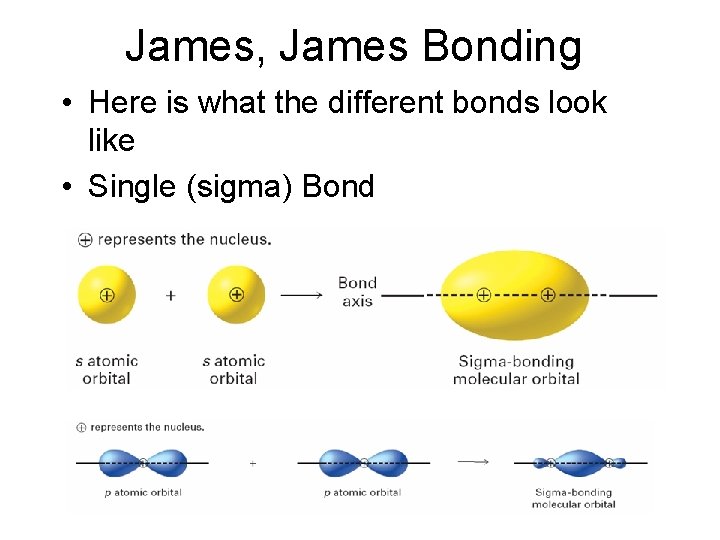
James, James Bonding • Here is what the different bonds look like • Single (sigma) Bond

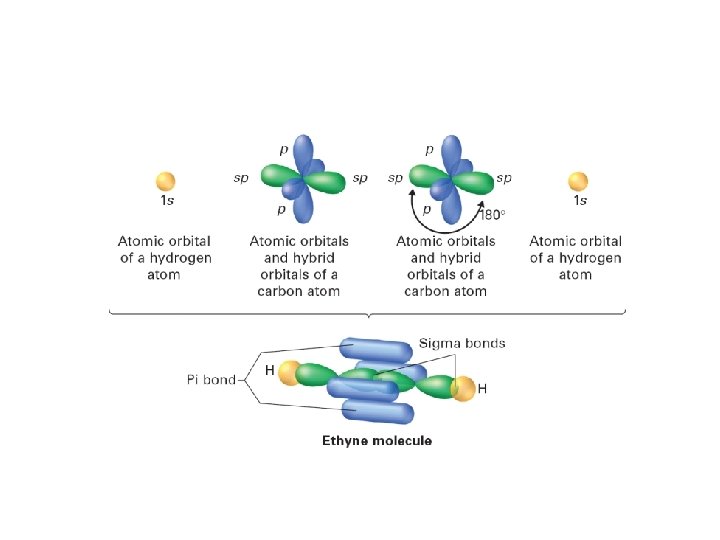
Double and Triple (pi) Bonds
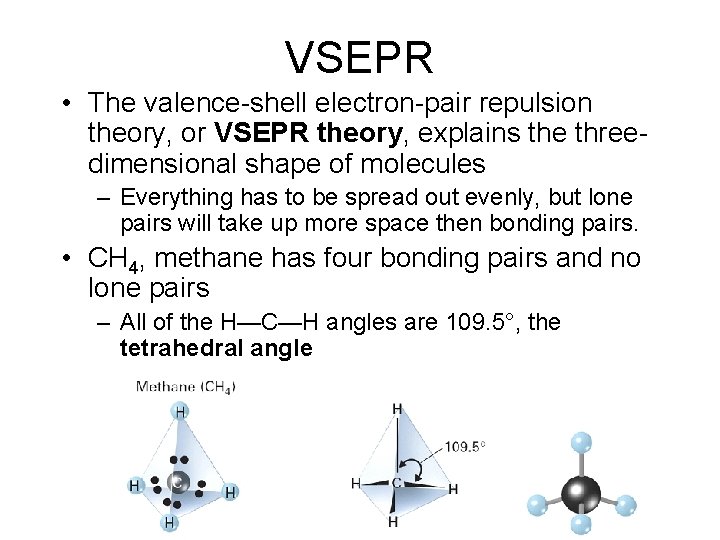
VSEPR • The valence-shell electron-pair repulsion theory, or VSEPR theory, explains the threedimensional shape of molecules – Everything has to be spread out evenly, but lone pairs will take up more space then bonding pairs. • CH 4, methane has four bonding pairs and no lone pairs – All of the H—C—H angles are 109. 5°, the tetrahedral angle
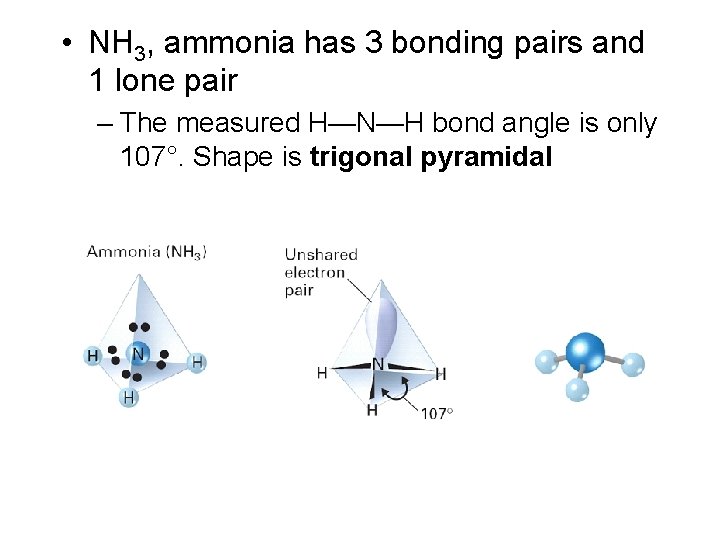
• NH 3, ammonia has 3 bonding pairs and 1 lone pair – The measured H—N—H bond angle is only 107°. Shape is trigonal pyramidal
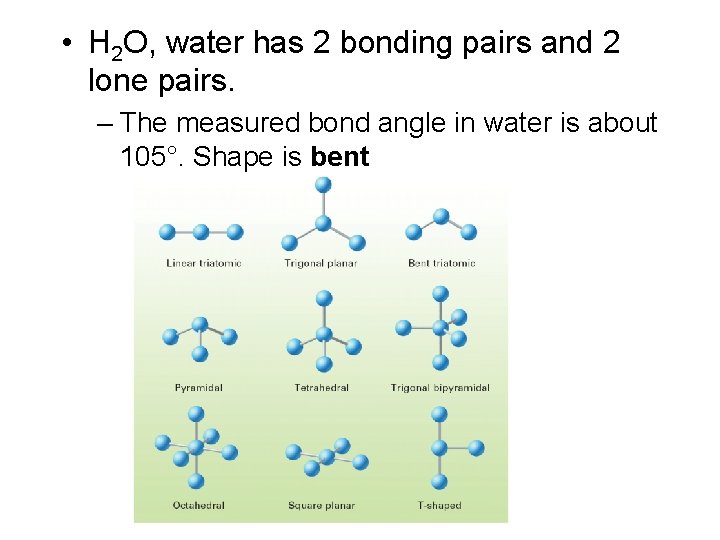
• H 2 O, water has 2 bonding pairs and 2 lone pairs. – The measured bond angle in water is about 105°. Shape is bent
- Slides: 16