
Covalent Bonding models for methane CH 4 Models
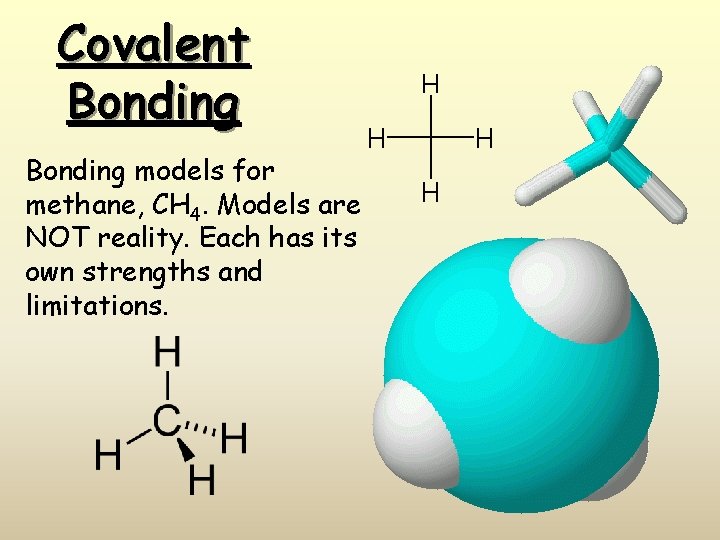
Covalent Bonding models for methane, CH 4. Models are NOT reality. Each has its own strengths and limitations.
Covalent Bonds Polar-Covalent bonds § Electrons are unequally shared § Electronegativity difference between. 3 and 1. 7 Nonpolar-Covalent bonds § Electrons are equally shared § Electronegativity difference of 0 to 0. 3

Covalent Bonding Forces q Electron – electron repulsive forces q Proton – proton repulsive forces q Electron – proton attractive forces
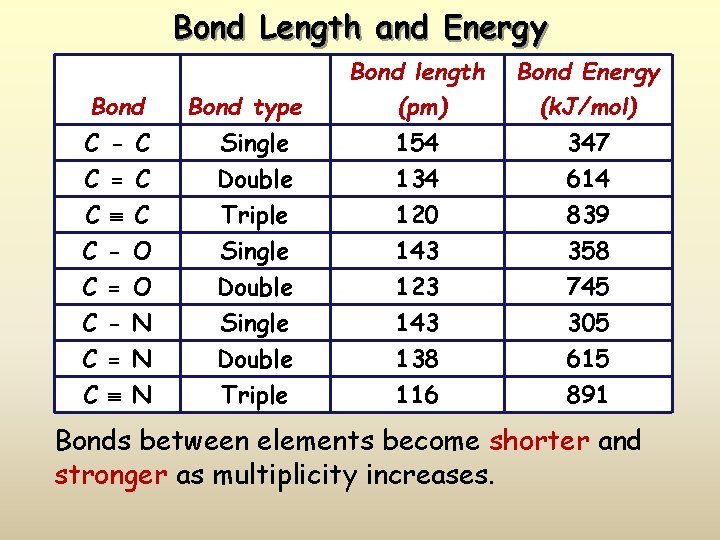
Bond Length and Energy Bond type Bond length (pm) Bond Energy (k. J/mol) C - C C = C Single Double 154 134 347 614 C C C Triple Single Double Triple 120 143 123 143 138 116 839 358 745 305 615 891 = = C O O N N N Bonds between elements become shorter and stronger as multiplicity increases.
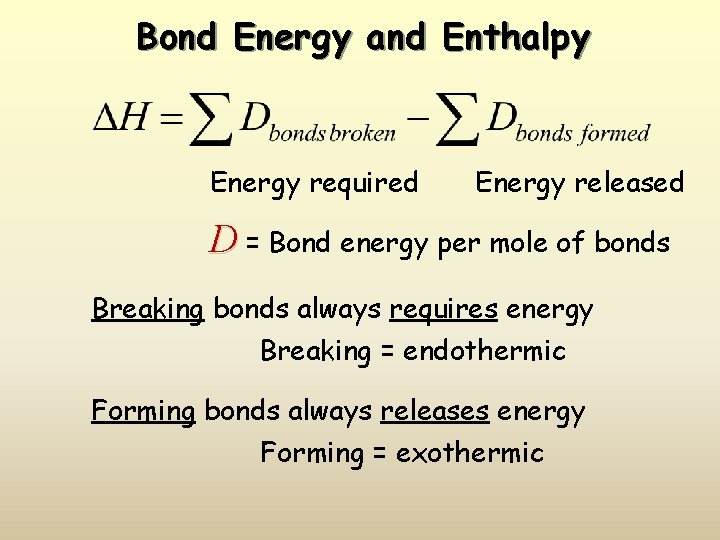
Bond Energy and Enthalpy Energy required Energy released D = Bond energy per mole of bonds Breaking bonds always requires energy Breaking = endothermic Forming bonds always releases energy Forming = exothermic

The Octet Rule Combinations of elements tend to form so that each atom, by gaining, losing, or sharing electrons, has an octet of electrons in its highest occupied energy level. Monatomic chlorine Diatomic chlorine
The Octet Rule and Covalent Compounds v Covalent compounds tend to form so that each atom, by sharing electrons, has an octet of electrons in its highest occupied energy level. v Covalent compounds involve atoms of nonmetals only. v The term “molecule” is used exclusively for covalent bonding
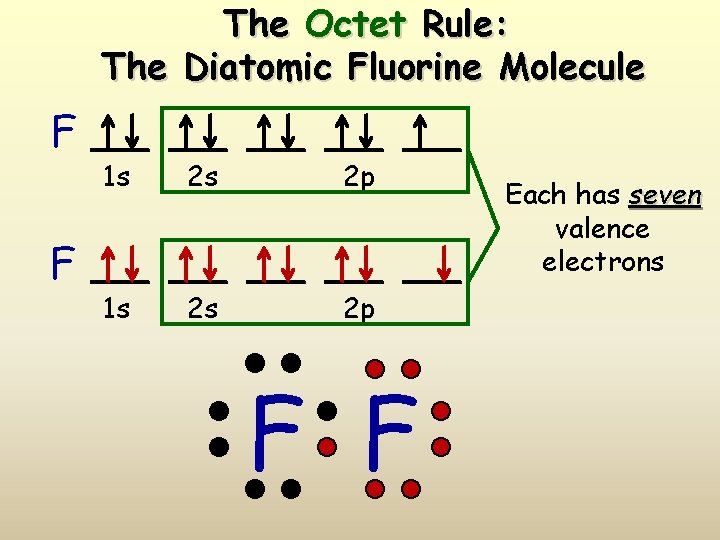
The Octet Rule: The Diatomic Fluorine Molecule F F 1 s 2 s 2 p F F Each has seven valence electrons
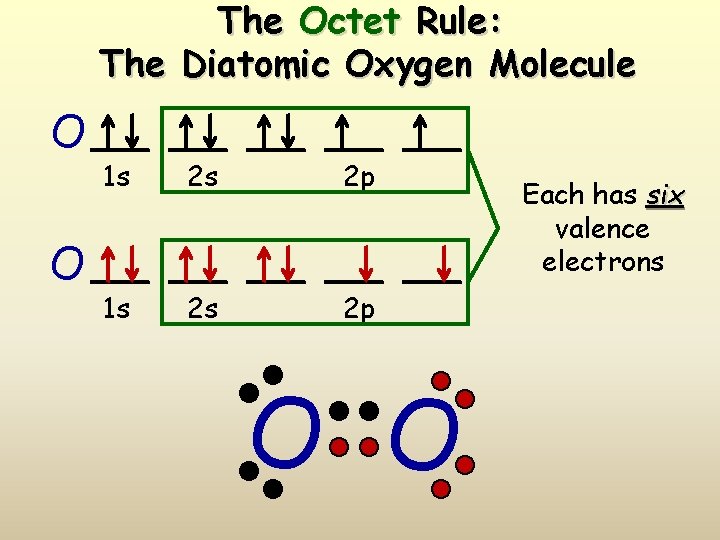
The Octet Rule: The Diatomic Oxygen Molecule O O 1 s 2 s 2 p O O Each has six valence electrons
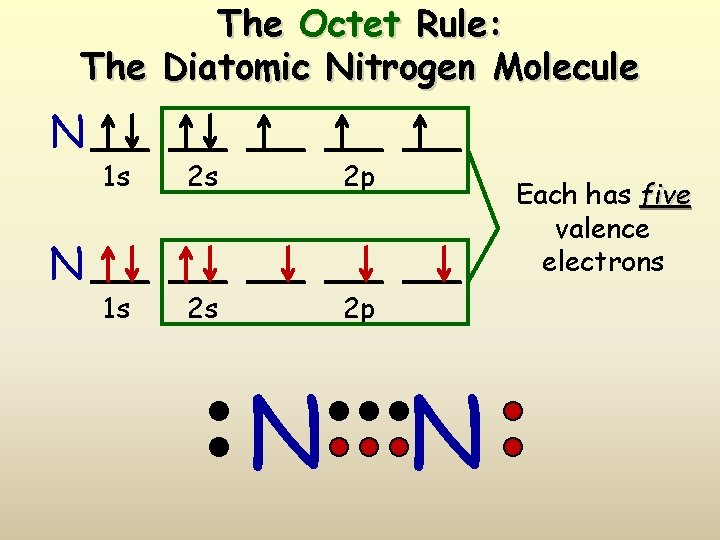
The Octet Rule: The Diatomic Nitrogen Molecule N N 1 s 2 s 2 p N N Each has five valence electrons
Lewis Structures q Lewis structures show valence electrons are arranged among atoms in a molecule. q Lewis structures Reflect the central idea that stability of a compound relates to noble gas electron configuration. q Shared electrons pairs are covalent bonds and can be represented by two dots (: ) or by a single line ( - )
Comments About the Octet Rule Ø 2 nd row elements C, N, O, F observe the octet rule (HONC rule as well). Ø 2 nd row elements B and Be often have fewer than 8 electrons around themselves - they are very reactive. Ø 3 rd row and heavier elements CAN exceed the octet rule using empty valence d orbitals. Ø When writing Lewis structures, satisfy octets first, then place electrons around elements having available d orbitals.

Lewis Structures Show valence electrons are arranged among atoms in a molecule. Reflect the central idea that stability of a compound relates to noble gas electron configuration.
The HONC Rule Hydrogen (and Halogens) form one covalent bond Oxygen (and sulfur) form two covalent bonds One double bond, or two single bonds Nitrogen (and phosphorus) form three covalent bonds One triple bond, or three single bonds, or one double bond a single bond Carbon (and silicon) form four covalent bonds. Two double bonds, or four single bonds, or a triple and a single, or a double and two singles
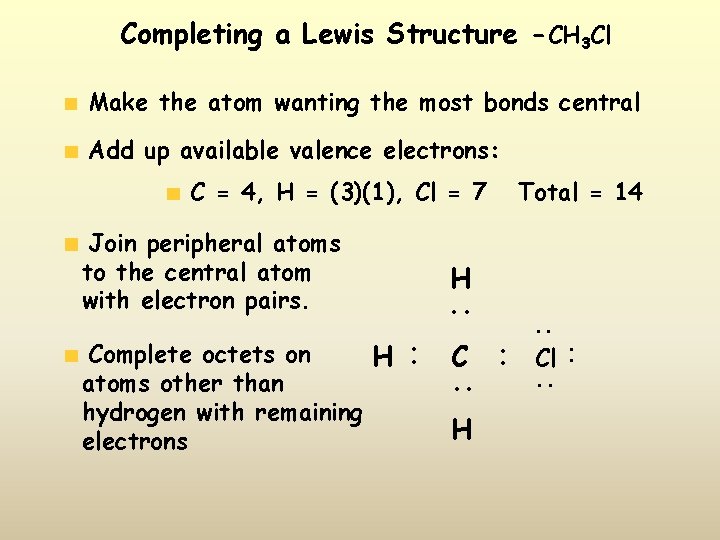
Completing a Lewis Structure -CH 3 Cl Make the atom wanting the most bonds central Add up available valence electrons: Join peripheral atoms to the central atom with electron pairs. H. . C. . . Complete octets on H atoms other than hydrogen with remaining electrons H Total = 14 . . Cl. . C = 4, H = (3)(1), Cl = 7
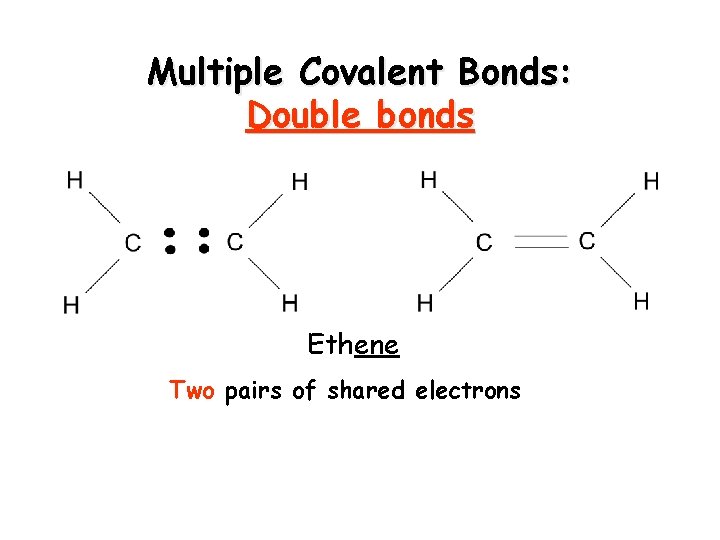
Multiple Covalent Bonds: Double bonds Ethene Two pairs of shared electrons
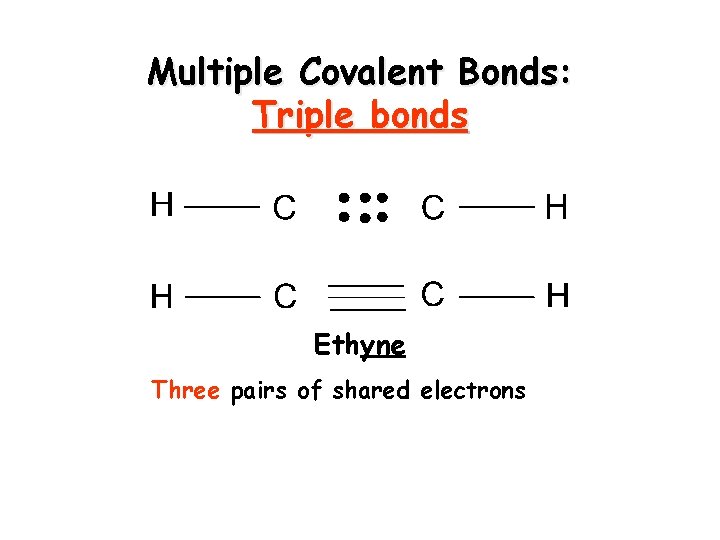
Multiple Covalent Bonds: Triple bonds Ethyne Three pairs of shared electrons
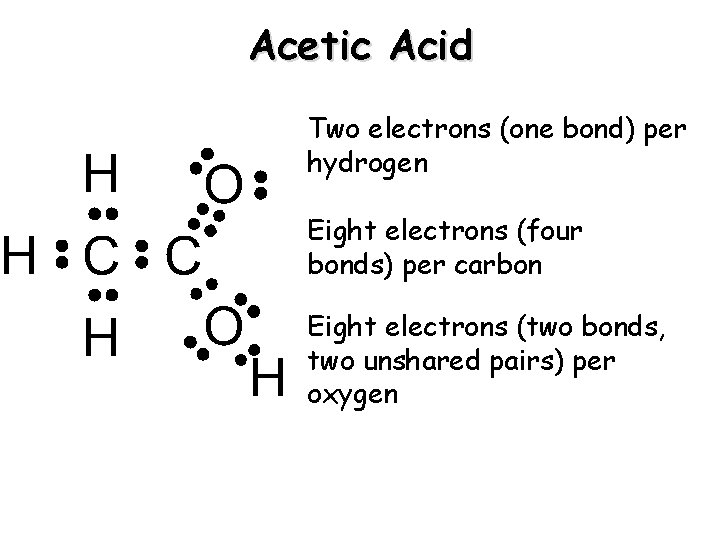
Acetic Acid Two electrons (one bond) per hydrogen Eight electrons (four bonds) per carbon Eight electrons (two bonds, two unshared pairs) per oxygen
- Slides: 18