
Court Proceedings CIVIL CASES STEPS IN A CIVIL
- Slides: 4
Court Proceedings
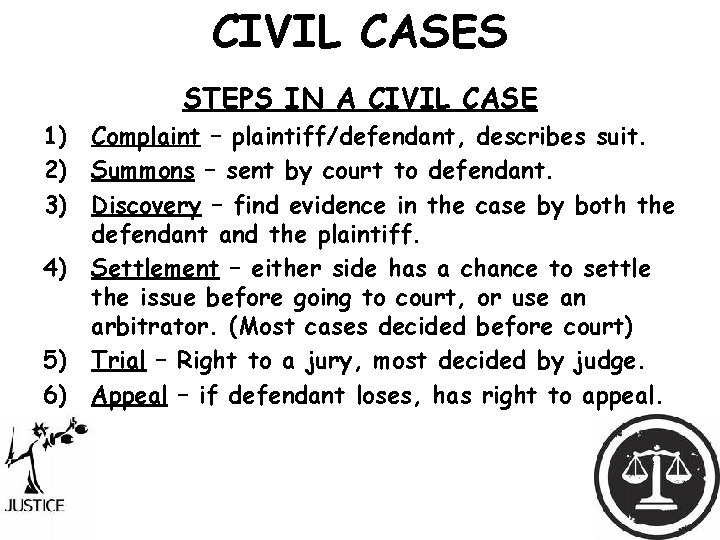
CIVIL CASES STEPS IN A CIVIL CASE 1) Complaint – plaintiff/defendant, describes suit. 2) Summons – sent by court to defendant. 3) Discovery – find evidence in the case by both the defendant and the plaintiff. 4) Settlement – either side has a chance to settle the issue before going to court, or use an arbitrator. (Most cases decided before court) 5) Trial – Right to a jury, most decided by judge. 6) Appeal – if defendant loses, has right to appeal.
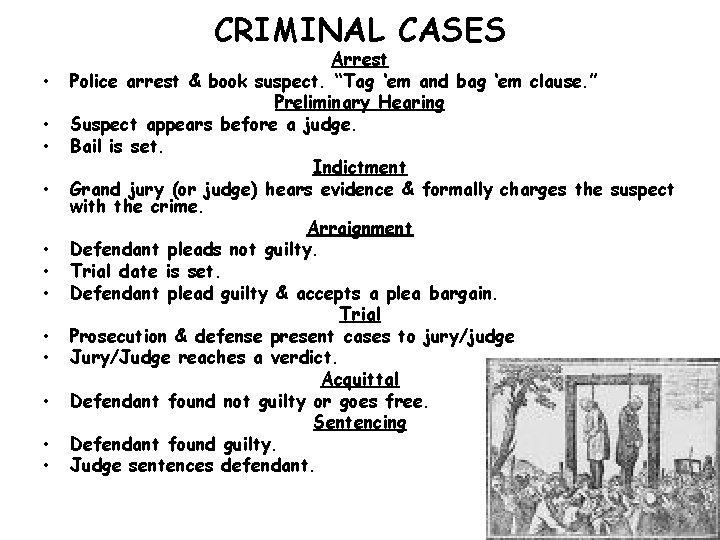
CRIMINAL CASES • • • Arrest Police arrest & book suspect. “Tag ‘em and bag ‘em clause. ” Preliminary Hearing Suspect appears before a judge. Bail is set. Indictment Grand jury (or judge) hears evidence & formally charges the suspect with the crime. Arraignment Defendant pleads not guilty. Trial date is set. Defendant plead guilty & accepts a plea bargain. Trial Prosecution & defense present cases to jury/judge Jury/Judge reaches a verdict. Acquittal Defendant found not guilty or goes free. Sentencing Defendant found guilty. Judge sentences defendant.
JUVENILES & THE COURTS • Juvenile – a person under the age of 18. • Juvenile Delinquent – persons under 18 who commit crime. Goal of the Juvenile Justice System Rehabilitation – help young person correct behavior. Types of Cases • Neglect – caregivers abuse or do not care for juvenile. • Delinquency – juvenile commits crime. Juvenile Trials • No trial by jury & trials are closed to the public. • Once juvenile completes probation, the charges are dropped and removed from their record.