
Course of World War One Schlieffen Plan Plan



- Slides: 47
Course of World War One
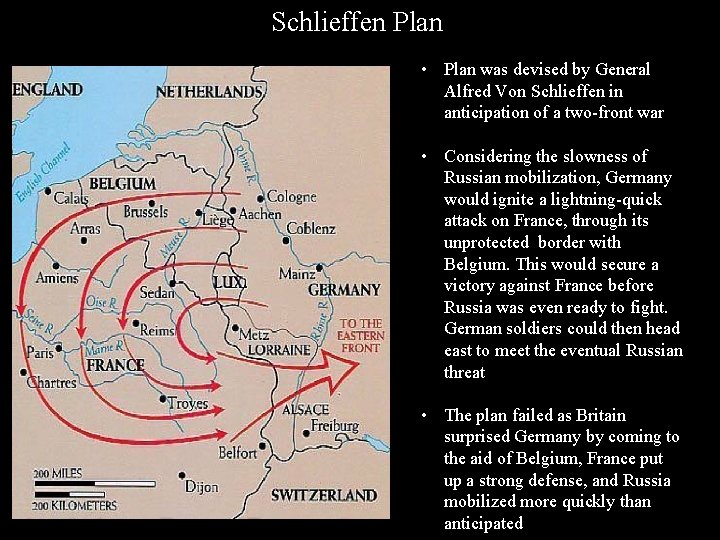
Schlieffen Plan • Plan was devised by General Alfred Von Schlieffen in anticipation of a two-front war • Considering the slowness of Russian mobilization, Germany would ignite a lightning-quick attack on France, through its unprotected border with Belgium. This would secure a victory against France before Russia was even ready to fight. German soldiers could then head east to meet the eventual Russian threat • The plan failed as Britain surprised Germany by coming to the aid of Belgium, France put up a strong defense, and Russia mobilized more quickly than anticipated
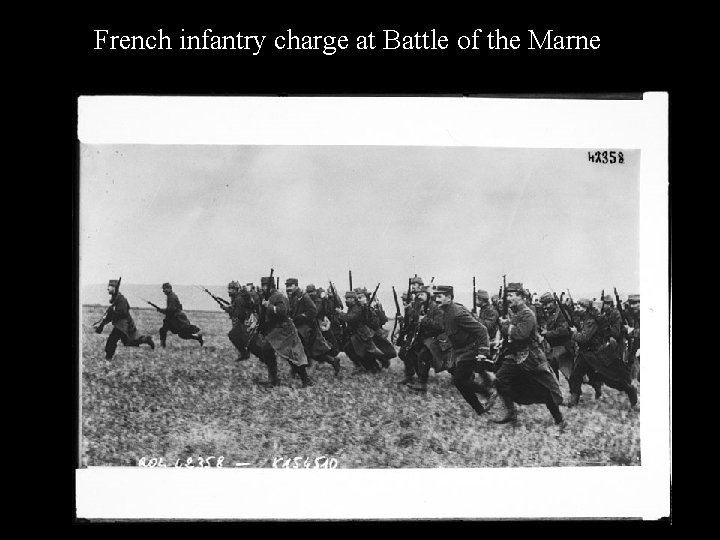
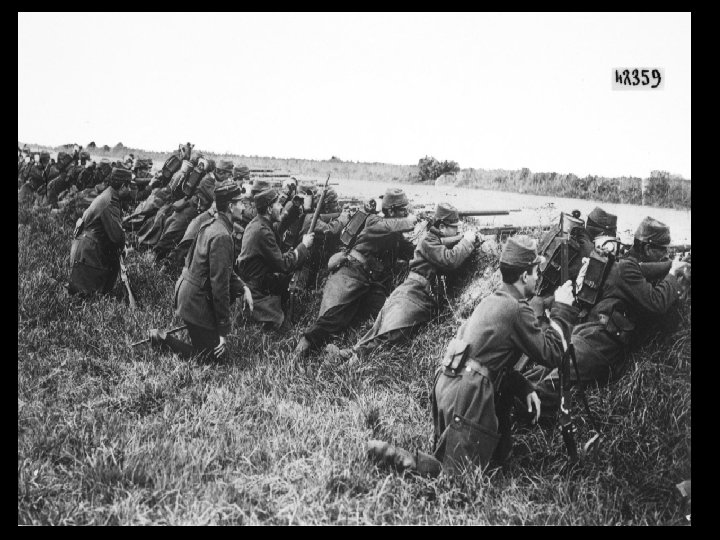
Battle of the Marne • French and British attack German lines northwest of Paris on the Marne River • Germans defeated and forced to retreat back 40 miles • Was the first major clash on the western front. • A quick German victory in the west would not be realized • 263, 000 French/British casualties; 220, 000 German casualties
French infantry charge at Battle of the Marne
Battle of Marne youtube video? ?
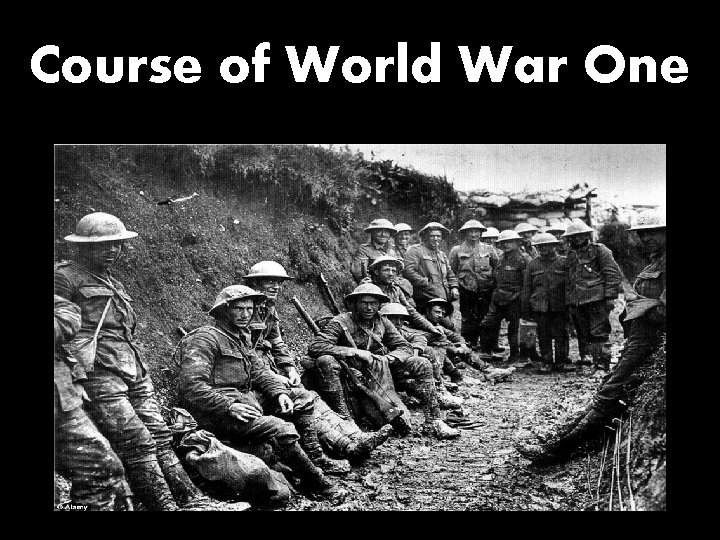
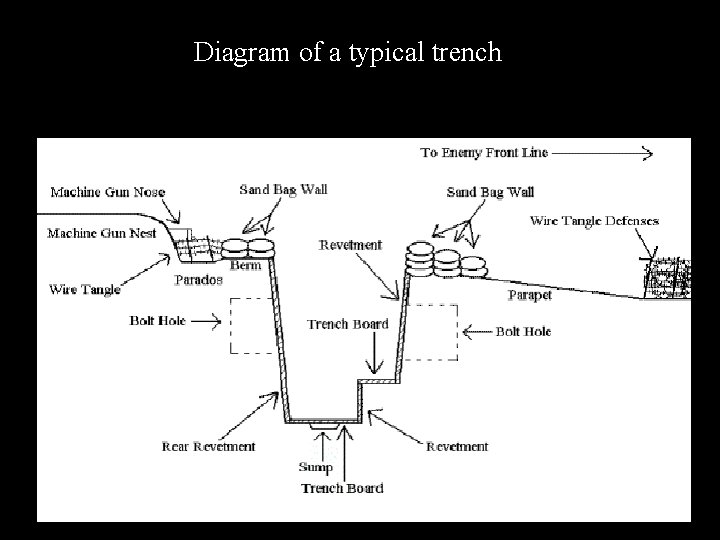
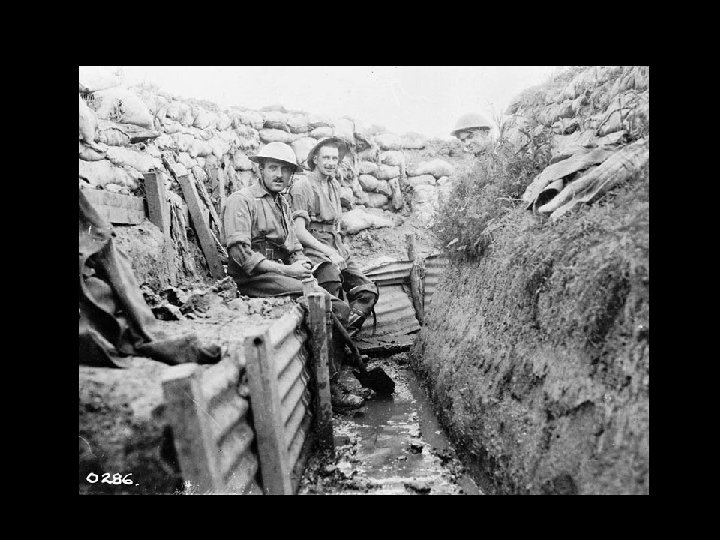
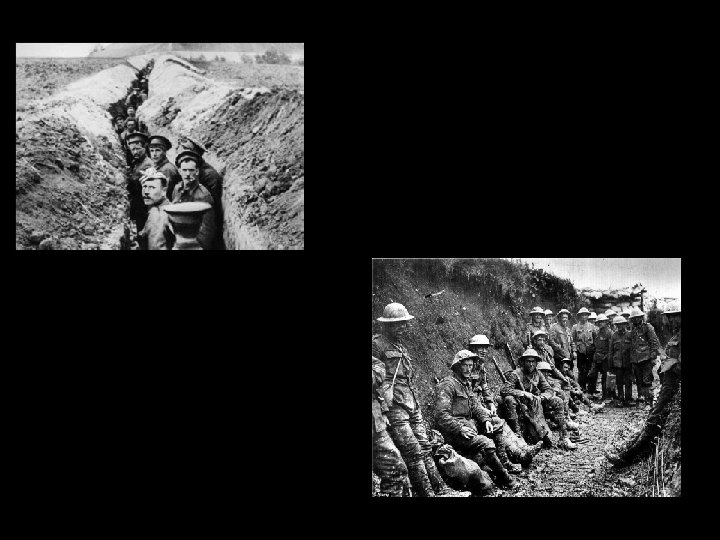
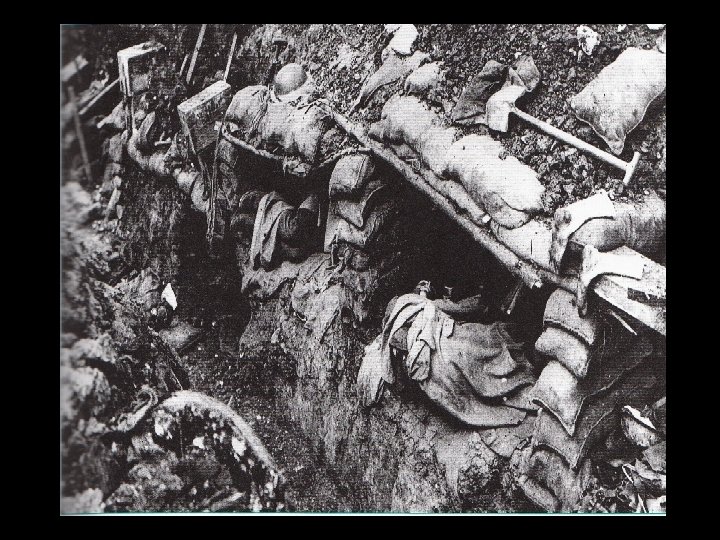
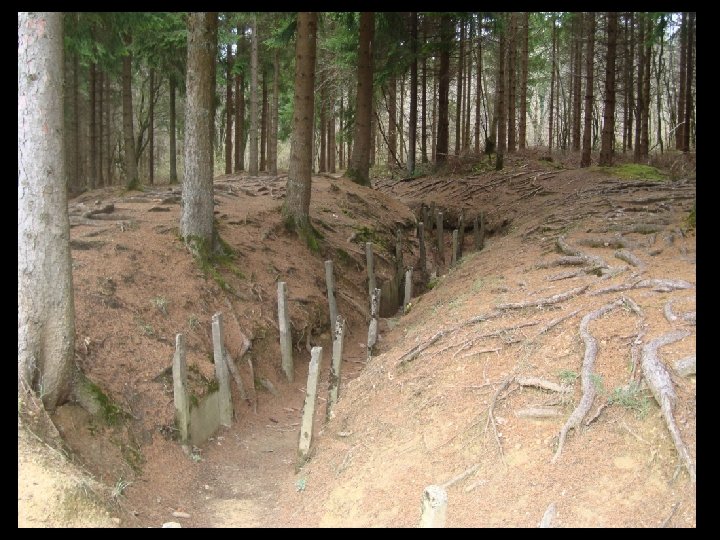
Stalemate on Western Front & Trench Warfare • After Battle of the Marne, fighting on the western front settled into a stalemate • By early 1915, both sides had settled into an elaborate system of tunnels, shelters and trenches that stretched for 600 miles • A key reason for the onset of trench warfare were substantial advancements in firepower that were not matched by advancements in mobility • The introduction of automatic machine guns necessitated that soldier’s find protection in trenches • The introduction of poison gas added unpredictability and the need to defend oneself with a gas mask • Tanks were invented but had many technical difficulties and were mostly ineffective until later in the war
Diagram of a typical trench
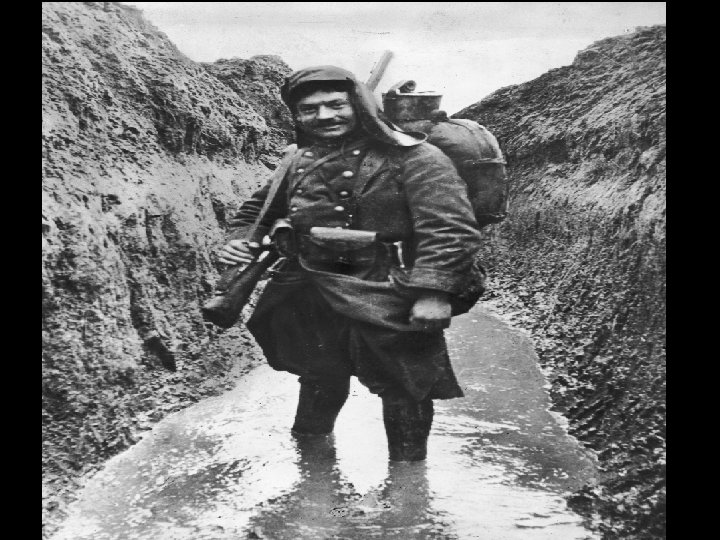
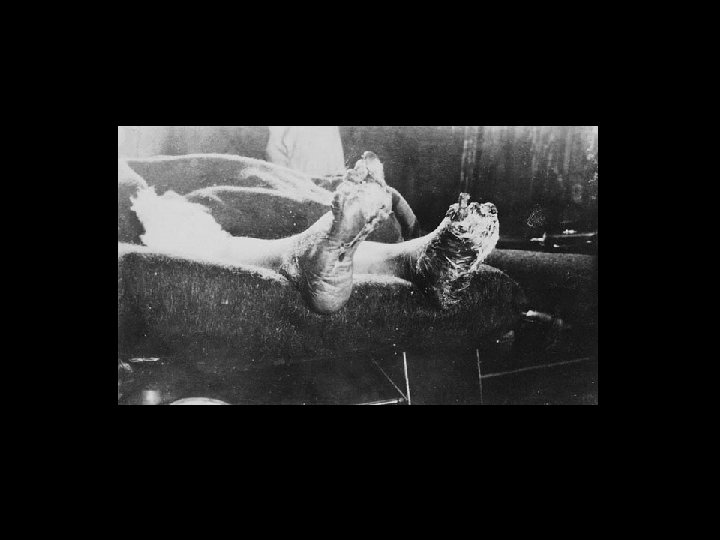
• 10% of all fighting soldiers in WWI were killed (compared to 4. 5% in WWII) • The greatest killer in WWI, like many wars before it, was disease and infection. With sanitary conditions in the trenches quite poor many suffered from dysentry, cholera and thyphus • Poor hygiene also led to fungal infections. One of the most common was “trench foot” which occurred as a result of consistent foot exposure to cold, wet, and unsanitary conditions. • Exposure from the elements was another major cause of death
Battles of Verdun & Somme • In February, 1916, the Germans launched a significant attack on the French near Verdun. • The Germans attacked from a strategic position on some high land overlooking the Meuse River. Still, the French defenses held over five months of fighting and nearly 300, 000 men lost on both sides • To take pressure off the French at Verdun, the British attacked German positions nearby at the valley of the Somme River. • At the end of 1916, the Germans had advanced about 4 miles near Verdun, and the British about 6 miles in the Somme Valley.
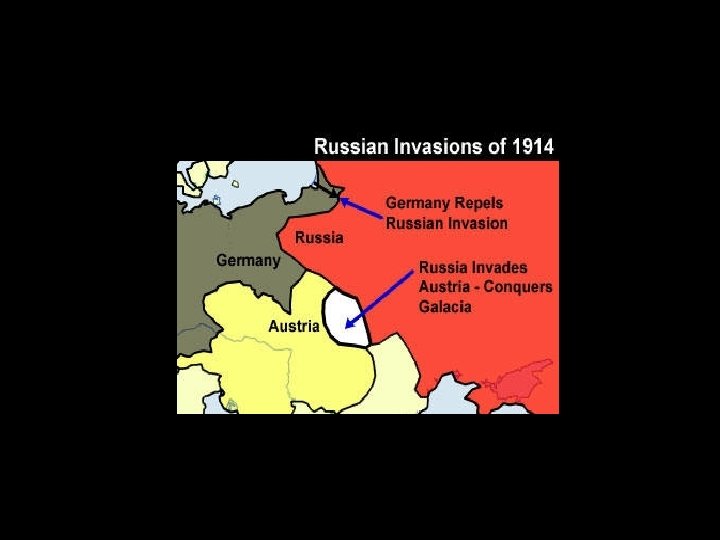
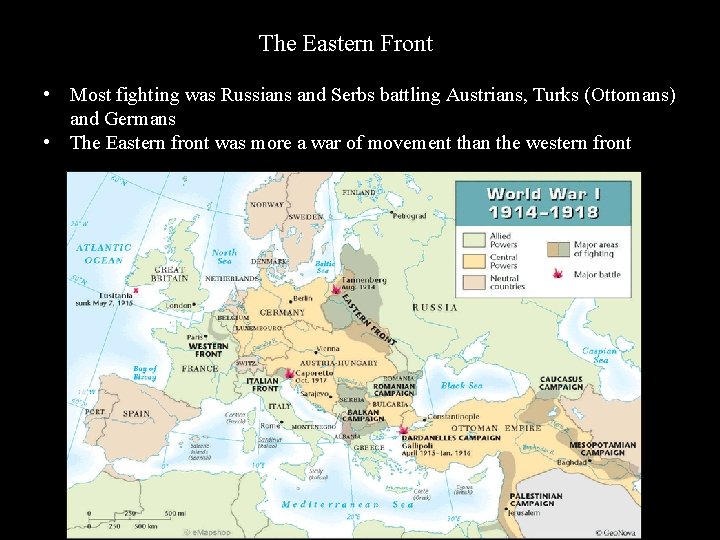
The Eastern Front • Most fighting was Russians and Serbs battling Austrians, Turks (Ottomans) and Germans • The Eastern front was more a war of movement than the western front
• Russia never fully recovered from their major loss at the Battle of Tannenberg against the Germans in 1914 • However, by hurling massive numbers of soldiers at Germany, Russia kept the Germany army occupied and unable to commit the numbers they wanted to over on the western front
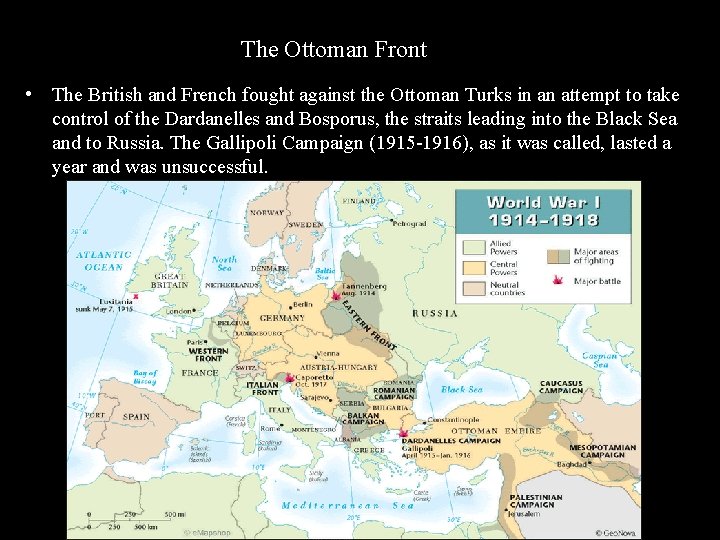
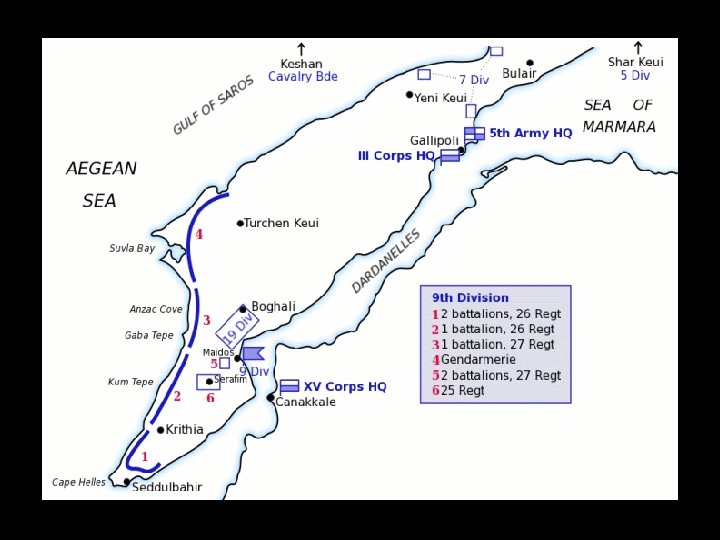
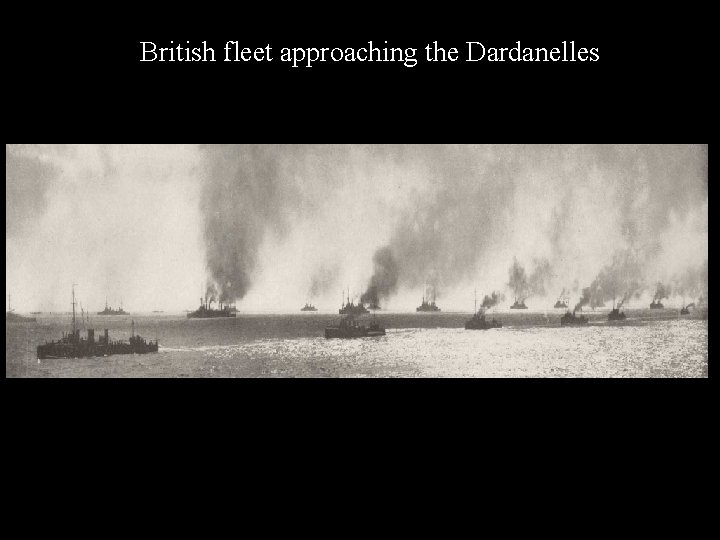
The Ottoman Front • The British and French fought against the Ottoman Turks in an attempt to take control of the Dardanelles and Bosporus, the straits leading into the Black Sea and to Russia. The Gallipoli Campaign (1915 -1916), as it was called, lasted a year and was unsuccessful.
British fleet approaching the Dardanelles
• The allies had more success against the Ottomans in the Middle East campaigns where they organized Arab nationalists to overthrow Ottoman control. As a result, the allies would take control of Baghdad, Jerusalem and Damascus
Rise of Arab Nationalism • Ottoman Empire enters WWI on German side in August, 1914. Motives were to regain Egypt from Britain and Caucasus Mountain region from Russia. • Ottoman Sultan officially declared a jihad against Britain, France and Russia • Ottoman armies put pressure on British in Egypt. Britain forced to commit 100, 000 soldiers there • British attempt to plot against Ottoman Empire by creating an anti. Ottoman alliance with Husayn , the current leader of Hashemites in Mecca. Husayn is supposedly a direct descendant of MH
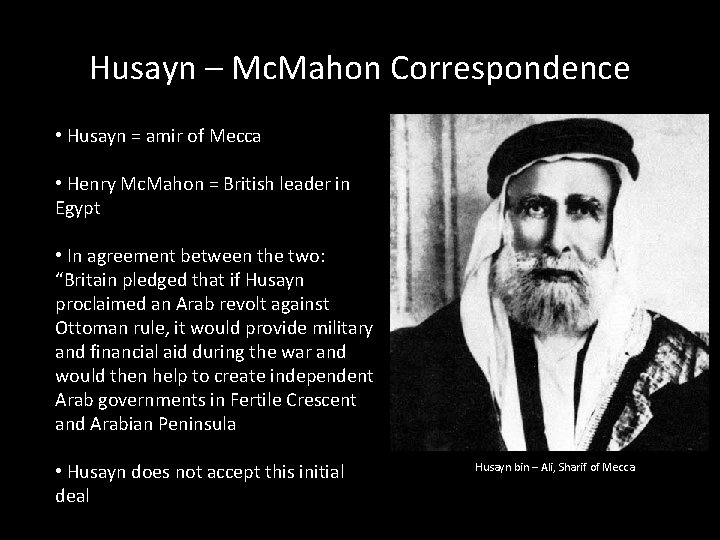
Husayn – Mc. Mahon Correspondence • Husayn = amir of Mecca • Henry Mc. Mahon = British leader in Egypt • In agreement between the two: “Britain pledged that if Husayn proclaimed an Arab revolt against Ottoman rule, it would provide military and financial aid during the war and would then help to create independent Arab governments in Fertile Crescent and Arabian Peninsula • Husayn does not accept this initial deal Husayn bin – Ali, Sharif of Mecca
Arab Revolt • In Syria, Ottoman governor (Jemal) forces peasants into military service. Life deteriorates there, creating rise of Arab nationalists. Jemal has 22 Arab nationalists publicly hanged in Damascus • Husayn’s son, Faysal, who was working with nationalists in Syria, returns to Mecca to convince his father that the time had arrived to revolt against the Ottomans • On June 5 th, 1916, Husayn declares Arabs under Ottoman rule to be independent. Arabs in the Hejaz, Syria, and Palestine take up arms against the Turks
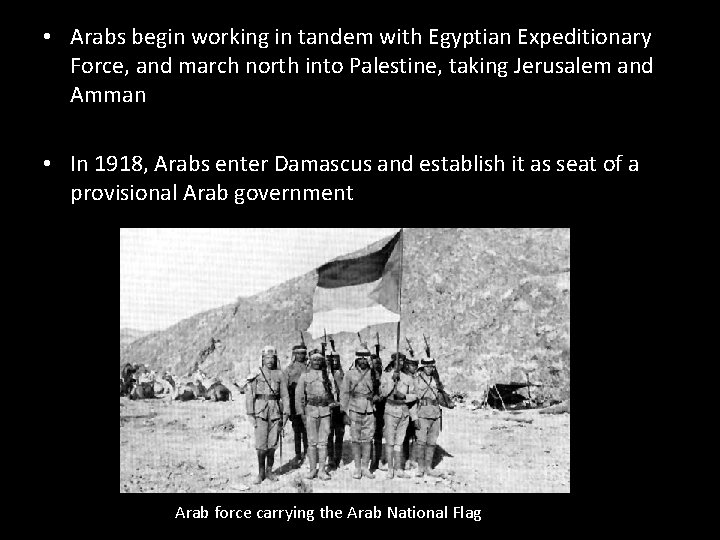
• Arabs begin working in tandem with Egyptian Expeditionary Force, and march north into Palestine, taking Jerusalem and Amman • In 1918, Arabs enter Damascus and establish it as seat of a provisional Arab government Arab force carrying the Arab National Flag
• Ottomans, also being attacked by joint Anglo-Indian force in Iraq, retreat. In October, 1918, Ottoman Empire signed an armistice with the allies. • The Arabs, promised self-government by the British, were jubilant
HOWEVER…….
Sykes – Picot Agreement • ……. the jubilance of the Arabs would not last for long. • The British had promised France and Russia a piece of the pie in the secretive Sykes – Picot Agreement drawn up in May, 1916 • Sykes – Picot: 1. 2. 3. 4. Direct French rule in much of Syria Direct British rule in lower Iraq Indirect British rule from Egyptian border eastward Enclave around Jaffa & Jerusalem under “international rule”
TO FURTHER ANGER THE ARABS…. .
Balfour Declaration • Announced on Nov. 2 nd, 1917, it is a British delcaration that they intended to set up a Jewish state in Palestine. The Arabs had not been consulted.
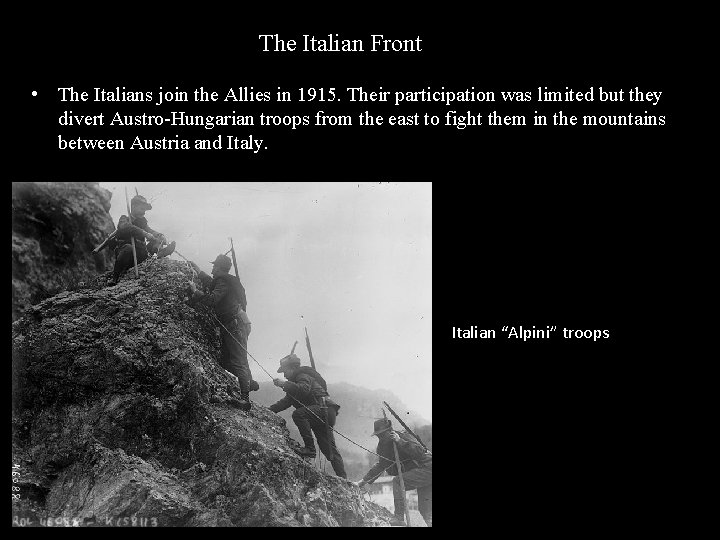
The Italian Front • The Italians join the Allies in 1915. Their participation was limited but they divert Austro-Hungarian troops from the east to fight them in the mountains between Austria and Italy. Italian “Alpini” troops
Asia & Africa • Japanese joined the allies and overran German possessions in China, namely Shandong Province • In Africa, the British and French took over many German possessions but Germany held onto German East Africa
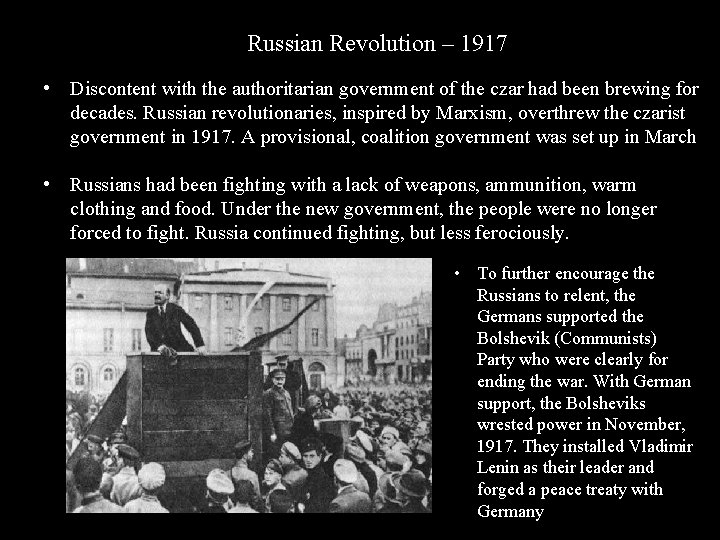
Russian Revolution – 1917 • Discontent with the authoritarian government of the czar had been brewing for decades. Russian revolutionaries, inspired by Marxism, overthrew the czarist government in 1917. A provisional, coalition government was set up in March • Russians had been fighting with a lack of weapons, ammunition, warm clothing and food. Under the new government, the people were no longer forced to fight. Russia continued fighting, but less ferociously. • To further encourage the Russians to relent, the Germans supported the Bolshevik (Communists) Party who were clearly for ending the war. With German support, the Bolsheviks wrested power in November, 1917. They installed Vladimir Lenin as their leader and forged a peace treaty with Germany
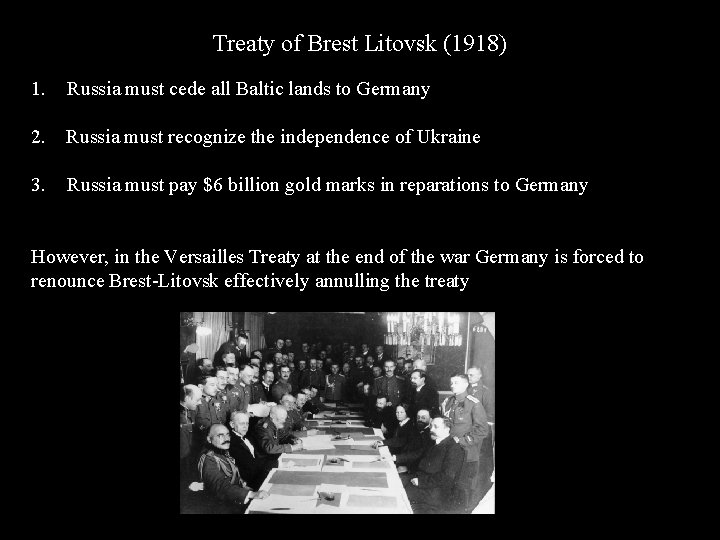
Treaty of Brest Litovsk (1918) 1. Russia must cede all Baltic lands to Germany 2. Russia must recognize the independence of Ukraine 3. Russia must pay $6 billion gold marks in reparations to Germany However, in the Versailles Treaty at the end of the war Germany is forced to renounce Brest-Litovsk effectively annulling the treaty
With their war against Russia now to a close, Germany was able to focus all resources on the war in the west and was hopeful for victory, however…
The United States Enters the War - 1917 • As a result of unrestricted submarine warfare in the Atlantic ocean, and the Zimmerman Telegram, the United States joins the allies in 1917. • Hundreds of Americans had been killed on some of the merchant vessels destroyed by the Germans • From the Zimmerman Telegram, the U. S. government learned that Germany was secretly trying to persuade Mexico to join them in the war and that Germany would help them regain their lost lands in Arizona, New Mexico and Texas.
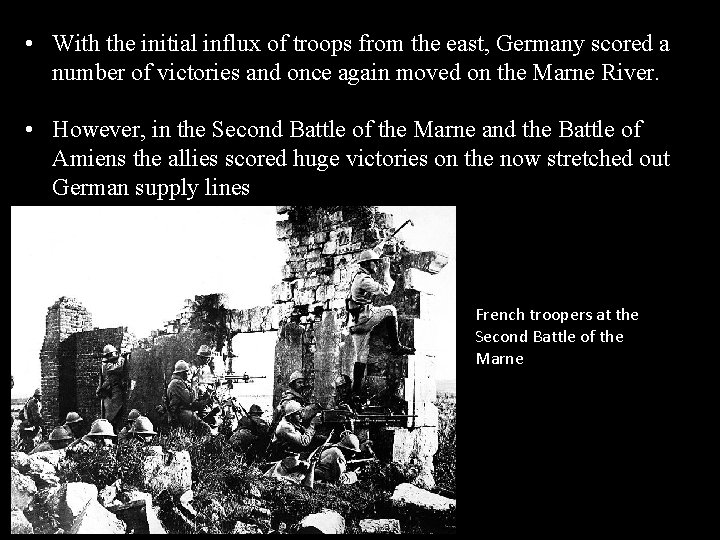
• With the initial influx of troops from the east, Germany scored a number of victories and once again moved on the Marne River. • However, in the Second Battle of the Marne and the Battle of Amiens the allies scored huge victories on the now stretched out German supply lines French troopers at the Second Battle of the Marne
• In the summer of 1918, the Axis began to crumble. The Bulgarians, Ottomans sued for peace and in November the Austrian. Hungarian Empire was overcome by a revolution and split apart. • On November, 11 th, 1918 Germany signed an armistice with the allies ending WWI • Churchill: “Victory was bought so dear as to be indistinguishable from defeat”
Death Toll Allies: 9. 4 million Russia – 3. 5 million France – 1. 6 million Italy – 1. 2 million Britain – 995, 000 Serbia – 725, 000 Romania – 700, 000 USA – 117, 000 Axis: 16. 5 million Ottoman Empire – 2. 9 million Germany – 2. 4 million Austria – Hungary – 1. 5 million
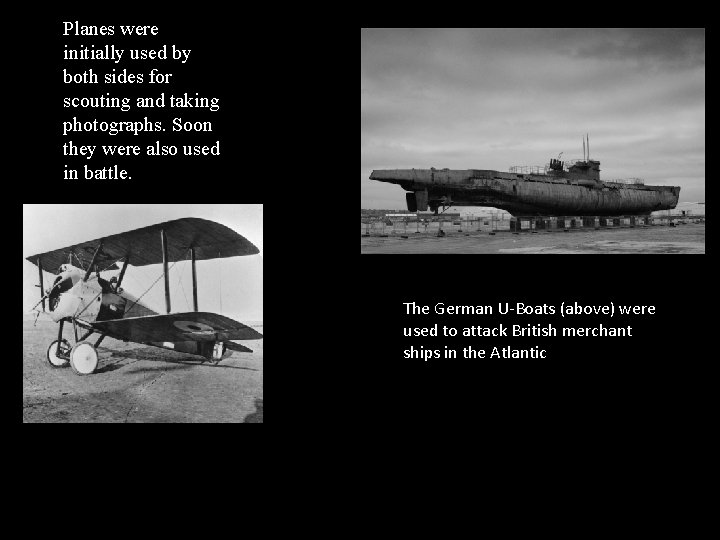
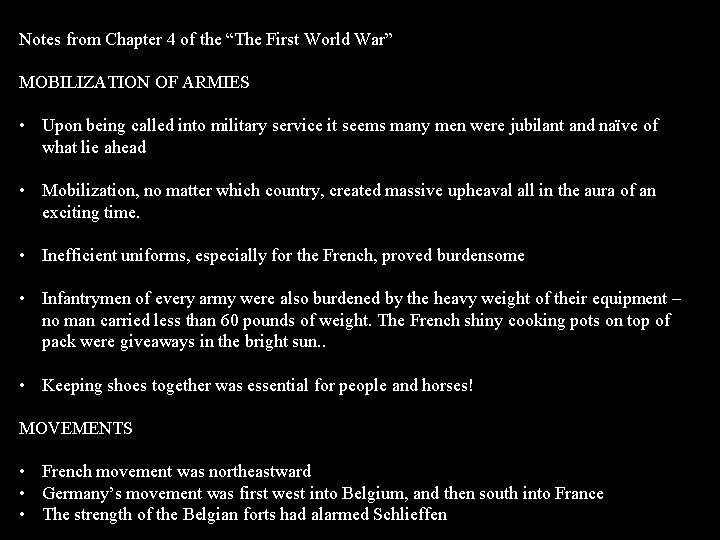
Planes were initially used by both sides for scouting and taking photographs. Soon they were also used in battle. The German U-Boats (above) were used to attack British merchant ships in the Atlantic
Notes from Chapter 4 of the “The First World War” MOBILIZATION OF ARMIES • Upon being called into military service it seems many men were jubilant and naïve of what lie ahead • Mobilization, no matter which country, created massive upheaval all in the aura of an exciting time. • Inefficient uniforms, especially for the French, proved burdensome • Infantrymen of every army were also burdened by the heavy weight of their equipment – no man carried less than 60 pounds of weight. The French shiny cooking pots on top of pack were giveaways in the bright sun. . • Keeping shoes together was essential for people and horses! MOVEMENTS • French movement was northeastward • Germany’s movement was first west into Belgium, and then south into France • The strength of the Belgian forts had alarmed Schlieffen
MOVEMENTS (con’t) • Belgium was neutral. With the German advance they hoped to resist such aggression while at the same time maintaining its integrity and neutrality • The German advance turned out to be brutal with the death and destruction of many people and villages. As German military leader Moltke said, “Our advance in Belgium is certainly brutal, but we are fighting for our lives and all who get in the way must take the consequences. ” The brutality got worse with numerous massacres of civilians in Belgian towns. • By the end of August, 1914, Germany successfully had overrun the majority of the Belgian army and forts and was positioning itself among the French frontiers BATTLE OF THE FRONTIERS • “There was for some senior officers on both sides… a certain familiarity about the preliminary events. They resembled those of the first days of the Franco. Prussian War forty-years earlier with the difference being that everything was working now with greater efficiency”
BATTLE OF THE FRONTIERS (CON’T) • By the war’s 3 rd week, the Germans had achieved significant victories in two sectors (Alsace-Lorraine and the Ardennes). They now looked to a victory on the Belgian border to achieve the quick end to the war they had envisioned