
Course of World War II Immediately following Pearl
- Slides: 14
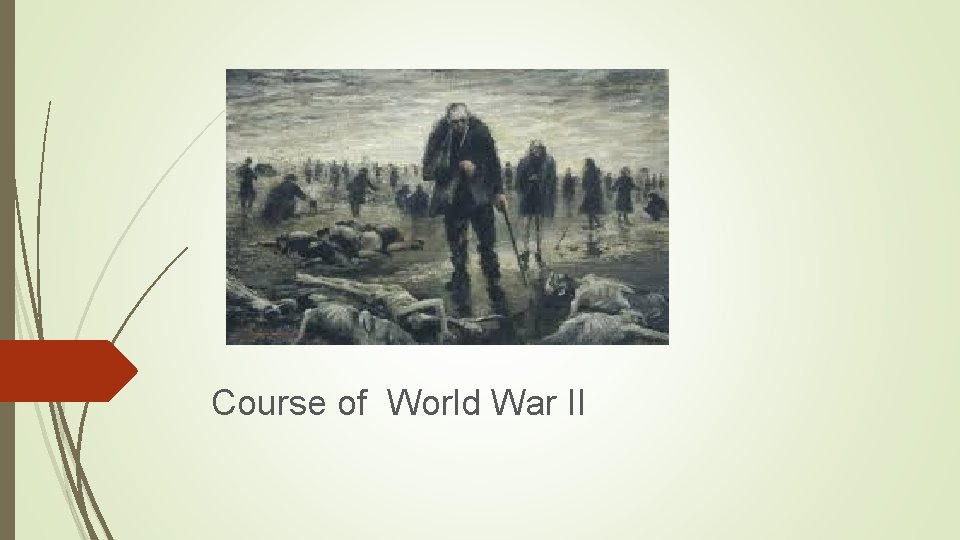
Course of World War II
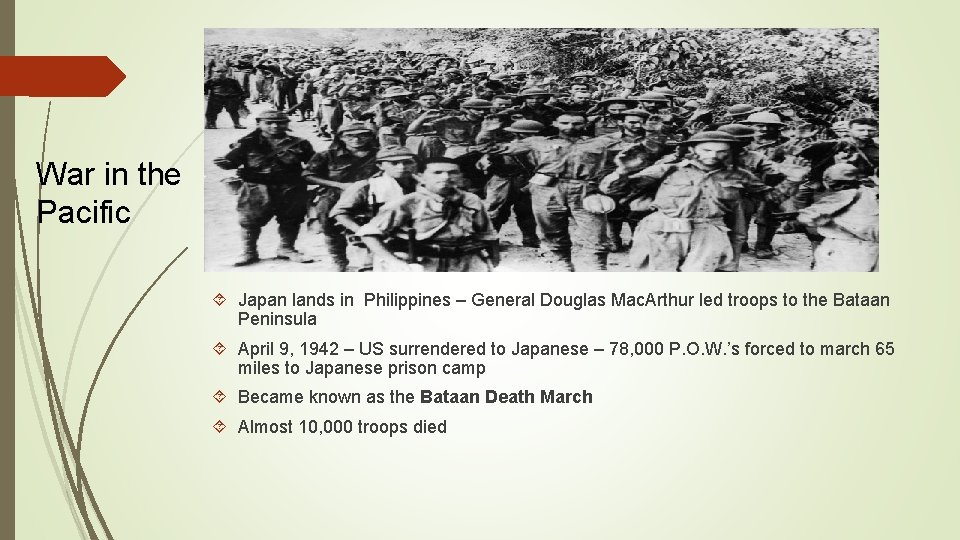
Immediately following Pearl Harbor War in the Pacific Japan lands in Philippines – General Douglas Mac. Arthur led troops to the Bataan Peninsula April 9, 1942 – US surrendered to Japanese – 78, 000 P. O. W. ’s forced to march 65 miles to Japanese prison camp Became known as the Bataan Death March Almost 10, 000 troops died
Pacific Rim Doolittle raid on Tokyo – - March 1942 – 16 B-25 bombers loaded on aircraft carrier (Hornet) - April 18 – first time American lands bombs on Japan - created uncertainty in Japan’s plans Battle of Coral Sea – US code breakers decipher message of Japan’s plan to attack New Guinea - Prevents Japan from landing in new Guinea – keeps supply lines open to Australia
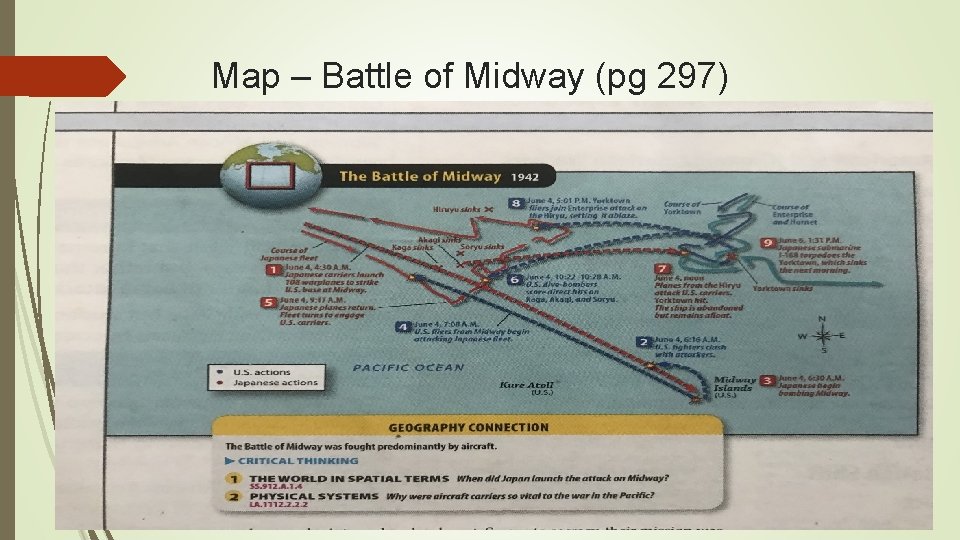
Pacific Rim cont. Battle of Midway – major turning point against Japanese Navajo “code talkers” ” https: //www. youtube. com/watch? v=z. QHhbhtp. J 3 M U. S. sent 3 aircraft carriers to protect base at Midway. This decisive victory led to a shift in the war that resulted in stopping the Japanese advance in the Pacific
Map – Battle of Midway (pg 297)
Island Hopping Fall of 1943 Campaign strategy in the Pacific that resulted in the U. S. getting closer to the mainland of Japan Details of Island-Hopping on guided reading activity Activity worksheet – only answer the first three questions. We will discuss the last two questions later in class Resulted in eventually gaining back the Philippines in 1945
War in Europe Battle of Atlantic – German U-boats on Eastern seaboard of U. S. (convoy system) Battle of North Africa and Italy – “Germany first strategy” – May 1943 Germans defeated in Algeria and Morocco. Sept. 1943 - Results in Allies moving into Sicily and Salerno. Led to overthrow of Mussolini. Battle of Stalingrad – German v. Soviets. Germans surrendered Jan. 1943. All these battles led to Churchill and Eisenhower deciding to attack the Germans from France– forcing the Germans to fight on TWO fronts Operation Overlord (D-Day) Why the beaches in Normandy? - Worksheet (Omaha Beach) – answer first three questions
D-Day https: //www. youtube. com/watch? v=xqc. SY 770 a. YA 100, 000 soldiers stormed the beach on June 6, 1944 (about 2, 500 American soldiers wounded or killed) Why was D-Day invasion so important? How did this victory shape course of the war?
V-E Day (Victory in Europe) Battle of the Bulge –December 1944 – Stopped Germans in Belgium. Hitler had hoped to cut off Allied troops from supply lines This marked a decisive victory for the Allies. More than 100, 000 German casualties and very few resources left German forces weak Soviet forces pushed Germans out of Russia and Allied forces broke through German lines near Berlin. Hitler commits suicide in his bunker. May 8, 1945 was proclaimed V-E day. Japan did not surrender – fighting in Pacific continues
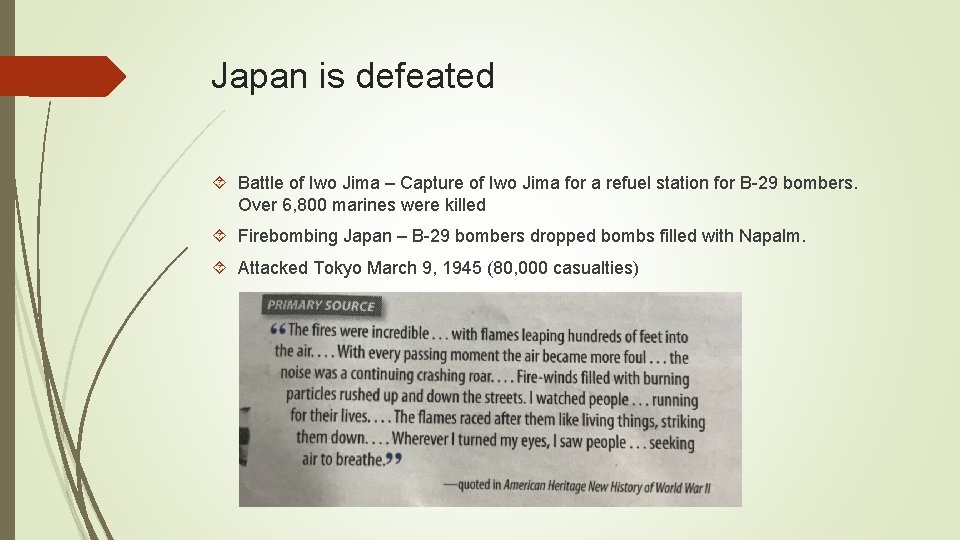
Japan is defeated Battle of Iwo Jima – Capture of Iwo Jima for a refuel station for B-29 bombers. Over 6, 800 marines were killed Firebombing Japan – B-29 bombers dropped bombs filled with Napalm. Attacked Tokyo March 9, 1945 (80, 000 casualties)
Japan defeated cont. Invasion of Okinawa – needed a base near mainland Japan to stockpile supplies and build up troops. After 12, 000 American casualties on June 22, 1945, Okinawa captured. Terms for surrender - Emperor Hirohito stay in power. Manhattan Project – secret U. S. scientific research project to build an atomic bomb. Physicist Robert Oppenheimer – led laboratory at Los Alamos, New Mexico. The decision to use the atomic bomb by President Truman results in massive casualties of more civilians than soldiers.
Hiroshima and Nagasaki Report in 1998 reports that 202, 118 people died in Hiroshima, and between 4080, 000 people in Nagasaki. Most being civilians (women and children) https: //www. youtube. com/watch? v=63 Nfbdl_Oso V-J Day – August 15, 1945 Japanese surrender and WW II officially over Read Hiroshima and Nagasaki MLK book pages 311 and 312. Turn and talk with neighbors about the whether you think we should have or should not have used nuclear weapons on Hiroshima and Nagasaki
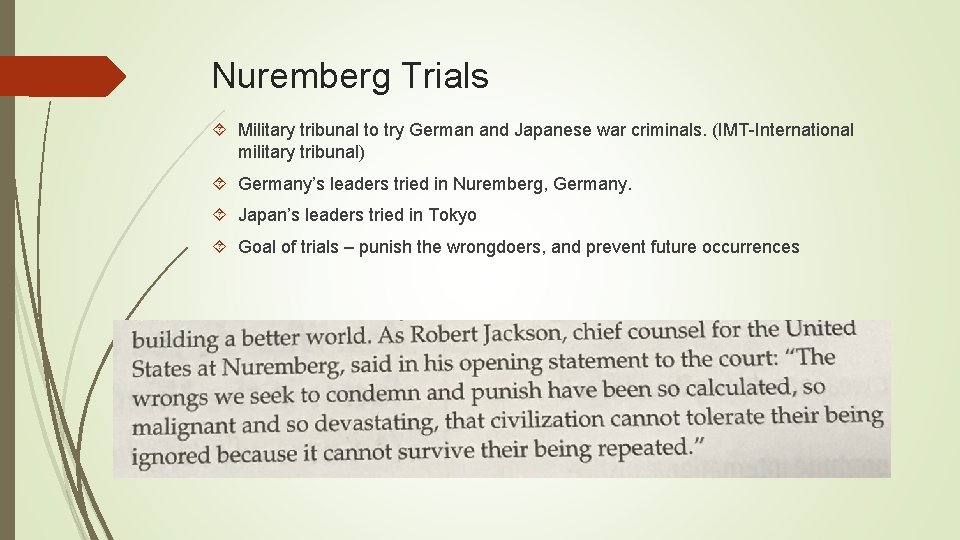
Nuremberg Trials Military tribunal to try German and Japanese war criminals. (IMT-International military tribunal) Germany’s leaders tried in Nuremberg, Germany. Japan’s leaders tried in Tokyo Goal of trials – punish the wrongdoers, and prevent future occurrences
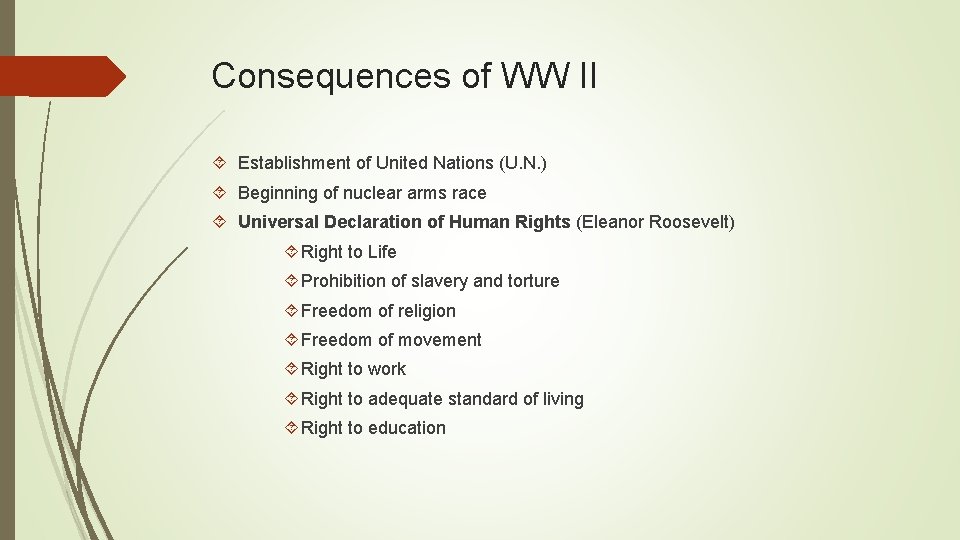
Consequences of WW II Establishment of United Nations (U. N. ) Beginning of nuclear arms race Universal Declaration of Human Rights (Eleanor Roosevelt) Right to Life Prohibition of slavery and torture Freedom of religion Freedom of movement Right to work Right to adequate standard of living Right to education