
Course Introduction to Forest and Natural Resources Sciences
- Slides: 30
Course: Introduction to Forest and Natural Resources Sciences and Management Joachim PUHE ISU – BA course: Concepts of Applied Ecology, Forestry and Natural Resources Introduction to Forest and Natural Resources Sciences and Management 1. Introduction Forest and Natural Resources, Ecology – professional and career opportunities in management, education and science I. Concepts of Natural Resources and their Use ● Climate and Weather ● Forests ● Soils ● Rangelands ● Water, Watersheds & Wetlands ● Agricultural Lands ● Seminars, Group Presentation, Exams & Project Work II. Man and Nature, an introduction to sustainable Land Biodiversity Management ● Forestry ● Nature Protection Management ● Agriculture ● Water Management ● Rangeland Management ● Urban Nature Management ● Wildlife Management ● Seminars, Group Work Presentation, Evaluation & Final Exam Course: Introduction to Forest and Natural Resources Sciences and Management ������ , ����������� �� ���������� 1. ����������� – ����������� ������� , �������������� I. ���������� �������� ● ������� ● ����� , ������������� ������ II. �������� , �������� ����������� ●������� ● ���������� ● �������� ● ������ ●������ ����� ● ����� , �������� , ��������� : ����� 17: 00 – 18: 40 �� Seminars: ����� 18: 45 – 19: 30 hrs ���� , ������������ : 24������ , 12������ , 19 ������ Joachim PUHE
Course: Introduction to Forest and Natural Resources Sciences and Management I. Concepts of Natural Resources and their Utilization I. IV. Forests a) What is a forest? b) What makes a forest different from woodland, steppes, savanna or desert ecosystems? c) What different types of forest exist in the world? d) What characterizes the boreal forest? e) …temperate forest? f) …tropical and subtropical forest? g) …our mountain forests? h) What is the local and global importance of forests? i) What functions do forests fulfill for man and nature? j) What is the natural life cycle of forests? k) How do biotic threats affect forests? l) Which abiotic threats are known to affect forests? Joachim PUHE I. IV. ������ a) �� ��� ? b) �������� ������� , ������� �� ����������� ? c) �������� ����� ? d) �� ���������� ? e) ������� ? f) �������������� ? g) ������ ? h) ����������� ������ ? i) �� �������������� ? j) ��������� ����� ? k) �������� ����� ? l) �������� ������� , �������� ? Further Reading: Evans (2004) The Forests Handbook, Young, Giese (2003) Introduction to forest ecosystem science and management; UNEP (2005) The Millennium Ecosystem Assessment Visit the ISU - Library of Natural Sciences at ISU - Vake Park (“S”-Building, M. Tamarashvili Str. 3 - 9 th floor)
Course: Introduction to Forest and Natural Resources Sciences and Management Joachim PUHE I. Concepts of Natural Resources and their Utilization I. IV. Forests a) What is a forest? ● Different definitions of forests exist, but they all have in common that it is a vegetation type – natural or plantedwhich is dominated by trees ● Trees are: perennial woody plants which reach more than 5 m height as they mature. I. IV. ������ a) �� ��� ? ● ���������� , ������� ���� ��� , ������� ������������� ���������� ● ������� ������� , �������� 5 �-�� ������� Course: Concepts of Applied Ecology, sustainable Forest, Natural Resources and Biodiversity Management Joachim PUHE, Waldemar SCHMIDT
I. Concepts of Natural Resources and their Utilization I. IV. Forests I. IV. ������ b) What makes a forest different from woodland, steppes, savanna or desert ecosystems? ● Forests are densely stocked with trees, more than open woodlands or savannas. ● Tropical savannas are characterized by a sparse occurrence of trees, whose crowns extend over less than 10% of the horizontal space of the ecosystem. ● Mediterranean woodlands are in some cases dominated by shrubs, small trees or scattered occurrence of trees, and sometimes do not count as forests ● Steppes, like tundra, are usually without trees. They both are dominated by grassland species like pastures or shrubs/bushes, either in the dry temperate zone (steppes) or the cold boreal zone (tundra). b) �������� ������� , ������� �� ����������� ? ● ������ ������� , ������� ����� , ����� �� ������� ● ���������� ��������� ������ , ������������� ������� 10% ������� ● ��������������� , ������ �� ������� ● ������ (������� ) �� �������� (������ )����� �� ��������� ����� Course: Concepts of Applied Ecology, sustainable Forest, Natural Resources and Biodiversity Management Joachim PUHE, Waldemar SCHMIDT
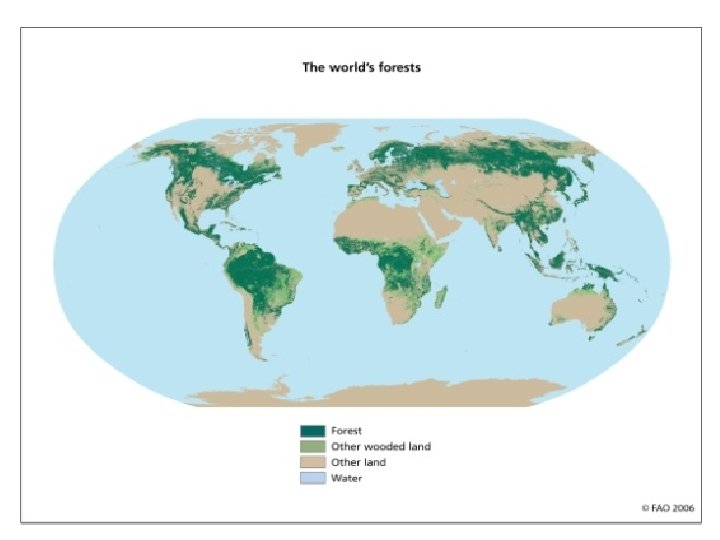
I. Concepts of Natural Resources and their Utilization I. IV. Forests c) What different types of forest exist in the world? Forests can be distinguished either ● by the character of the dominant tree species (coniferous [main group of the cone-bearing, needle-leaved gymnosperm] trees, broadleaved trees [angiosperms]) e. g. as coniferous forest, broadleaved forest, mixed forest ● or by the overall or specific ecological or climate zone it belongs to and to which its structure and function is closely linked – for these ‘zonal’ forest types many different categories exist e. g. boreal forest, temperate broadleaved forest, temperate coniferous forest, subtropical dry forest, subtropical humid forest, tropical dry forest, tropical humid forest ● specific attention can be put to savannahs / open woodlands which often have been influenced by the action of man or great mammals ● mountain forests occur in different parts and climate zones of the world, they are particularly diverse due to rapid changes of climate and soils at a small scale I. IV. ������ c) �������� ����� ? �������� ● ��������������� [������� , ������ �������� ] -������� ����� [�������� ]-������� ��� , ������� ���. ● �������� , ������ �� ���������� , ���� �� ������������ ��������� ; ���������� ���� ���������� ��� , �������������� ��� , ��������� ; ● ������� ��������� / ���� ������ , �������� ���������� �� ������� ; ● �������� ������� �� ������ , ������������ �������
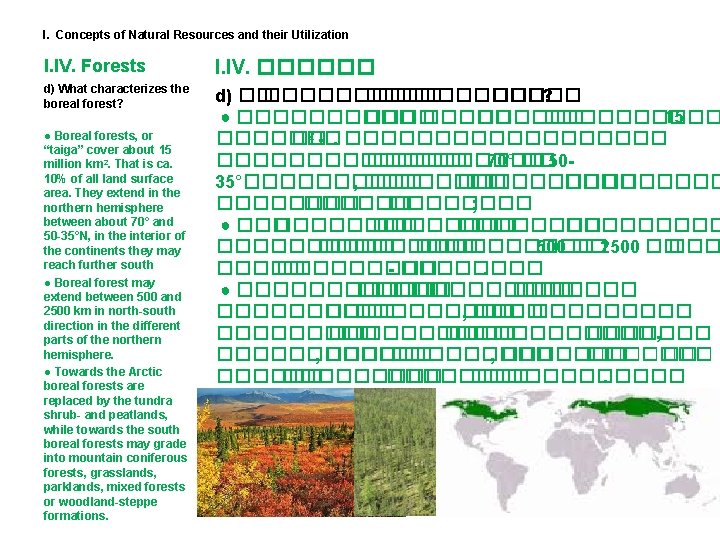
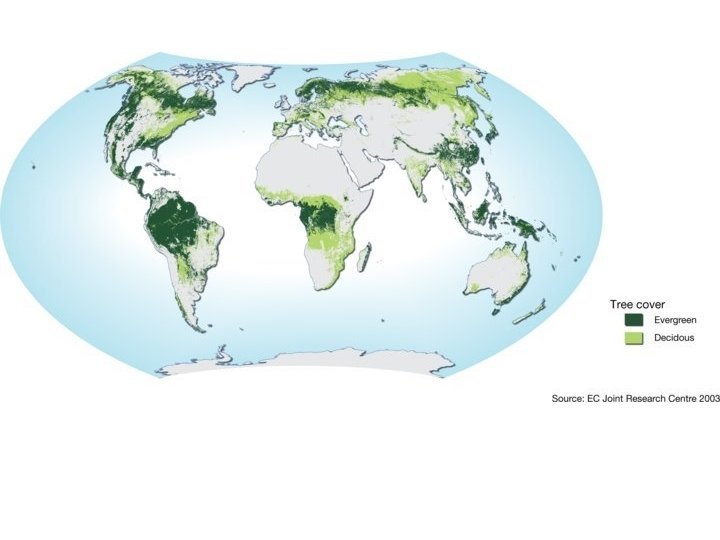
I. Concepts of Natural Resources and their Utilization I. IV. Forests I. IV. ������ d) What characterizes the boreal forest? d) �� ���������� ? ● ����� ������ ����� 15 2 -� ������ ��. ����������� ����� 70° �� 5035°����� , ���������� �������� ; ● �������� ���������� 500 �� 2500 �� ����� - ����. ● ��������� ���������� , ��������� ����� ������� , ������� �� ���������. ● Boreal forests, or “taiga” cover about 15 million km 2. That is ca. 10% of all land surface area. They extend in the northern hemisphere between about 70° and 50 -35°N, in the interior of the continents they may reach further south ● Boreal forest may extend between 500 and 2500 km in north-south direction in the different parts of the northern hemisphere. ● Towards the Arctic boreal forests are replaced by the tundra shrub- and peatlands, while towards the south boreal forests may grade into mountain coniferous forests, grasslands, parklands, mixed forests or woodland-steppe formations.
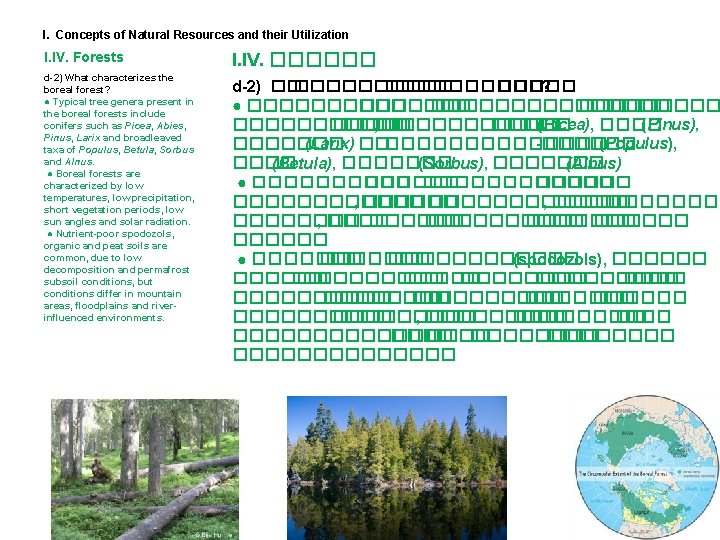
I. Concepts of Natural Resources and their Utilization I. IV. Forests d-2) What characterizes the boreal forest? ● Typical tree genera present in the boreal forests include conifers such as Picea, Abies, Pinus, Larix and broadleaved taxa of Populus, Betula, Sorbus and Alnus. ● Boreal forests are characterized by low temperatures, low precipitation, short vegetation periods, low sun angles and solar radiation. ● Nutrient-poor spodozols, organic and peat soils are common, due to low decomposition and permafrost subsoil conditions, but conditions differ in mountain areas, floodplains and riverinfluenced environments. I. IV. ������ d-2) �� ���������� ? ● ������������ ������ , ������ (Picea), ���� (Pinus), ������� (Larix) �������� -������ (Populus), ���� (Betula), ������� (Sorbus), ������� (Alnus) ● ���������� ������� , ������������ , �������� , ������ �������. ● ������� (spodozols), ������ �������� ���������� ������ ����� , ���������� ���� ��������
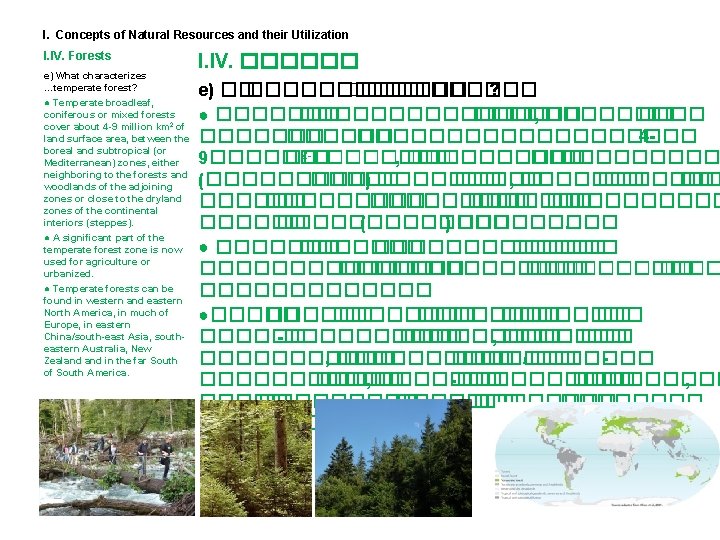
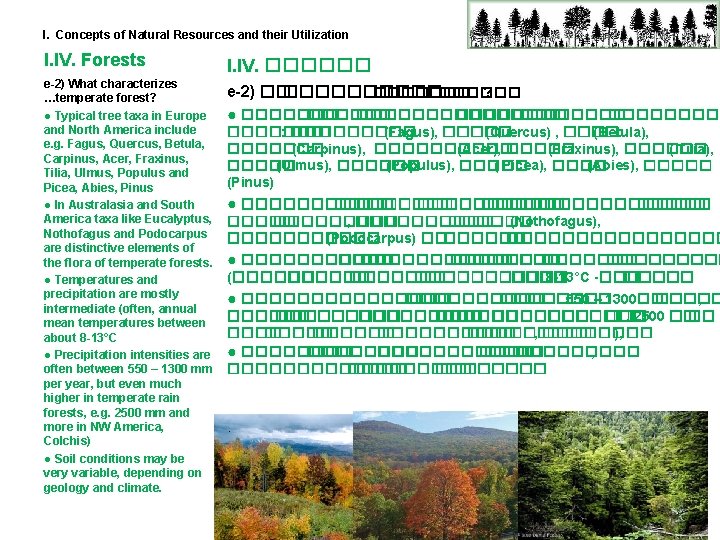
I. Concepts of Natural Resources and their Utilization I. IV. Forests e) What characterizes …temperate forest? ● Temperate broadleaf, coniferous or mixed forests cover about 4 -9 million km 2 of land surface area, between the boreal and subtropical (or Mediterranean) zones, either neighboring to the forests and woodlands of the adjoining zones or close to the dryland zones of the continental interiors (steppes). ● A significant part of the temperate forest zone is now used for agriculture or urbanized. ● Temperate forests can be found in western and eastern North America, in much of Europe, in eastern China/south-east Asia, southeastern Australia, New Zealand in the far South of South America. I. IV. ������ e) �� ������� ? ● �������������� , ����� �� ��������� ����� 42 -���� 9������ �� , ����������� (����� ) ������� , ������� �� ��������� �� ������� (���� ) �����. ● �������������� ����������� �� �������. ●�������� �������� �� ������ -����� , ������� , ������� /������� , ������� -����� , ��������� �������.
I. Concepts of Natural Resources and their Utilization I. IV. Forests I. IV. ������ e-2) What characterizes …temperate forest? ● Typical tree taxa in Europe and North America include e. g. Fagus, Quercus, Betula, Carpinus, Acer, Fraxinus, Tilia, Ulmus, Populus and Picea, Abies, Pinus ● In Australasia and South America taxa like Eucalyptus, Nothofagus and Podocarpus are distinctive elements of the flora of temperate forests. ● Temperatures and precipitation are mostly intermediate (often, annual mean temperatures between about 8 -13°C ● Precipitation intensities are often between 550 – 1300 mm per year, but even much higher in temperate rain forests, e. g. 2500 mm and more in NW America, Colchis) ● Soil conditions may be very variable, depending on geology and climate. e-2) �� ������� ? ● ������� �������� ������� : ������� (Fagus), ����� (Quercus) , ���� (Betula), ������� (Carpinus), ����� (Acer), ����� (Fraxinus), ������ ( Tilia), ����� (Ulmus), ������ (Populus), ����� ( Picea), ���� (Abies), ����� (Pinus) ● �������� ������������� ����� , ������ (Nothofagus), ������ (Podocarpus) ��������������� ● ������������� ��������� (������� ���� 8 -13°C -��� ����� ● ���������� 550 – 1300�� ����� , ��������� ������� ���. 2500 �� �� ���������� , ���� ), ● �������� ��������� , �������� ����. .
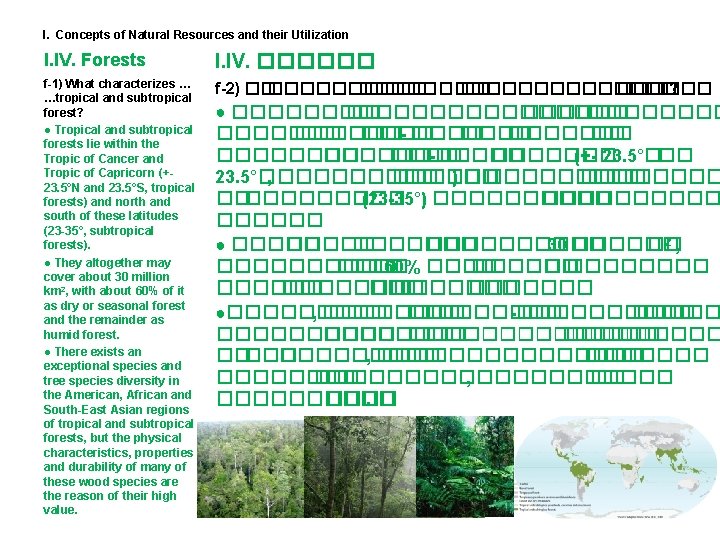
I. Concepts of Natural Resources and their Utilization I. IV. Forests I. IV. ������ f-1) What characterizes … …tropical and subtropical forest? ● Tropical and subtropical forests lie within the Tropic of Cancer and Tropic of Capricorn (+23. 5°N and 23. 5°S, tropical forests) and north and south of these latitudes (23 -35°, subtropical forests). ● They altogether may cover about 30 million km 2, with about 60% of it as dry or seasonal forest and the remainder as humid forest. ● There exists an exceptional species and tree species diversity in the American, African and South-East Asian regions of tropical and subtropical forests, but the physical characteristics, properties and durability of many of these wood species are the reason of their high value. f-2) �� ��������� ������ ? ● �������������� ������ - ������� �� ������ -������� (+- 23. 5°��� 23. 5°�, ������ ) �� �������� (23 -35°) ���������� 2, ● ���������� 30 ������ ���� 60% ������ ���� �� ������� ●����� , ��������� -���������� ��������� , ���������� �������� , ������ ����.
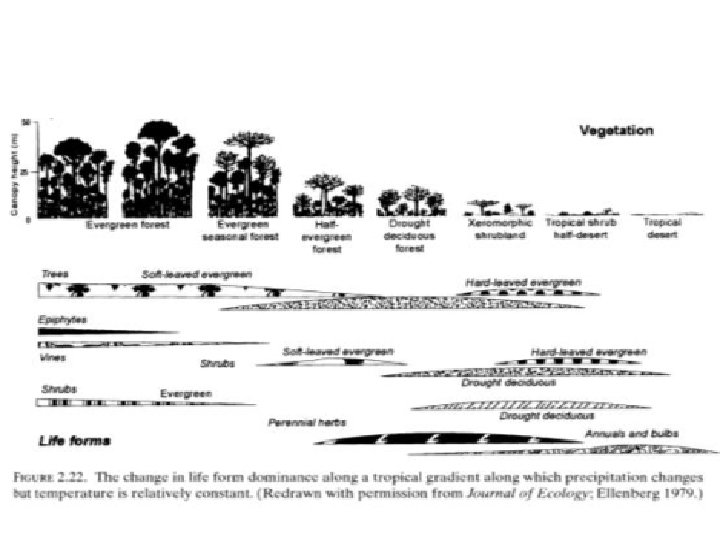
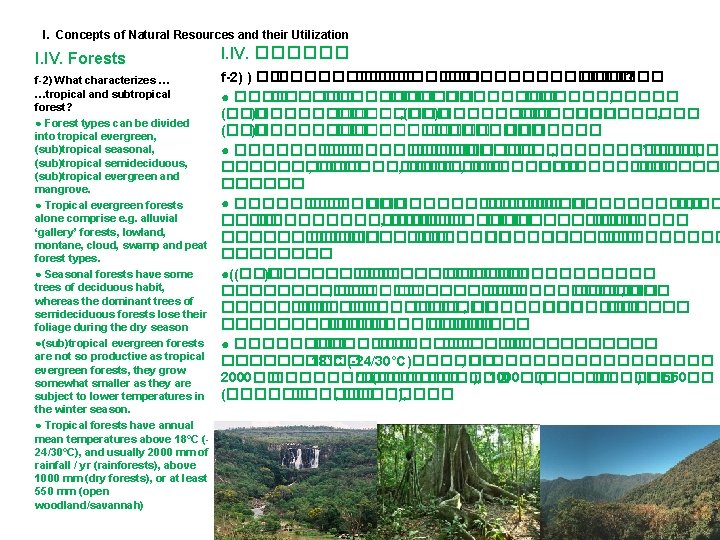
I. Concepts of Natural Resources and their Utilization I. IV. Forests f-2) What characterizes … …tropical and subtropical forest? ● Forest types can be divided into tropical evergreen, (sub)tropical seasonal, (sub)tropical semideciduous, (sub)tropical evergreen and mangrove. ● Tropical evergreen forests alone comprise e. g. alluvial ‘gallery’ forests, lowland, montane, cloud, swamp and peat forest types. ● Seasonal forests have some trees of deciduous habit, whereas the dominant trees of semideciduous forests lose their foliage during the dry season ●(sub)tropical evergreen forests are not so productive as tropical evergreen forests, they grow somewhat smaller as they are subject to lower temperatures in the winter season. ● Tropical forests have annual mean temperatures above 18°C (24/30°C), and usually 2000 mm of rainfall / yr (rainforests), above 1000 mm (dry forests), or at least 550 mm (open woodland/savannah) I. IV. ������ f-2) ) �� ��������� ������ ? ● �������� ����������� , (��� )�������� ��������� �������. ● ����������� ������ , , ����� ’’ ������ , ���������� , �������� ������ ● �������������� ������ �� , ���������� , �������� ������� ��������� ●((��� )��������� �� ������� , ��������� ������ , �������� , ������� ������������ �����. ● ������� ����������� 18°C (-24/30°C)������ , ������ 2000�� ������ /�. (������ ), 1000�� (������ ) �� 550�� (��� ������ , ���� ),
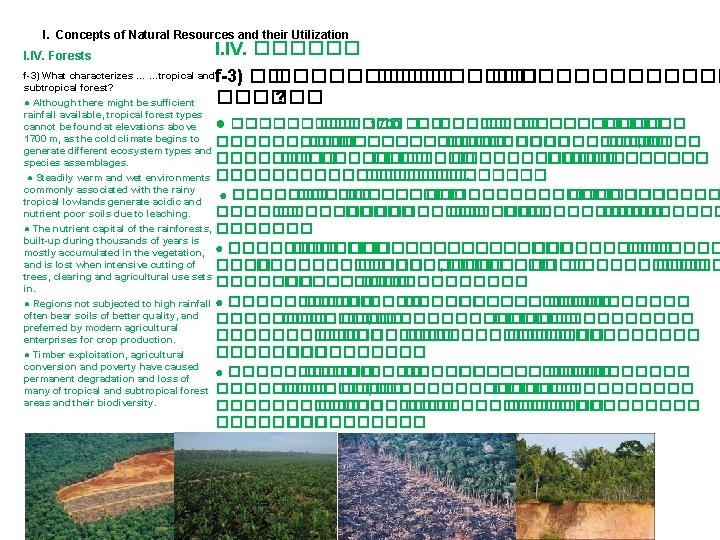
I. Concepts of Natural Resources and their Utilization I. IV. Forests I. IV. ������ f-3) �� ��������� ������ ? ● f-3) What characterizes … …tropical and subtropical forest? ● Although there might be sufficient rainfall available, tropical forest types ������ 1700 ���������� cannot be found at elevations above 1700 m, as the cold climate begins to ����� , ������������ ���� , ���� generate different ecosystem types and ������� ������������ species assemblages. �������. ● Steadily warm and wet environments ��������� commonly associated with the rainy ● ������� ���������� tropical lowlands generate acidic and �������� ������������ nutrient poor soils due to leaching. ● The nutrient capital of the rainforests, ������� built-up during thousands of years is ����������� ������� mostly accumulated in the vegetation, ● ���� and is lost when intensive cutting of �������� , ���������� trees, clearing and agricultural use sets ��������� in. ● Regions not subjected to high rainfall often bear soils of better quality, and preferred by modern agricultural enterprises for crop production. ● Timber exploitation, agricultural conversion and poverty have caused permanent degradation and loss of many of tropical and subtropical forest areas and their biodiversity. ● ��������� �� ������ ����������� ����������� ���� , ������������� ������������ ��� ��������������� ��������� ����������.
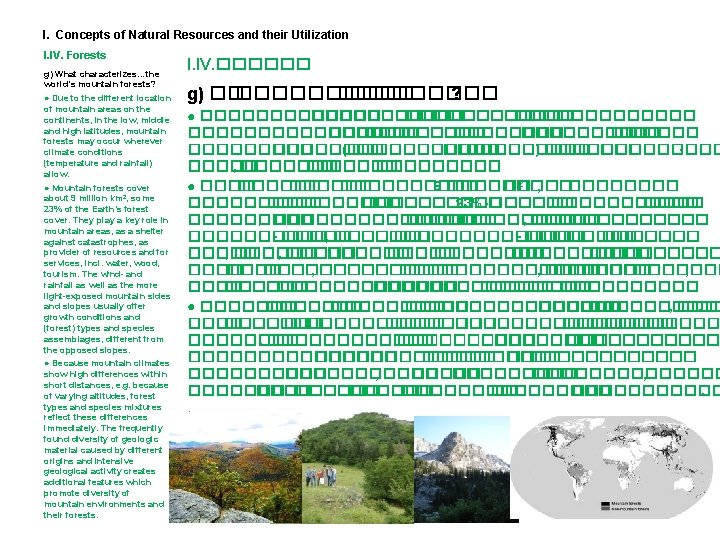
I. Concepts of Natural Resources and their Utilization I. IV. Forests g) What characterizes…the world’s mountain forests? ● Due to the different location of mountain areas on the continents, in the low, middle and high latitudes, mountain forests may occur wherever climate conditions (temperature and rainfall) allow. ● Mountain forests cover about 9 million km 2, some 23% of the Earth’s forest cover. They play a key role in mountain areas, as a shelter against catastrophes, as provider of resources and for services, incl. water, wood, tourism. The wind- and rainfall as well as the more light-exposed mountain sides and slopes usually offer growth conditions and (forest) types and species assemblages, different from the opposed slopes. ● Because mountain climates show high differences within short distances, e. g. because of varying altitudes, forest types and species mixtures reflect these differences immediately. The frequently found diversity of geologic material caused by different origins and intensive geological activity creates additional features which promote diversity of mountain environments and their forests. I. IV. ������ g) �� ������ ? ● ����������������������� ����� �� ��������� (����������� ) ��������� , ������� 2 -� ● ���������� 9 ������ �� , ����� ������� 23%-�. ����������� , ��������� , ���������� - ����� , �������������� - ������� , ����� ���������� ������ , ����������������� , ������ �������������. ● ���������������� , ��������������� �������� ������������� �������������� , �������������� , ������� �����������. .
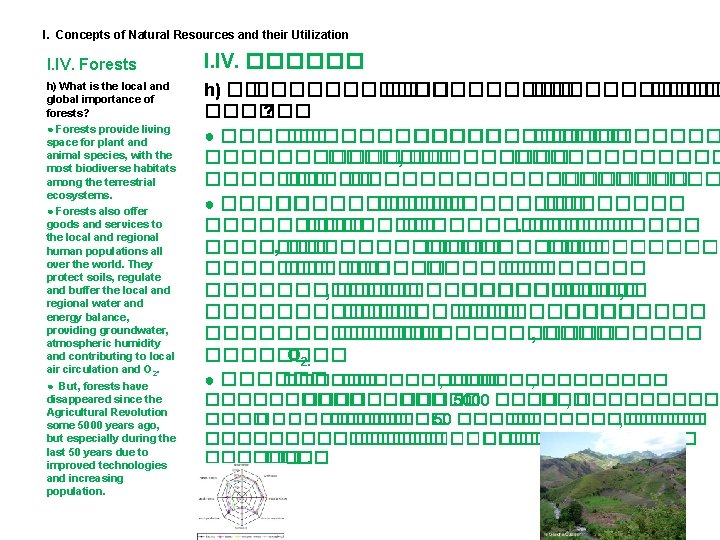
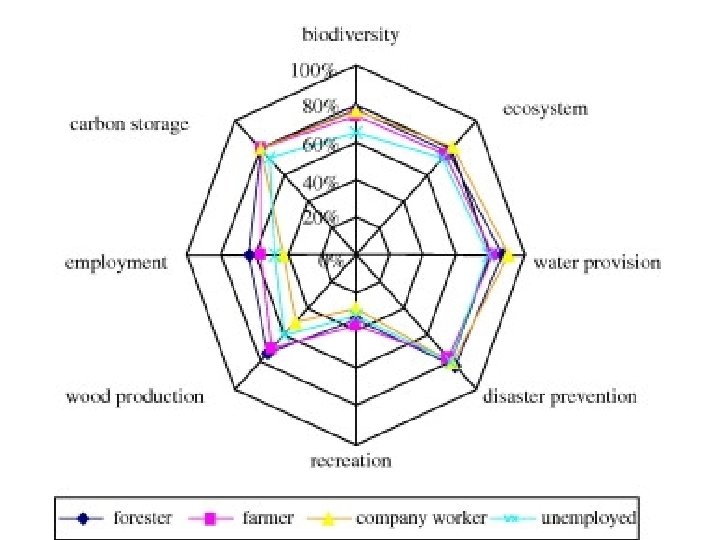
I. Concepts of Natural Resources and their Utilization I. IV. Forests I. IV. ������ h) What is the local and global importance of forests? ● Forests provide living space for plant and animal species, with the most biodiverse habitats among the terrestrial ecosystems. ● Forests also offer goods and services to the local and regional human populations all over the world. They protect soils, regulate and buffer the local and regional water and energy balance, providing groundwater, atmospheric humidity and contributing to local air circulation and O 2. ● But, forests have disappeared since the Agricultural Revolution some 5000 years ago, but especially during the last 50 years due to improved technologies and increasing population. h) �� ����������� ������ ? ● ������������ ������� , ������������ �����. ● ���������� ��������� , ������������ ������������ , ������� ����� , ������������������ , ����� O 2. ● ������ , ��� ������ ����� 5000 ���� , �������� ���� 50 ������������ , ��������������� ������.
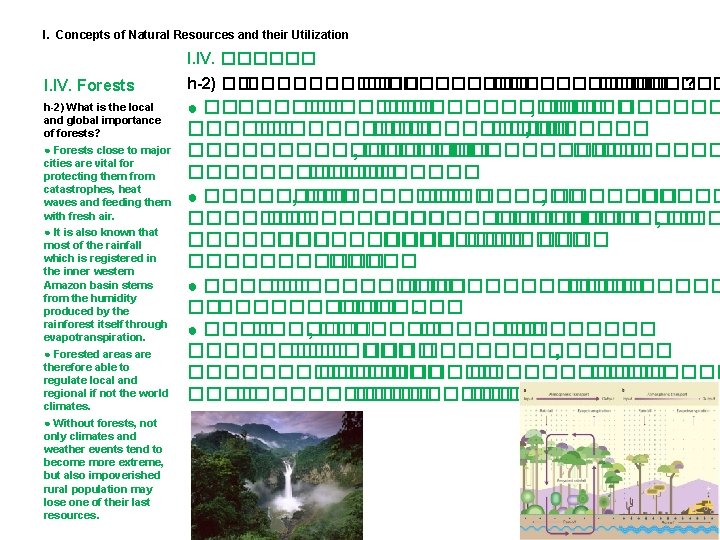
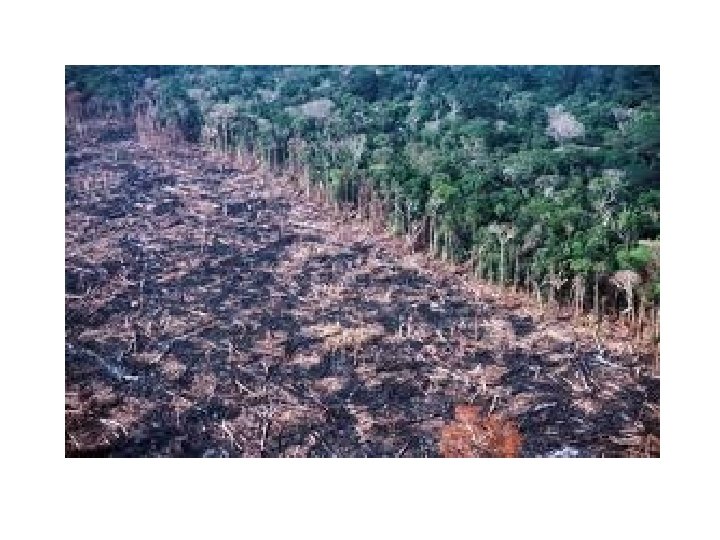
I. Concepts of Natural Resources and their Utilization I. IV. ������ I. IV. Forests h-2) �� ����������� ������ ? h-2) What is the local and global importance of forests? ● Forests close to major cities are vital for protecting them from catastrophes, heat waves and feeding them with fresh air. ● It is also known that most of the rainfall which is registered in the inner western Amazon basin stems from the humidity produced by the rainforest itself through evapotranspiration. ● Forested areas are therefore able to regulate local and regional if not the world climates. ● Without forests, not only climates and weather events tend to become more extreme, but also impoverished rural population may lose one of their last resources. ● ������������� , �� ���������� , �� ���������� , ����������� ������ ● ���� , ������� �������������� , �� ���������� ������ ● ����������� ������������. ● ������ , ������������ ������� , ������������ �������������.
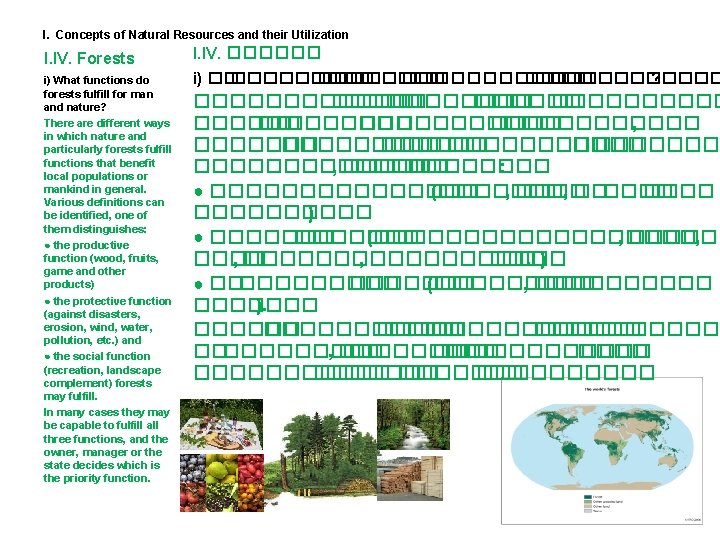
I. Concepts of Natural Resources and their Utilization I. IV. Forests i) What functions do forests fulfill for man and nature? There are different ways in which nature and particularly forests fulfill functions that benefit local populations or mankind in general. Various definitions can be identified, one of them distinguishes: ● the productive function (wood, fruits, game and other products) ● the protective function (against disasters, erosion, wind, water, pollution, etc. ) and ● the social function (recreation, landscape complement) forests may fulfill. In many cases they may be capable to fulfill all three functions, and the owner, manager or the state decides which is the priority function. I. IV. ������ i) �� �������� ������� ? �������� �������� �������� , ����������� �� ������������� , �������� : ● ������� (������� , ������ ) ● ������� (������� , ������ , ������ ���. �) ● ������� (����� , ������� ). ����������� ������ , ����� �� ����������� ������
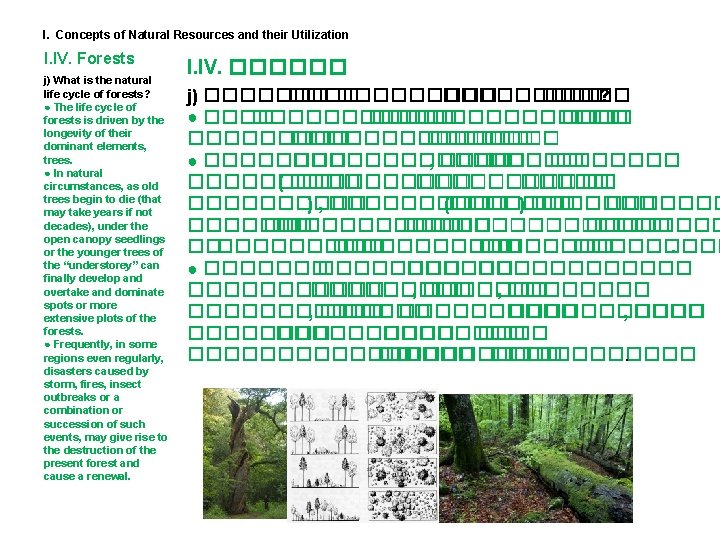
I. Concepts of Natural Resources and their Utilization I. IV. Forests j) What is the natural life cycle of forests? ● The life cycle of forests is driven by the longevity of their dominant elements, trees. ● In natural circumstances, as old trees begin to die (that may take years if not decades), under the open canopy seedlings or the younger trees of the “understorey” can finally develop and overtake and dominate spots or more extensive plots of the forests. ● Frequently, in some regions even regularly, disasters caused by storm, fires, insect outbreaks or a combination or succession of such events, may give rise to the destruction of the present forest and cause a renewal. I. IV. ������ j) ��������� ����� ? ● ���������� ������ ���� ● ������������� , ����� �� �������� ( �������� �� ����� ) , ����� (������� ) ������� �� ����������������� �����. ● ������� ������������ , �������� , �� ���������� , �������� ��������� ���������.
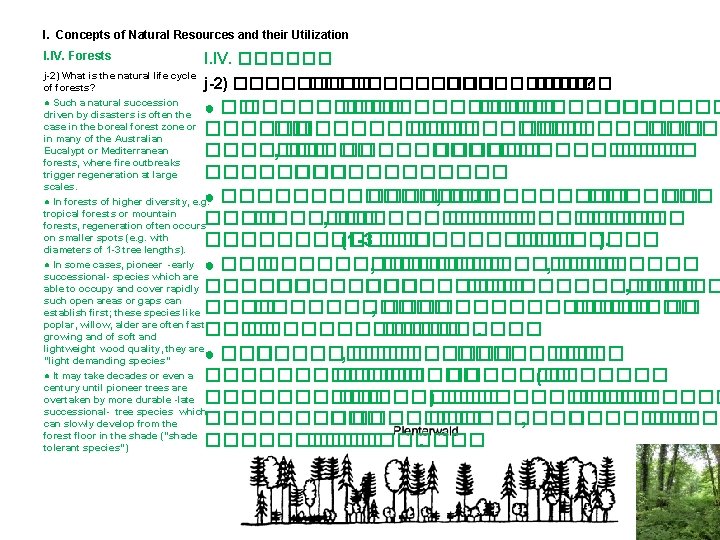
I. Concepts of Natural Resources and their Utilization I. IV. Forests I. IV. ������ j-2) What is the natural life cycle of forests? ● Such a natural succession driven by disasters is often the case in the boreal forest zone or in many of the Australian Eucalypt or Mediterranean forests, where fire outbreaks trigger regeneration at large scales. ● In forests of higher diversity, e. g. tropical forests or mountain forests, regeneration often occurs on smaller spots (e. g. with diameters of 1 -3 tree lengths). ● In some cases, pioneer -early successional- species which are able to occupy and cover rapidly such open areas or gaps can establish first; these species like poplar, willow, alder are often fast growing and of soft and lightweight wood quality, they are “light demanding species” ● It may take decades or even a century until pioneer trees are overtaken by more durable -late successional- tree species which can slowly develop from the forest floor in the shade (“shade tolerant species”) j-2) ��������� ����� ? ● �� ������������ ������ �� ���������� ������� , ��������� �������� ● ������� , ������� �� ������� , ������������ (1 -3 ��������� ). ● ������� , ��������� , ��������� ������ , �������� ������� �����. ● ��������� , ����� �������� ������� (��������� ) ���������� �� ������� , ������� �����.
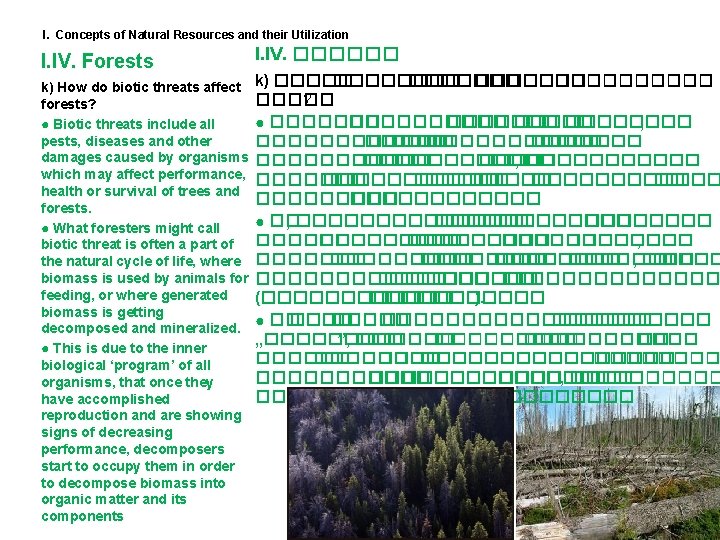
I. Concepts of Natural Resources and their Utilization I. IV. Forests k) How do biotic threats affect forests? ● Biotic threats include all pests, diseases and other damages caused by organisms which may affect performance, health or survival of trees and forests. ● What foresters might call biotic threat is often a part of the natural cycle of life, where biomass is used by animals for feeding, or where generated biomass is getting decomposed and mineralized. ● This is due to the inner biological ‘program’ of all organisms, that once they have accomplished reproduction and are showing signs of decreasing performance, decomposers start to occupy them in order to decompose biomass into organic matter and its components I. IV. ������ k) �������� ����� ? ● ���������� ���� , ����������������� , ��������� �� ������������ ● �� , ���������� ��������� �������� , ��������� ���� , �� ������� ������� (������ ). ● �� ���������� , , ���� ’’, ����������� �������������� ������� , ������� �������
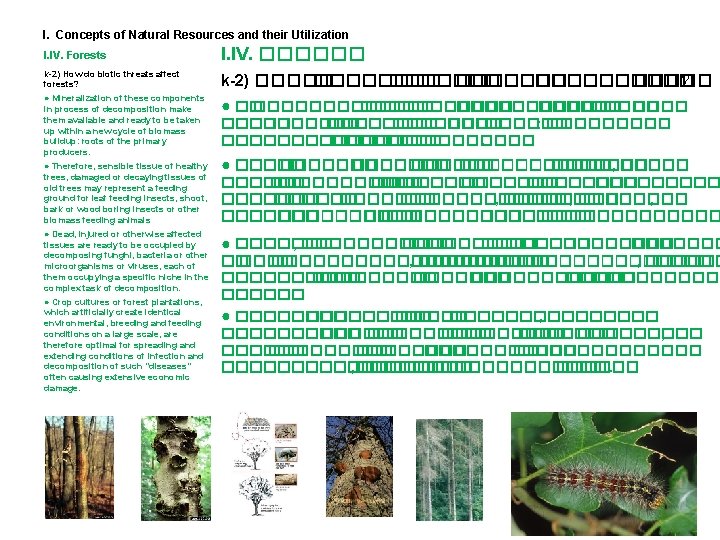
I. Concepts of Natural Resources and their Utilization I. IV. Forests I. IV. ������ k-2) How do biotic threats affect forests? k-2) �������� ����� ? ● Mineralization of these components in process of decomposition make them available and ready to be taken up within a new cycle of biomass buildup: roots of the primary producers. ● �� ����������� ������ ● Therefore, sensible tissue of healthy trees, damaged or decaying tissues of old trees may represent a feeding ground for leaf feeding insects, shoot, bark or wood boring insects or other biomass feeding animals ● Dead, injured or otherwise affected tissues are ready to be occupied by decomposing funghi, bacteria or other microorganisms or viruses, each of them occupying a specific niche in the complex task of decomposition. ● Crop cultures or forest plantations, which artificially create identical environmental, breeding and feeding conditions on a large scale, are therefore optimal for spreading and extending conditions of infection and decomposition of such “diseases” often causing extensive economic damage. ������� ������ : �������������. ● ������� ������� , ������ �� ��������� �������� , ������� , ���������� ������� ● ������� , ������ ������� �� ���������� , ���������� ����������� ������. ● ��������� �� ������� , ���������� ������� , ����������� ������������ , ������� ������.
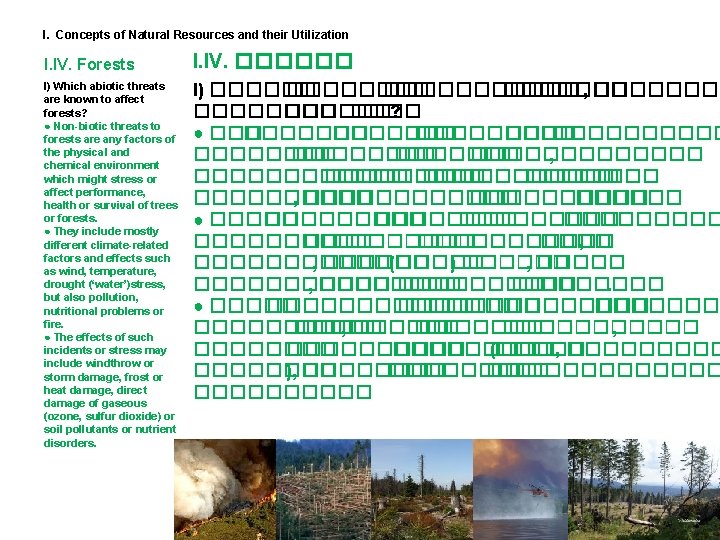
I. Concepts of Natural Resources and their Utilization I. IV. Forests I. IV. ������ l) Which abiotic threats are known to affect forests? ● Non-biotic threats to forests are any factors of the physical and chemical environment which might stress or affect performance, health or survival of trees or forests. ● They include mostly different climate-related factors and effects such as wind, temperature, drought (‘water’)stress, but also pollution, nutritional problems or fire. ● The effects of such incidents or stress may include windthrow or storm damage, frost or heat damage, direct damage of gaseous (ozone, sulfur dioxide) or soil pollutants or nutrient disorders. l) �������� ������� , �������� ? ● �������� ����� �� ������� , ������������ �� ������ , ������ ������ ● ��������� ����������� , ������ (����� ) ������ , ����������� , ����������. ● ������������ ����� ����� , ������� , ���������� (����� , ����� ), ��������� �� ����������
I. Concepts of Natural Resources and their Utilization I. IV. Forests I. IV. ������ l-2) Which abiotic threats l-2) �������� ������� , ������� are known to affect ������ ? forests? ● ��������� ● Once severely subjected to one of these ����������� , ������ stressors, trees and other ������������ ecosystem components ����� ���� may become less resilient ������ and subjected to the ����� �� ������. attack of decomposers, ● �������� ������ i. e. pests or diseases. ● According to the ������ ����� specific conditions trees ��������� may react with responding to the threat ��������� ����� and combating the initial ������������ and possible secondary �����. attacks, e. g. by isolating ����� the wound and building ● ������ �� �������� up boundaries between ����� �� ������� , �� healthy and infected portions of the tree. ������. ● But if the condition of the tree is critical or if the attack(s) is too overwhelming, the tree may die. Course: Concepts of Applied Ecology, sustainable Forest, Natural Resources and Biodiversity Management Joachim PUHE, Waldemar SCHMIDT