
Courageous Conversations Marta Codina Area President May 2017


- Slides: 21
Courageous Conversations Marta Codina Area President May 2017 © 2015 Wells Fargo Bank, N. A. All rights reserved. Internal use.
Agenda § Background § Mastering D&I conversation fundamentals – Identifying non-inclusive behaviors – Addressing non-inclusive behaviors – Engaging in conversations about D&I § Practice § Debrief/What Will Be Your Do? 2
Background 3
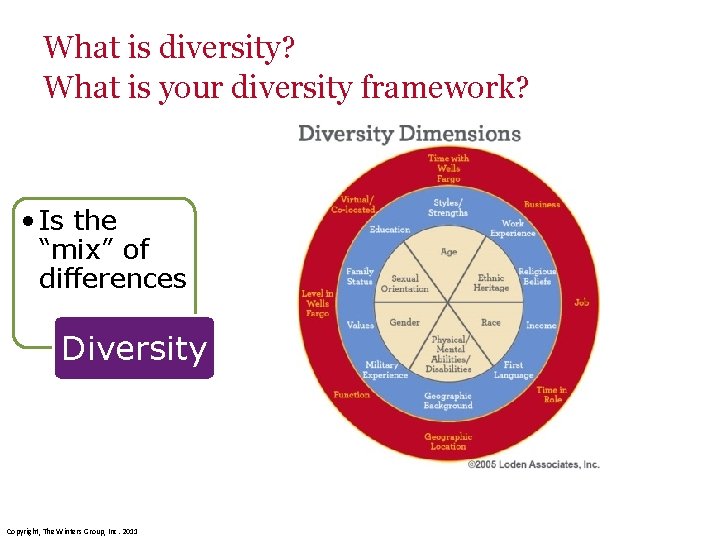
What is diversity? What is your diversity framework? • Is the “mix” of differences Diversity Copyright, The Winters Group, Inc. 2011
What is a courageous conversation? A “courageous conversation” about diversity & inclusion is one that is often difficult to have but necessary, and when done effectively, can have a dramatic impact on how we lead ourselves, the team or the business. It requires us to step out of our comfort zone to discuss a topic that might well cause an emotional response. While often avoided, these conversations can be instrumental in building an inclusive workplace. 5
Human Nature Do you recognize any of these common human tendencies? à We go to great lengths to avoid any kind of disagreement or confrontation and to keep conversations even-keeled. à We really like to be liked most or all of the time and therefore avoid conversations that endanger this need. à We rather choose to postpone, avoid, deny or rationalize something than address it and risk upsetting someone.
Why Courageous Conversations? • Decrease blind spots and self-deception • Provide a diversity of perspectives • Strengthen trust, reliability, and accountability • Unravel the ‘why’ of unmet expectations
Benefits of Courageous Conversations § Helps you understand other’s perspectives, and broadens your diversity and inclusion awareness and understanding § Helps you gain understanding of intent and impact § Helps you address biases and non-inclusive behaviors § Helps you be open to and receptive of feedback § Helps you live up to the kind of culture we want at our company § Enables you to have more effective, productive and collaborative conversations up, down and across organizational levels § Builds transferable skills you can use inside and outside of the workplace
Mastering D&I conversation fundamentals 9
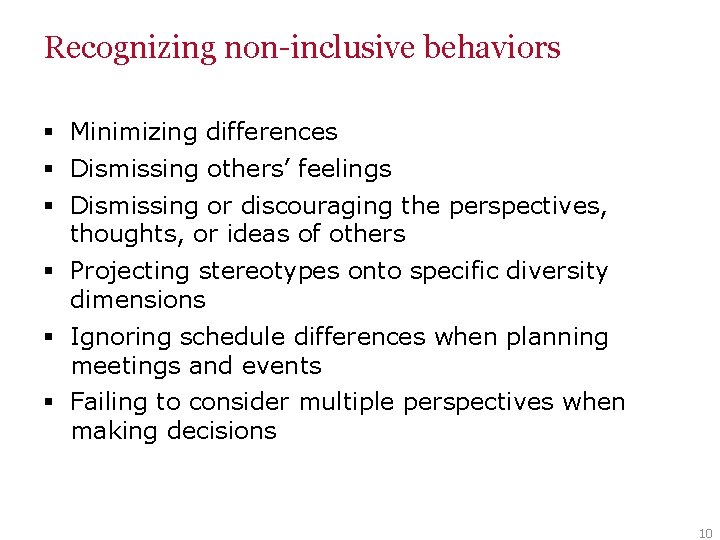
Recognizing non-inclusive behaviors § Minimizing differences § Dismissing others’ feelings § Dismissing or discouraging the perspectives, thoughts, or ideas of others § Projecting stereotypes onto specific diversity dimensions § Ignoring schedule differences when planning meetings and events § Failing to consider multiple perspectives when making decisions 10
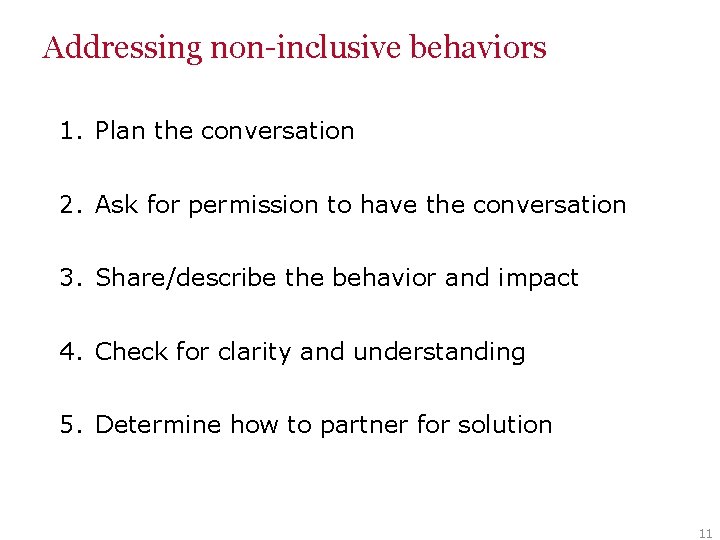
Addressing non-inclusive behaviors 1. Plan the conversation 2. Ask for permission to have the conversation 3. Share/describe the behavior and impact 4. Check for clarity and understanding 5. Determine how to partner for solution 11
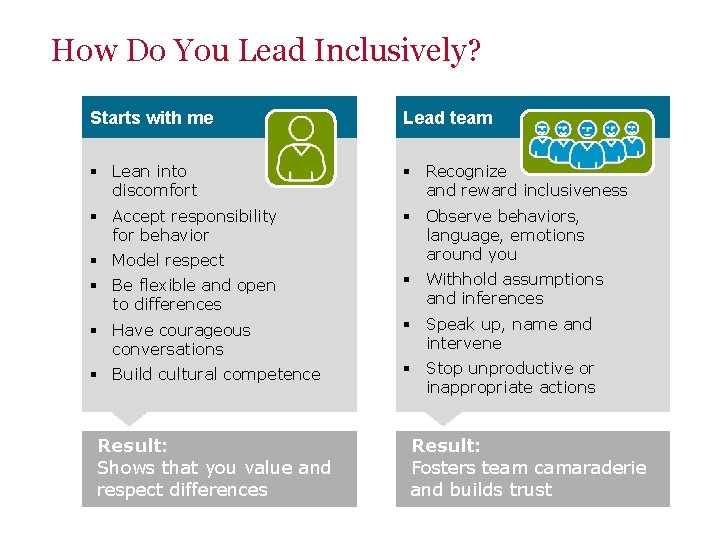
How Do You Lead Inclusively? Starts with me Lead team § Lean into discomfort § Recognize and reward inclusiveness § Accept responsibility for behavior § Observe behaviors, language, emotions around you § Model respect § Be flexible and open to differences § Have courageous conversations § Build cultural competence Result: Shows that you value and respect differences § Withhold assumptions and inferences § Speak up, name and intervene § Stop unproductive or inappropriate actions Result: Fosters team camaraderie and builds trust
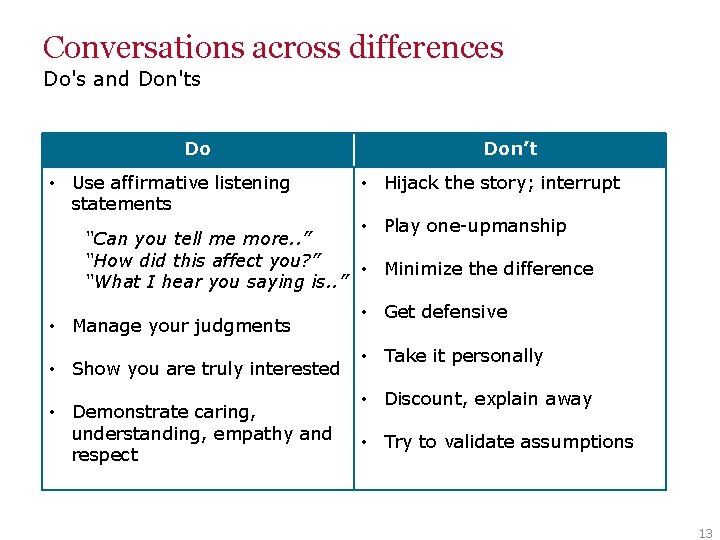
Conversations across differences Do's and Don'ts Do • Use affirmative listening statements Don’t • Hijack the story; interrupt • Play one-upmanship “Can you tell me more. . ” “How did this affect you? ” • Minimize the difference “What I hear you saying is. . ” • Manage your judgments • Show you are truly interested • Demonstrate caring, understanding, empathy and respect • Get defensive • Take it personally • Discount, explain away • Try to validate assumptions 13
Experiential learning Practice 14
Ground Rules § Confidentiality § Share what feels comfortable yet challenge self § Seek to understand § Give each other space/grace § Be patient § Listen 15
Setting up a Practice Courageous Conversations 16
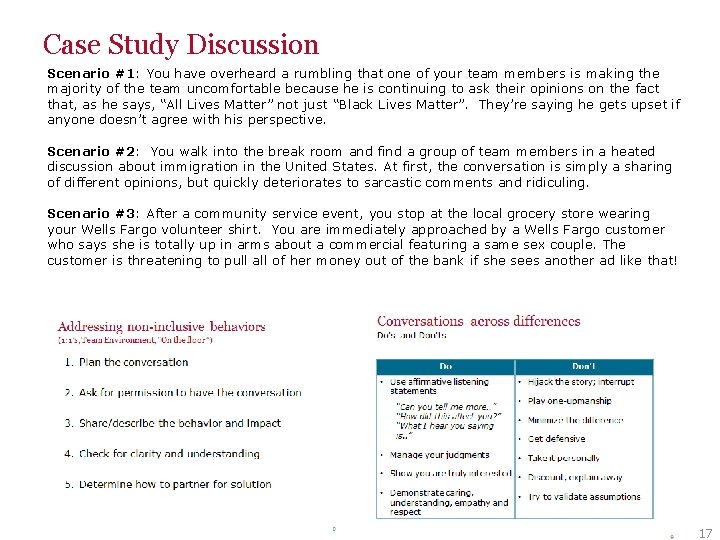
Case Study Discussion Scenario #1: You have overheard a rumbling that one of your team members is making the majority of the team uncomfortable because he is continuing to ask their opinions on the fact that, as he says, “All Lives Matter” not just “Black Lives Matter”. They’re saying he gets upset if anyone doesn’t agree with his perspective. Scenario #2: You walk into the break room and find a group of team members in a heated discussion about immigration in the United States. At first, the conversation is simply a sharing of different opinions, but quickly deteriorates to sarcastic comments and ridiculing. Scenario #3: After a community service event, you stop at the local grocery store wearing your Wells Fargo volunteer shirt. You are immediately approached by a Wells Fargo customer who says she is totally up in arms about a commercial featuring a same sex couple. The customer is threatening to pull all of her money out of the bank if she sees another ad like that! 17
Feedback & application 18
Courageous Conversations Call to Action/What will be your do? § What is one key learning? § What will you do more of and what will you do less of? § How can you bring this information forward?
Q&A
“ Courage doesn’t always roar. Sometimes courage is the little voice at the end of the day that says I’ll try again tomorrow. ” − Mary Ann Radmacher, author