
County of Los Angeles Department of Mental Health
- Slides: 9
County of Los Angeles – Department of Mental Health MHSA 3 Year Program and Expenditure Plan Fiscal Years 2017 -18, 2018 -19 and 2019 -20 System Leadership Team Presentation September 21, 2016 Debbie Innes-Gomberg, Ph. D. , Program Manager III Program Support Bureau – MSA Implementation and Outcomes Division
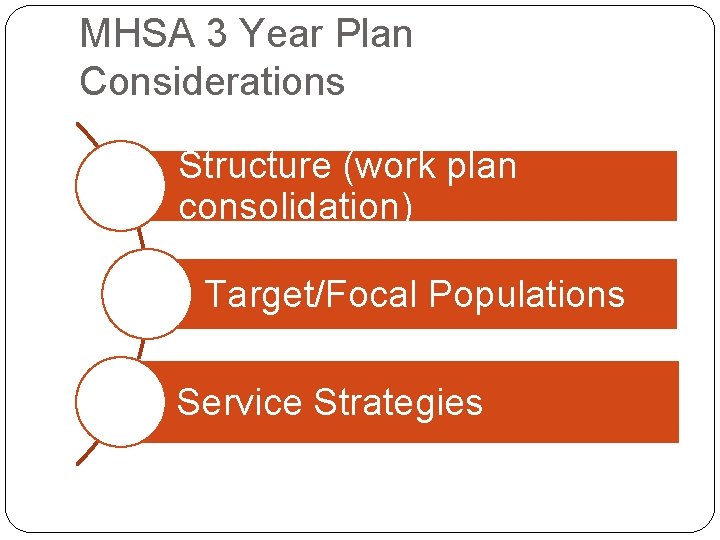
MHSA 3 Year Plan Considerations Structure (work plan consolidation) Target/Focal Populations Service Strategies
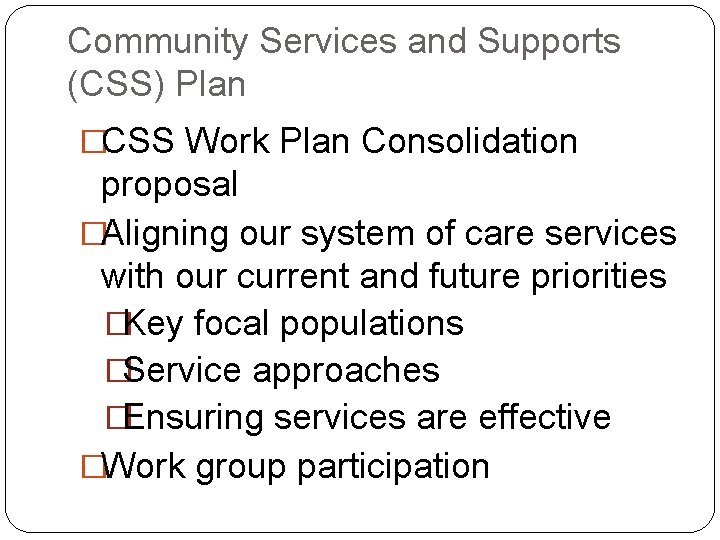
Community Services and Supports (CSS) Plan �CSS Work Plan Consolidation proposal �Aligning our system of care services with our current and future priorities �Key focal populations �Service approaches �Ensuring services are effective �Work group participation
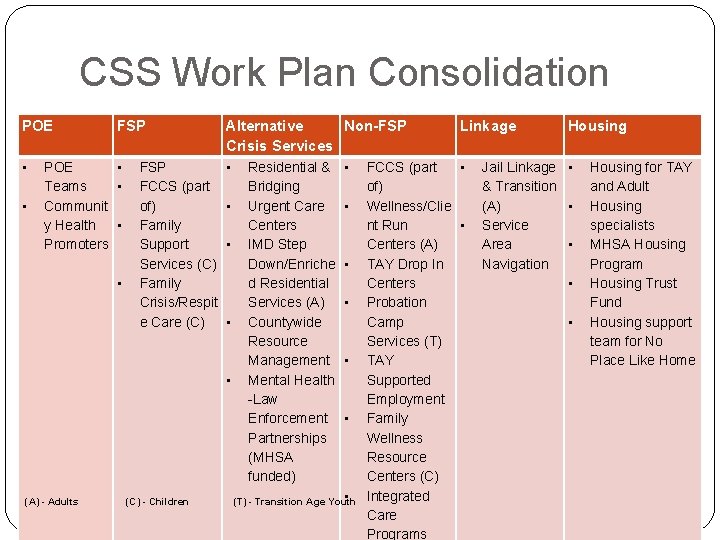
CSS Work Plan Consolidation �With each new work plan that has been added to the General Systems Development (GSD) part of the Community Services and Supports Plan, specific funding categories have been added which have created fiscal and programmatic challenges for our provider network. �In order to address this and to move in a direction that will be necessary in the future, the Department is proposing to consolidate GSD work plans.
CSS Work Plan Consolidation POE • • FSP POE • Teams • Communit y Health • Promoters • Alternative Non-FSP Crisis Services • Residential & • FCCS (part FSP FCCS (part of) • Family Support • Services (C) Family Crisis/Respit e Care (C) • • Bridging Urgent Care Centers IMD Step Down/Enriche d Residential Services (A) Countywide Resource Management Mental Health -Law Enforcement Partnerships (MHSA funded) • • • (A) - Adults (C) - Children (T) - Transition Age Youth Linkage • of) Wellness/Clie nt Run • Centers (A) TAY Drop In Centers Probation Camp Services (T) TAY Supported Employment Family Wellness Resource Centers (C) Integrated Care Programs Housing Jail Linkage • & Transition (A) • Service Area • Navigation • • Housing for TAY and Adult Housing specialists MHSA Housing Program Housing Trust Fund Housing support team for No Place Like Home
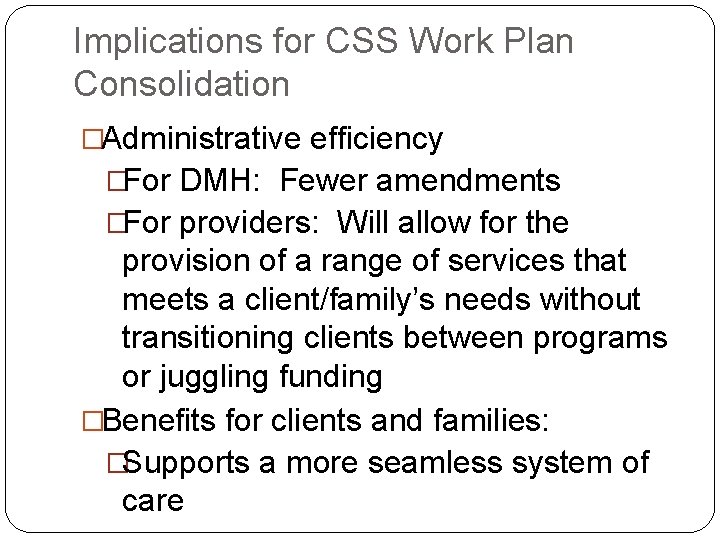
Implications for CSS Work Plan Consolidation �Administrative efficiency �For DMH: Fewer amendments �For providers: Will allow for the provision of a range of services that meets a client/family’s needs without transitioning clients between programs or juggling funding �Benefits for clients and families: �Supports a more seamless system of care
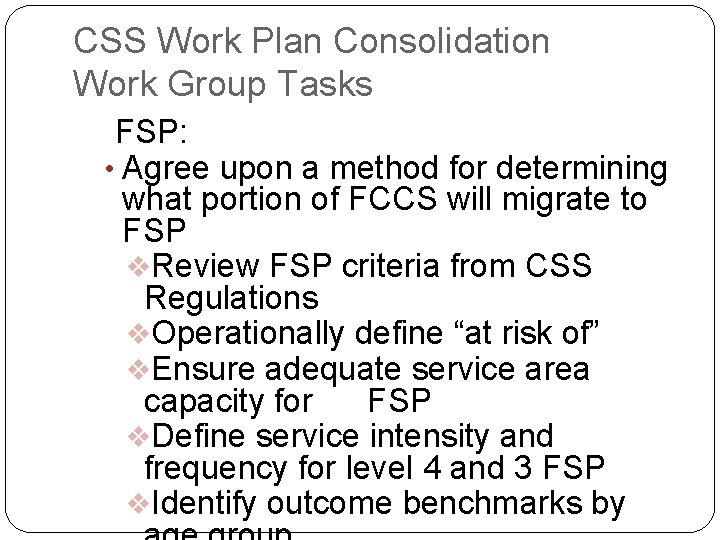
CSS Work Plan Consolidation Work Group Tasks FSP: • Agree upon a method for determining what portion of FCCS will migrate to FSP v. Review FSP criteria from CSS Regulations v. Operationally define “at risk of” v. Ensure adequate service area capacity for FSP v. Define service intensity and frequency for level 4 and 3 FSP v. Identify outcome benchmarks by
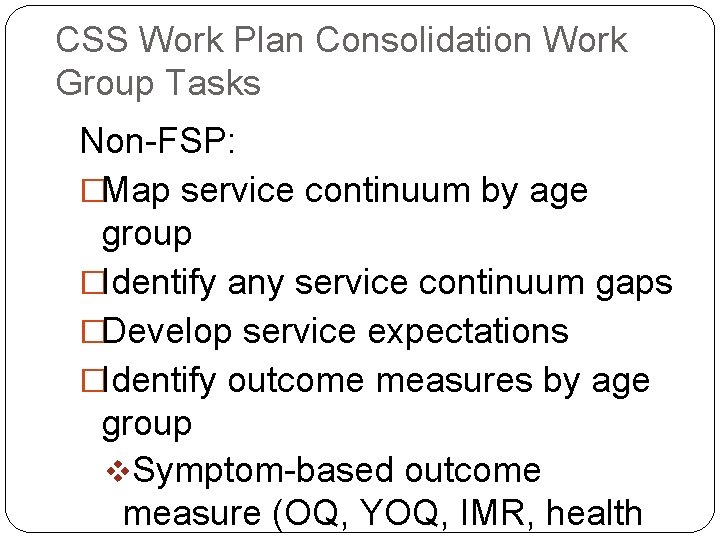
CSS Work Plan Consolidation Work Group Tasks Non-FSP: �Map service continuum by age group �Identify any service continuum gaps �Develop service expectations �Identify outcome measures by age group v. Symptom-based outcome measure (OQ, YOQ, IMR, health
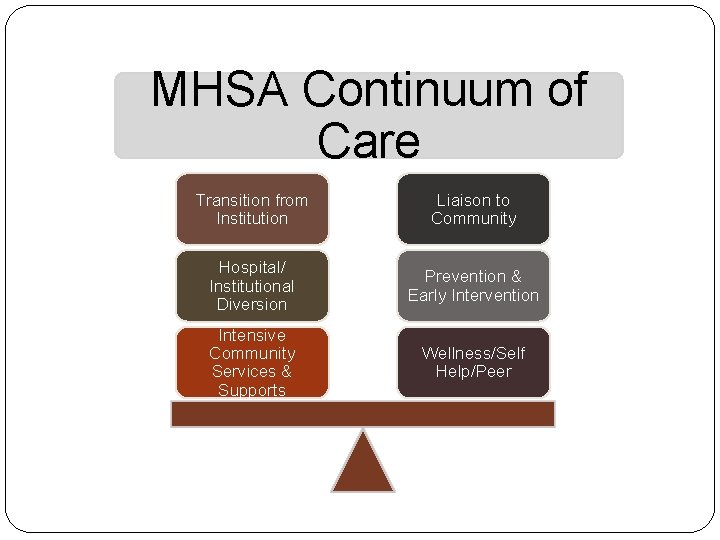
MHSA Continuum of Care Transition from Institution Liaison to Community Hospital/ Institutional Diversion Prevention & Early Intervention Intensive Community Services & Supports Wellness/Self Help/Peer