
COUNTY AND CITY GOVERNMENTS County Government Counties carry
- Slides: 19
COUNTY AND CITY GOVERNMENTS
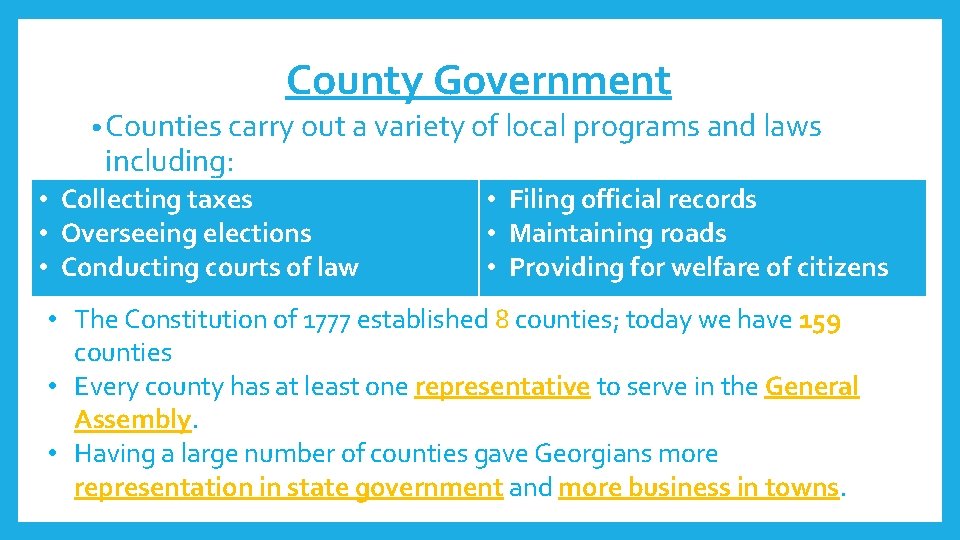
County Government • Counties carry out a variety of local programs and laws including: • Collecting taxes • Overseeing elections • Conducting courts of law • Filing official records • Maintaining roads • Providing for welfare of citizens • The Constitution of 1777 established 8 counties; today we have 159 counties • Every county has at least one representative to serve in the General Assembly. • Having a large number of counties gave Georgians more representation in state government and more business in towns.
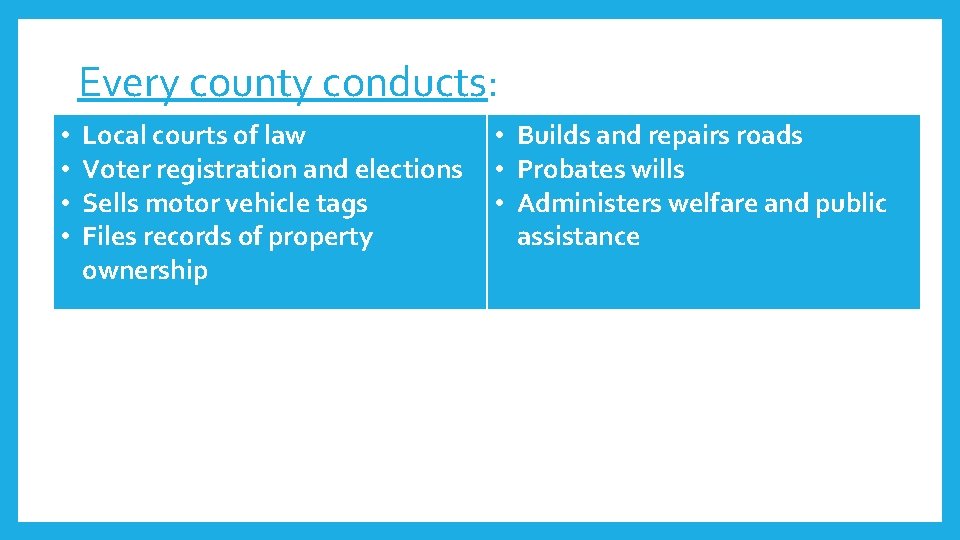
Every county conducts: • • Local courts of law Voter registration and elections Sells motor vehicle tags Files records of property ownership • Builds and repairs roads • Probates wills • Administers welfare and public assistance
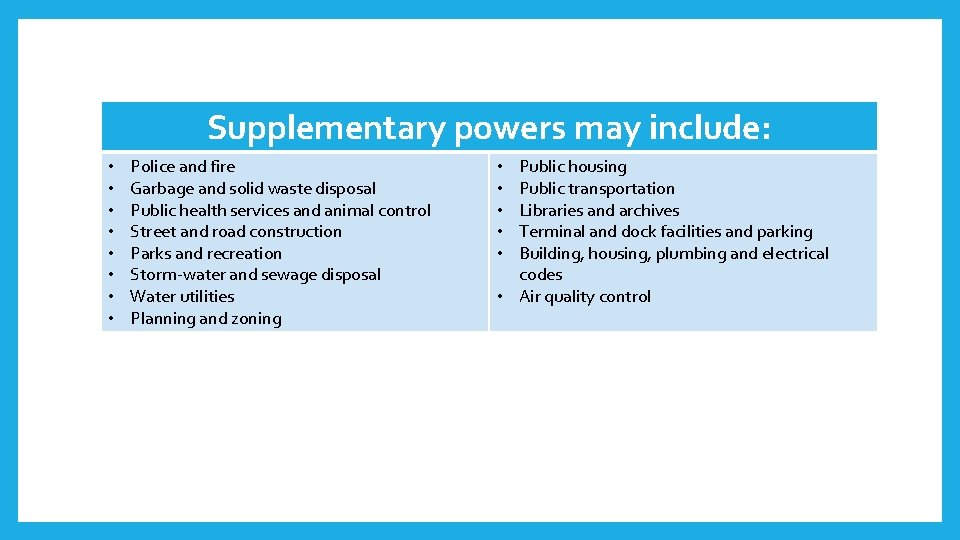
Supplementary powers may include: • • Police and fire Garbage and solid waste disposal Public health services and animal control Street and road construction Parks and recreation Storm-water and sewage disposal Water utilities Planning and zoning Public housing Public transportation Libraries and archives Terminal and dock facilities and parking Building, housing, plumbing and electrical codes • Air quality control • • •
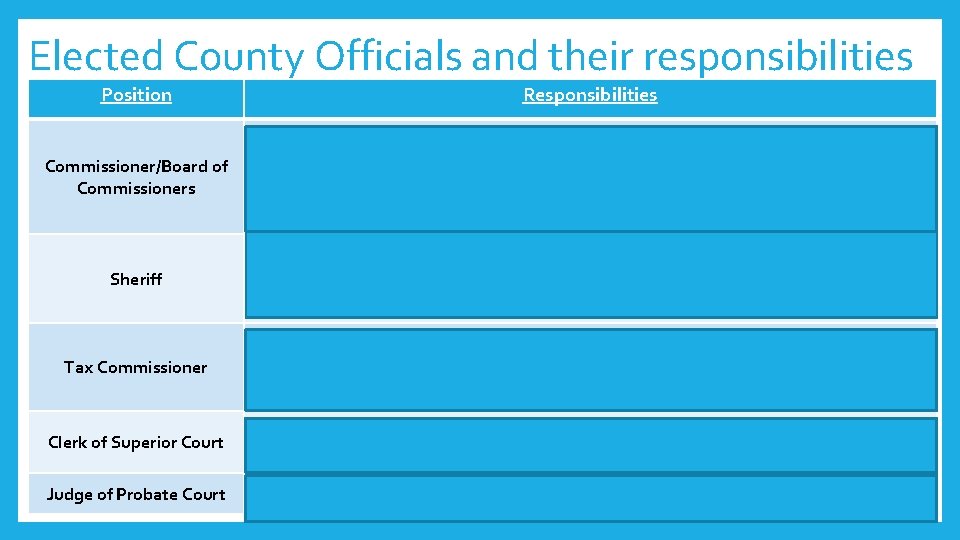
Elected County Officials and their responsibilities Position Commissioner/Board of Commissioners Responsibilities • • Finance programs and pay the salaries of constitutional officers Establishes police department County governing authority Adopt ordinances, resolutions, and regulations related to county affairs Sheriff • Enforces law • Maintains peace in the county and serves as jailer Tax Commissioner • Accountant for the county • Receives all tax returns and maintains tax records • collects and pays taxes Clerk of Superior Court • Record keeper • Maintains records and supervises registration for property transactions Judge of Probate Court • Oversees property deeds, marriage licenses, guardianships, wills, elections,
CITY GOVERNMENTS
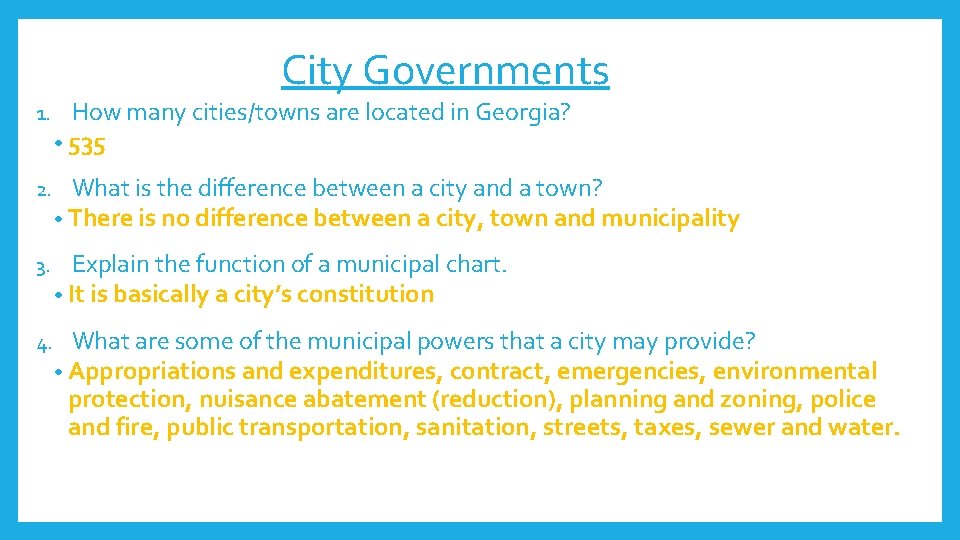
City Governments 1. How many cities/towns are located in Georgia? • 535 2. What is the difference between a city and a town? • There is no difference between a city, town and municipality 3. Explain the function of a municipal chart. • It is basically a city’s constitution 4. What are some of the municipal powers that a city may provide? • Appropriations and expenditures, contract, emergencies, environmental protection, nuisance abatement (reduction), planning and zoning, police and fire, public transportation, sanitation, streets, taxes, sewer and water.
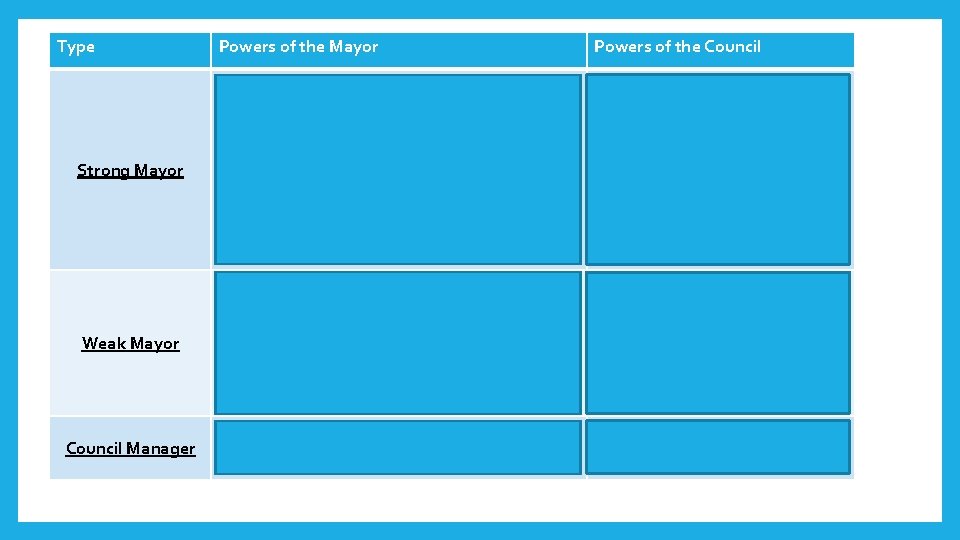
Type Strong Mayor Weak Mayor Council Manager Powers of the Mayor • • Chief executive officer (CEO) Daily operations Hire and firing City budget Contracts Makes appointments Can veto actions of city council Powers of the Council • Adopts ordinances and resolutions • May override the mayor’s veto • Shares duties with council • Mostly ceremonial w/ few executive powers • Limited role in appointments • • Day to day operations Appoints council committees City budget Confirm and fire department heads • Ceremonial- day to day operations are conducted by the City Manager • Sets city’s policy • Hires city manager
Special Purpose Districts 1. What is a special purpose district? • Government entities created to serve a specific function for the state or community. • They are usually headed by a governing board of non-elected officials 2. Examples of Special purpose districts are: • MARTA • Georgia Ports Authority • Local School Systems • Housing Authorities • Hartsfield Jackson International Airport. • Watch the video on Hartsfield Jackson Airport and find reasons and examples that a special-purpose district is needed.
HOW LOCAL GOVERNMENTS ARE FUNDED
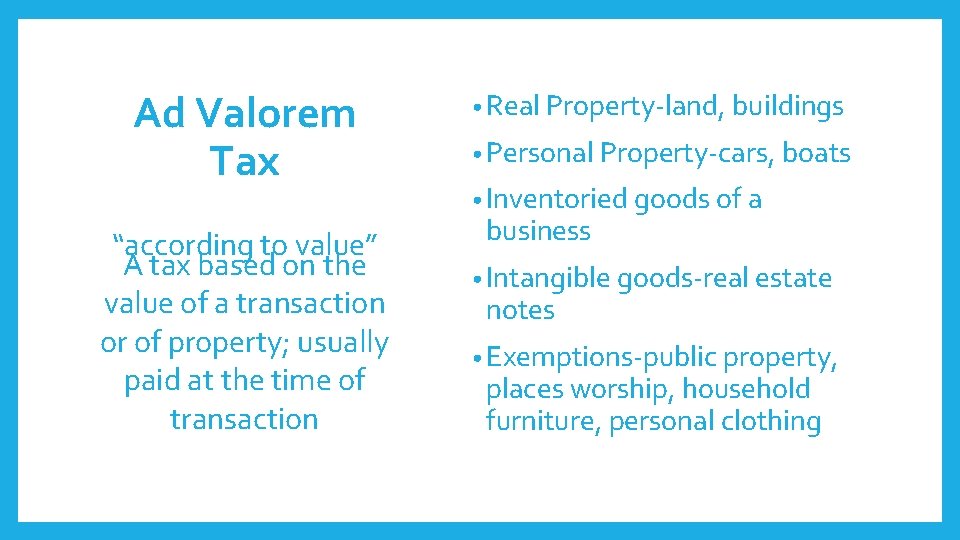
Ad Valorem Tax “according to value” A tax based on the value of a transaction or of property; usually paid at the time of transaction • Real Property-land, buildings • Personal Property-cars, boats • Inventoried goods of a business • Intangible goods-real estate notes • Exemptions-public property, places worship, household furniture, personal clothing
Sales and Use Tax A tax placed on the purchase, sale, rental, storage, use or consumption of tangible property. • Local Option Sales Tax (LOST)- used to reduce millage rate. • Special Purpose Local Option Sales Tax (SPLOST)-a tax on identified projects; referendum establishes purpose of tax, length of time the tax is in place, and amount of revenue desired. • sales tax for educational purposes (STEP) a one percent sales tax levied by boards of education for educational use only
Franchise Tax • Tax on electric, gas, telephone, cable television and other public utilities • Franchise fees are A tax placed on public utilities negotiated between the local government and the franchisee
Exise Tax A tax paid when purchases are made on a specific good, such a gasoline • Taxes on alcoholic beverages, insurance premiums, hotel-motel rooms, and rental cars
Regulatory Fees Mandatory fees that are required for a business or a professional to operate within a county • Business and professional fees
NON-TAX REVENUE
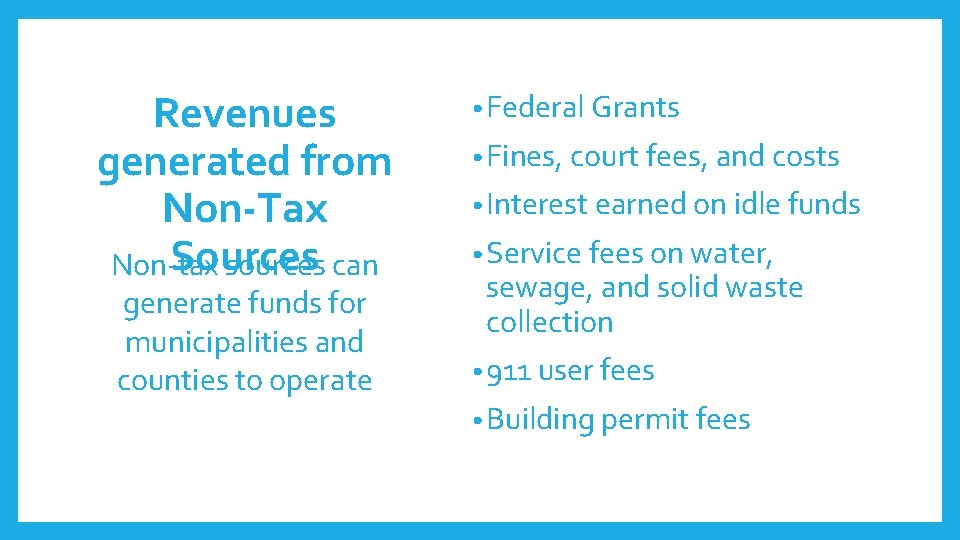
Revenues generated from Non-Tax Sources Non-tax sources can generate funds for municipalities and counties to operate • Federal Grants • Fines, court fees, and costs • Interest earned on idle funds • Service fees on water, sewage, and solid waste collection • 911 user fees • Building permit fees
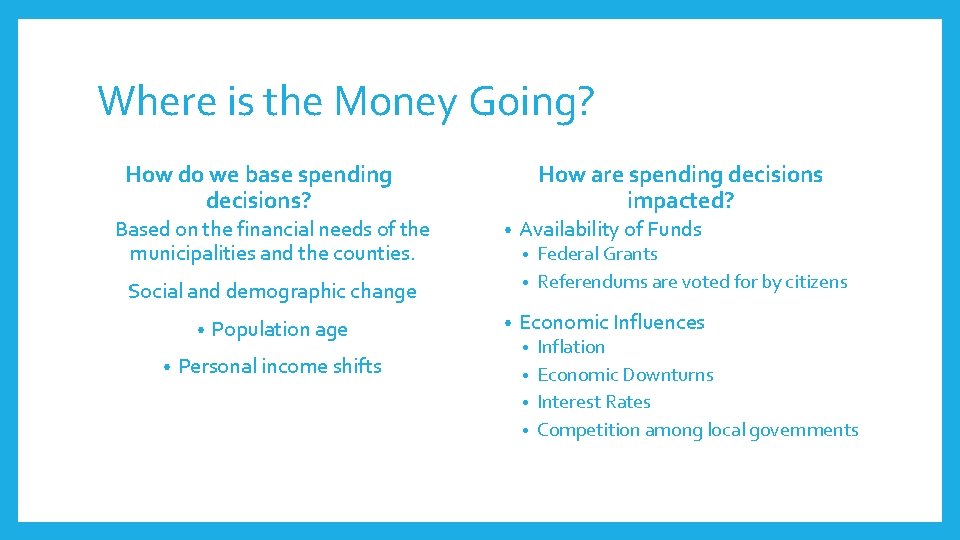
Where is the Money Going? How are spending decisions impacted? How do we base spending decisions? Based on the financial needs of the municipalities and the counties. • Federal Grants • Referendums are voted for by citizens • Social and demographic change • • Population age Personal income shifts Availability of Funds • Economic Influences Inflation • Economic Downturns • Interest Rates • Competition among local governments •