
Counters According to how they handle input transitions
- Slides: 23
Counters • According to how they handle input transitions – Synchronous – Asynchronous • According to counting sequence – Binary – Non-binary
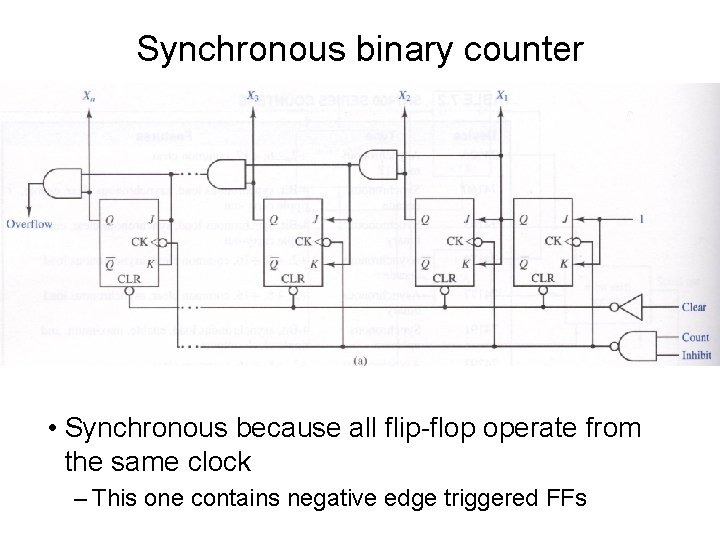
Synchronous binary counter • Synchronous because all flip-flop operate from the same clock – This one contains negative edge triggered FFs
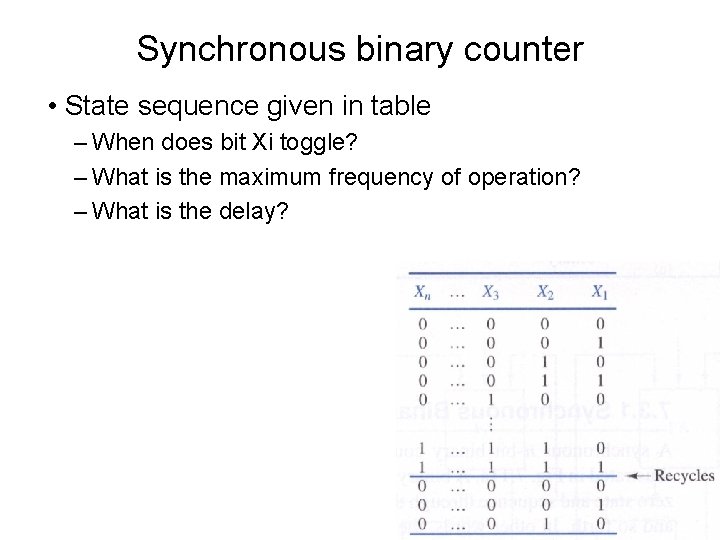
Synchronous binary counter • State sequence given in table – When does bit Xi toggle? – What is the maximum frequency of operation? – What is the delay?
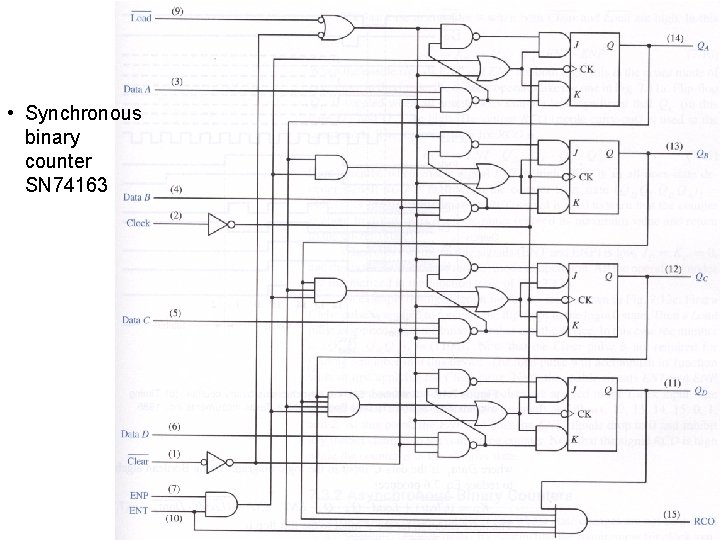
• Synchronous binary counter SN 74163
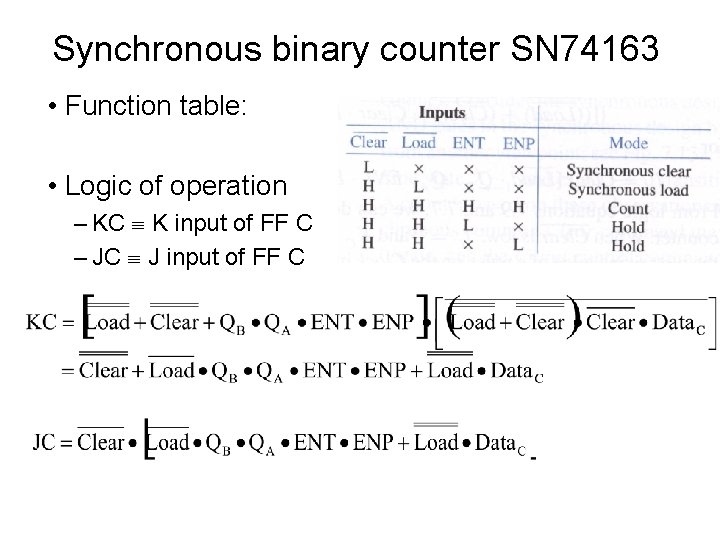
Synchronous binary counter SN 74163 • Function table: • Logic of operation – KC K input of FF C – JC J input of FF C
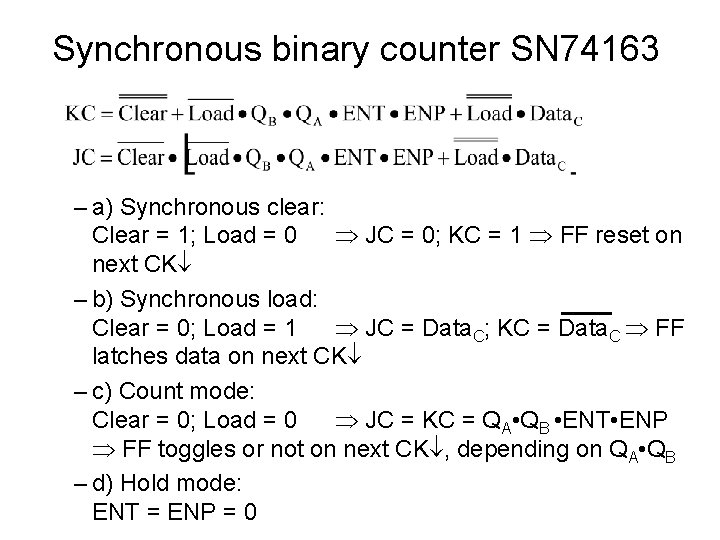
Synchronous binary counter SN 74163 – a) Synchronous clear: Clear = 1; Load = 0 JC = 0; KC = 1 FF reset on next CK – b) Synchronous load: Clear = 0; Load = 1 JC = Data. C; KC = Data. C FF latches data on next CK – c) Count mode: Clear = 0; Load = 0 JC = KC = QA • QB • ENT • ENP FF toggles or not on next CK , depending on QA • QB – d) Hold mode: ENT = ENP = 0
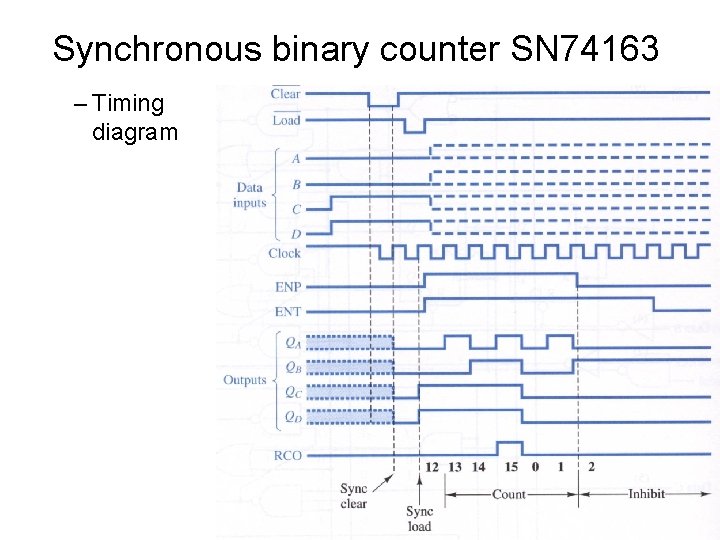
Synchronous binary counter SN 74163 – Timing diagram
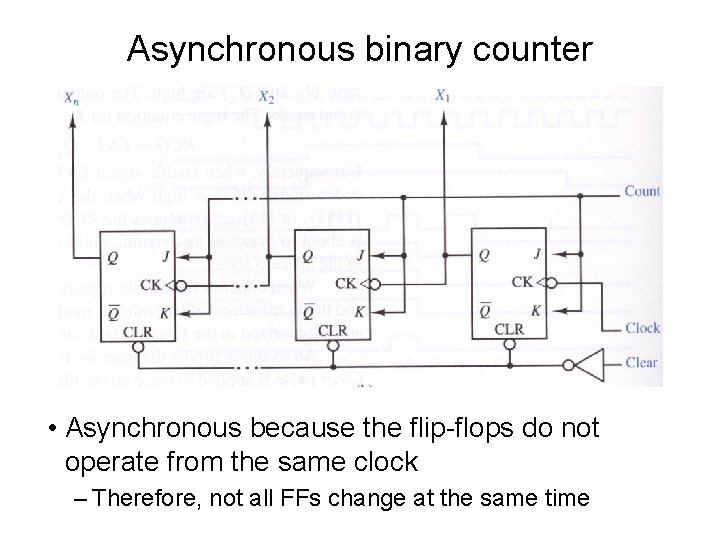
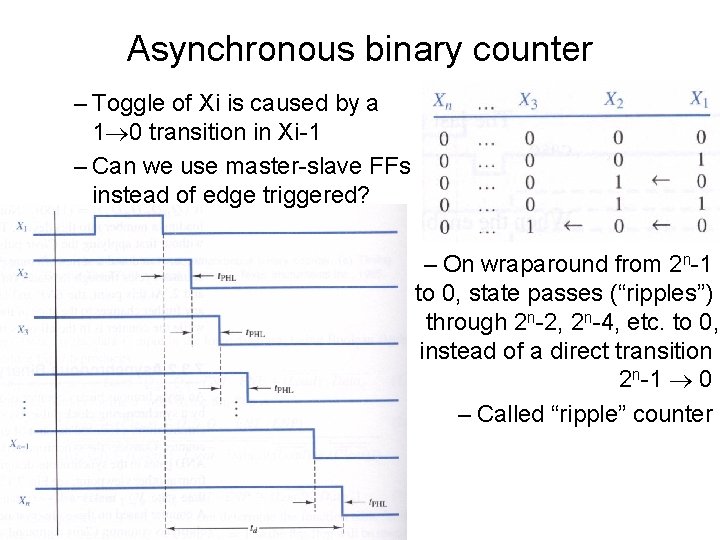
Asynchronous binary counter • Asynchronous because the flip-flops do not operate from the same clock – Therefore, not all FFs change at the same time
Asynchronous binary counter – Toggle of Xi is caused by a 1 0 transition in Xi-1 – Can we use master-slave FFs instead of edge triggered? – On wraparound from 2 n-1 to 0, state passes (“ripples”) through 2 n-2, 2 n-4, etc. to 0, instead of a direct transition 2 n-1 0 – Called “ripple” counter
Counters • Let the delay of 1 stage of a n-bit binary counter be – The synchronous counter must have a clock pulse period T ≥ n – The asynchronous counter can have a pulse period T≥ • If we don’t care about intermediate states, after starting in the same state, and applying – k pulses n wide to the synchronous counter – k pulses wide to the asynchronous counter Both counters will be in the same final state (after hold) – The asynchronous counter stages will trigger each other properly, even if multiple pulses present & racing through
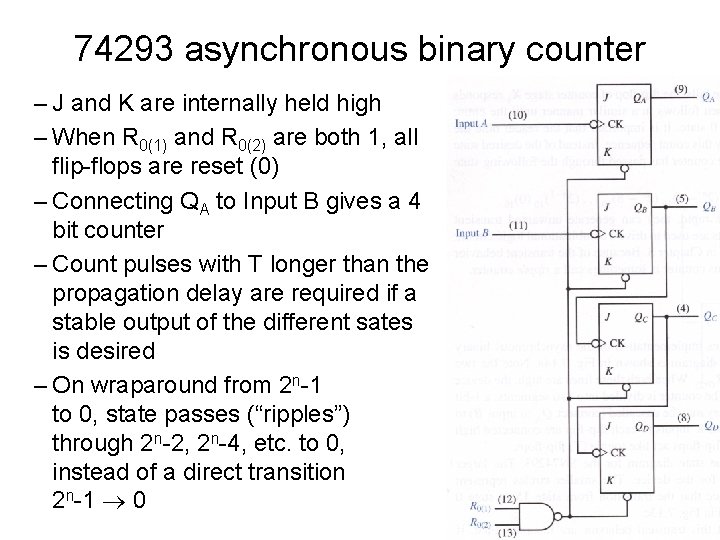
74293 asynchronous binary counter – J and K are internally held high – When R 0(1) and R 0(2) are both 1, all flip-flops are reset (0) – Connecting QA to Input B gives a 4 bit counter – Count pulses with T longer than the propagation delay are required if a stable output of the different sates is desired – On wraparound from 2 n-1 to 0, state passes (“ripples”) through 2 n-2, 2 n-4, etc. to 0, instead of a direct transition 2 n-1 0
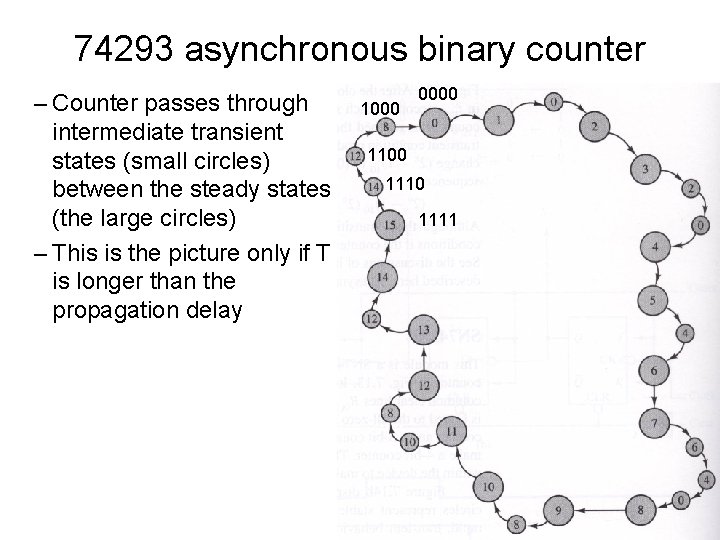
74293 asynchronous binary counter – Counter passes through intermediate transient states (small circles) between the steady states (the large circles) – This is the picture only if T is longer than the propagation delay 1000 0000 1110 1111
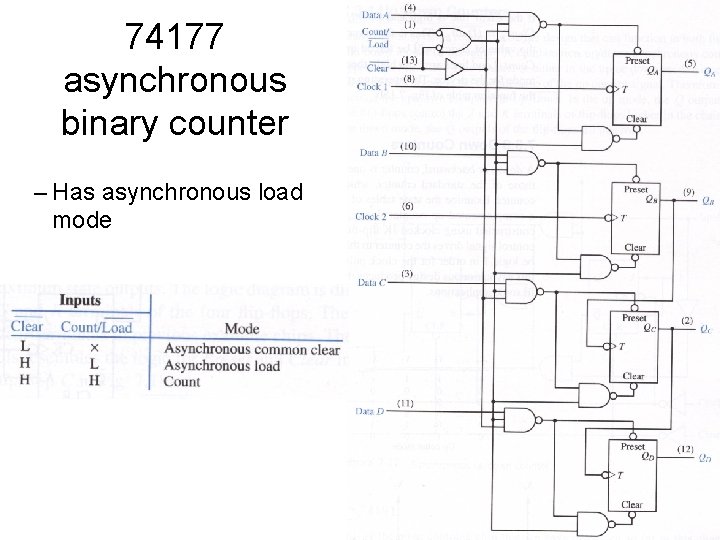
74177 asynchronous binary counter – Has asynchronous load mode
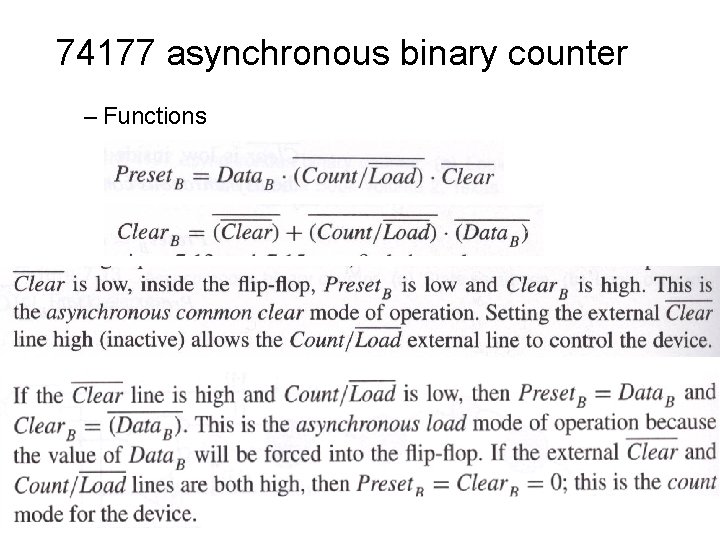
74177 asynchronous binary counter – Functions
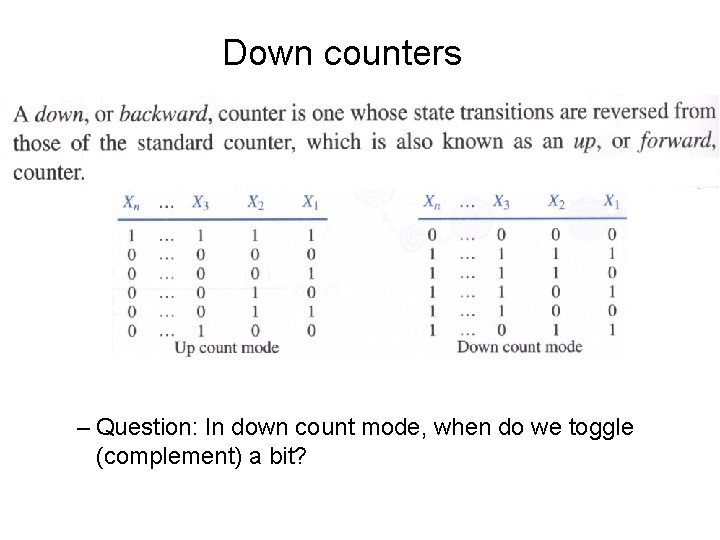
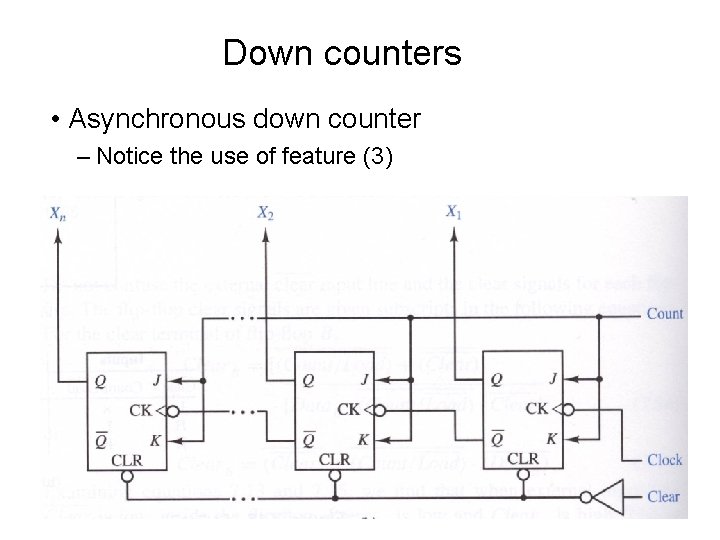
Down counters – Question: In down count mode, when do we toggle (complement) a bit?
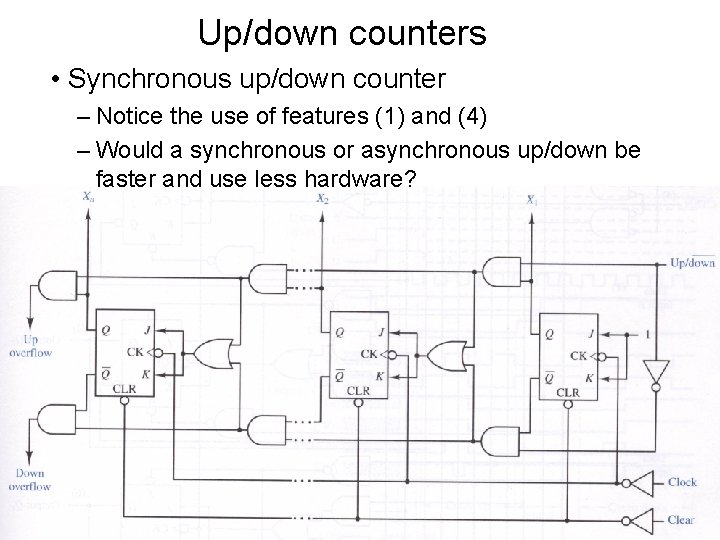
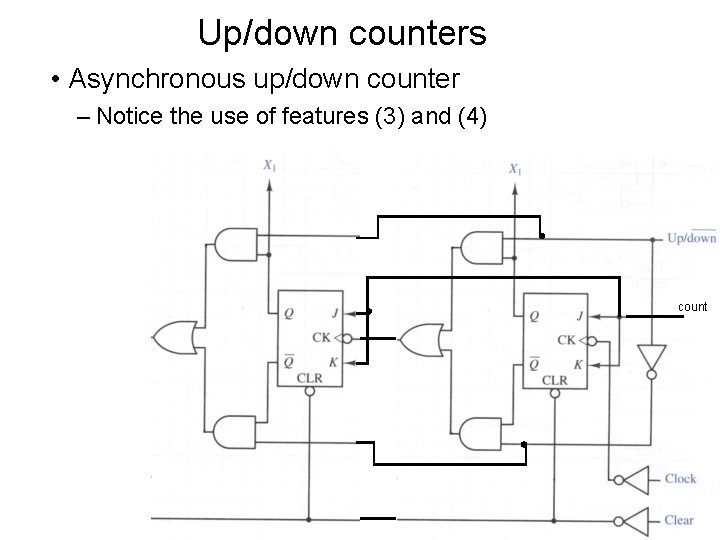
Down counters • Answer – (1) Only if the all the lower-order bits are 0 AND we decrement the counter (i. e. subtract 1) • Borrow propagates as long as the bits are zero: this feature is useful for the synchronous design – (2) LSB toggles on every count pulse – (3) A 0 1 transition in bit i toggles bit i+1 • This feature is useful in the asynchronous design – (4) If the up counter starts from state 0, and the down counter from 2 n-1, every state bit in the one is the complement of the corresponding bit in the other • This feature is useful in up/down counter design
Down counters • Asynchronous down counter – Notice the use of feature (3)
Up/down counters • Synchronous up/down counter – Notice the use of features (1) and (4) – Would a synchronous or asynchronous up/down be faster and use less hardware?
Up/down counters • Asynchronous up/down counter – Notice the use of features (3) and (4) count
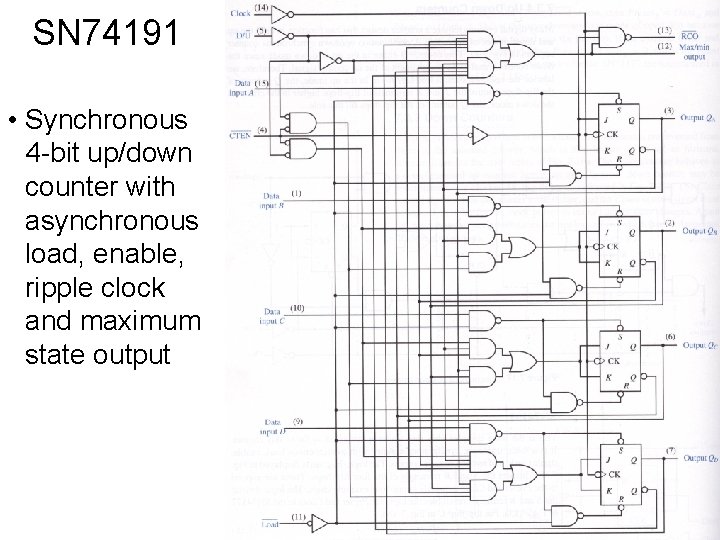
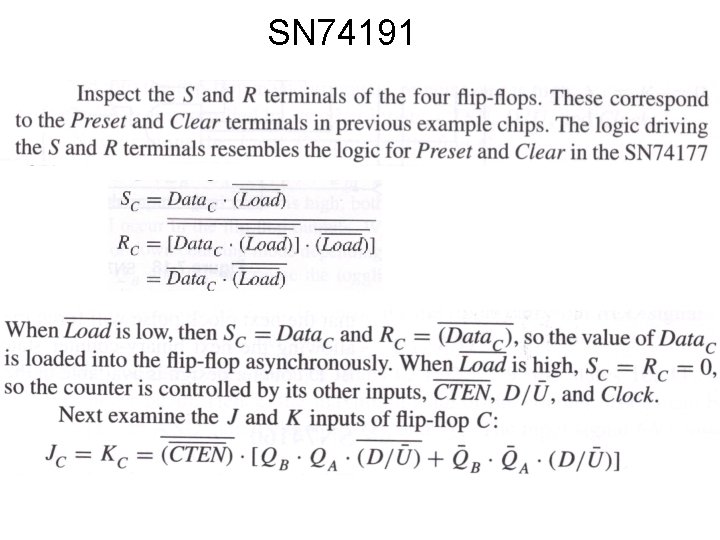
SN 74191 • Synchronous 4 -bit up/down counter with asynchronous load, enable, ripple clock and maximum state output
SN 74191
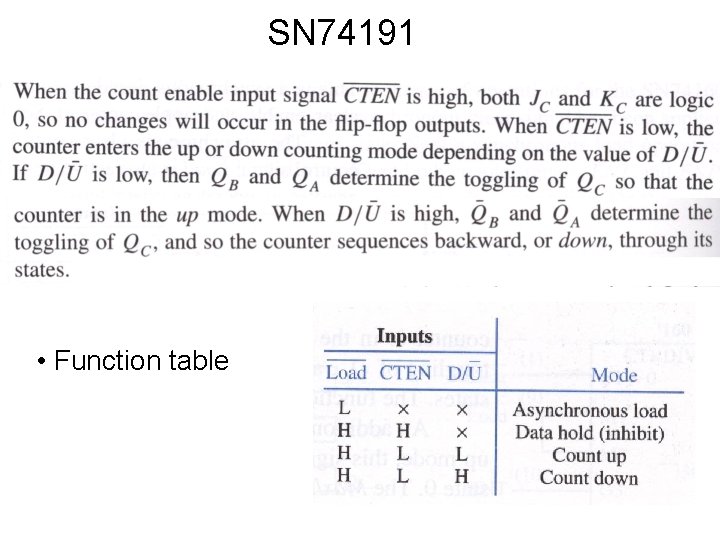
SN 74191 • Function table
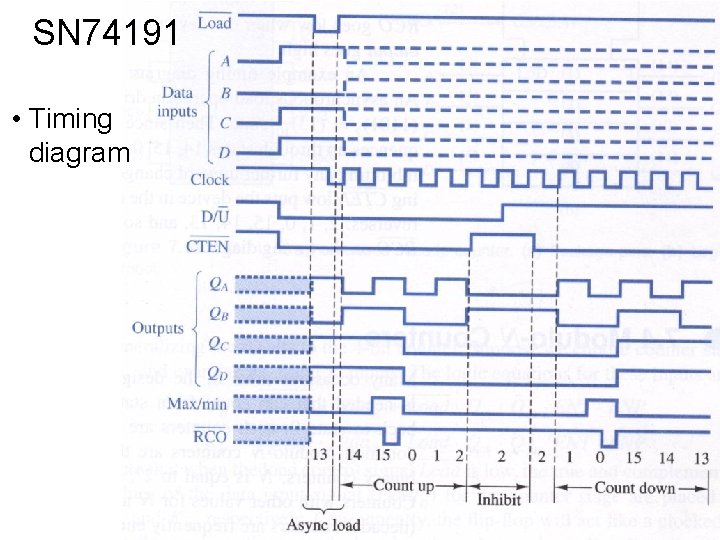
SN 74191 • Timing diagram