
Counterfactual thinking The first instinct fallacy Bacala Alexandra
Counterfactual thinking & The first instinct fallacy Bacala Alexandra Rose Callanta (3035441291) Lai Yee Lok (3035441409)
Let’s vote! ❖ Go to www. menti. com ❖ Use the code 41 96 24 Or scan this QR code!

First instinct fallacy ❖ ❖ ❖ “Go with your first instinct” bias Reality: Changing answers is a better stategy! Underestimate the effectiveness of trusting “the guts feelings” Overestimate the harm done by changing answers More likely to feel regret of switching answers

In-class results

Original article results ❖ Regret: Problem 1 > Problem 2 ❖ 5 times more likely to feel foolish ❖ 3 times more likely to think that they should have known better Switching when I should have stuck (%) Sticking Neither when I (%) should have switched (%) Which would you 74 regret most? 0 26 Which would make you feel foolish for missing? 61 13 26 Which would 48 make you think you “should have known better”? 17 35

Theories behind the bias Memory bias (Miller & Taylor, 1995) Action vs Inaction (Kahneman & Tversky, 1982) Academic vs Interpersonal contexts (Mandel, 2003) Availability heuristic (Gilovich, Medvec, & Chen, 1995)
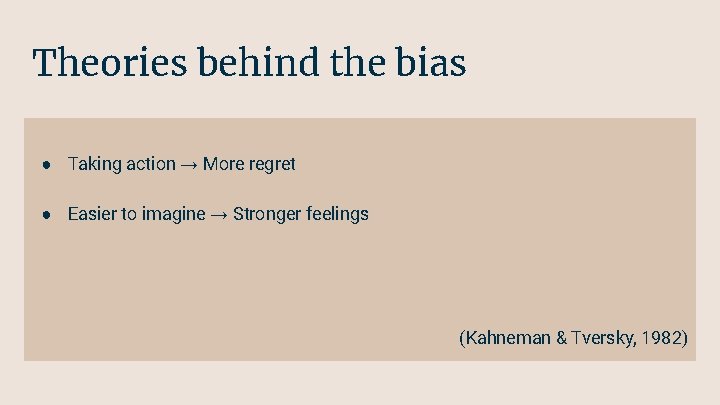
Theories behind the bias ● Taking action → More regret ● Easier to imagine → Stronger feelings (Kahneman & Tversky, 1982)
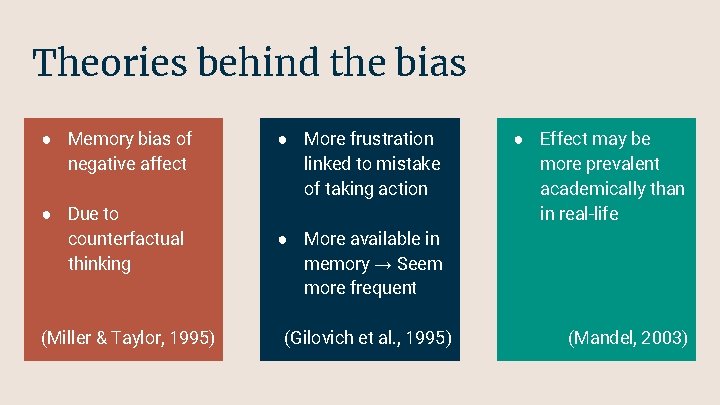
Theories behind the bias ● Memory bias of negative affect ● Due to counterfactual thinking (Miller & Taylor, 1995) ● More frustration linked to mistake of taking action ● Effect may be more prevalent academically than in real-life ● More available in memory → Seem more frequent (Gilovich et al. , 1995) (Mandel, 2003)

Real-life examples ❖ Exam ❖ Switching lines in supermarkets ❖ Regret of your life ➢ More inaction regret than action regret (Feldman, Miyamoto, & Loftus, 1999)
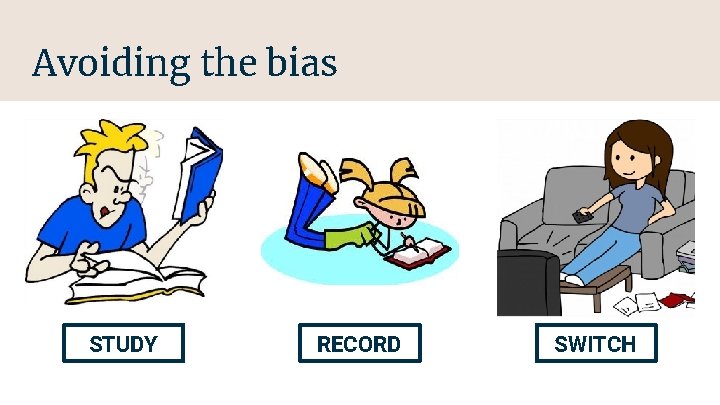
Avoiding the bias STUDY RECORD SWITCH
References Feldman, Miyamoto, & Loftus. (1999). Are Actions Regretted More Than Inactions? Organizational Behavior and Human Decision Processes, 78 (3), 232 -255.
- Slides: 11