
Countdown Conundrum Use the whiteboards to have a
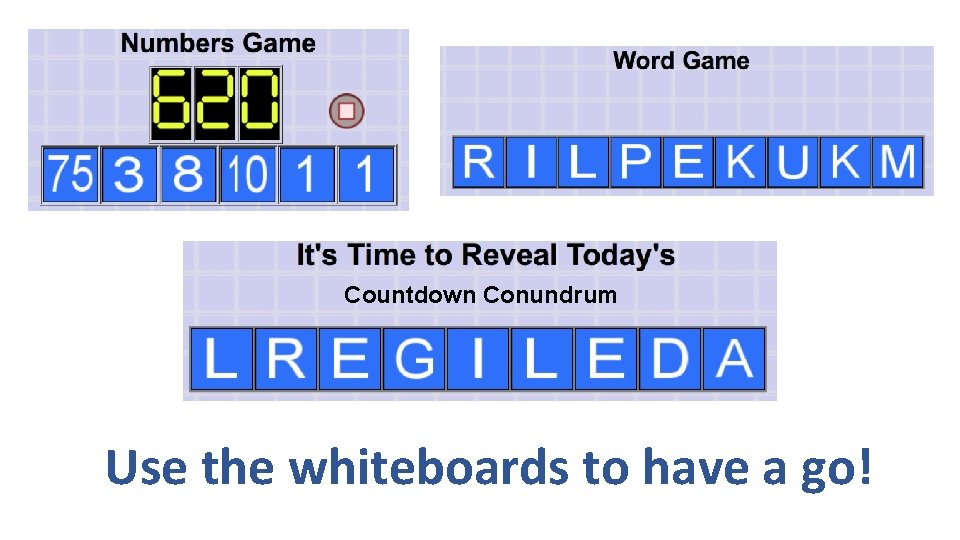
Countdown Conundrum Use the whiteboards to have a go!
Bledlow Ridge School Information Workshop for Parents: Moving from secure to greater depth 17 th May 2018
Aims for tonight… • to have a clearer understanding of what "greater depth" in Maths and Writing means for children, parents and teachers • to look at some examples of "greater depth" lesson ideas and outcomes • to experience tasks that are aimed at developing greater depth skills • to go away with greater understanding of how you can help your children Moving from secure to greater depth
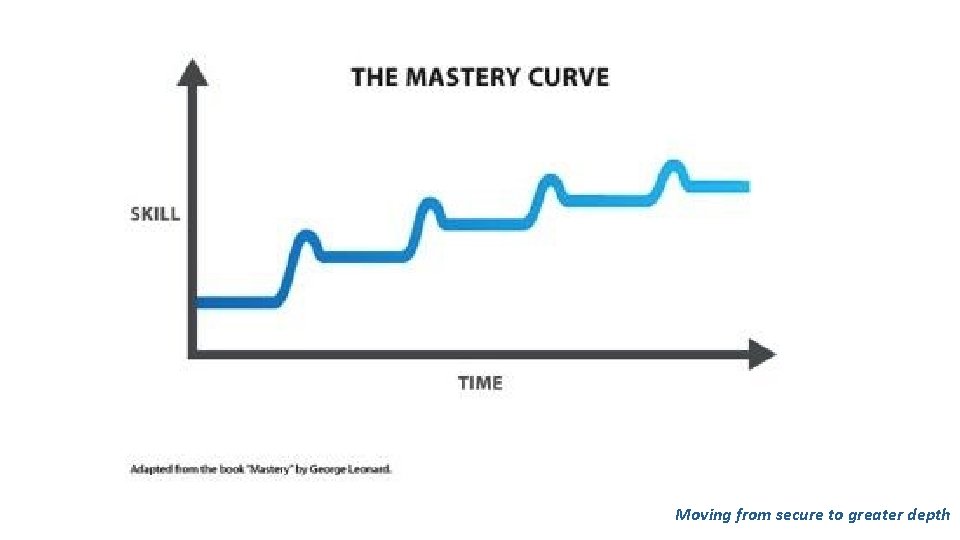
What is “greater depth”? • Greater depth is all about giving the children the opportunity to “master” their understanding of key concepts and ideas • So, when we talk about greater depth, we are really talking about mastery of an objective, topic or subject Moving from secure to greater depth
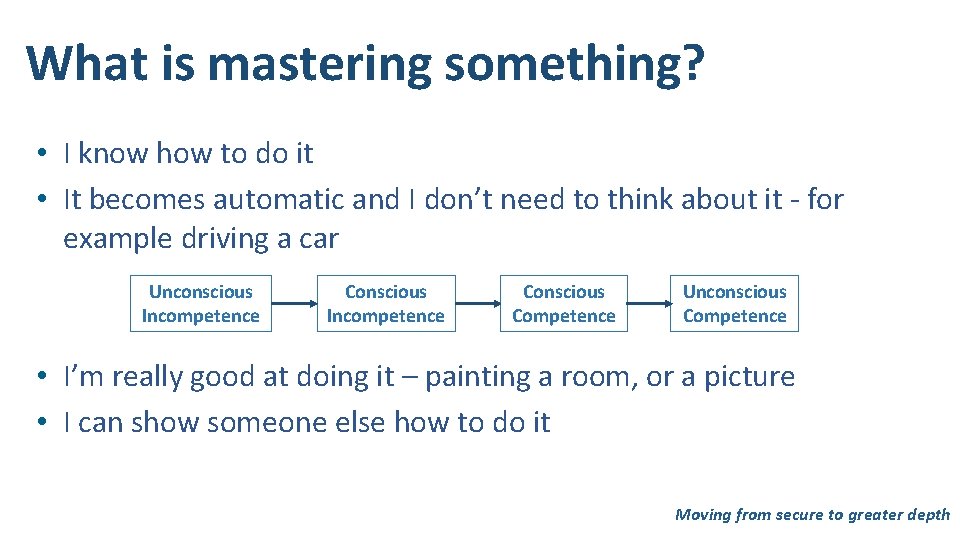
What is mastering something? • I know how to do it • It becomes automatic and I don’t need to think about it - for example driving a car Unconscious Incompetence Conscious Competence Unconscious Competence • I’m really good at doing it – painting a room, or a picture • I can show someone else how to do it Moving from secure to greater depth
Moving from secure to greater depth
Moving from secure to greater depth
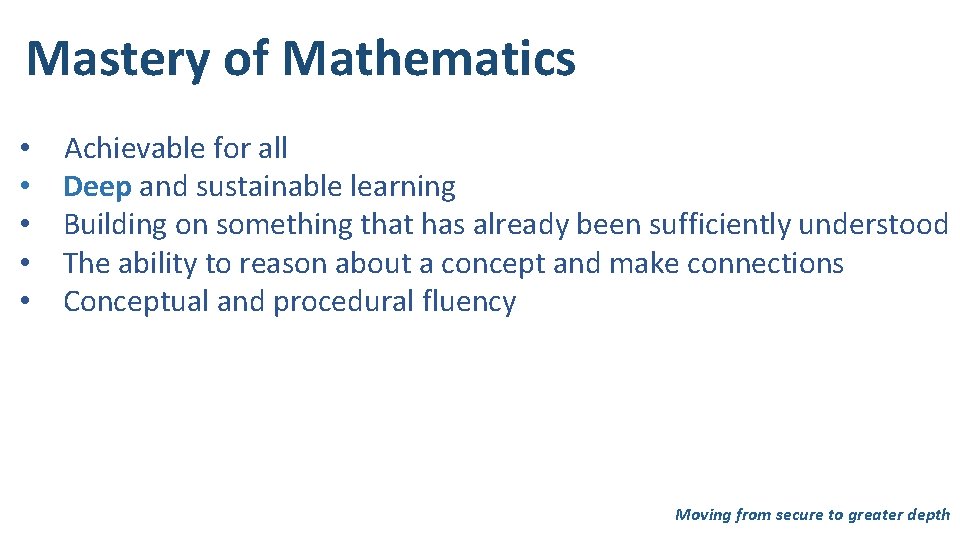
Mastery of Mathematics • • • Achievable for all Deep and sustainable learning Building on something that has already been sufficiently understood The ability to reason about a concept and make connections Conceptual and procedural fluency Moving from secure to greater depth
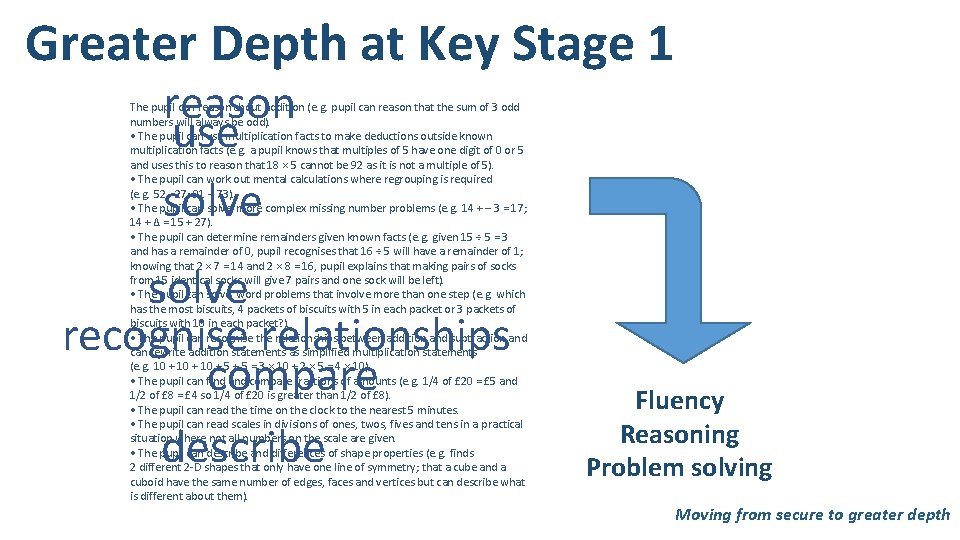
Greater Depth at Key Stage 1 reason use solve The pupil can about addition (e. g. pupil can reason that the sum of 3 odd reason numbers will always be odd). • The pupil can multiplication facts to make deductions outside known use multiplication facts (e. g. a pupil knows that multiples of 5 have one digit of 0 or 5 and uses this to reason that 18 × 5 cannot be 92 as it is not a multiple of 5). • The pupil can work out mental calculations where regrouping is required (e. g. 52 - 27; 91 – 73). solve • The pupil can more complex missing number problems (e. g. 14 + – 3 = 17; 14 + Δ = 15 + 27). • The pupil can determine remainders given known facts (e. g. given 15 ÷ 5 = 3 and has a remainder of 0, pupil recognises that 16 ÷ 5 will have a remainder of 1; knowing that 2 × 7 = 14 and 2 × 8 = 16, pupil explains that making pairs of socks from 15 identical socks will give 7 pairs and one sock will be left). solve • The pupil can word problems that involve more than one step (e. g. which has the most biscuits, 4 packets of biscuits with 5 in each packet or 3 packets of biscuits with 10 in each packet? ). • The pupil can recognise the relationships between addition and subtraction and can rewrite addition statements as simplified multiplication statements (e. g. 10 + 5 = 3 × 10 + 2 × 5 = 4 × 10). • The pupil can find and compare fractions of amounts (e. g. 1/4 of £ 20 = £ 5 and 1/2 of £ 8 = £ 4 so 1/4 of £ 20 is greater than 1/2 of £ 8). • The pupil can read the time on the clock to the nearest 5 minutes. • The pupil can read scales in divisions of ones, twos, fives and tens in a practical situation where not all numbers on the scale are given. describe • The pupil can and differences of shape properties (e. g. finds 2 different 2 -D shapes that only have one line of symmetry; that a cube and a cuboid have the same number of edges, faces and vertices but can describe what is different about them). solve recognise relationships compare describe Fluency Reasoning Problem solving Moving from secure to greater depth
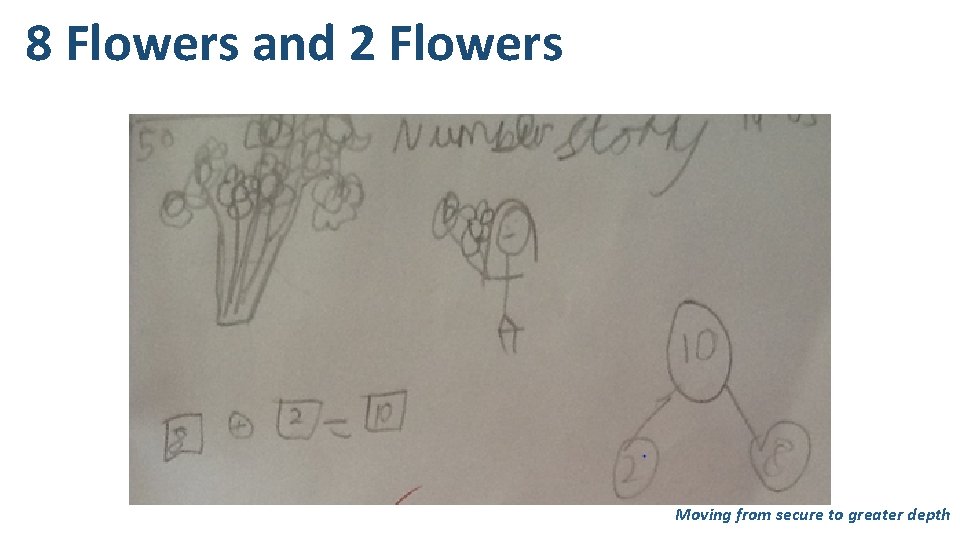
8 Flowers and 2 Flowers Moving from secure to greater depth
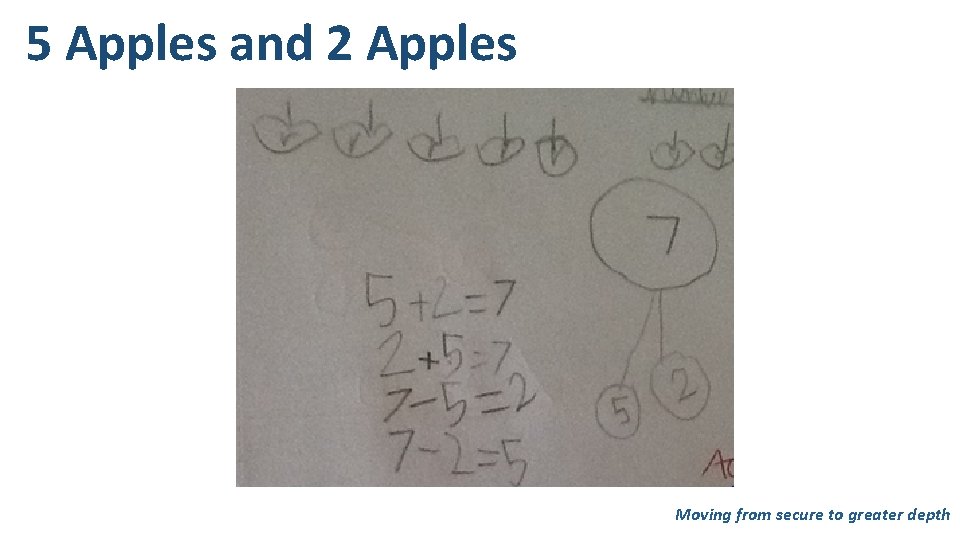
5 Apples and 2 Apples Moving from secure to greater depth
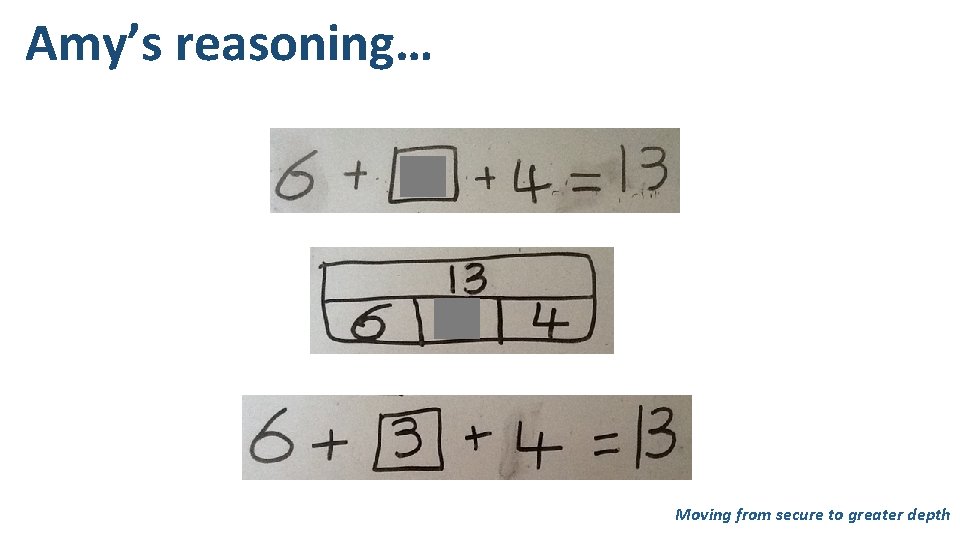
Amy’s reasoning… Moving from secure to greater depth
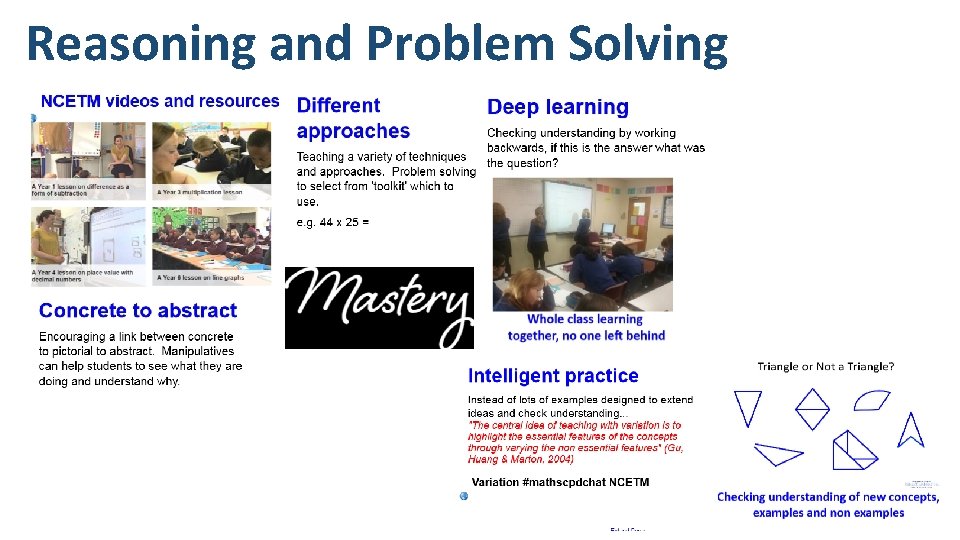
Reasoning and Problem Solving
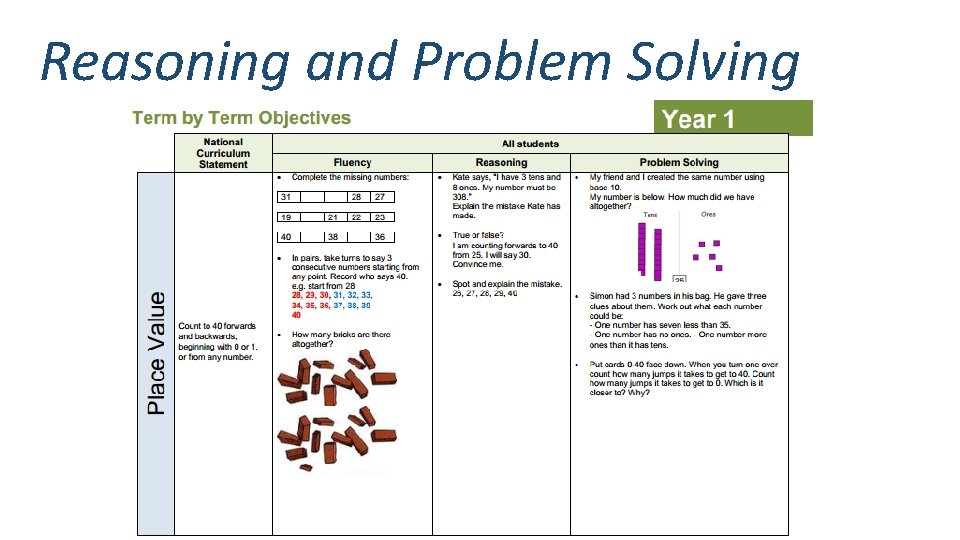
Reasoning and Problem Solving
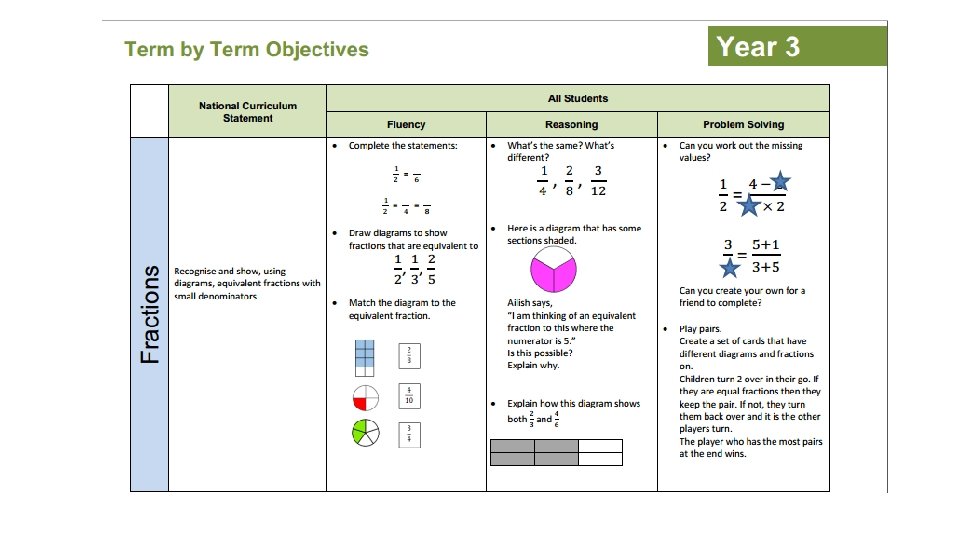
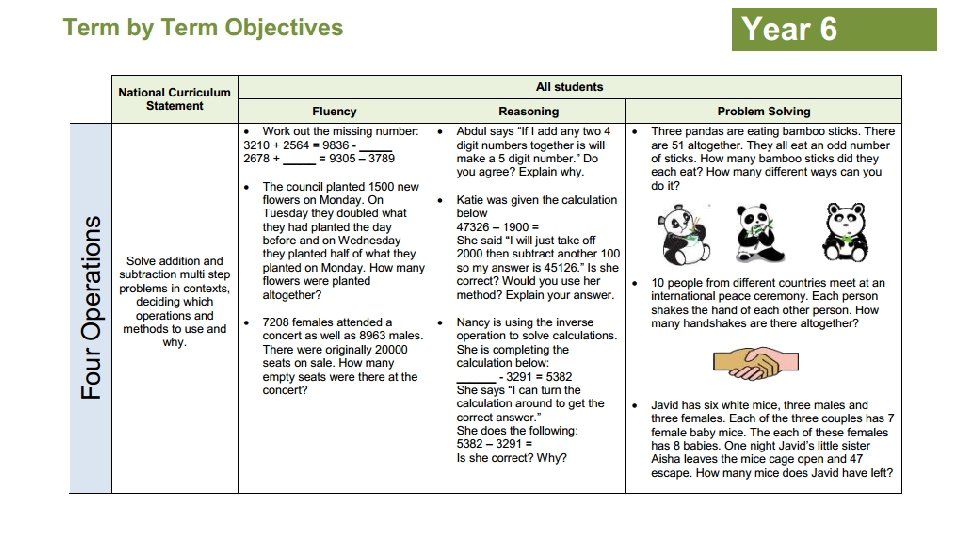
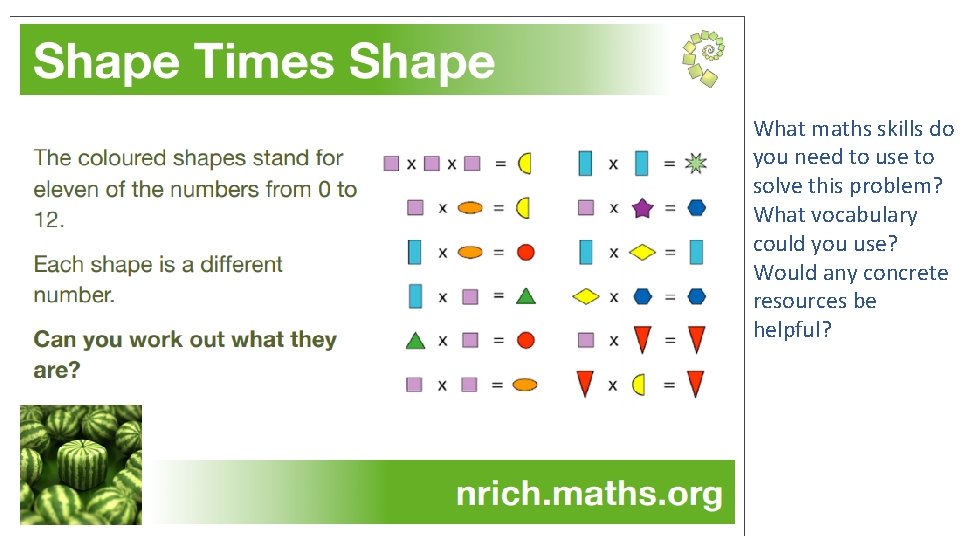
What maths skills do you need to use to solve this problem? What vocabulary could you use? Would any concrete resources be helpful?
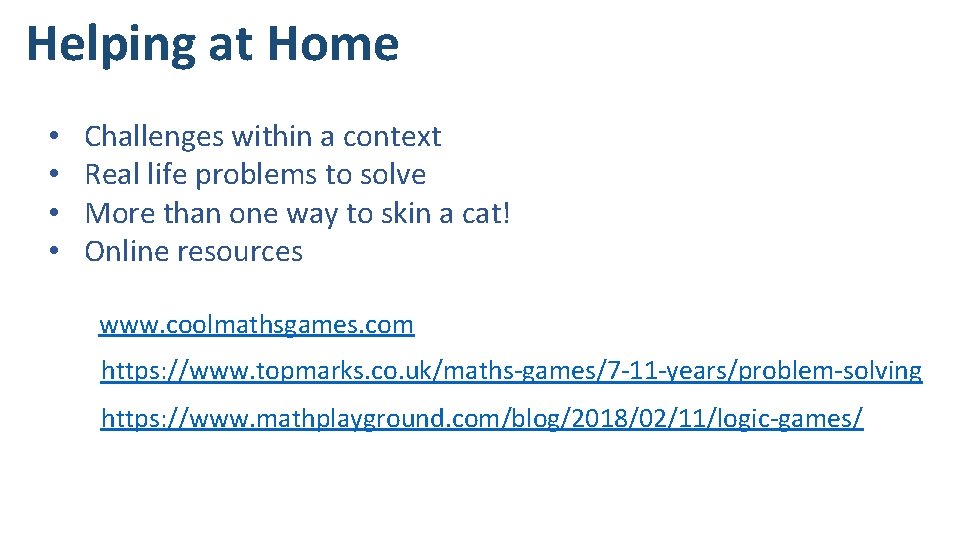
Helping at Home • • Challenges within a context Real life problems to solve More than one way to skin a cat! Online resources www. coolmathsgames. com https: //www. topmarks. co. uk/maths-games/7 -11 -years/problem-solving https: //www. mathplayground. com/blog/2018/02/11/logic-games/
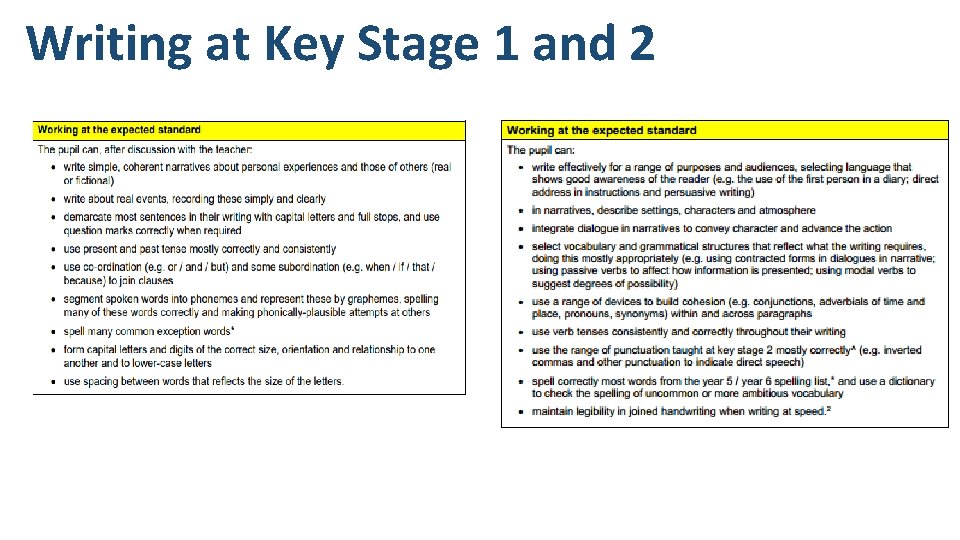
Writing at Key Stage 1 and 2
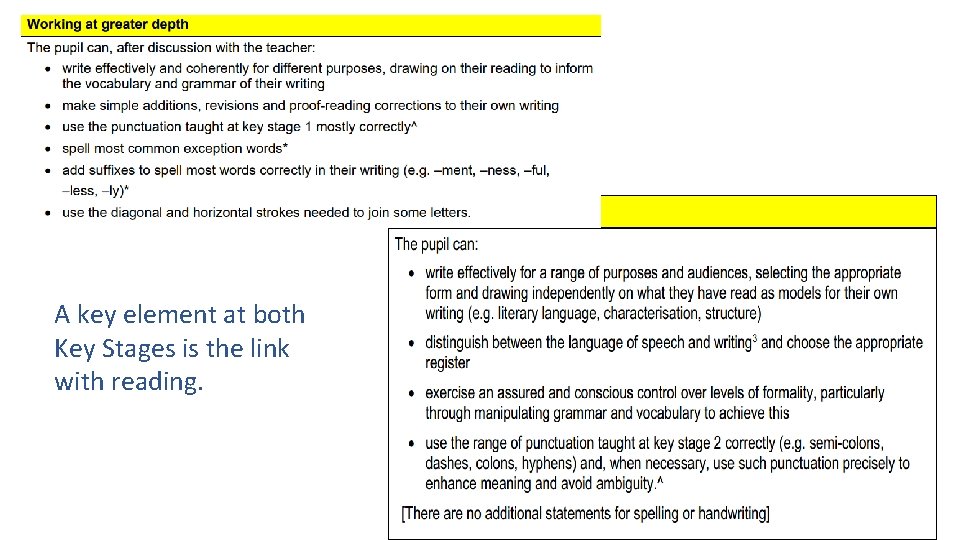
A key element at both Key Stages is the link with reading.
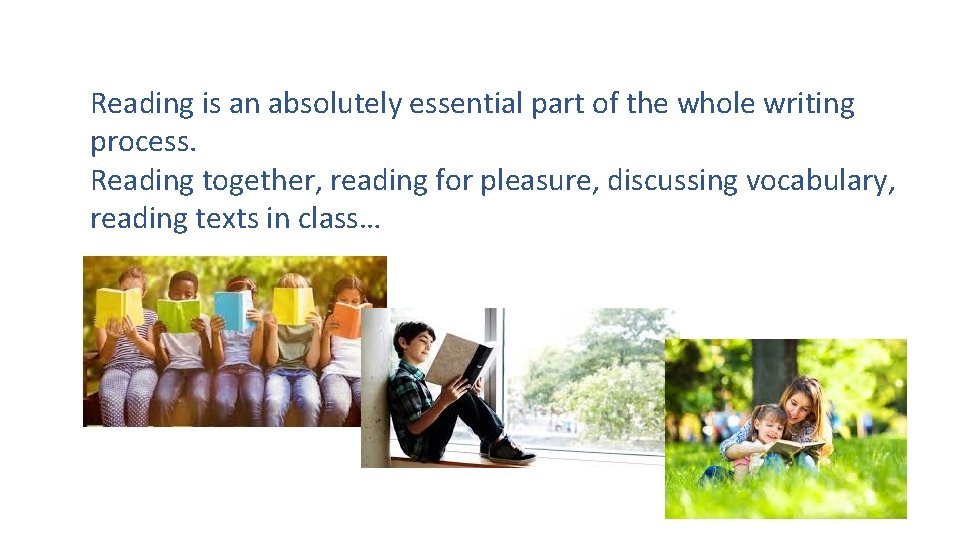
Reading is an absolutely essential part of the whole writing process. Reading together, reading for pleasure, discussing vocabulary, reading texts in class…
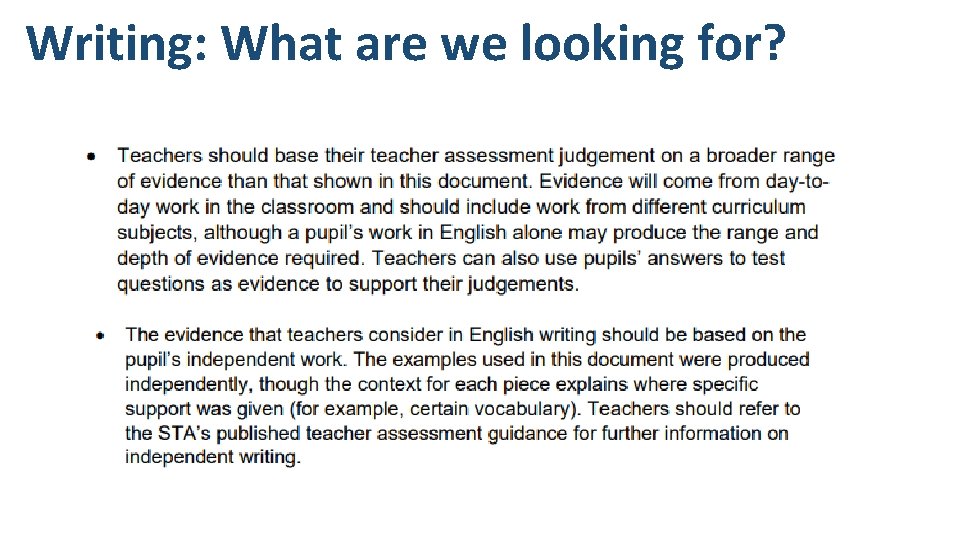
Writing: What are we looking for?
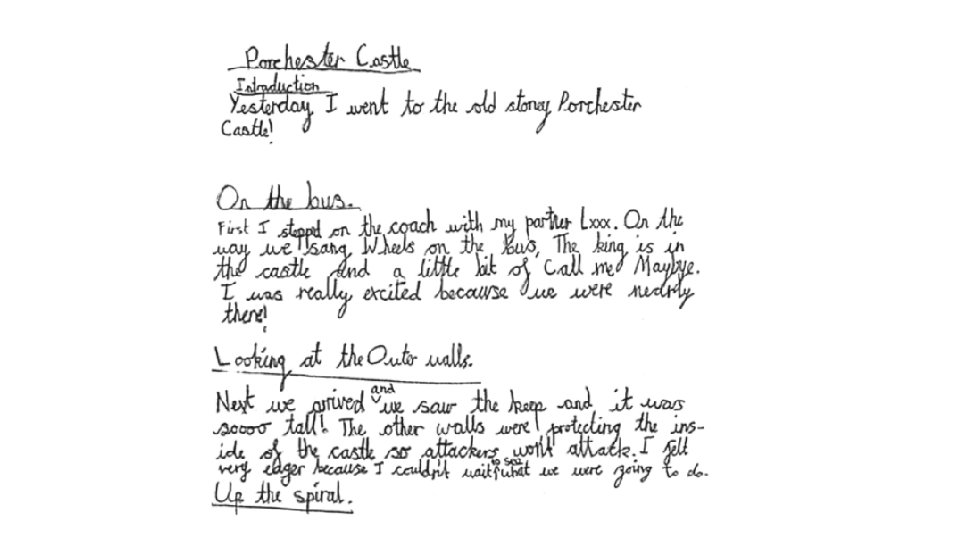
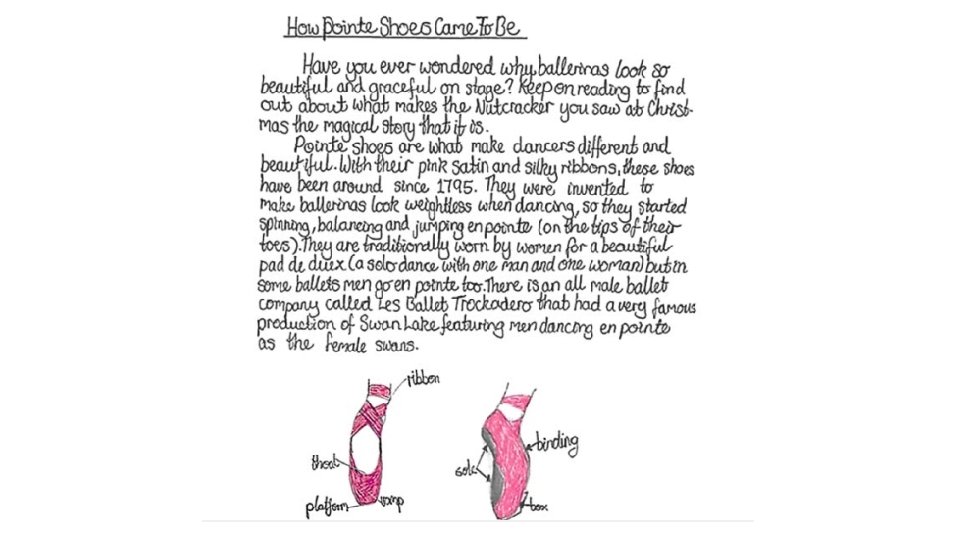
Your turn! We have put together some packs of writing and some guidance. Can you decide whether the piece of writing was: a) Banded as “working towards”, “expected” or “greater depth”? b) KS 1 (Yr 2) or KS 2 (Yr 6) What was the difference between each level?
Control and Intent Writer’s at Greater Depth do not just tick the boxes and follow a set of success criteria. They have an understanding of how and why language is used and exercise control over their use of it.
How Can I Help My Child? Maths: • Play number games • Encourage children to look for maths/number in everyday lives • Solve number puzzles (Radio 4 have a puzzle every morning!) Writing: • Read with your child and discuss the book – words, character, writer’s style • Visit/join a library • Encourage “free writing”
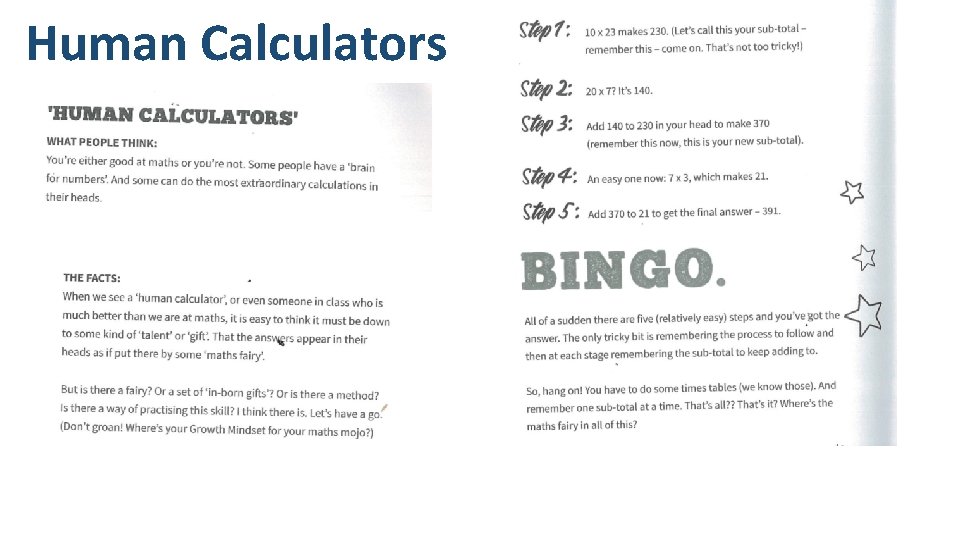
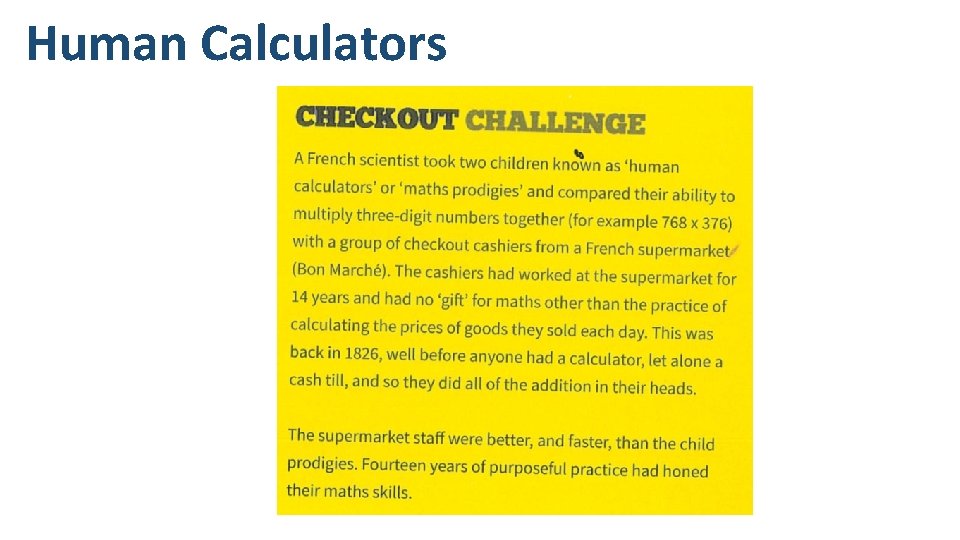
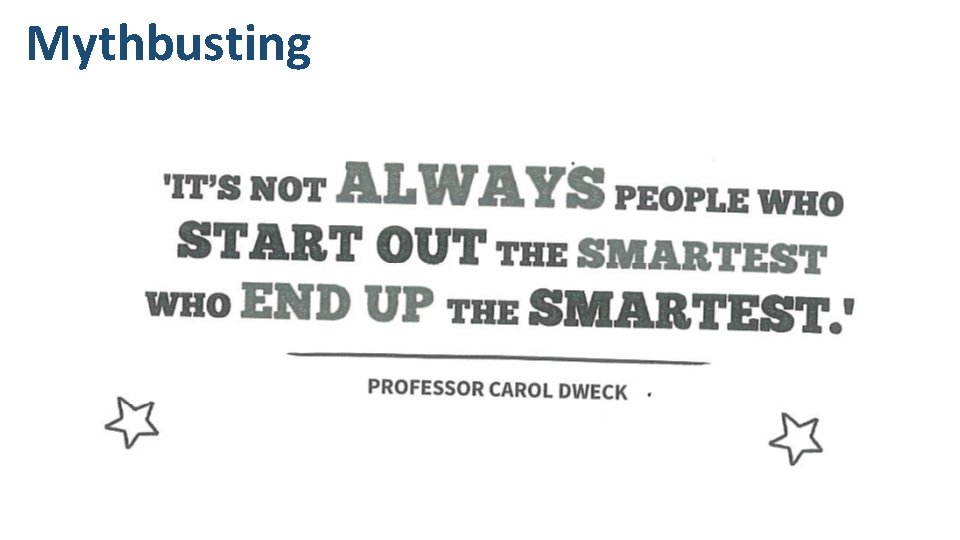
Mythbusting ! People are born with a natural and innate talent, predisposed towards a certain skill. Myth!
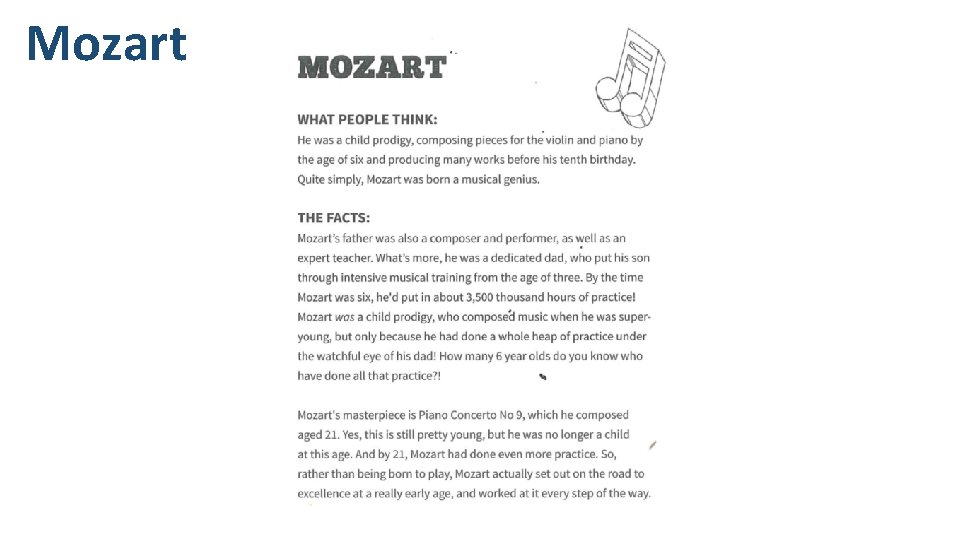
Mozart
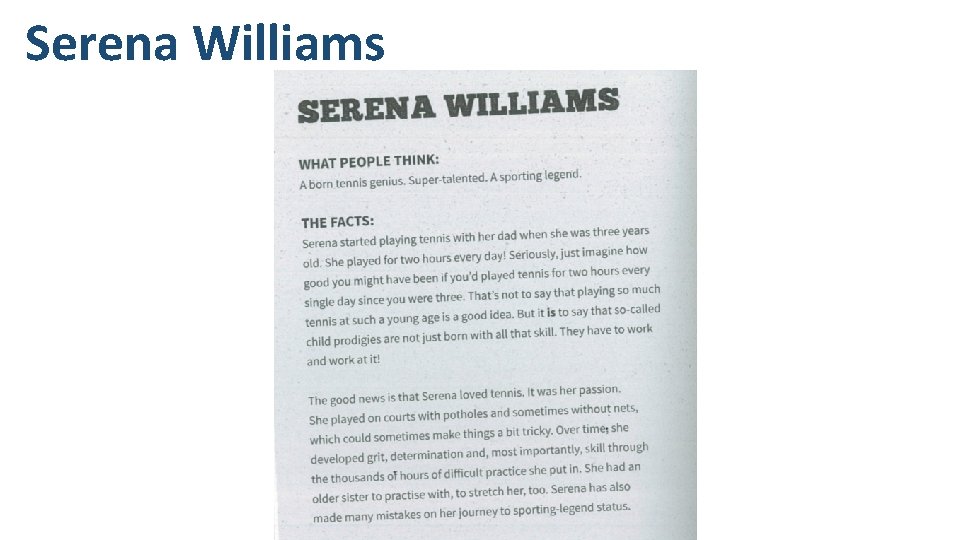
Serena Williams
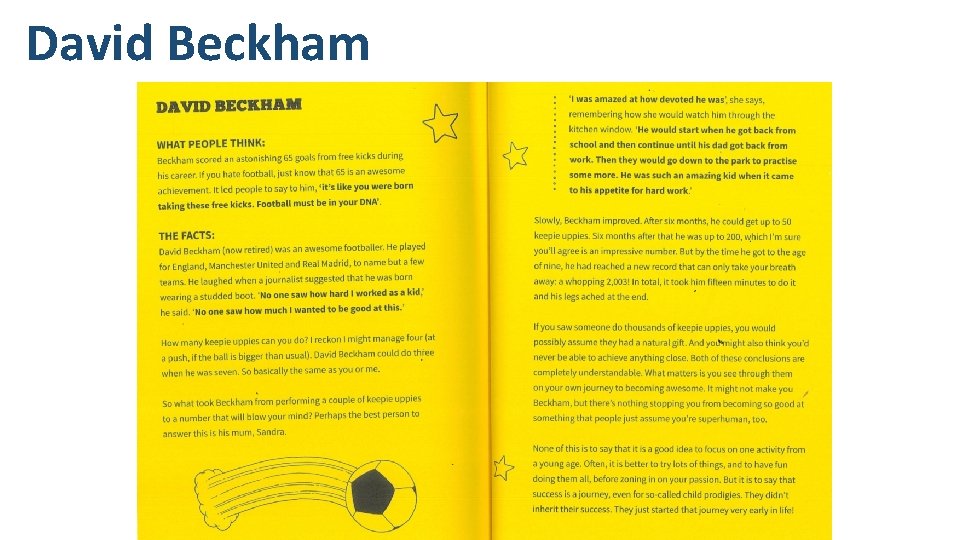
David Beckham
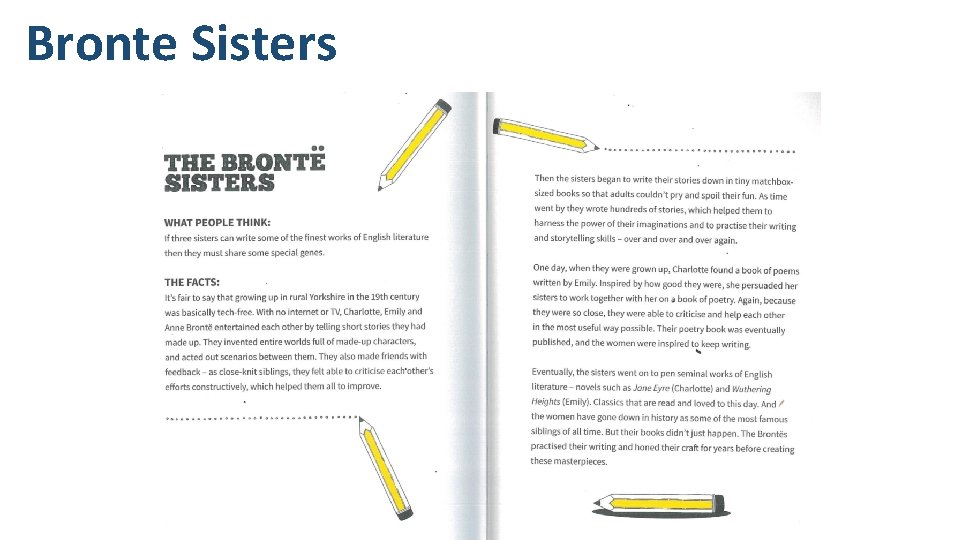
Bronte Sisters
Human Calculators
Human Calculators
Mythbusting
- Slides: 35