
COUNT ATOM How to count atoms 2 H
- Slides: 17
COUNT ATOM How to count atoms
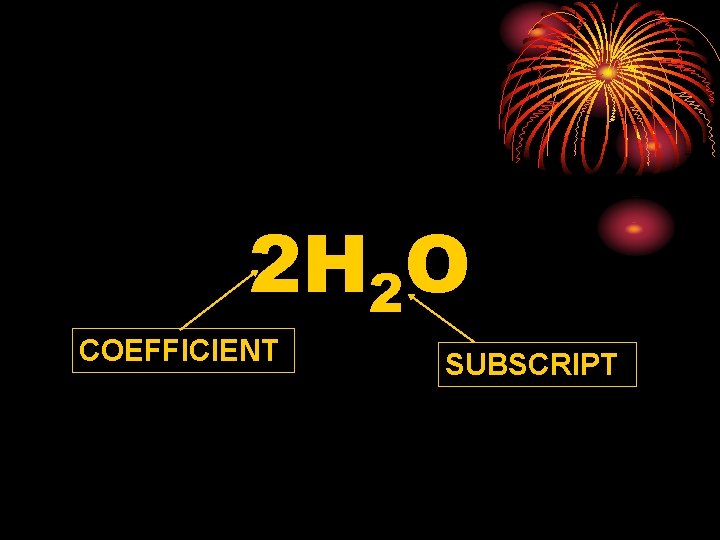
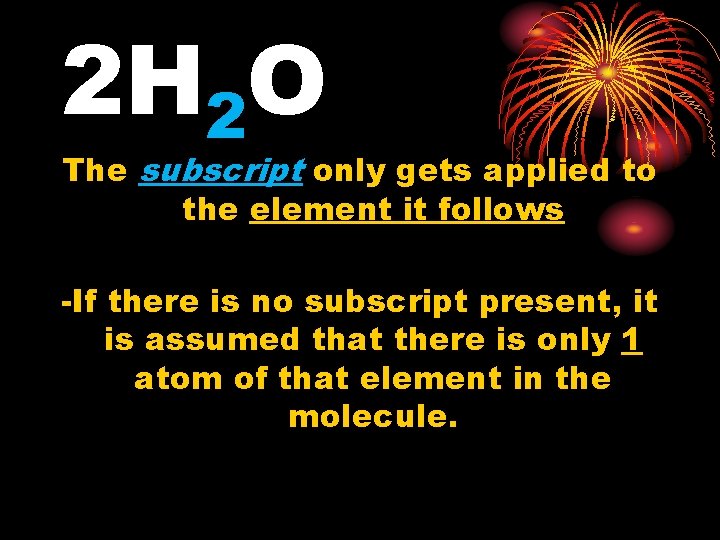
2 H 2 O COEFFICIENT SUBSCRIPT
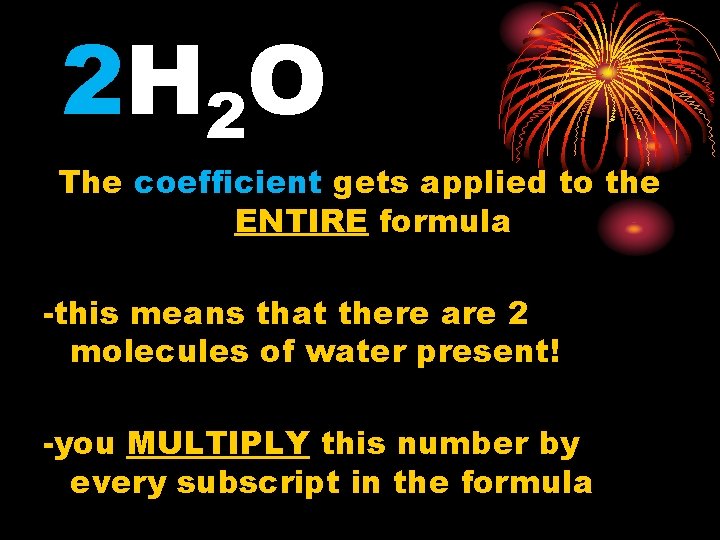
2 H 2 O The coefficient gets applied to the ENTIRE formula -this means that there are 2 molecules of water present! -you MULTIPLY this number by every subscript in the formula
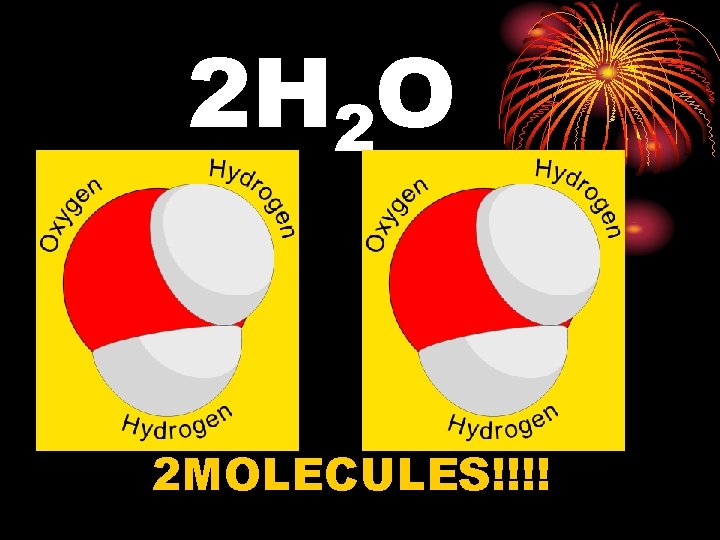
2 H 2 O 2 MOLECULES!!!!
2 H 2 O The subscript only gets applied to the element it follows -If there is no subscript present, it is assumed that there is only 1 atom of that element in the molecule.
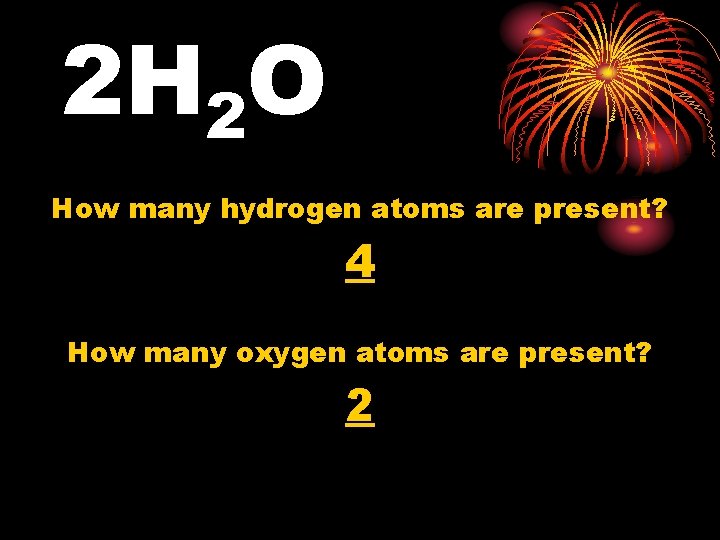
2 H 2 O How many hydrogen atoms are present? 4 How many oxygen atoms are present? 2
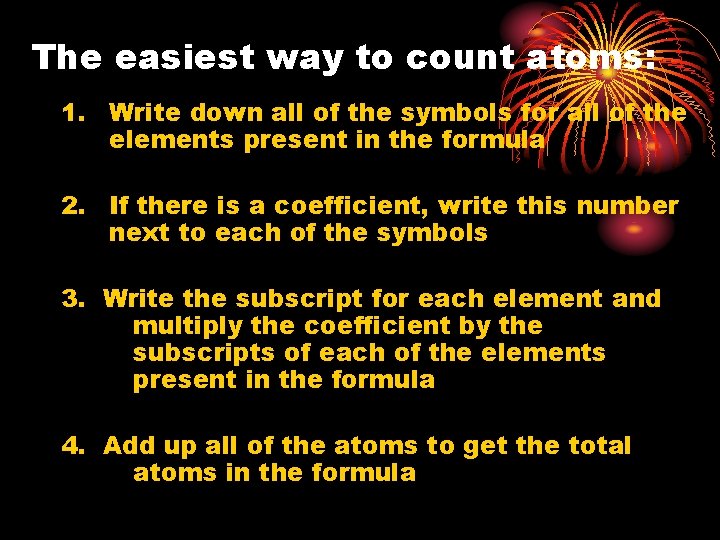
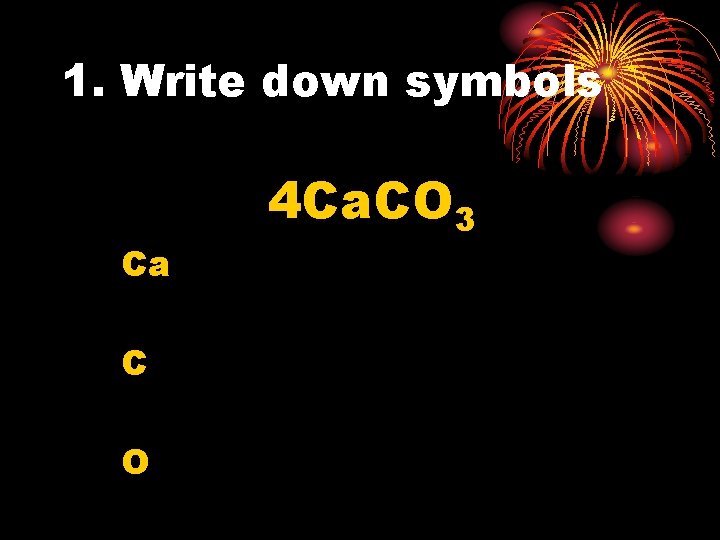
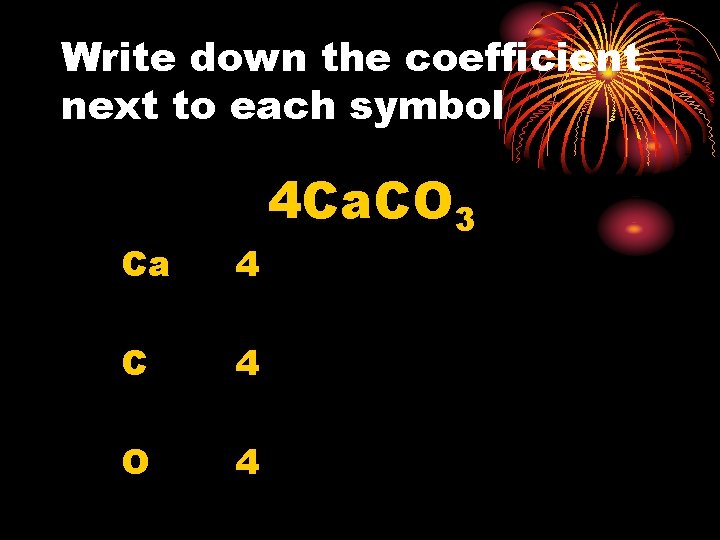
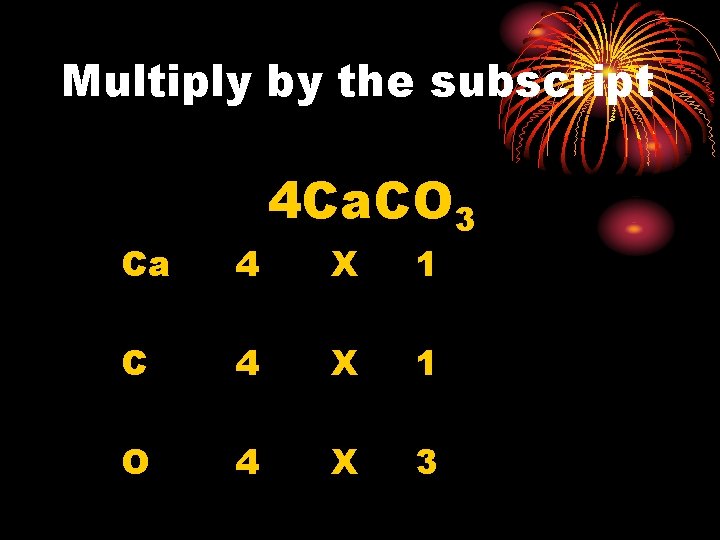
The easiest way to count atoms: 1. Write down all of the symbols for all of the elements present in the formula 2. If there is a coefficient, write this number next to each of the symbols 3. Write the subscript for each element and multiply the coefficient by the subscripts of each of the elements present in the formula 4. Add up all of the atoms to get the total atoms in the formula
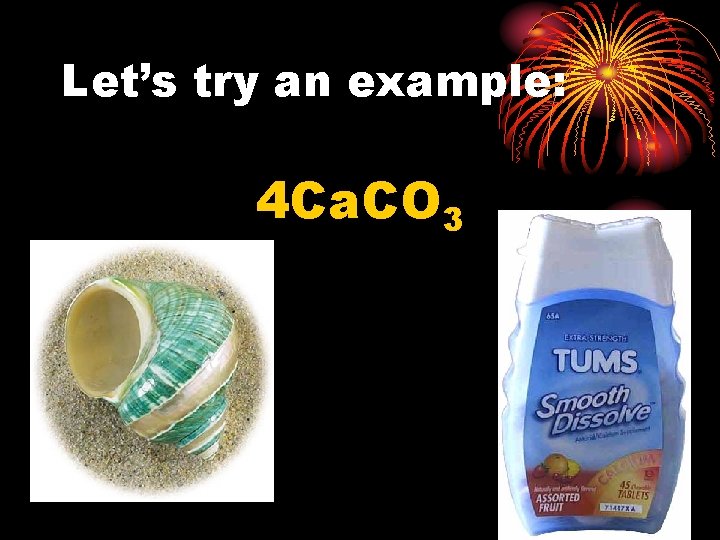
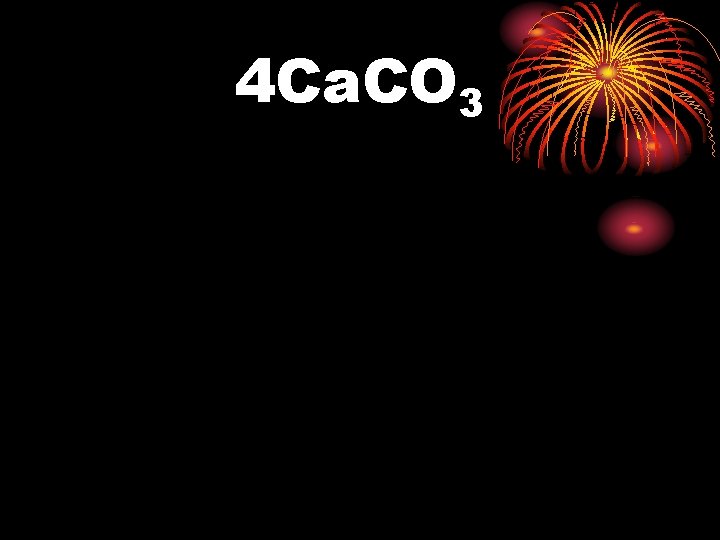
Let’s try an example: 4 Ca. CO 3
4 Ca. CO 3
1. Write down symbols Ca C O 4 Ca. CO 3
Write down the coefficient next to each symbol Ca 4 C 4 O 4 4 Ca. CO 3
Multiply by the subscript Ca 4 C O 4 Ca. CO 3 X 1 4 X 3
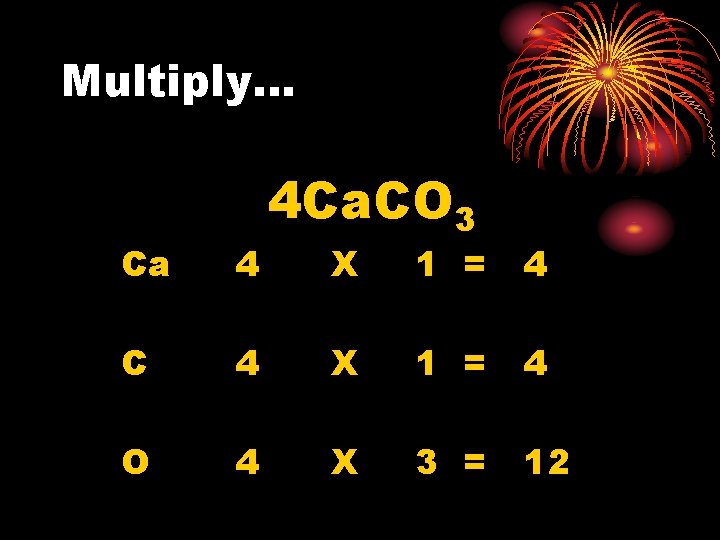
Multiply… Ca 4 C O 4 Ca. CO 3 X 1 = 4 4 X 3 = 12
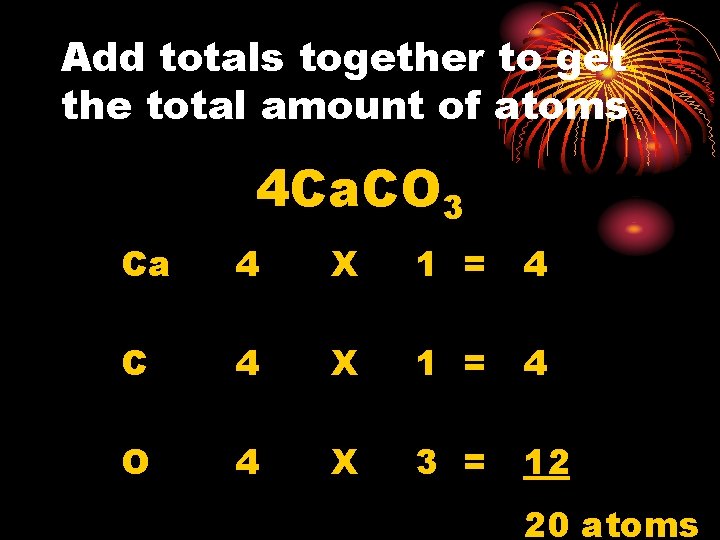
Add totals together to get the total amount of atoms 4 Ca. CO 3 Ca 4 X 1 = 4 C 4 X 1 = 4 O 4 X 3 = 12 20 atoms
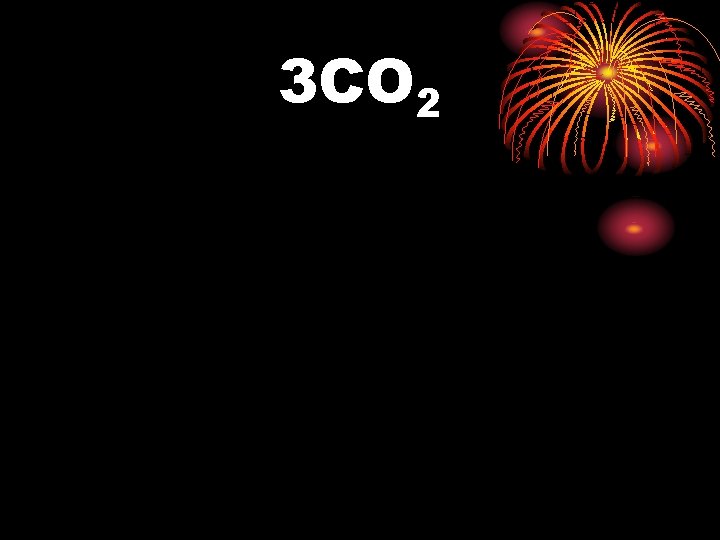
3 CO 2
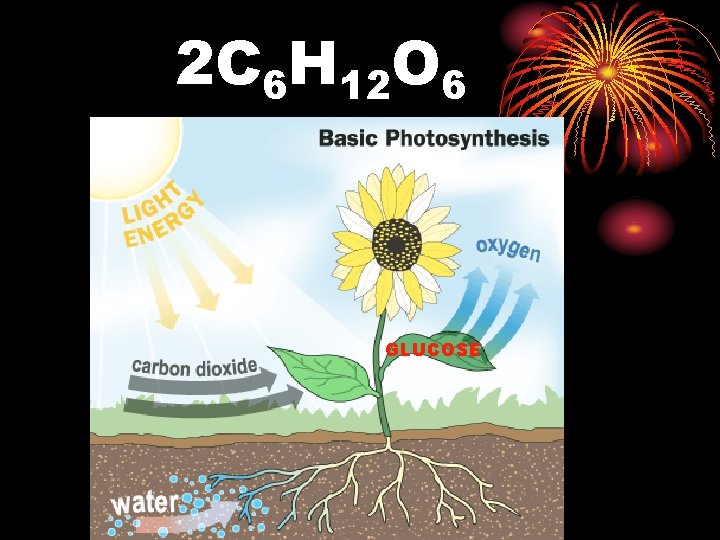
2 C 6 H 12 O 6 GLUCOSE
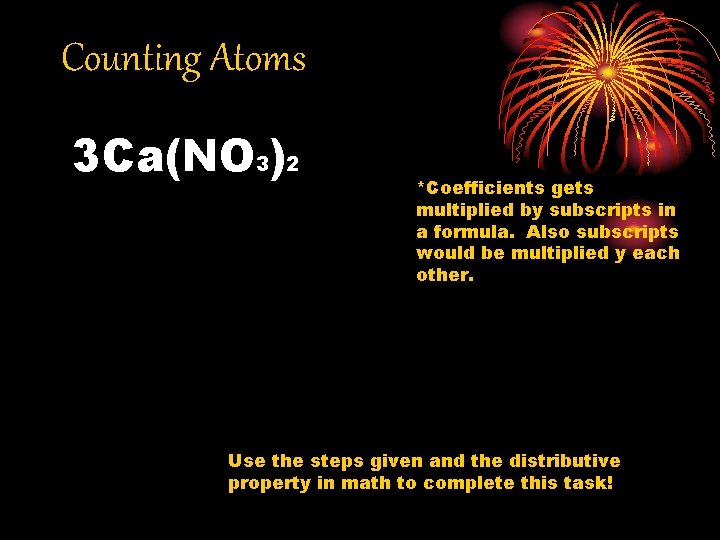
Counting Atoms 3 Ca(NO 3)2 *Coefficients gets multiplied by subscripts in a formula. Also subscripts would be multiplied y each other. Use the steps given and the distributive property in math to complete this task!