
Coulombexcitation of 112 114 116 Sn Pieter Doornenbal
Coulomb-excitation of 112, 114, 116 Sn Pieter Doornenbal
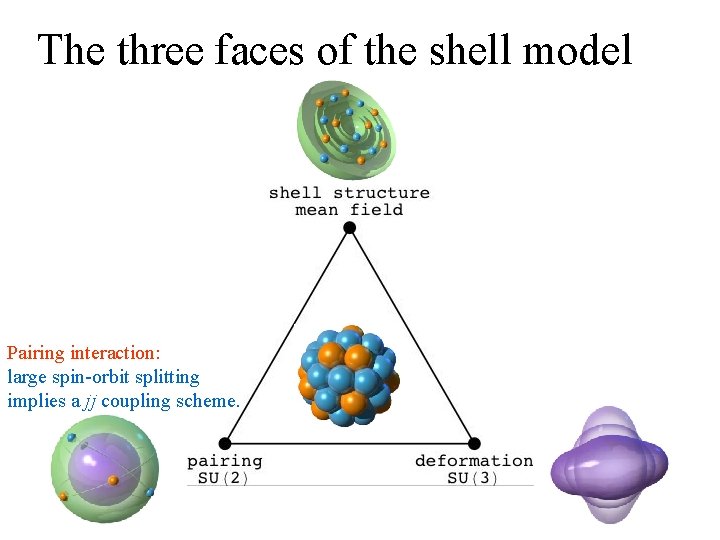
The three faces of the shell model Pairing interaction: large spin-orbit splitting implies a jj coupling scheme.
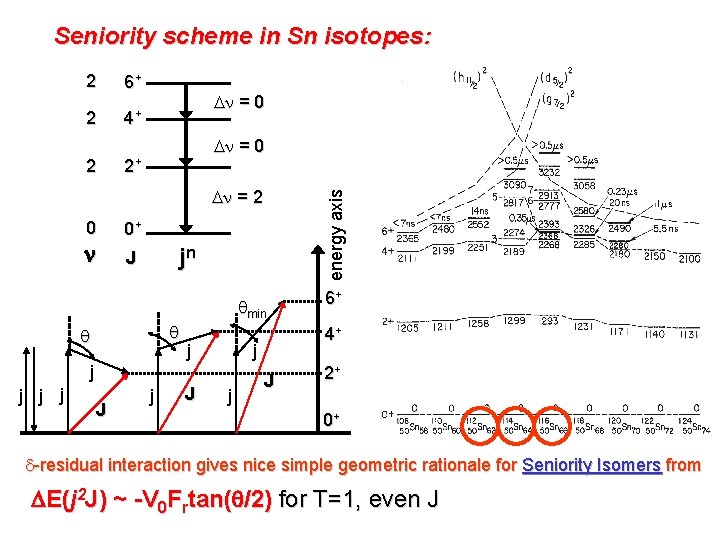
Seniority scheme in Sn isotopes: 6+ 2 4+ 2 2+ 0 = 2 energy axis 2 min 6+ 0+ jn J j j j J j J 4+ j J 2+ 0+ -residual interaction gives nice simple geometric rationale for Seniority Isomers from E(j 2 J) ~ -V 0 Frtan( /2) for T=1, even J
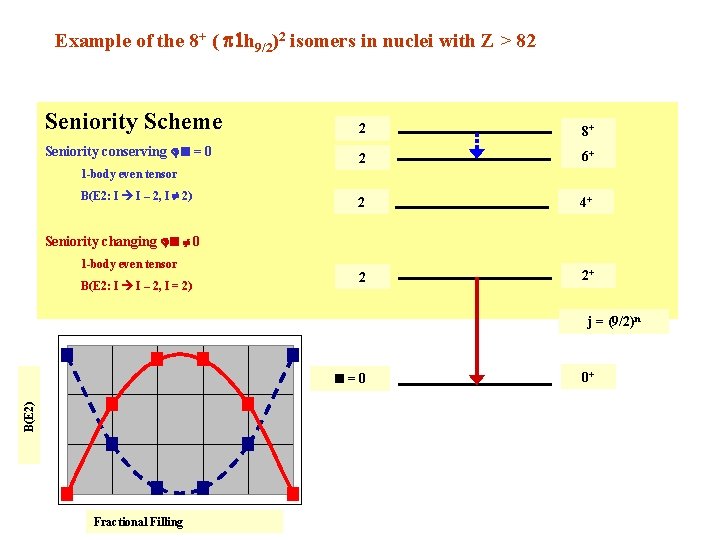
Example of the 8+ ( p 1 h 9/2)2 isomers in nuclei with Z > 82 Seniority Scheme 2 8+ Seniority conserving Dn = 0 2 6+ 2 4+ 2 2+ 1 -body even tensor B(E 2: I I – 2, I 2) Seniority changing Dn 0 1 -body even tensor B(E 2: I I – 2, I = 2) j = (9/2)n B(E 2) n=0 Fractional Filling 0+
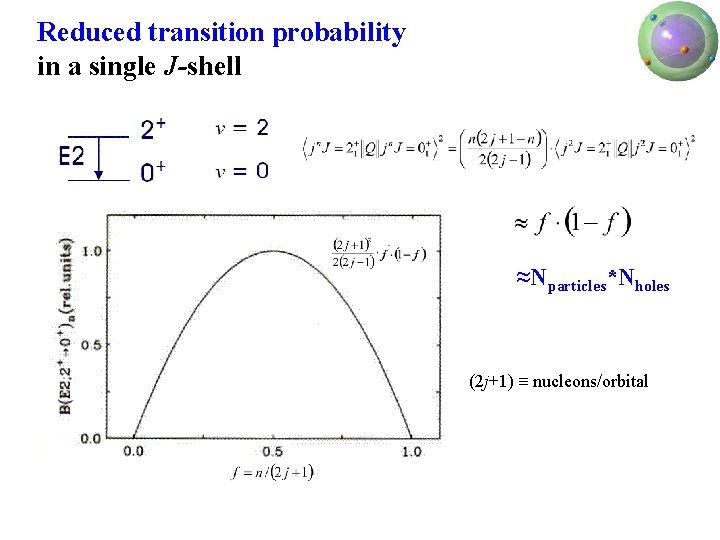
Reduced transition probability in a single J-shell ≈Nparticles*Nholes (2 j+1) ≡ nucleons/orbital
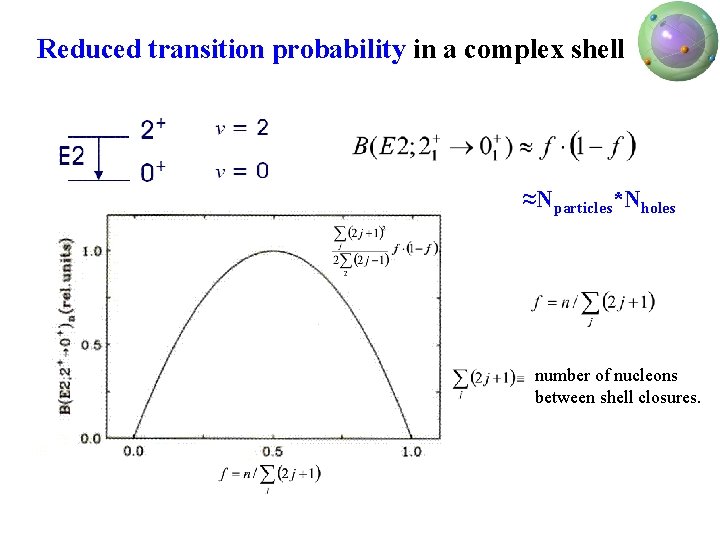
Reduced transition probability in a complex shell ≈Nparticles*Nholes number of nucleons between shell closures.
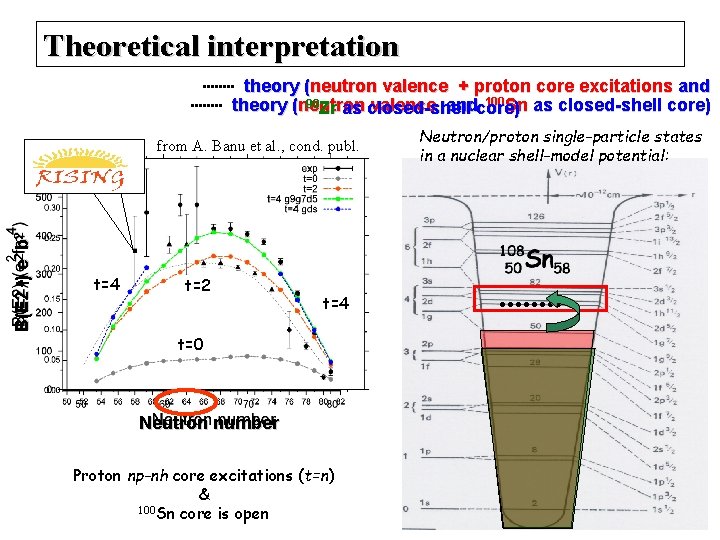
Theoretical interpretation theory (neutron valence + proton core excitations and 100 Sn as closed-shell core) 90 Zr as closed-shell theory (neutron valence andcore) from A. Banu et al. , cond. publ. B(E 2 ) e 2 b 2 This work t=4 t=2 t=4 t=0 Neutron number Proton np-nh core excitations (t=n) & 100 Sn core is open Neutron/proton single-particle states in a nuclear shell-model potential: • • • •
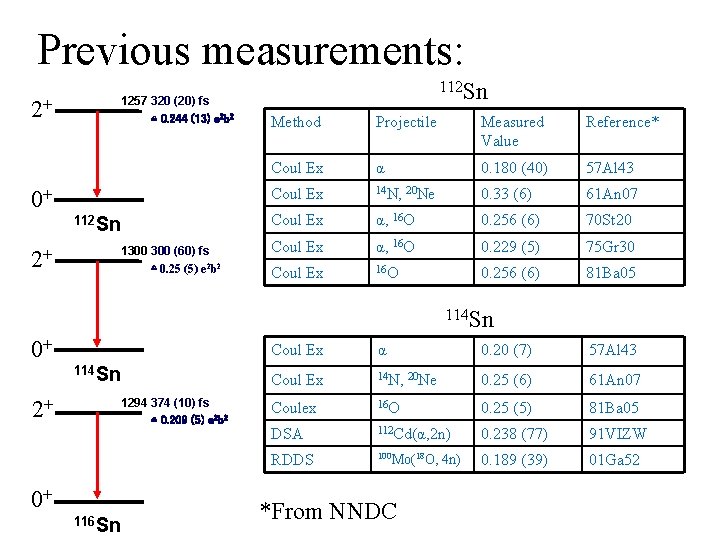
Previous measurements: 2+ 1257 320 (20) fs ≙ 0. 244 (13) e 2 b 2 0+ 112 Sn 2+ 1300 (60) fs ≙ 0. 25 (5) e 2 b 2 112 Sn Method Projectile Measured Value Reference* Coul Ex α 0. 180 (40) 57 Al 43 Coul Ex 14 N, 20 Ne 0. 33 (6) 61 An 07 Coul Ex α, 16 O 0. 256 (6) 70 St 20 Coul Ex α, 16 O 0. 229 (5) 75 Gr 30 Coul Ex 16 O 0. 256 (6) 81 Ba 05 114 Sn 0+ 114 Sn 2+ 1294 374 (10) fs ≙ 0. 209 (5) e 2 b 2 0+ 116 Sn Coul Ex α 0. 20 (7) 57 Al 43 Coul Ex 14 N, 20 Ne 0. 25 (6) 61 An 07 Coulex 16 O 0. 25 (5) 81 Ba 05 DSA 112 Cd(α, 2 n) 0. 238 (77) 91 VIZW RDDS 100 Mo(18 O, 0. 189 (39) 01 Ga 52 *From NNDC 4 n)
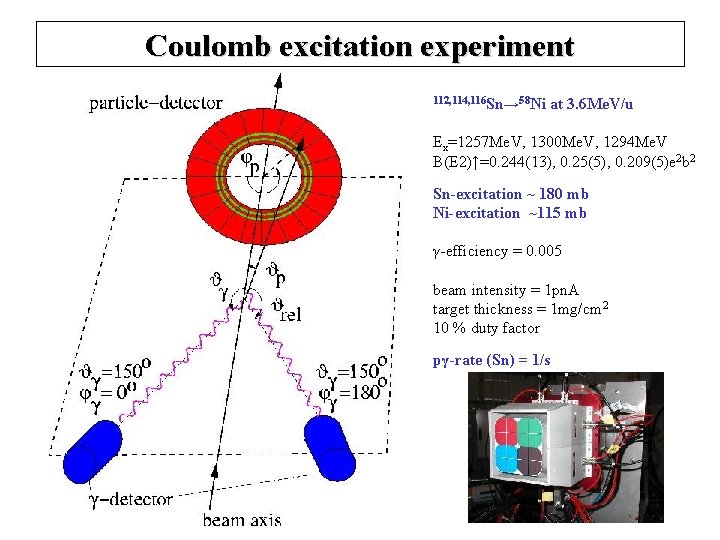
Coulomb excitation experiment 112, 114, 116 Sn→ 58 Ni at 3. 6 Me. V/u Ex=1257 Me. V, 1300 Me. V, 1294 Me. V B(E 2)↑=0. 244(13), 0. 25(5), 0. 209(5)e 2 b 2 Sn-excitation ~ 180 mb Ni-excitation ~115 mb γ-efficiency = 0. 005 beam intensity = 1 pn. A target thickness = 1 mg/cm 2 10 % duty factor pγ-rate (Sn) = 1/s
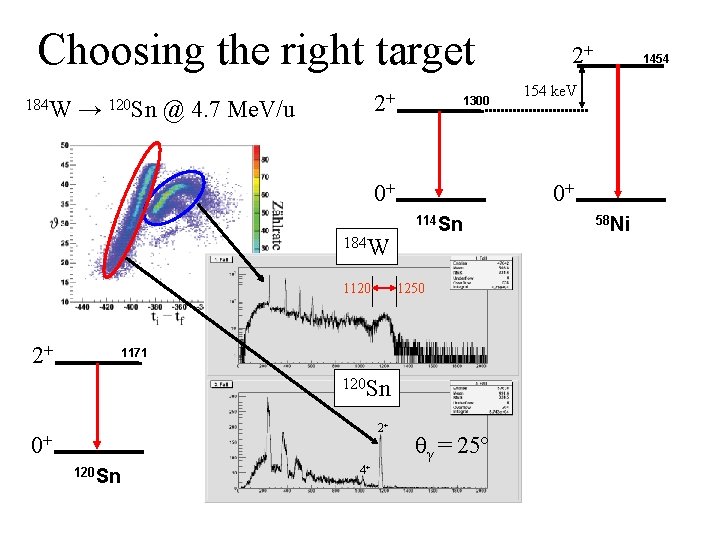
Choosing the right target 184 W 2+ → 120 Sn @ 4. 7 Me. V/u 1300 0+ 184 W 1120 2+ 114 Sn 1171 120 Sn 0+ 120 Sn 4+ 1454 154 ke. V 0+ 1250 2+ 2+ θγ = 25º 58 Ni
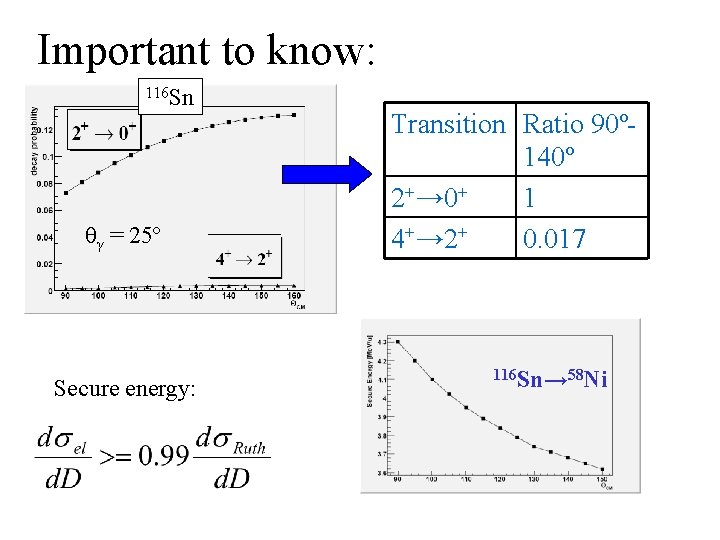
Important to know: 116 Sn θγ = 25º Secure energy: Transition Ratio 90º 140º 2+→ 0+ 1 4+→ 2+ 0. 017 116 Sn→ 58 Ni
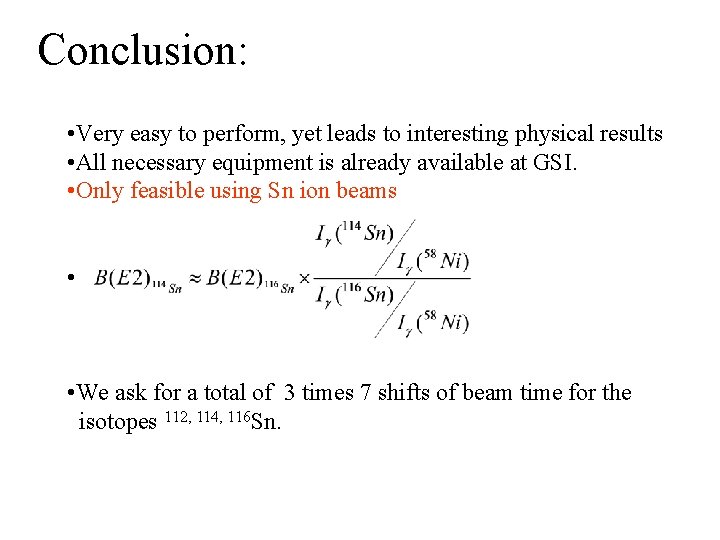
Conclusion: • Very easy to perform, yet leads to interesting physical results • All necessary equipment is already available at GSI. • Only feasible using Sn ion beams • • We ask for a total of 3 times 7 shifts of beam time for the isotopes 112, 114, 116 Sn.
- Slides: 12