
Could you have a blood clot Diagnostic Tests
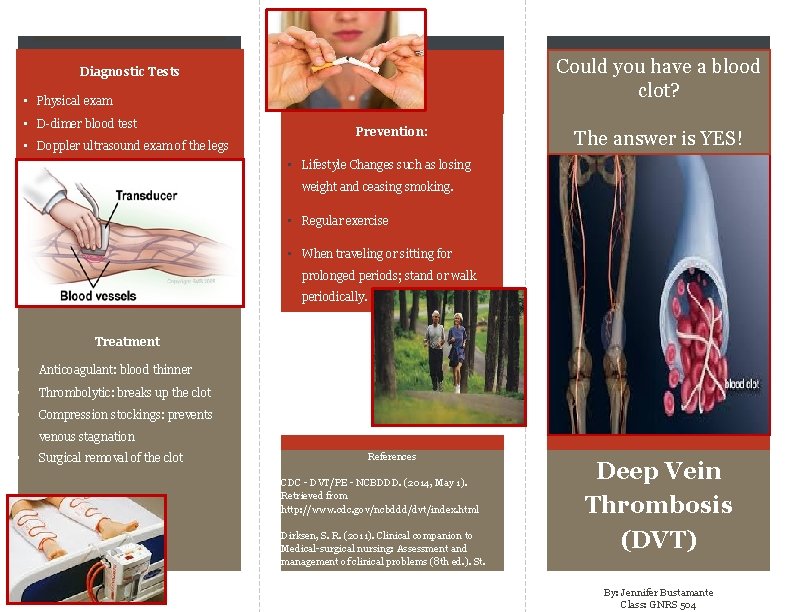
Could you have a blood clot? Diagnostic Tests • Physical exam • D-dimer blood test Prevention: • Doppler ultrasound exam of the legs The answer is YES! • Lifestyle Changes such as losing weight and ceasing smoking. • Regular exercise • When traveling or sitting for prolonged periods; stand or walk periodically. Treatment • Anticoagulant: blood thinner • Thrombolytic: breaks up the clot • Compression stockings: prevents venous stagnation • Surgical removal of the clot References CDC - DVT/PE - NCBDDD. (2014, May 1). Retrieved from http: //www. cdc. gov/ncbddd/dvt/index. html Dirksen, S. R. (2011). Clinical companion to Medical-surgical nursing: Assessment and management of clinical problems (8 th ed. ). St. Louis, MO: Elsevier/Mosby. Deep Vein Thrombosis (DVT) By: Jennifer Bustamante Class: GNRS 504
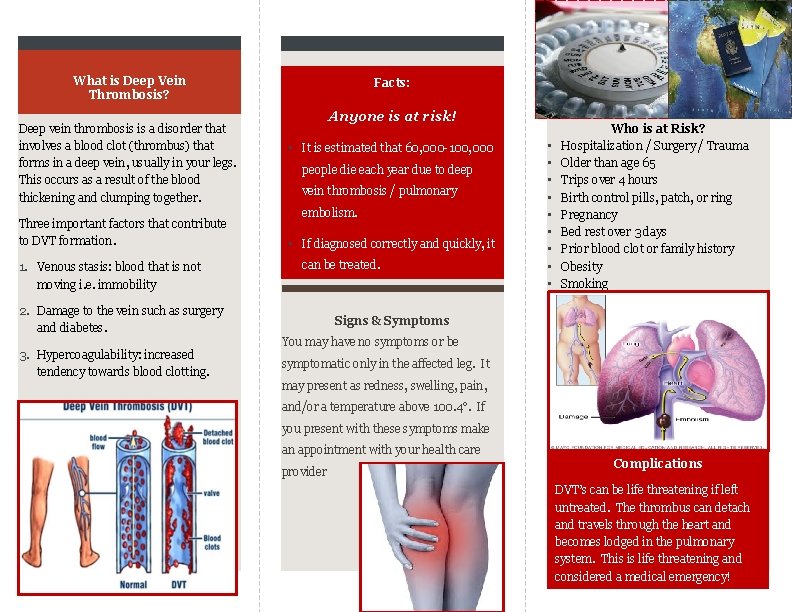
What is Deep Vein Thrombosis? Deep vein thrombosis is a disorder that involves a blood clot (thrombus) that forms in a deep vein, usually in your legs. This occurs as a result of the blood thickening and clumping together. Three important factors that contribute to DVT formation. 1. Venous stasis: blood that is not moving i. e. immobility Facts: Anyone is at risk! • It is estimated that 60, 000 -100, 000 people die each year due to deep vein thrombosis / pulmonary embolism. • If diagnosed correctly and quickly, it can be treated. 2. Damage to the vein such as surgery and diabetes. 3. Hypercoagulability: increased tendency towards blood clotting. • • • Who is at Risk? Hospitalization / Surgery / Trauma Older than age 65 Trips over 4 hours Birth control pills, patch, or ring Pregnancy Bed rest over 3 days Prior blood clot or family history Obesity Smoking Signs & Symptoms You may have no symptoms or be symptomatic only in the affected leg. It may present as redness, swelling, pain, and/or a temperature above 100. 4°. If you present with these symptoms make an appointment with your health care provider Complications DVT’s can be life threatening if left untreated. The thrombus can detach and travels through the heart and becomes lodged in the pulmonary system. This is life threatening and considered a medical emergency!
- Slides: 2