
Cotton Fiber Outline 1 Introduction 2 Species and
Cotton Fiber

Outline: 1. Introduction 2. Species and Varieties of Cotton 3. Structure of Cotton Fiber 4. Cotton Fiber from Field to Mill 5. Cotton Grading and Its System 6. Properties 7. End Uses
Introduction Cotton referred to as the “King of fibers” is most important textile fiber in the world. Cotton is a vegetable fiber which surrounds the seeds of the cotton plant. Cotton has been cultivated for more than 5000 years. Cotton plant belongs to the family “GOSSYPIUM”. GOSSYPIUM

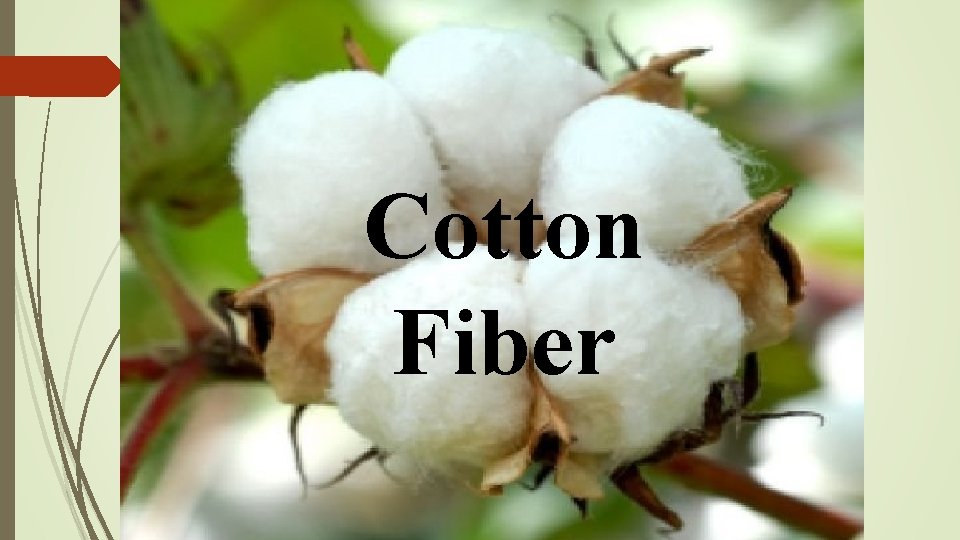
Introduction The cotton fiber is made up of countless cellulose molecules. Cotton is removed mechanically from the seed bolls by the cotton ginning. The ginned cotton is then pressed into bales and sent to the factories to be spun into yarns.

Cotton Boll Cotton after Ginning Cotton Bales

Species of Cotton There are four commercially-grown species of cotton: Gossypium hirsutum – upland cotton, native to Central America, Mexico Gossypium barbadense – known as extra-long staple cotton, native to tropical South America Gossypium arboreum – native to India and Pakistan Gossypium herbaceum – cotton, native to Southern Africa
Structure of Cotton Fiber
Structure of Cotton Fiber

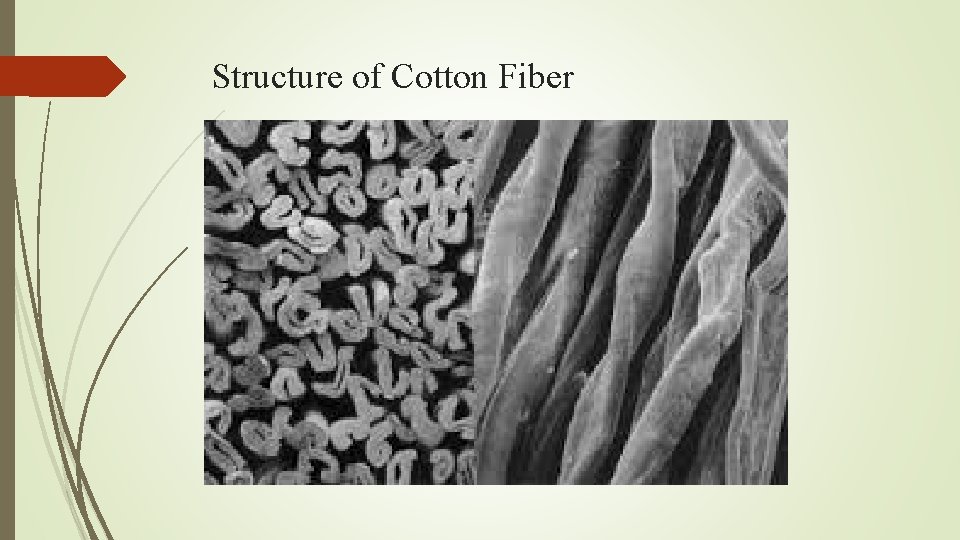
Longitudinal Structure of Cotton Fiber 1. Base/Root 2. Body 3. Tip Body Base
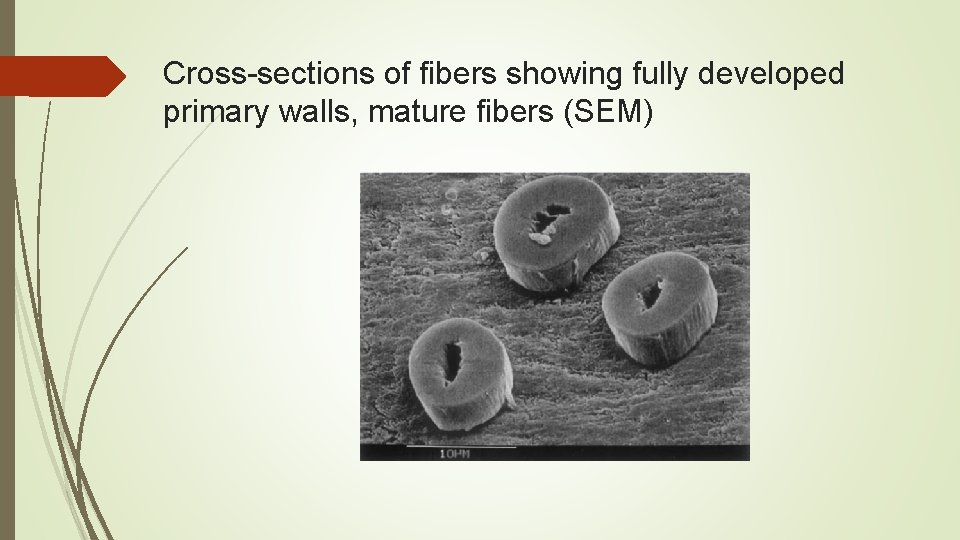
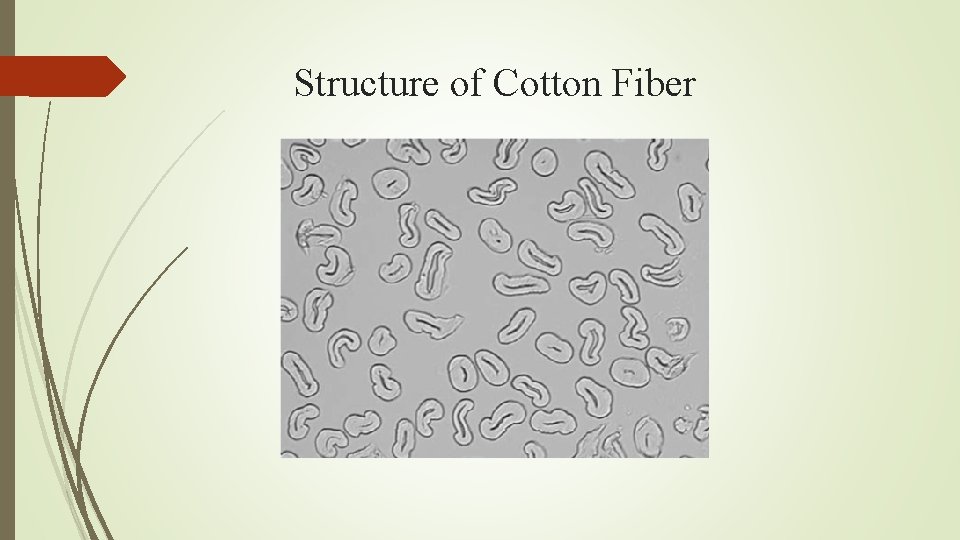
Cross-sections of fibers showing fully developed primary walls, mature fibers (SEM)
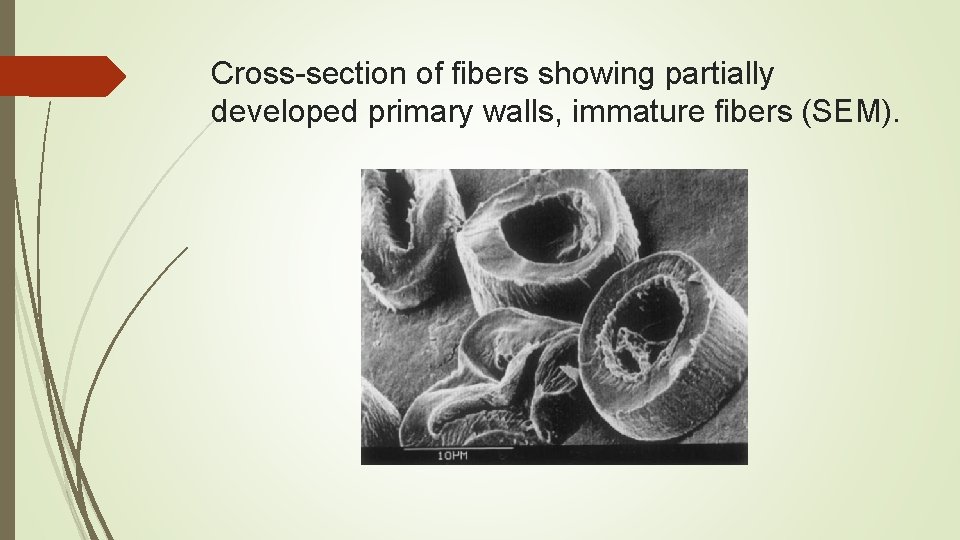
Cross-section of fibers showing partially developed primary walls, immature fibers (SEM).
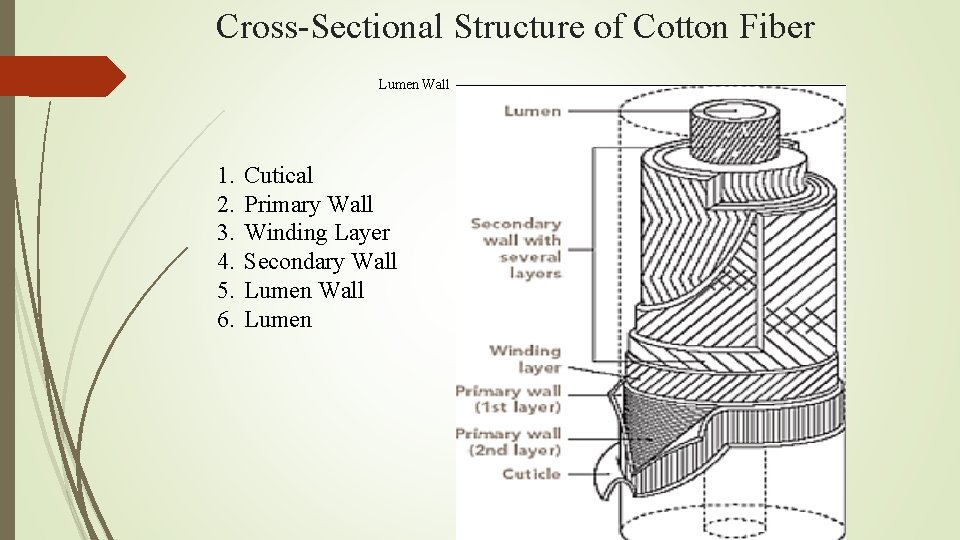
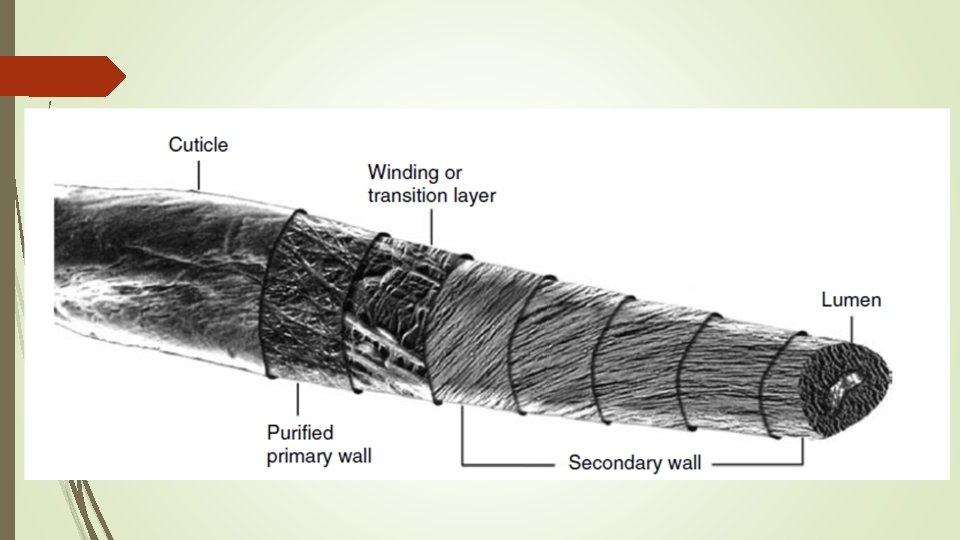
Cross-Sectional Structure of Cotton Fiber Lumen Wall 1. 2. 3. 4. 5. 6. Cutical Primary Wall Winding Layer Secondary Wall Lumen
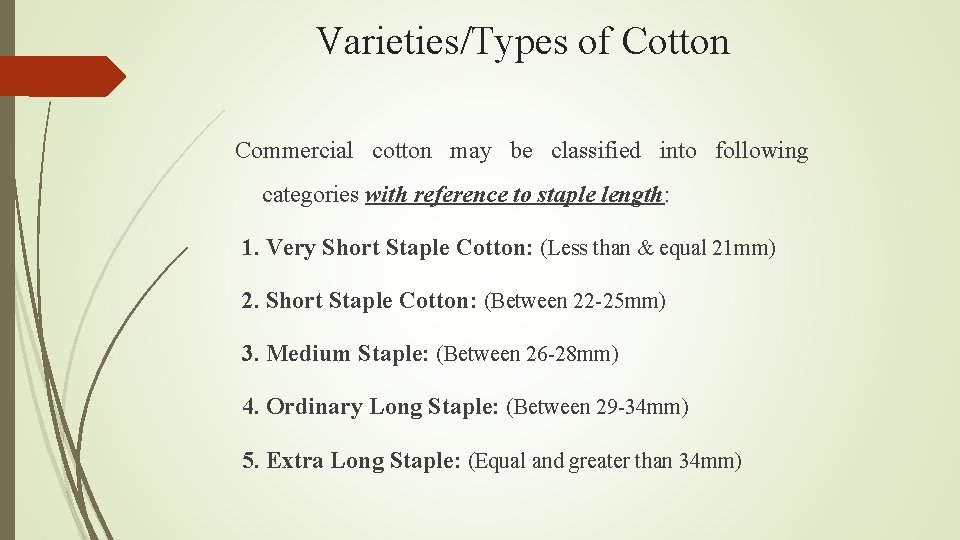
Varieties/Types of Cotton Commercial cotton may be classified into following categories with reference to staple length: 1. Very Short Staple Cotton: (Less than & equal 21 mm) 2. Short Staple Cotton: (Between 22 -25 mm) 3. Medium Staple: (Between 26 -28 mm) 4. Ordinary Long Staple: (Between 29 -34 mm) 5. Extra Long Staple: (Equal and greater than 34 mm)
Varieties/Types of Pak Cotton ØMNH-93 (Cotton of Punjab region) ØNAYYAB-78 (Cotton of Sindh region) ØOrganic Cotton ØBCI Cotton
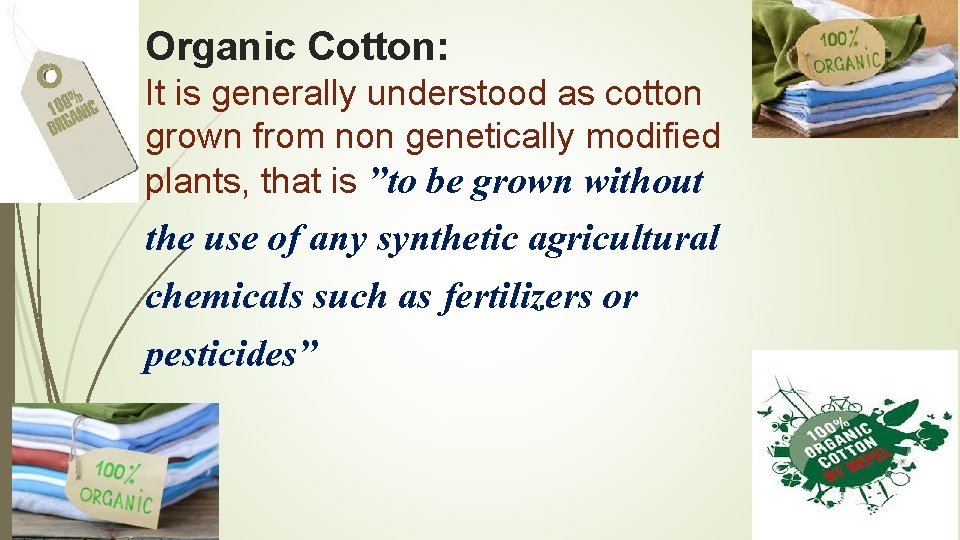
Organic Cotton: It is generally understood as cotton grown from non genetically modified plants, that is ”to be grown without the use of any synthetic agricultural chemicals such as fertilizers or pesticides”
Ø Ecological footprint Cotton covers 2. 5% the world's cultivated land yet uses 16% of the world's insecticides, more than any other single major crop. Chemicals used in the processing of cotton pollute the air and surface waters. Residual chemicals may irritate consumers' skin. Decreased biodiversity and shifting equilibrium of ecosystems due to the use of pesticides.
Ø Advantages Protecting surface and groundwater quality (eliminating contaminants in surface runoff) Reduced risk in insect and disease control by replacing insecticide with the manipulation of ecosystems Conservation of biodiversity Eliminate the use of toxic chemicals used in cotton
BCI Cotton: The Better Cotton Initiative exists “to make global cotton production; übetter for the people who produce it übetter for the environment it grows in übetter for the sector’s future”
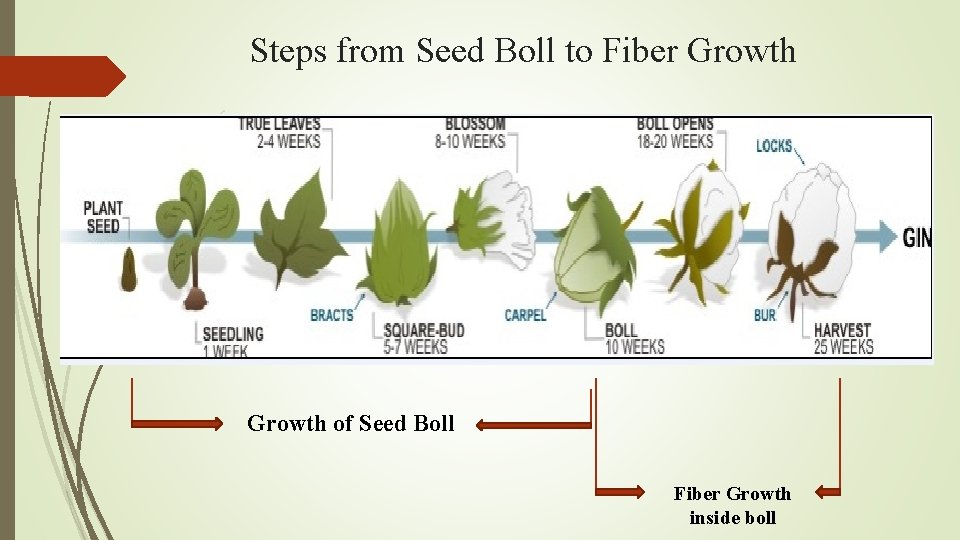
Steps from Seed Boll to Fiber Growth of Seed Boll Fiber Growth inside boll
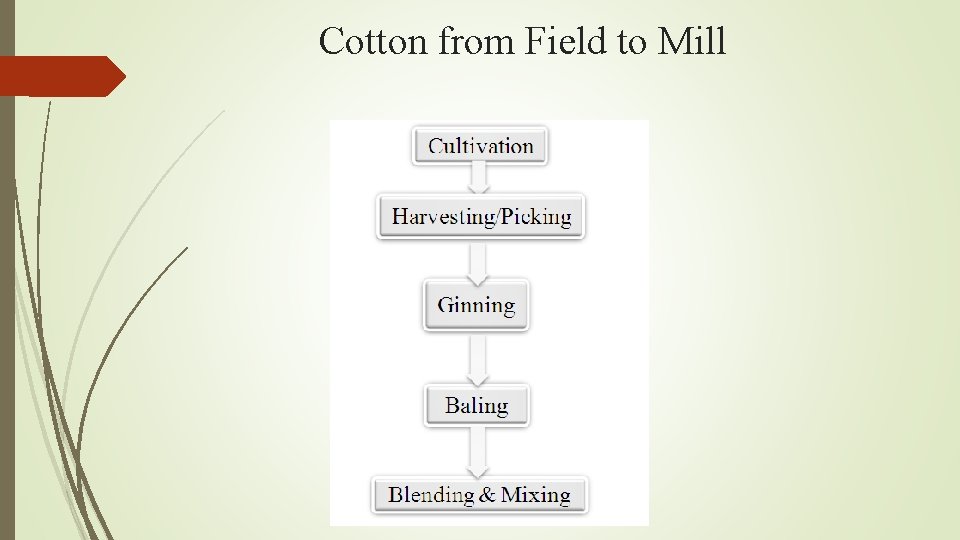
Cotton from Field to Mill
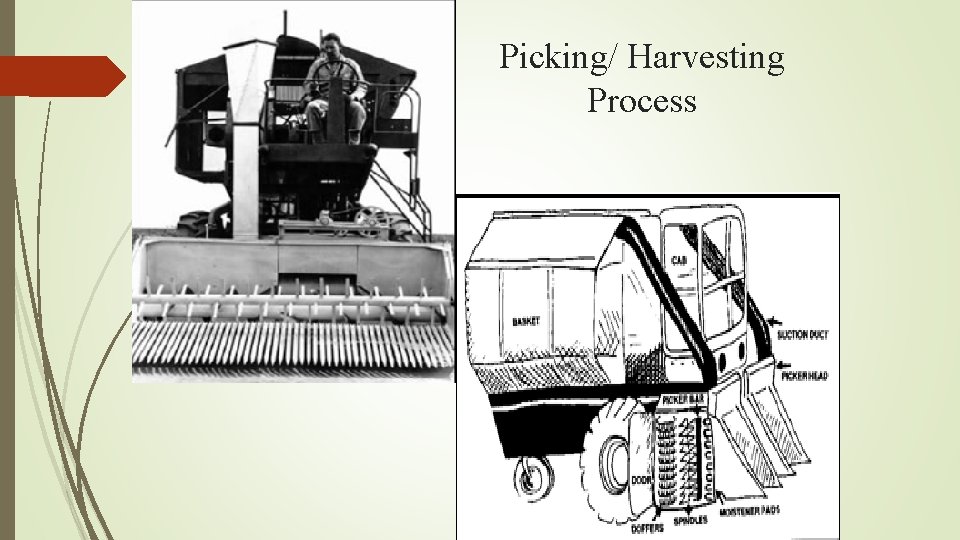
Picking/ Harvesting Process
Ginning Process After picking, the cotton fibers have to be separated from the seeds by the process of Ginning. Generally two types of Ginning methods: 1. Saw Ginning 2. Roller Ginning

Saw Ginning Process
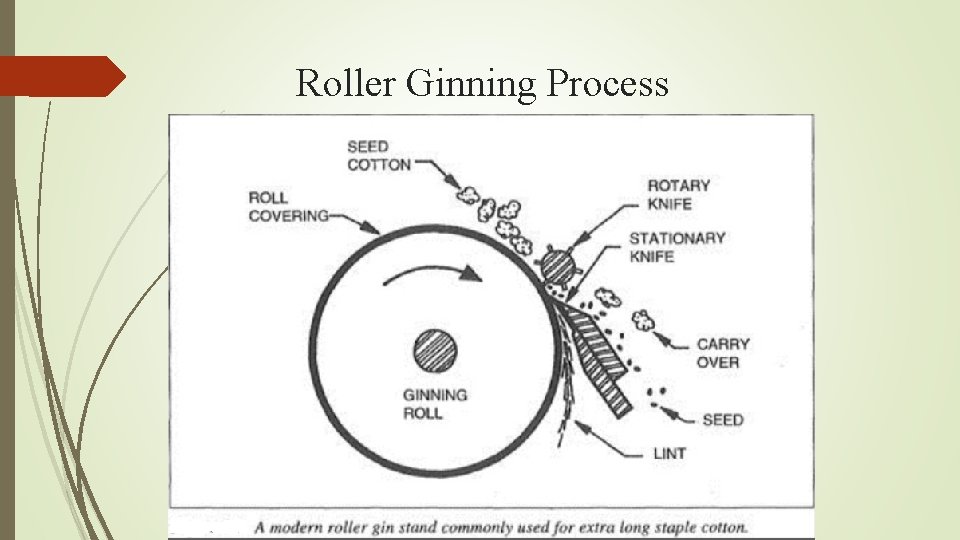
Roller Ginning Process
By-Products of Cotton The raw cotton passes through several cleaning processes before it is baled. As a result, the grower obtains valuable by-products that amount approximately to one-sixth of the entire income derived from the cotton plant. Cotton Linters: Short hair like fibers used in making Regenerated fibers Hulls: Outside portion of seed, rich in nitrogen, used as fertilizer Inner Seeds: Seed inside the hull gives cottonseed oil, used in cooking and making soap.
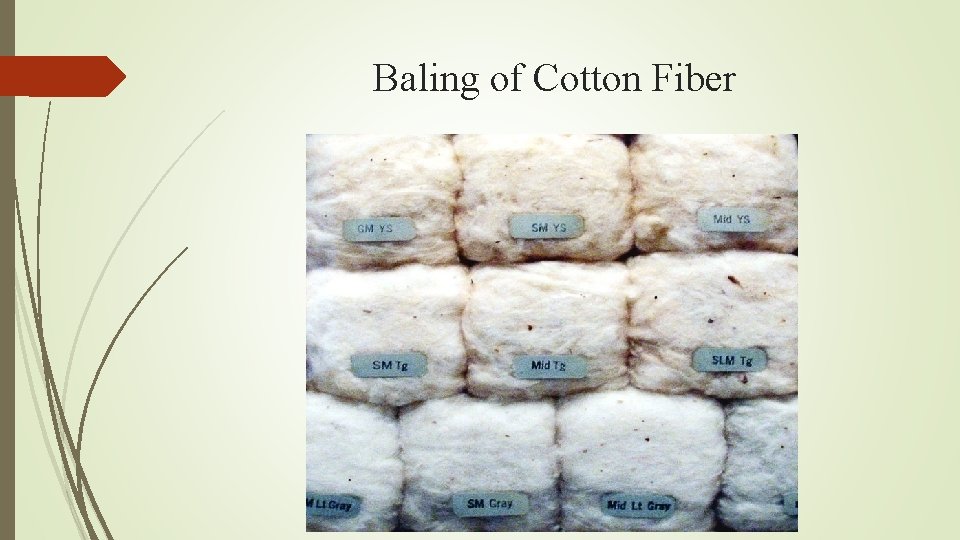
Baling of Cotton Fiber
Cotton Grading and Its System It is also called “Number Grading System”. Grading is done on the basis of following factors: 1. Moisture %age 2. Staple Length 3. U. R % (Uniformity Ratio) 4. Floating Fibers 5. Micronaire (Fineness) 6. Trash % 7. Invisible %
Universal Grades of Cotton This grading is done by (U. S. D. A), United States Department of Agriculture. Limitations: Only for Saw Ginned Cotton Grading on the basis of Trash % Not applicable for long staple cotton No consideration for maturity
Properties of Cotton Fiber 1. Fiber Surface and Color: Lustrous/ Creamy White color 2. Tensile Strength: Tenacity = 28~45 Gram/Tex 3. Elongation: Not easily stretch Elongation at Break = 5 -10 % 4. Elastic Properties: Rigid/ Less Flexibility At 2% Extension ------- 74% Recovery At 5% Extension ------- 45% Recovery
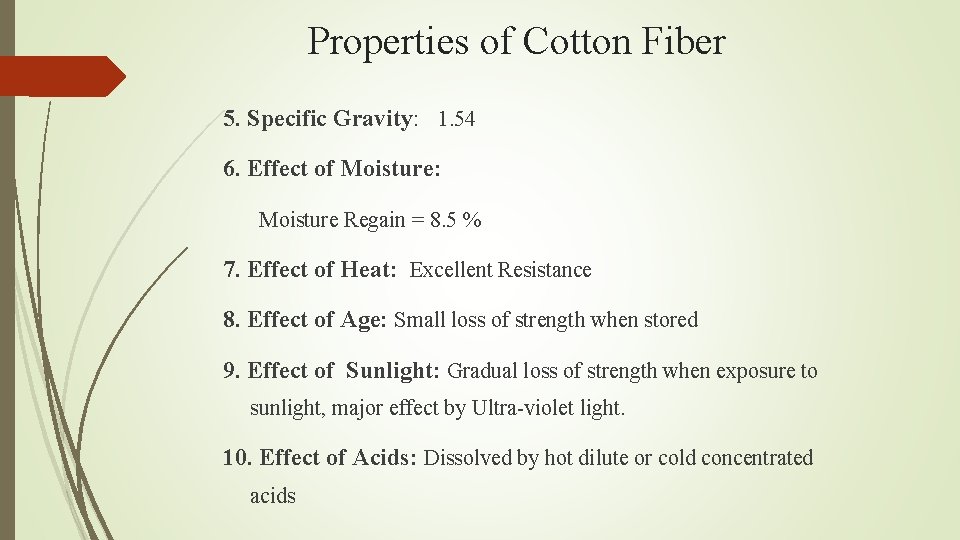
Properties of Cotton Fiber 5. Specific Gravity: 1. 54 6. Effect of Moisture: Moisture Regain = 8. 5 % 7. Effect of Heat: Excellent Resistance 8. Effect of Age: Small loss of strength when stored 9. Effect of Sunlight: Gradual loss of strength when exposure to sunlight, major effect by Ultra-violet light. 10. Effect of Acids: Dissolved by hot dilute or cold concentrated acids
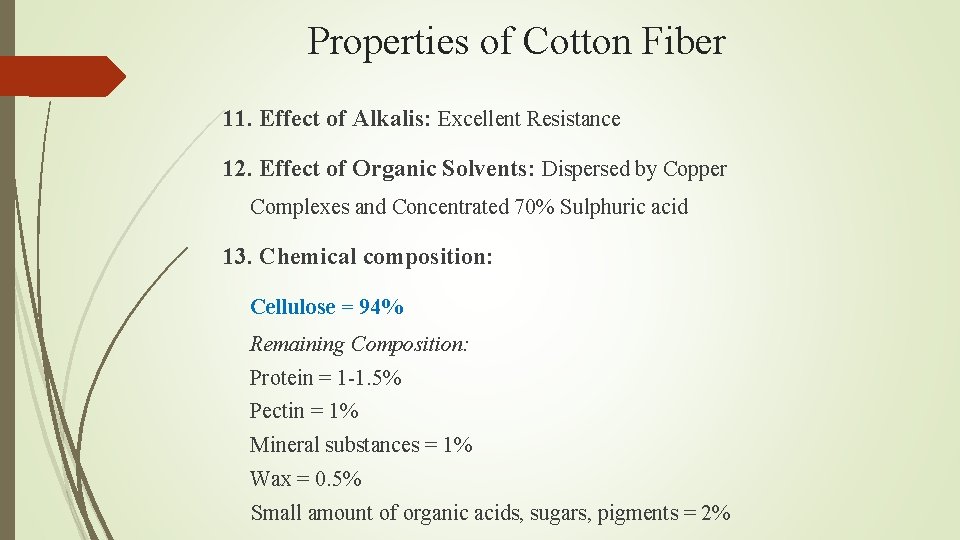
Properties of Cotton Fiber 11. Effect of Alkalis: Excellent Resistance 12. Effect of Organic Solvents: Dispersed by Copper Complexes and Concentrated 70% Sulphuric acid 13. Chemical composition: Cellulose = 94% Remaining Composition: Protein = 1 -1. 5% Pectin = 1% Mineral substances = 1% Wax = 0. 5% Small amount of organic acids, sugars, pigments = 2%
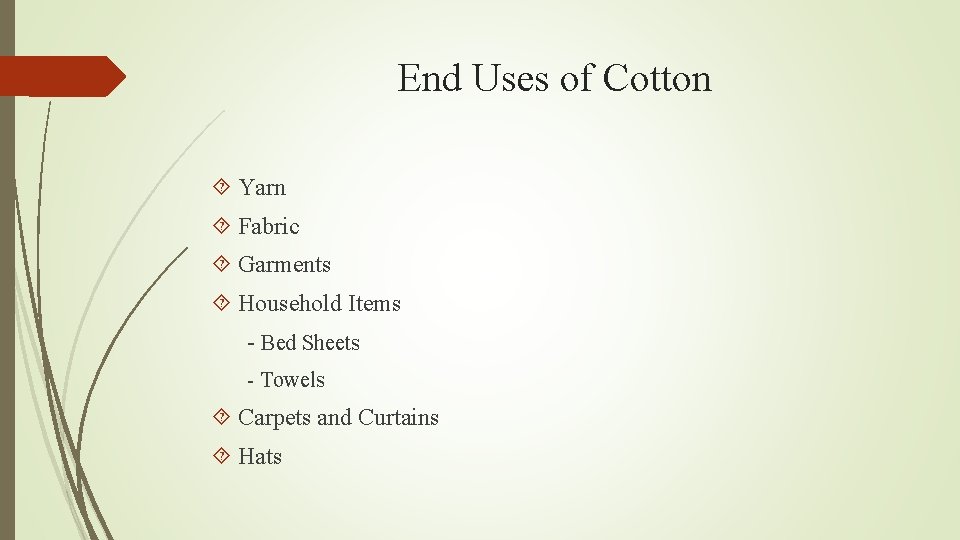
End Uses of Cotton Yarn Fabric Garments Household Items - Bed Sheets - Towels Carpets and Curtains Hats
- Slides: 33