
CoTeaching Nicole Macpherson and Fin Mullins Overview Benefits
Co-Teaching Nicole Macpherson and Fin Mullins
Overview • Benefits of Co-Teaching • What Co-Teaching Is and What It Is Not • 6 Types of Co-Teaching Models • Case Studies • Resources
Benefits of Co-Teaching • Share responsibility and accountability of planning, instruction and evaluation • Promotes differentiated instruction • Teachers have an opportunity to share their skills and expertise • Meet the educational needs of students with diverse learning options • Benefit from the professional support and exchange of teaching practices while working collaboratively
Factors that Influence the Success of Co-Teaching • Willingness to share and learn with and from each other • Compatible or complementary teaching philosophies • Communication and interpersonal skills • Time during the day for partners to co-plan and co-reflect on lessons
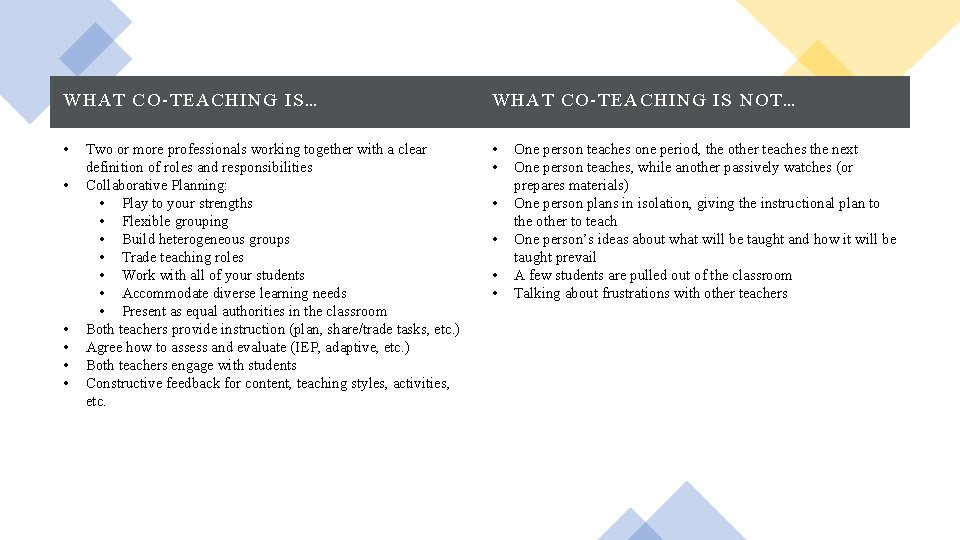
WHAT CO-TEACHING IS… WHAT CO-TEACHING IS NOT… • • Two or more professionals working together with a clear definition of roles and responsibilities Collaborative Planning: • Play to your strengths • Flexible grouping • Build heterogeneous groups • Trade teaching roles • Work with all of your students • Accommodate diverse learning needs • Present as equal authorities in the classroom Both teachers provide instruction (plan, share/trade tasks, etc. ) Agree how to assess and evaluate (IEP, adaptive, etc. ) Both teachers engage with students Constructive feedback for content, teaching styles, activities, etc. • • One person teaches one period, the other teaches the next One person teaches, while another passively watches (or prepares materials) One person plans in isolation, giving the instructional plan to the other to teach One person’s ideas about what will be taught and how it will be taught prevail A few students are pulled out of the classroom Talking about frustrations with other teachers
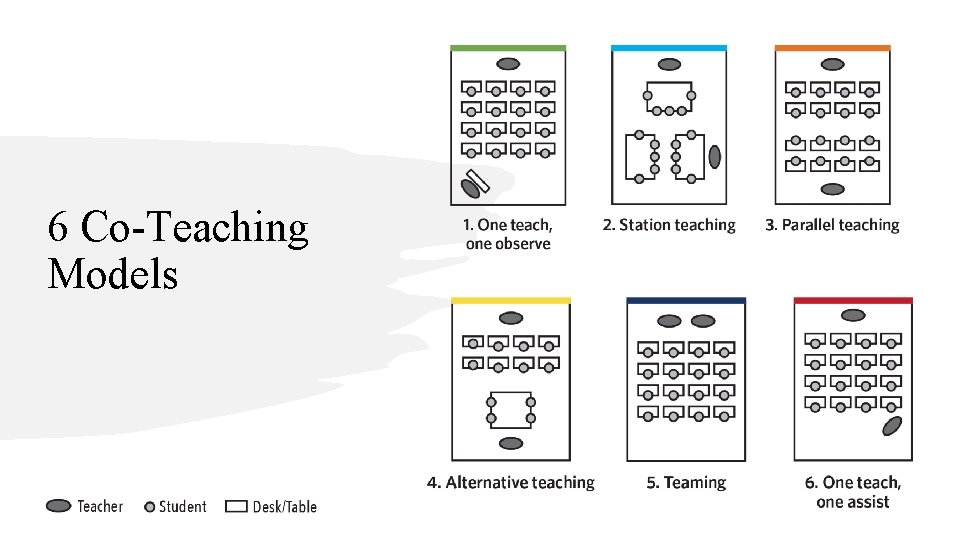
6 Co-Teaching Models
Which Approach? • Collaborative strategies that prove to be effective vary from classroom to classroom • No one approach is better than the other • The goal is to improve the educational outcomes of all the students
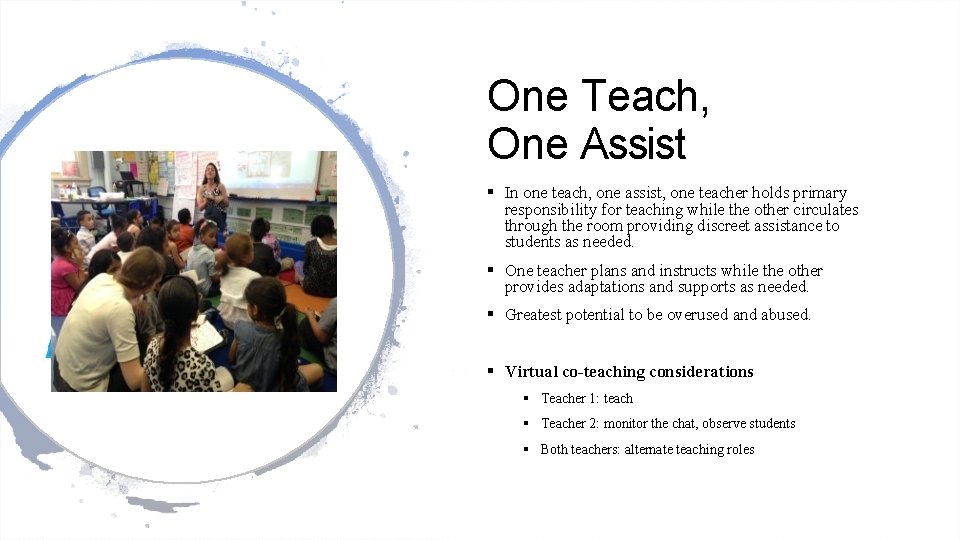
One Teach, One Assist § In one teach, one assist, one teacher holds primary responsibility for teaching while the other circulates through the room providing discreet assistance to students as needed. § One teacher plans and instructs while the other provides adaptations and supports as needed. § Greatest potential to be overused and abused. § Virtual co-teaching considerations § Teacher 1: teach § Teacher 2: monitor the chat, observe students § Both teachers: alternate teaching roles
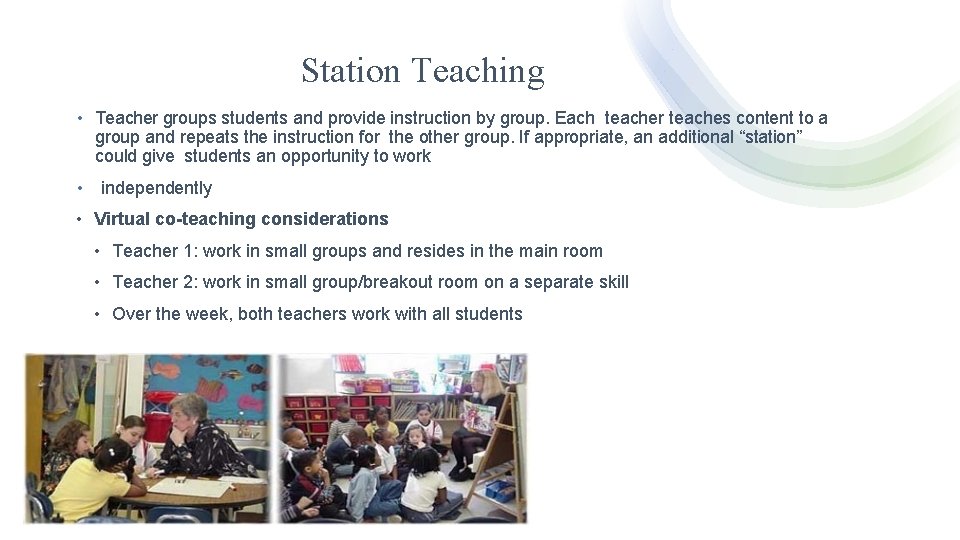
Station Teaching • Teacher groups students and provide instruction by group. Each teacher teaches content to a group and repeats the instruction for the other group. If appropriate, an additional “station” could give students an opportunity to work • independently • Virtual co-teaching considerations • Teacher 1: work in small groups and resides in the main room • Teacher 2: work in small group/breakout room on a separate skill • Over the week, both teachers work with all students
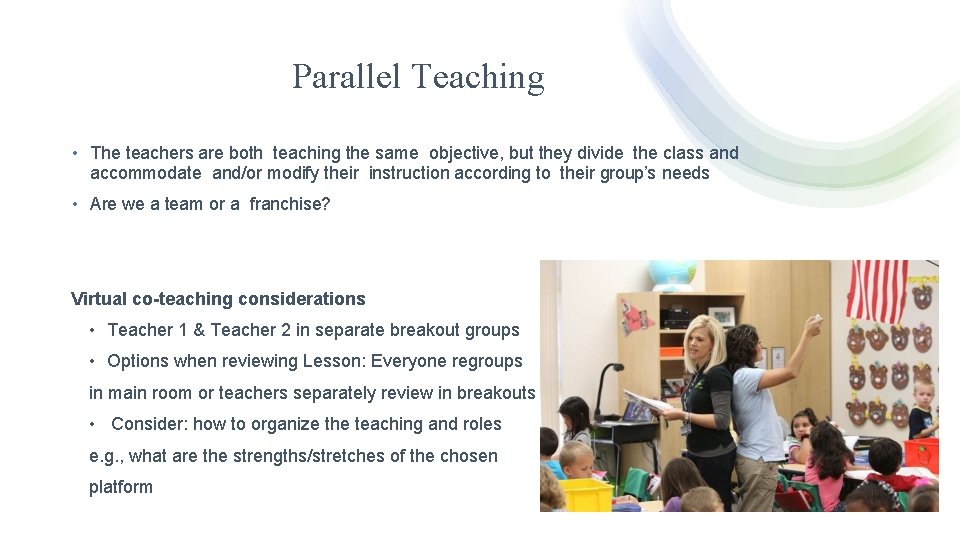
Parallel Teaching • The teachers are both teaching the same objective, but they divide the class and accommodate and/or modify their instruction according to their group’s needs • Are we a team or a franchise? Virtual co-teaching considerations • Teacher 1 & Teacher 2 in separate breakout groups • Options when reviewing Lesson: Everyone regroups in main room or teachers separately review in breakouts • Consider: how to organize the teaching and roles e. g. , what are the strengths/stretches of the chosen platform
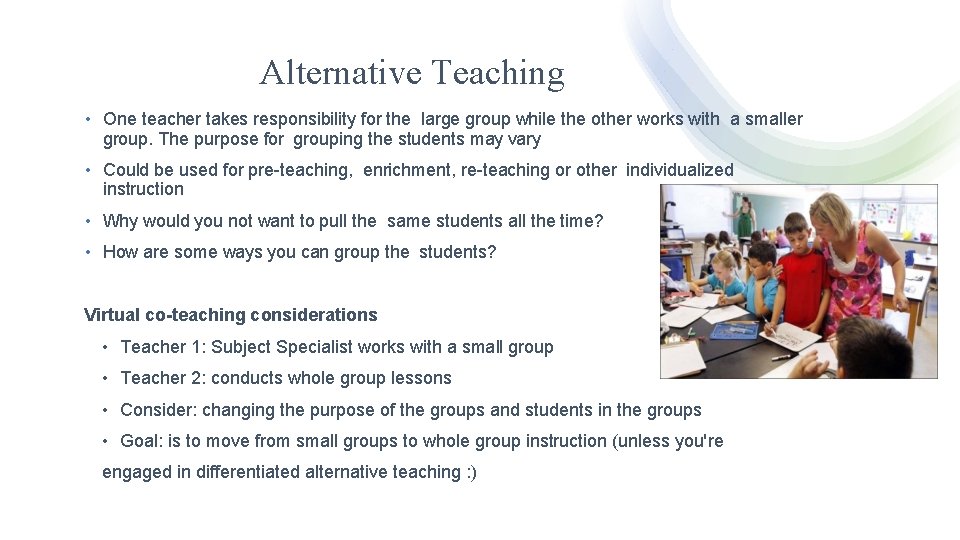
Alternative Teaching • One teacher takes responsibility for the large group while the other works with a smaller group. The purpose for grouping the students may vary • Could be used for pre-teaching, enrichment, re-teaching or other individualized instruction • Why would you not want to pull the same students all the time? • How are some ways you can group the students? Virtual co-teaching considerations • Teacher 1: Subject Specialist works with a small group • Teacher 2: conducts whole group lessons • Consider: changing the purpose of the groups and students in the groups • Goal: is to move from small groups to whole group instruction (unless you're engaged in differentiated alternative teaching : )
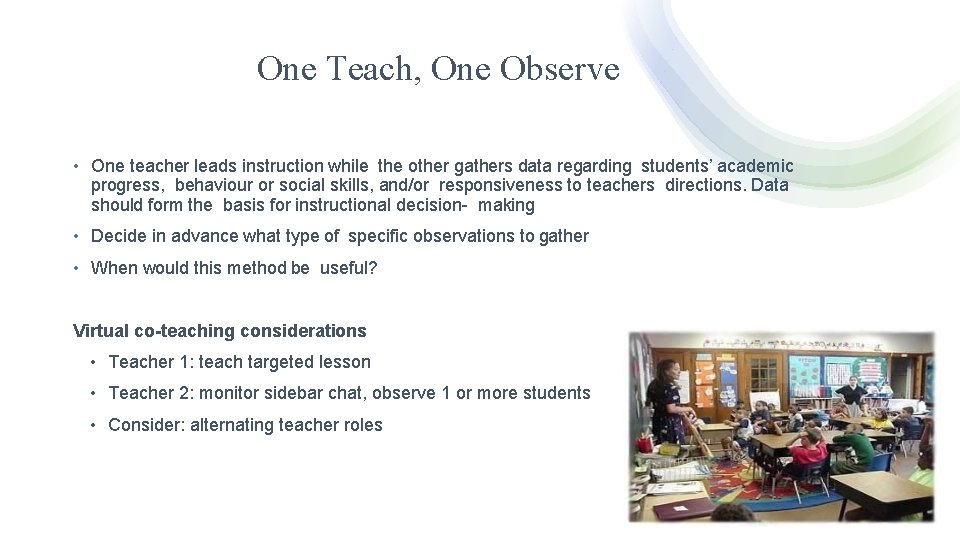
One Teach, One Observe • One teacher leads instruction while the other gathers data regarding students’ academic progress, behaviour or social skills, and/or responsiveness to teachers directions. Data should form the basis for instructional decision- making • Decide in advance what type of specific observations to gather • When would this method be useful? Virtual co-teaching considerations • Teacher 1: teach targeted lesson • Teacher 2: monitor sidebar chat, observe 1 or more students • Consider: alternating teacher roles
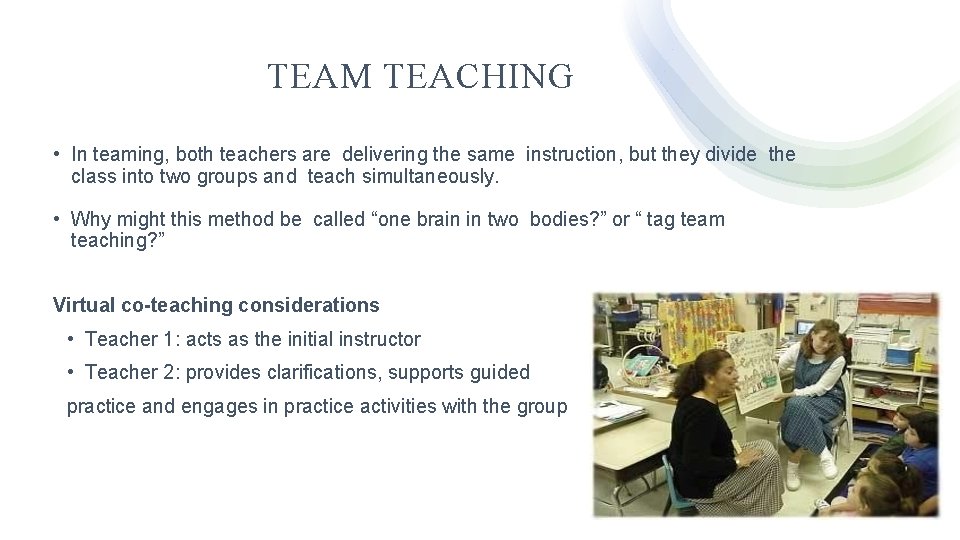
TEAM TEACHING • In teaming, both teachers are delivering the same instruction, but they divide the class into two groups and teach simultaneously. • Why might this method be called “one brain in two bodies? ” or “ tag team teaching? ” Virtual co-teaching considerations • Teacher 1: acts as the initial instructor • Teacher 2: provides clarifications, supports guided practice and engages in practice activities with the group
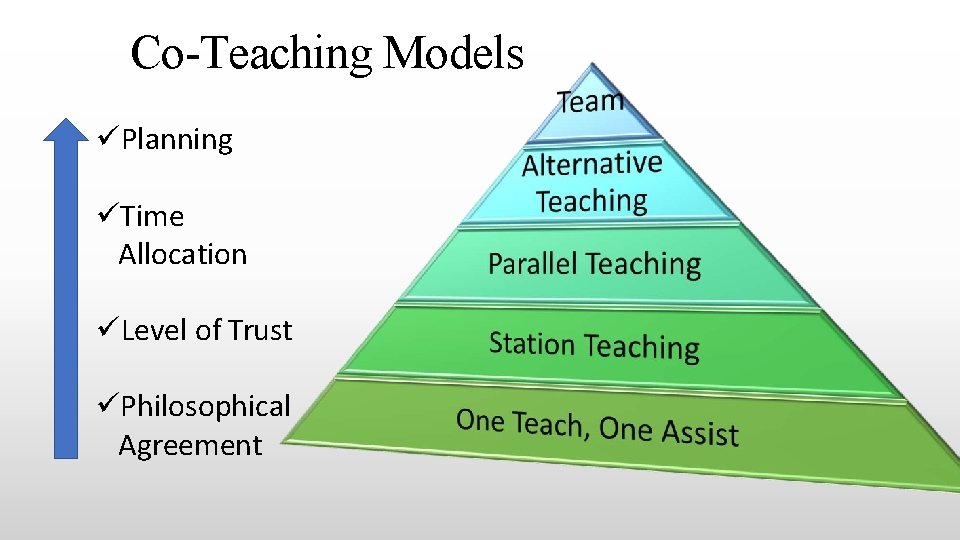
Co-Teaching Models Planning Time Allocation Level of Trust Philosophical Agreement
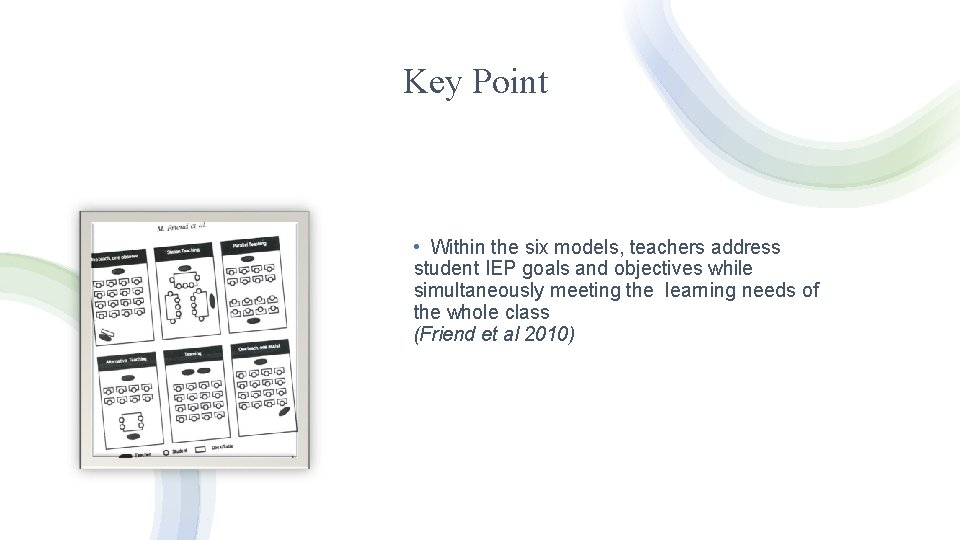
Key Point • Within the six models, teachers address student IEP goals and objectives while simultaneously meeting the learning needs of the whole class (Friend et al 2010)
Case studies • In Breakout groups • Choose a case study • Discuss class's strengths & stretches • Choose a co-teaching model you would use • Provide some concrete examples of what it would look like • Share out to larger group
Case studies: Share out • In Breakout groups • Choose a case study • Discuss class's strengths & stretches • Choose a co-teaching model you would use • Provide some concrete examples of what it would look like • Share out to larger group
Resources � Caron, EA. , and Mc. Laughlin, MJ. , (2002) Indicators of Beacons of Excellence Schools: What Do They Tell Us About Collaborative Practices, Journal of Educational and Psychological Consultation, 13: 4, 285 -313 � Conderman, G. , Bresnahan, V. and Pedersen, T. (2009) Purposeful Co-Teaching. California: Corwin Press � Friend, M. Cook, L, Hurley-Chamberlain, D and Shamberger, C. (2010) Co-Teaching: An Illustration of the complexity of Collaboration in Special Education. Journal of Educational and Psychological Consultation, 20, 9 -27 � Hentz, S. & Jones, M. (2011) Collaborate SMART: Practical Strategies and Tools for Educators. Virginia: CEC � Linz, E. , Heater, M. J, & Howeard, L. (2008) Team teaching high school science: Game plan for success. TEACHING Exceptional Children Plus. 5(2) � Villa, R. Thousand, J. , Nevin, A. (2004) A Guide to Co-Teaching. California: Corwin Press
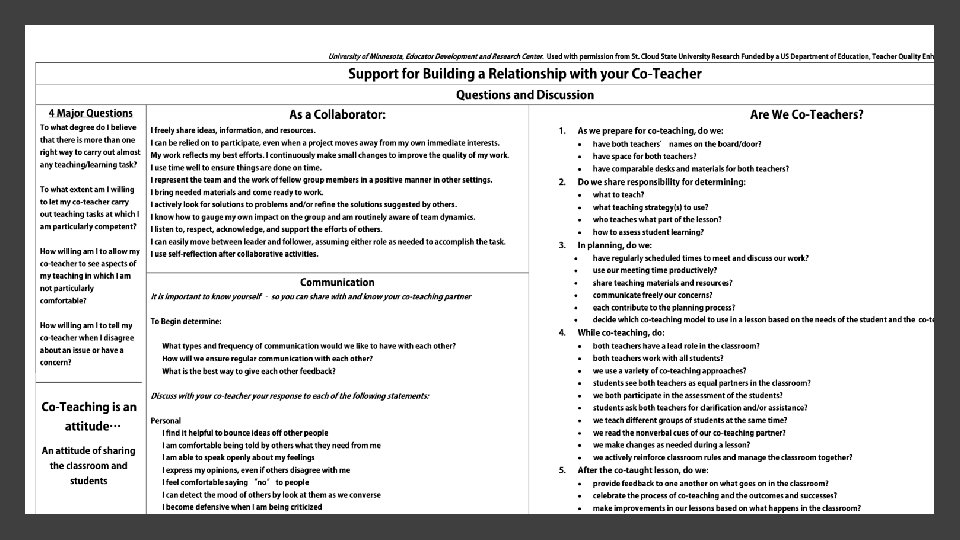
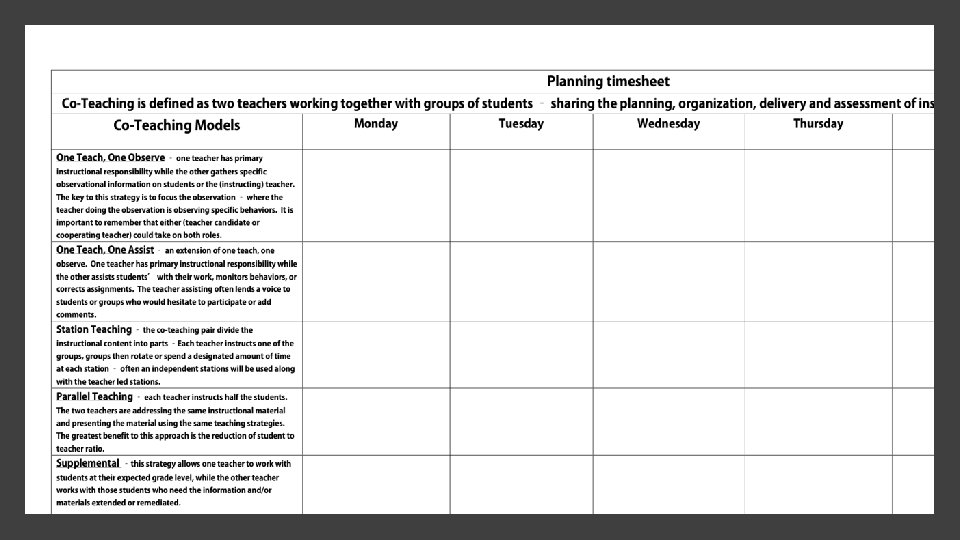
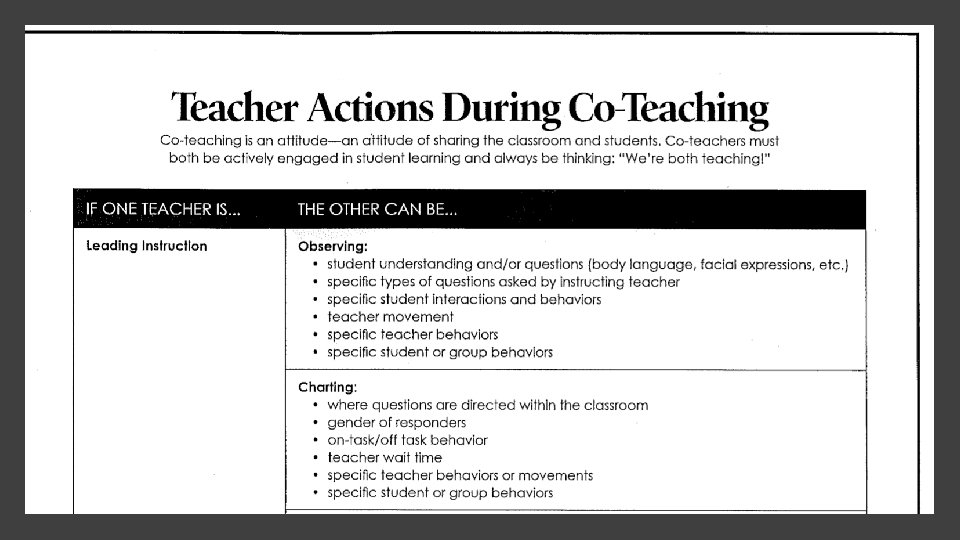
Resources • Links • http: //faculty. virginia. edu/coteaching/definition. html • http: //www. cehd. umn. edu/TERI/Co-Teaching/Foundations/What. html • Does Co-Teaching Work? - http: //susanfitzell. com/does-co-teaching-work/ • Digital Handouts • Building Relationships with your Co-Teacher • Co- Teaching Planning Timesheet • Teacher Actions During Co-Teaching • Co-Teaching Principles, Practices and Pragmatics
- Slides: 22