
Costing and Breakeven Analysis Types of Costs Fixed
Costing and Break-even Analysis Types of Costs Fixed Costs – costs that will remain the same whatever the level of output produced or sold. Variable Costs – vary in direct proportion to output, as output increases variable costs increase. Semi –variable Costs – made up of two cost components, fixed and variable.

Costing and Break-even Analysis Break-even analysis All businesses need to know at what level of sales they will begin to make a profit. Break-even analysis allows calculation of the level of output or sales where firms start to make profits and amounts of losses or profits made at different levels of sales.
Graphical method of break-even analysis. Using the example seen on the NGFL handout CD Racks for All Wooden CD racks are sold for £ 10
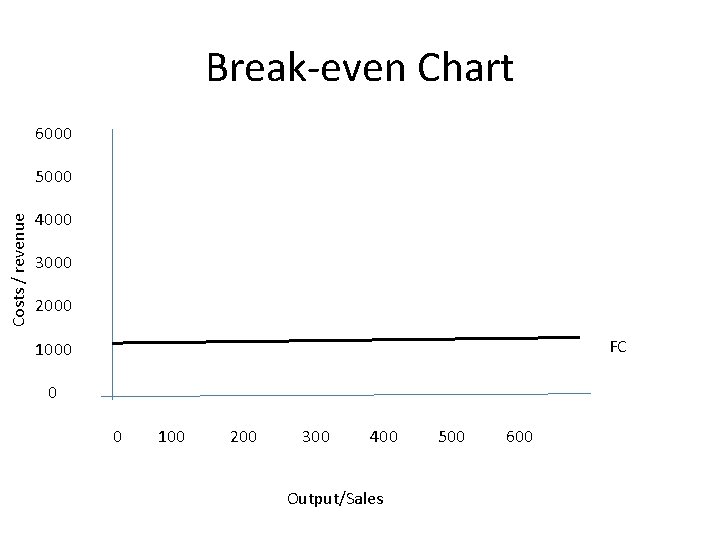
Break-even Chart 6000 Costs / revenue 5000 4000 3000 2000 FC 1000 0 0 100 200 300 400 Output/Sales 500 600
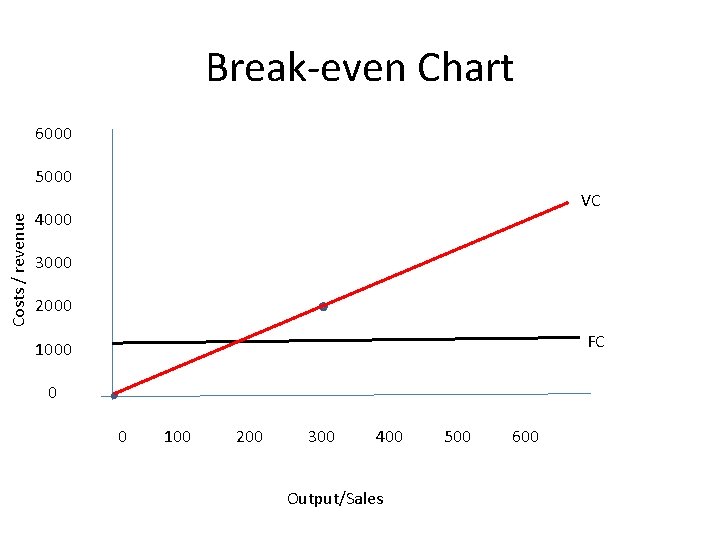
Break-even Chart 6000 Costs / revenue 5000 VC 4000 3000 2000 FC 1000 0 0 100 200 300 400 Output/Sales 500 600
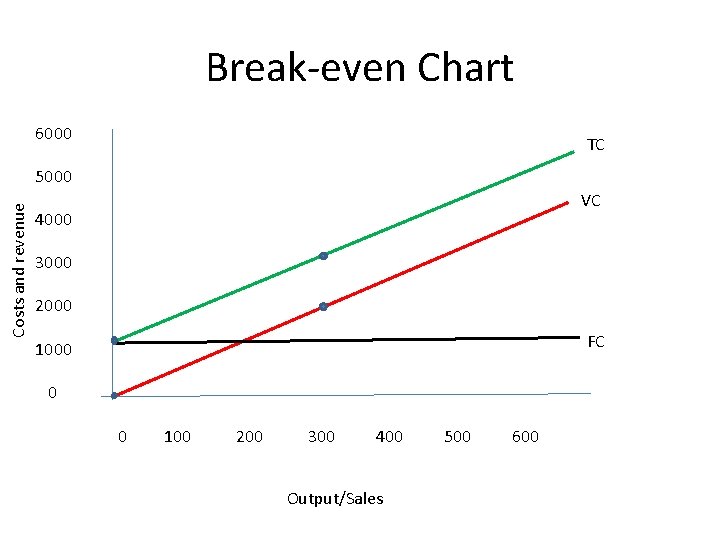
Break-even Chart 6000 TC Costs and revenue 5000 VC 4000 3000 2000 FC 1000 0 0 100 200 300 400 Output/Sales 500 600
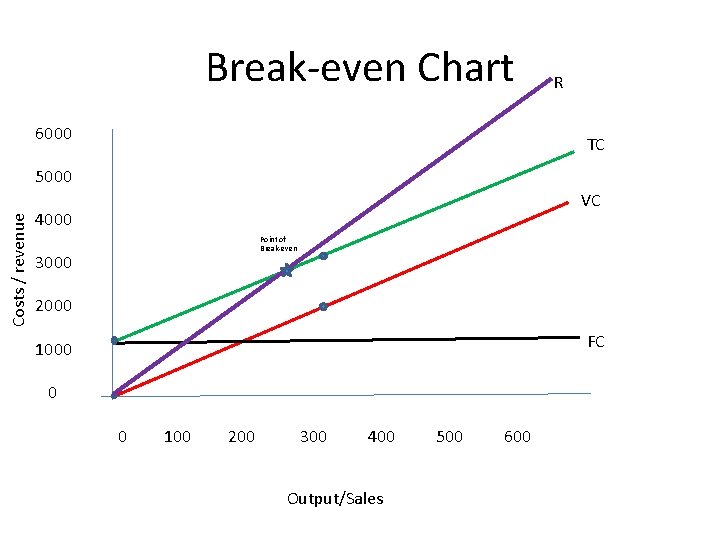
Break-even Chart 6000 R TC Costs / revenue 5000 VC 4000 Point of Break-even 3000 2000 FC 1000 0 0 100 200 300 400 Output/Sales 500 600
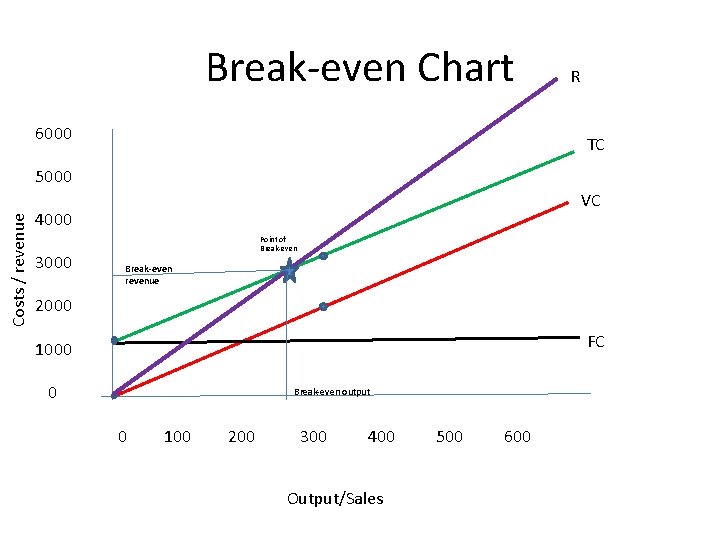
Break-even Chart 6000 R TC Costs / revenue 5000 VC 4000 3000 Point of Break-even revenue 2000 FC 1000 0 Break-even output 0 100 200 300 400 Output/Sales 500 600
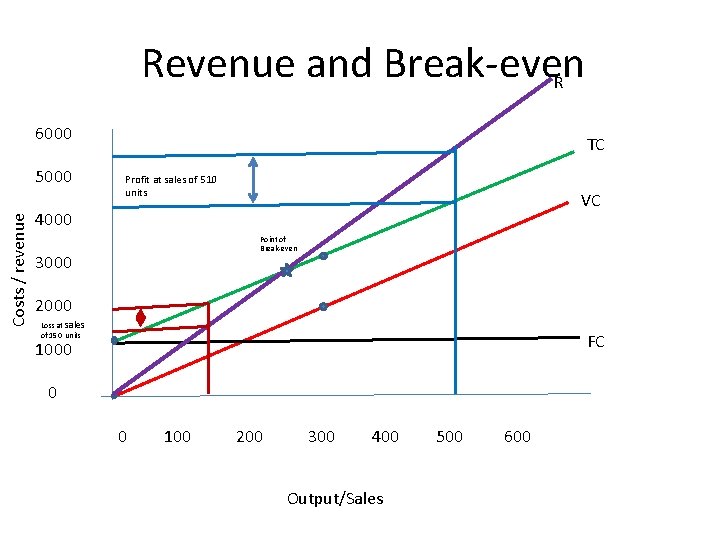
Revenue and Break-even R 6000 Costs / revenue 5000 TC Profit at sales of 510 units VC 4000 Point of Break-even 3000 2000 Loss at sales of 150 units FC 1000 0 0 100 200 300 400 Output/Sales 500 600
Break-even Analysis Margin of Safety The difference between output and level of break-even output level. A high margin of safety is desirable as even if output falls profits can be made. However if there is a low margin of safety then if output falls then this could lead to losses being made. Action needs to be taken to increase output through increased orders, reducing costs hence reducing break-even point and increasing margin of safety. Capacity Firms want to produce at maximum capacity, to return maximum profits, maximise investment and ensure margin of safety is at its highest. However this has negative affects as quality will be jeopardised, costs will be increased through maintenance and there will be little place for accommodating further orders that could be valuable to the firm.
Break-even Analysis Contribution Not all of the revenue received from selling an item can be profit, as the item produced or sold has money spent on variable costs. The difference between the revenue or selling price of an item and the direct cost of producing the item is known as contribution. This is the amount each item sold contributes toward paying the other costs of the business i. e. fixed costs. Once fixed costs are covered , then the contribution earned on each item sold becomes profit. This has an impact on firms accepting orders and investment can be based on contribution. What-if analysis This analysis merely asks questions based on item selling price, profit if sales increased by number of units, or margin of safety if fixed costs increased. The nature of beak-even graphs make them suitable for what-is analysis. However this is more suitable with the use of spreadsheet software. What-if analysis results in redrawing lines on the breakeven to show changes in costs, revenues and new break-even point and new levels of profit and losses at different levels of output.
- Slides: 11