
Costas Levels of Questioning Why is the sky
- Slides: 19
Costa’s Levels of Questioning
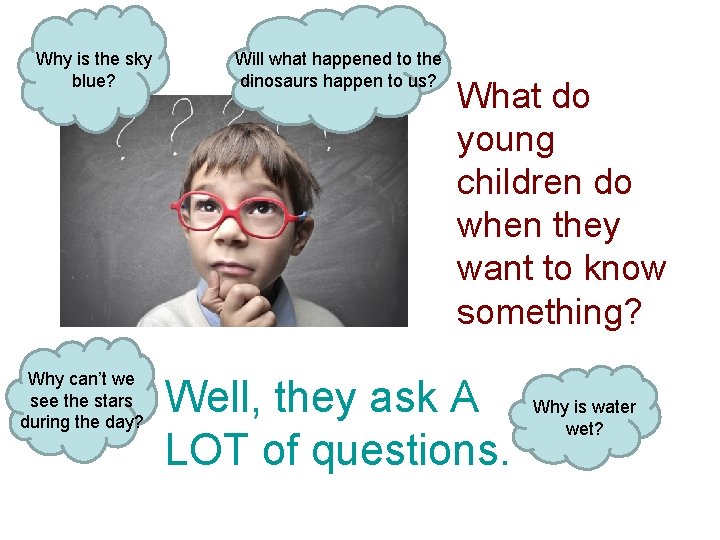
Why is the sky blue? Why can’t we see the stars during the day? Will what happened to the dinosaurs happen to us? What do young children do when they want to know something? Well, they ask A LOT of questions. Why is water wet?
We learn by asking questions. “What we get out of literature depends on the questions we ask it. ” The higher the level of question, the higher the level of thinking and the more you will learn.
• We will use these styles of questioning for Socratic seminar. • We want to ask questions that are demanding and require some serious brain activity. • Not all questions are created equal.
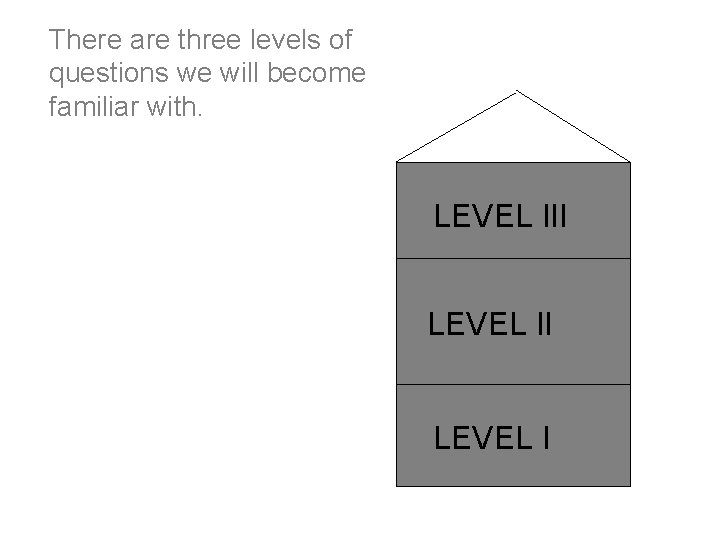
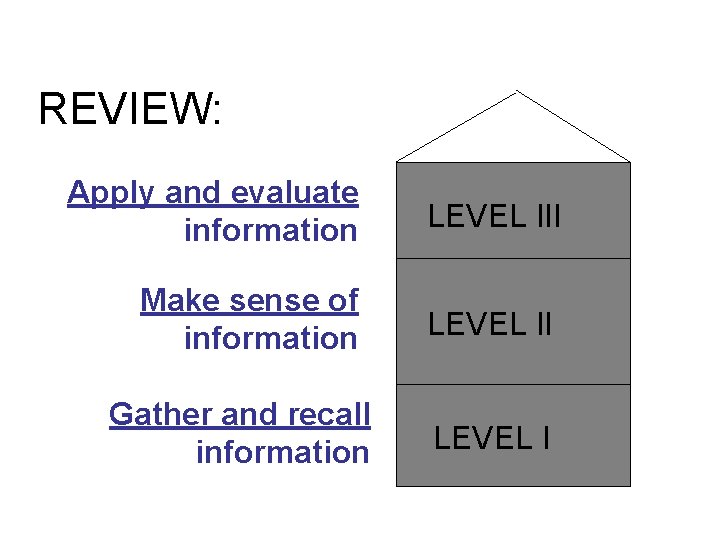
There are three levels of questions we will become familiar with. LEVEL III LEVEL I
Why? • Learning takes place when you PRODUCE knowledge not reproduce it. • Higher-level thinking questions help you dig deeper, and learning is richer and more rewarding. • Making higher-level questions a habit of mind will make you smarter and more capable in ALL of your studies, not just English class.
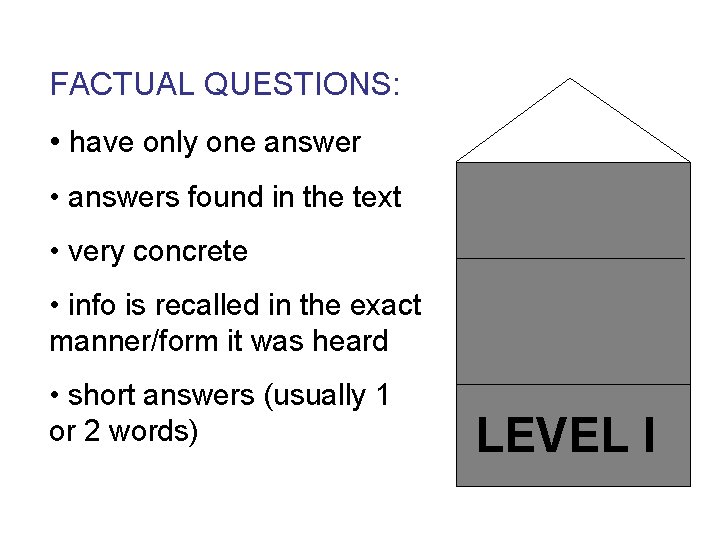
FACTUAL QUESTIONS: • have only one answer • answers found in the text • very concrete • info is recalled in the exact manner/form it was heard • short answers (usually 1 or 2 words) LEVEL I
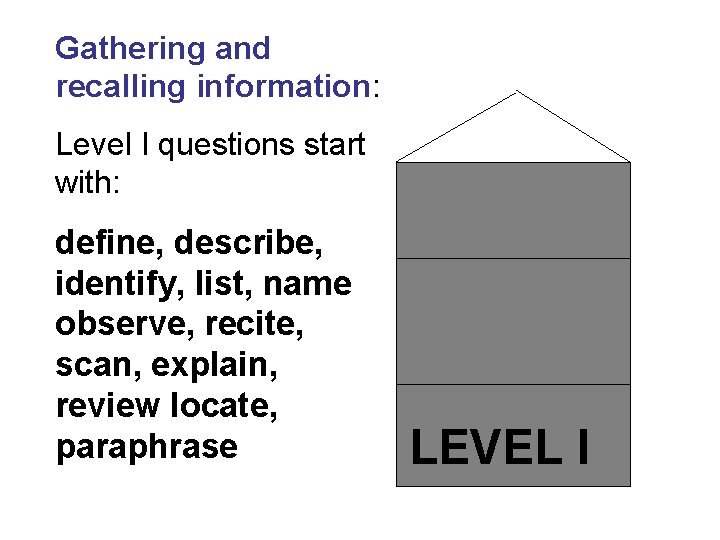
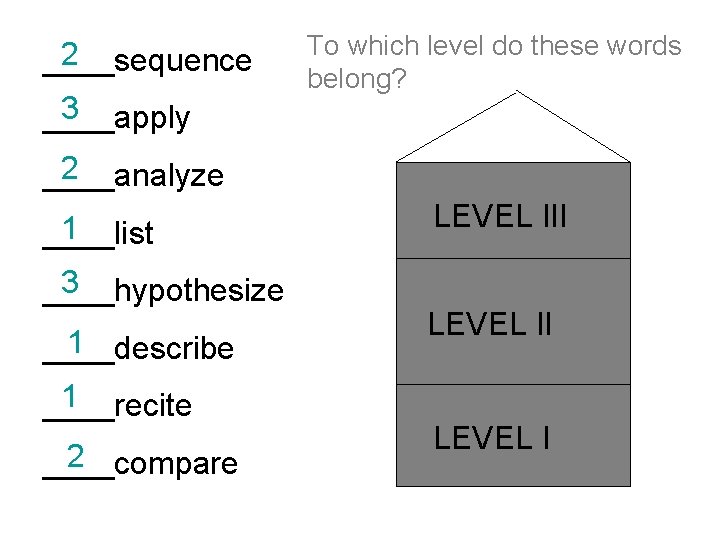
Gathering and recalling information: Level I questions start with: define, describe, identify, list, name observe, recite, scan, explain, review locate, paraphrase LEVEL I
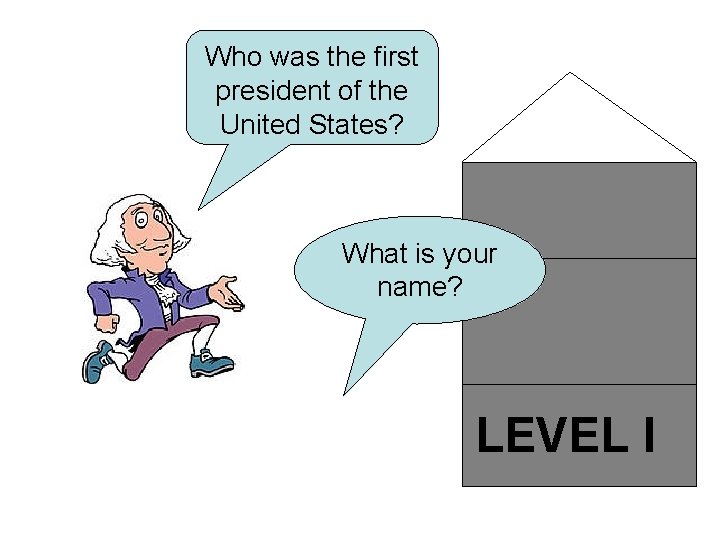
Who was the first president of the United States? What is your name? LEVEL I
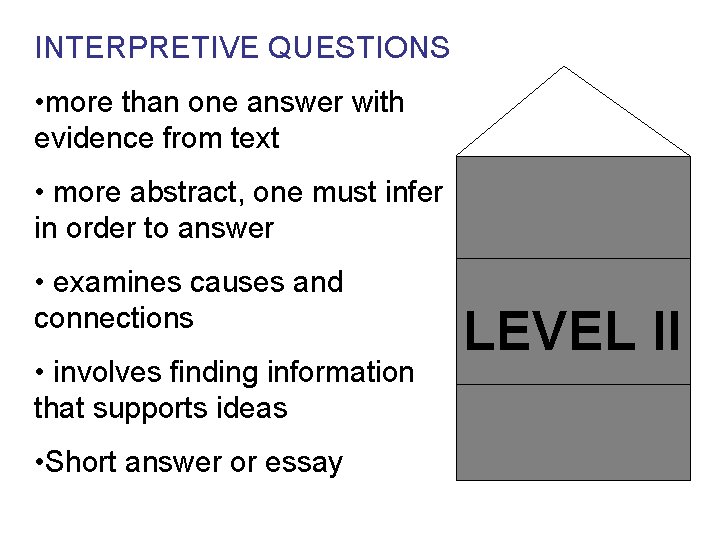
INTERPRETIVE QUESTIONS • more than one answer with evidence from text • more abstract, one must infer in order to answer • examines causes and connections • involves finding information that supports ideas • Short answer or essay LEVEL II
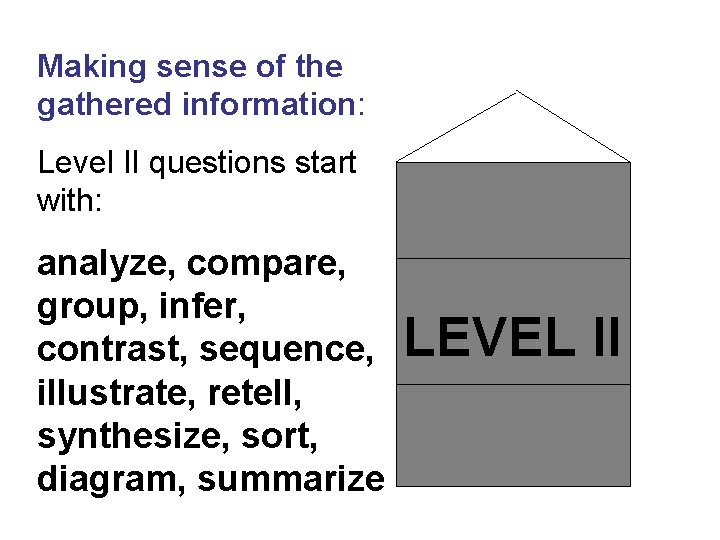
Making sense of the gathered information: Level II questions start with: analyze, compare, group, infer, contrast, sequence, illustrate, retell, synthesize, sort, diagram, summarize LEVEL II
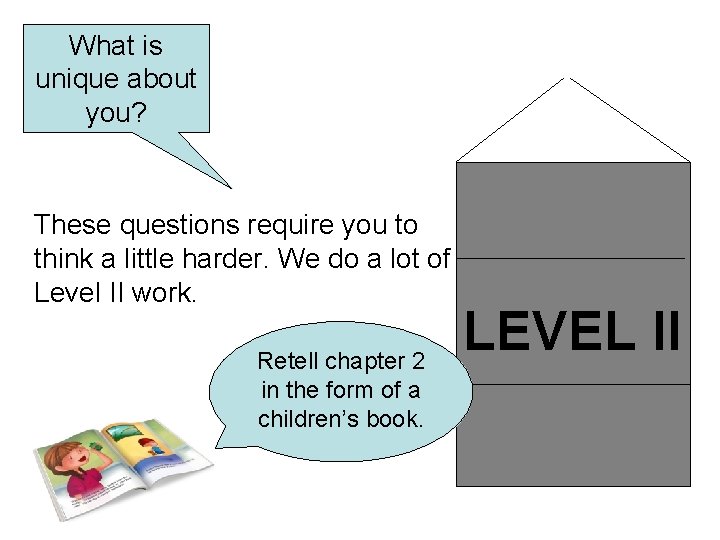
What is unique about you? These questions require you to think a little harder. We do a lot of Level II work. Retell chapter 2 in the form of a children’s book. LEVEL II
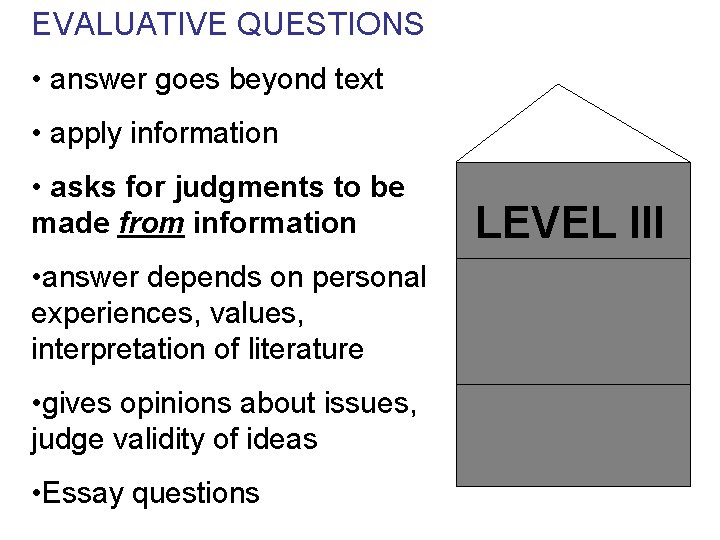
EVALUATIVE QUESTIONS • answer goes beyond text • apply information • asks for judgments to be made from information • answer depends on personal experiences, values, interpretation of literature • gives opinions about issues, judge validity of ideas • Essay questions LEVEL III
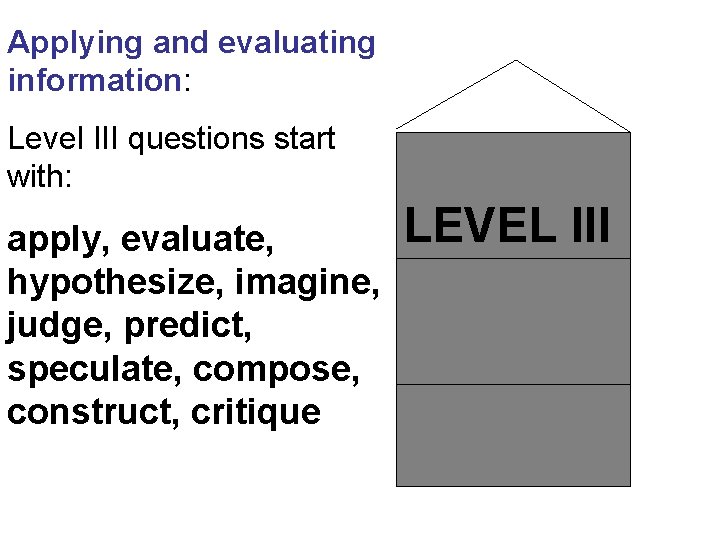
Applying and evaluating information: Level III questions start with: apply, evaluate, hypothesize, imagine, judge, predict, speculate, compose, construct, critique LEVEL III
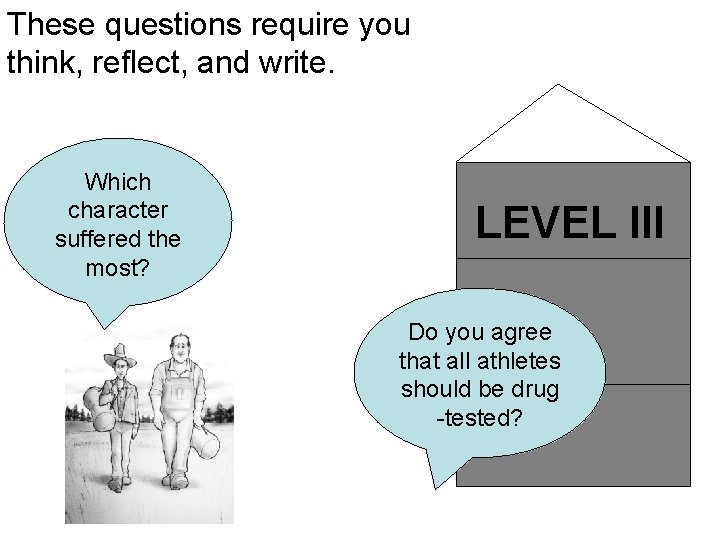
These questions require you think, reflect, and write. Which character suffered the most? LEVEL III Do you agree that all athletes should be drug -tested?
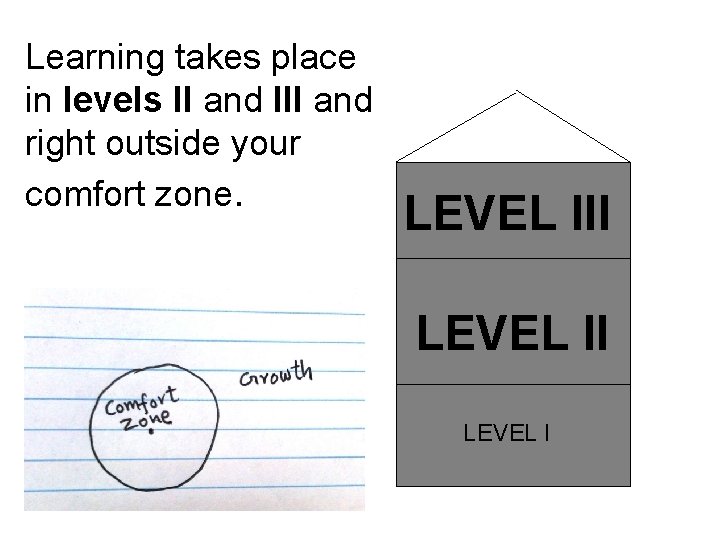
Learning takes place in levels II and III and right outside your comfort zone. LEVEL III LEVEL I
REVIEW: Apply and evaluate information LEVEL III Make sense of information LEVEL II Gather and recall information LEVEL I
2 ____sequence 3 ____apply To which level do these words belong? 2 ____analyze 1 ____list 3 ____hypothesize 1 ____describe 1 ____recite 2 ____compare LEVEL III LEVEL I
Now it’s your turn to write some questions of your own.