
Cost and Affordability of Healthy Diets Globally Anna
Cost and Affordability of Healthy Diets Globally Anna Herforth April 16, 2021 with collaborators: Yan Bai, Aishwarya Venkat, Kristi Mahrt, Alissa Ebel, Will Masters
http: //www. fao. org/publications/sofi/2020/en/ Herforth, A. , Bai, Y. , Venkat, A. , Mahrt, K. , Ebel, A. & Masters, W. A. 2020. https: //doi. org/10. 4060/cb 2431 en
Vision: Food price measurement to match this aspiration Food security is… when all people, at all times, have physical and economic access to sufficient, safe, nutritious food to meet dietary needs and food preferences for an active and healthy life. -- World Food Summit, 1996
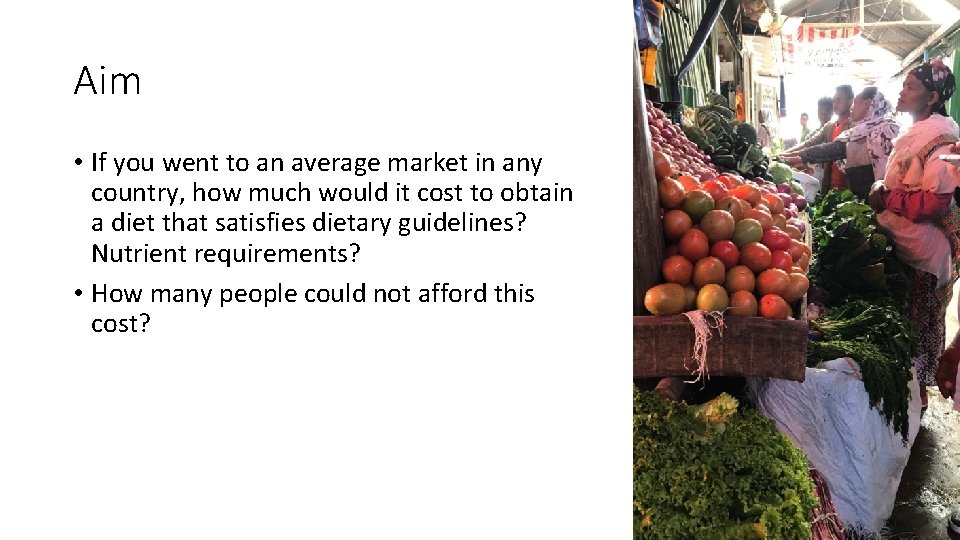
Aim • If you went to an average market in any country, how much would it cost to obtain a diet that satisfies dietary guidelines? Nutrient requirements? • How many people could not afford this cost?
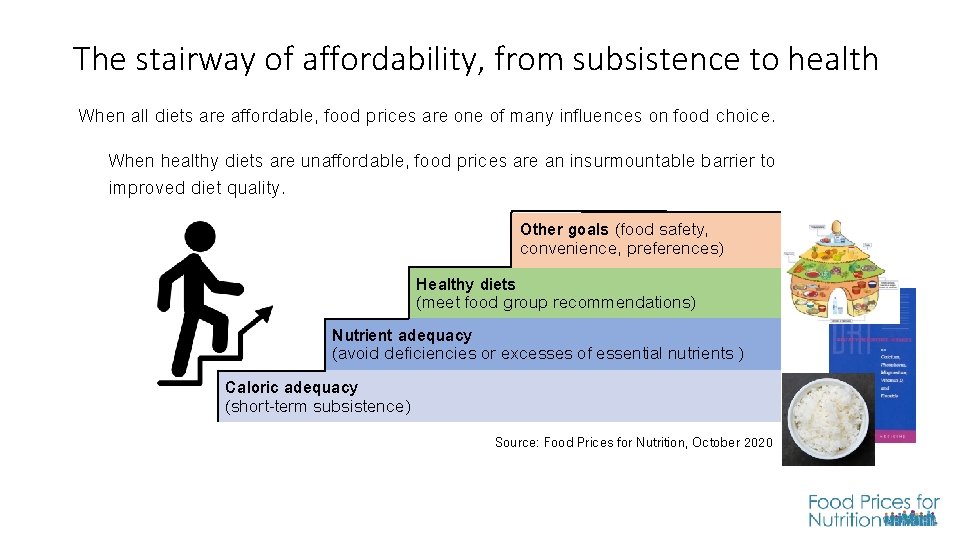
The stairway of affordability, from subsistence to health When all diets are affordable, food prices are one of many influences on food choice. When healthy diets are unaffordable, food prices are an insurmountable barrier to improved diet quality. Other goals (food safety, convenience, preferences) Healthy diets (meet food group recommendations) Nutrient adequacy (avoid deficiencies or excesses of essential nutrients ) Caloric adequacy (short-term subsistence) Source: Food Prices for Nutrition, October 2020

Least-cost diets • Diet cost in each place is based on the cheapest combination of foods that meets the criteria for the diet • No standard set of items in the least-cost basket: Food items chosen would vary by time and place, drawing on locally-available or seasonal items Our estimates provide a lower bound on the cost per day of meeting each dietary standard. • Adding food preferences and convenience would raise the estimated costs, and raise the number of people who cannot afford the diet
Global food price dataset • We use the World Bank’s International Comparison Program (ICP) dataset from 2017 • Unique dataset • Global and regional lists for 2017 include 680 foods & non-alcoholic beverages in 173 countries
Results: Global average costs • $0. 79 per day to meet daily energy needs using the most affordable starchy staple • $2. 34 per day to meet all essential nutrient requirements • Linear programming result • $3. 68 per day (range $3. 30 to $4. 46) to meet dietary recommendations • we use 10 different definitions of a healthy diet published by UN member states (no single definition of a healthy diet)
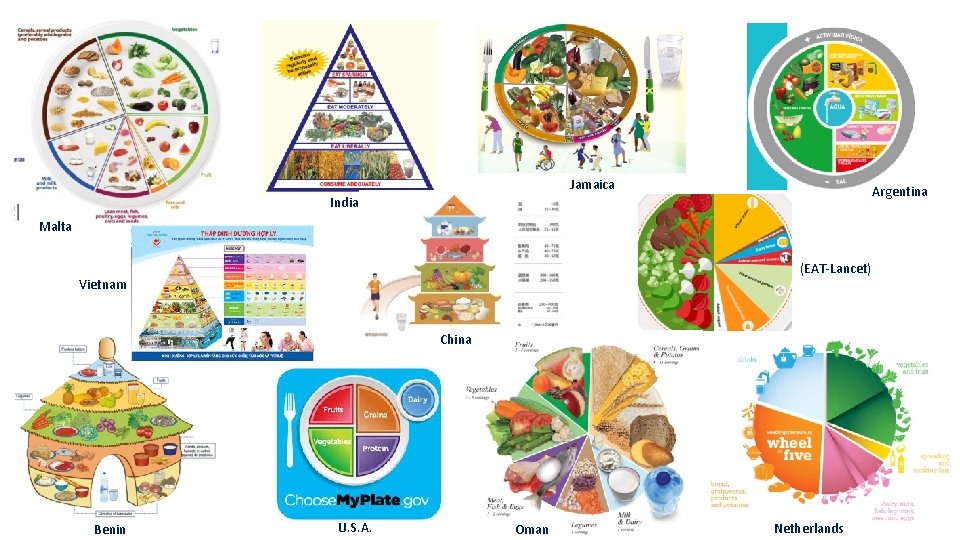
Jamaica Argentina India Malta (EAT-Lancet) Vietnam China Benin U. S. A. Oman Netherlands
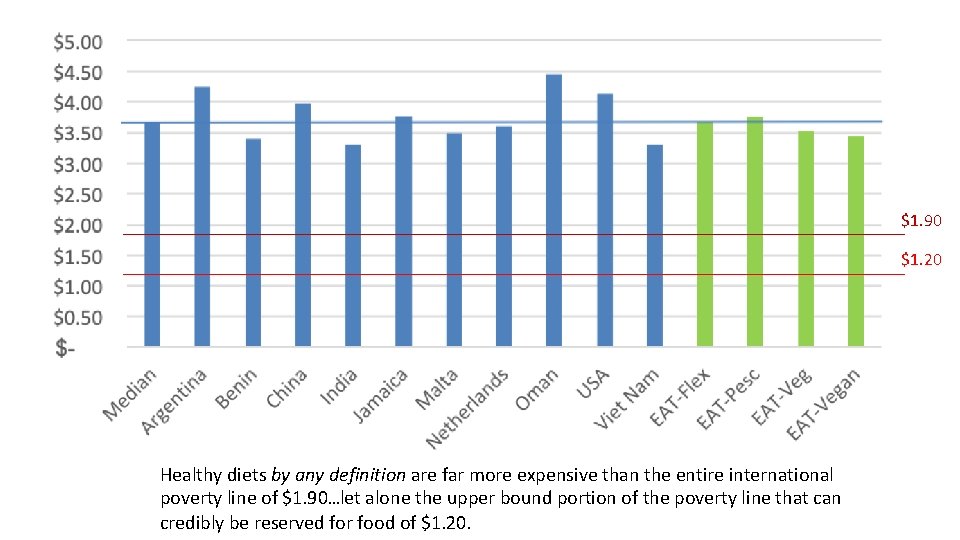
$1. 90 $1. 20 Healthy diets by any definition are far more expensive than the entire international poverty line of $1. 90…let alone the upper bound portion of the poverty line that can credibly be reserved for food of $1. 20.
How many people cannot afford it? • The poorest in LICs spend an average of 63% of expenditures on food • Calculated from the World Bank Global Consumption Database • So, we compare the cost of each diet to 63% of income • Using World Bank estimated 2018 income distributions across 164 countries
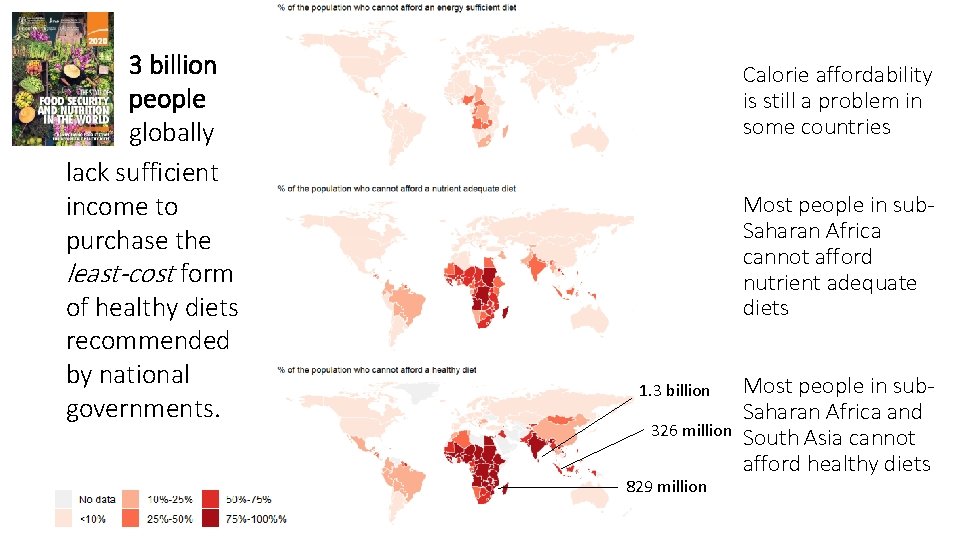
3 billion people globally lack sufficient income to purchase the least-cost form of healthy diets recommended by national governments. Calorie affordability is still a problem in some countries Most people in sub. Saharan Africa cannot afford nutrient adequate diets 1. 3 billion 326 million 829 million Most people in sub. Saharan Africa and South Asia cannot afford healthy diets
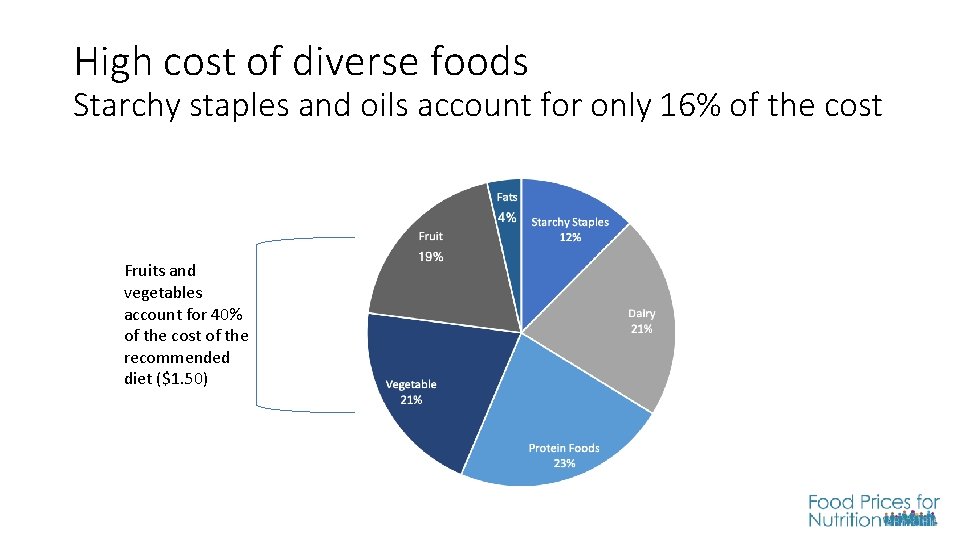
High cost of diverse foods Starchy staples and oils account for only 16% of the cost Fruits and vegetables account for 40% of the cost of the recommended diet ($1. 50)
Conclusions • The cost of nutritious diets in the market is more than many people can afford. • This has been exacerbated by COVID-19 • Existing food systems and assistance programs do not fulfill longstanding aspirations for global food security. • Implications for poverty, social protection, and agriculture
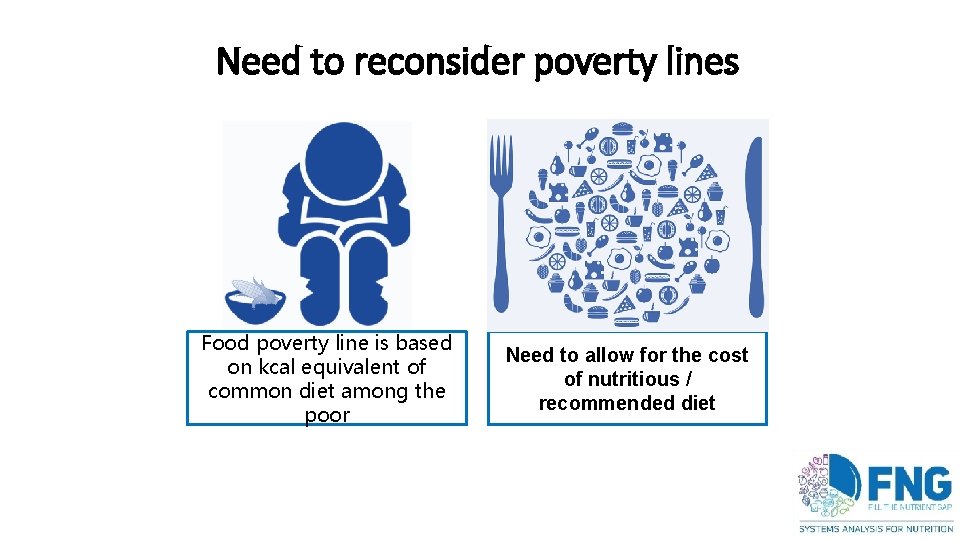
Need to reconsider poverty lines Food poverty line is based on kcal equivalent of common diet among the poor Need to allow for the cost of nutritious / recommended diet
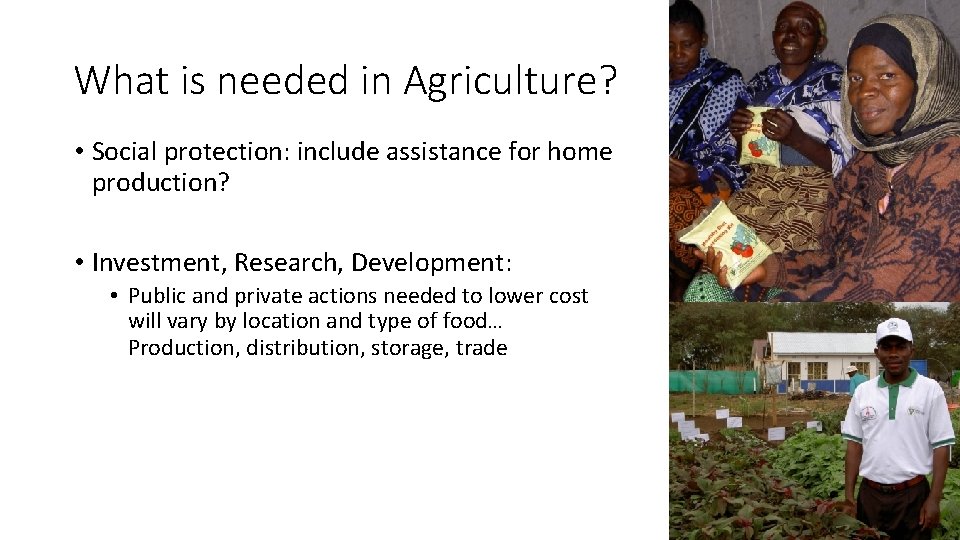
What is needed in Agriculture? • Social protection: include assistance for home production? • Investment, Research, Development: • Public and private actions needed to lower cost will vary by location and type of food… Production, distribution, storage, trade
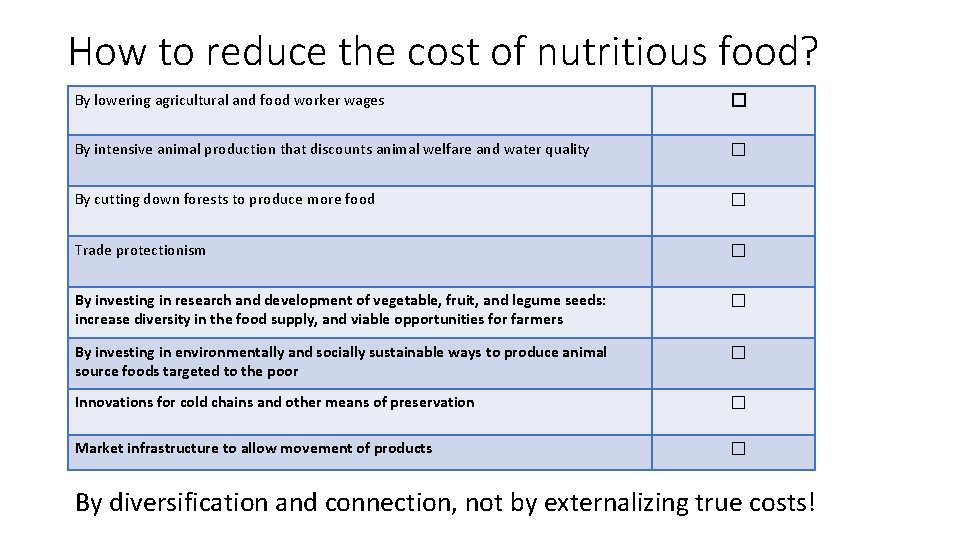
How to reduce the cost of nutritious food? By lowering agricultural and food worker wages � By intensive animal production that discounts animal welfare and water quality � By cutting down forests to produce more food � Trade protectionism � By investing in research and development of vegetable, fruit, and legume seeds: increase diversity in the food supply, and viable opportunities for farmers � By investing in environmentally and socially sustainable ways to produce animal source foods targeted to the poor � Innovations for cold chains and other means of preservation � Market infrastructure to allow movement of products � By diversification and connection, not by externalizing true costs!
Thank you Many thanks to FAO for supporting this analysis Methods and data analysis are from the Food Prices for Nutrition Project, in the CANDASA project phase funded by the Bill & Melinda Gates Foundation and UKAid.

Extra slides
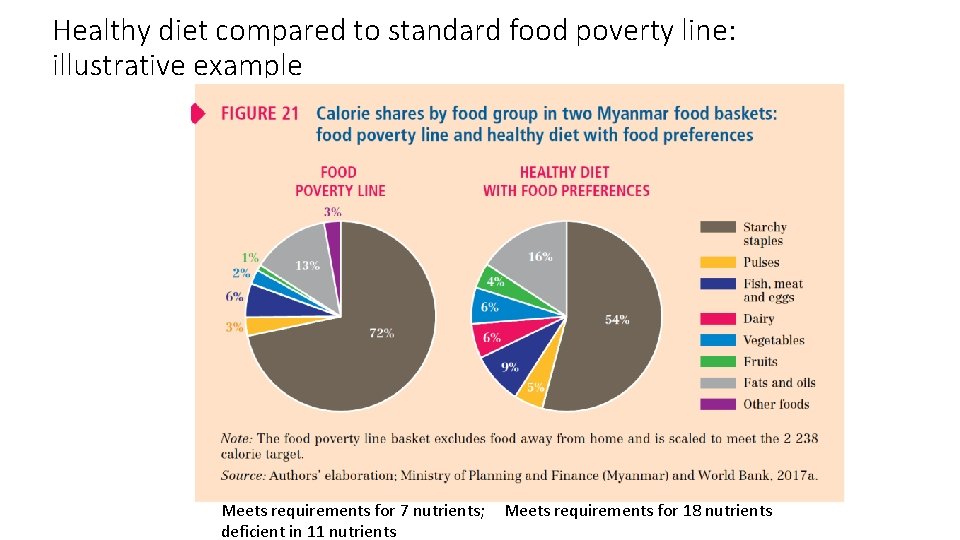
Healthy diet compared to standard food poverty line: illustrative example Meets requirements for 7 nutrients; deficient in 11 nutrients Meets requirements for 18 nutrients
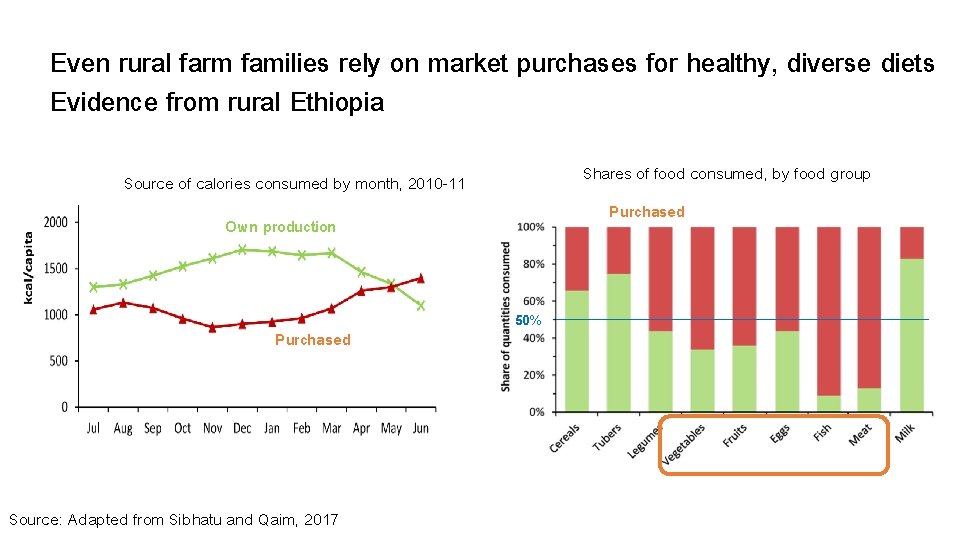
Even rural farm families rely on market purchases for healthy, diverse diets Evidence from rural Ethiopia Shares of food consumed, by food group Source of calories consumed by month, 2010 -11 Purchased Own production Purchased Source: Adapted from Sibhatu and Qaim, 2017 50%
Next steps in Food Prices for Nutrition • Updated estimates for SOFI 2021 expected in June/July • Agriculture, Nutrition and Health (ANH) Academy Week Learning Lab in June • • • Simplified method for computing Cost of a Healthy Diet; and Generating tool and guides for data holders to compute the metric themselves World Bank e. Learning course coming next year, August 2022
- Slides: 22