
Cosmology The Origin and Evolution of the Universe
- Slides: 33
Cosmology: The Origin and Evolution of the Universe Chapter Twenty-Eight
Guiding Questions 1. What does the darkness of the night sky tell us about the nature of the universe? 2. As the universe expands, what, if anything, is it expanding into? 3. Where did the Big Bang take place? 4. How do we know that the Big Bang was hot? 5. What was the universe like during its first 380, 000 years? 6. What is “dark energy”? How does the curvature of the universe reveal its presence? 7. Has the universe always expanded at the same rate? 8. How reliable is our current understanding of the universe?
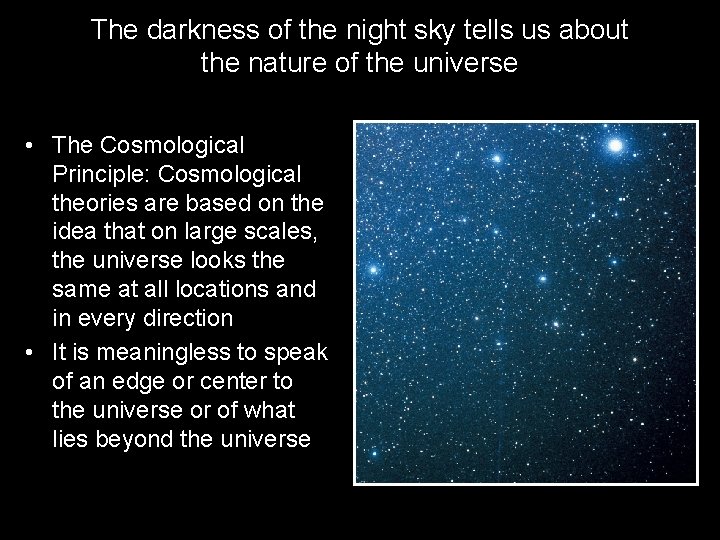
The darkness of the night sky tells us about the nature of the universe • The Cosmological Principle: Cosmological theories are based on the idea that on large scales, the universe looks the same at all locations and in every direction • It is meaningless to speak of an edge or center to the universe or of what lies beyond the universe
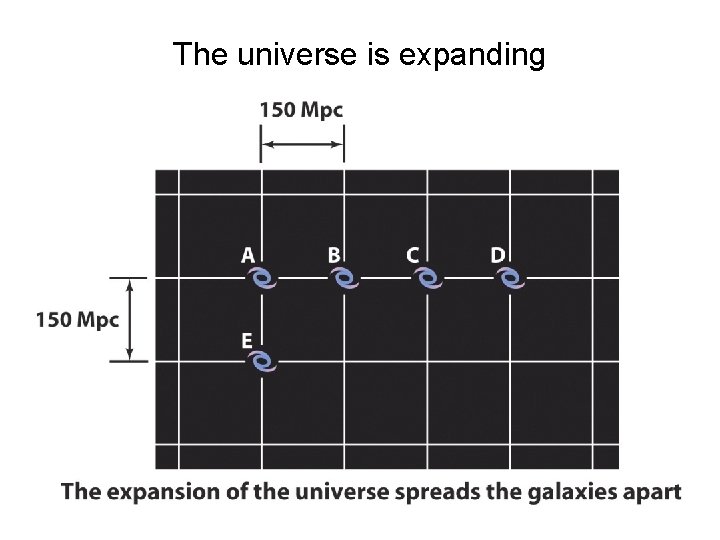
The universe is expanding
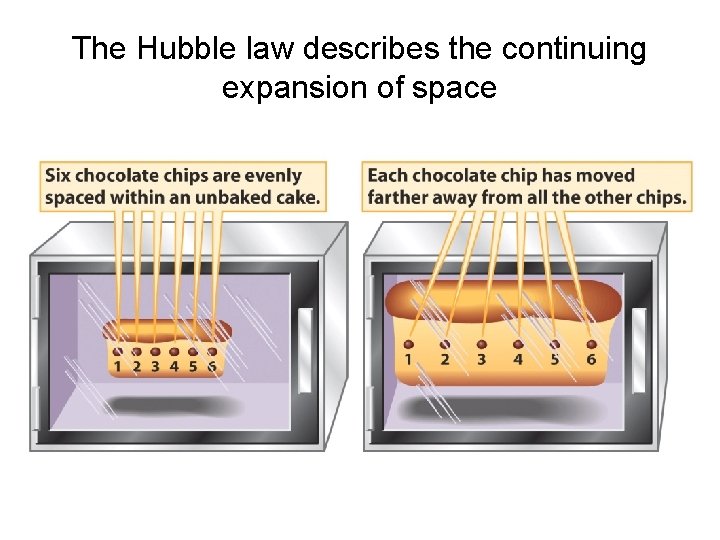
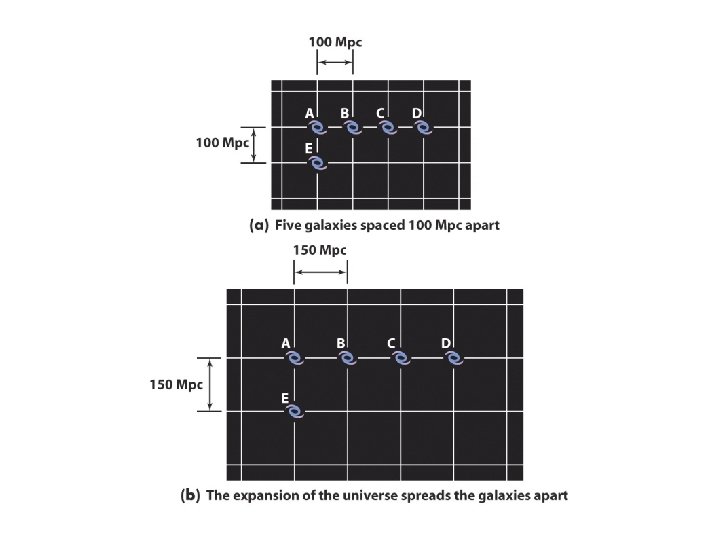
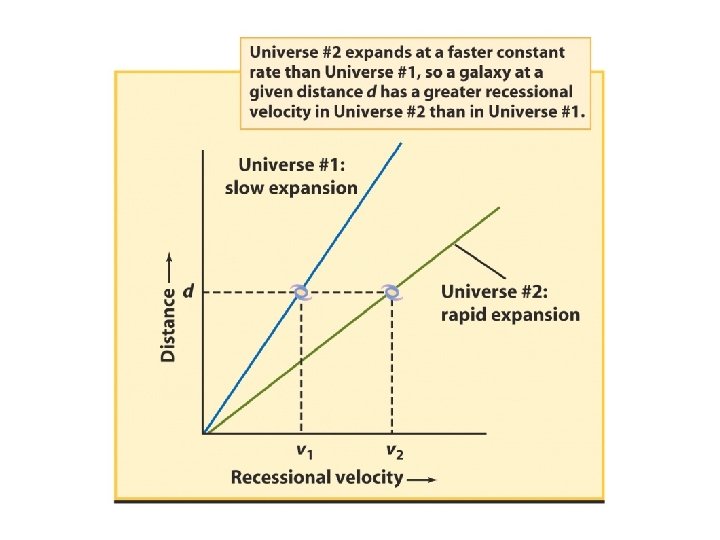
The Hubble law describes the continuing expansion of space
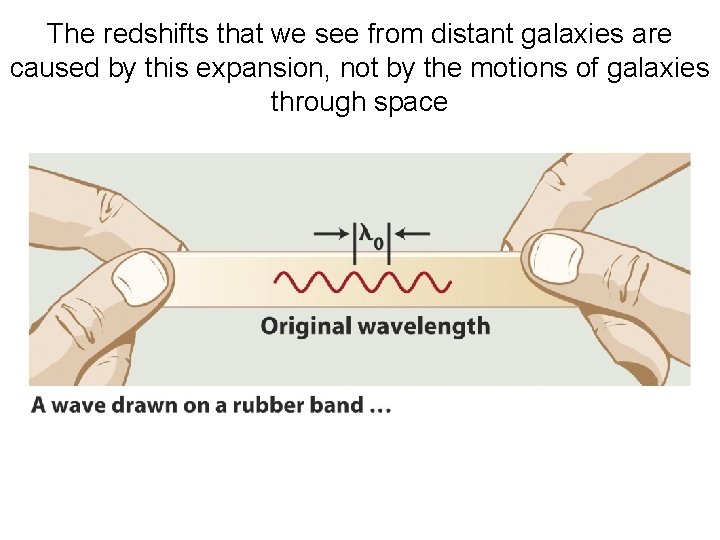
The redshifts that we see from distant galaxies are caused by this expansion, not by the motions of galaxies through space
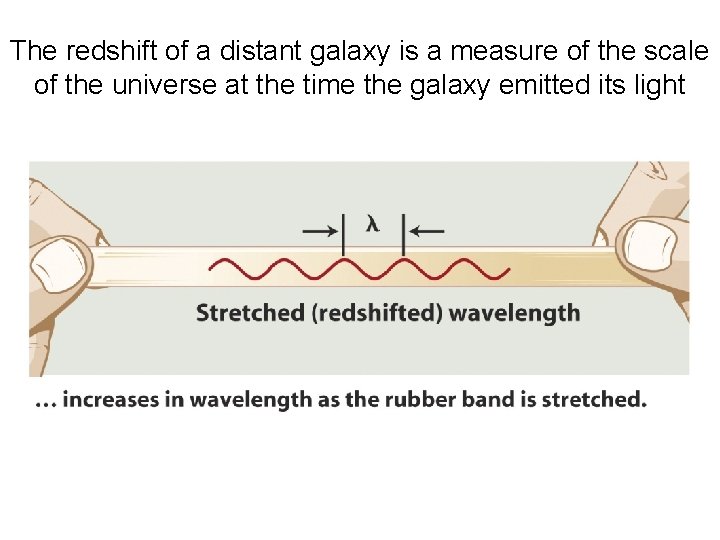
The redshift of a distant galaxy is a measure of the scale of the universe at the time the galaxy emitted its light
The expanding universe emerged from a cataclysmic event called the Big Bang • The universe began as an infinitely dense cosmic singularity which began its expansion in the event called the Big Bang, which can be described as the beginning of time • During the first 10– 43 second after the Big Bang, the universe was too dense to be described by the known laws of physics
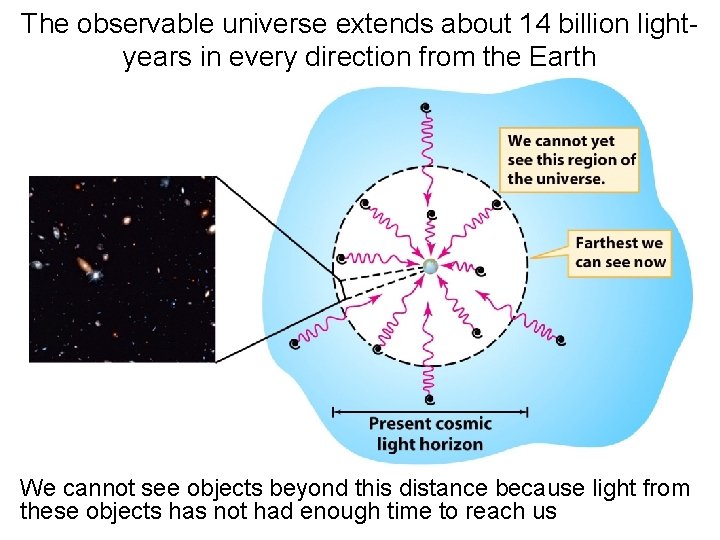
The observable universe extends about 14 billion lightyears in every direction from the Earth We cannot see objects beyond this distance because light from these objects has not had enough time to reach us
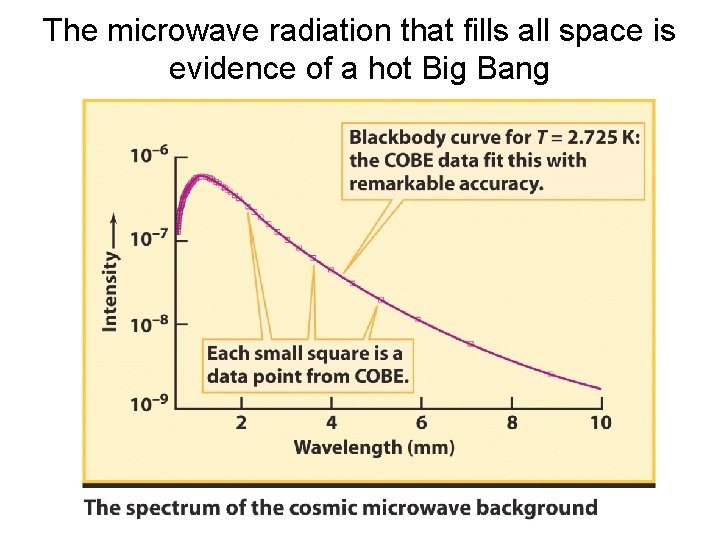
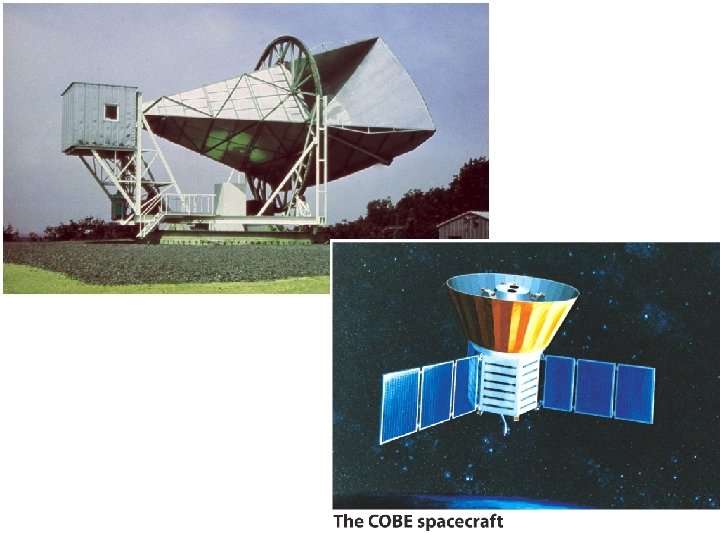
The microwave radiation that fills all space is evidence of a hot Big Bang
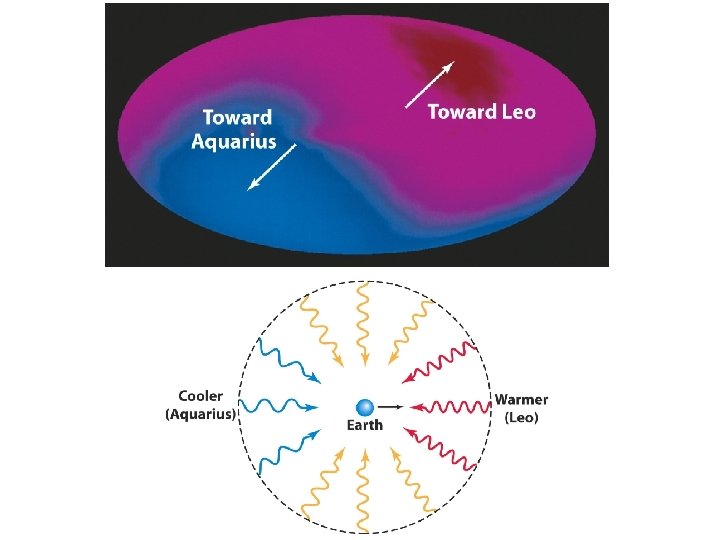
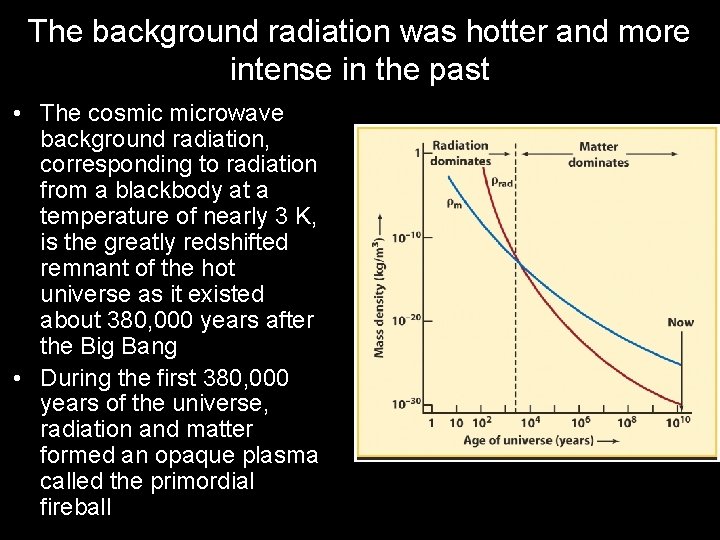
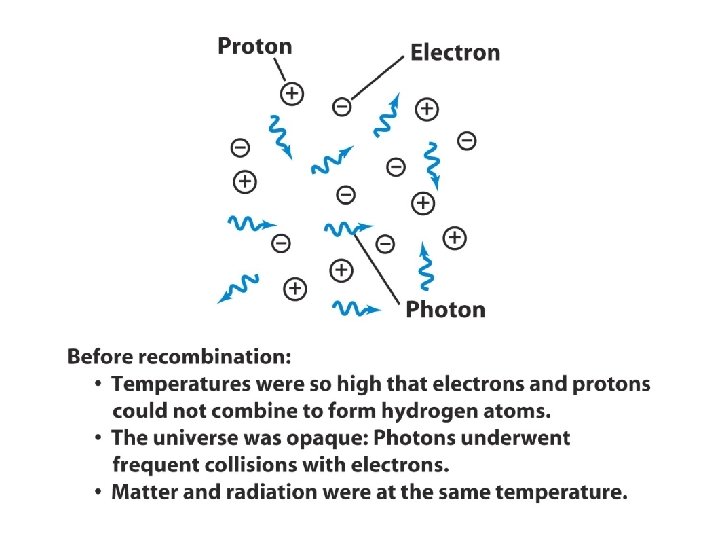
The background radiation was hotter and more intense in the past • The cosmic microwave background radiation, corresponding to radiation from a blackbody at a temperature of nearly 3 K, is the greatly redshifted remnant of the hot universe as it existed about 380, 000 years after the Big Bang • During the first 380, 000 years of the universe, radiation and matter formed an opaque plasma called the primordial fireball
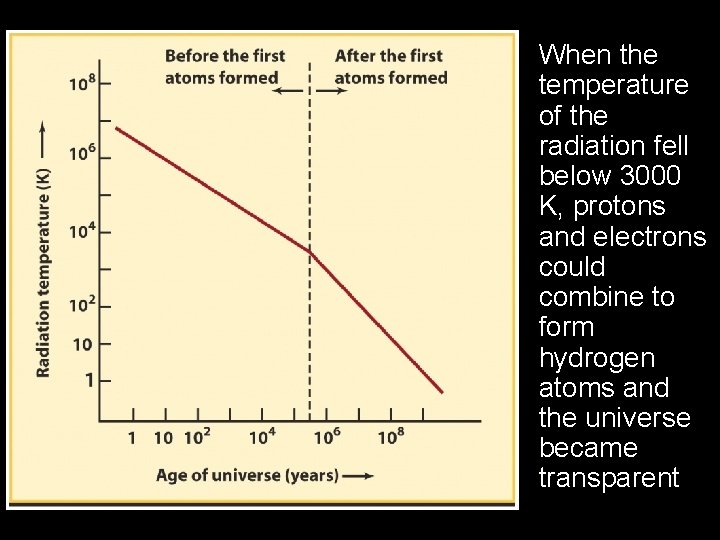
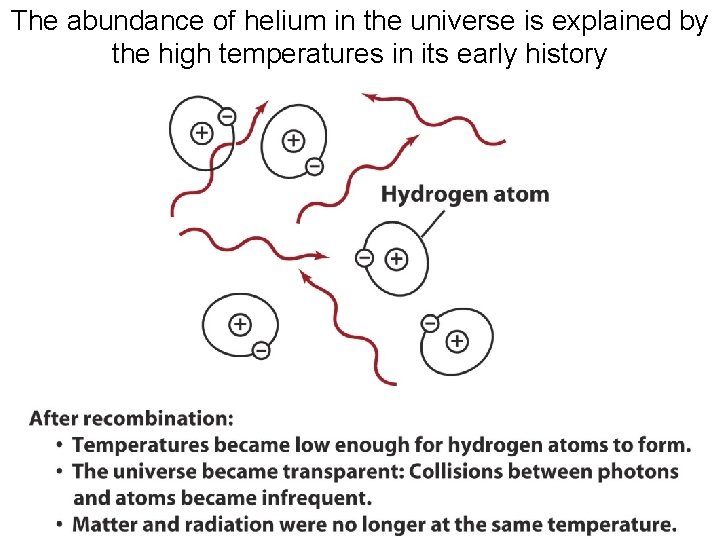
When the temperature of the radiation fell below 3000 K, protons and electrons could combine to form hydrogen atoms and the universe became transparent
The abundance of helium in the universe is explained by the high temperatures in its early history
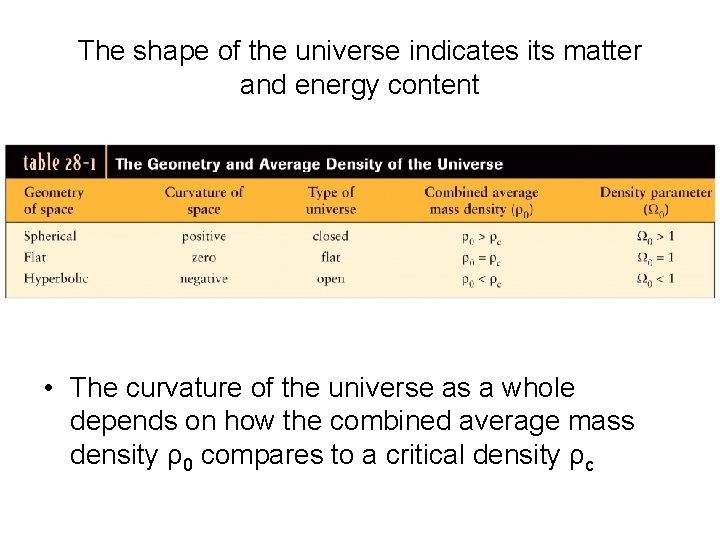
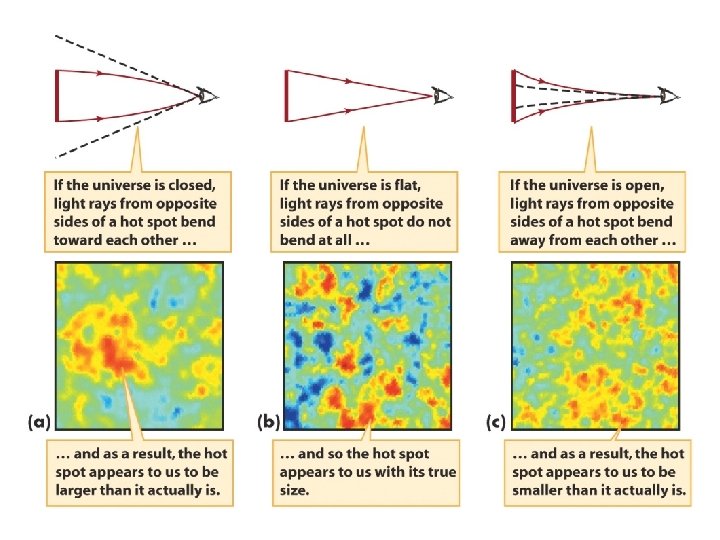
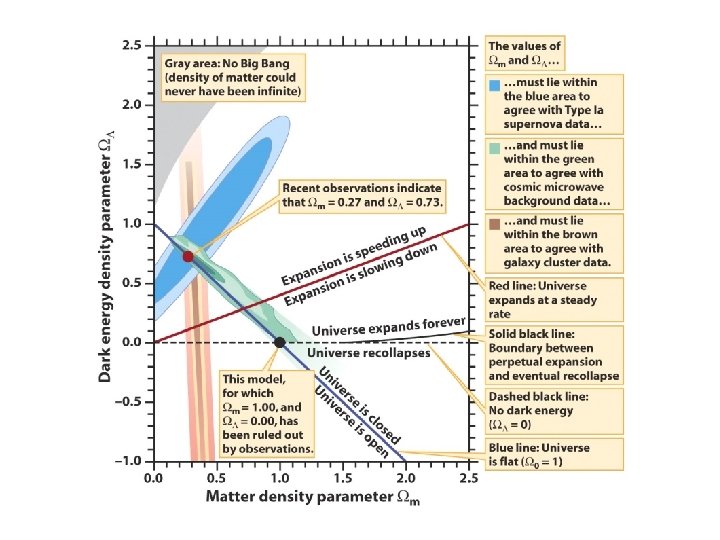
The shape of the universe indicates its matter and energy content • The curvature of the universe as a whole depends on how the combined average mass density ρ0 compares to a critical density ρc
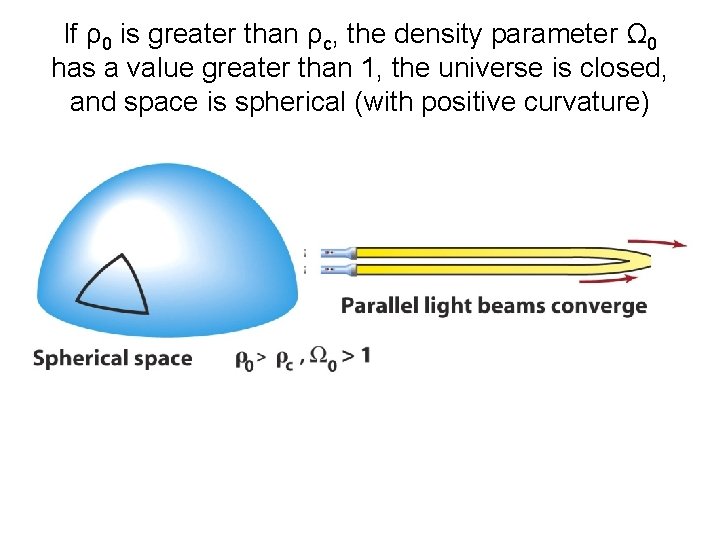
If ρ0 is greater than ρc, the density parameter Ω 0 has a value greater than 1, the universe is closed, and space is spherical (with positive curvature)
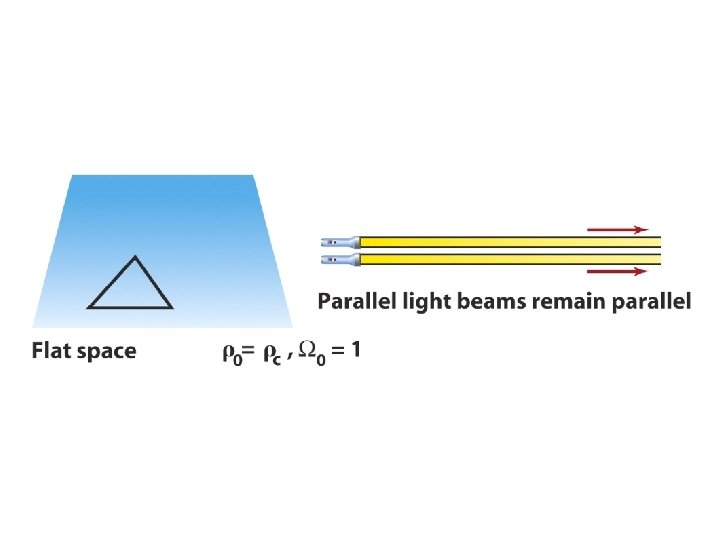
If ρ0 is equal to ρc, the density parameter Ω 0 is equal to 1 and space is flat (with zero curvature)
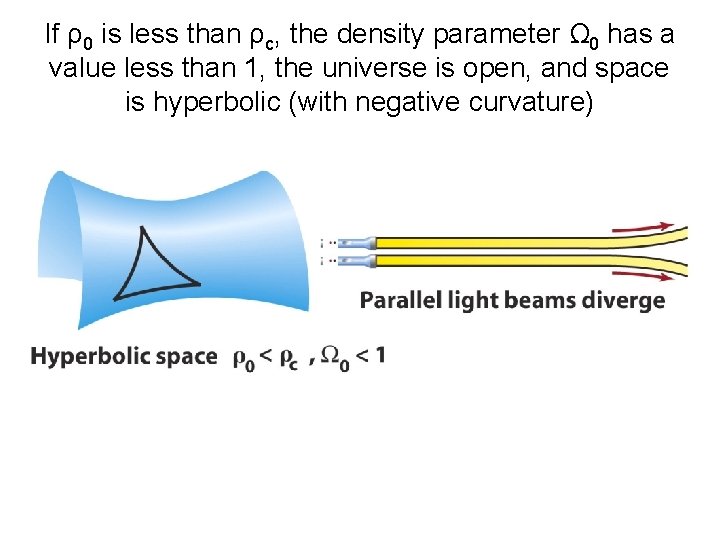
If ρ0 is less than ρc, the density parameter Ω 0 has a value less than 1, the universe is open, and space is hyperbolic (with negative curvature)
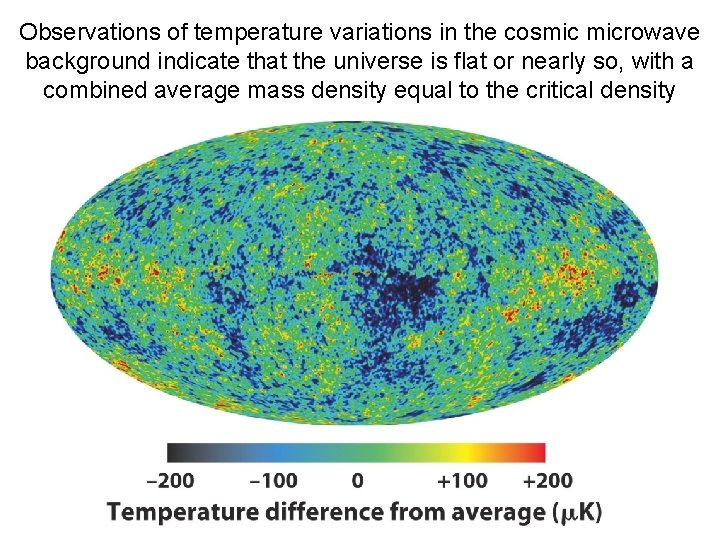
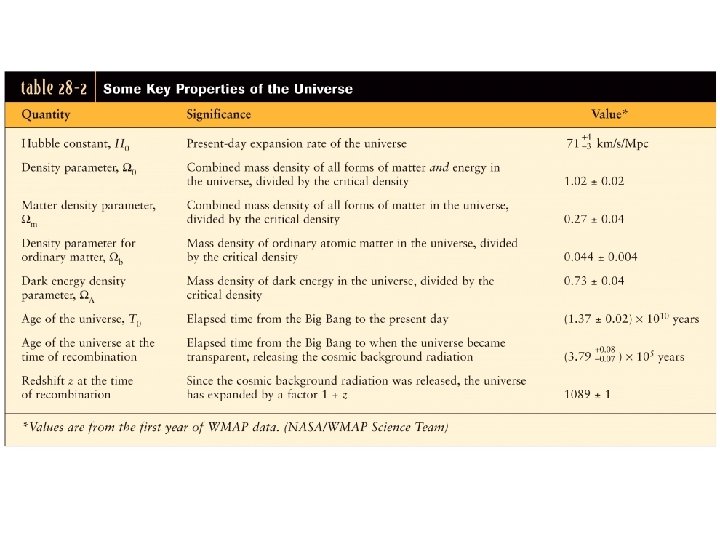
Observations of temperature variations in the cosmic microwave background indicate that the universe is flat or nearly so, with a combined average mass density equal to the critical density
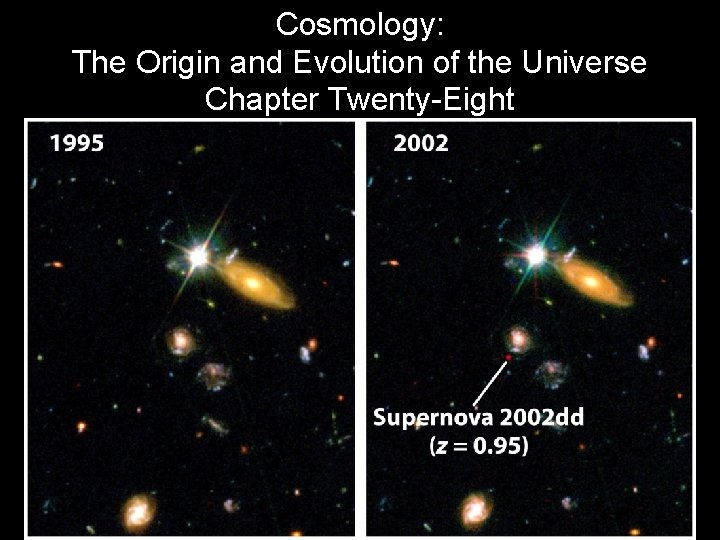
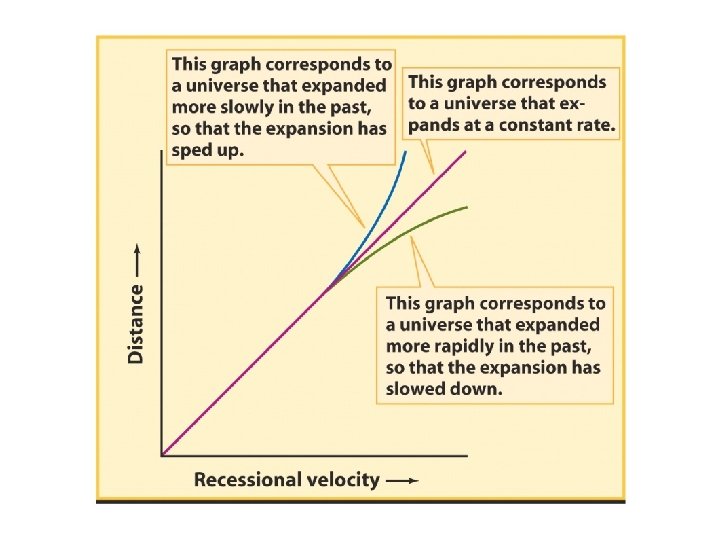
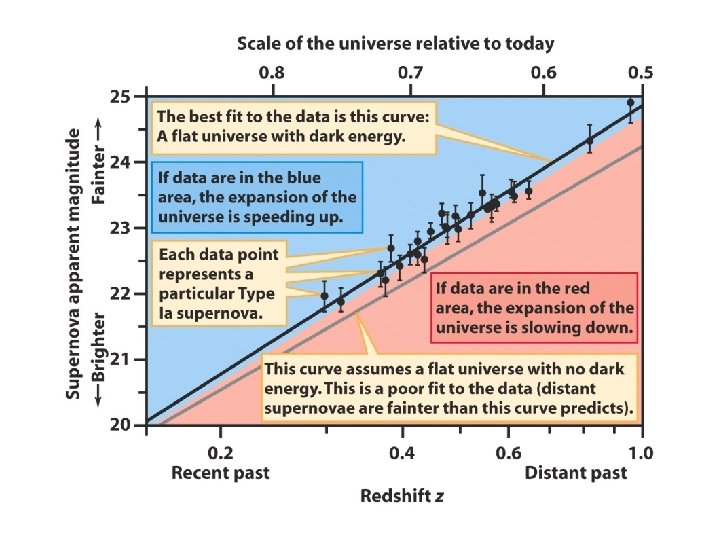
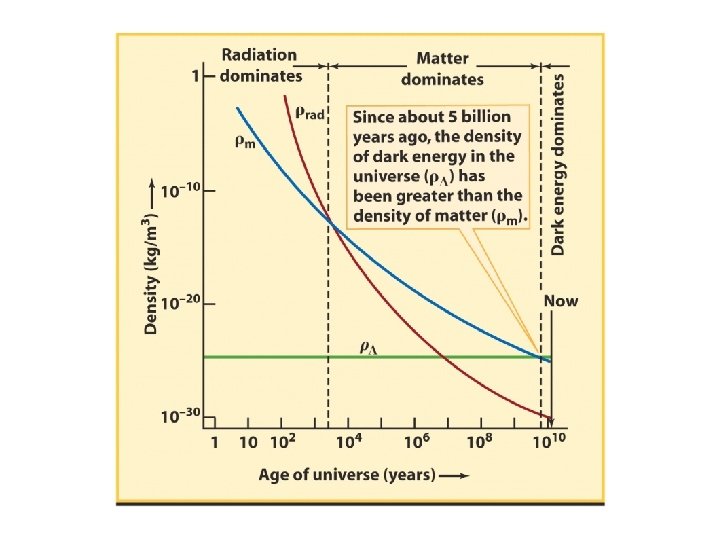
Observations of distant supernovae reveal that we live in an accelerating universe • Observations of galaxy clusters suggest that the average density of matter in the universe is about 0. 27 of the critical density • The remaining contribution to the average density is called dark energy • Measurements of Type Ia supernovae in distant galaxies show that the expansion of the universe is speeding up • This may be due to the presence of dark energy in the form of a cosmological constant, which provides a pressure that pushes the universe outward
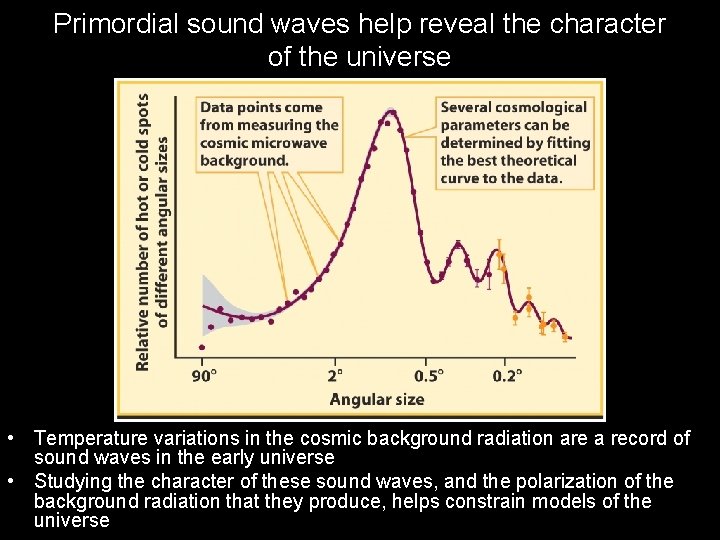
Primordial sound waves help reveal the character of the universe • Temperature variations in the cosmic background radiation are a record of sound waves in the early universe • Studying the character of these sound waves, and the polarization of the background radiation that they produce, helps constrain models of the universe
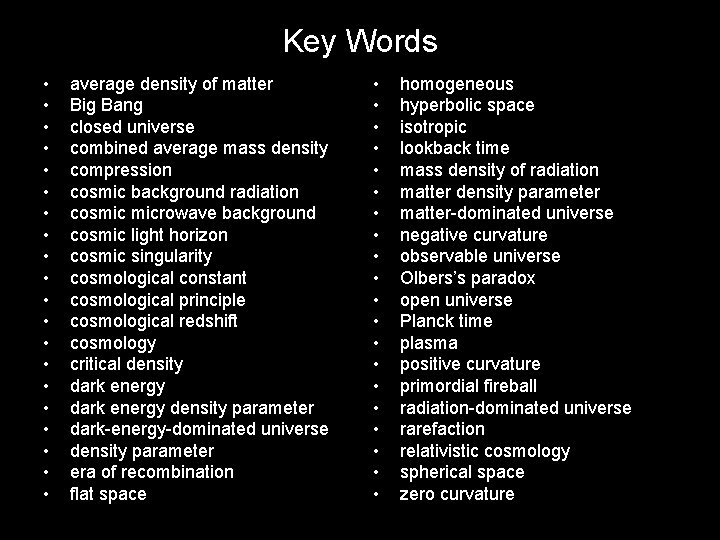
Key Words • • • • • average density of matter Big Bang closed universe combined average mass density compression cosmic background radiation cosmic microwave background cosmic light horizon cosmic singularity cosmological constant cosmological principle cosmological redshift cosmology critical density dark energy density parameter dark-energy-dominated universe density parameter era of recombination flat space • • • • • homogeneous hyperbolic space isotropic lookback time mass density of radiation matter density parameter matter-dominated universe negative curvature observable universe Olbers’s paradox open universe Planck time plasma positive curvature primordial fireball radiation-dominated universe rarefaction relativistic cosmology spherical space zero curvature