
Cosmic Structure and Evolution as Revealed by the
Cosmic Structure and Evolution as Revealed by the Intergalactic Medium Taotao Fang UC Irvine 02/2008 Miami
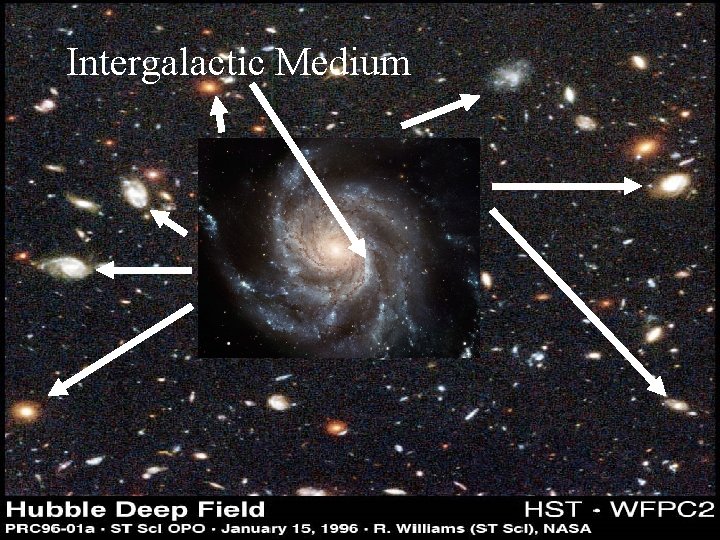
Intergalactic Medium
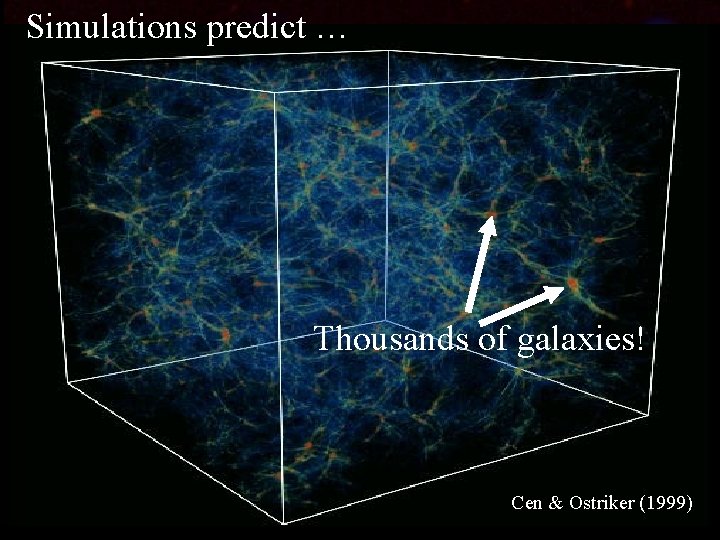
Simulations predict … Thousands of galaxies! Cen & Ostriker (1999)
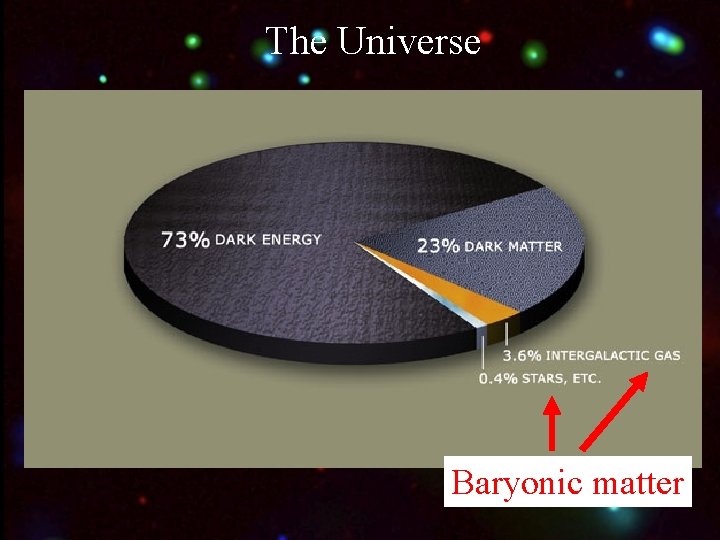
The Universe Baryonic matter
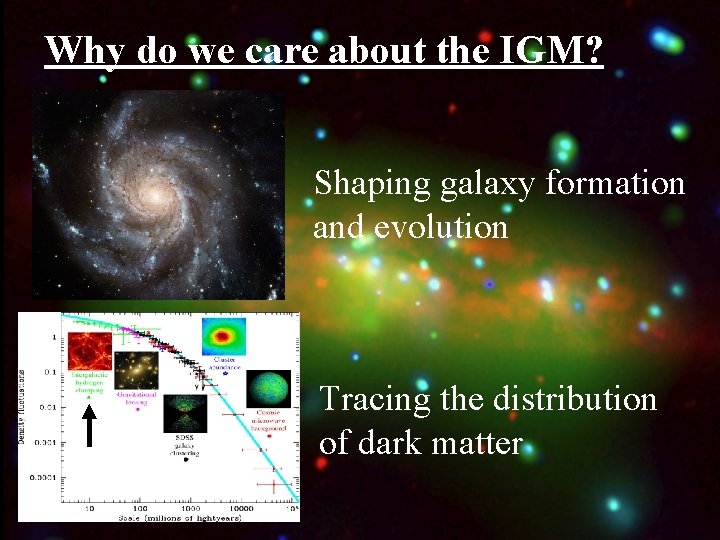
Why do we care about the IGM? Shaping galaxy formation and evolution Tracing the distribution of dark matter

Lyman alpha forest: resonant absorption by neutral hydrogen in the IGM via Ly-alpha transition
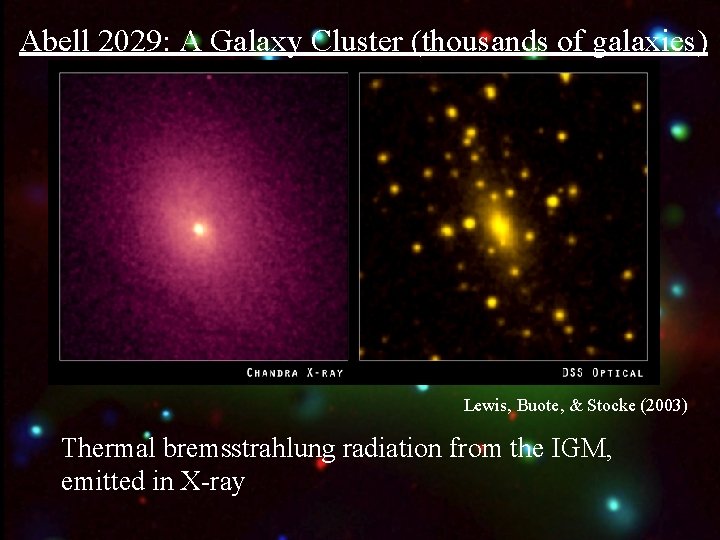
Abell 2029: A Galaxy Cluster (thousands of galaxies) Lewis, Buote, & Stocke (2003) Thermal bremsstrahlung radiation from the IGM, emitted in X-ray
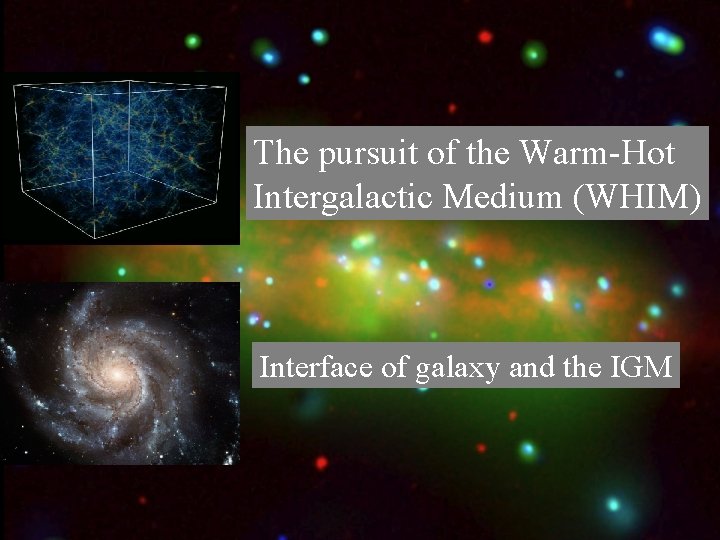
The pursuit of the Warm-Hot Intergalactic Medium (WHIM) Interface of galaxy and the IGM
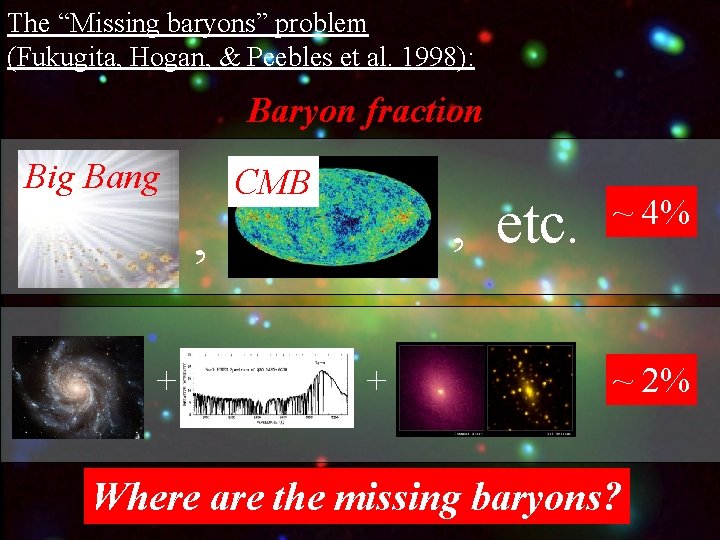
The “Missing baryons” problem (Fukugita, Hogan, & Peebles et al. 1998): Baryon fraction Big Bang , + CMB , etc. + ~ 4% ~ 2% Where are the missing baryons?
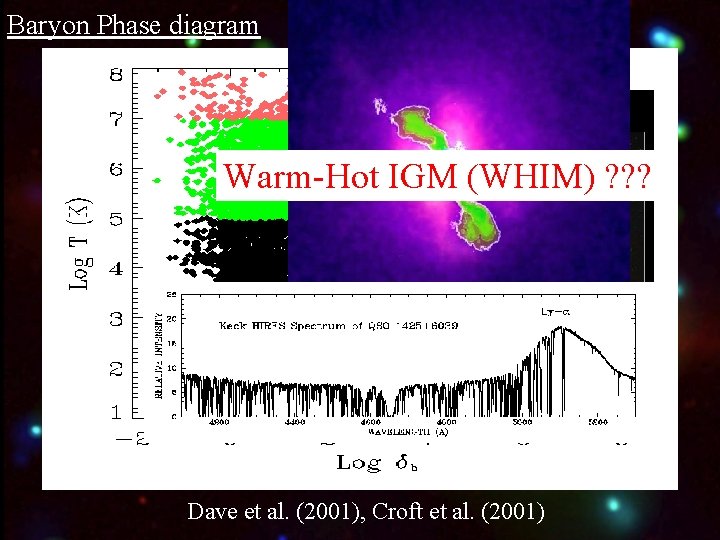
Baryon Phase diagram Warm-Hot IGM (WHIM) ? ? ? Dave et al. (2001), Croft et al. (2001)
The Pursuit of WHIM Cosmological hydrodynamic simulations Observational probes of the WHIM Future missions
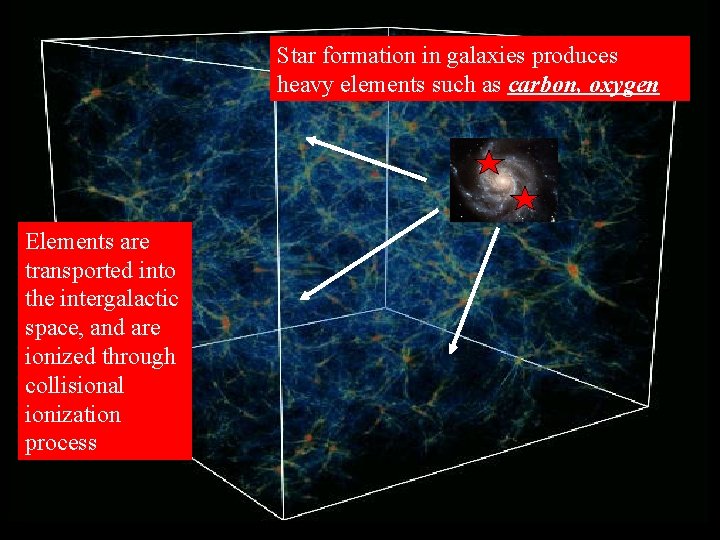
Star formation in galaxies produces heavy elements such as carbon, oxygen Elements are transported into the intergalactic space, and are ionized through collisional ionization process
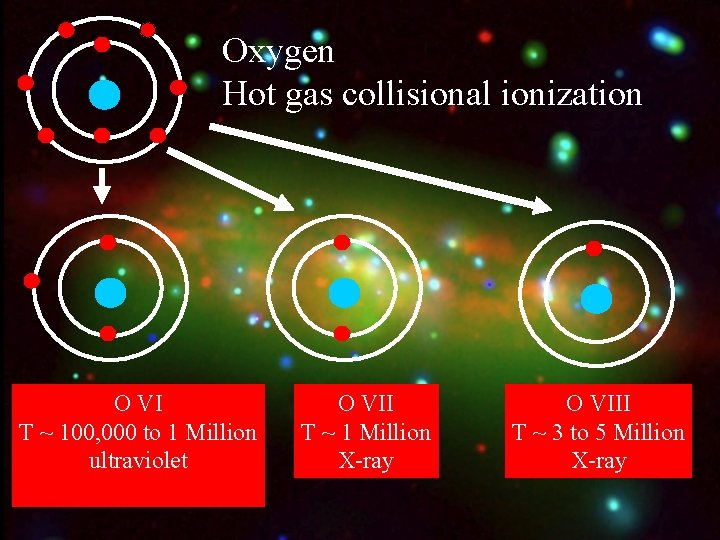
Oxygen Hot gas collisional ionization O VI T ~ 100, 000 to 1 Million ultraviolet O VII T ~ 1 Million X-ray O VIII T ~ 3 to 5 Million X-ray
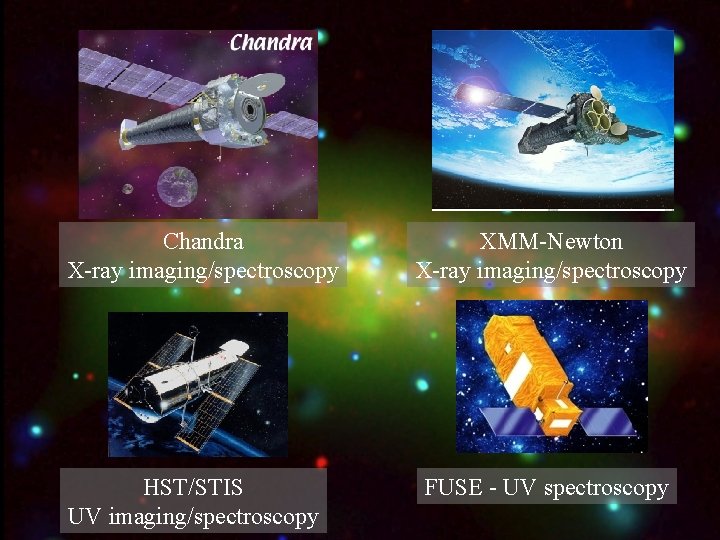
Chandra X-ray imaging/spectroscopy HST/STIS UV imaging/spectroscopy XMM-Newton X-ray imaging/spectroscopy FUSE - UV spectroscopy
Our X-ray absorption programs • Continuous observation of the three brightest extragalactic, X -ray sources • Accumulating 2 million (+) seconds of observing time • 25 variable sources • Accumulating 500, 000 (+) seconds of observing time
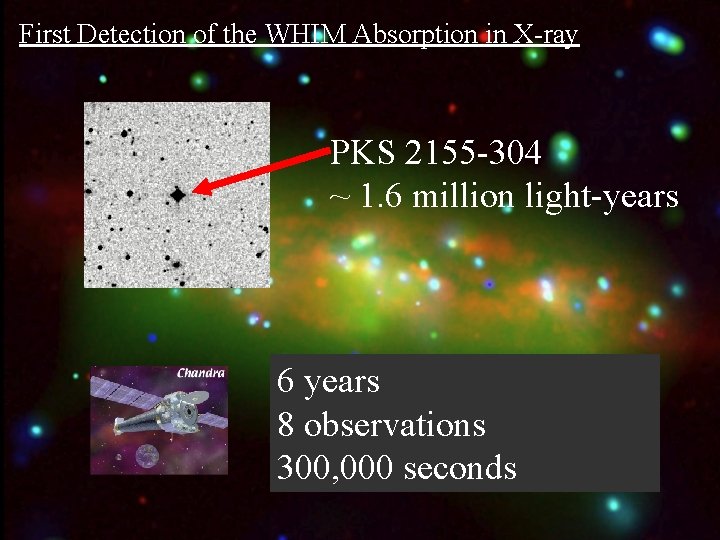
First Detection of the WHIM Absorption in X-ray PKS 2155 -304 ~ 1. 6 million light-years 6 years 8 observations 300, 000 seconds
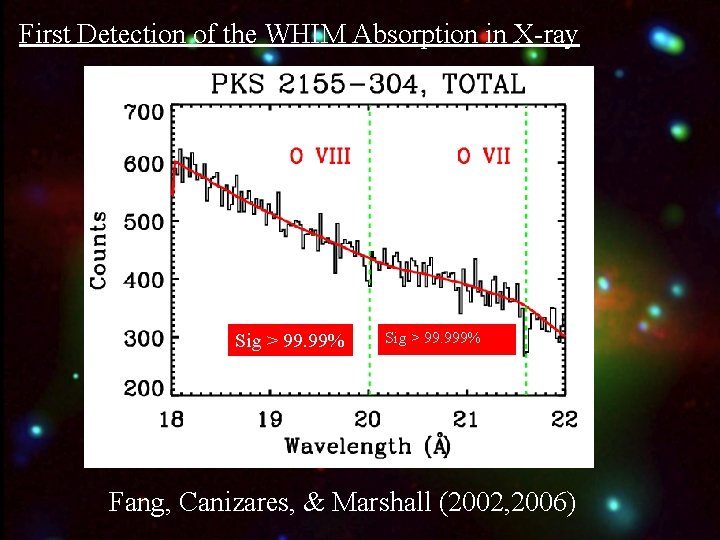
First Detection of the WHIM Absorption in X-ray Sig > 99. 99% Sig > 99. 999% Fang, Canizares, & Marshall (2002, 2006)
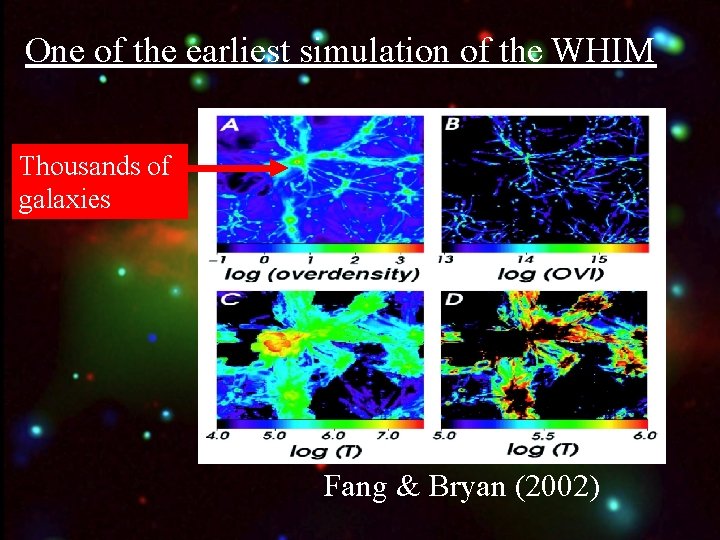
One of the earliest simulation of the WHIM Thousands of galaxies Fang & Bryan (2002)
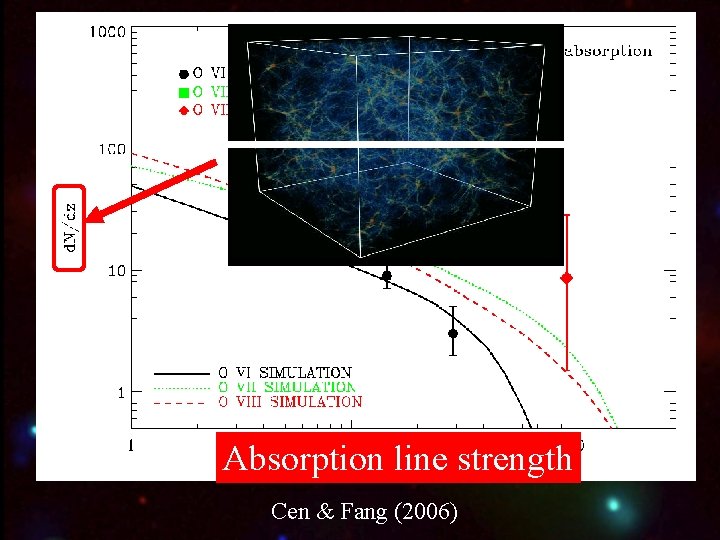
- Danforth & Shull (2005) - Nicastro et al. (2005) - Fang & Canizares (2006) Absorption line strength Cen & Fang (2006)
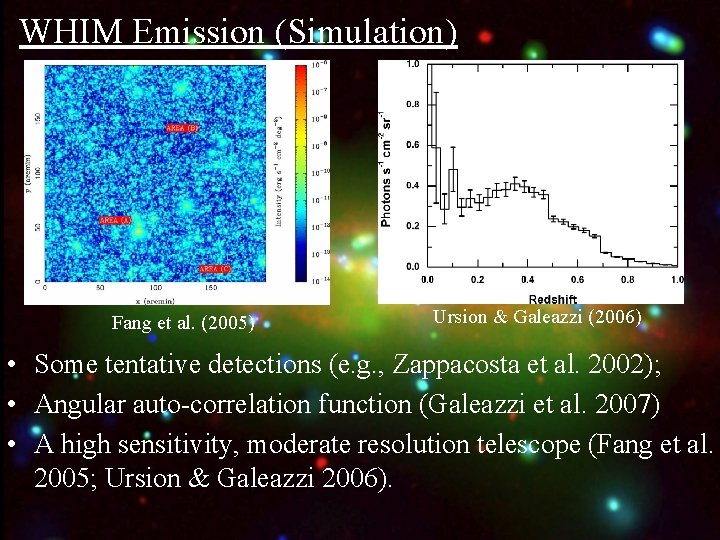
WHIM Emission (Simulation) Fang et al. (2005) Ursion & Galeazzi (2006) • Some tentative detections (e. g. , Zappacosta et al. 2002); • Angular auto-correlation function (Galeazzi et al. 2007) • A high sensitivity, moderate resolution telescope (Fang et al. 2005; Ursion & Galeazzi 2006).
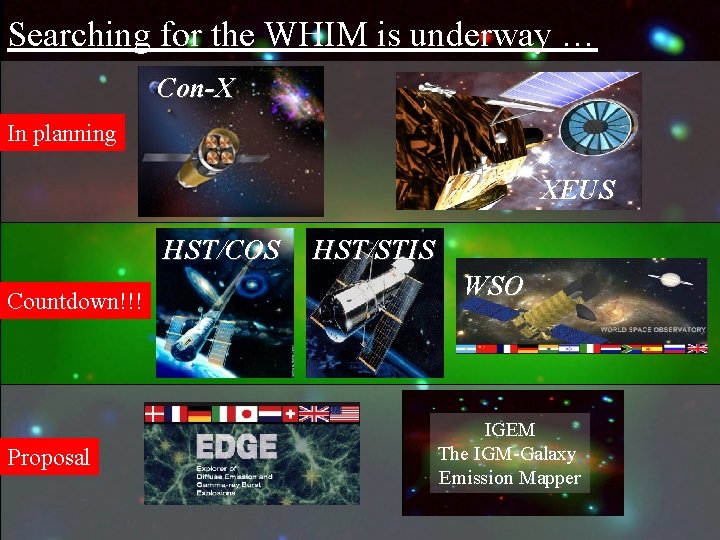
Searching for the WHIM is underway … Con-X In planning XEUS HST/COS Countdown!!! Proposal HST/STIS WSO IGEM The IGM-Galaxy Emission Mapper
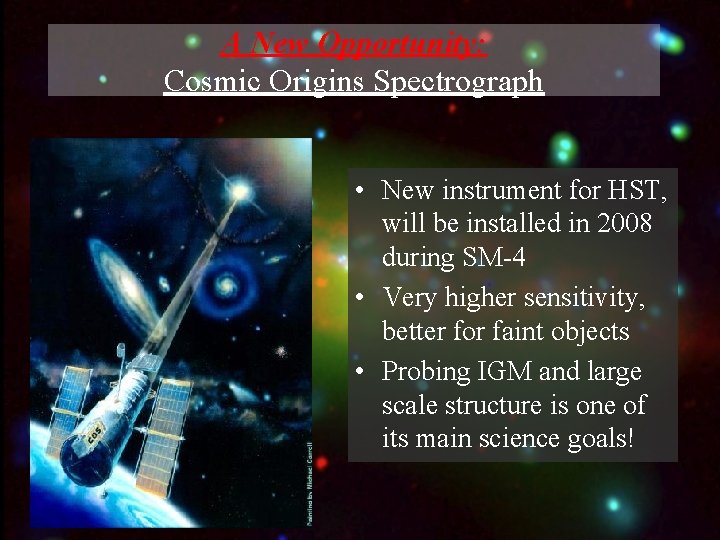
A New Opportunity: Cosmic Origins Spectrograph • New instrument for HST, will be installed in 2008 during SM-4 • Very higher sensitivity, better for faint objects • Probing IGM and large scale structure is one of its main science goals!
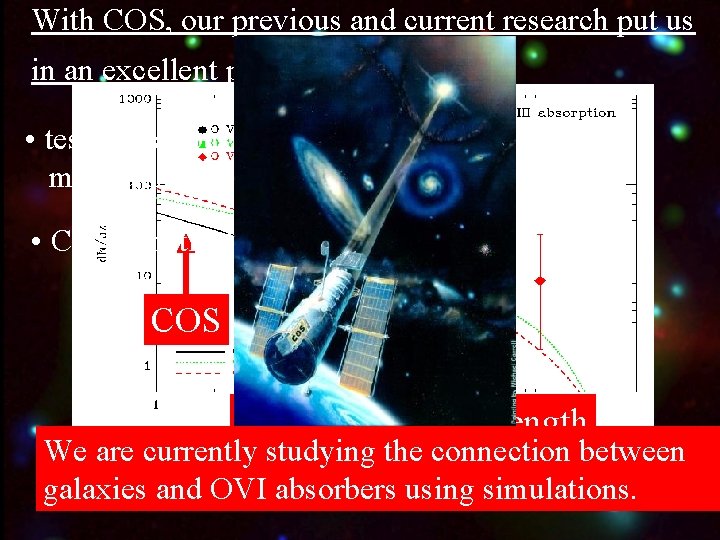
With COS, our previous and current research put us in an excellent position in • testing various galaxy-IGM feeedback mechanisms. • COS + optical imaging/spectroscopy COS Absorption line strength We are currently studying the connection between galaxies and OVI absorbers using simulations.
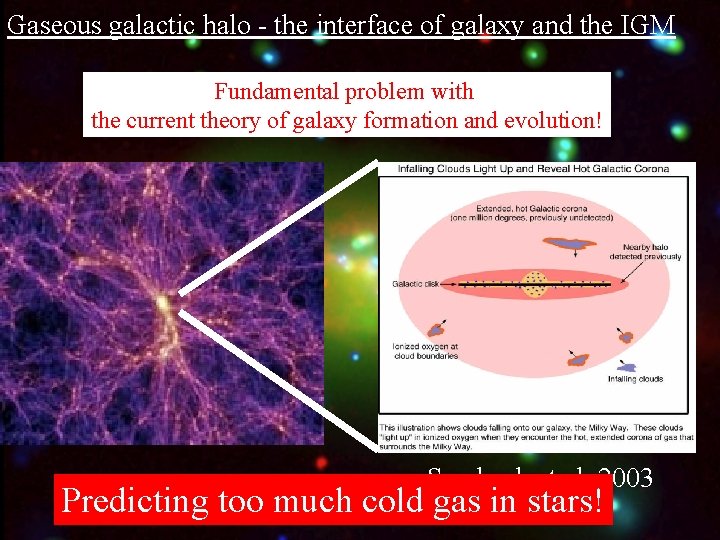
Gaseous galactic halo - the interface of galaxy and the IGM Fundamental problem with the current theory of galaxy formation and evolution! Sembach et al. 2003 Predicting too much cold gas in stars!
Baryon Counting in Our Backyard In the Milky Way Another missing baryons problem!
The Over-cooling Problem • Standard galaxy formation theory predicted at least twice as much cold gas and stars, and caused problems: – Cold gas mass too high; – X-ray luminosity (from hot gas cooling) too bright • Treatments: – Strong blow-out feedback from supernova & central black holes (but will destroy the disk!!!) – Pre-heating (e. g. , Oh & Benson 2003) – Multi-phase cooling (Maller & Bullock 2004; predicting an extended hot halo!!!) Extended hot halo: a crucial test of galaxy formation and evolution theory!
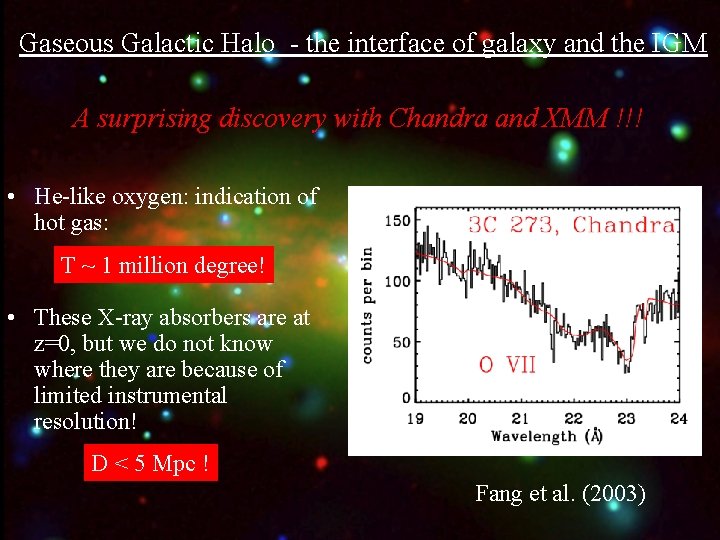
Gaseous Galactic Halo - the interface of galaxy and the IGM A surprising discovery with Chandra and XMM !!! • He-like oxygen: indication of hot gas: T ~ 1 million degree! • These X-ray absorbers are at z=0, but we do not know where they are because of limited instrumental resolution! D < 5 Mpc ! Fang et al. (2003)
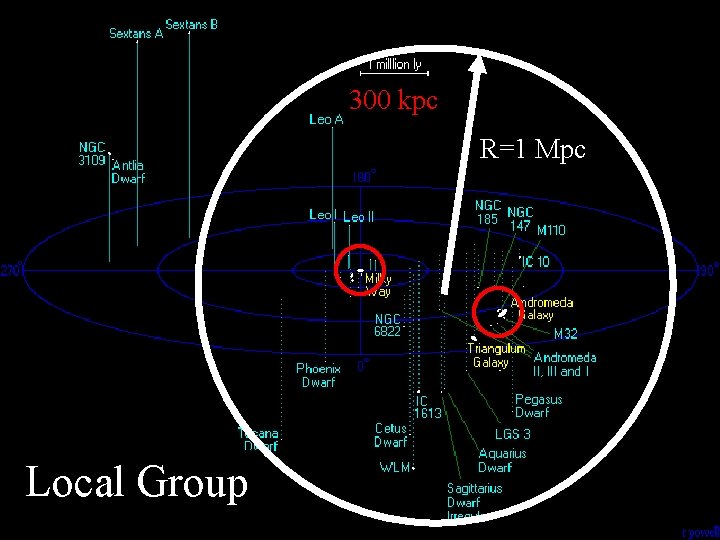
300 kpc R=1 Mpc Local Group
Why do we care about the hot gas at the vicinity of the Milky Way? • Local Group origin - the WHIM? • Galactic origin - hot halo gas?
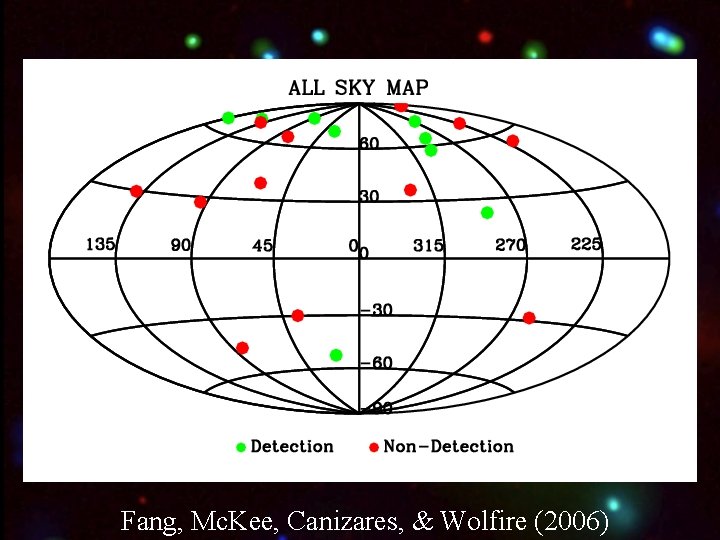
Fang, Mc. Kee, Canizares, & Wolfire (2006)
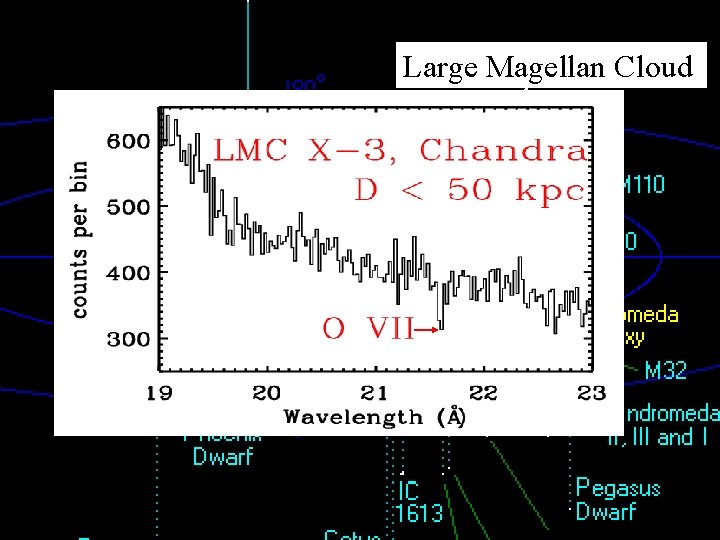
Large Magellan Cloud
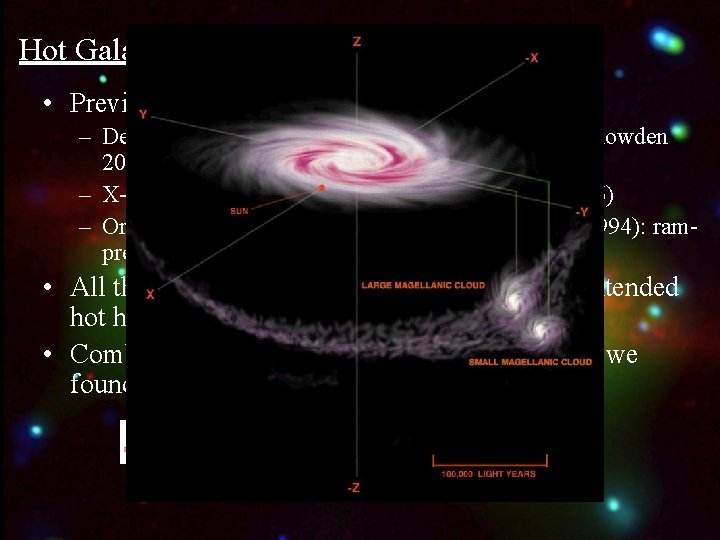
Hot Galactic Halo is not new … • Previous evidence includes: – Deconstruct the soft X-ray background (Kuntz & Snowden 2001) – X-ray shadowing measurement (Galeazzi et al. 2006) – Origin of the Magellanic Stream (Moore & Davis 1994): rampressure striping from the hot halo gas • All the evidence supports the existence of an extended hot halo • Combining with the X-ray absorption measure, we found (Fang et al. 2006):
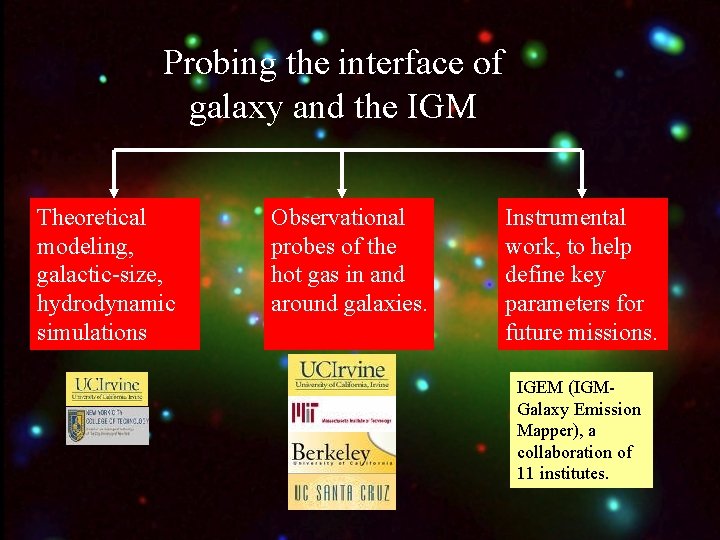
Probing the interface of galaxy and the IGM Theoretical modeling, galactic-size, hydrodynamic simulations Observational probes of the hot gas in and around galaxies. Instrumental work, to help define key parameters for future missions. IGEM (IGMGalaxy Emission Mapper), a collaboration of 11 institutes.
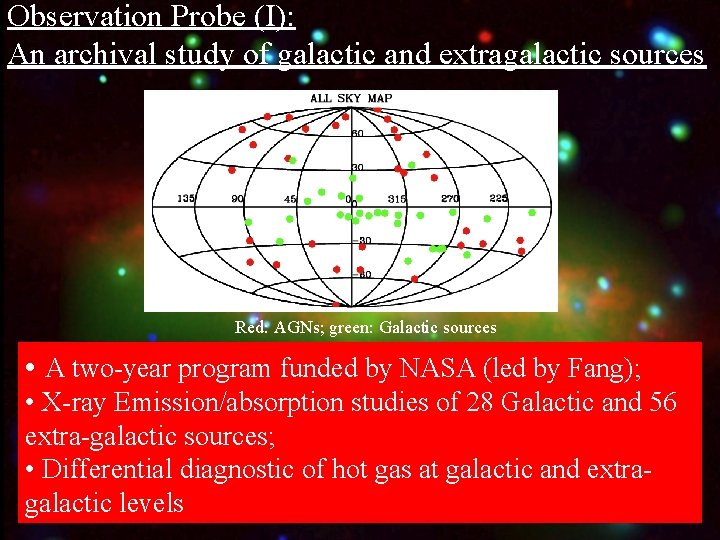
Observation Probe (I): An archival study of galactic and extragalactic sources Red: AGNs; green: Galactic sources • A two-year program funded by NASA (led by Fang); • X-ray Emission/absorption studies of 28 Galactic and 56 extra-galactic sources; • Differential diagnostic of hot gas at galactic and extragalactic levels
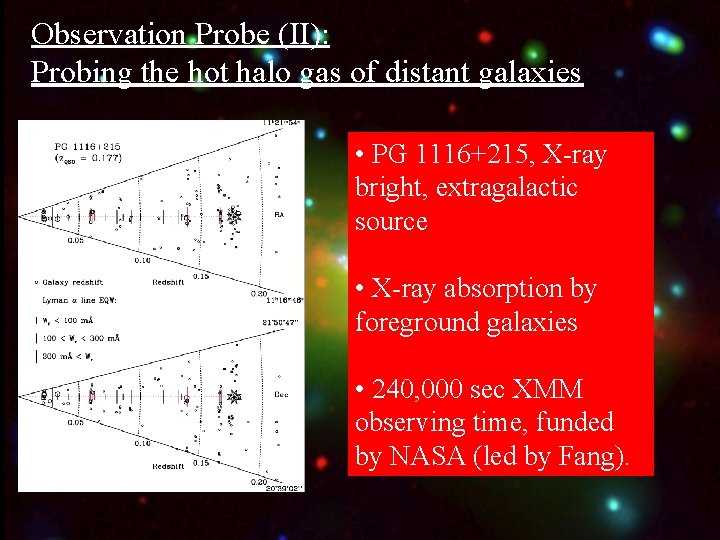
Observation Probe (II): Probing the hot halo gas of distant galaxies • PG 1116+215, X-ray bright, extragalactic source • X-ray absorption by foreground galaxies • 240, 000 sec XMM observing time, funded by NASA (led by Fang).
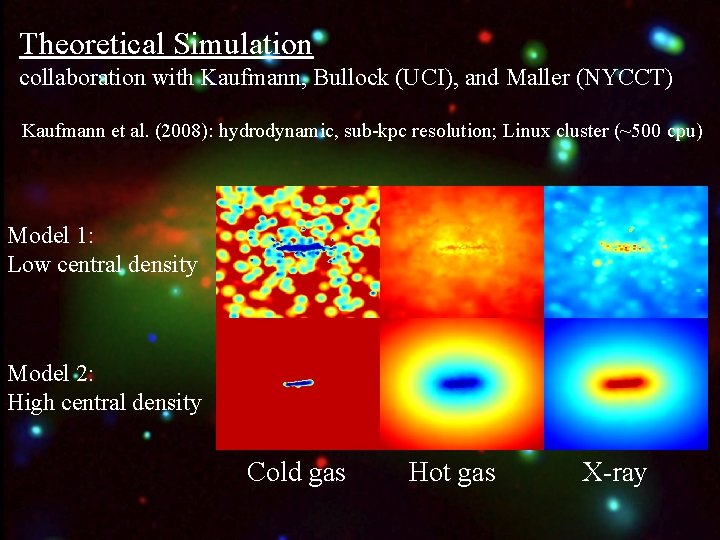
Theoretical Simulation collaboration with Kaufmann, Bullock (UCI), and Maller (NYCCT) Kaufmann et al. (2008): hydrodynamic, sub-kpc resolution; Linux cluster (~500 cpu) Model 1: Low central density Model 2: High central density Cold gas Hot gas X-ray
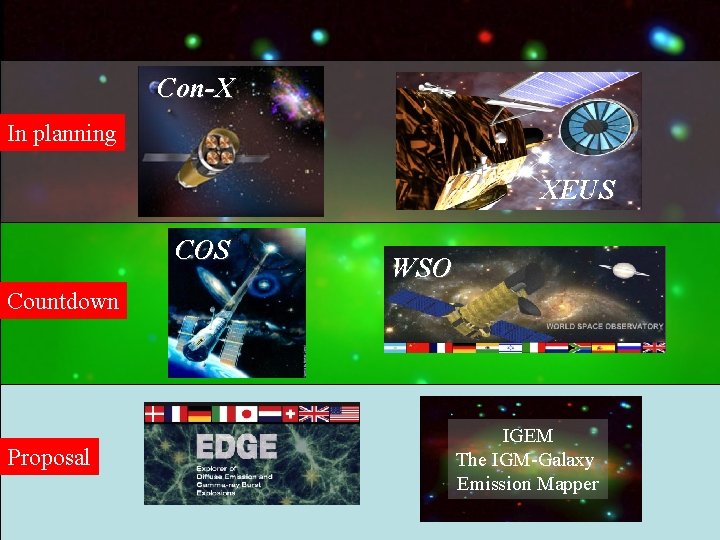
Con-X In planning XEUS COS WSO Countdown Proposal IGEM The IGM-Galaxy Emission Mapper
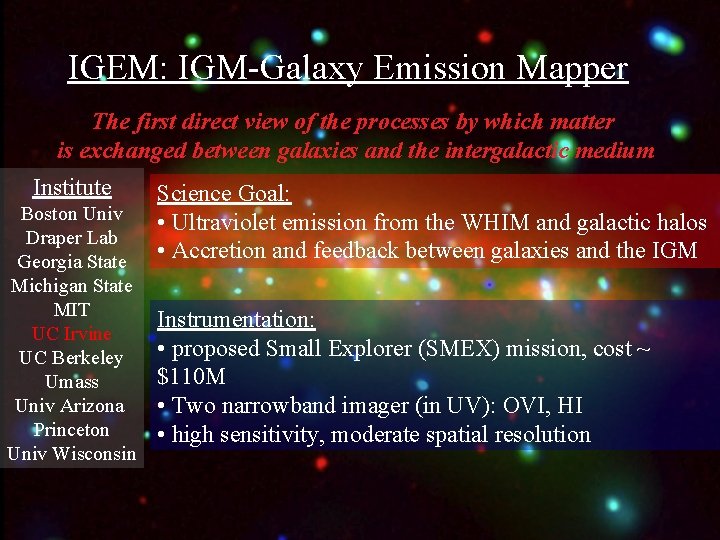
IGEM: IGM-Galaxy Emission Mapper The first direct view of the processes by which matter is exchanged between galaxies and the intergalactic medium Institute Boston Univ Draper Lab Georgia State Michigan State MIT UC Irvine UC Berkeley Umass Univ Arizona Princeton Univ Wisconsin Science Goal: • Ultraviolet emission from the WHIM and galactic halos • Accretion and feedback between galaxies and the IGM Instrumentation: • proposed Small Explorer (SMEX) mission, cost ~ $110 M • Two narrowband imager (in UV): OVI, HI • high sensitivity, moderate spatial resolution
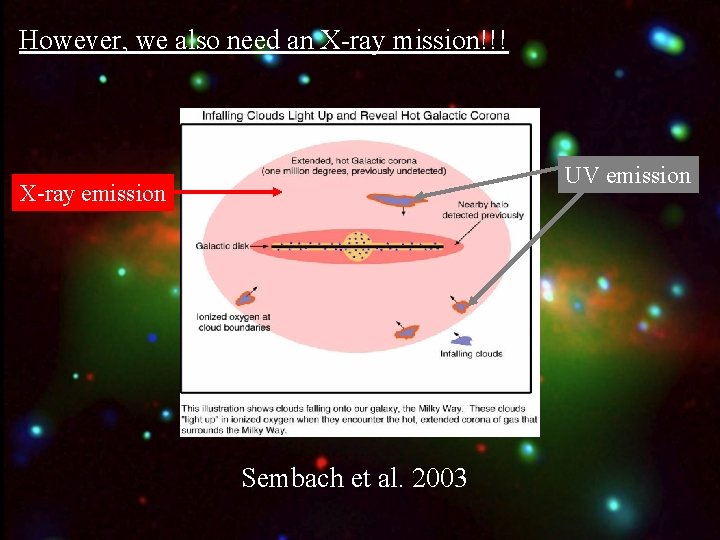
However, we also need an X-ray mission!!! UV emission X-ray emission Sembach et al. 2003
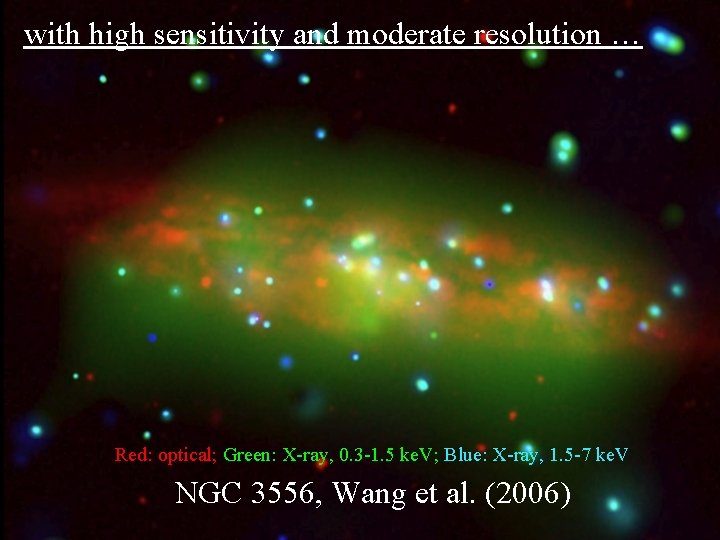
with high sensitivity and moderate resolution … Red: optical; Green: X-ray, 0. 3 -1. 5 ke. V; Blue: X-ray, 1. 5 -7 ke. V NGC 3556, Wang et al. (2006)
Summary • Combining broad band observations with state-ofart simulations of the IGM, we are in an excellent position to probe the rich, complex history of the cosmic structure; • Two “missing baryons” problems: – The WHIM – The interface of galaxy and the IGM • Better instruments!
- Slides: 41