
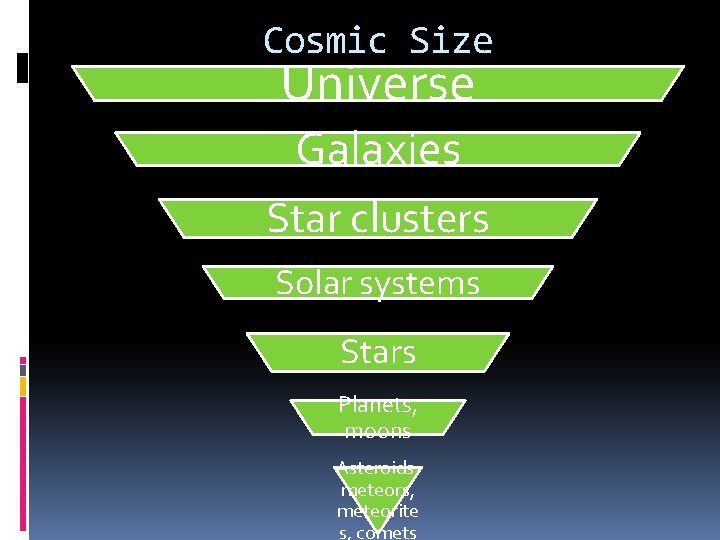
Cosmic Size Universe Galaxies Star clusters Solar systems
- Slides: 27
Cosmic Size Universe Galaxies Star clusters Solar systems Stars Planets, moons Asteroids, meteorite s, comets
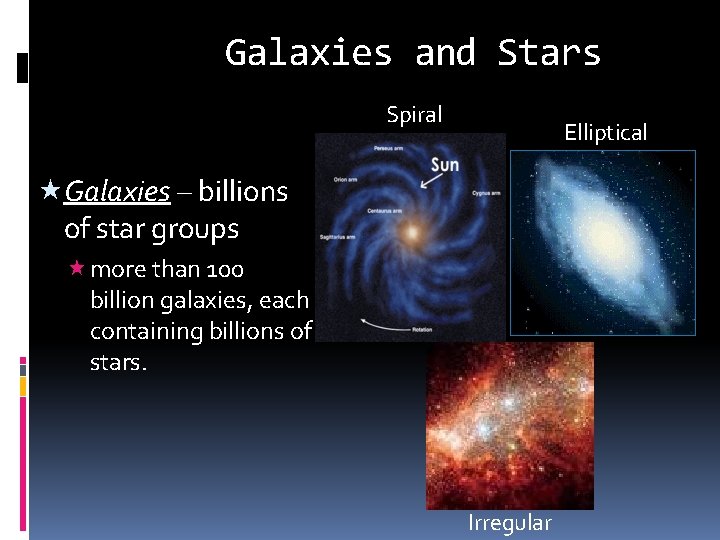
Galaxies and Stars Spiral Elliptical «Galaxies – billions of star groups « more than 100 billion galaxies, each containing billions of stars. Irregular
LIGHT: ELECTROMAGNETIC SPECTRUM & DOPPLER SHIFT
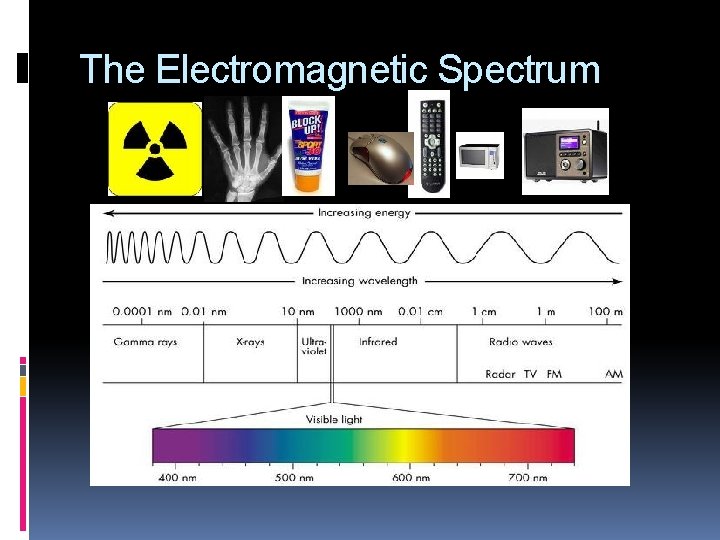
The Electromagnetic Spectrum
Cosmic Speed Limit Speed of light = 300, 000 km/s Light-year = the distance light travels in one year = 9, 500, 000, 000 km The 2 nd nearest star is 4. 3 light years away
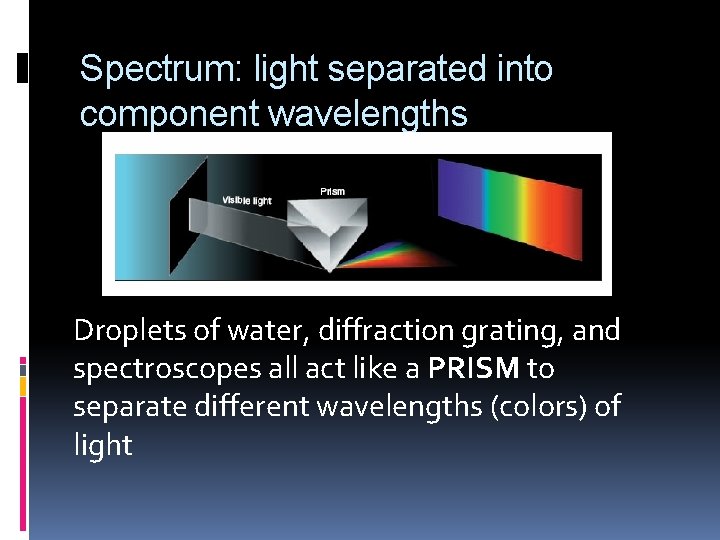
Spectrum: light separated into component wavelengths Droplets of water, diffraction grating, and spectroscopes all act like a PRISM to separate different wavelengths (colors) of light
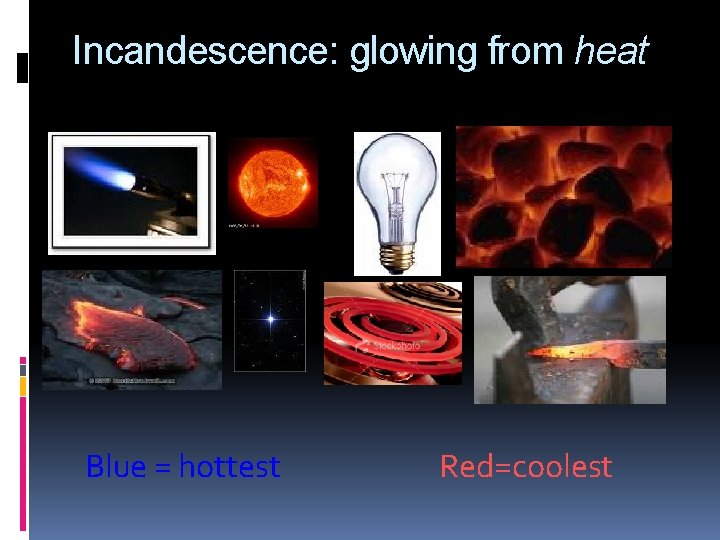
Incandescence: glowing from heat Blue = hottest Red=coolest
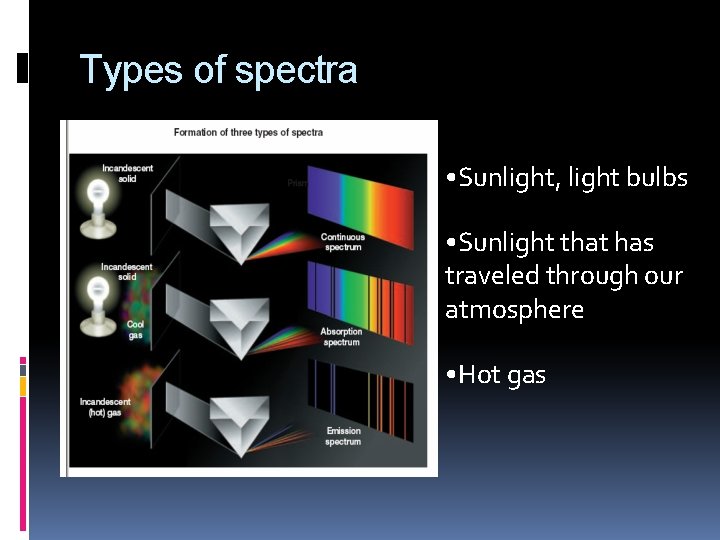
Types of spectra • Sunlight, light bulbs • Sunlight that has traveled through our atmosphere • Hot gas
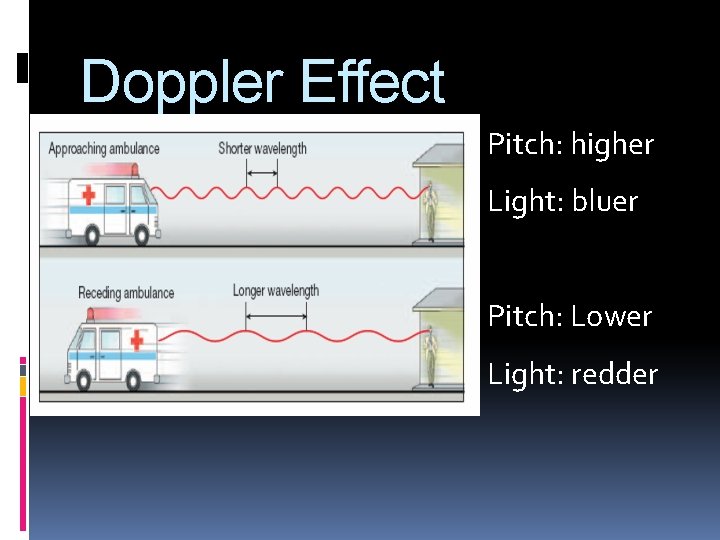
Doppler Effect Pitch: higher Light: bluer Pitch: Lower Light: redder
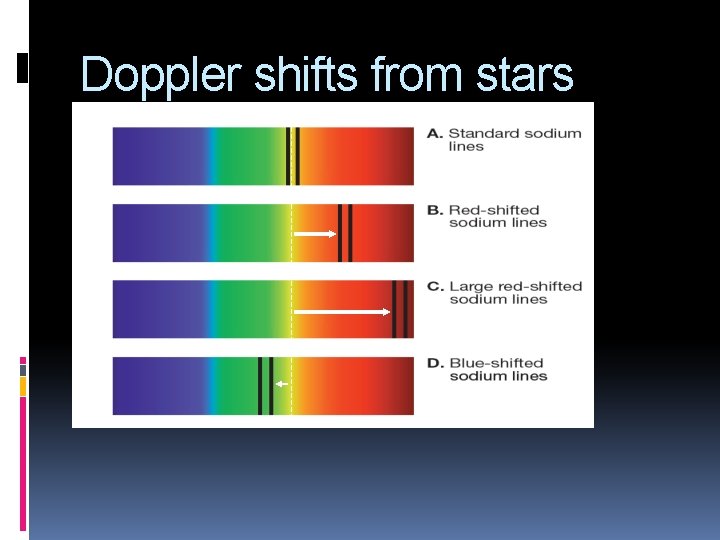
Doppler shifts from stars
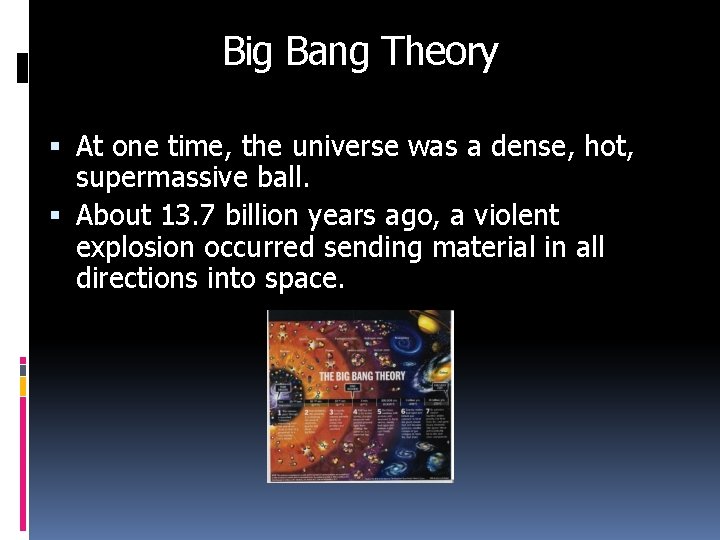
Big Bang Theory At one time, the universe was a dense, hot, supermassive ball. About 13. 7 billion years ago, a violent explosion occurred sending material in all directions into space.
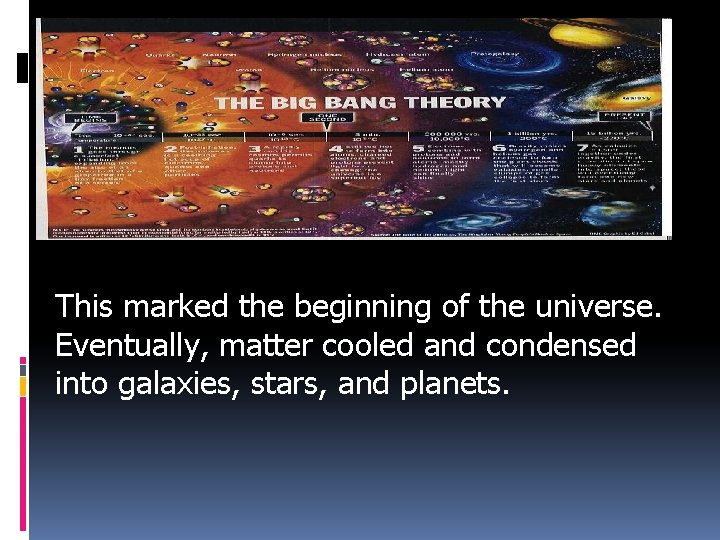
This marked the beginning of the universe. Eventually, matter cooled and condensed into galaxies, stars, and planets.
Support for the Big Bang Theory Red shifts Cosmic background radiation Radio signals coming from every direction in space. Believed to be created by the big bang explosion.
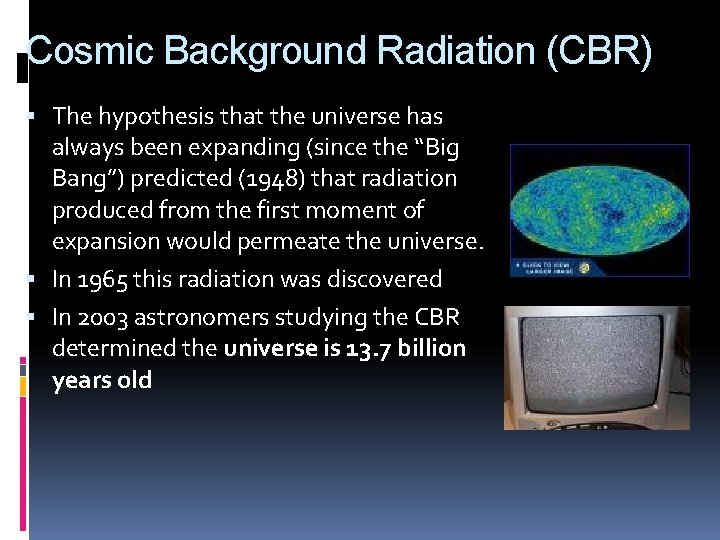
Cosmic Background Radiation (CBR) The hypothesis that the universe has always been expanding (since the “Big Bang”) predicted (1948) that radiation produced from the first moment of expansion would permeate the universe. In 1965 this radiation was discovered In 2003 astronomers studying the CBR determined the universe is 13. 7 billion years old
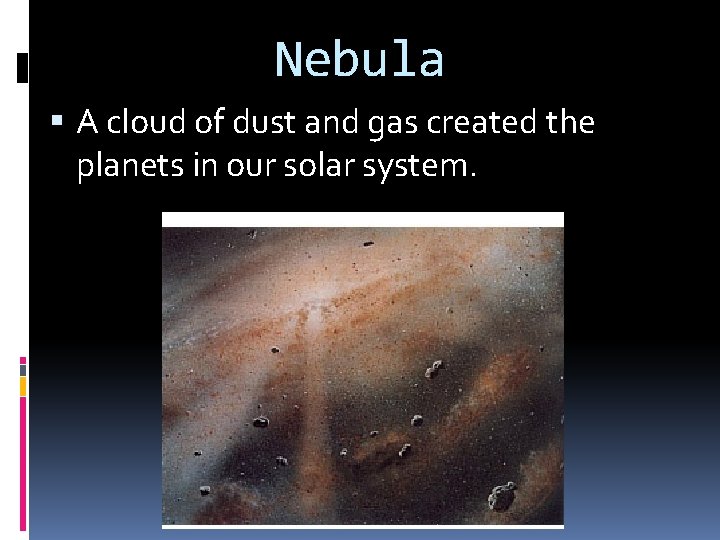
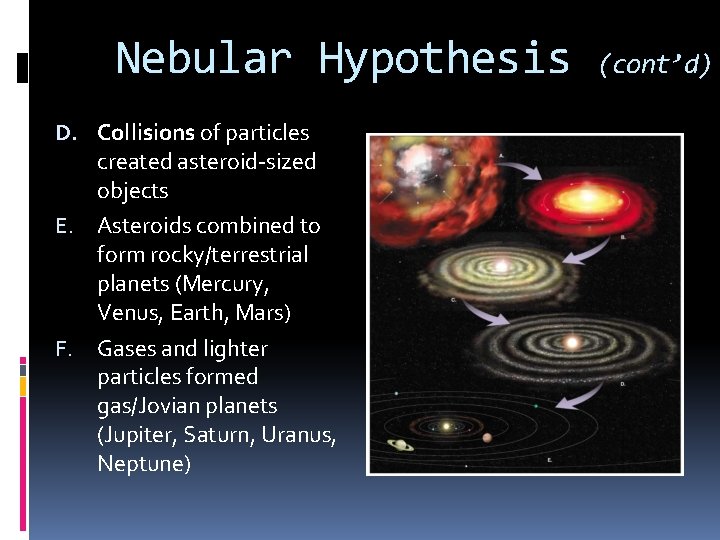
Nebula A cloud of dust and gas created the planets in our solar system.
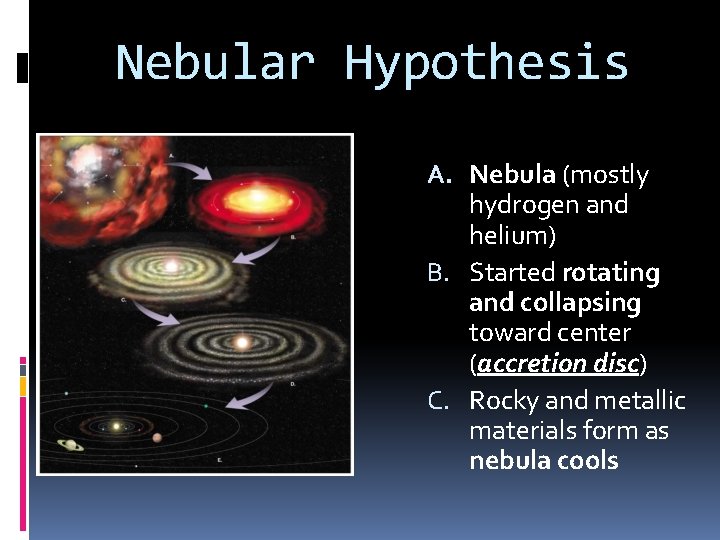
Nebular Hypothesis A. Nebula (mostly hydrogen and helium) B. Started rotating and collapsing toward center (accretion disc) C. Rocky and metallic materials form as nebula cools
Nebular Hypothesis D. Collisions of particles created asteroid-sized objects E. Asteroids combined to form rocky/terrestrial planets (Mercury, Venus, Earth, Mars) F. Gases and lighter particles formed gas/Jovian planets (Jupiter, Saturn, Uranus, Neptune) (cont’d)
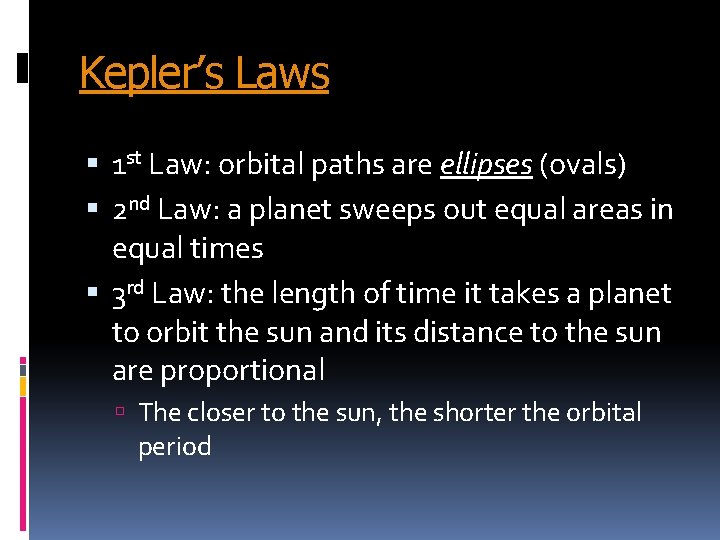
Kepler’s Laws 1 st Law: orbital paths are ellipses (ovals) 2 nd Law: a planet sweeps out equal areas in equal times 3 rd Law: the length of time it takes a planet to orbit the sun and its distance to the sun are proportional The closer to the sun, the shorter the orbital period
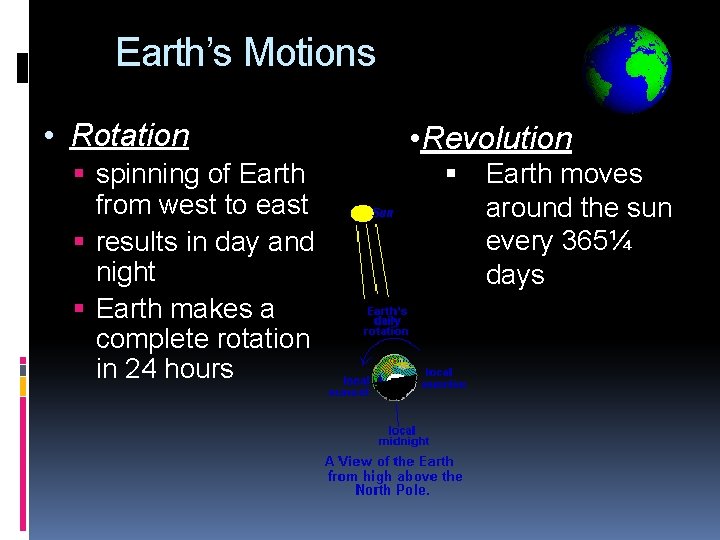
Earth’s Motions • Rotation spinning of Earth from west to east results in day and night Earth makes a complete rotation in 24 hours • Revolution Earth moves around the sun every 365¼ days
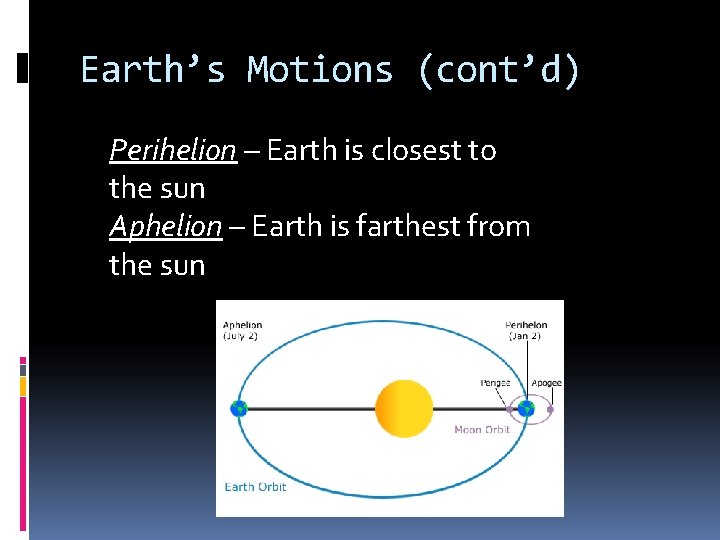
Earth’s Motions (cont’d) Perihelion – Earth is closest to the sun Aphelion – Earth is farthest from the sun
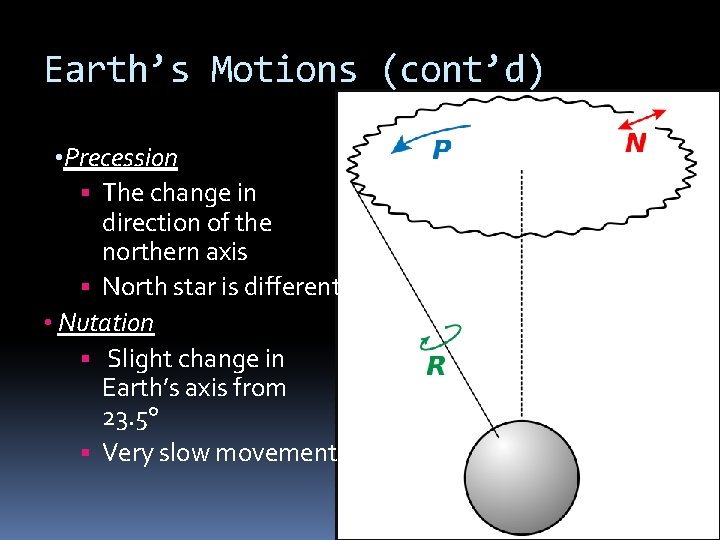
Earth’s Motions (cont’d) • Precession The change in direction of the northern axis North star is different • Nutation Slight change in Earth’s axis from 23. 5° Very slow movement
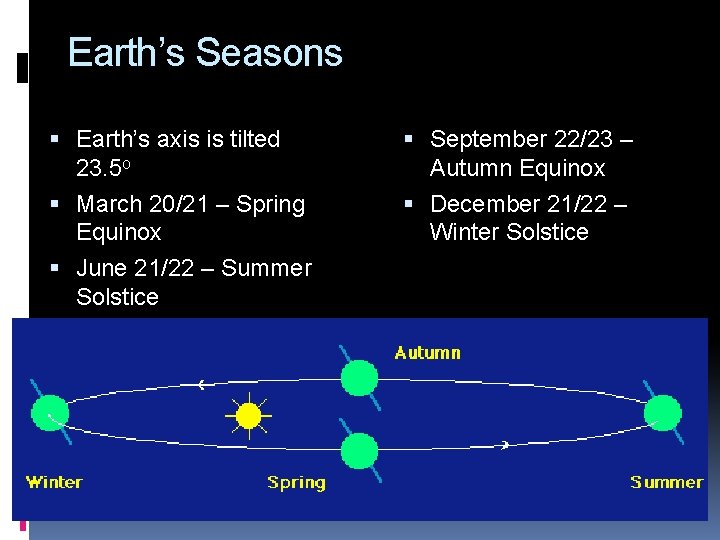
Earth’s Seasons Earth’s axis is tilted 23. 5 o September 22/23 – Autumn Equinox March 20/21 – Spring Equinox December 21/22 – Winter Solstice June 21/22 – Summer Solstice
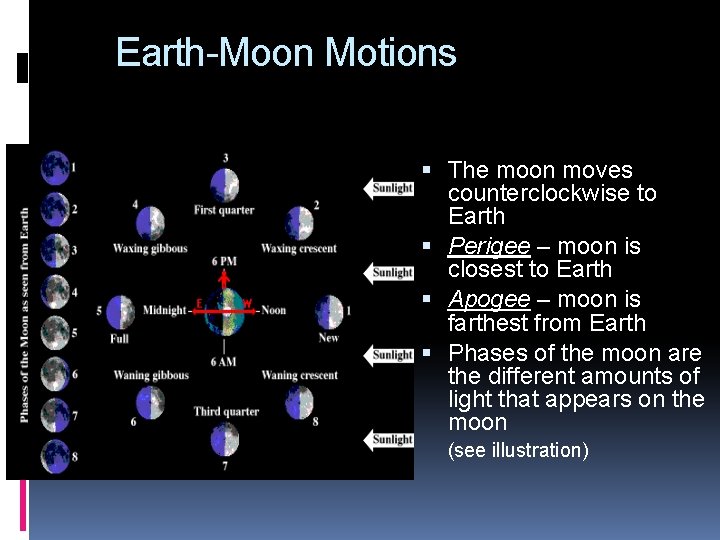
Earth-Moon Motions The moon moves counterclockwise to Earth Perigee – moon is closest to Earth Apogee – moon is farthest from Earth Phases of the moon are the different amounts of light that appears on the moon (see illustration)
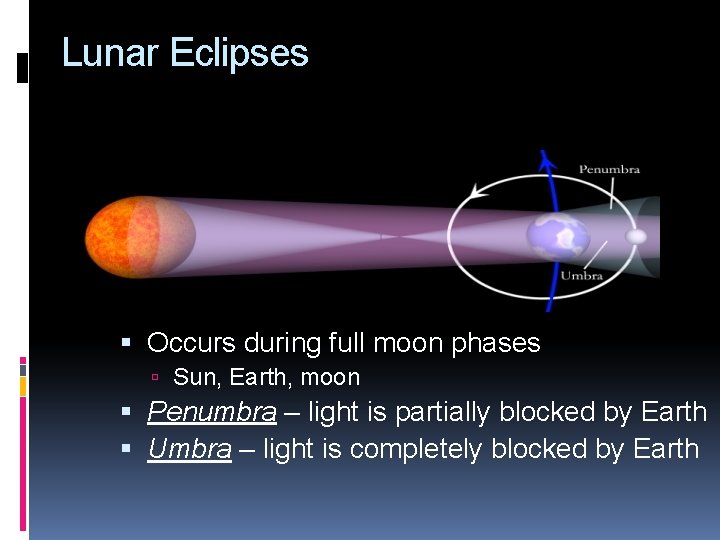
Lunar Eclipses Occurs during full moon phases Sun, Earth, moon Penumbra – light is partially blocked by Earth Umbra – light is completely blocked by Earth
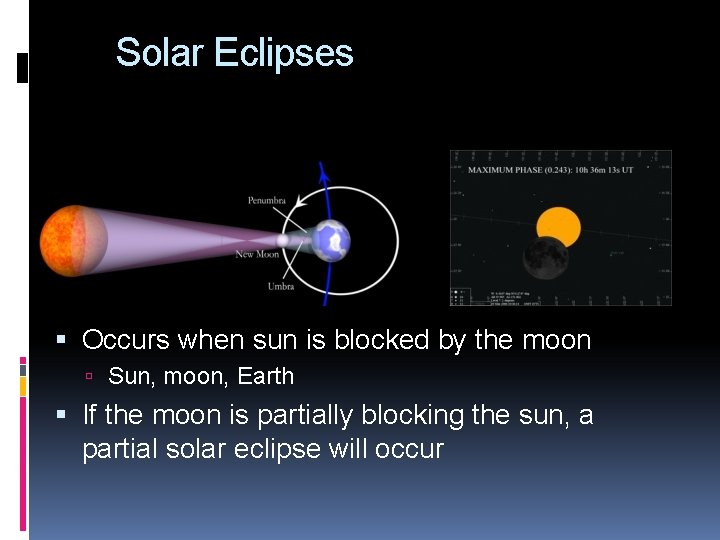
Solar Eclipses Occurs when sun is blocked by the moon Sun, moon, Earth If the moon is partially blocking the sun, a partial solar eclipse will occur
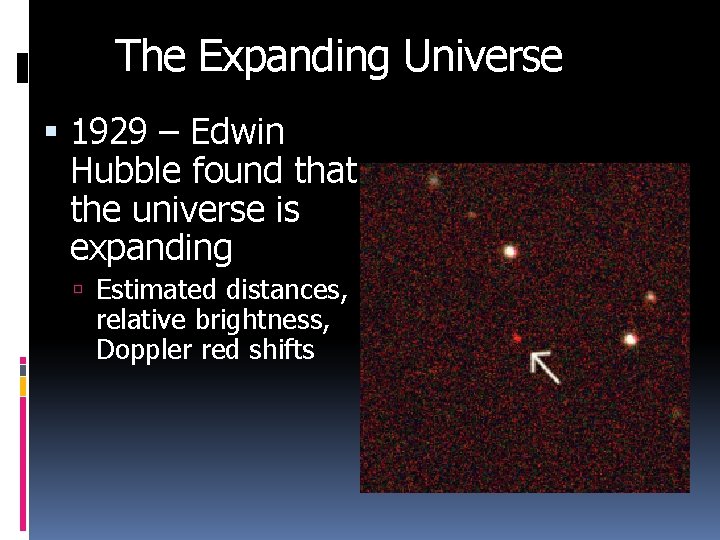
The Expanding Universe 1929 – Edwin Hubble found that the universe is expanding Estimated distances, relative brightness, Doppler red shifts
Dimmer galaxies had greater red shifts farthest from Earth and moving faster Hubble’s Law: the more distant the galaxy, the greater the red shiftthey are moving away at faster speeds.