
COSHH ASSESSMENT TRAINING Essential Elements of a COSHH
- Slides: 9
COSHH ASSESSMENT TRAINING Essential Elements of a COSHH Form
Introduction • This presentation will explain how to undertake a COSHH Assessment using the standard University COSHH Assessment Form • Clicking the left mouse button will move you to the next slide • At the end of this presentation you will find details on where to go for further information and supporting documents
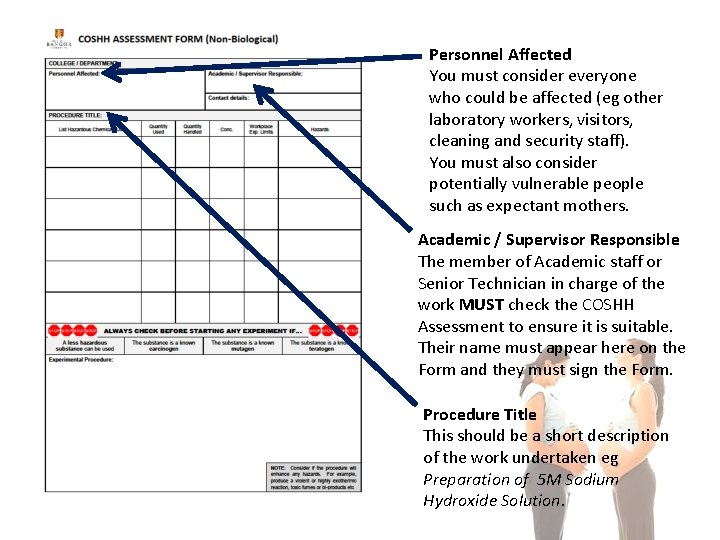
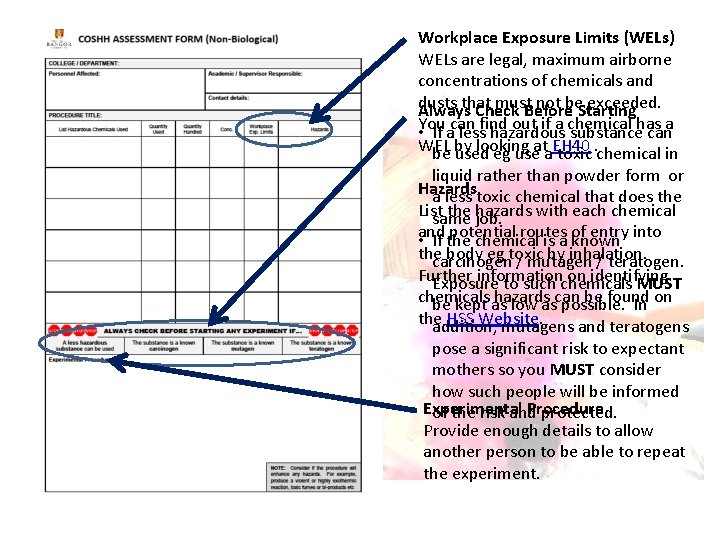
Personnel Affected You must consider everyone who could be affected (eg other laboratory workers, visitors, cleaning and security staff). You must also consider potentially vulnerable people such as expectant mothers. Academic / Supervisor Responsible The member of Academic staff or Senior Technician in charge of the work MUST check the COSHH Assessment to ensure it is suitable. Their name must appear here on the Form and they must sign the Form. Procedure Title This should be a short description of the work undertaken eg Preparation of 5 M Sodium Hydroxide Solution.
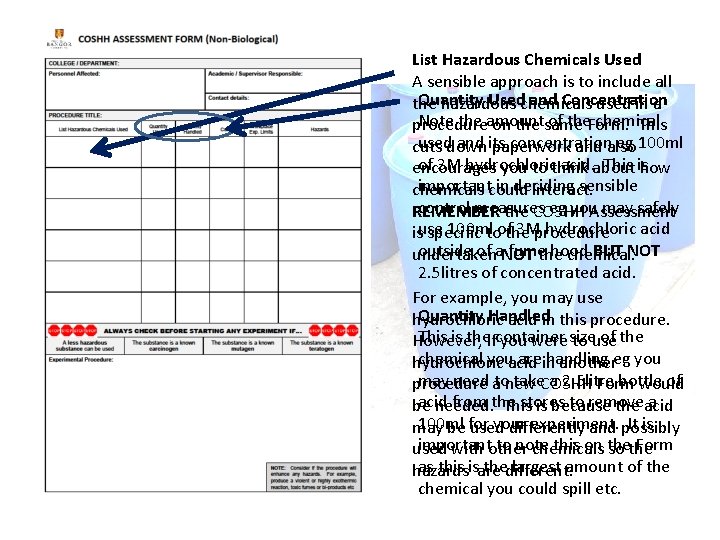
List Hazardous Chemicals Used A sensible approach is to include all Quantity Usedchemicals and Concentration the hazardous used in a Note the amount of the. Form. chemical procedure on the same This useddown and its concentration eg 100 ml cuts paperwork and also of 3 M hydrochloric acid. about This ishow encourages you to think importantcould in deciding sensible chemicals interact. control measures eg you. Assessment may safely REMEMBER the COSHH 100 mltoofthe 3 Mprocedure hydrochloric acid isuse specific outside of a. NOT fumethe hood BUT NOT undertaken chemical. 2. 5 litres of concentrated acid. For example, you may use Quantity Handled hydrochloric acid in this procedure. This is theifcontainer of the However, you were size to use chemical youacid arein handling hydrochloric anothereg you may need atonew take. COSHH a 2. 5 litre bottle of procedure Form would acid from the stores to remove a be needed. This is because the acid 100 ml your experiment. It is may be for used differently and possibly important to note this on the Form used with other chemicals so the as this isare thedifferent. largest amount of the hazards chemical you could spill etc.
Workplace Exposure Limits (WELs) WELs are legal, maximum airborne concentrations of chemicals and dusts that must. Before not be. Starting exceeded. Always Check You out if a chemical • If acan lessfind hazardous substancehas cana WEL looking be by used eg useata. EH 40 toxic. chemical in liquid rather than powder form or Hazards a less toxic chemical that does the List the hazards with each chemical same job. and potential routes entry into • If the chemical is a of known the body eg toxic by inhalation. carcinogen / mutagen / teratogen. Further information on identifying Exposure to such chemicals MUST chemicals hazards can be found be kept as low as possible. In on the HSS Website. addition, mutagens and teratogens pose a significant risk to expectant mothers so you MUST consider how such people will be informed Experimental Procedure of the risk and protected. Provide enough details to allow another person to be able to repeat the experiment.
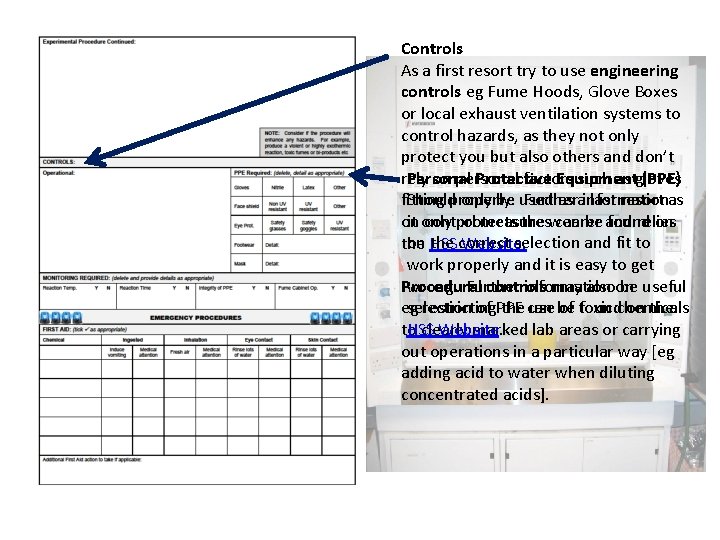
Controls As a first resort try to use engineering controls eg Fume Hoods, Glove Boxes or local exhaust ventilation systems to control hazards, as they not only protect you but also others and don’t Personal Protective Equipment (PPE) rely on personal factors such as gloves Shouldproperly. only be used as ainformation last resort as fitting Further it only protects the wearer relies on control measures can be and found on on HSS the correct selection and fit to the Website. work properly and it is easy to get wrong. Further information Procedural controls may alsoon be useful selection of PPE foundchemicals on the eg restricting the can use be of toxic HSS Website. to clearly marked lab areas or carrying out operations in a particular way [eg adding acid to water when diluting concentrated acids].
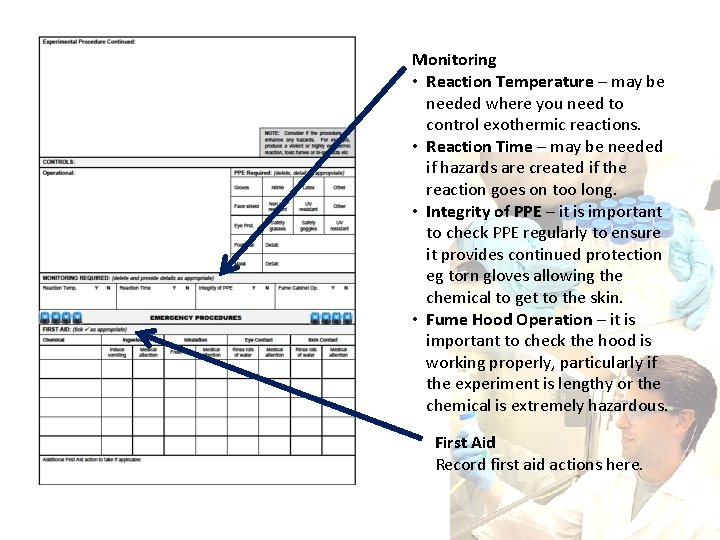
Monitoring • Reaction Temperature – may be needed where you need to control exothermic reactions. • Reaction Time – may be needed if hazards are created if the reaction goes on too long. • Integrity of PPE – it is important to check PPE regularly to ensure it provides continued protection eg torn gloves allowing the chemical to get to the skin. • Fume Hood Operation – it is important to check the hood is working properly, particularly if the experiment is lengthy or the chemical is extremely hazardous. First Aid Record first aid actions here.
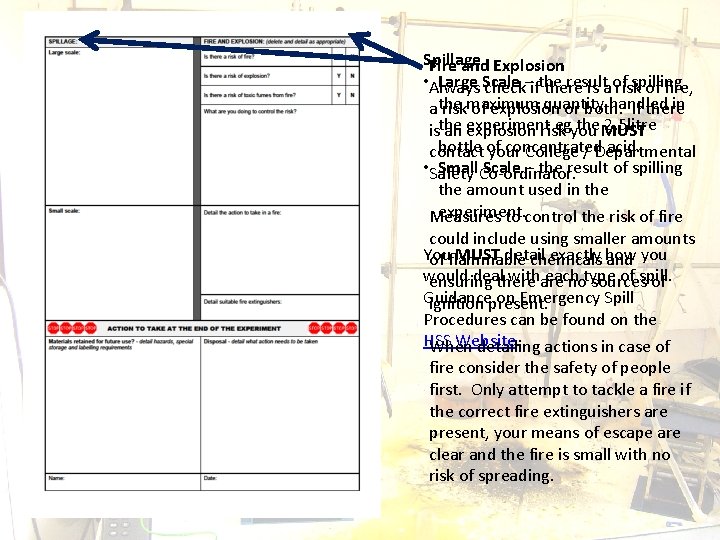
Spillage Fire and Explosion • Always Large Scale result spilling check–ifthe there is a of risk of fire, quantity handled in athe riskmaximum of explosion or both. If there egyou the MUST 2. 5 litre isthe an experiment explosion risk bottle of concentrated acid. contact your College / Departmental • Safety Small. Co-ordinator. Scale – the result of spilling the amount used in the experiment. Measures to control the risk of fire could include using smaller amounts You MUST detail exactly how of flammable chemicals and you would dealthere withare each of spill. ensuring notype sources of Guidance on Emergency Spill ignition present. Procedures can be found on the HSS Website. When detailing actions in case of fire consider the safety of people first. Only attempt to tackle a fire if the correct fire extinguishers are present, your means of escape are clear and the fire is small with no risk of spreading.
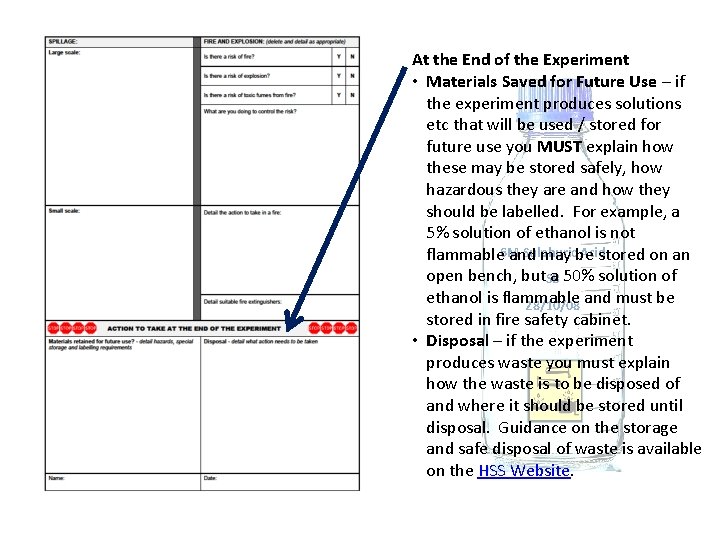
At the End of the Experiment • Materials Saved for Future Use – if the experiment produces solutions etc that will be used / stored for future use you MUST explain how these may be stored safely, how hazardous they are and how they should be labelled. For example, a 5% solution of ethanol is not Sulphuric Acid flammable 6 M and may be stored on an open bench, but. SB a 50% solution of ethanol is flammable 28/10/08 and must be stored in fire safety cabinet. • Disposal – if the experiment produces waste you must explain how the waste is to be disposed of and where it should be stored until disposal. Guidance on the storage and safe disposal of waste is available on the HSS Website.