
Cortical Control of Movement Lecture 20 Hierarchical Control
- Slides: 21
Cortical Control of Movement Lecture 20
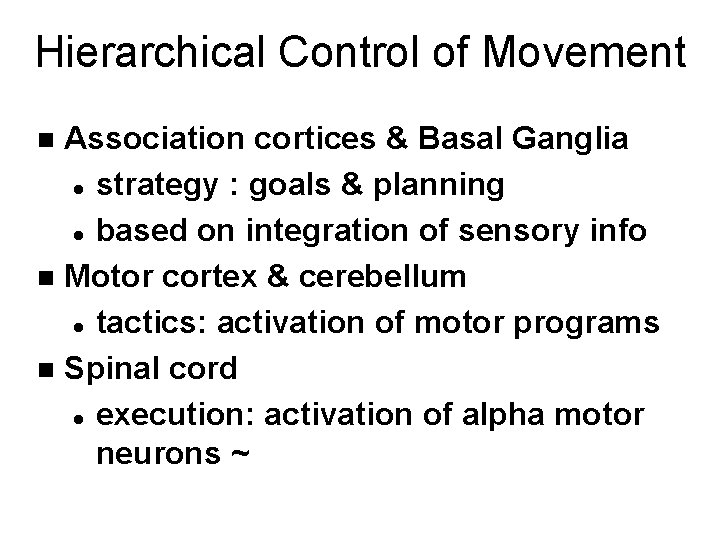
Hierarchical Control of Movement Association cortices & Basal Ganglia l strategy : goals & planning l based on integration of sensory info n Motor cortex & cerebellum l tactics: activation of motor programs n Spinal cord l execution: activation of alpha motor neurons ~ n
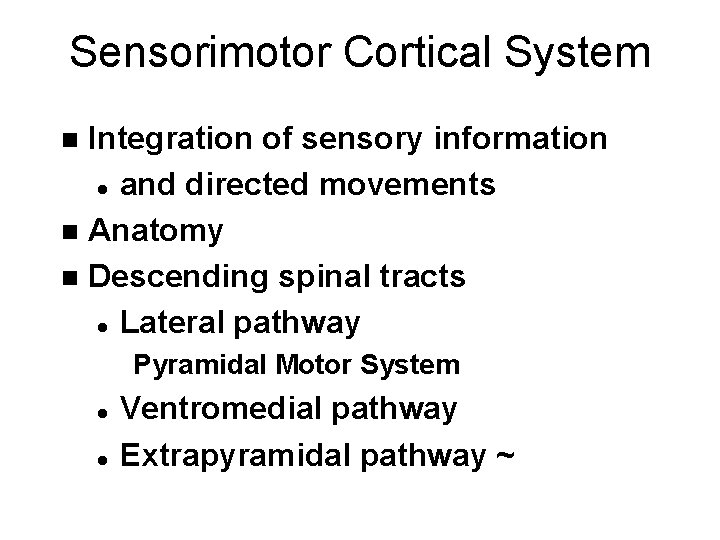
Sensorimotor Cortical System Integration of sensory information l and directed movements n Anatomy n Descending spinal tracts l Lateral pathway n Pyramidal Motor System l l Ventromedial pathway Extrapyramidal pathway ~
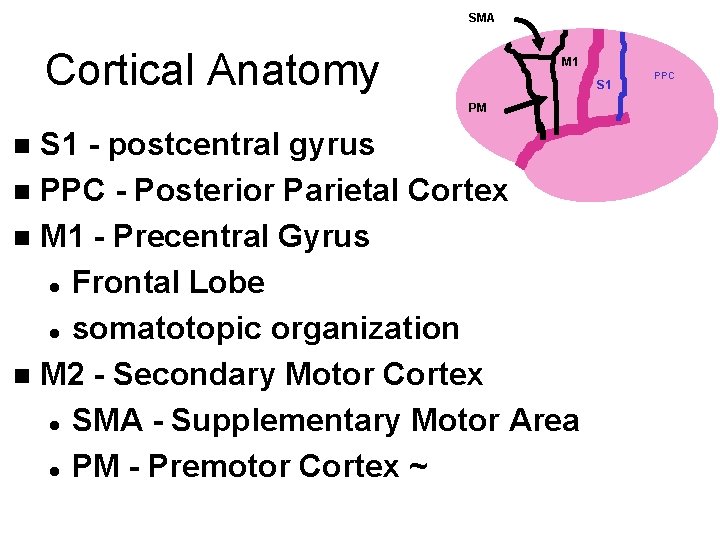
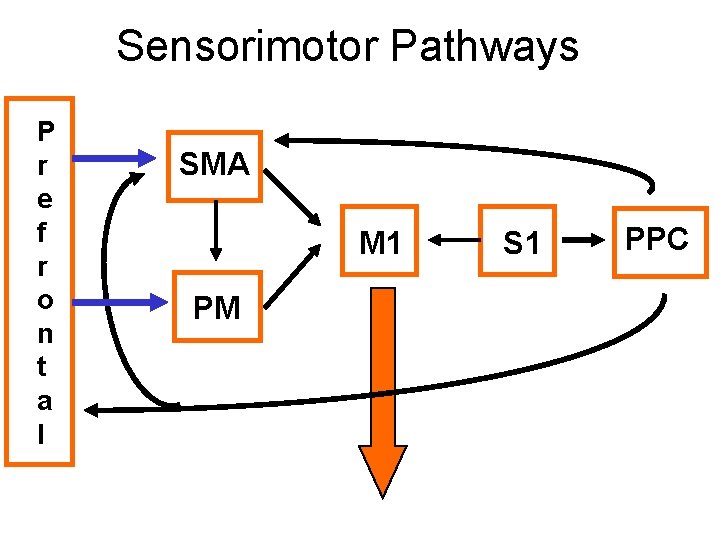
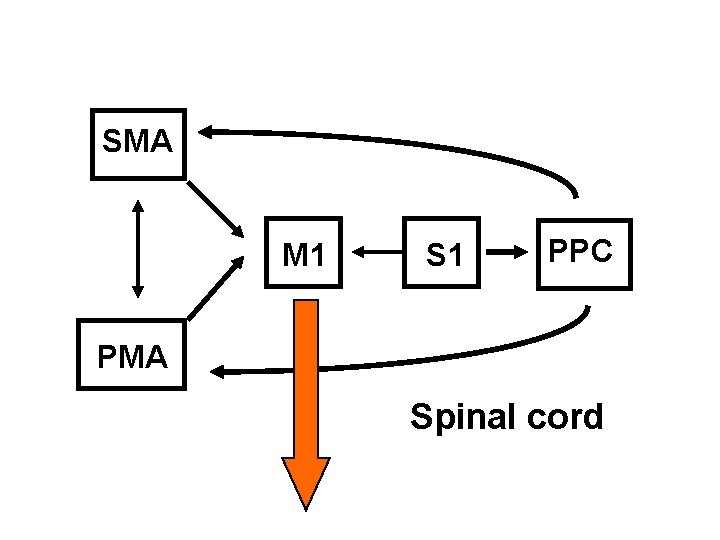
SMA Cortical Anatomy M 1 S 1 PM S 1 - postcentral gyrus n PPC - Posterior Parietal Cortex n M 1 - Precentral Gyrus l Frontal Lobe l somatotopic organization n M 2 - Secondary Motor Cortex l SMA - Supplementary Motor Area l PM - Premotor Cortex ~ n PPC
Sensorimotor Pathways P r e f r o n t a l SMA M 1 PM S 1 PPC
Primary Motor Cortex n n Somatotopic organization l neurons have preferred direction of movement Motor homunculus ~
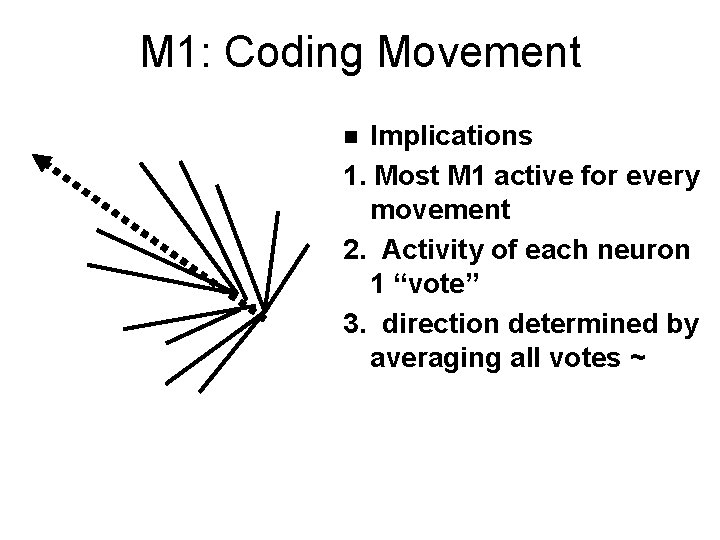
M 1: Coding Movement for limbs n Neuron most active l Preferred direction l but active at 45° from preferred n How is direction determined? l Populations of M 1 neurons l Net activity of neurons with different preferred directions l vectors ~ n
M 1: Coding Movement Implications 1. Most M 1 active for every movement 2. Activity of each neuron 1 “vote” 3. direction determined by averaging all votes ~ n
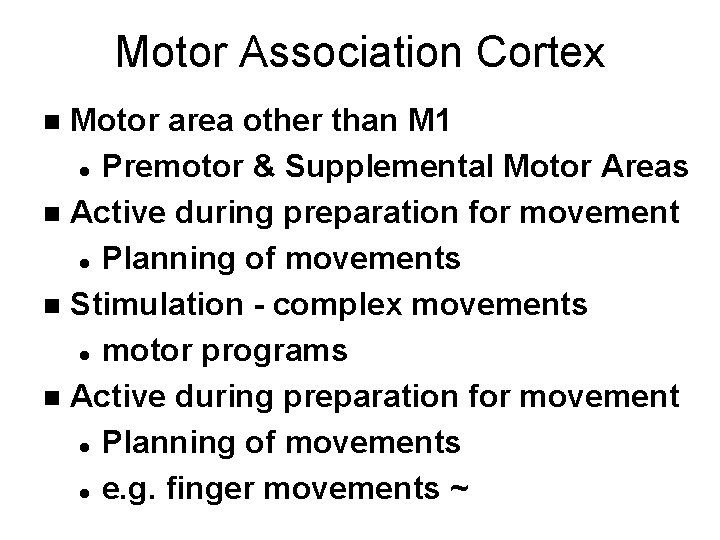
Motor Association Cortex Motor area other than M 1 l Premotor & Supplemental Motor Areas n Active during preparation for movement l Planning of movements n Stimulation - complex movements l motor programs n Active during preparation for movement l Planning of movements l e. g. finger movements ~ n
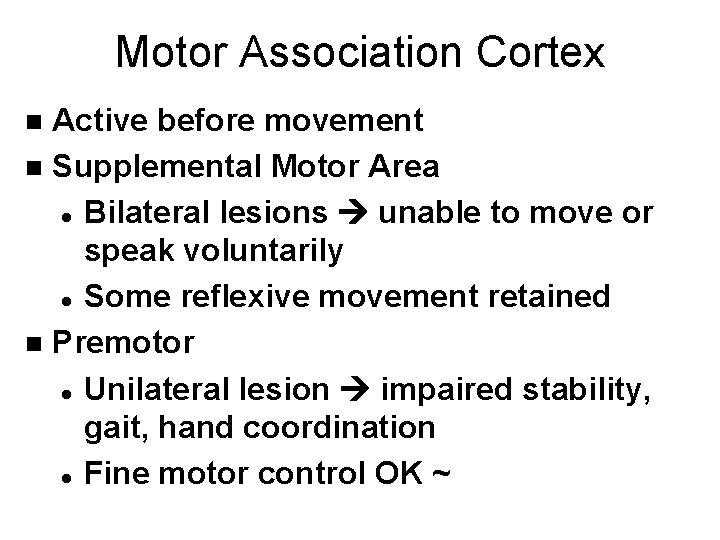
Motor Association Cortex Active before movement n Supplemental Motor Area l Bilateral lesions unable to move or speak voluntarily l Some reflexive movement retained n Premotor l Unilateral lesion impaired stability, gait, hand coordination l Fine motor control OK ~ n
SMA M 1 S 1 PPC PMA Spinal cord
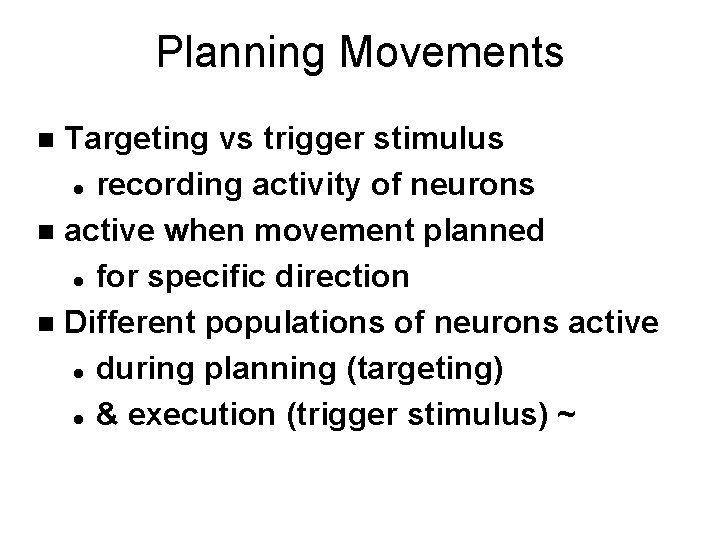
Planning Movements Targeting vs trigger stimulus l recording activity of neurons n active when movement planned l for specific direction n Different populations of neurons active l during planning (targeting) l & execution (trigger stimulus) ~ n
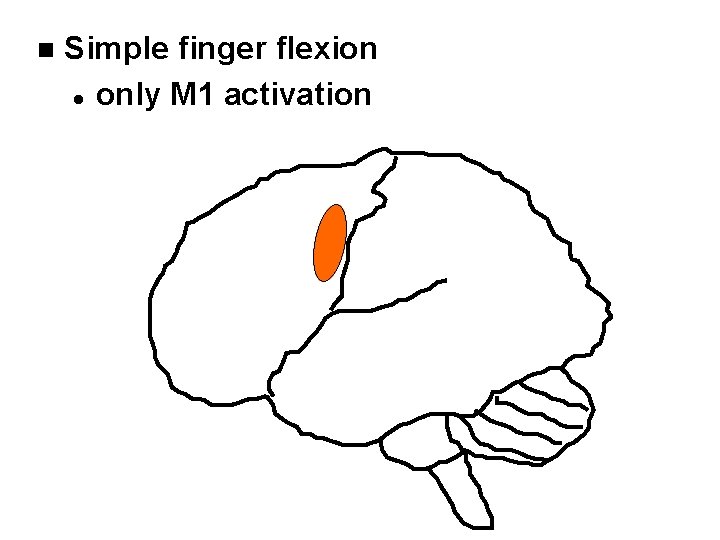
n Simple finger flexion l only M 1 activation
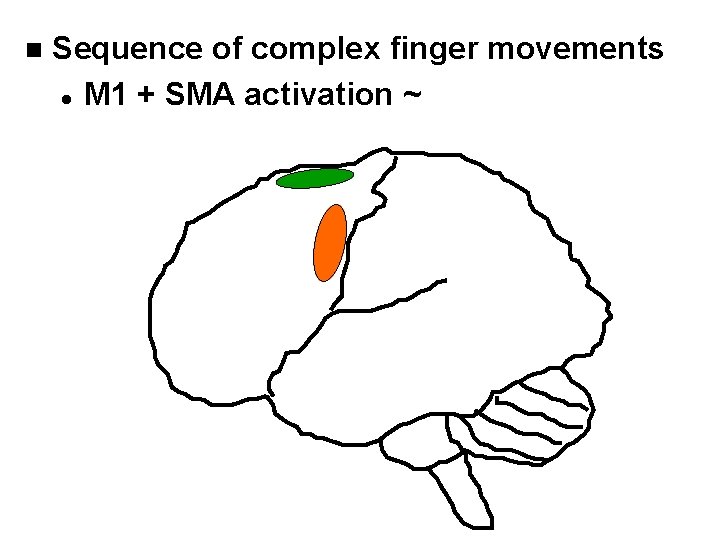
n Sequence of complex finger movements l M 1 + SMA activation ~
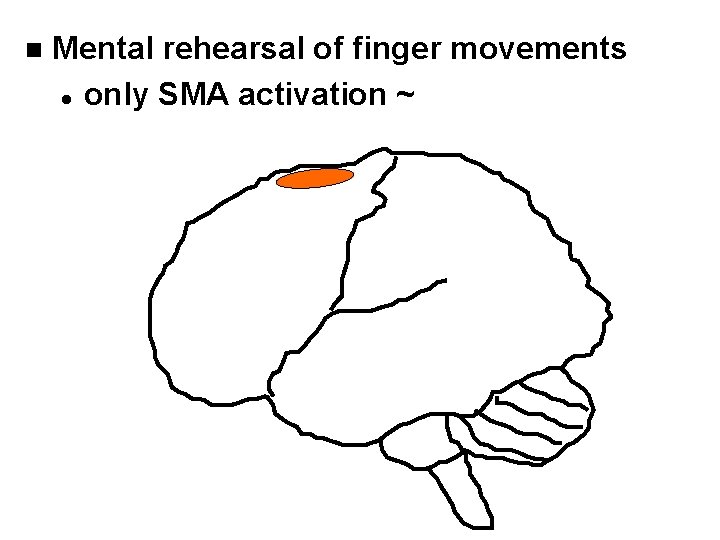
n Mental rehearsal of finger movements l only SMA activation ~
The Descending Spinal Tracts
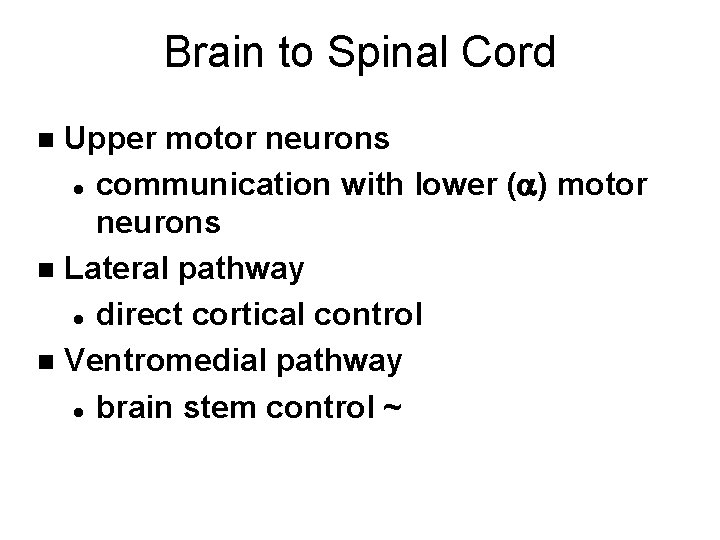
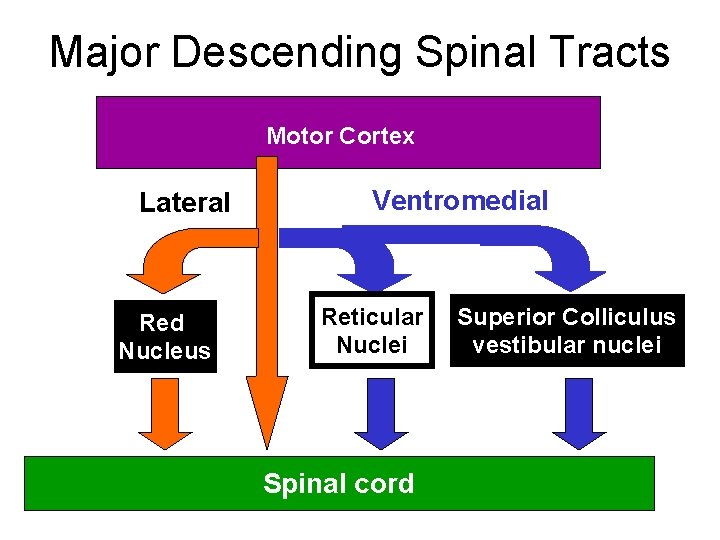
Brain to Spinal Cord Upper motor neurons l communication with lower (a) motor neurons n Lateral pathway l direct cortical control n Ventromedial pathway l brain stem control ~ n
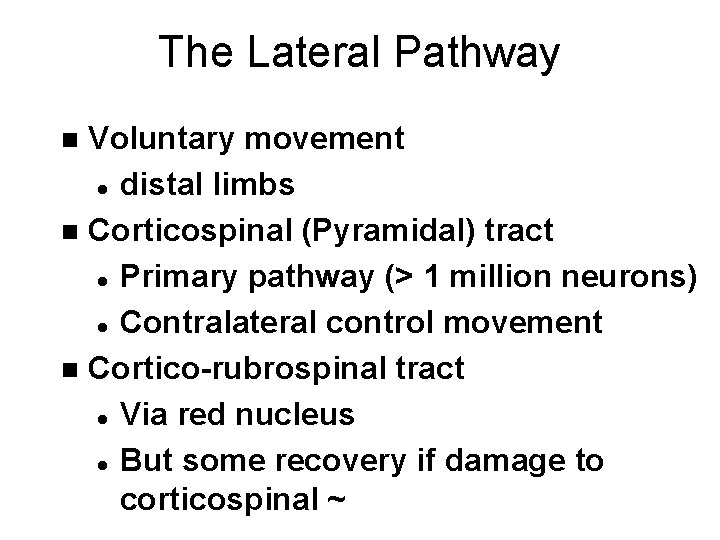
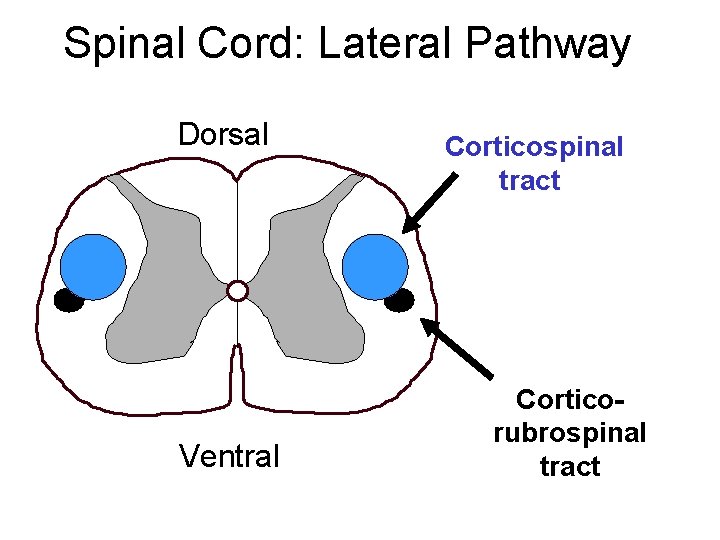
The Lateral Pathway Voluntary movement l distal limbs n Corticospinal (Pyramidal) tract l Primary pathway (> 1 million neurons) l Contralateral control movement n Cortico-rubrospinal tract l Via red nucleus l But some recovery if damage to corticospinal ~ n
Spinal Cord: Lateral Pathway Dorsal Ventral Corticospinal tract Corticorubrospinal tract
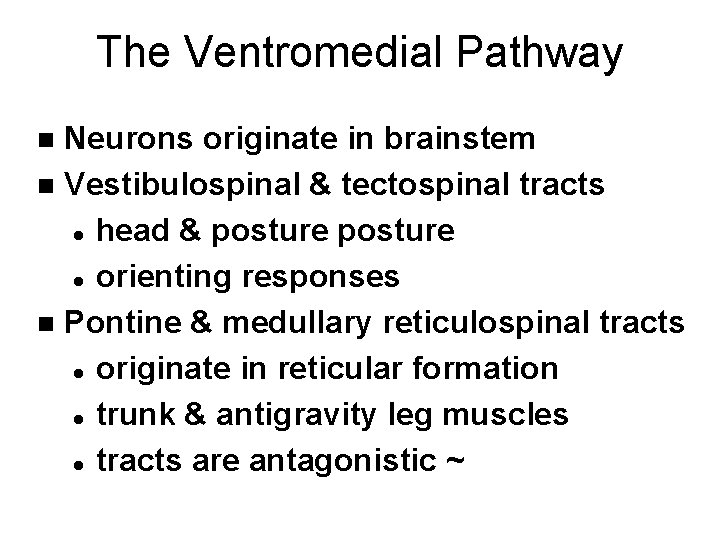
The Ventromedial Pathway Neurons originate in brainstem n Vestibulospinal & tectospinal tracts l head & posture l orienting responses n Pontine & medullary reticulospinal tracts l originate in reticular formation l trunk & antigravity leg muscles l tracts are antagonistic ~ n
Major Descending Spinal Tracts Motor Cortex Lateral Red Nucleus Ventromedial Reticular Nuclei Spinal cord Superior Colliculus vestibular nuclei