
CORROSION TYPES CHAPTER 4 11 HYDROGEN DAMAGE Ass
- Slides: 6
CORROSION TYPES CHAPTER 4 11) HYDROGEN DAMAGE Ass. Professor SAHEB M. MAHDI
11) Hydrogen Damage It is a general term which refers to mechanical damage of a metal caused by the presence of, or interaction with, hydrogen. Hydrogen damage may be classified into four distinct types: hydrogen blistering. hydrogen embrittlements. decarburization. hydrogen attack. Blistering Hydrogen enters the lattice of a metal, diffuses to voids, creates high internal stresses blisters. . . Blistering may occur during exposure to: v hydrocarbons; v electroplating solutions; v chemical process streams; v pickling solutions; v H-containing contaminants during welding; v general corrosive environments.
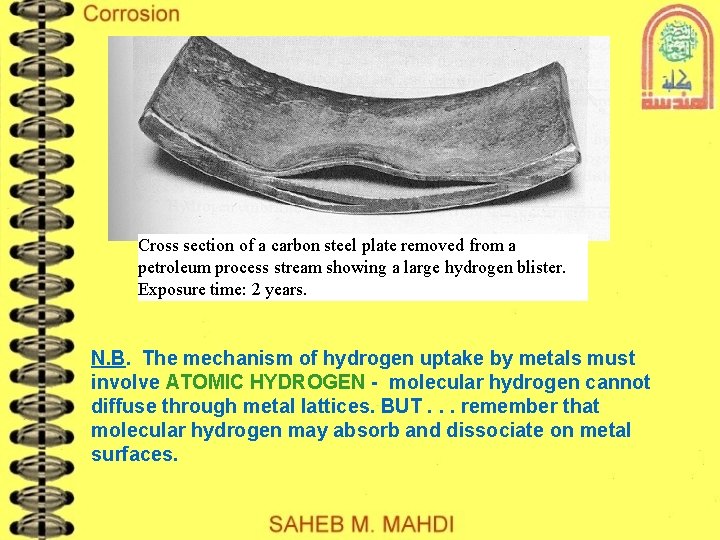
Cross section of a carbon steel plate removed from a petroleum process stream showing a large hydrogen blister. Exposure time: 2 years. N. B. The mechanism of hydrogen uptake by metals must involve ATOMIC HYDROGEN - molecular hydrogen cannot diffuse through metal lattices. BUT. . . remember that molecular hydrogen may absorb and dissociate on metal surfaces.
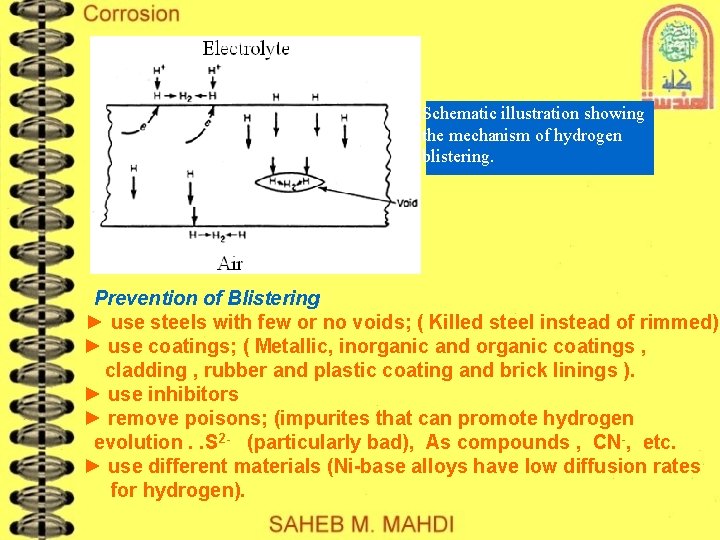
Schematic illustration showing the mechanism of hydrogen blistering. Prevention of Blistering ► use steels with few or no voids; ( Killed steel instead of rimmed) ► use coatings; ( Metallic, inorganic and organic coatings , cladding , rubber and plastic coating and brick linings ). ► use inhibitors ► remove poisons; (impurites that can promote hydrogen evolution. . S 2 - (particularly bad), As compounds , CN-, etc. ► use different materials (Ni-base alloys have low diffusion rates for hydrogen).
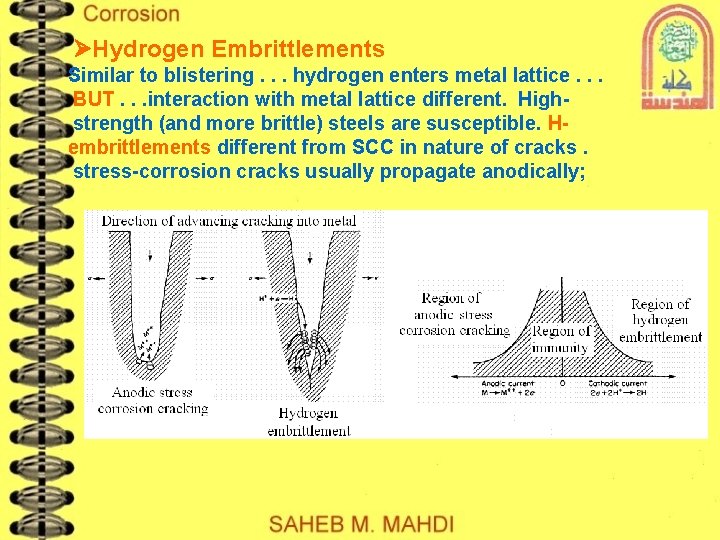
Hydrogen Embrittlements Similar to blistering. . . hydrogen enters metal lattice. . . BUT. . . interaction with metal lattice different. Highstrength (and more brittle) steels are susceptible. Hembrittlements different from SCC in nature of cracks. stress-corrosion cracks usually propagate anodically;
Prevention of Embrittlement q q q reduce corrosion rate (inhibitors, coatings, etc. ). change electroplating process to minimize H effects (voltage, current density, bath composition, etc. ). bake material to remove H; ( 200 - 300 o. F ). minimize residual stresses; ( annealing ). use less susceptible material; ( Alloying with Ni or Mb ). maintain clean conditions during welding. ( Dry condition ). Decarburization and Hydrogen Attack High temperature process - C or carbide in steels can react with gaseous hydrogen C + 2 H 2 CH 4 Note that the reaction can occur with atomic H in the metal lattice. . . C + 4 H CH 4 May crack the steel from high internal pressure. May cause loss of strength as C disappears.