
Corrosion of passive metals Jacek Bana University of
Corrosion of passive metals Jacek Banaś University of Science and Technology (AGH-UST) Faculty of Foundry Engineering Department of General and Analytical Chemistry
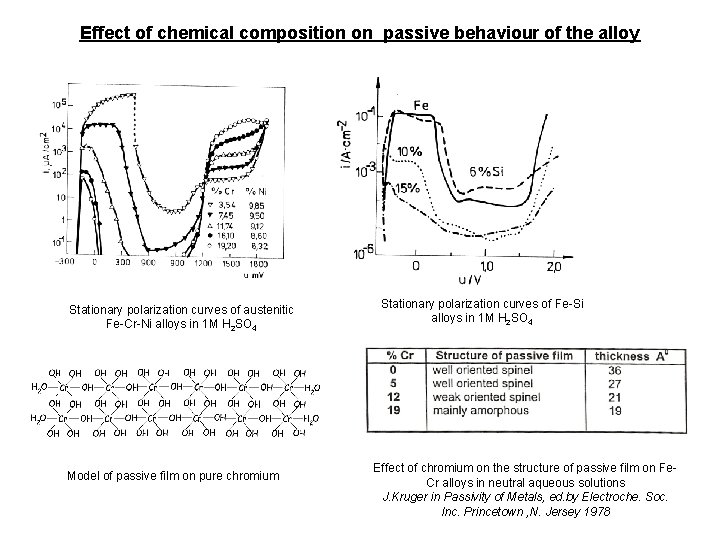
Effect of chemical composition on passive behaviour of the alloy Stationary polarization curves of austenitic Fe-Cr-Ni alloys in 1 M H 2 SO 4 Model of passive film on pure chromium Stationary polarization curves of Fe-Si alloys in 1 M H 2 SO 4 Effect of chromium on the structure of passive film on Fe. Cr alloys in neutral aqueous solutions J. Kruger in Passivity of Metals, ed. by Electroche. Soc. Inc. Princetown , N. Jersey 1978
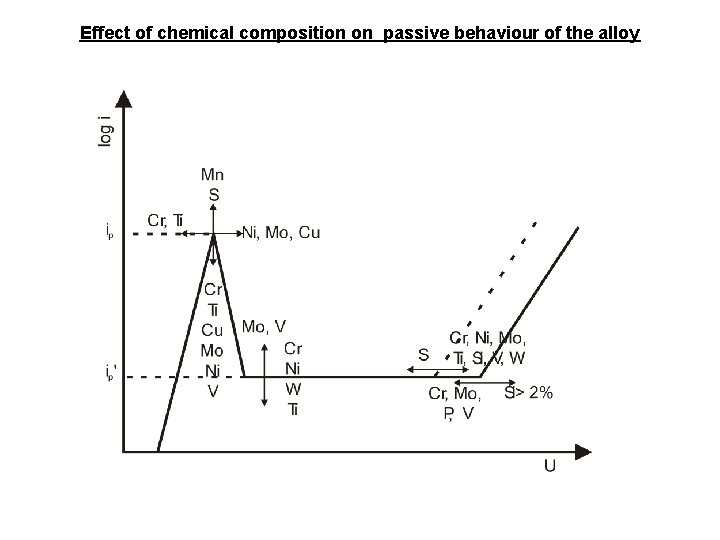
Effect of chemical composition on passive behaviour of the alloy
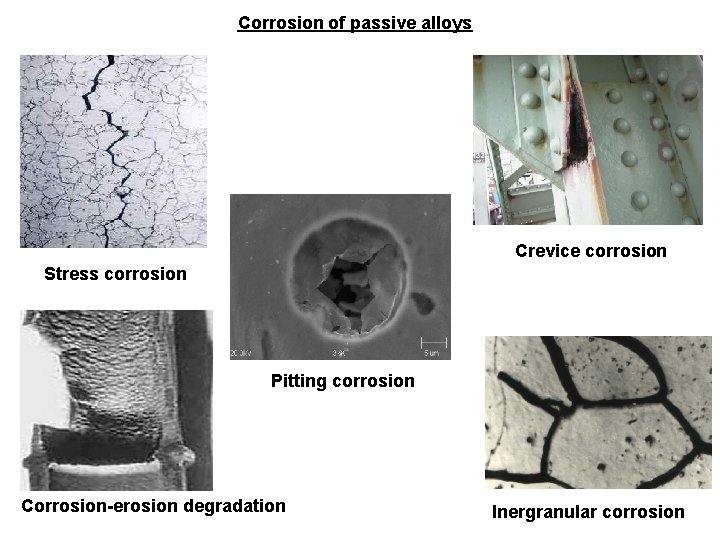
Corrosion of passive alloys Crevice corrosion Stress corrosion Pitting corrosion Corrosion-erosion degradation Inergranular corrosion
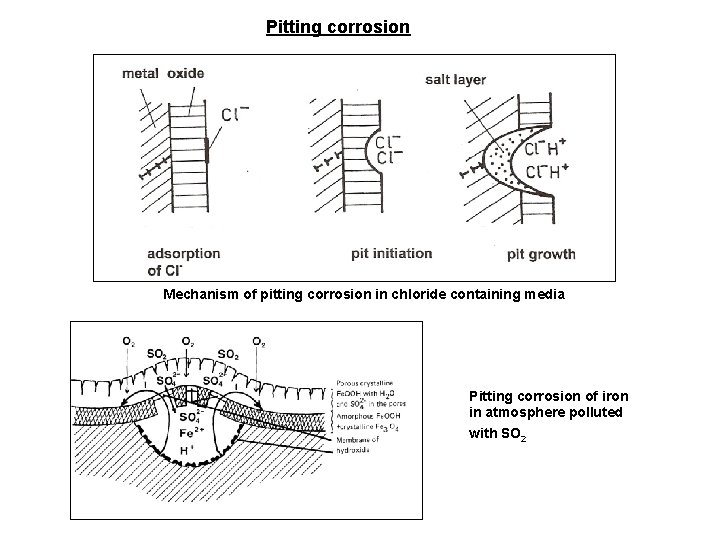
Pitting corrosion Mechanism of pitting corrosion in chloride containing media Pitting corrosion of iron in atmosphere polluted with SO 2

Pitting corrosion Schematic of a polarization curve showing critical potentials and metastable pitting region. EP, pitting potential; ER, repassivation potential; Ecorr, corrosion potential. Autocatalytic process occurring in a corrosion pit. The metal, M, is being pitted by an aerated Na. Cl solution. Rapid dissolution occurs in the pit, while oxygen reduction takes place on the adjacent metal surfaces.
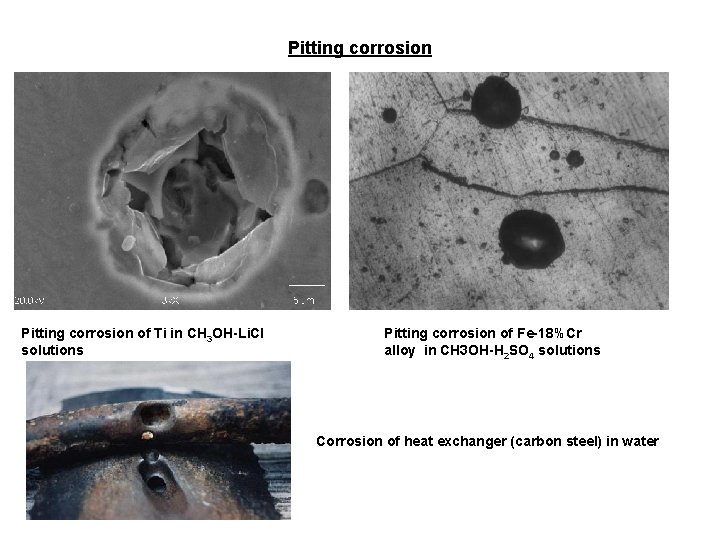
Pitting corrosion of Ti in CH 3 OH-Li. Cl solutions Pitting corrosion of Fe-18%Cr alloy in CH 3 OH-H 2 SO 4 solutions Corrosion of heat exchanger (carbon steel) in water
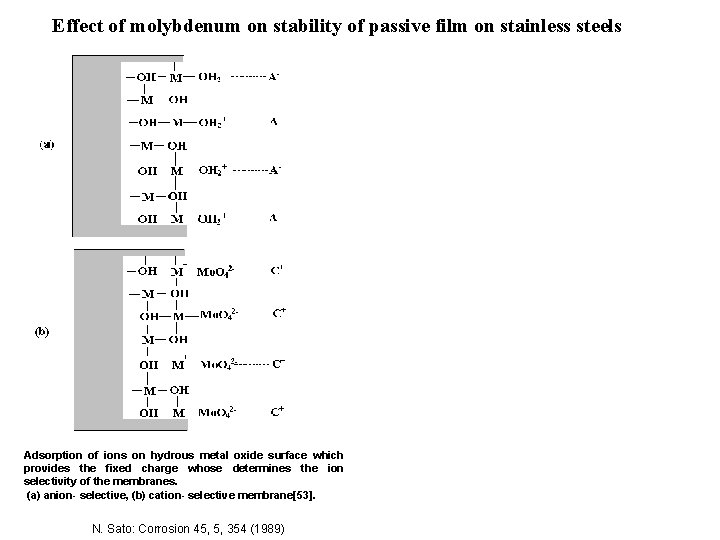
Effect of molybdenum on stability of passive film on stainless steels Adsorption of ions on hydrous metal oxide surface which provides the fixed charge whose determines the ion selectivity of the membranes. (a) anion- selective, (b) cation- selective membrane[53]. N. Sato: Corrosion 45, 5, 354 (1989)
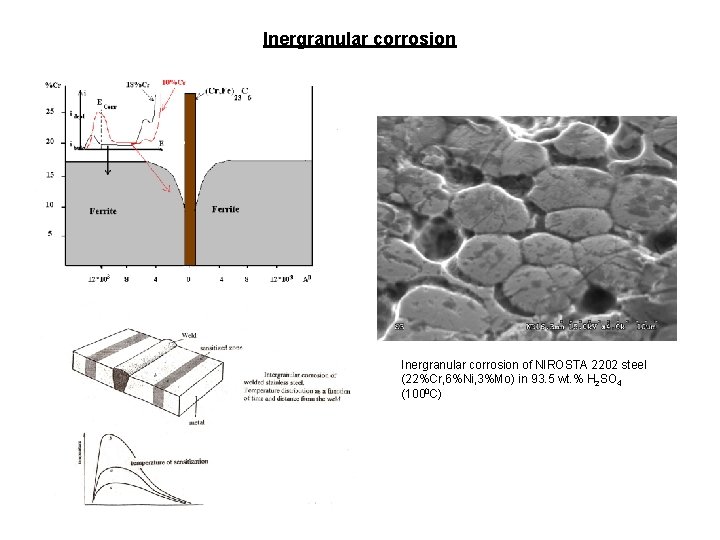
Inergranular corrosion of NIROSTA 2202 steel (22%Cr, 6%Ni, 3%Mo) in 93. 5 wt. % H 2 SO 4 (1000 C)
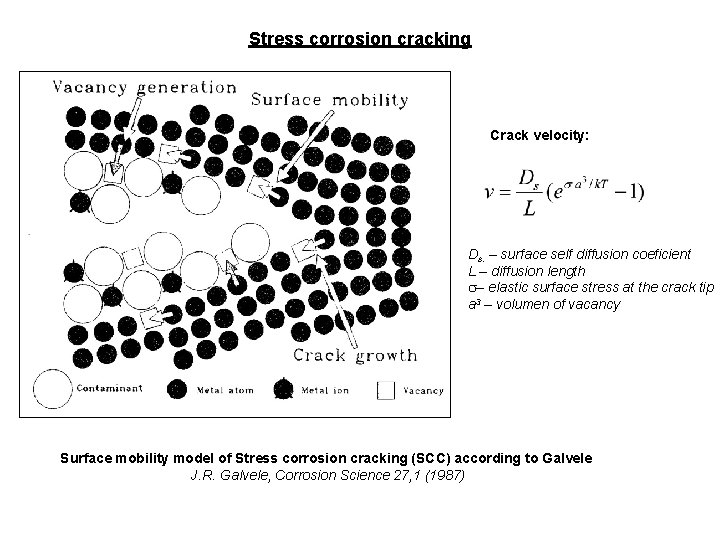
Stress corrosion cracking Crack velocity: Ds. – surface self diffusion coeficient L – diffusion length s– elastic surface stress at the crack tip a 3 – volumen of vacancy Surface mobility model of Stress corrosion cracking (SCC) according to Galvele J. R. Galvele, Corrosion Science 27, 1 (1987)
- Slides: 10