
Corrosion Corrosion is a chemical reaction that occurs


- Slides: 8
Corrosion
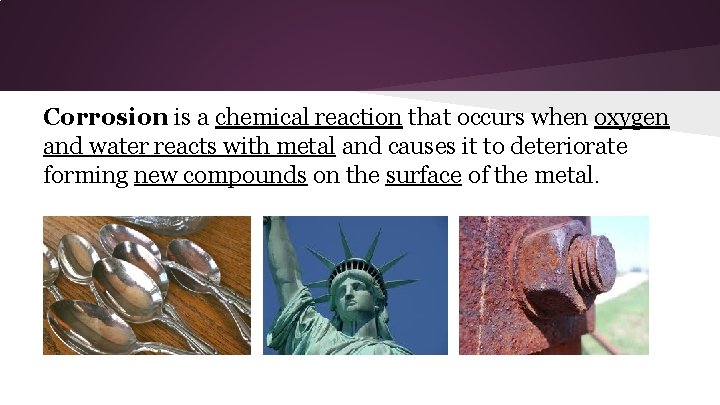
Corrosion is a chemical reaction that occurs when oxygen and water reacts with metal and causes it to deteriorate forming new compounds on the surface of the metal.
Rusting is a chemical reaction which occurs when iron reacts with water and oxygen in the air to form the compounds that make up the flaky red-brown substance known as rust (hydrated iron oxides).
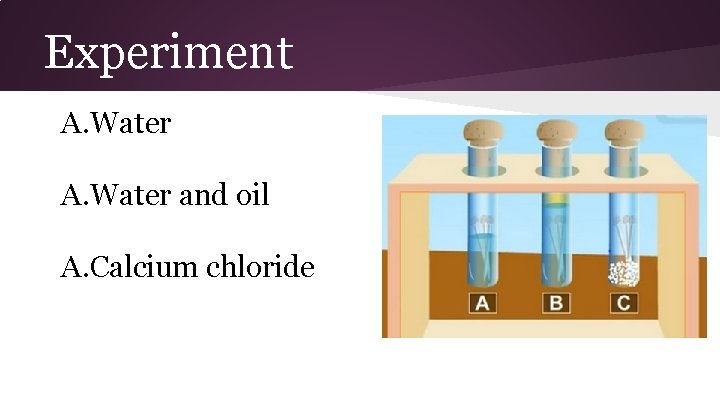
Experiment A. Water and oil A. Calcium chloride
Catalyst: Speeding up reactions A catalyst is a chemical that can speed up a chemical reaction but is still present once the reaction has finished. Catalysts are not reactants because they are not changed by the reaction.
Salt Some substances in the environment can make rusting happen more quickly. Salt can act as a catalyst, it increases the conductivity of water (speeding up the reaction between oxygen and iron).
Rust Protection Steel, an alloy of iron, is a strong material and is used for almost everything, including bridges, buildings and cars. However steel is still susceptible to rusting and therefore needs to be protected from the corrosive effects of the environment. Surface protection: coating over a metal surface to prevent corrosion eg. with paint, plastic or oil. Galvanising: protecting a metal by covering it with a more reactive metal that will corrode first. eg. Zinc
https: //www. youtube. com/watch? v=T 4 p. Sufl. O 9 fk