
Corridors Safety and Efficiency Using Active Traffic Management
- Slides: 14
Corridors Safety and Efficiency: Using Active Traffic Management to Achieve Congestion and Safety Benefits June 4, 2014 Kamal Suliman Virginia Department of Transportation Northern Region Operations
Overview • Corridors Where, why, needs and purpose? • Active Traffic Management • What is it? • What are the benefits? • What are the proposed applications? • Delivery method • Procurement • Challenges • Lessons learned 2
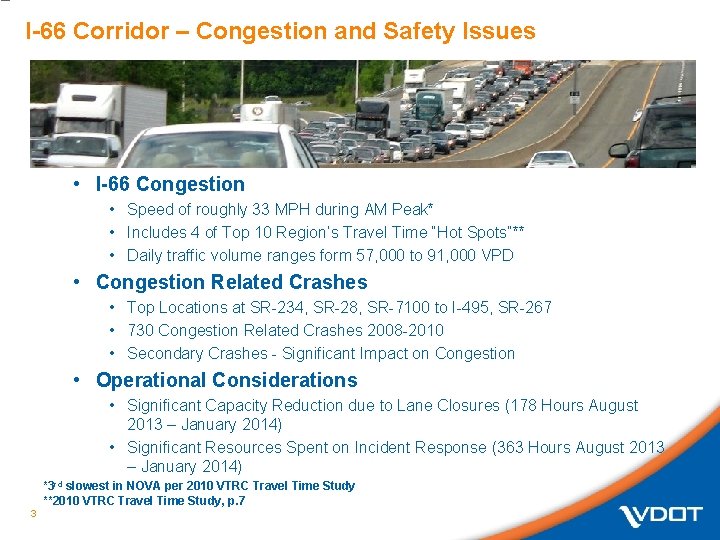
I-66 Corridor – Congestion and Safety Issues • I-66 Congestion • Speed of roughly 33 MPH during AM Peak* • Includes 4 of Top 10 Region’s Travel Time “Hot Spots”** • Daily traffic volume ranges form 57, 000 to 91, 000 VPD • Congestion Related Crashes • Top Locations at SR-234, SR-28, SR-7100 to I-495, SR-267 • 730 Congestion Related Crashes 2008 -2010 • Secondary Crashes - Significant Impact on Congestion • Operational Considerations • Significant Capacity Reduction due to Lane Closures (178 Hours August 2013 – January 2014) • Significant Resources Spent on Incident Response (363 Hours August 2013 – January 2014) *3 rd slowest in NOVA per 2010 VTRC Travel Time Study **2010 VTRC Travel Time Study, p. 7 3
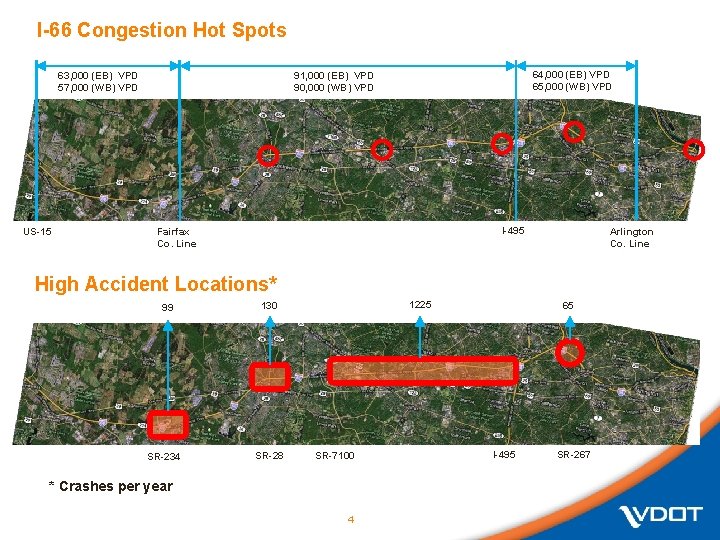
I-66 Congestion Hot Spots US-15 64, 000 (EB) VPD 65, 000 (WB) VPD 91, 000 (EB) VPD 90, 000 (WB) VPD 63, 000 (EB) VPD 57, 000 (WB) VPD I-495 Fairfax Co. Line Arlington Co. Line High Accident Locations* 99 SR-234 1225 130 SR-28 SR-7100 * Crashes per year 4 65 I-495 SR-267
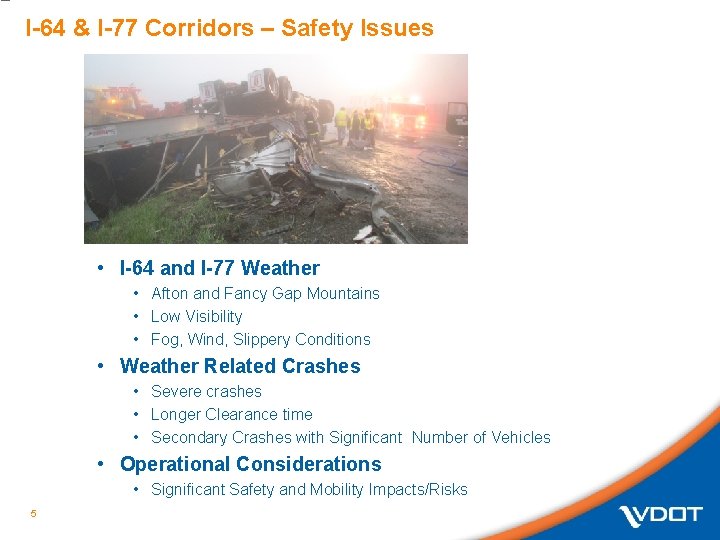
I-64 & I-77 Corridors – Safety Issues • I-64 and I-77 Weather • Afton and Fancy Gap Mountains • Low Visibility • Fog, Wind, Slippery Conditions • Weather Related Crashes • Severe crashes • Longer Clearance time • Secondary Crashes with Significant Number of Vehicles • Operational Considerations • Significant Safety and Mobility Impacts/Risks 5
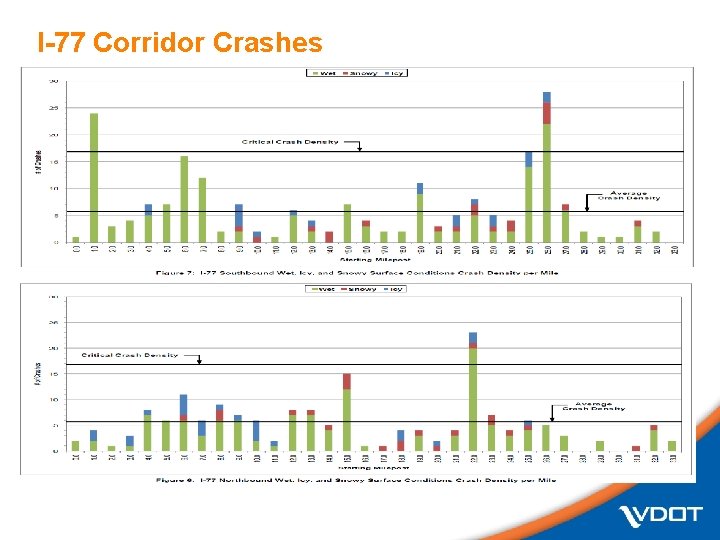
I-77 Corridor Crashes
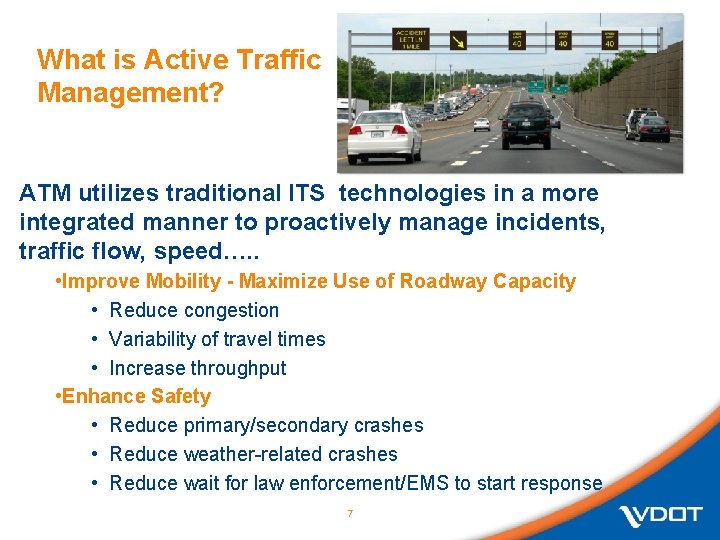
What is Active Traffic Management? ATM utilizes traditional ITS technologies in a more integrated manner to proactively manage incidents, traffic flow, speed…. . • Improve Mobility - Maximize Use of Roadway Capacity • Reduce congestion • Variability of travel times • Increase throughput • Enhance Safety • Reduce primary/secondary crashes • Reduce weather-related crashes • Reduce wait for law enforcement/EMS to start response 7
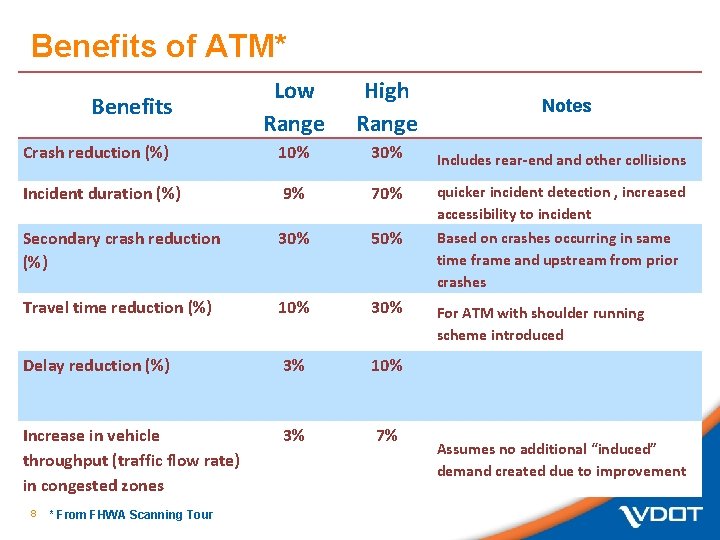
Benefits of ATM* Low Range High Range Crash reduction (%) 10% 30% Incident duration (%) 9% 70% Secondary crash reduction (%) 30% 50% Travel time reduction (%) 10% 30% Delay reduction (%) 3% 10% Increase in vehicle throughput (traffic flow rate) in congested zones 3% 7% Benefits 8 * From FHWA Scanning Tour Notes Includes rear-end and other collisions quicker incident detection , increased accessibility to incident Based on crashes occurring in same time frame and upstream from prior crashes For ATM with shoulder running scheme introduced Assumes no additional “induced” demand created due to improvement
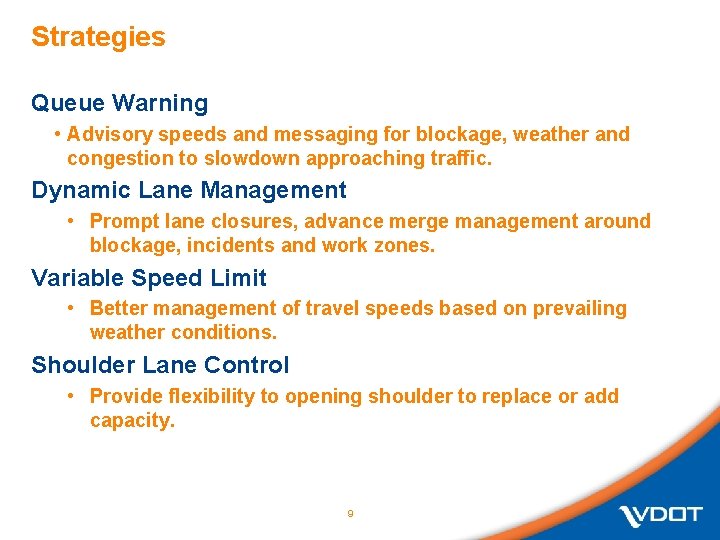
Strategies Queue Warning • Advisory speeds and messaging for blockage, weather and congestion to slowdown approaching traffic. Dynamic Lane Management • Prompt lane closures, advance merge management around blockage, incidents and work zones. Variable Speed Limit • Better management of travel speeds based on prevailing weather conditions. Shoulder Lane Control • Provide flexibility to opening shoulder to replace or add capacity. 9
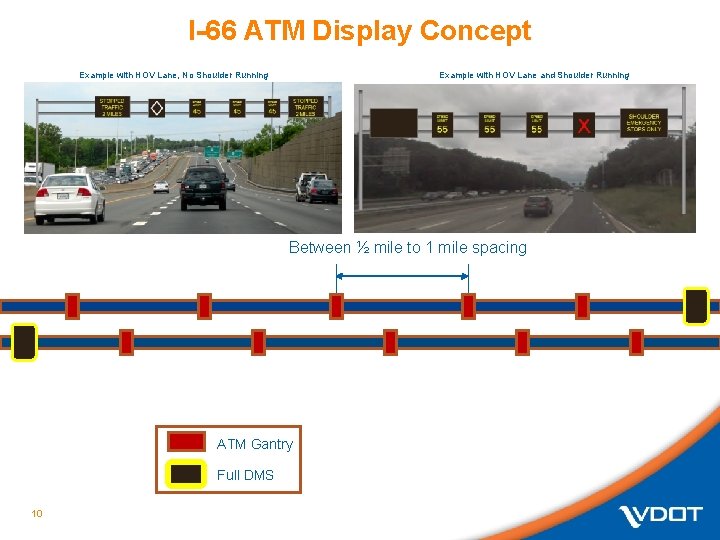
I-66 ATM Display Concept Example with HOV Lane, No Shoulder Running Example with HOV Lane and Shoulder Running Between ½ mile to 1 mile spacing ATM Gantry Full DMS 10
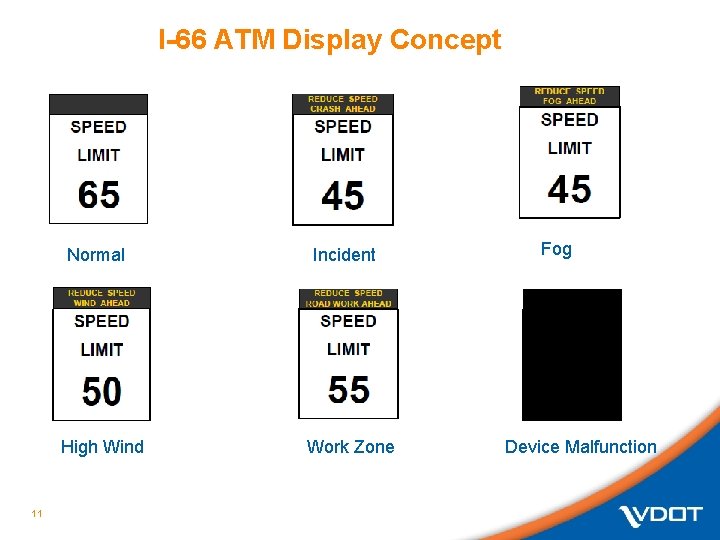
I-66 ATM Display Concept Normal High Wind 11 Incident Work Zone Fog Device Malfunction
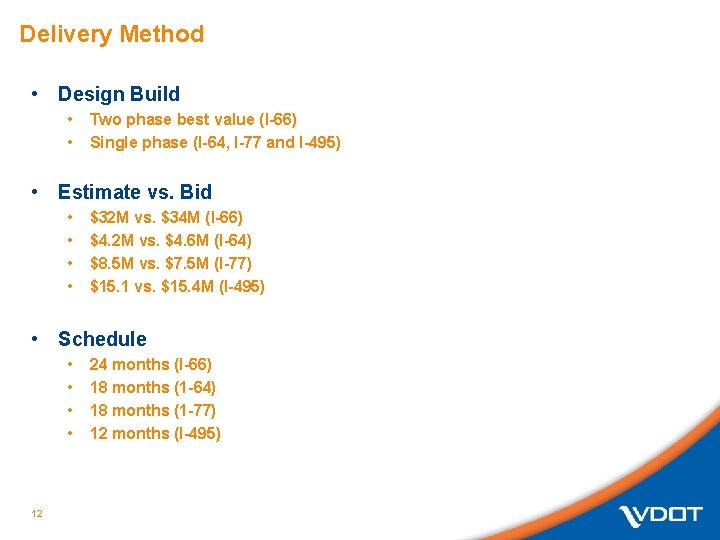
Delivery Method • Design Build • • Two phase best value (I-66) Single phase (I-64, I-77 and I-495) • Estimate vs. Bid • • $32 M vs. $34 M (I-66) $4. 2 M vs. $4. 6 M (I-64) $8. 5 M vs. $7. 5 M (I-77) $15. 1 vs. $15. 4 M (I-495) • Schedule • • 12 24 months (I-66) 18 months (1 -64) 18 months (1 -77) 12 months (I-495)
Challenges/Risks • Availability and qualifications of design build teams. • Disruptions to existing ITS system • Utilities • Right of way • Motorist/Users Acceptance • Separate software development track • System Maintenance beyond completion 13
Lessons Learned • Resist inclusion of none ITS elements. • Build/maintain capacity by spacing project advertisements further apart • Advance RFP plans further • In-service maintenance • ITS Standards/Specification • Contingency, CEI budget 14