
Correlation key concepts a Scatter diagram b Positive

Correlation key concepts: a) Scatter diagram b) Positive & Negative correlation
Correlation is a statistical tool that helps to measure and analyze the degree of relationship between two variables. Correlation analysis deals with the association between two or more variables.
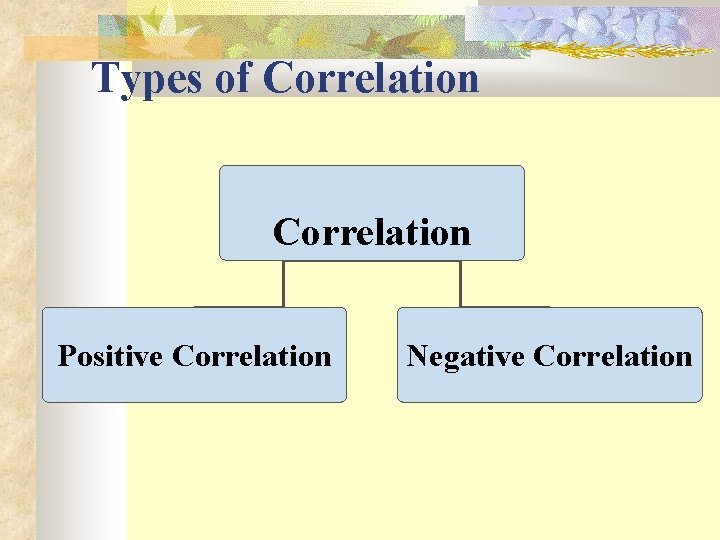
Types of Correlation Positive Correlation Negative Correlation
Types of Correlation Type I Positive Correlation: The correlation is said to be positive correlation if the values of two variables changing with same direction. Ex. Pub. Exp. & sales, Height & weight. Negative Correlation: The correlation is said to be negative correlation when the values of variables change with opposite direction. Ex. Price & qty. demanded.
More examples Positive relationships Negative relationships: relationships water consumption and temperature. study time and grades. alcohol consumption and driving ability. Price & quantity demanded
Methods of Studying Correlation Scatter Diagram Method ◄◄◄ Graphic Method Karl Pearson’s Coefficient of Correlation Method of Least Squares
Scatter Diagram Method Scatter Diagram is a graph of observed plotted points where each points represents the values of X & Y as a coordinate. It portrays the relationship between these two variables graphically.
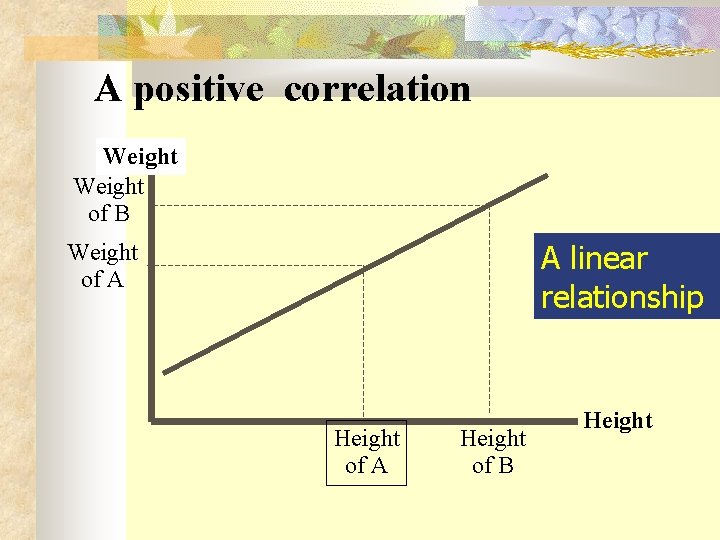
A positive correlation Weight of B A linear relationship Weight of A Height of B Height
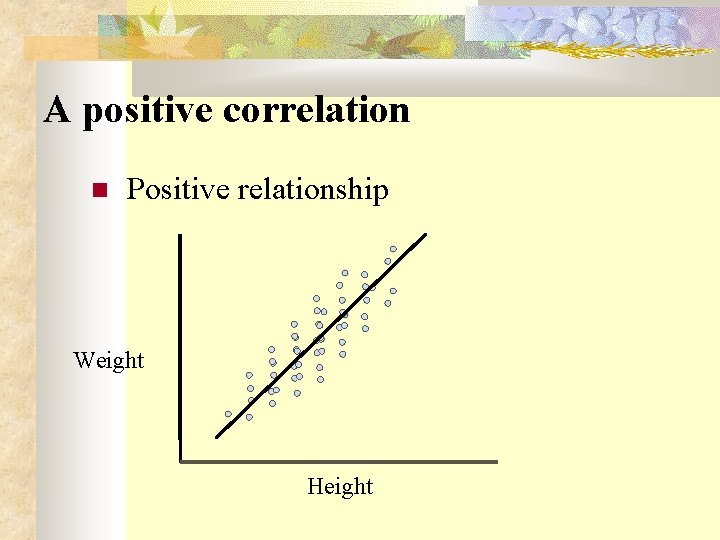
A positive correlation Positive relationship Weight Height
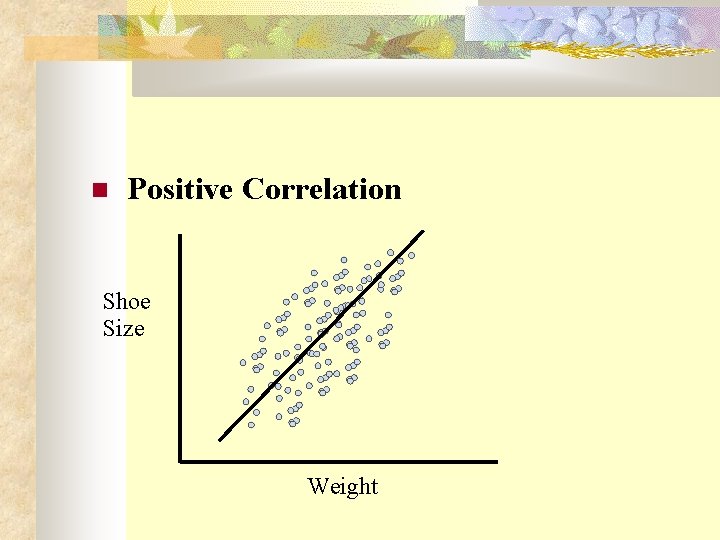
Positive Correlation Shoe Size Weight
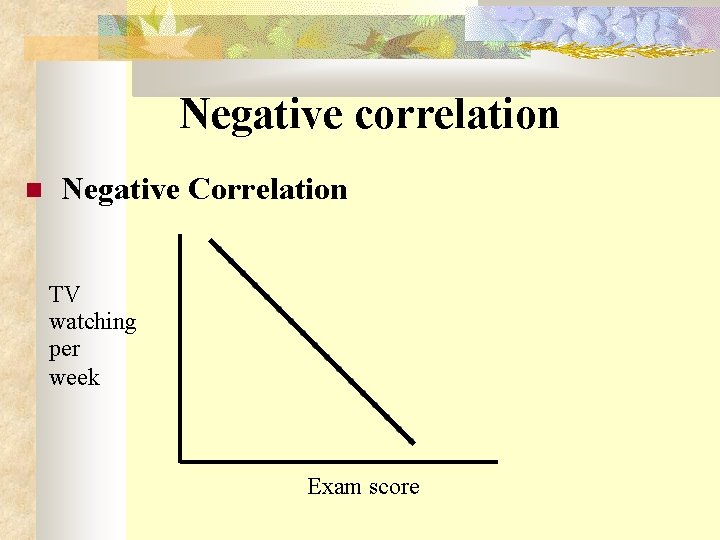
Negative correlation Negative Correlation TV watching per week Exam score
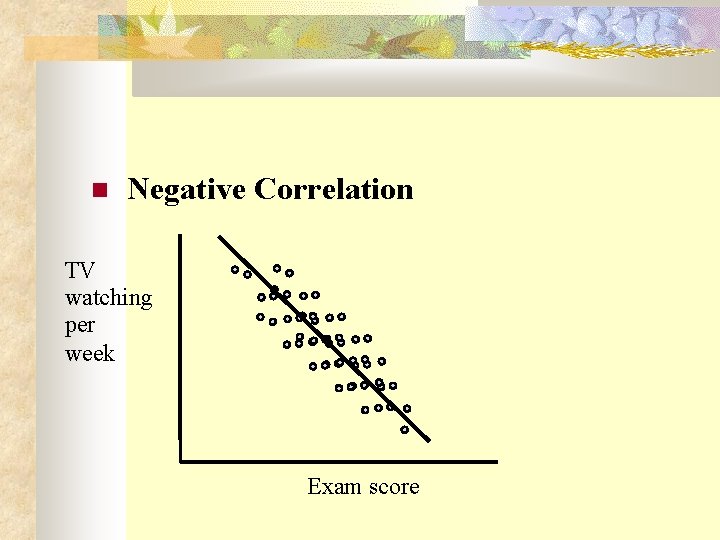
Negative Correlation TV watching per week Exam score
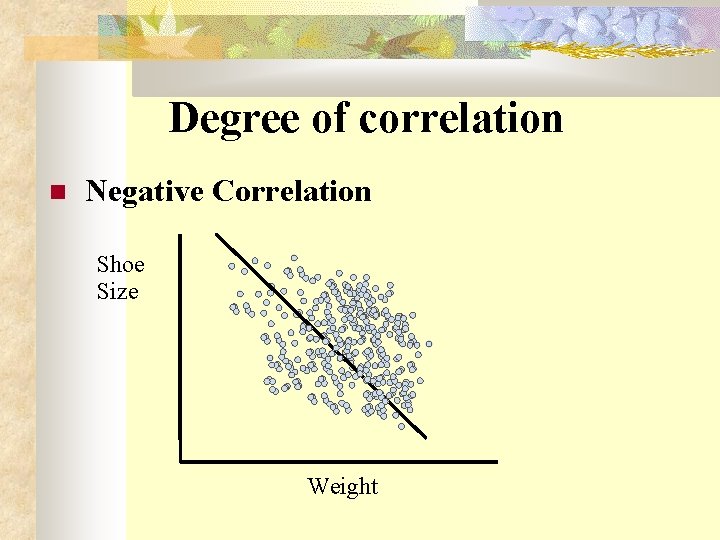
Degree of correlation Negative Correlation Shoe Size Weight
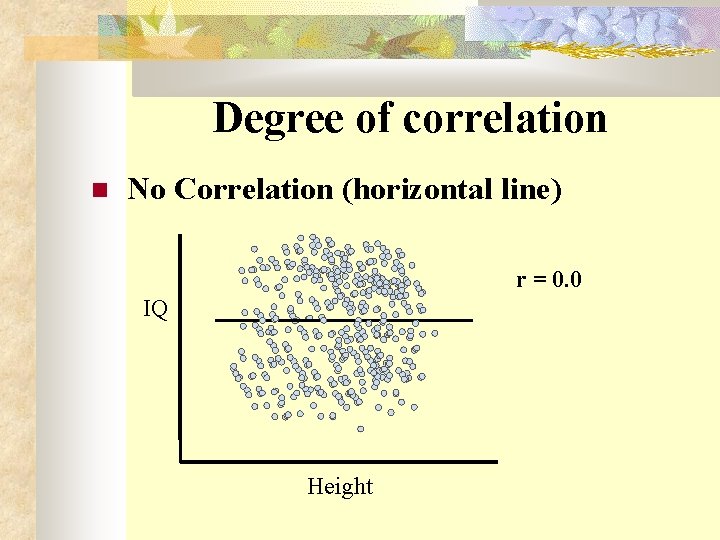
Degree of correlation No Correlation (horizontal line) r = 0. 0 IQ Height
- Slides: 14