
Correlation between Binaural Perception and Brainstem Lesions Miriam
Correlation between Binaural Perception and Brainstem Lesions Miriam Furst School of Electrical Engineering Tel Aviv University
This talk is based on the published chapter : “Hearing Disorders in Multiple “clerosis” In the book: “The Human Auditory “ystem: Fundamental Organization and Clinical Disorders” Edited by Celesia G. G. and Hickok G. As part of the series: “Handbook of Clinical Neurology” Volume 129 (2015)
Talk Outline • Binaural Perception in Healthy People • Binaural Perception in Subjects with brainstem lesions due to either MS or CVA • Detecting Lesions in the Brainstem Auditory Pathway • Correlation between the site of the lesions and binaural abilities
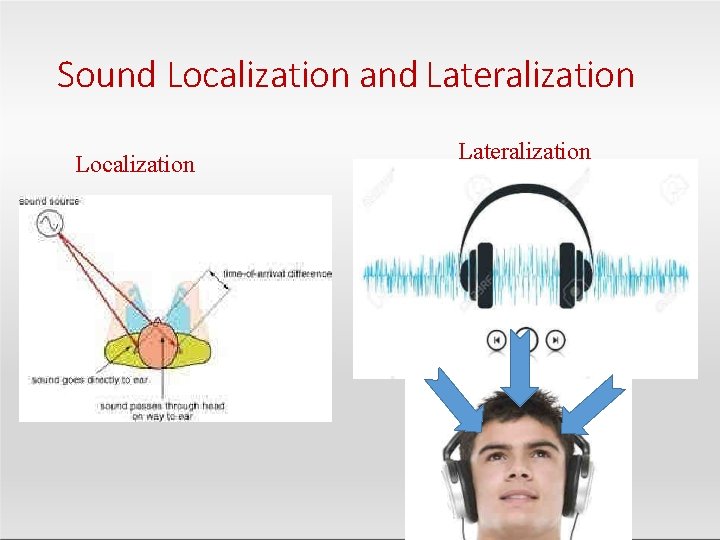
Sound Localization and Lateralization Localization Lateralization
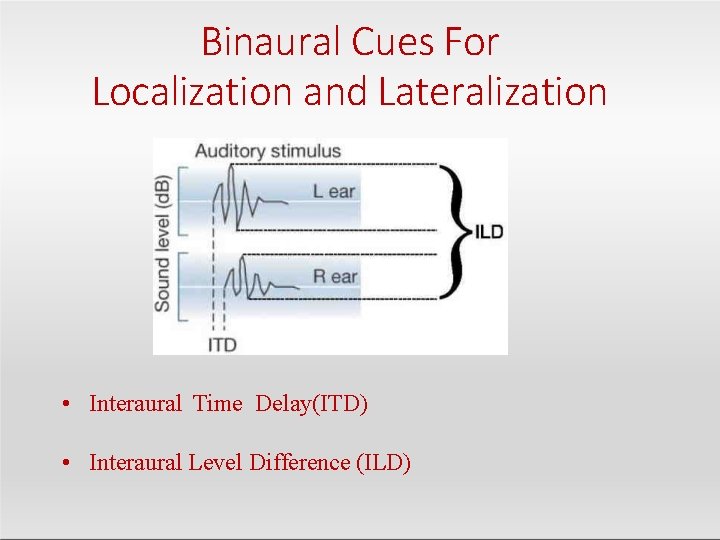
Binaural Cues For Localization and Lateralization • Interaural Time Delay(ITD) • Interaural Level Difference (ILD)
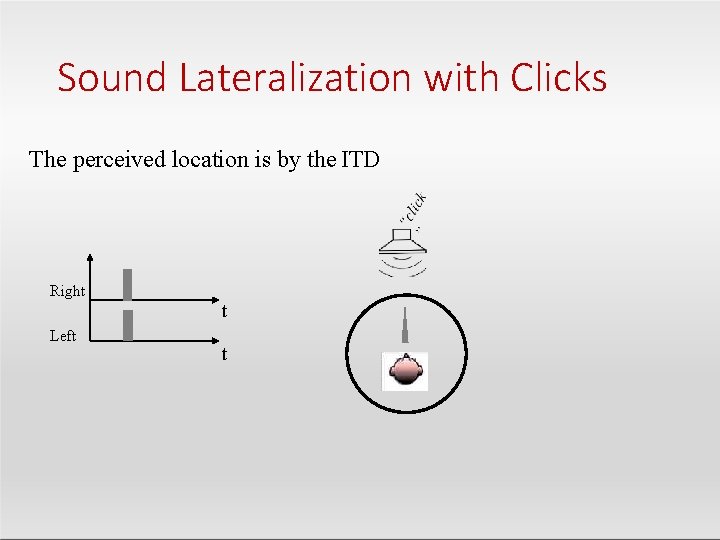
Sound Lateralization with Clicks The perceived location is by the ITD Right t Left t
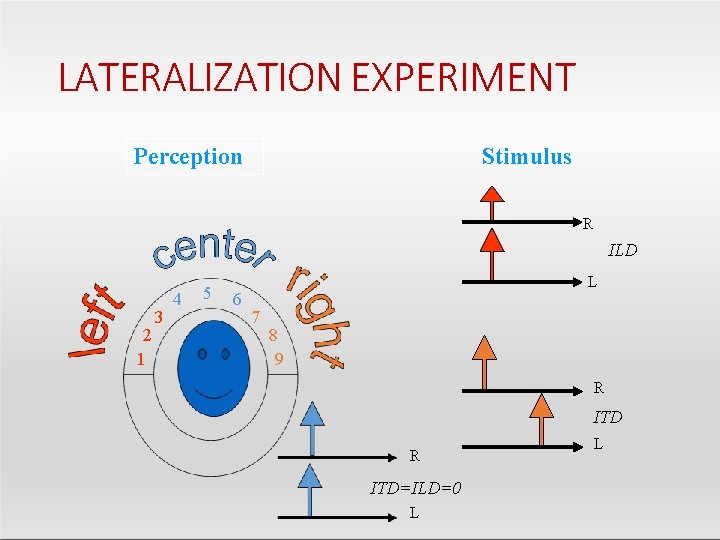
LATERALIZATION EXPERIMENT Perception Stimulus R ILD 2 1 3 4 5 6 L 7 8 9 R ITD=ILD=0 L L
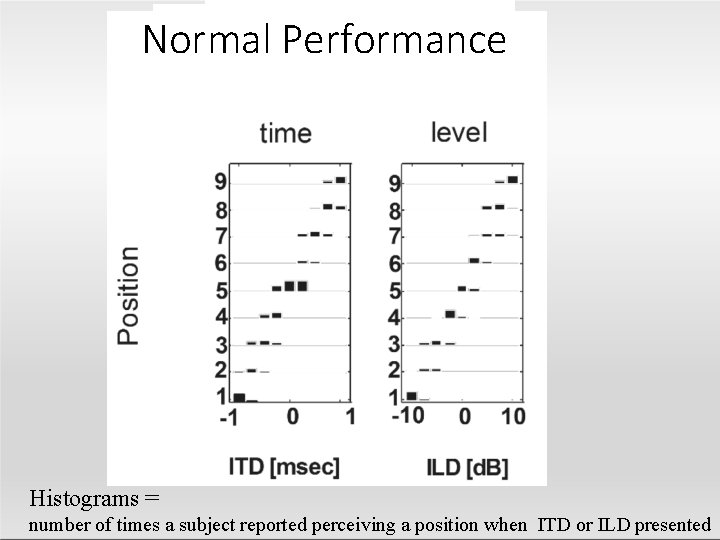
Normal Performance Histograms = number of times a subject reported perceiving a position when ITD or ILD presented
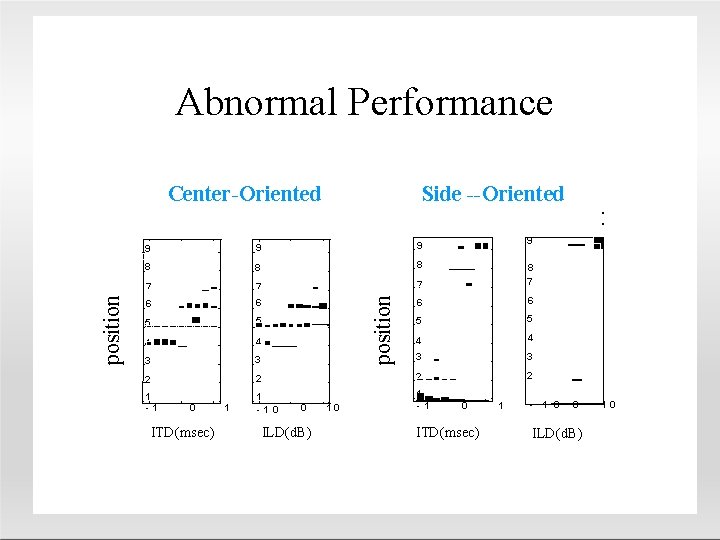
Abnormal Performance Side --Oriented 9 9 8 8 8 7 7 7 8 7 6 6 5 5 4 4 3 3 2 2 1 -1 0 ITD(msec) 1 position Center-Oriented 1 -1 0 0 ILD(d. B) 10 1 -1 0 ITD(msec) 1 1 - 1 0 0 ILD(d. B) 10
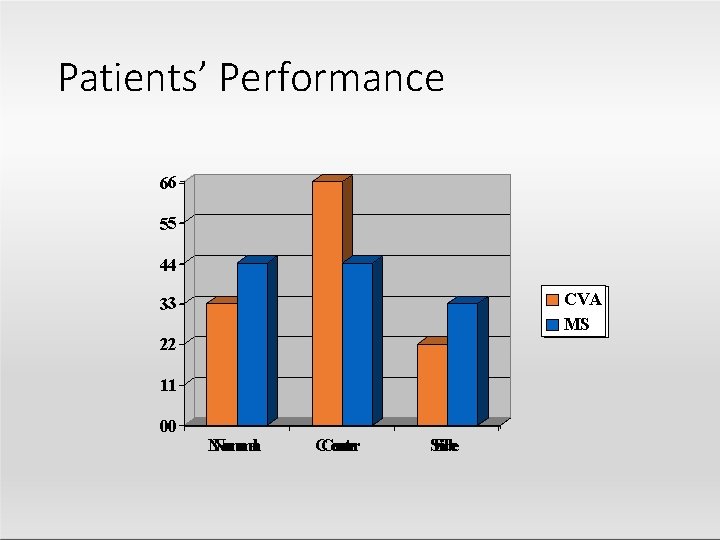
Patients’ Performance 66 55 44 CVA MS MS 33 22 11 00 NNormmaal CCennteerr SSiddee
Is Abnormal Performance Correlates to an Existing Lesion in the Auditory Pathway?
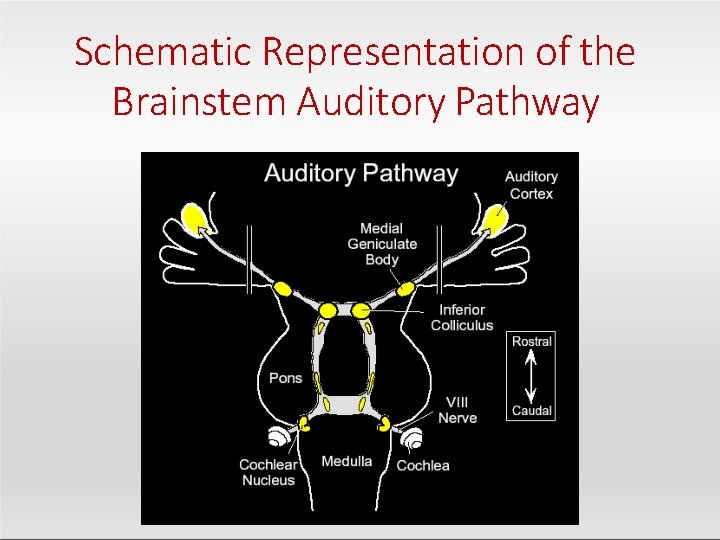
Schematic Representation of the Brainstem Auditory Pathway
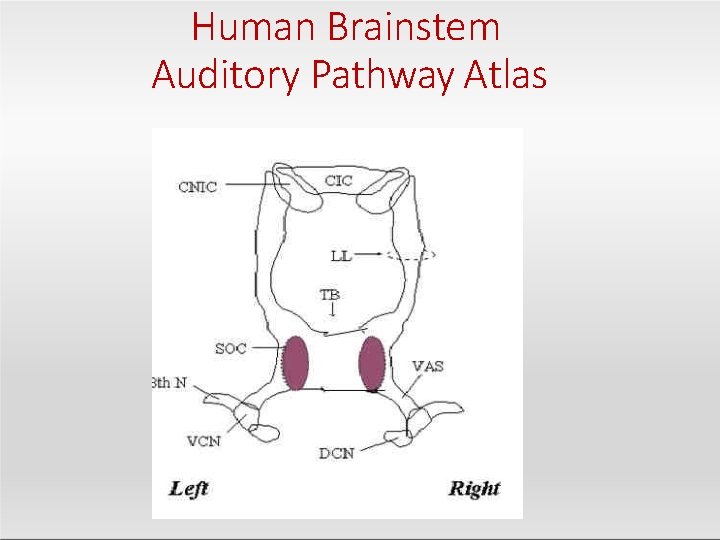
Human Brainstem Auditory Pathway Atlas
The MRI Protocol Contiguous 5 mmsections were obtained using T 2 spinecho sequences from three orthogonal planes of the brainstem : perpendicular to the long axis of the axial: brainstem coronal: parallel to the plane of the floor of the fourth ventricle sagittal : perpendicular to the plane of the floor of the fourth ventricle and in the plane of the long axis of the brainstem.
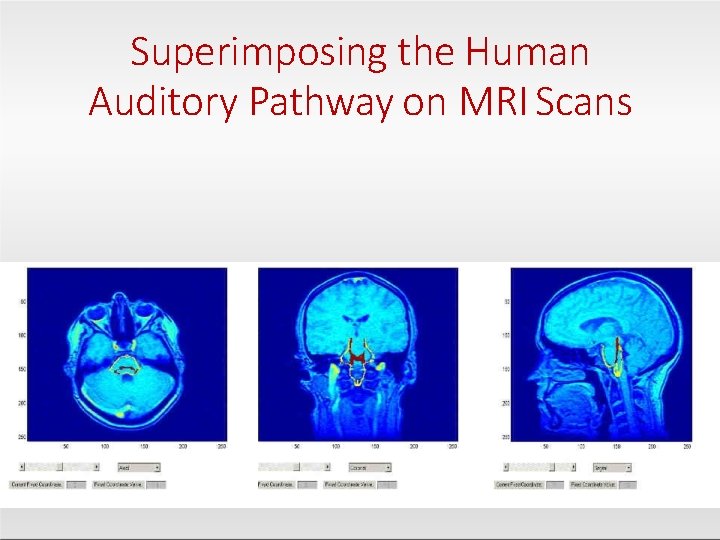
Superimposing the Human Auditory Pathway on MRI Scans
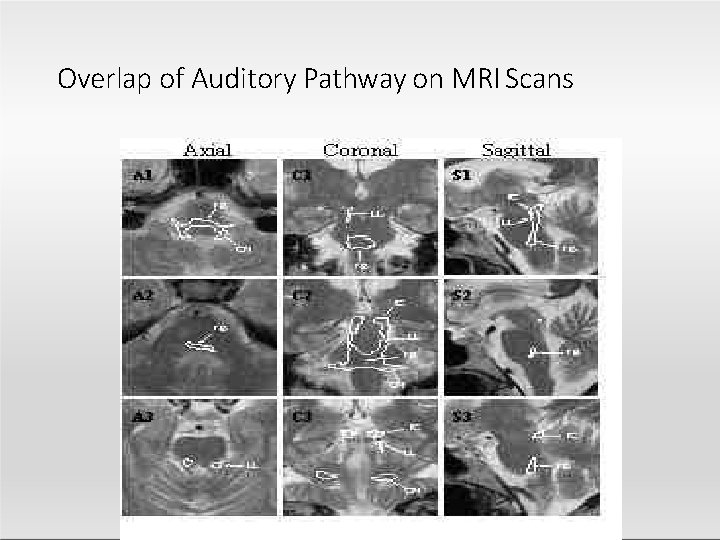
Overlap of Auditory Pathway on MRI Scans
Lesion is defined as overlapping the auditory pathway if and only if it overlaps the auditory pathway in at least 2 orthogonal planes.
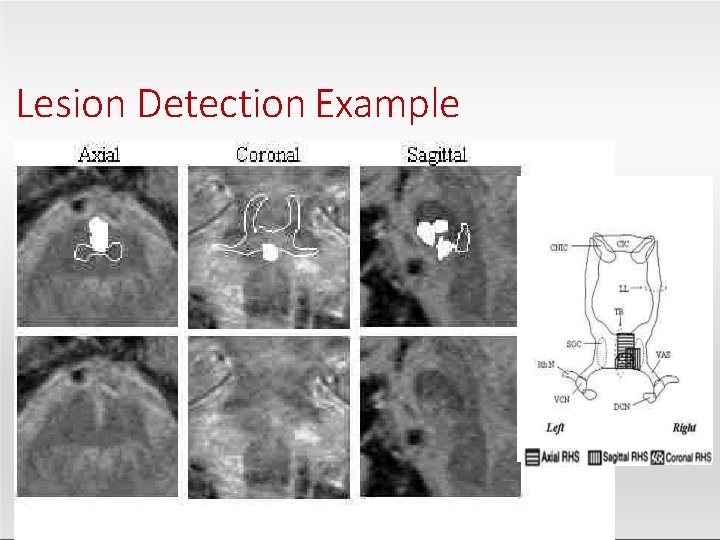
Lesion Detection Example
Results All the Patients that performed abnormally in the lateralization experiment had lesions that overlapped the brainstem auditory pathway All the Patients that performed normally in the lateralization experiment did not havelesions that overlapped the brainstem auditory pathway
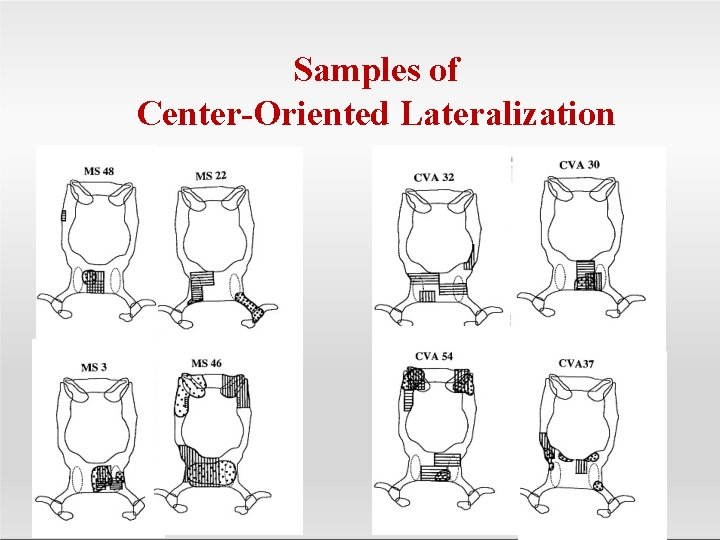
Samples of Center-Oriented Lateralization
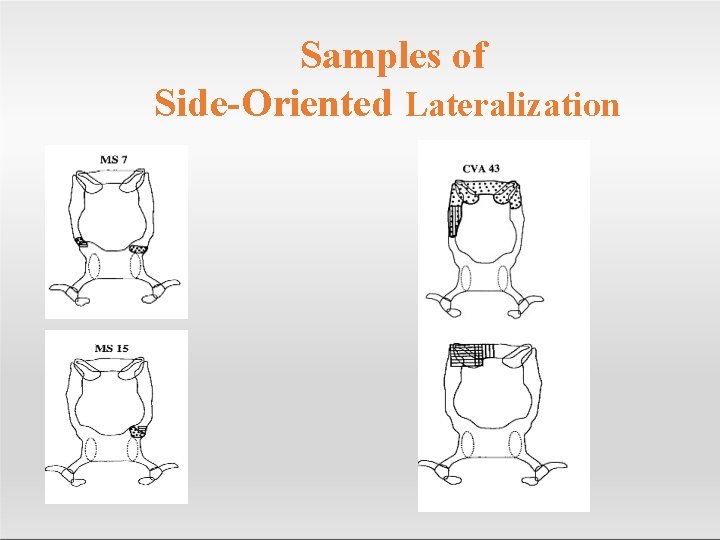
Samples of Side-Oriented Lateralization
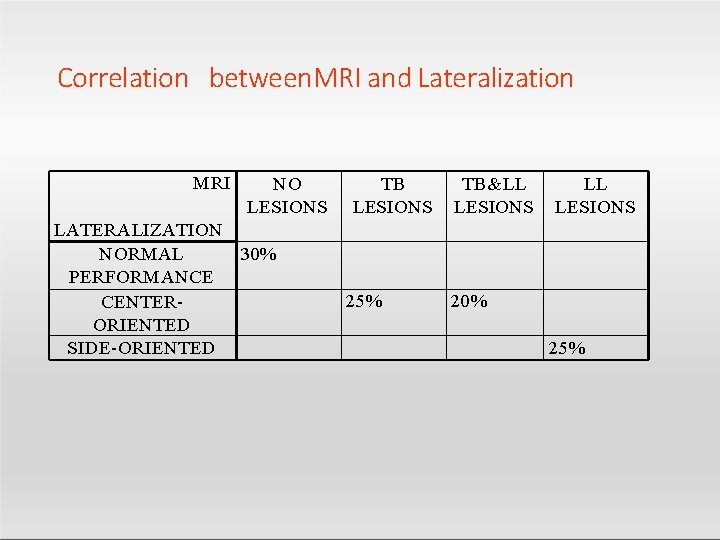
Correlation between. MRI and Lateralization MRI NO LESIONS LATERALIZATION NORMAL 30% PERFORMANCE CENTERORIENTED SIDE-ORIENTED TB LESIONS 25% TB&LL LESIONS 20% 25%
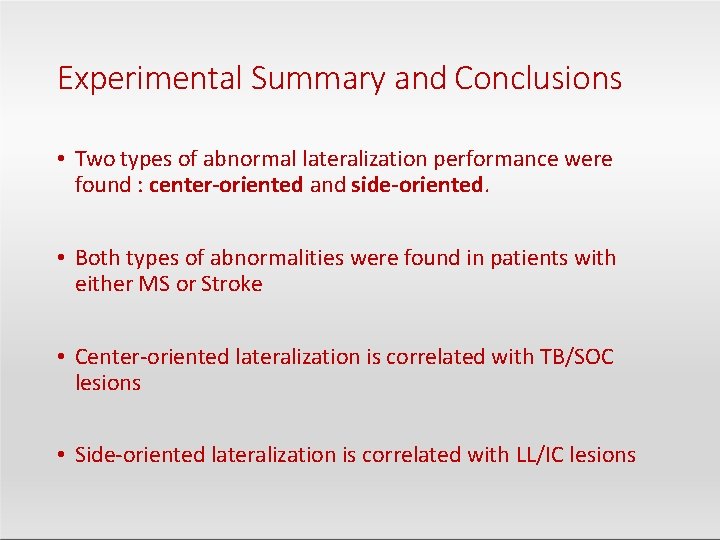
Experimental Summary and Conclusions • Two types of abnormal lateralization performance were found : center-oriented and side-oriented. • Both types of abnormalities were found in patients with either MS or Stroke • Center-oriented lateralization is correlated with TB/SOC lesions • Side-oriented lateralization is correlated with LL/IC lesions
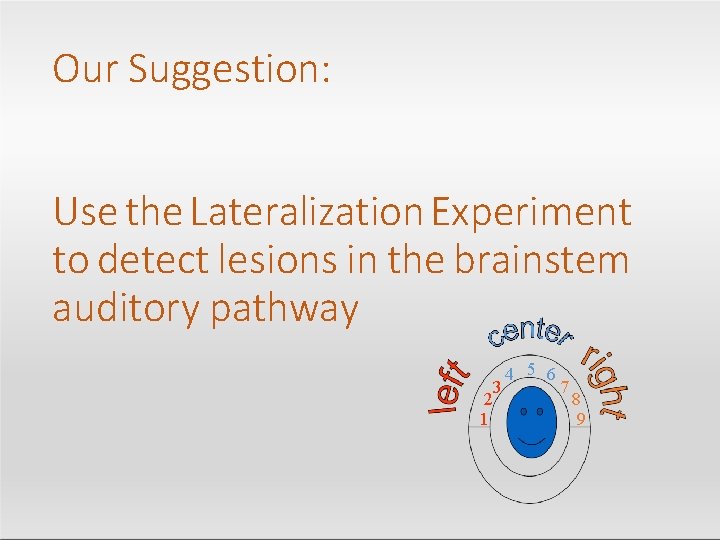
Our Suggestion: Use the Lateralization Experiment to detect lesions in the brainstem auditory pathway 3 2 1 4 5 6 7 8 9
Acknowledgments Thanks to all the colleagues and students who took part in the project: Robert A. Levine Amos D. Korczyn Barbara C. Fullerton Rina Tadmor Hillel Pratt Vered Aharonson Roy Tenny • The study was supported by BSF Grant 89 -00447 and ISF 563/12
- Slides: 25