
CORRECTIVE READING EFFECTIVENESS OF A DIRECT INSTRUCTION REMEDIAL
- Slides: 17
CORRECTIVE READING: EFFECTIVENESS OF A DIRECT INSTRUCTION REMEDIAL READING PROGRAM FOR SECONDARY STUDENTS Eric Ceresa & Todd Schafer Oakland University Action Research Presentation
Corrective Reading Overview Specific Research Questions Participants & Setting Data Collection Methods & Measures Data Results Conclusion
Overview Reading Interventions • Current Educational Landscape • Approaches to Intervention
Corrective Reading • • • Published by Mc. Graw/Hill Direct Instruction Comprehension/Decoding
Specific Research Questions The Effectiveness of Corrective Reading • Will Students’ Reading Ability Increase? • What Variables in Implementation Might Affect Results Moving Forward?
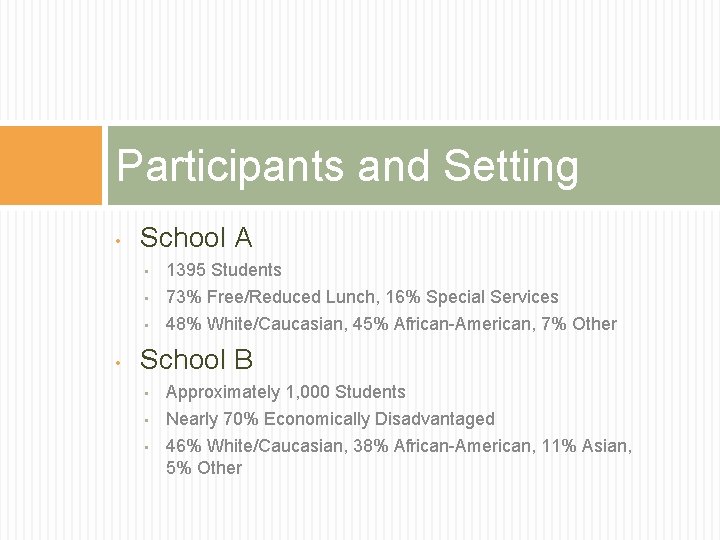
Participants and Setting • • School A • 1395 Students • 73% Free/Reduced Lunch, 16% Special Services • 48% White/Caucasian, 45% African-American, 7% Other School B • Approximately 1, 000 Students • Nearly 70% Economically Disadvantaged • 46% White/Caucasian, 38% African-American, 11% Asian, 5% Other
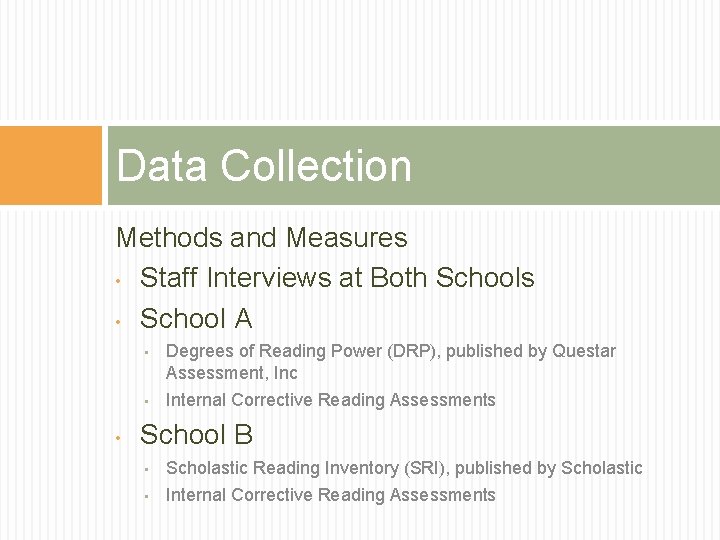
Data Collection Methods and Measures • Staff Interviews at Both Schools • School A • • Degrees of Reading Power (DRP), published by Questar Assessment, Inc • Internal Corrective Reading Assessments School B • Scholastic Reading Inventory (SRI), published by Scholastic • Internal Corrective Reading Assessments
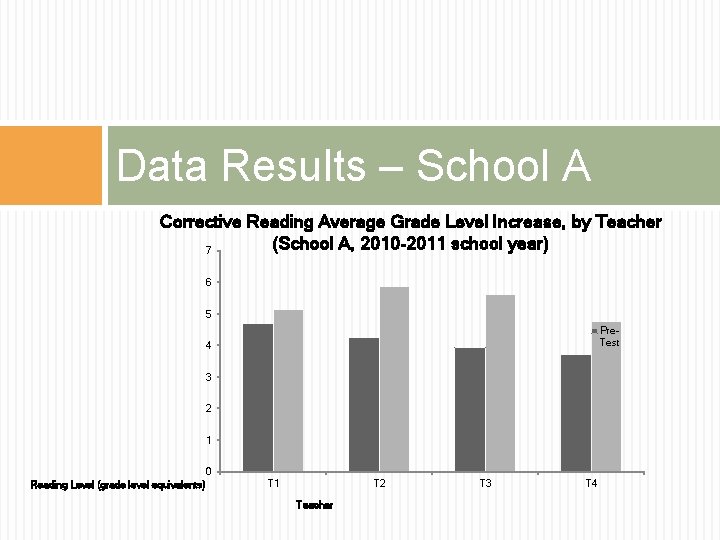
Data Results – School A Corrective Reading Average Grade Level Increase, by Teacher (School A, 2010 -2011 school year) 7 6 5 Pre. Test 4 3 2 1 0 Reading Level (grade level equivalents) T 1 T 2 Teacher T 3 T 4
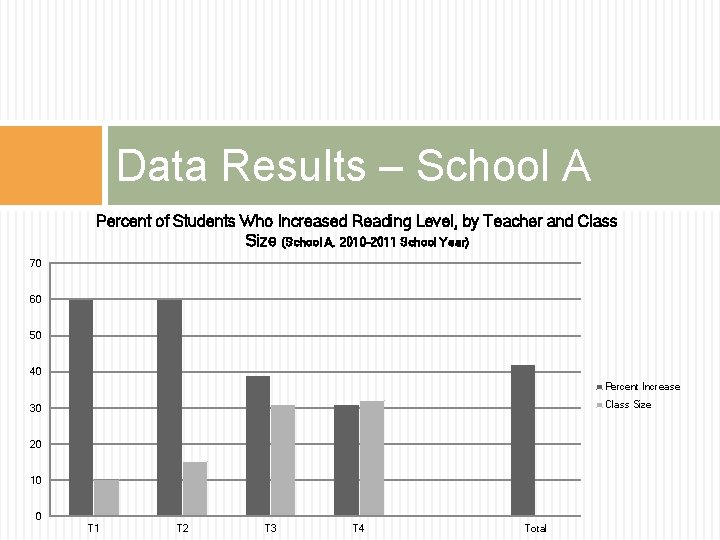
Data Results – School A Percent of Students Who Increased Reading Level, by Teacher and Class Size (School A, 2010 -2011 School Year) 70 60 50 40 Percent Increase Class Size 30 20 10 0 T 1 T 2 T 3 T 4 Total
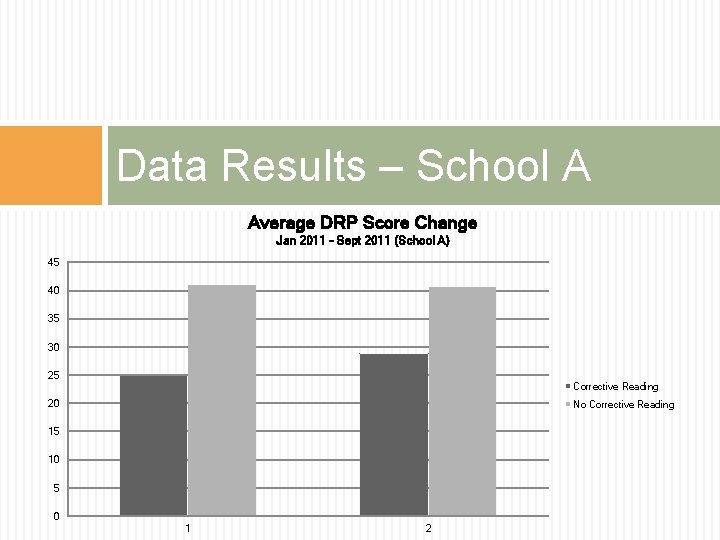
Data Results – School A Average DRP Score Change Jan 2011 - Sept 2011 (School A) 45 40 35 30 25 Corrective Reading 20 No Corrective Reading 15 10 5 0 1 2
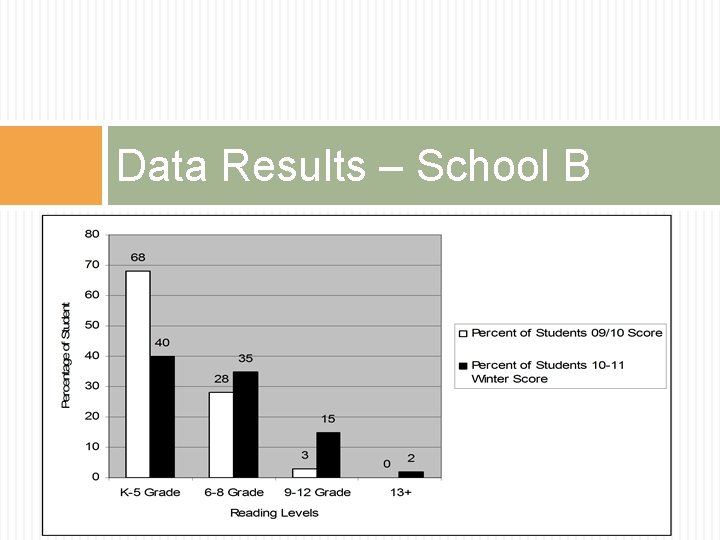
Data Results – School B
Data Results – School B
Conclusion Research Findings • Results Appear Positive and Significant • Class Sizes • Comparison with Students Not Scheduled into Corrective Reading
Conclusion Perception Data • Early Stages • • Staff • Students Full Implementation • Staff • Students
Conclusion Limitations • Quasi-Experimental • Different/Changing Policies • Fidelity Questions • Specific Populations
Conclusion Recommended Action Steps • Program Commitment • Program Expansion • Class Size
Questions